Week-3 Challenge: ADVISOR Tool
AIM:- To use Advisor tool and simulate the following objectives
OBJECTIVES:-
1) concluding observations For EV_defaults_in file, can the vehicle travel for 45 km with FTP drive cycle if the vehicle carrying a payload of 500 kg.
2) For the same file repeat the simulation by changing only battery capacity.
3) Perform gradeability test with the PRIUS_Jpn_defaults_in file and compare the results.
THEORY:-
What is ADVISOR & who might benefit from using it?
ADVISOR, NREL’s ADvanced VehIcle SimulatOR, is a set of model, data, and script text files for use with Matlab and Simulink. It is designed for rapid analysis of the performance and fuel economy of conventional, electric, and hybrid vehicles. ADVISOR also provides a backbone for the detailed simulation and analysis of user-defined drivetrain components, a starting point of verified vehicle data and algorithms from which to take full advantage of the modeling flexibility of Simulink and analytic power of MATLAB.
You may benefit from using ADVISOR if you want to:
- estimate the fuel economy of vehicles that have not yet been built
- learn about how conventional, hybrid or electric vehicles use (and lose) energy throughout their drivetrains
- compare relative tailpipe emissions produced on a number of cycles
- evaluate an energy management strategy for your hybrid vehicle’s fuel converter
- optimize the gear ratios in your transmission to minimize fuel use or maximize performance, etc.
The models in ADVISOR are:
- mostly empirical, relying on drivetrain component input/output relationships measured in the laboratory, and
- quasi-static, using data collected in steady-state (for example, constant torque and speed) tests and correcting them for transient effects such as the rotational inertia of drivetrain components.
ADVISOR was preliminarily written and used in November 1994. Since then, it has been modified as necessary to help manage the US DOE Hybrid Vehicle Propulsion System subcontracts. Only in January 1998 was a concerted development effort was undertaken to clean up and document ADVISOR.
Since then, over 4500 individuals have downloaded one or more versions of ADVISOR, including all of the OEMs and major suppliers. About 2/3 of the users are from industry and 1/3 from universities. A shortlist of major ADVISOR users includes:
- DaimlerChrysler
- Ford Motor Company
- General Motors Corp.
- Delphi Automotive Systems
- Visteon and hundreds of others
Capabilities and Intended use
ADVISOR uses basic physics and measured component performance to model existing or future vehicles. Its real power lies in the prediction of the performance of vehicles that have not yet been built. It answers the question “what if we build a car with certain characteristics?” ADVISOR usually predicts fuel use, tailpipe emissions, acceleration performance, and gradeability.In general, the user takes two steps
1.Define a vehicle using measured or estimated component and overall data.
2.Prescribe a speed versus time trace, along with road grade,that the vehicle must follow
ADVISOR then puts the vehicle through its paces, making sure it meets the cycle to the best of its ability and measuring (or offering the opportunity to measure) just about every torque, speed, voltage, current, and power passed from one component to another.
ADVISOR will allow the user to answer questions like:
- Was the vehicle able to follow the speed trace?
- How much fuel and/or electric energy were required in the attempt?
- How does the state-of-charge of the batteries fluctuate throughout a cycle?
- What were the peak powers delivered by the drivetrain components?
- What was the distribution of torques and speeds that the piston engine delivered?
- What was the average efficiency of the transmission?
By iteratively changing the vehicle definition and/or driving cycle, the user can go on to answer questions such as:
- At what road grade can the vehicle maintain 55 mph indefinitely?
- What’s the smallest engine I can put into this vehicle to accelerate from 0 to 60 mph in 12 s?
- What’s the final drive ratio that minimizes fuel use while keeping the 40 to 60 mph time below 3 s?
- What is the fuel economy sensitivity to mass, aerodynamic drag, or other vehicle or component variations?
ADVISOR’s GUI and other script files answer many of these questions automatically, while others require some custom programming on the user’s part.
Because ADVISOR is modular, its component models can be relatively easily extended and improved. For example, an electrochemical model of a battery, complete with diffusion, polarization, and thermal effects, can easily be put into a vehicle to cooperate with a motor model that uses a measured efficiency map. Of course, developing new, detailed models of drivetrain components (or anything else, for that matter) requires an intimate familiarity with the environment, MATLAB/Simulink.
LIMITATIONS:-
Primarily for analysis, not design
ADVISOR was developed as an analysis tool, and not originally intended as a detailed design tool. Its component models are quasi-static, and cannot be used to predict phenomena with a time scale of less than a tenth of a second or so. Physical vibrations, electric field oscillations, and other dynamics cannot be captured using ADVISOR, however recent linkages with other tools such as Saber, Simplorer, and Sinda/Fluent allow a detailed study of these transients in those tools with the vehicle level impacts linked back into ADVISOR.
System Requirements
ADVISOR has been developed and tested in Release 12.1 (MATLAB 6.1 and Simulink 4.1), available from The Mathworks. The Mathworks software runs on multiple platforms including Macintosh, UNIX, and PCs. Contact The Mathworks at www.mathworks.com for more information. ADVISOR files, however, have been tested using only the PC platform with Windows 2000 (it should still work with NT, and Win 98 as well). If you have success using other platforms (such as UNIX) we would love to hear about it, but in general, we do not support other platforms at this time.
Additional features for users with VisualDOC
Additional features for users with GCTool
-steps to execute the Advisor tool in Matlab
-download the advisor tool zip file from given sources, and extract the zip file (source:-https://sourceforge.net/projects/adv-vehicle-sim/)
-after that open Matlab and change the path to where the advisor tool is located.
-then open the advisor.m Matlab code file which is present in the working directory.
-after that advisor.m code file will open the type advisor in the command window and run the program this window will appear
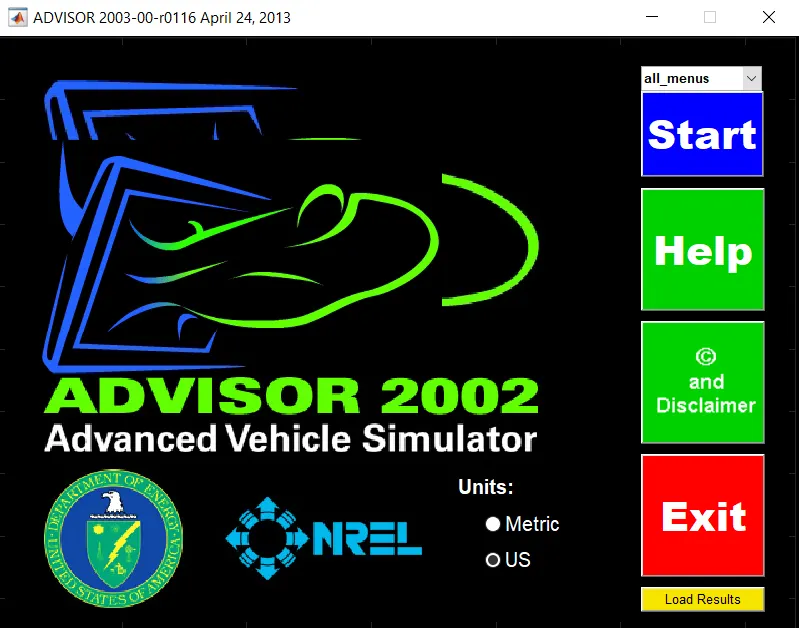
-select the appropriate unit here we are using metric as our measuring system then click on the start button.
-after clicking on the start button the vehicle input window will open so we can give inputs for modeling
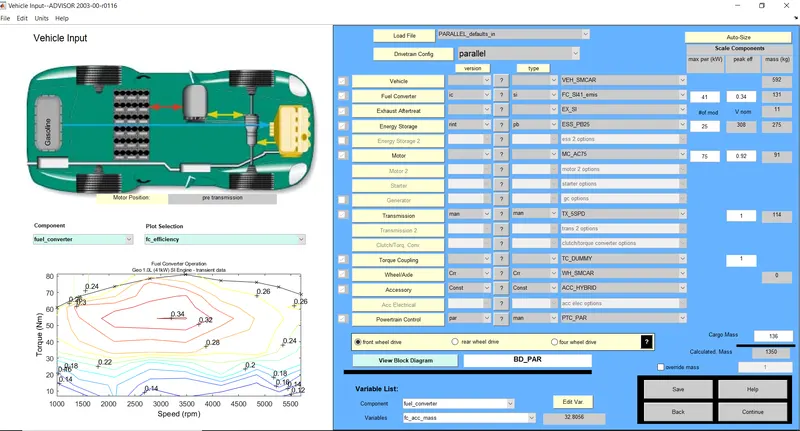
here we can make changes in our energy sources, weights, drive cycles motor, and many other parameters after changing we need to click on the continue button then the simulation parameters window will open.
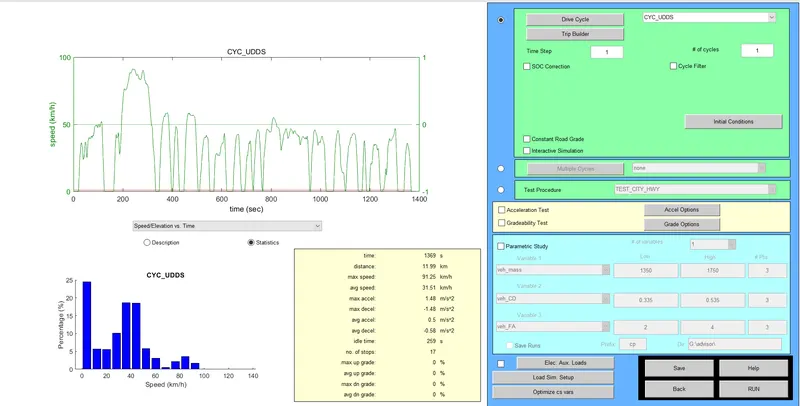
-in this window, we can change the simulation parameters of the vehicle such as drive cycle, time step, soc correction, acceleration test, and gradeability test, and many others parameters. after hitting the run button the result window will appear.
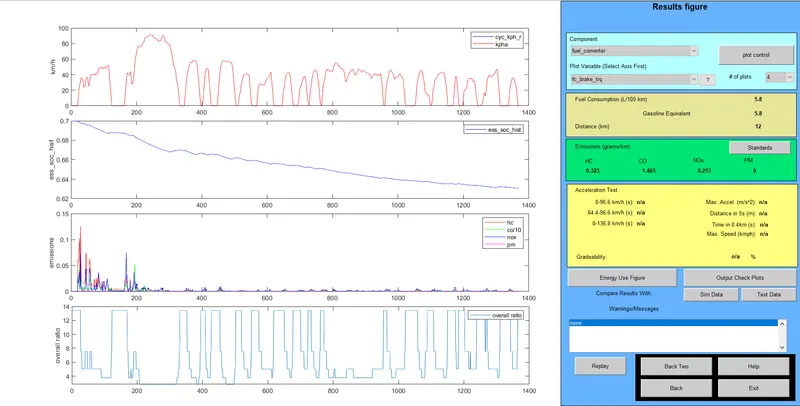
-here we can see various graphs and results of parameters that we simulate such as acceleration test,gradeability test, state of charge, emission, and many others.
that's how we are going to simulate our model for given conditions.
***********************************************************************************
Q.1) For the EV_defaults_in file if cargo mass is 500 kg with all other default conditions, can the vehicle travel for 45 km with FTP drive cycle? Conclude your observations.
Ans:-
-here we are selecting our model as EV_defaults_in file and changing cargo mass to 500 kg. and other parameters as by default and clicking on continue button we get our next simulation parameters window where we going to change our drive cycle type and no of the drive cycle.
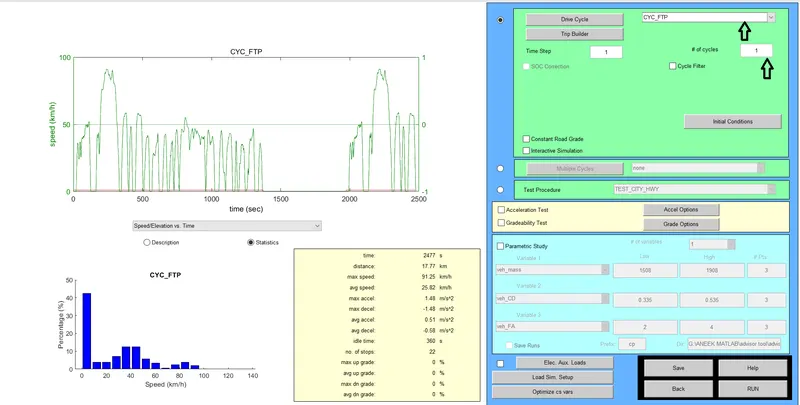
for cycle no 1:-
a drive cycle is CYC_FTP and initially choosing no of drive cycle as 1 and clicking on the run button for results.
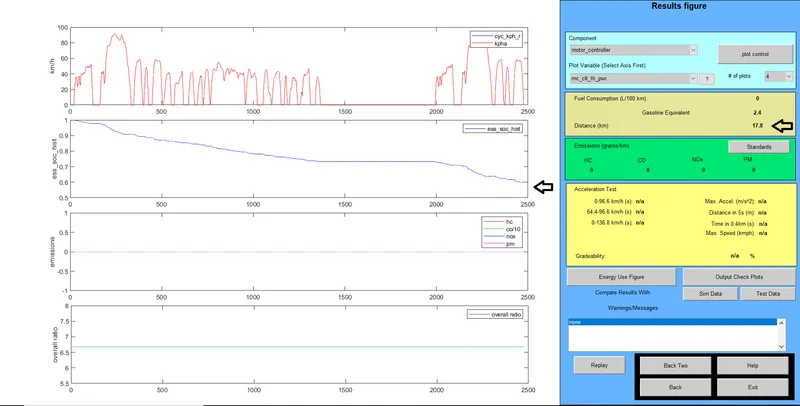
for the first cycle, the distance traveled by the vehicle is 17.8 km and the battery is still charged.
for 2nd cycle:-
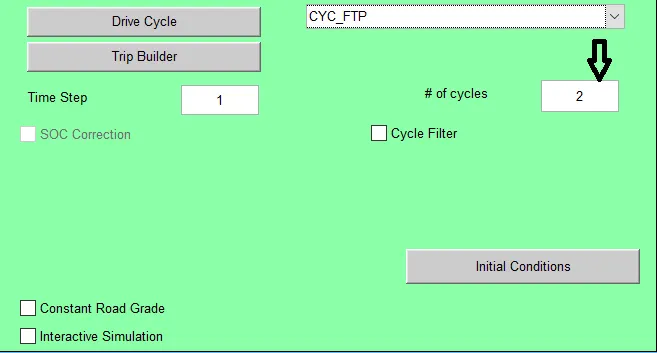
and click on the continue button for results.
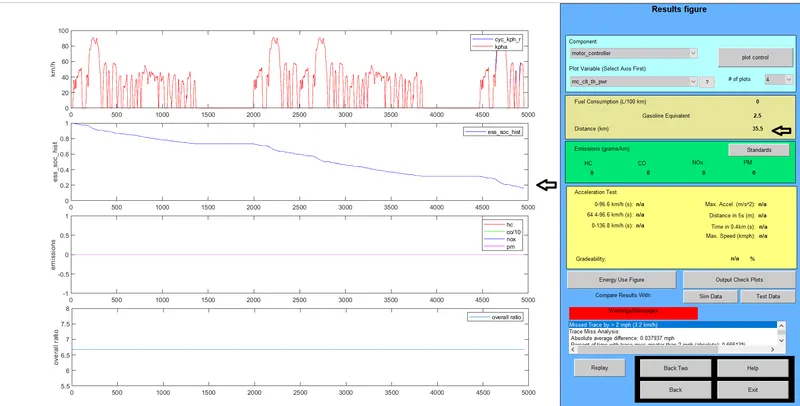
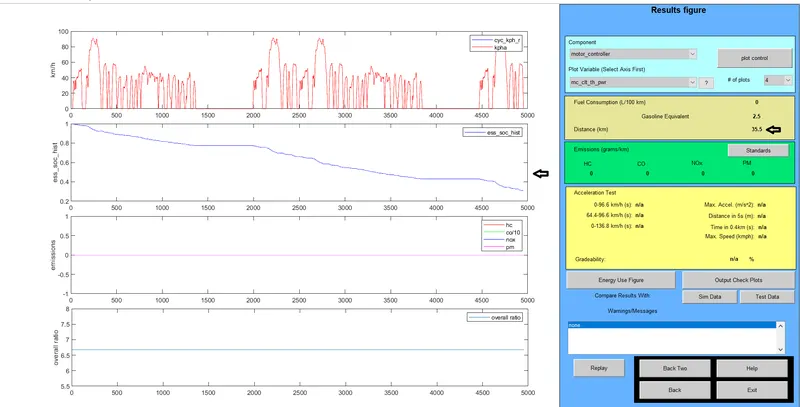
-distance traveled by vehicle in the 2nd cycle is 35.5 km and the battery is still charged.
3rd cycle:-
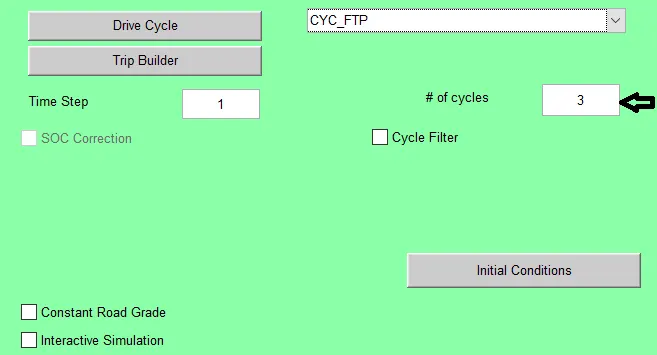
by clicking on the run button we got results for 3rd cycle
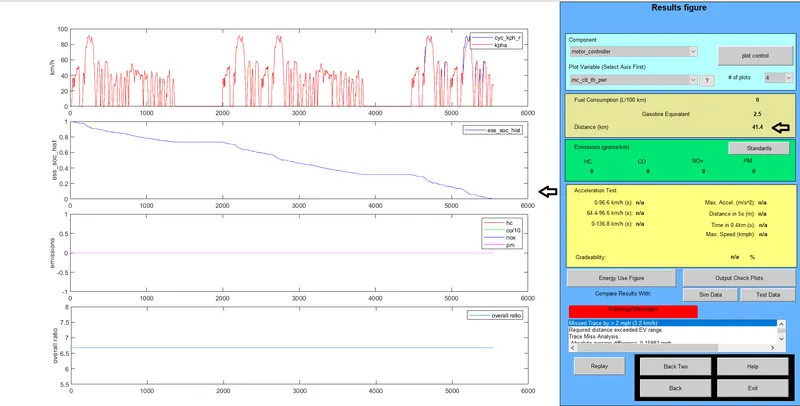
distance traveled by vehicle is 41.4 km in 3rd cycle and the battery is drained.
RESULTS:-
| sr no | no of cycles | distance traveled | state of charge(battery) |
| 1 | 1 | 17.8 | charged |
| 2 | 2 | 35.5 | charged |
| 3 | 3 | 41.4 | drained |
- vehicle failed to travel 45k with ftp_drive_cycle at the end of the 3rd cycle the maximum distance traveled by the vehicle was 41.4 km and the battery was drained.
********************************************************************************************
2. In the above case, try changing the battery capacity and repeat the simulation.
Ans:-
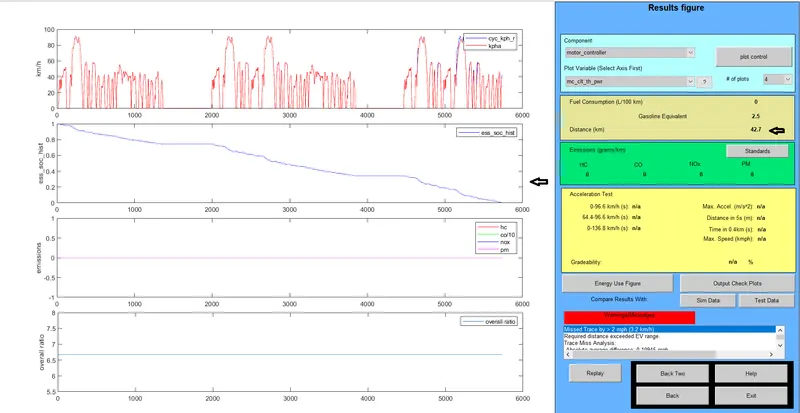
-in this simulation, we are going to keep all parameters the same as condition one just going to change battery mods,
1st trial:-
a)
battery mod=26
cargo weight=500
as we increase battery mods total weight is also going to change.
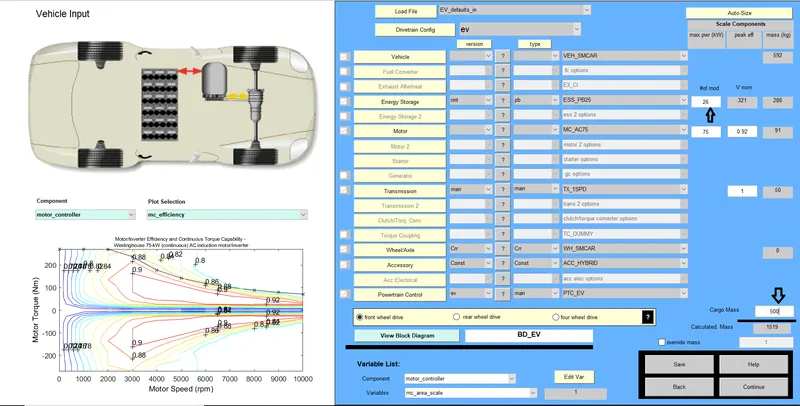
then clicking on the continue button we got our simulation parameters window where we going to select no of drive cycle as 1.
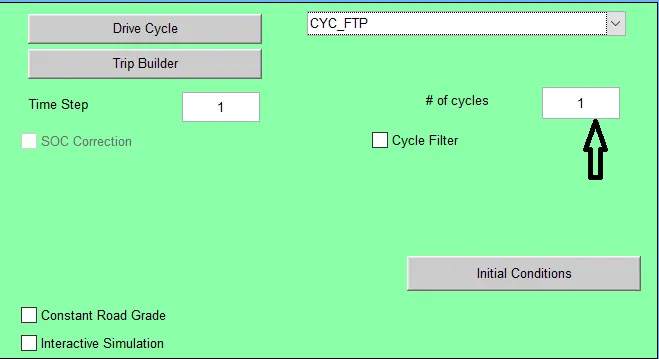
and by clicking on the run button we got our results.
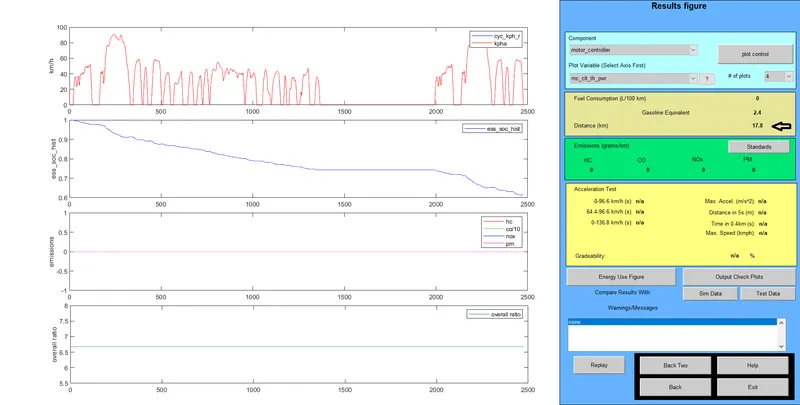
b) for the same battery mods and cargo weight then clicking on the continue button we got our simulation parameters window where we going to select no of drive cycle as 2
battery mod=26
cargo mass=500
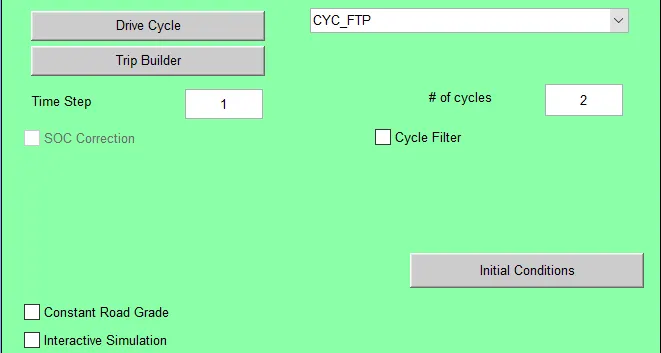
and by clicking on the run button we got our results.
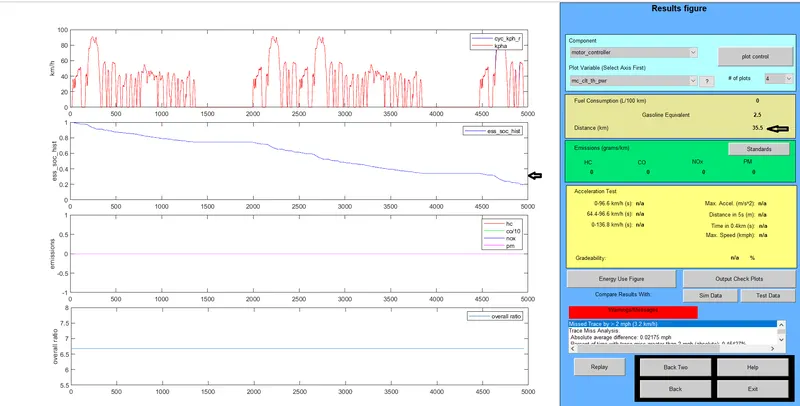
c) for same battery mod and cargo weight then clicking on the continue button we got our simulation parameters window where we going to select no of drive cycle as 3
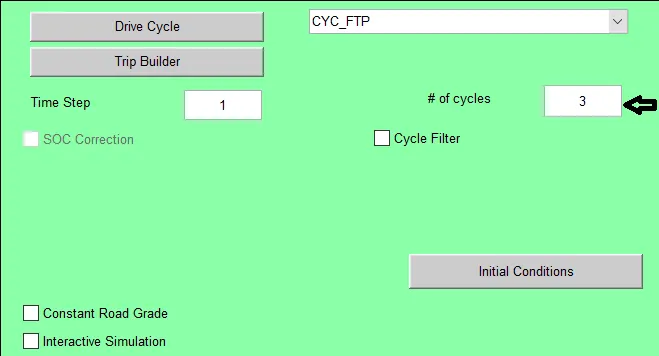
and by clicking on the run button we got our results.
2nd trial:-
a)
battery mod=28
cargo weight=500
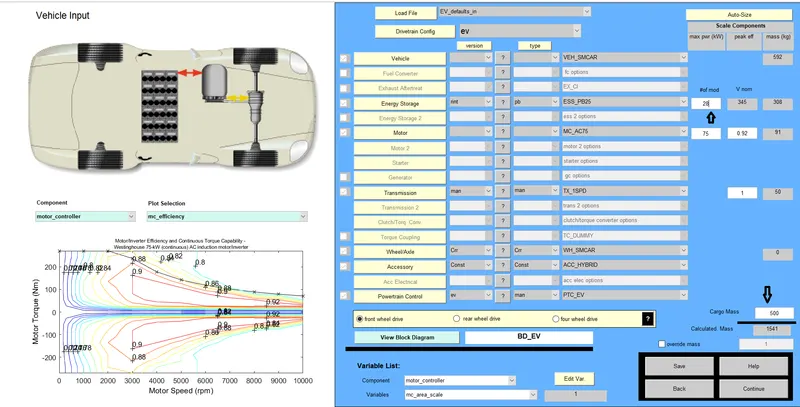
then clicking on the continue button we got our simulation parameters window where we going to select no of drive cycle as 1.
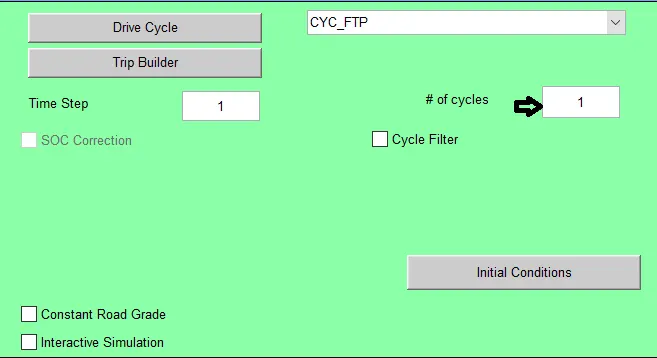
and by clicking on the run button we got our results.
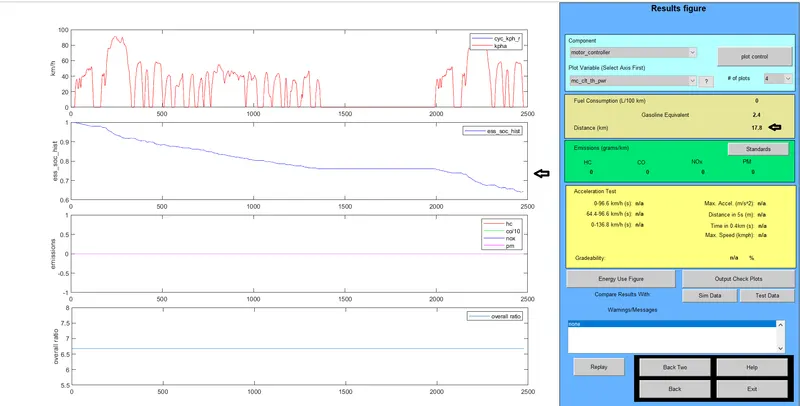
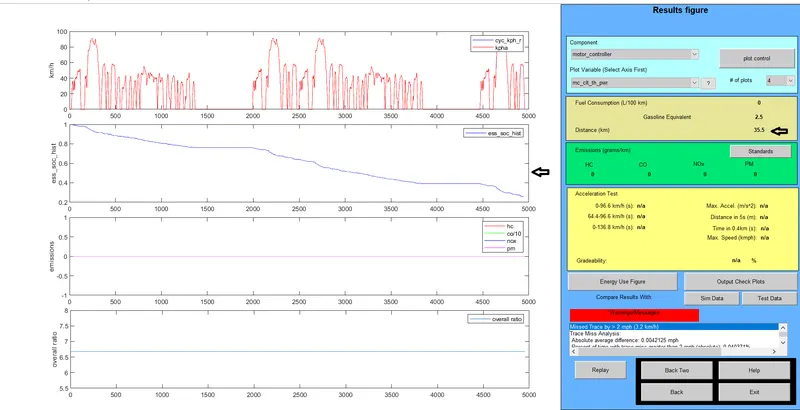
b) for the same battery mods and cargo weight then clicking on the continue button we got our simulation parameters window where we going to select no of drive cycle as 2
battery mod=28
cargo mass=500
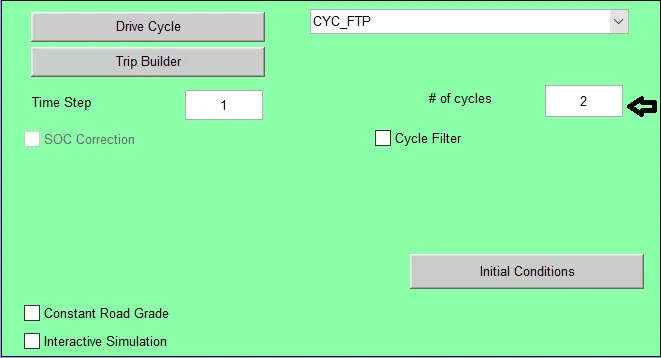
and by clicking on the run button we got our results.
c) for same battery mods and cargo weight then clicking on the continue button we got our simulation parameters window where we going to select no of drive cycle as 3
battery mod=28
cargo mass=500
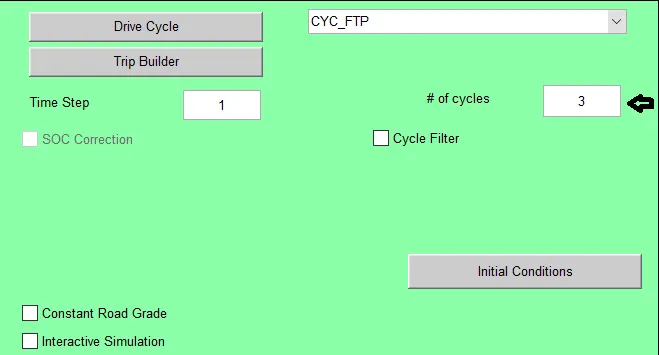
and by clicking on the run button we got our results.
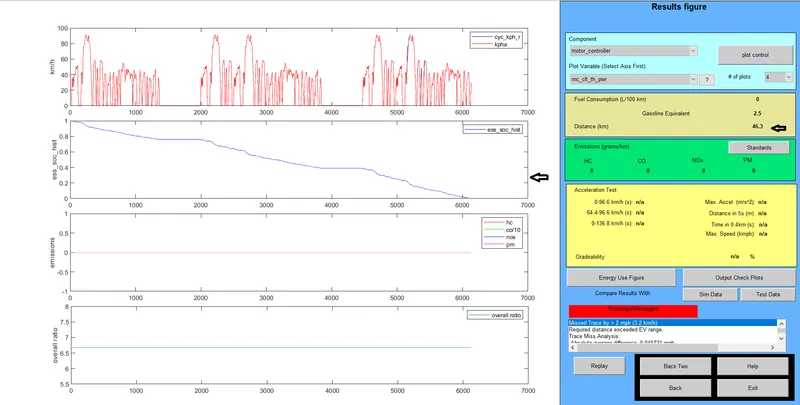
3rd trial:-
a)
battery mod=30
cargo weight=500
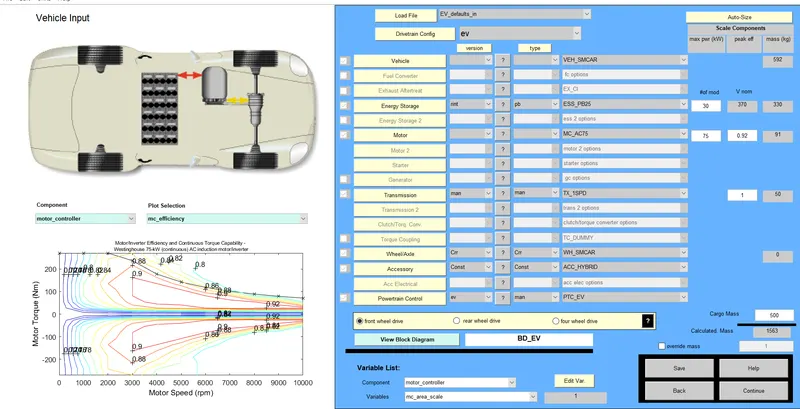
then clicking on the continue button we got our simulation parameters window where we going to select no of drive cycle as 1.
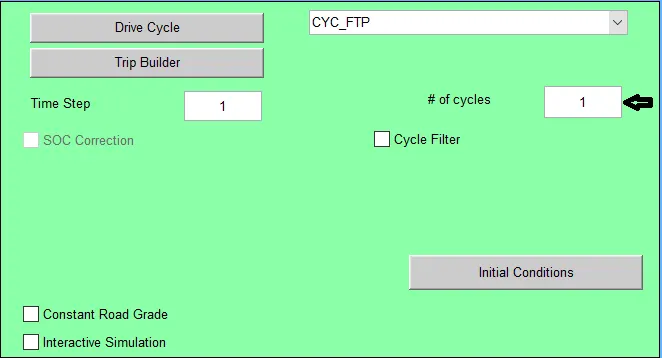
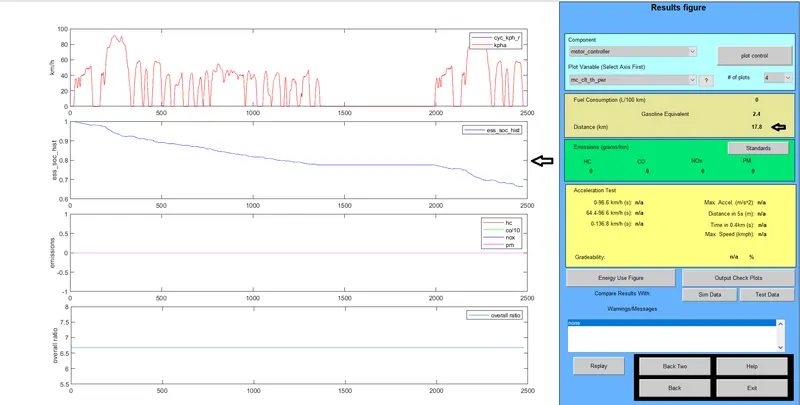
and by clicking on the run button we got our results.
b) for the same battery mods and cargo weight then clicking on the continue button we got our simulation parameters window where we going to select no of drive cycle as 2
battery mod=30
cargo mass=500
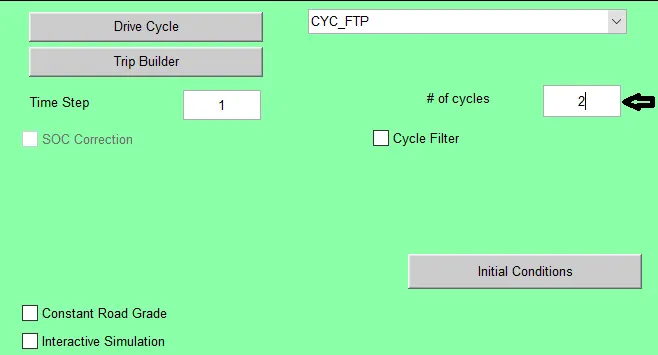
and by clicking on the run button we got our results.
c) for same battery mods and cargo weight then clicking on the continue button we got our simulation parameters window where we going to select no of drive cycle as 3
battery mod=30
cargo mass=500
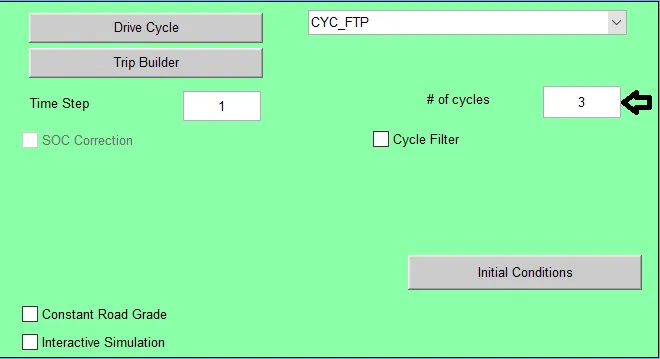
and by clicking on the run button we got our results.
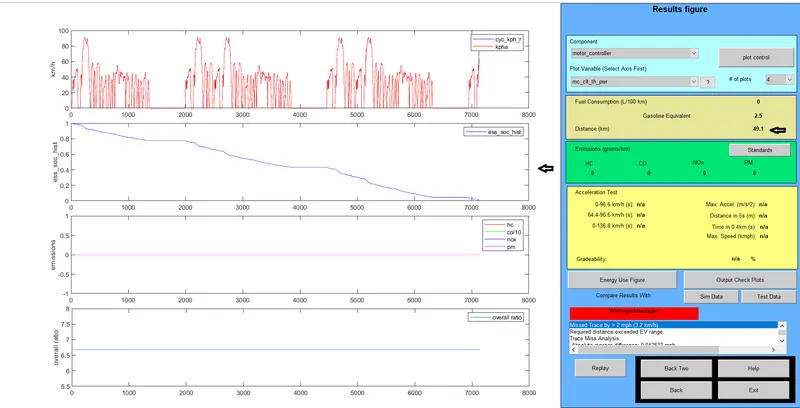
-comparing the results for different battery mods for no of cycle
1) battery mods=26
| no of cycles | voltage(v) | distance traveled (km) | battery weight |
| 1 | 321 | 17.8 | 286 |
| 2 | 321 | 35.5 | 286 |
| 3 | 321 | 42.7 | 286 |
2) battery mods=28
| no of cycles | voltage(v) | distance traveled (km) | battery weight |
| 1 | 345 | 17.8 | 308 |
| 2 | 345 | 35.5 | 308 |
| 3 | 345 | 46.3 | 308 |
2) battery mods=30
| no of cycles | voltage(v) | distance traveled (km) | battery weight |
| 1 | 370 | 17.8 | 330 |
| 2 | 370 | 35.5 | 330 |
| 3 | 370 | 49.1 | 330 |
i)Battery modules 28 with 3 drive cycles we cover 46.3 km
ii)Battery modules 30 with 3 drive cycles we cover 49.1 km
conclusion:-
-while changing battery modules till the 2 drive cycle the distance traveled is the same.
-changing battery modules till 3 drive cycle we get a change in distance traveled.
-to cover 45 km we need 28 modules 345-volt battery and 30 modules 370-volt battery is needed.
*******************************************************************************************************************************************************
Q 3) Perform gradeability test with PRIUS_Jpn_defaults_in file Compare your results in table and conclude.
Ans:-
we choose over the model as PRIUS_Jpn_defaults_in and keeping all the parameters as it is.
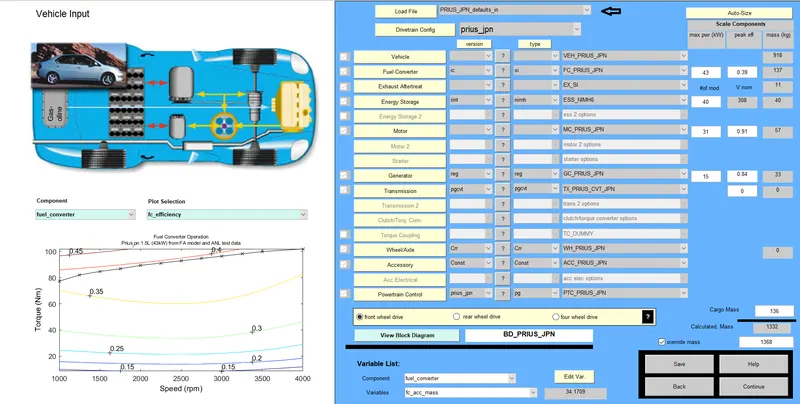
and by clicking on the continue button we get our parameter simulator window and then clicking on gradeability test we can adjust speed, duration, and many other parameters.
1st case:- (for 10 sec)
1st trial:-
speed=25mph
duration=10sec
here we are keeping the duration 10 sec and changing the speed of a vehicle and checking gradeability by keeping all system enabled
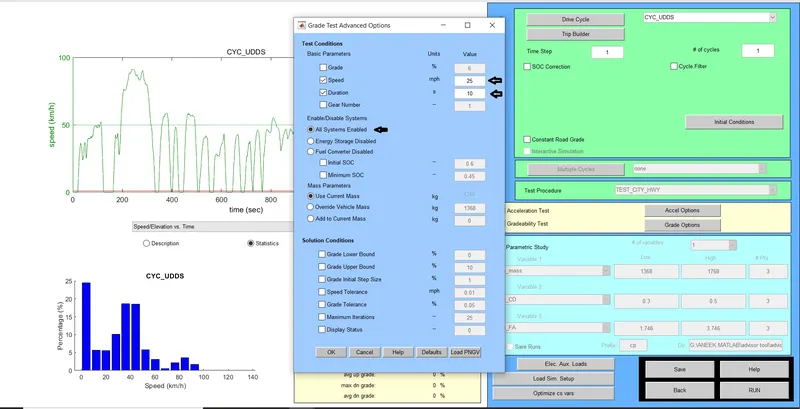
-and by clicking on the run button we got our results.
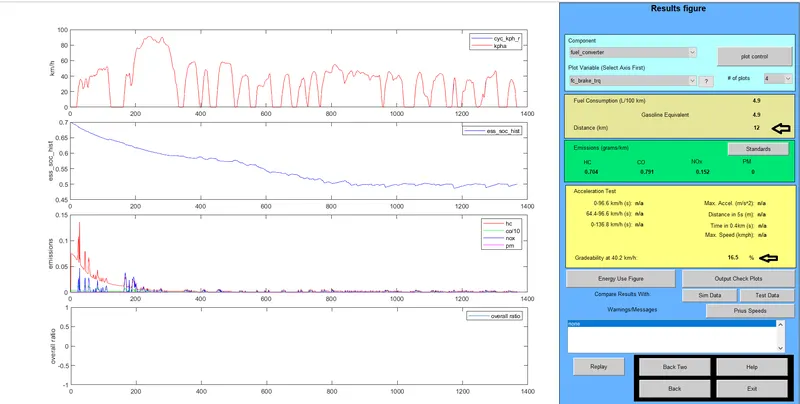
Gradeability is 16.5%
2nd trial
speed=35mph
duration=10sec
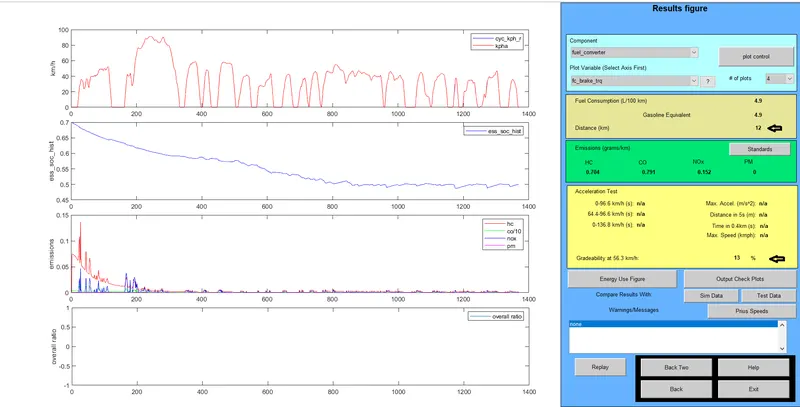
Gradeability is 13%
3rd trial
speed=45mph
duration=10sec
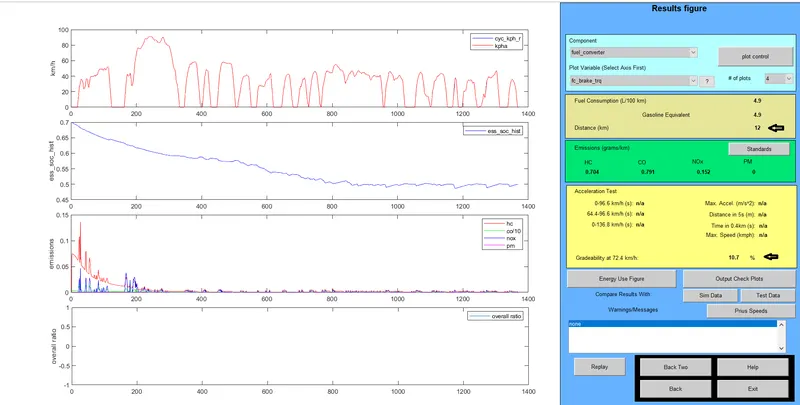
Gradeability is 10.7%
4th trial
speed=55mph
duration=10sec
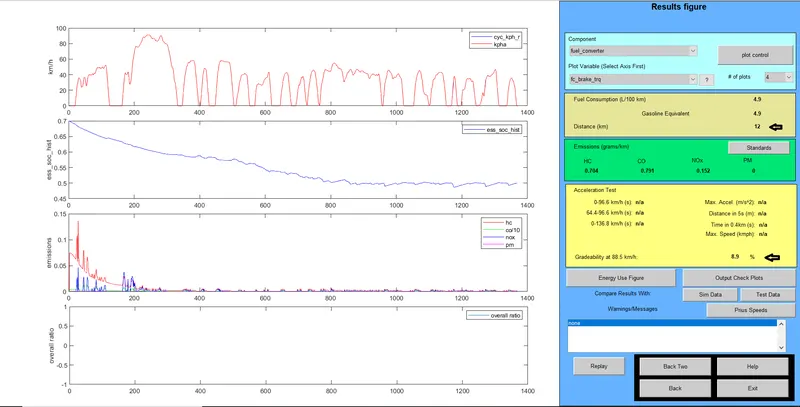
Gradeability is 8.9%
2nd case:- (for 20 sec)
1st trial:-
speed=20mph
duration=20sec
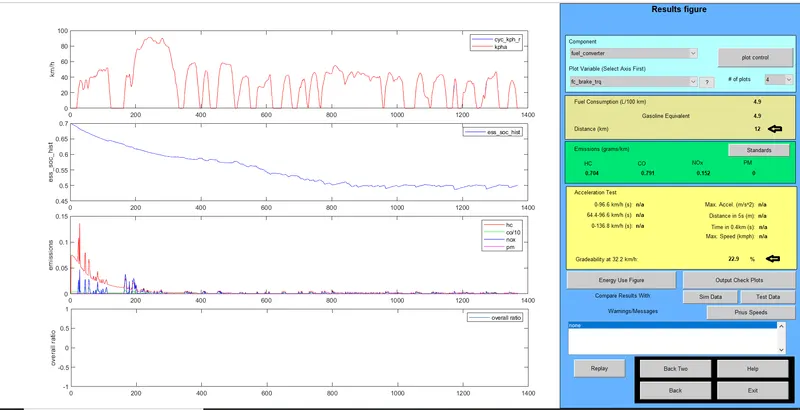
Gradeability is 22.9%
2nd trial:-
speed=30mph
duration=20sec
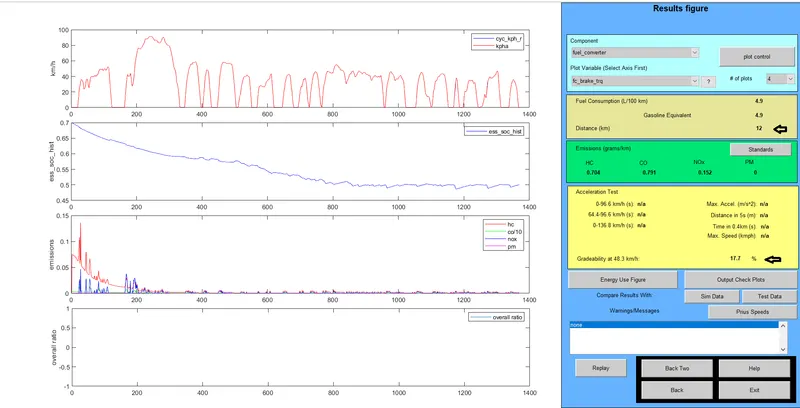
Gradeability is 17.7%
3rd trial:-
speed=40mph
duration=20sec
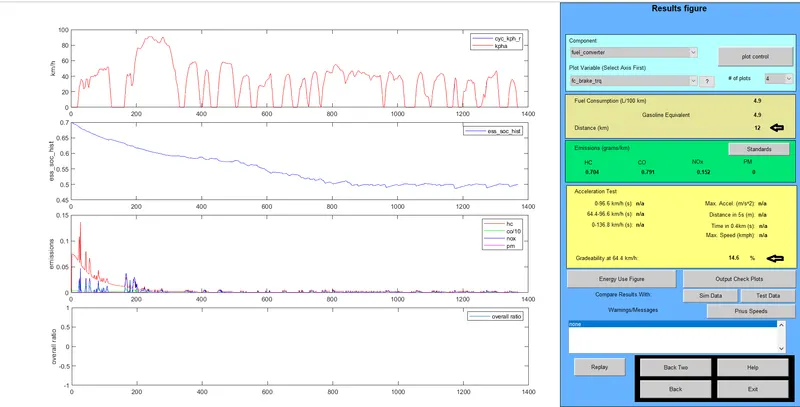
Gradeability is 14.6%
3rd trial:-
speed=50mph
duration=20sec
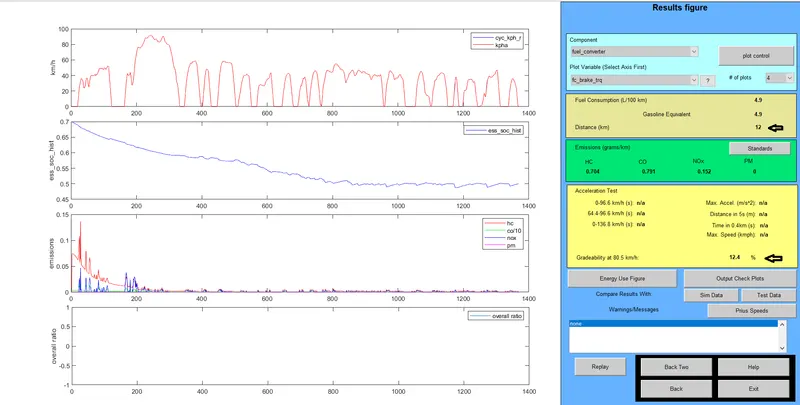
Gradeability is 12.4%
-comparing the results
a) for 10 sec
| sr no | speed (mph) | speed(kmph) | gradeability |
| 1 | 25 | 40.2 | 16.5 |
| 2 | 35 | 56.3 | 13 |
| 3 | 45 | 72.4 | 10.7 |
| 4 | 55 | 88.5 | 8.9 |
-comparing the results
a) for 20 sec
| sr no | speed (mph) | speed(kmph) | gradeability |
| 1 | 20 | 32.2 | 22.9 |
| 2 | 30 | 48.3 | 17.7 |
| 3 | 40 | 64.4 | 14.6 |
| 4 | 50 | 80.5 | 12.4 |
-from the above tables we can conclude that as vehicle speed increases the gradeability decreases
RESULTS:-
1) Vehicle failed to travel 45k with ftp_drive_cycle at the end of 3rd cycle the maximum distance traveled by vehicle was 41.4 km and the battery was drained
2) To cover 45 km we need 28 modules 345-volt battery and 30 modules 370-volt battery is needed
3) Gradeability at different speed and duration is calculated above
CONCLUSION:-
1) As no of cycles increases with the distance traveled the state of charge decreases
2) By adding battery mods with increase voltage we can achieve the defined distance withing the cycles before the battery gets drains
3)we can conclude that as vehicle speed increases the gradeability decreases.
(Note:-All the related screenshots attached below)