Week 3 Challenge
Aim and Introduction :
To design an I girder railway bridge and to apply Indian Railway (IRS) loads using staad pro and to perform a structural analysis of the bridge.
The railway loading based on Indian Railway standards are :
1) metro rail loading :
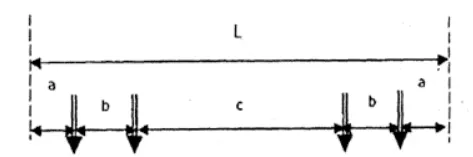
this diagram shows length of metro car, length a is 2150mm,length b is 2200mm, length c is 12400m, overall car length is 2100mm.
the max axle load for metro rail - 17tons
2) Broad gauge rail loading,
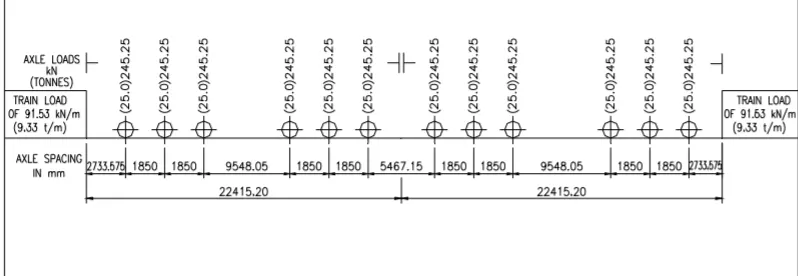
The above broad gauge loading shows the 25t axle load and 9.3 train load on both sides of the locomotives. (with reference from the bridge rule book)
3) Electric train loading:
In the electric train loading, all wheels have equal axle loading of 75.5kN and the train load of 27.8 kN per metre,(by reference to class video)
4) Guage A and Guage B loading:

The above one shows the Gauge A loading as per IRC bridge rules, for the train load of 2.83tonnes and axle load of 6.1t, 7.1t, 8.1t

The Guage B loading - axle load of 6.1 tonnes and train load of 2.83t
5) Footway loading :
The live load can be taken as uniformly distributed load, For the design of footbridges or footpaths on railway bridges the live load taken as 4.8 kPa (490 kg/m2)
Procedure:
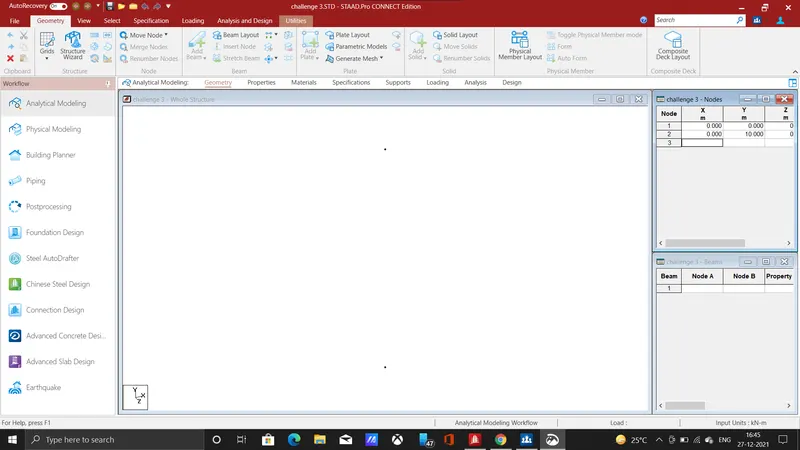
- First we need to enter the node coordinates,here i entered as (0,0,0) and (0,10,0) for the pier height, connect the two nodes by using add beam command thus pier is formed.
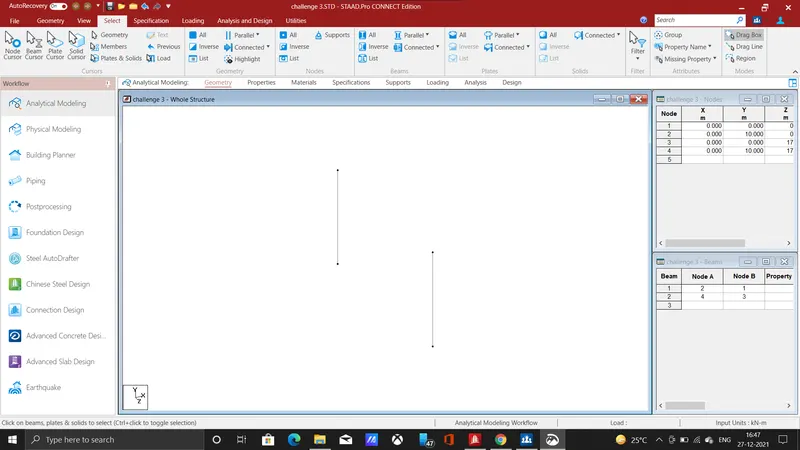
- After connecting the nodes, add an another pier by using translation repeat command at spacing of 17.55 m, this forms the width for carriageway.
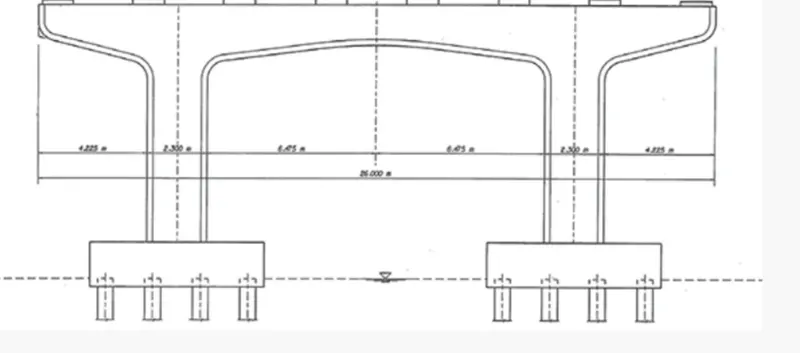
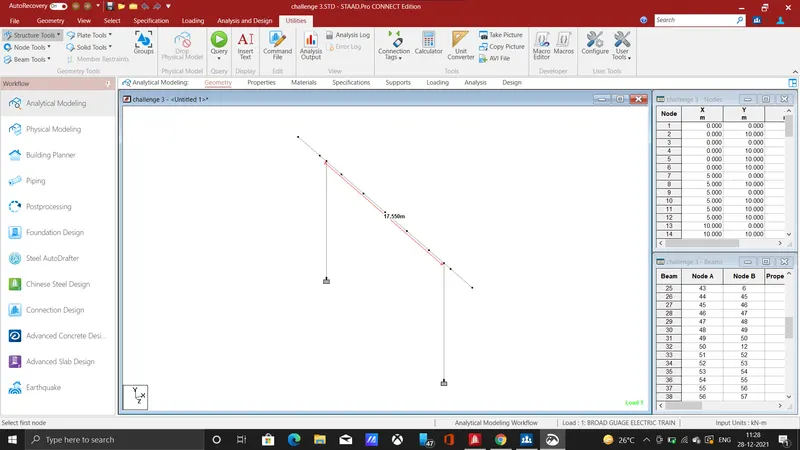
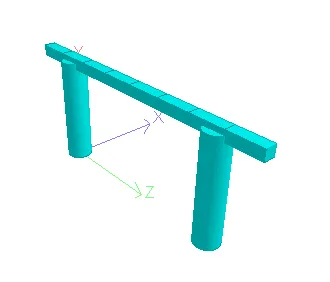
- the above image is a view of the bridge, which is compared with the given question, shows the width of the carriage way.
- connect the two piers by using add beam command, after that add two nodes on either side of the two piers and connect them ,it forms the entire width for deck slab.
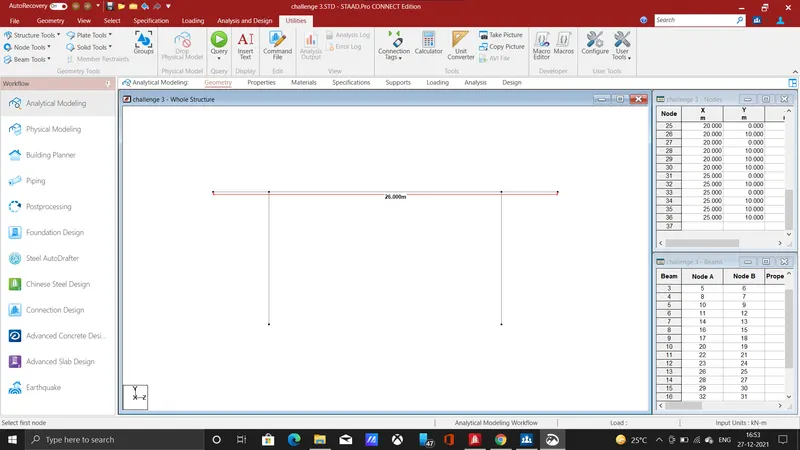
- This shows the width of the bridge deck along distance between the piers.
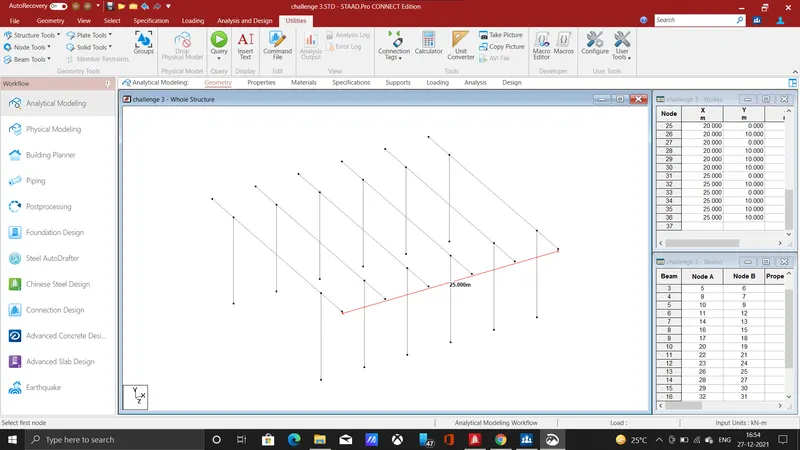
- use translational repeat command at a spacing of 5m for another 5 number of steps, thus forms the bridge span of 25m.
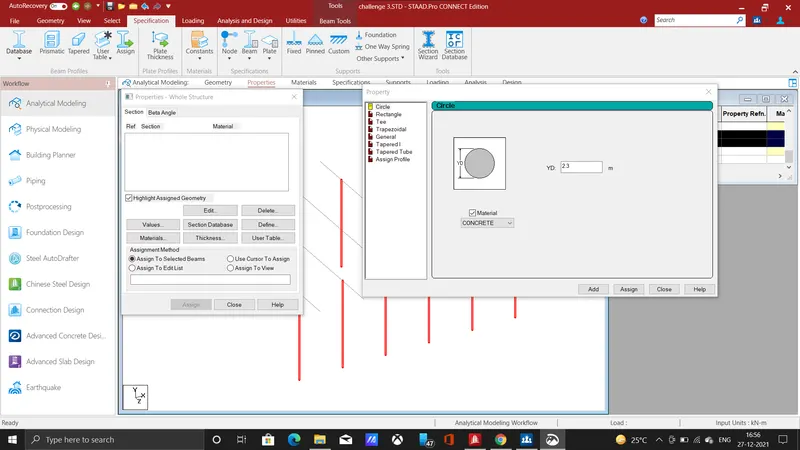
- Then specify the dimension for the bridge , assign a diameter of 2.3 metre for the pier with a reference from question,select all the piers and assign the dimension.
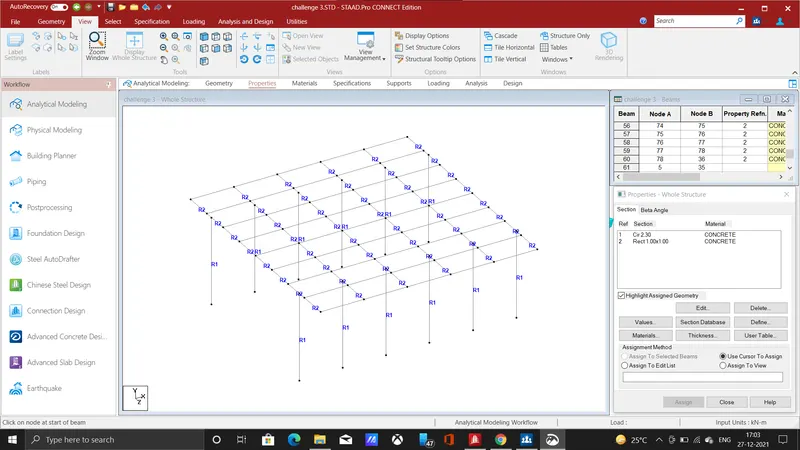
- add the cross beam to connect the piers, and also specify the dimension of 1m for both depth and length of the cross beam,
- add the nodes for the formation of main girder,
- form the I girder in between the piers connecting with cross girder to form a deck slab ,thus cross girder and main girder are added to the structure.
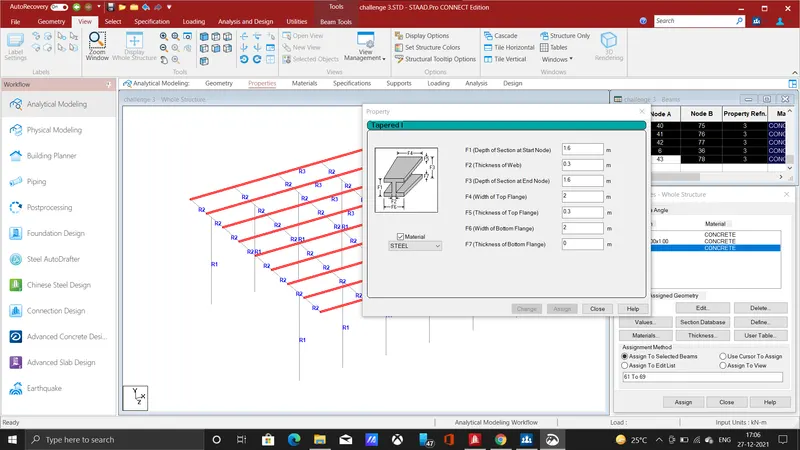
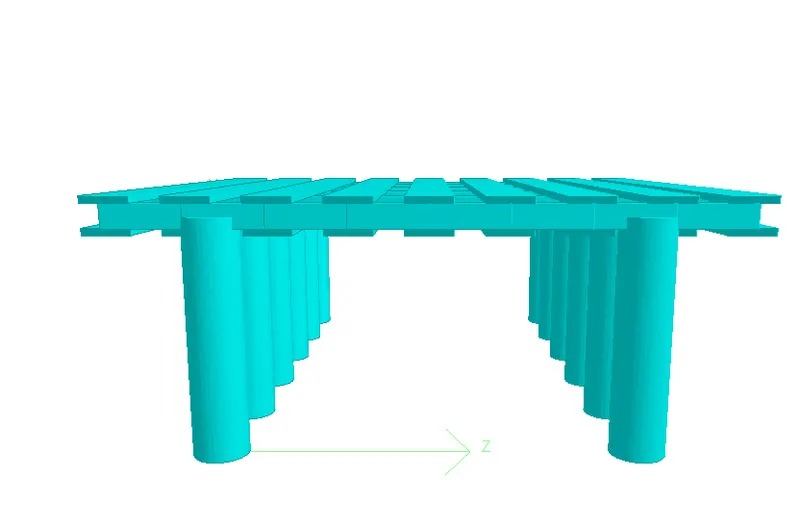
- The I girder dimension are assigned as specified above, and the above image shows 3 dimensional image of the bridge with cross beam and i girder.
- and assign fixed support to the piers.
- yet the loading is need to be added.
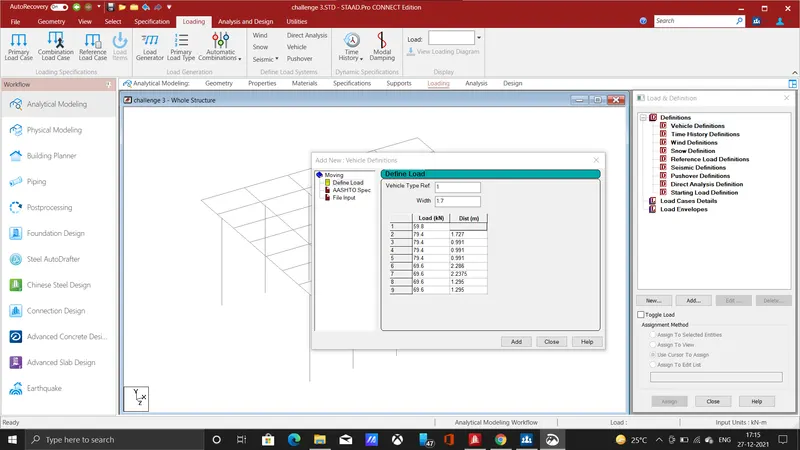
- The above entered loads are for broad gauge train ,hence the loads are defined as broad gauge for the designed bridge.
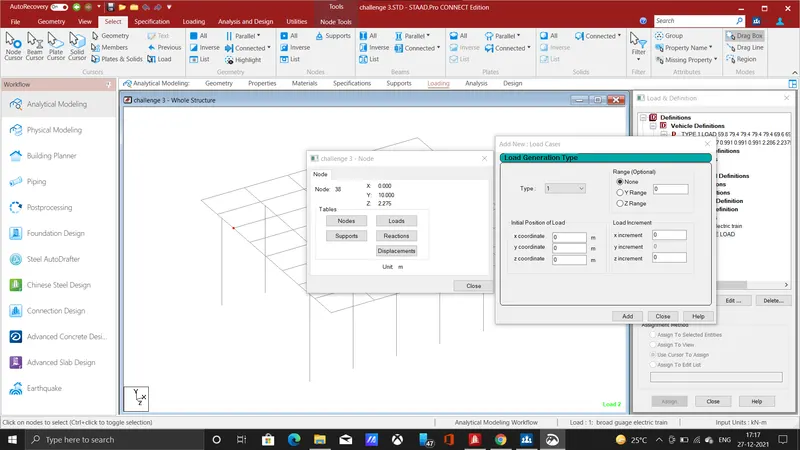
- The initial position of the load is placed at the coordinates (0,10,,2.275) at the increment range of one metre and click add to generate the load.
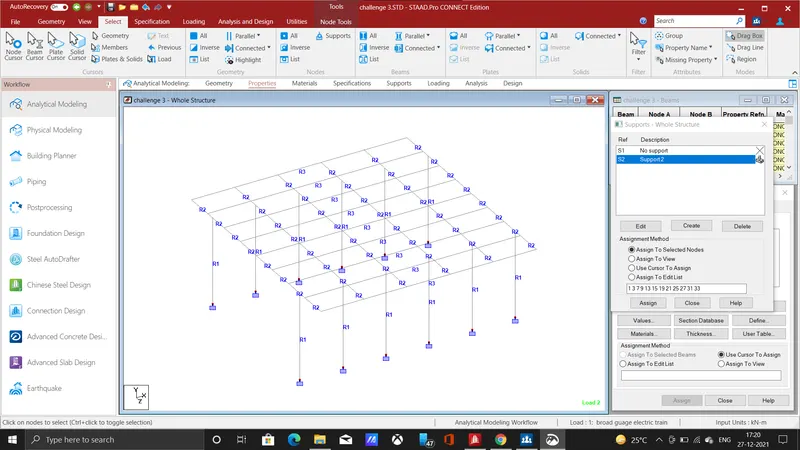
- fixed support is assigned to the piers.
Results :
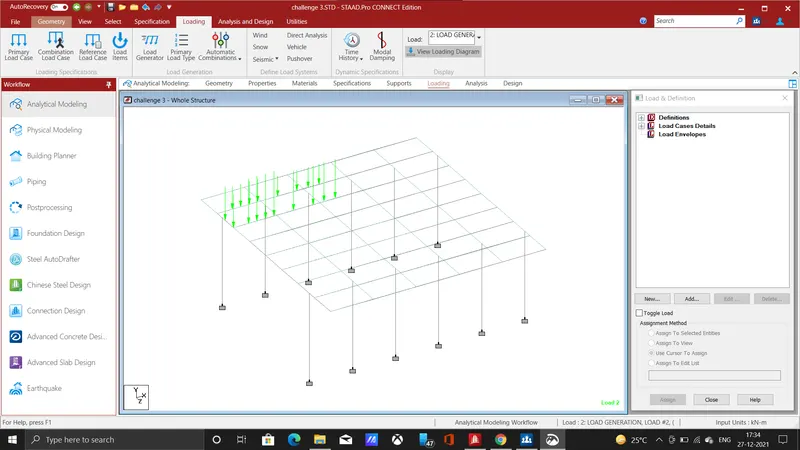
- The broad gauge loading is generated on the designed bream, the green arrow shows the loads are applied on the bridge.
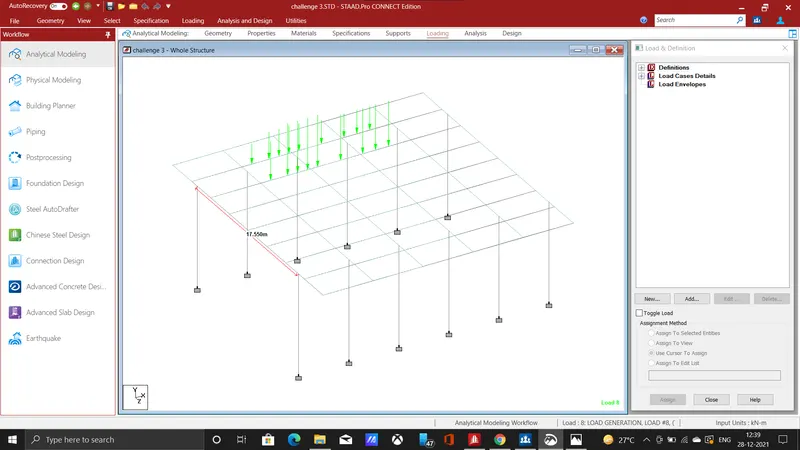
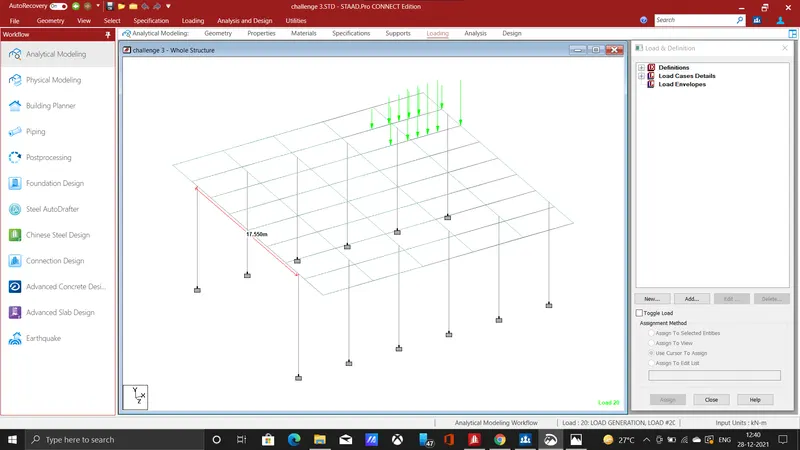
- The above two images shows the load generation at the middle and ends, it showcase the train enters the starting point of the bridge and travel towards the end of the bridge.
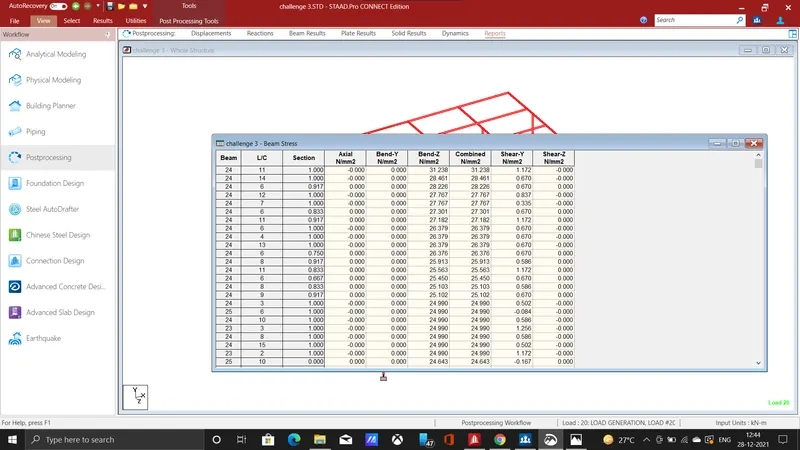
- The maximum and minimum bending stress of the beams are taken from the report,
- and the bending stress due to the application of load is shown below
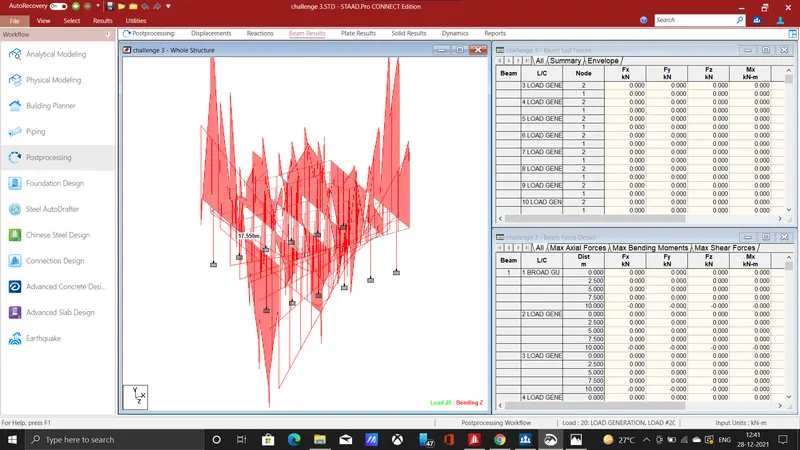
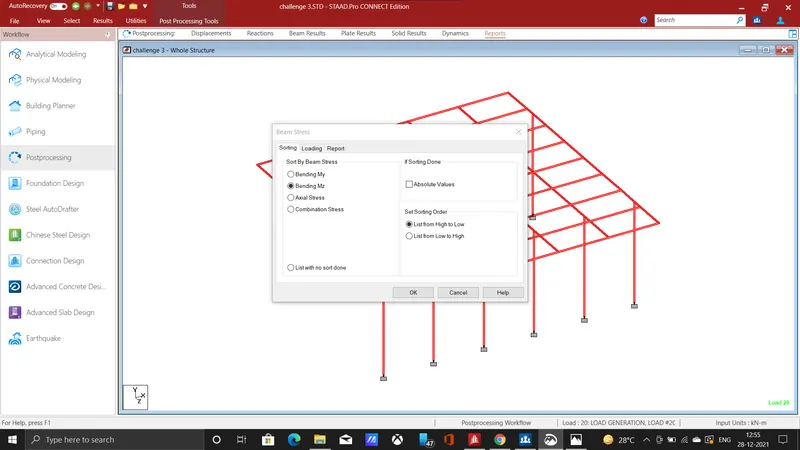
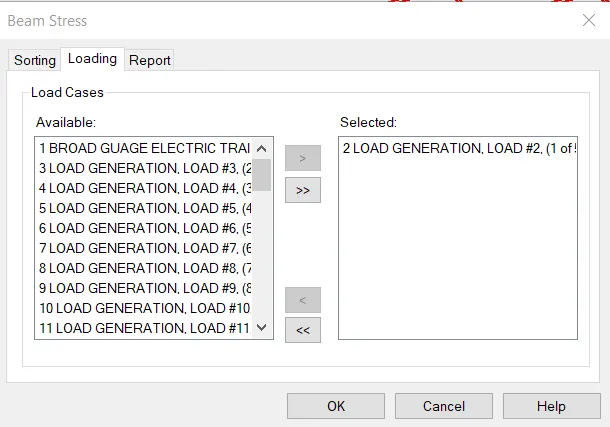
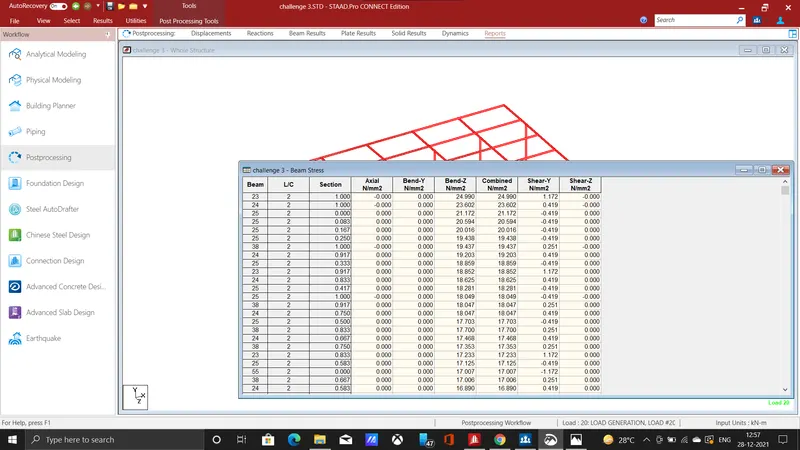
- The above image shows the bending at Z (mz) for the load case generation 2 from high to low.
- Hence the bridge is designed and IRS liveloads had applied and structural analysis is performed using staad pro.