Week 3 Challenge
AIM OF THE EXPERIMENT:-
To apply IRS railway loads on a given bridge section and model it in Staad Pro.
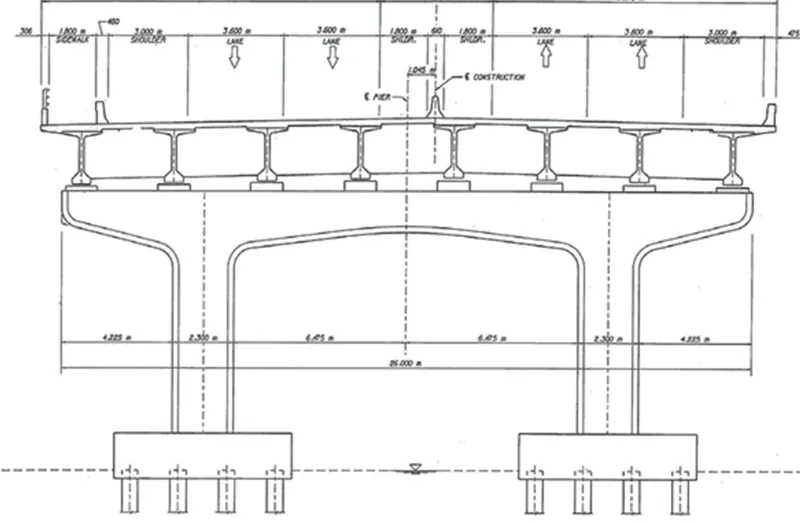
DATA GIVEN:-
Width of the bridge is 26m.
Span of the Bridge Deck=25m
Girder Type=I Section
No. of Girders=8 Nos.
THEORY:-
IRS- INDIAN RAILWAYS STANDARD
- IRS code were developed by Indian Railways for the purpose of Design and Construction of Railway related structures.
- Types of IRS Loads for Design of Bridge Includes:-
- Metro rail Loadings
- Broad gauge Loadings
- Electric Train
- Gauge A & Gauge B Loadings
PROCEDURES:-
Assumptions
- Deck slab thickness=0.3m or 300mm
- I-section girder with uniform thickness
- Pier cap of 2.5m X 2.5m
- Material is of Concrete
- 4 Nos. of Pier of 2.3m x 2.3m
Step 1.
- Model it in Staad Pro. V8i
- Along Z axis-carriageway width
- Along X axis-span of the bridge
- Girders were model as per the figure
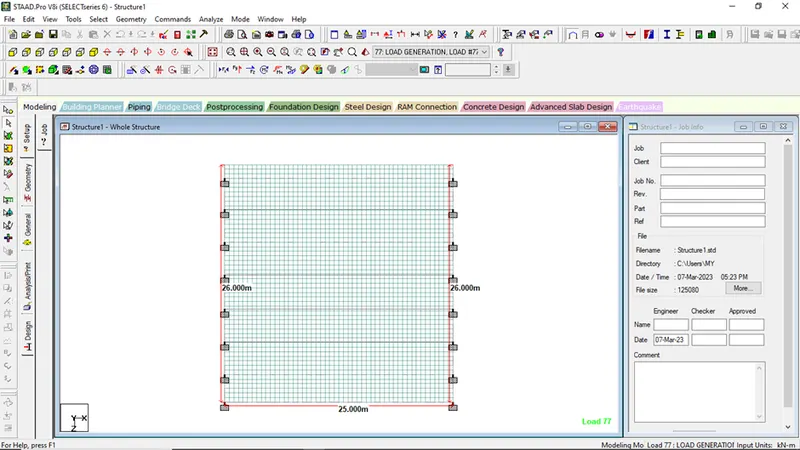
Fig:-Plan of the bridge
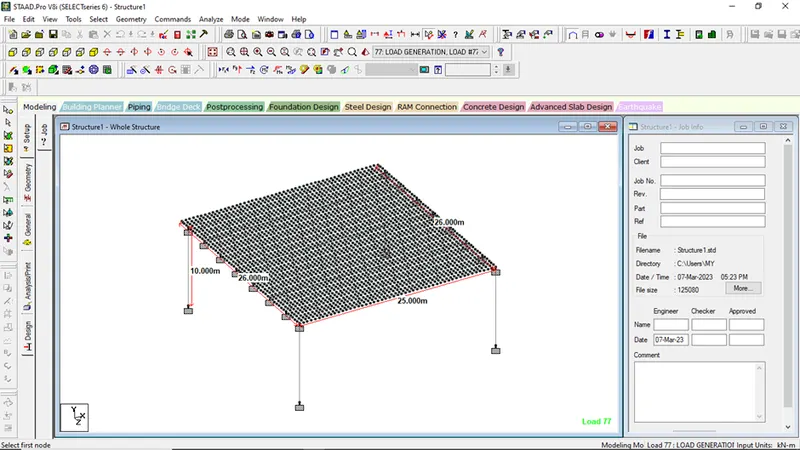
Fig:-Isometric view of the Bridge
Step 2:-
- Define the Property of the members
- For pier it is 2.3m x 23m
- For I-Girder
|
F1 |
1.6m |
|
F2 |
0.3m |
|
F3 |
1.6m |
|
F4 |
2m |
|
F5 |
0.3m |
|
F6 |
1.5m |
|
F7 |
0.3 |
- Plate thichness=0.3m
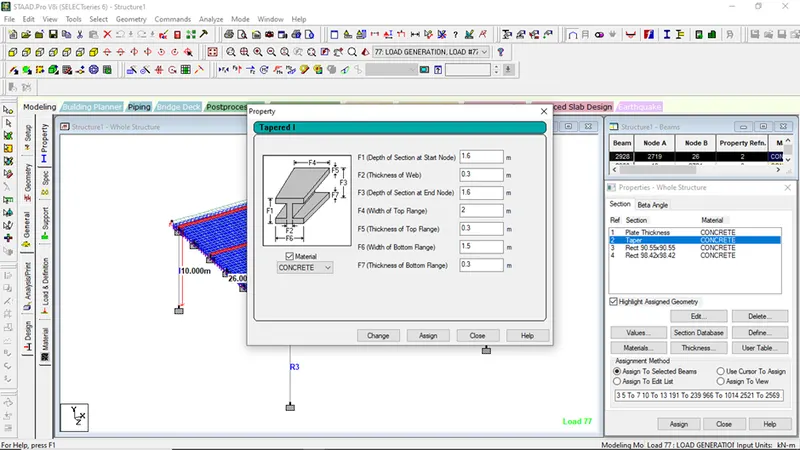
Fig:- Properties for I-Girder beam
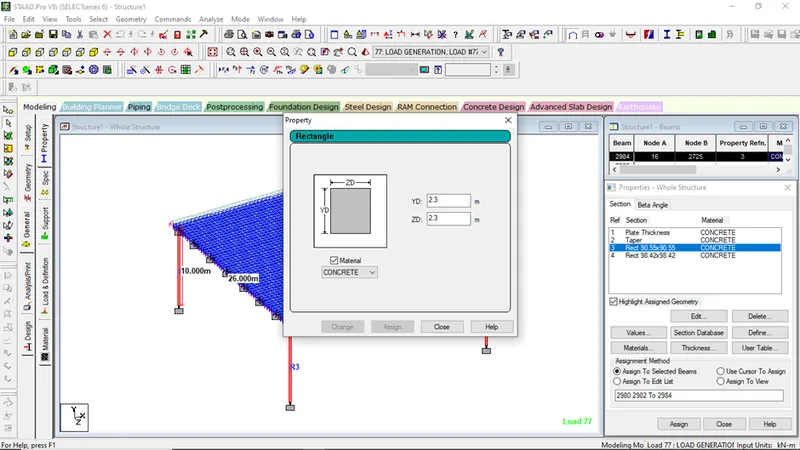
Fig:- Properties for Piers
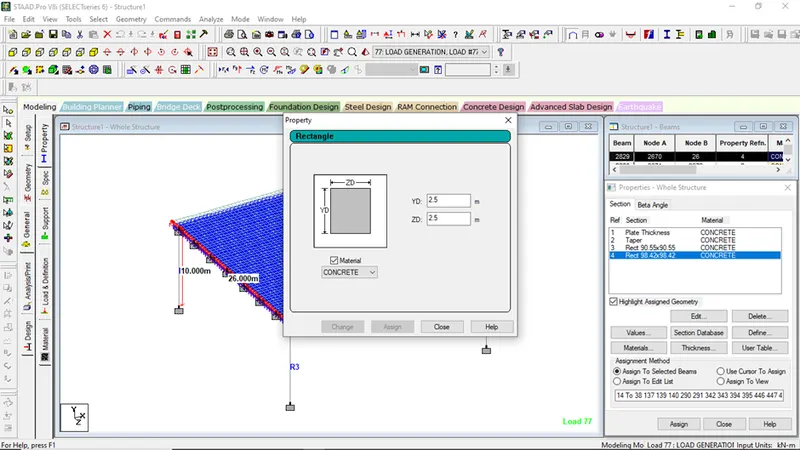
Fig:-Properties for Pier Cap
Step 3:-
- Adding supports beneath the girders and piers
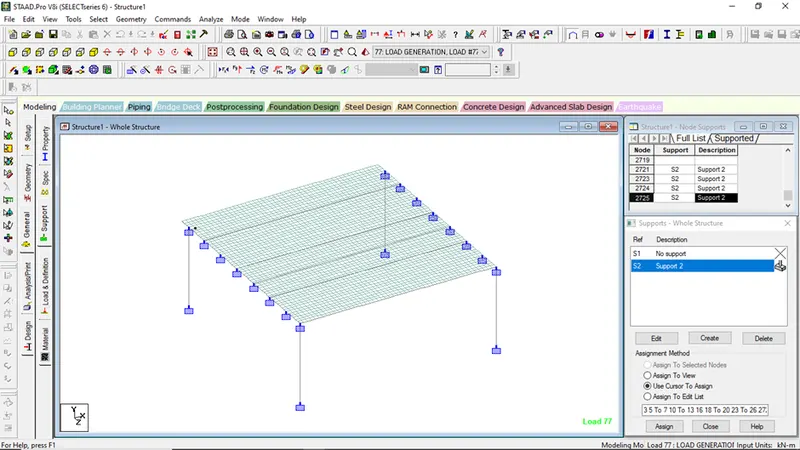
Step 4:-
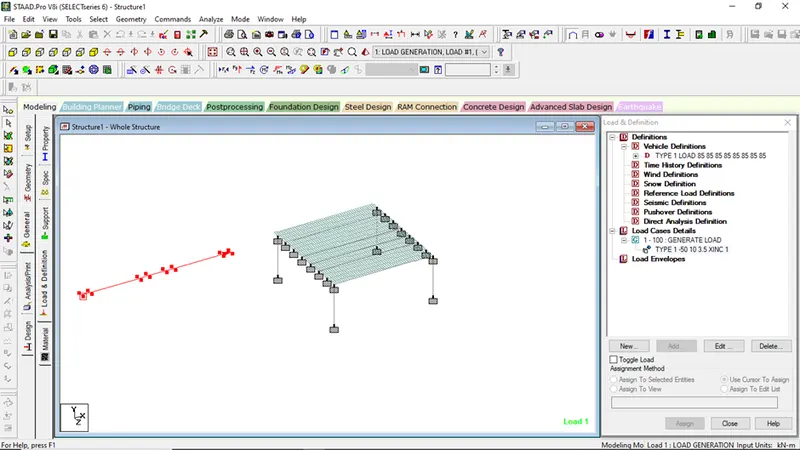
- Application of Loads on the model
- I have taken 2 units of metro car
- Applications of metro loading to the model
- As per IRS, axle loads for metro loadings = 170KN
- So, loading of each tyre=170/2=85KN
- Go to vehicle Definations
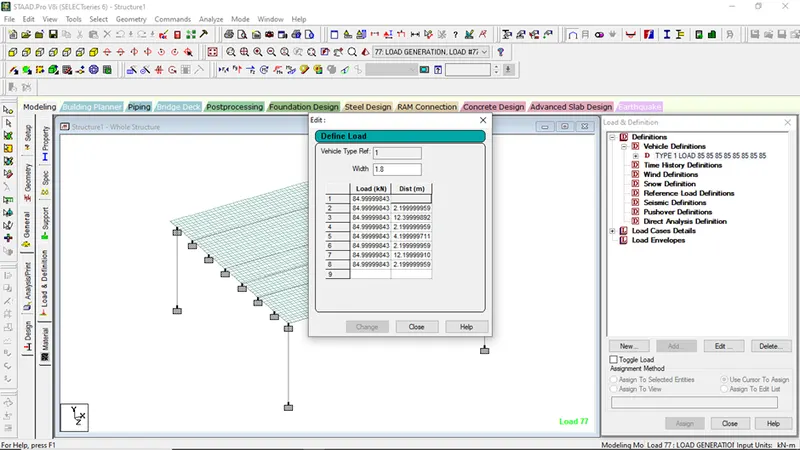
- Go to load cases details
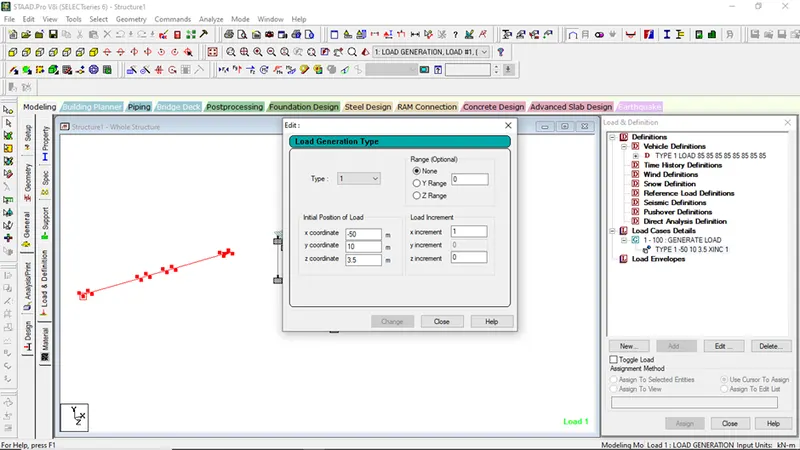
- Select Load generation
- of Loads to be generated=100 (say)
- Annotate the Initial Point of Load
- Define increment value
Step 5:-
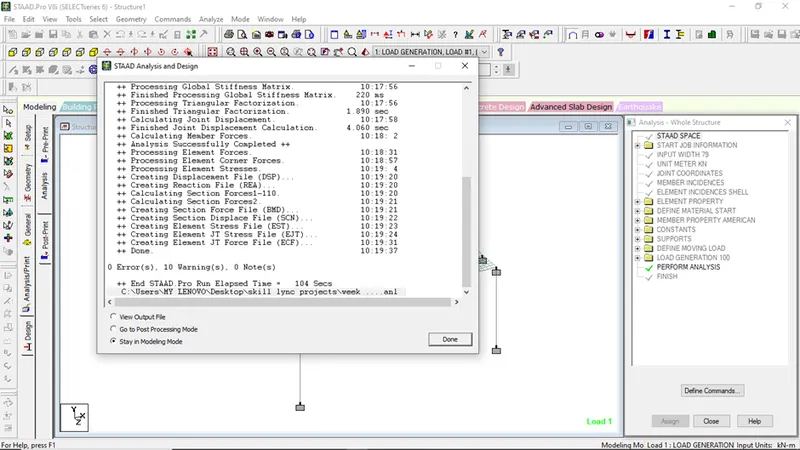
- Go to analysis and print
- Select No print option
- Go to Analyze menu bar
- Select run Analysis
Step 6:-
Go to Post-processsing to get the mximmum SF, BM
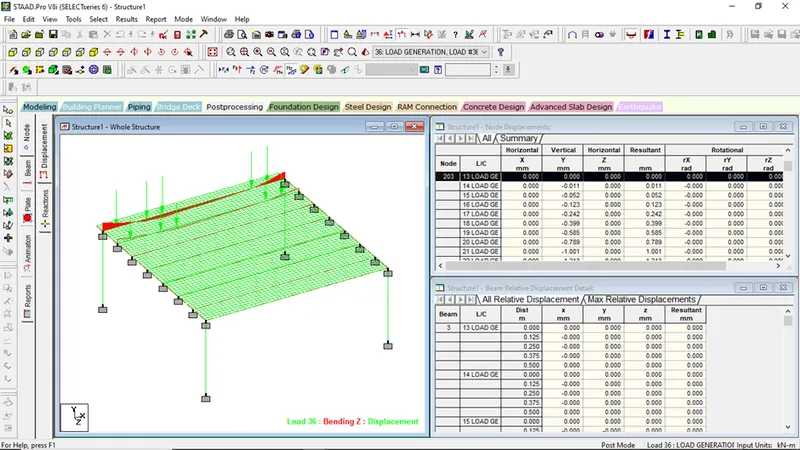
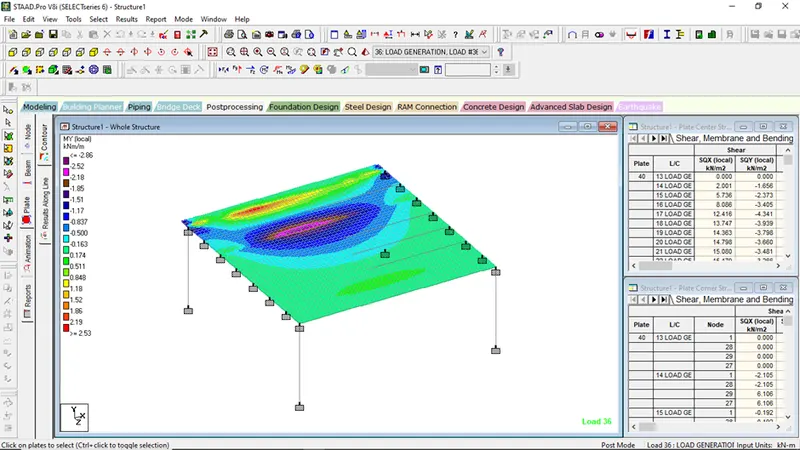
Plate stress contour
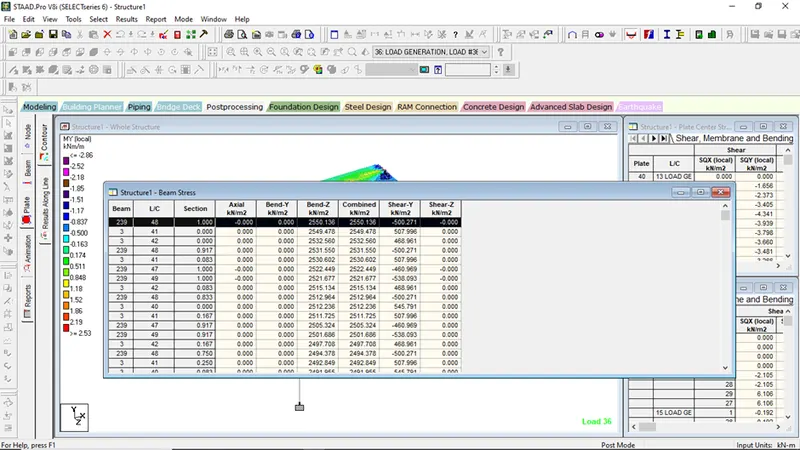
Report for max BM