Week 2 Session 7
Compare the different architectures of HEV. Discuss the pro's and con's
Answer
The HEV has been classified into different types based on architecture. They are listed below.
Series HEV:
The series HEV is powered by both motor and combustion engine in a series fashion. The generator both charges a battery and powers an electric motor that moves the vehicle.
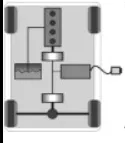
Pros of series HEV
Series hybrid EVs can be fit for the urban and suburban driving conditions.
Series hybrid EVs there is no direct connection between the engine and vehicle wheel alignment.
Cons of series HEV
Series hybrid EVs requires large and complicated battery unit and motor set to meet its power requirement.
Series hybrid EVs are not so efficient at transmission compartively than Parallel hybrid EVs.
Parallel HEV:
A parallel hybrid is propelled by both an internal combustion engine and an electric motor connected in a parallel fashion.
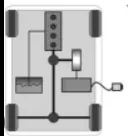
Pros of Parallel HEV
The Parallel HEV Overall efficiency is high over long distances.
Parallel HEV utilises both IC engine and electric motor
Cons of Parallel HEV
The Parallel HEV has a complex design and construction
In Parallel HEV the efficiency is low at low rotation speed.
Series-Parallel HEV
This type of vehicle is powered by the engine working alone, the electric motor by itself, or by both energy converters working together making the Series-Parallel HEV.
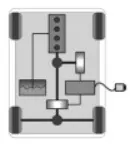
Pros of Series-Parallel HEV
The Series-Parallel HEV have higher efficiency compartively.
Series-Parallel HEV utlisies both series parallel connection that means the motor and engine are simultaneously works. This type is fit for every terrain and long distances and high speed vehicles
Cons of Series-Parallel HEV
Series-Parallel HEV have complex design
It need more complicated cooling systems and other mechanism to be complimented to.