Week 2 Railwheel and Track
OBJECTIVE:
To perform the structural analysis on railwheel and track setup and to compare the results for two different bearing loads.
METHODOLOGY:
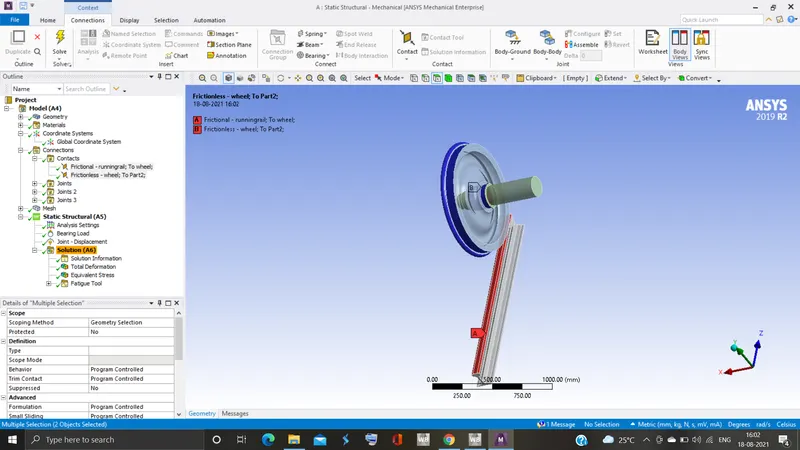
- First import the geometry to the model and define the frictional contact between the wheel and the track and frictionless contact between the wheel and the axle.
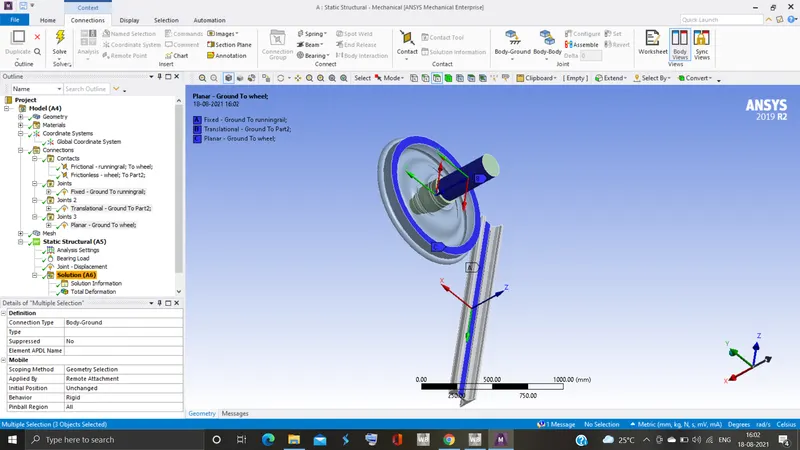
- apply the translational joint between the axle and the wheel .
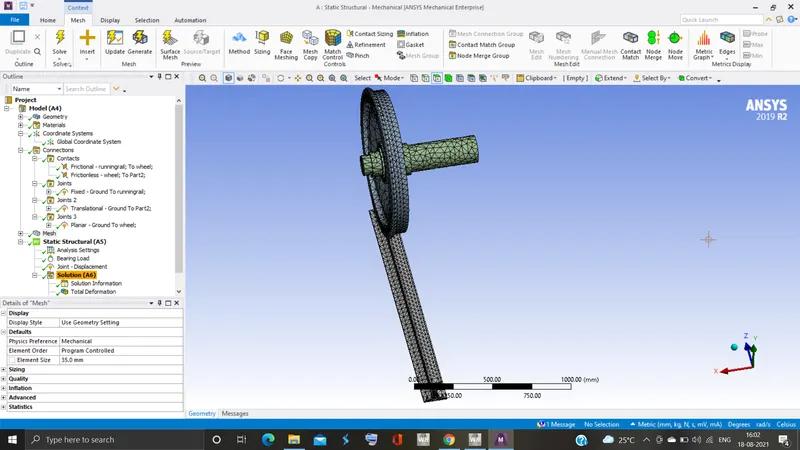
- apply the mesh and refine the mesh for wheel and contact region.
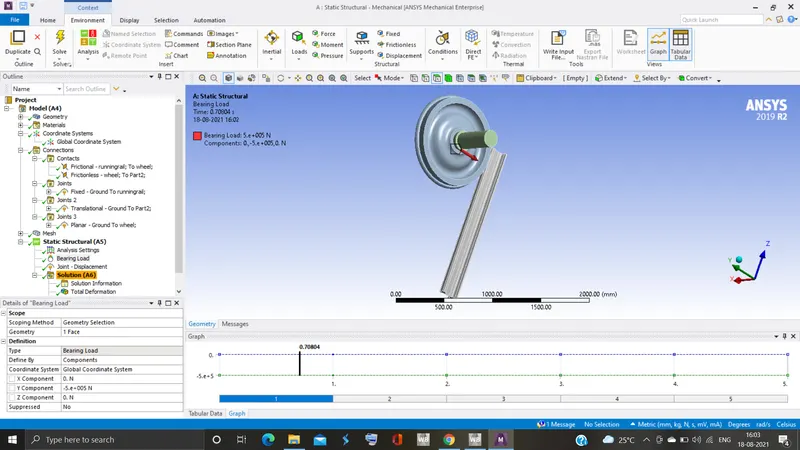
- perform the analysis in 5 steps and apply the bearing load of 100KN .
- apply the joint displacement of 500mm in the form of tabular data.
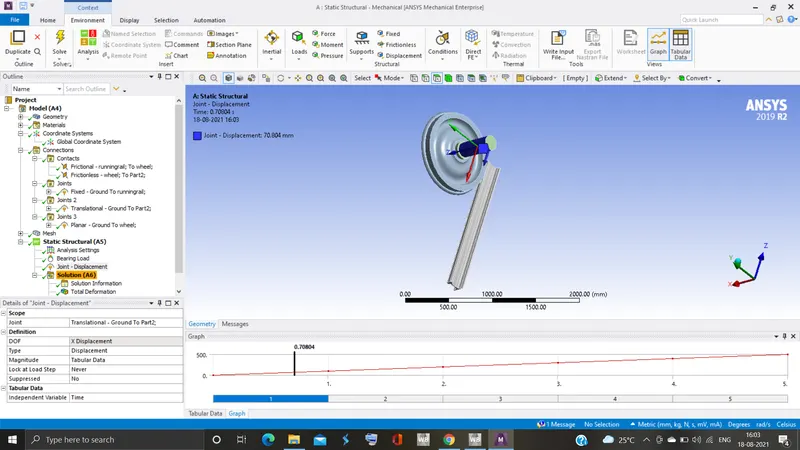
- run the simulation and compare the results for 500KN bearing load.
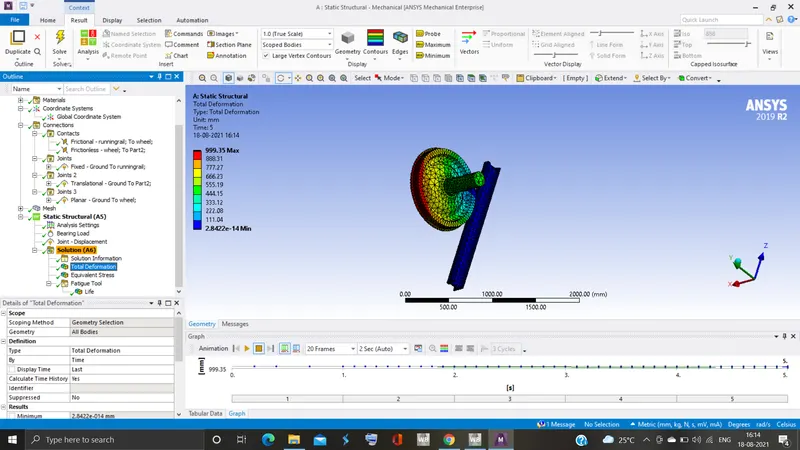
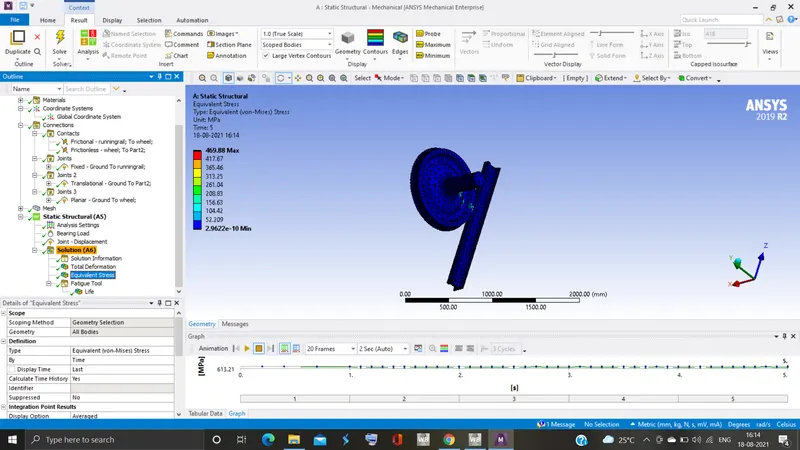
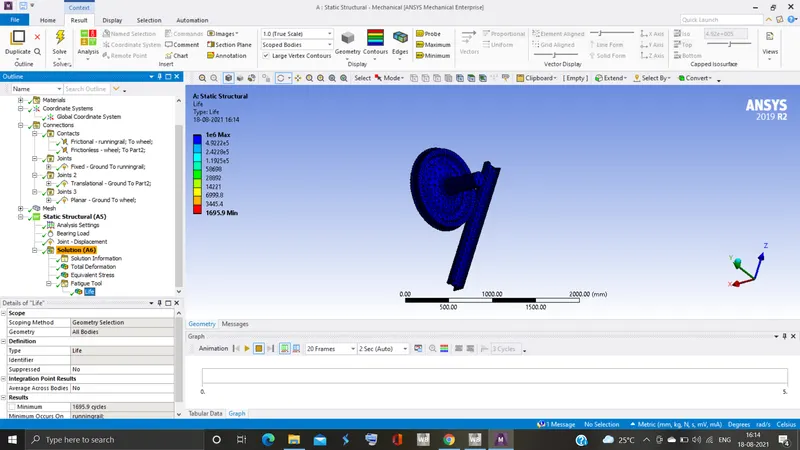
CASE 1:100kN BEARING LOAD
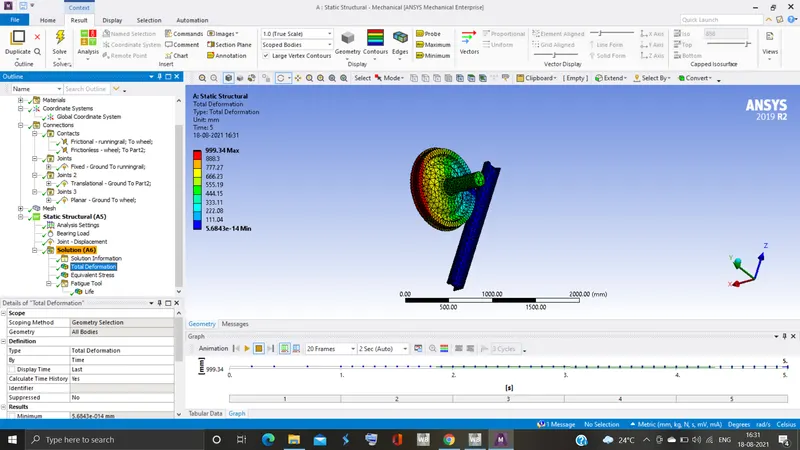
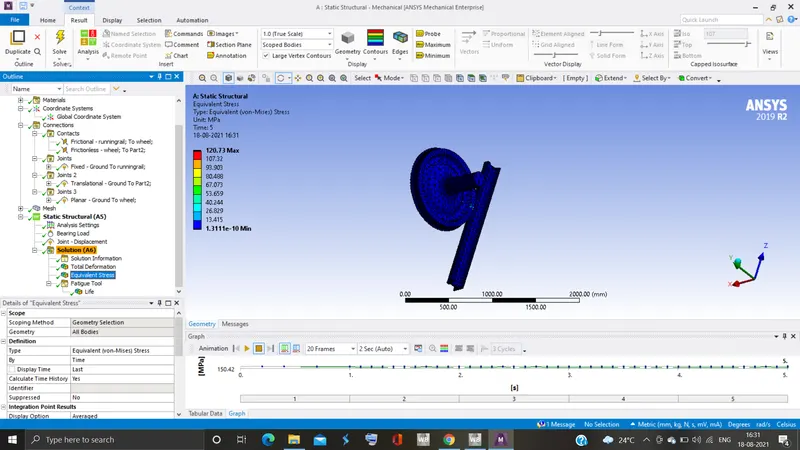
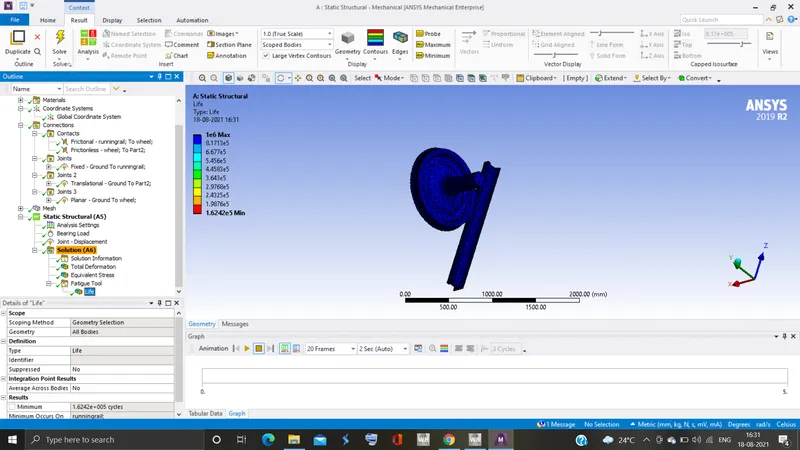
500KN bearing load
CASE 2:USER DEFINED RESULT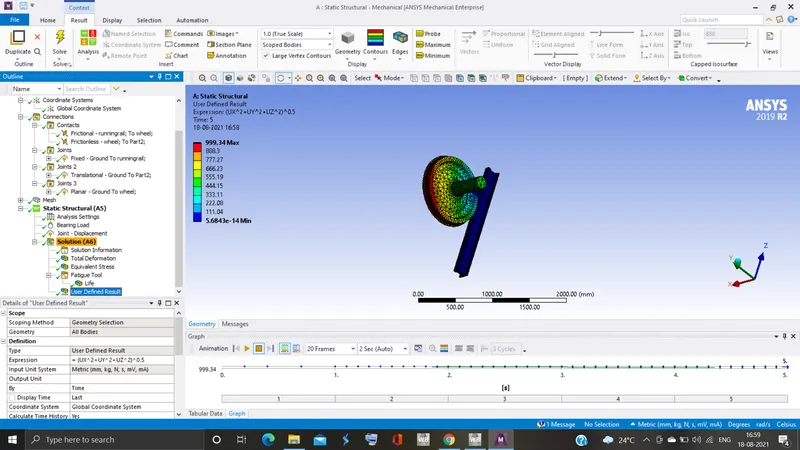
| load | max total deformation | max equivalent stress(Mpa) |
min life (cycles) |
max life(cycles) |
| 100KN | 999.34 | 120.73 | 1.6e5 | 1e6 |
| 500KN | 999.35mm | 469.8 | 1695.5 | 1e6 |
CONCLUSION:
by the above data we can say that for higher bearing load the stress developed is higher which might not be safe for design.the min fatigue life is higher for 100kn bearing load hence it is good to use