Week 2 Railwheel and Track
Simulation Report
Objective:
Perform a static structural analysis on the Rail wheel and Track setup.
Case 1: Multiply the bearing load by 5 times and compare the results with the load of 100000 N (As done in week 2 video). Compare the Total Deformation, Equivalent stress, and the life under both the loads
Case 2: Implement a User-defined result and calculate the Total Deformation from this result and check if it is the same as that obtained by the inbuilt result by ANSYS for a load of 100000.
Analysis Set Up
Case 1: Static Structural Analysis is carried for Rail wheel and Track set up. The material used is Structural Steel and analysis is carried out in Ansys Workbench. The Rail wheel and Track set up geometry is imported and shown in figure below.
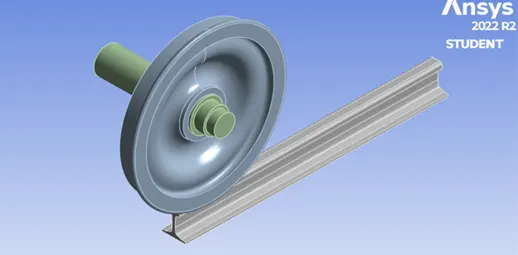
Material is Structural Steel
There are 3 parts viz. Axle (Part 2 Solid), Wheel, Rail.
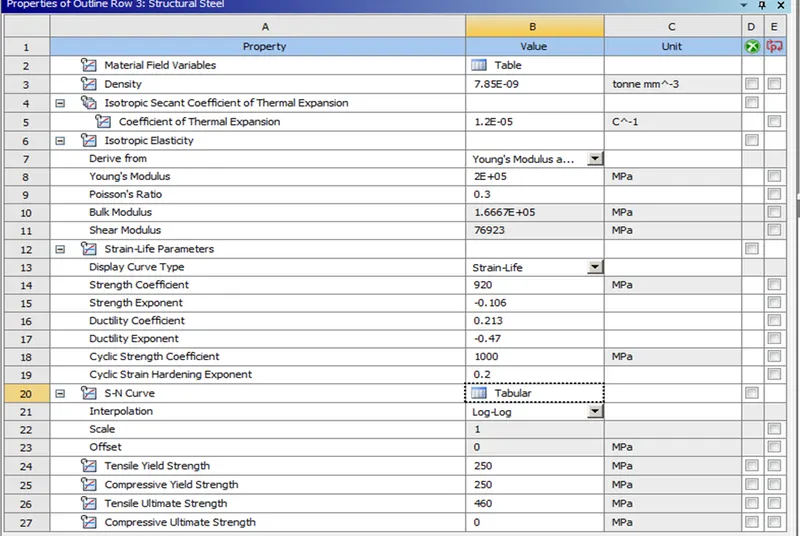
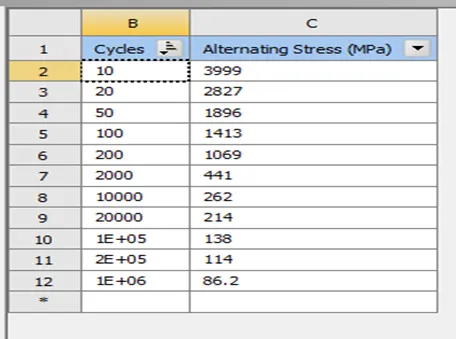
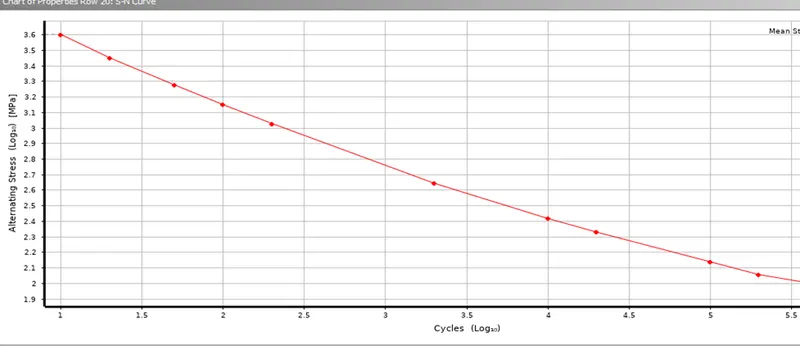
Properties of material are as follows:
Mesh:
Nodes: 15344
Elements: 7941
Element Size: 50 mm
Face Size: 35 mm
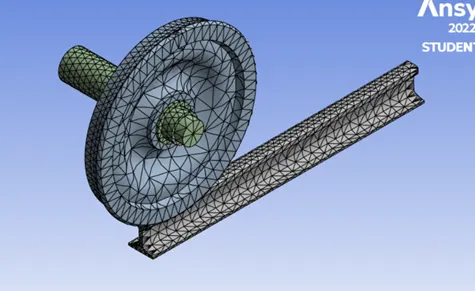

Element Matrix more on the higher side and hence acceptable. Further control on mesh size would result in exceeding values of Nodes and Elements permissible in Student version software. This could be improved in the full version if software.
Contact Details
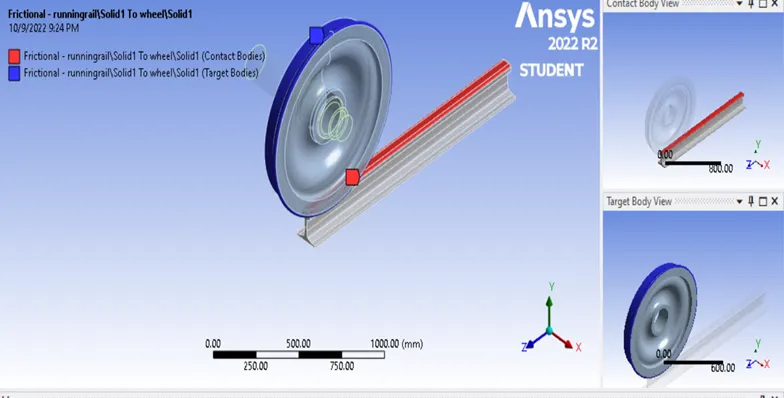
Between Wheel Rail , Friction Coefficient = 0.3
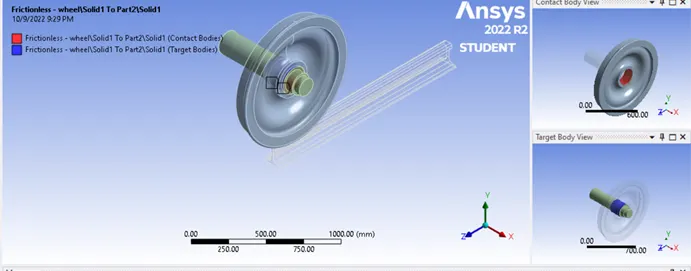
Between Wheel and Axle: Frictionless
Joint Details:
Fixed Support: Body-Ground
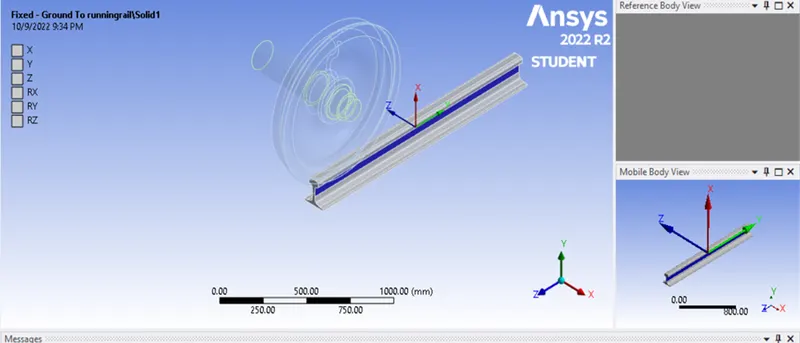
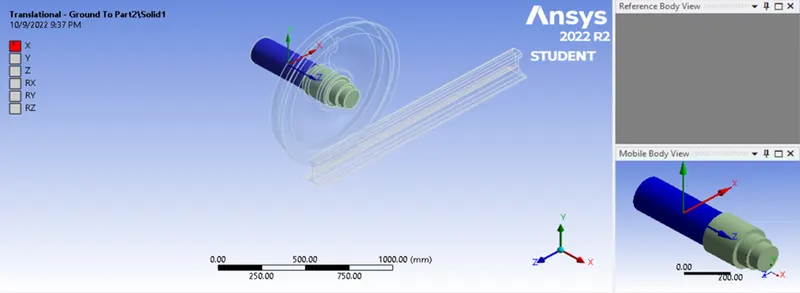
Translation Joint: Body-Ground
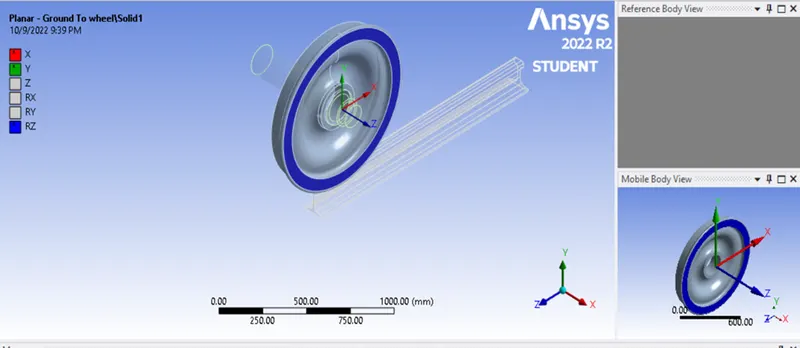
Planar Joint:
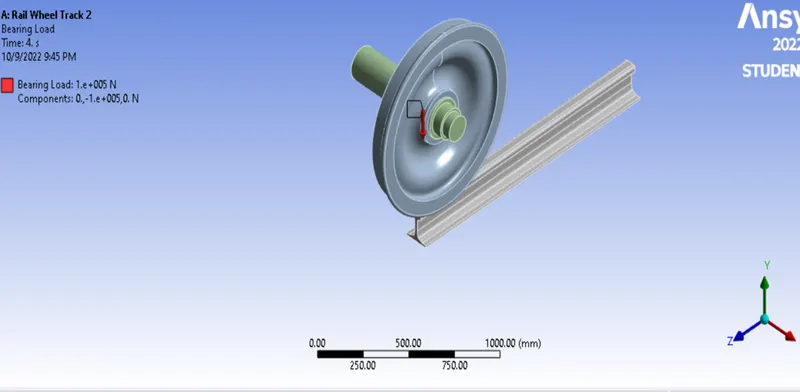
Bearing Load:
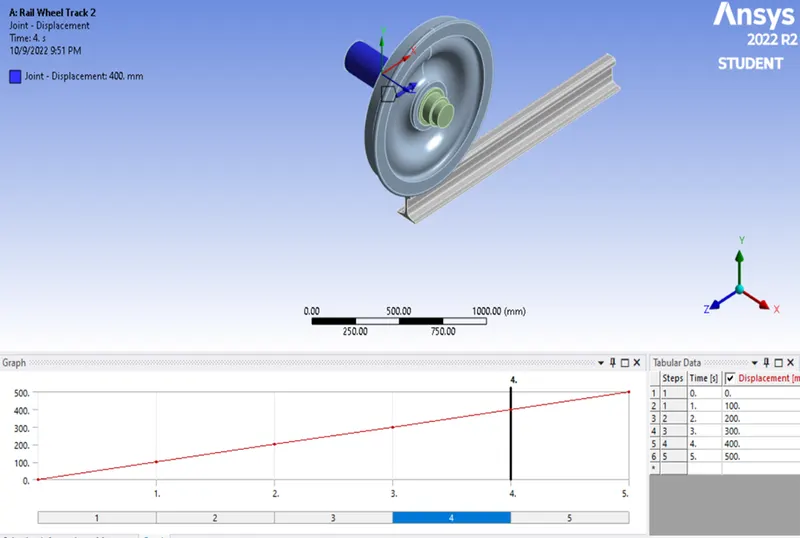
Joint Displacement:
Simulation Results:
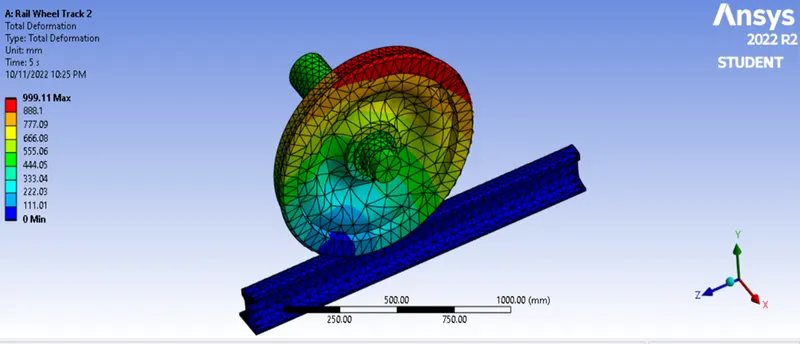
Total Deformation for Bearing Load 100000 N
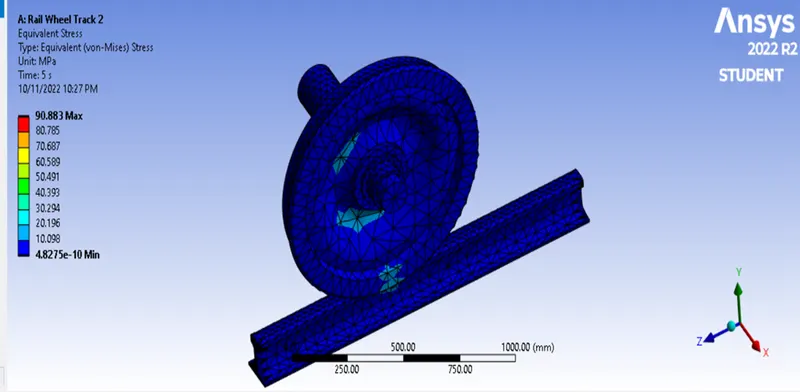
Equivalent Stress for Bearing Load 100000 N
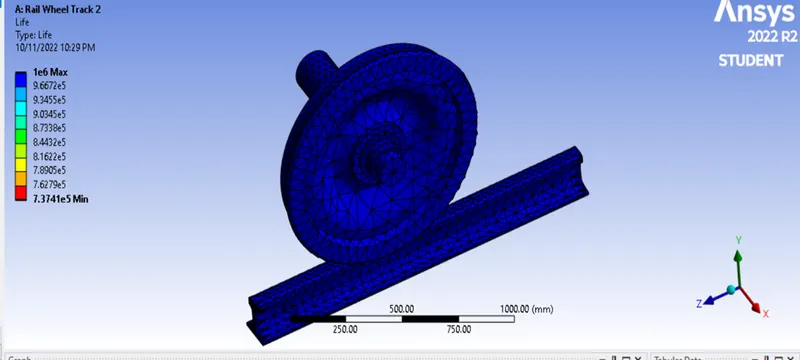
Fatigue Life for Bearing Load 100000 N
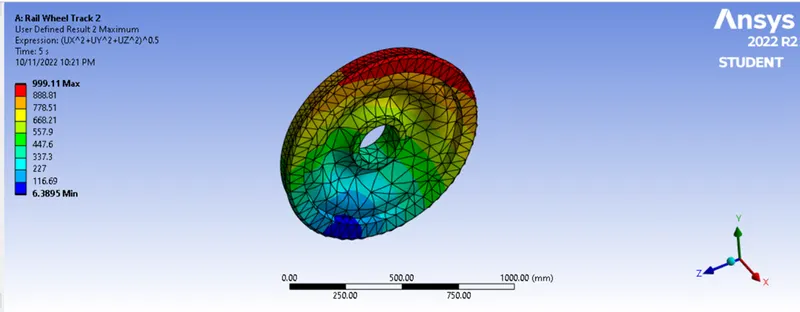
User Defined Result for Total Deformation with Bearing Load 100000 N considering Directional Deformation: Parametrics and equation “(UX^2+UY^2+UZ^2)^0.5” was used.
Conclusion:
Case 1:
Given below is the Chart of values using parametrics for 2 Loading condition of 100000 N and 500000N and values for Total Deformation, Equivalent Stress, Life and User Defined value.
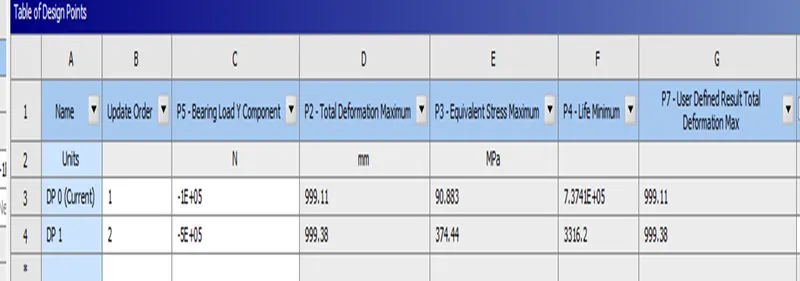
The Yield Strength of Structural Steel is 250 MPa. Incase of loading with 100000 N the stress value is 90.883 MPa This has a factor of safety of 250/90.993 or 2.75 (not considering safe stress as per IS 800).
In case of Loading of 500000 N the stress value is 374.44 MPa. This is beyond the Yield Strength and will have platic deformation. Hence not recommended.
The life with 100000 N load is 7.324E+05. This is low for Railway application. The life with 500000 N load is 3316.2. This is very low and unacceptable.
Case 2 :
The above chart shows the comparison of Total Deformation using User Defined function and Parametrics. The value is same for both loading of 100000 N and 500000 N.
Conclusion:
- The system can be used for loading of 100000 N. The life is low but if application does not demand high traffic it can be used. Material for wheel is recommended to be changed.
- The system with 500000 N loading cannot be used as Equivalent Stresses are higher than yield stress. This will cause plastic/permanent set in the wheel. The life calculated is abysmally low. Material and geometry of wheel to be changed.
- User defined Result for Total Deformation with use of equation of directional deformation values in all 3 planes gives identical result as Total deformation considering directly in both cases of loading.