Week 2 Railwheel and Track
RAIL WHEEL AND TRACK
OBJECTIVE
To perform a static structural analysis on the rail wheel and track setup for comparing the total deformation, equivalent stress and fatigue life for two different loads of 100000 N and 500000 N. The second objective is to define a user-defined expression for estimating the total deformation in 100000 N bearing load condition and comparing it with the inbuilt results in ANSYS.
METHODOLOGY
The geometry consisting of railwheel and track was imported and checked in Spaceclaim for any abnormalities. The model was free of any abnormalities. Fig. 1 shows the imported geometry. The materials for the wheel, rod and track were assigned as structural steel. The material property of structural steel is provided in Fig. 2. The analysis has been performed by specifying two contacts. In the first contact, the wheel was the contact body whereas the rail was the target body. This contact type was frictional with a frictional coefficient of 0.3 and interface as add offset, no ramping. In the second contact between the wheel and rod, the contact and target bodies were rod and wheel and frictionless contact was defined. Three joints are defined. A fixed joint was set by restricting the motion of rail in all degrees of freedom. A translational joint was set by selecting the outer surface of the rod to move along the X-axis (along the path of the rail). A planar joint to the wheel face for allowing only the motion along X, Y directions and rotation along the Z direction. The entire bodies have meshed with 50 mm and the faces on the rail and wheel where the contact should happen have been face meshed to 35 mm. The meshed bodies are shown in Fig. 3. The analysis settings consist of five steps. Large deflection was turned on. Force convergence was turned on with a value calculated by the solver. The tolerance was 0.5% and the minimum reference was 1e-2 N. The bearing loads were set to 10000N and 50000N in two analyses for all five time steps. The translational joint displacement was given from 0 mm to 500 mm with a 100 mm increment in each time step. The total deformation, von mises equivalent stress and fatigue life are estimated and compared.
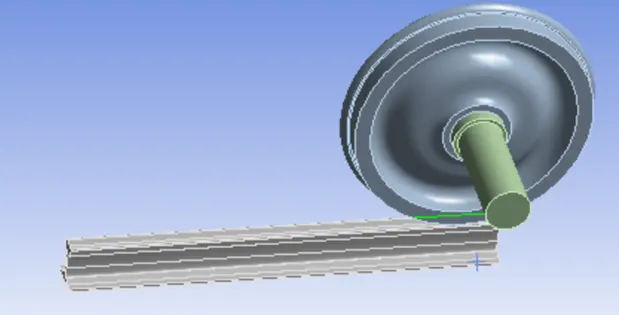
Fig. 1 Geometry consisting of wheel, rod and rail
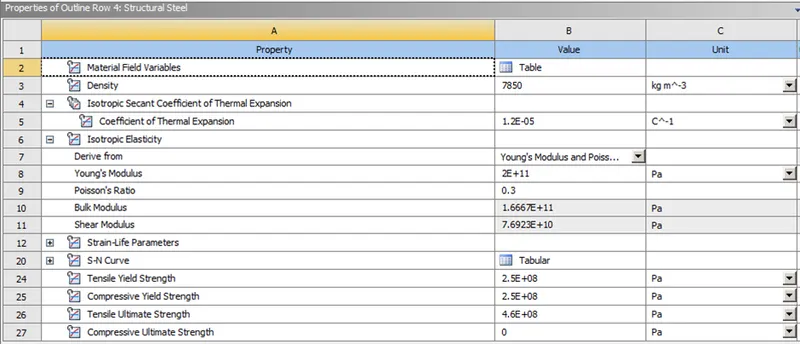
Fig. 2 Material properties of Structural steel
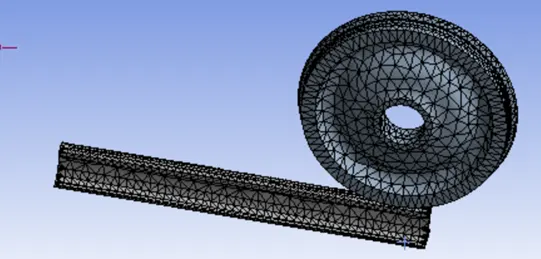
Fig. 3 Meshed model
RESULTS AND DISCUSSION
CASE 1
The wheel moving on a rail track has been simulated using ANSYS-workbench. Table 1 shows the total deformation, equivalent stress and fatigue life for two cases of bearing loads (1) bearing load = 100000 N and (2) bearing load = 500000 N. The results show that the total deformation was constant with a value of 1001.2 mm (Fig. 4 and Fig. 5). This is because the motion of the wheel has been displaced only 500 mm along the direction of the rail track. At the end of the time step, the von mises stress for bearing load equals 100000 N was 115.84 MPa (Fig. 6) whereas for 500000 N was 461.18 MPa (Fig. 7). The stress has been considerably increased when the bearing load has increased by five times. The maximum von mises stress was 632.56 Mpa and 159.11 MPa for 500000 N and 100000 N bearing loads respectively. Therefore, the stress was relieved when the applied load was unloaded. The minimum fatigue life for the bearing load conditions with bearing load equals 100000 N and 500000 N was 1.8873e+005 cycles (Fig.8) and 1780.3 cycles (Fig. 9) respectively. Least the bearing load, highest is the fatigue life and vice versa.
|
Table 1 Analysis results for (1) bearing load = 100000 N and (2) bearing load = 500000 N. |
||
|
CASE 1 |
||
|
Bearing Load |
100000 N |
500000 N |
|
Total deformation |
1001.2 mm |
1001.2 |
|
Maximum Von Mises Stress |
159.11 MPa |
632.56 MPa |
|
Von Mises stress at end time |
115.84 MPa |
461.18 MPa |
|
Fatigue Life (Minimum) |
1.8873e+005 cycles |
1780.3 cycles |
|
Fatigue Life (Maximum) |
1e6 cycles |
1e6 cycles |
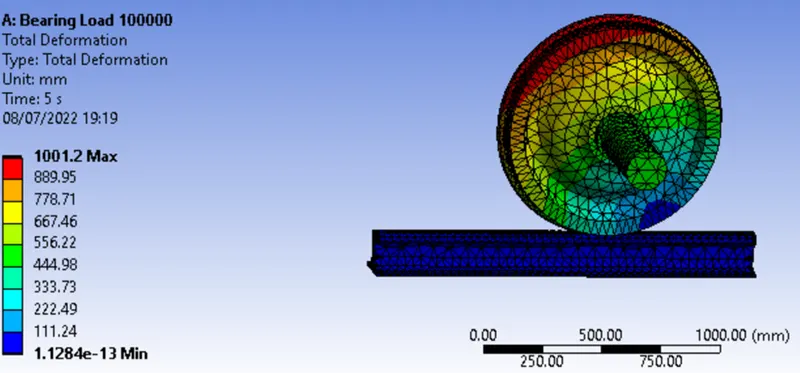
Fig. 4 Total deformation for the condition, bearing load equals 100000 N
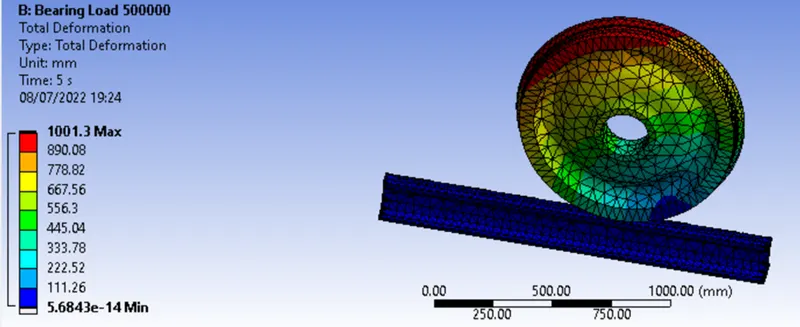
Fig. 5 Total deformation for the condition, bearing load equals 500000 N
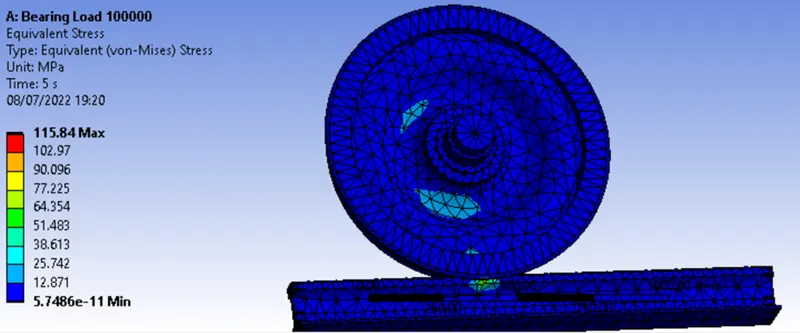
Fig. 6 Von mises stress for the condition, bearing load equals 100000 N
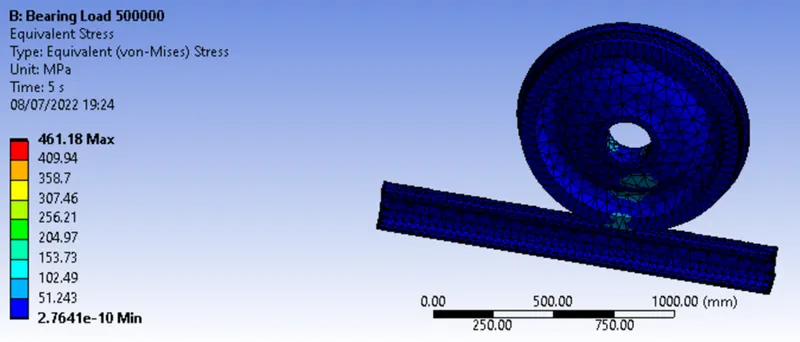
Fig. 7 Von mises stress for the condition, bearing load equals 500000 N
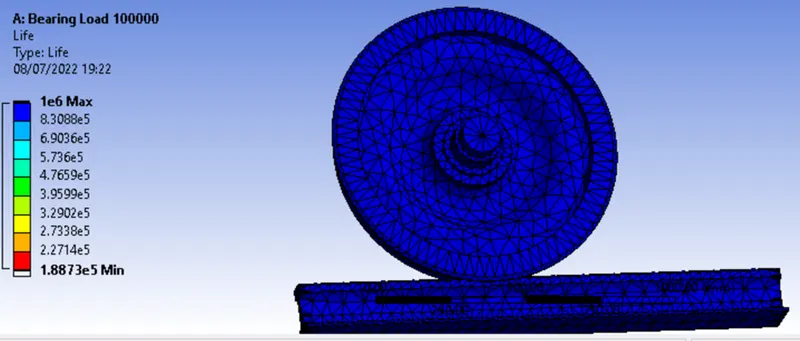
Fig. 8 Fatigue life for the condition, bearing load equals 100000 N
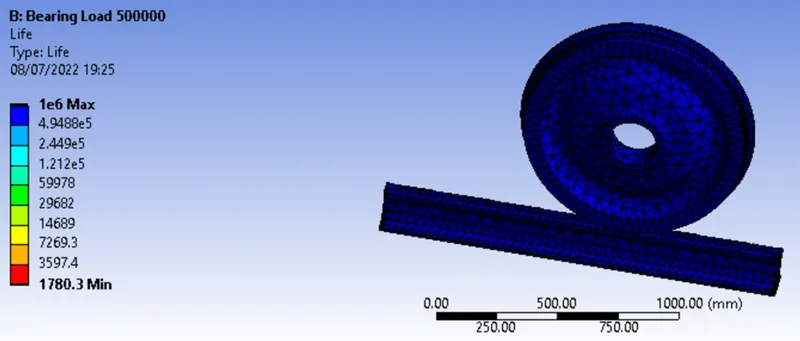
Fig. 9 Fatigue life for the condition, bearing load equals 100000 N
CASE 2
In the second case, an user-defined expression has been given to estimate the total deformation in the case of bearing load equals 100000 N. The total deformation was estimated using the following expression.
Total deformation = sqrt(UX^2 + UY^2 + UZ^2) (1)
Fig. 10 shows the total deformation estimated using the user-defined expression (Eq. 1). The total deformation using user expression is exactly the same (1001.2 mm) compared to the ansys inbuilt total deformation tab as shown in Fig. 4.
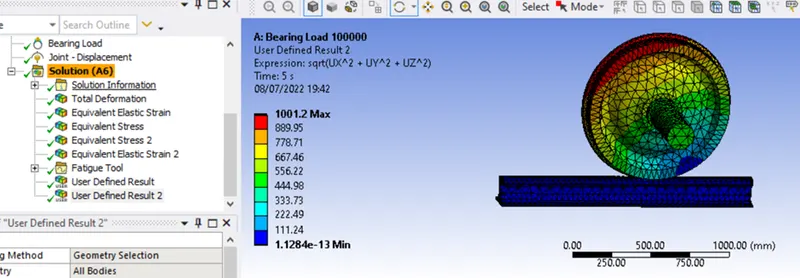
Fig. 10 Total deformation using user-defined expression
CONCLUSION
Numerical analysis was conducted for investigating the total deformation and von mises stress on the bodies and fatigue life on the rail while wheel moves on the rail. In the first case, the values are reported for two bearing load conditions such as 100000 N and 500000 N. The material for the wheel, rod and rail was structural steel. The major findings are listed below.
- The total deformation was constant for two load-bearing load conditions such as load-bearing equals 100000 N and 500000 N due to fixed 500 mm translation of the wheel along the direction of the rail.
- The von mises stress increased when the bearing load was increased. The von mises stress was 115.84 MPa and 461.18 Mpa for 100000 N and 500000 N bearing loads.
- The maximum von mises stress was 159.11 MPa and 632.56 MPa during the motion of the wheel along the rail path for 100000 N and 500000 N bearing load conditions.
- The fatigue life decreased with the increase in the bearing load. The minimum fatigue life for 500000 N bearing load was 1780.3 cycles whereas the minimum fatigue life was 1.8873e5
- The user defined expression for total deformation is validated with the ansys inbuilt solution for the total deformation.