Week 2 - Flow over a Cylinder.
OBJECTIVE
To simulate the flow over a cylinder using steady and unsteady state solvers.
INTRODUCTION
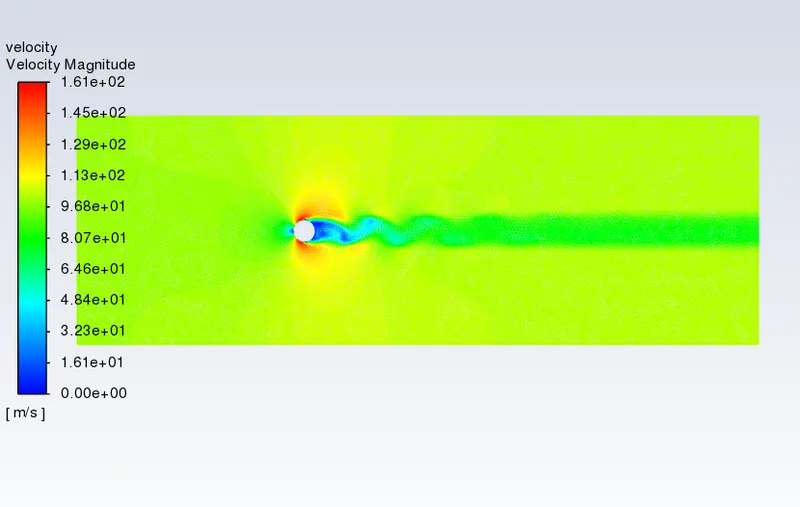
vortex shedding:
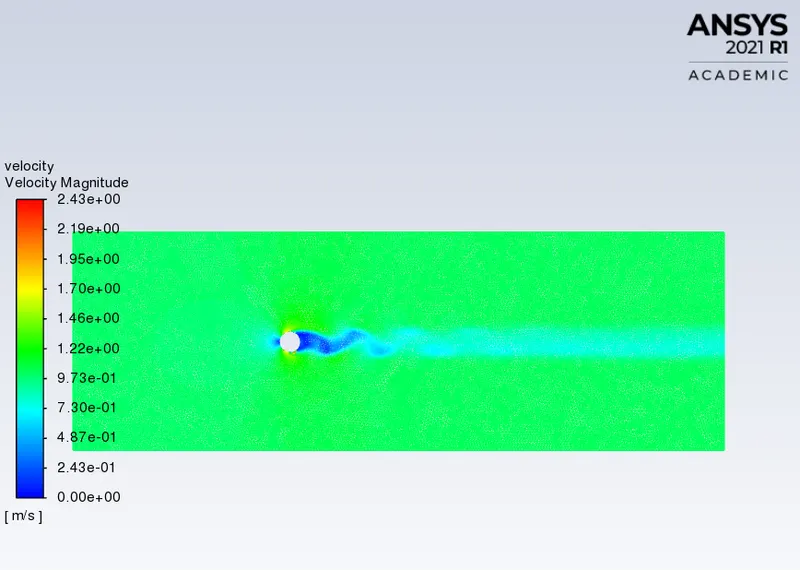
- it is an oscillating flow that takes place when fluid such as air or water flows past a bluff(as opposed to a streamlined) body at a certain velocity, depending on the shape and size of the body. In this flow, vortices are created at the back of the body and detach periodically from either side of the body forming a von Karman vortex street which is responsible for the unsteady separation of fluid flow around the blunt bodies.
- A vortex street will form at a certain range of flow velocities, specified by the range of Reynolds number, typically above a limiting Reynold number value of about 90.
- Reynolds number is defined as the ratio of inertia force to viscous force and is a dimensionless number and is denoted by Re.
- Reynolds number(Re) = ρVD/μ
- where ρ = density of fluid (kg/m3)
- V = velocity of fluid (m/sec)
- D is the diameter (m)
- μ = viscosity of the fluid
strouhal number:
- it is a dimensionless number describing oscillating flow mechanism
- St = (fL)/U
- where f = frequency of vortex shedding
- L = characteristic length
- U = flow velocity
PROCEDURE
1. GEOMETRY
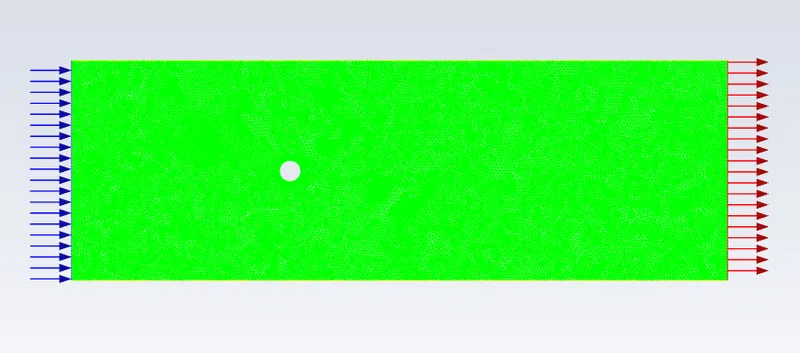
- first, the cylinder boundary is to be drawn in the SpaceClaim and its dimensions are L= 60m and B = 20.1 m with a diameter of cylinder =2m
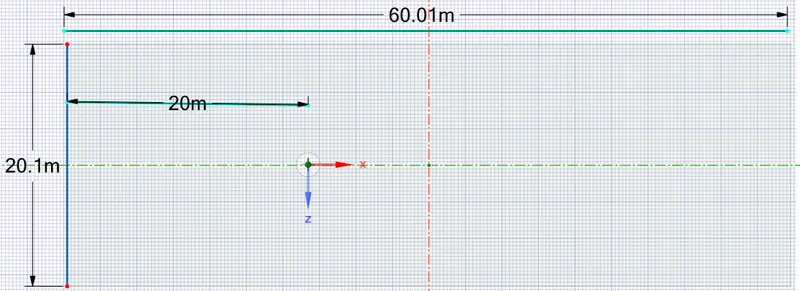
- inside the circle is to be deleted to carry out simulations.
MESH :
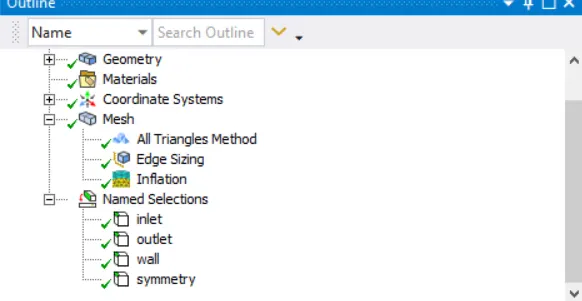
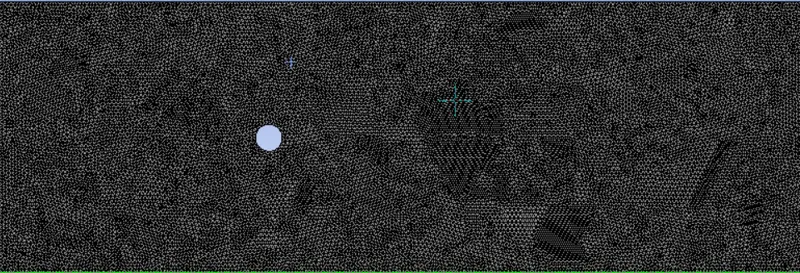
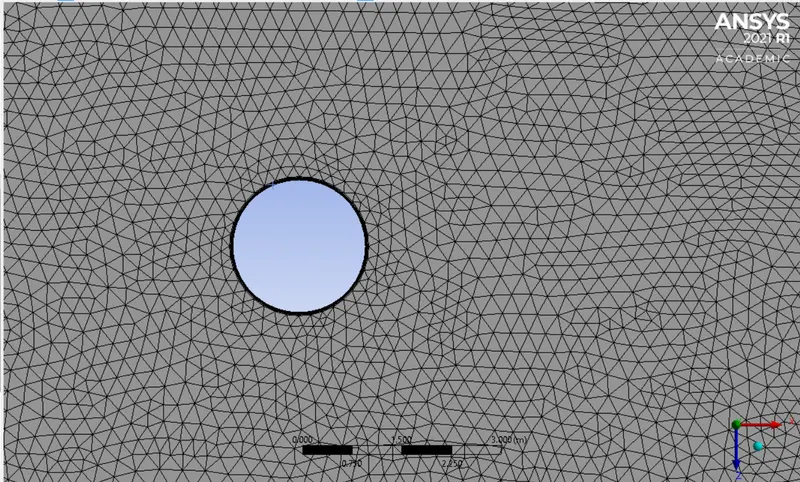
- In mesh, the first set mesh is the triangular mesh with mesh size 0.25.
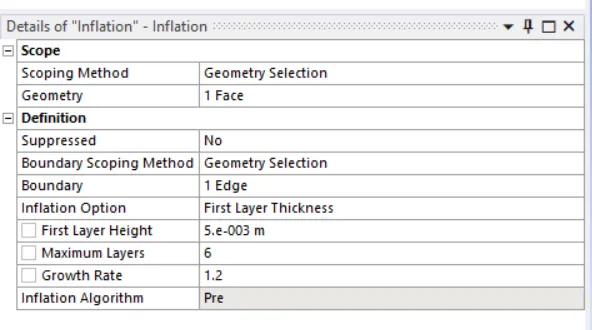
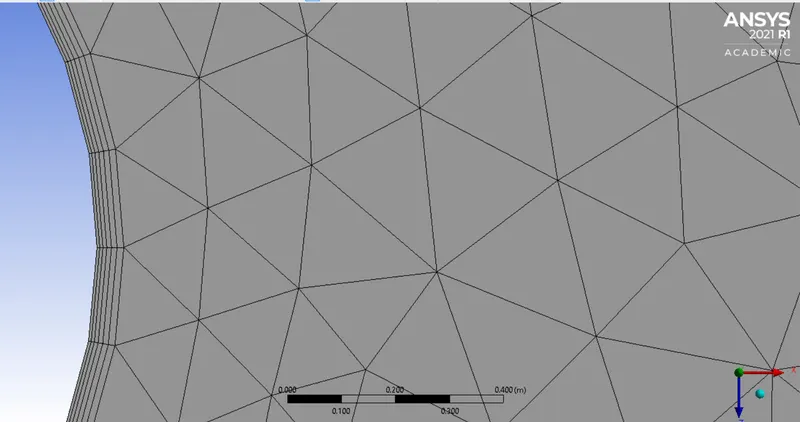
- edge sizing and inflation layer are done. in edge sizing, the body-fitted mesh is generated and the inflation layer is 6 nos and with the first layer thickness is 0.005 with 6 layers.
SOLVING
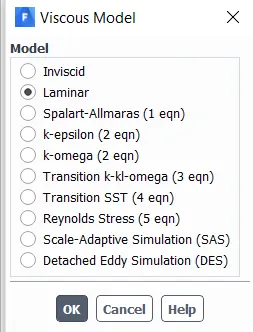
- In solution method, viscous is laminar
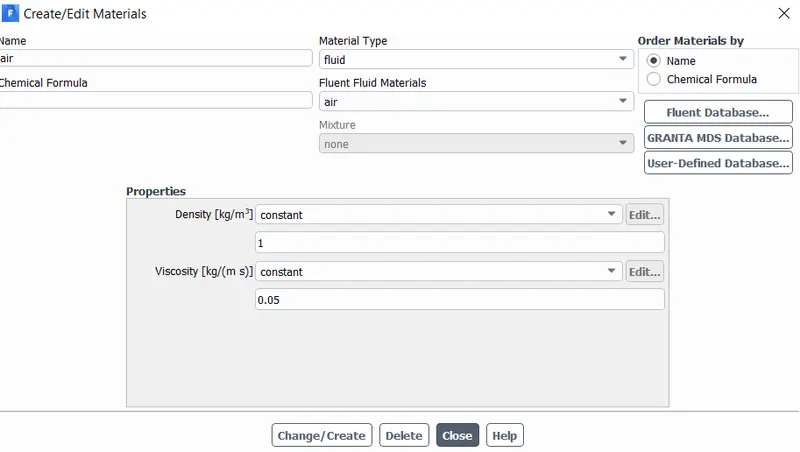
- material = air
material:
viscous model:
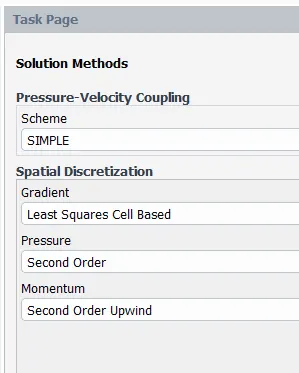
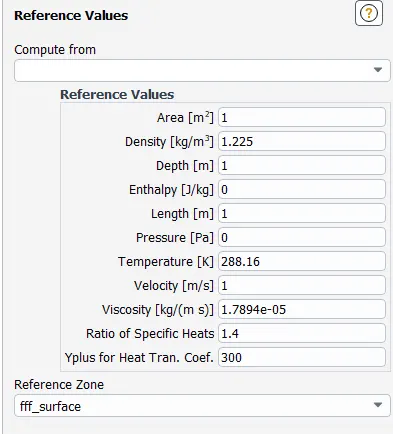
Area = height * width = 2m^2
STEADY STATE SIMULATIONS
CASE 1 FOR Re =10 WHERE VISCOSITY =0.02 AND CELOCITY = 0.1 m/sec
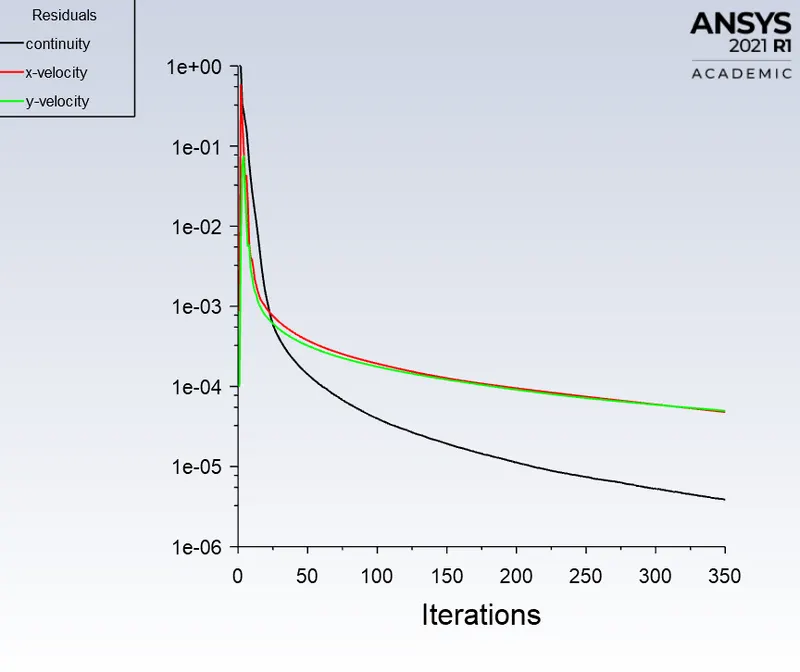
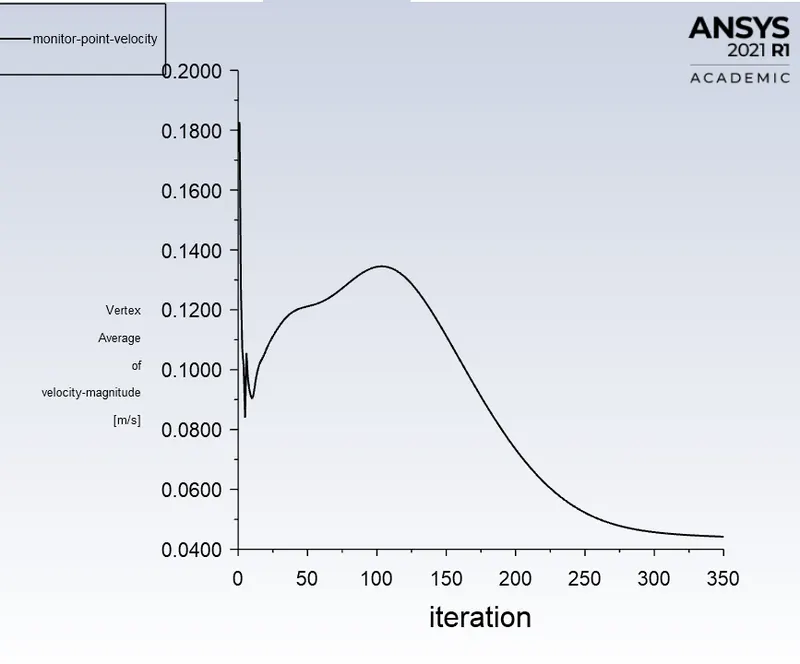
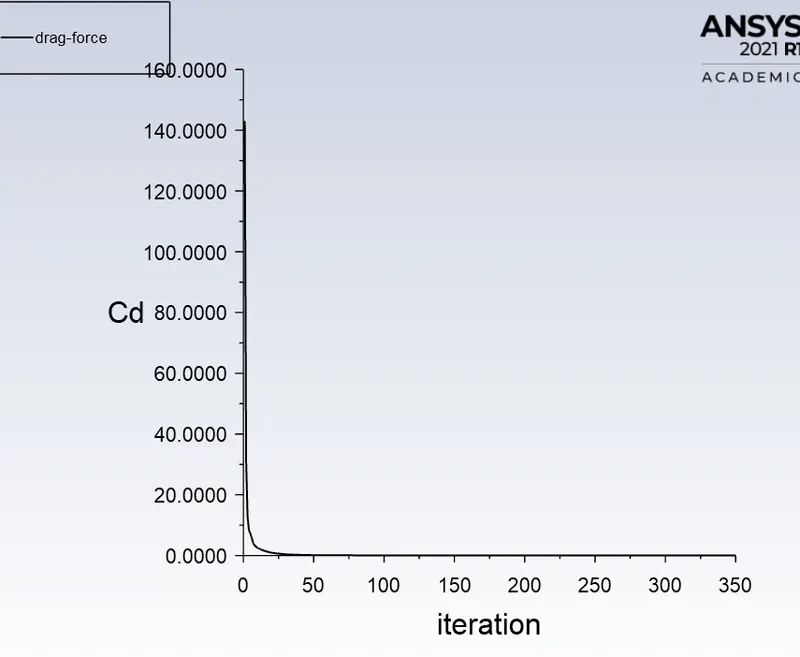
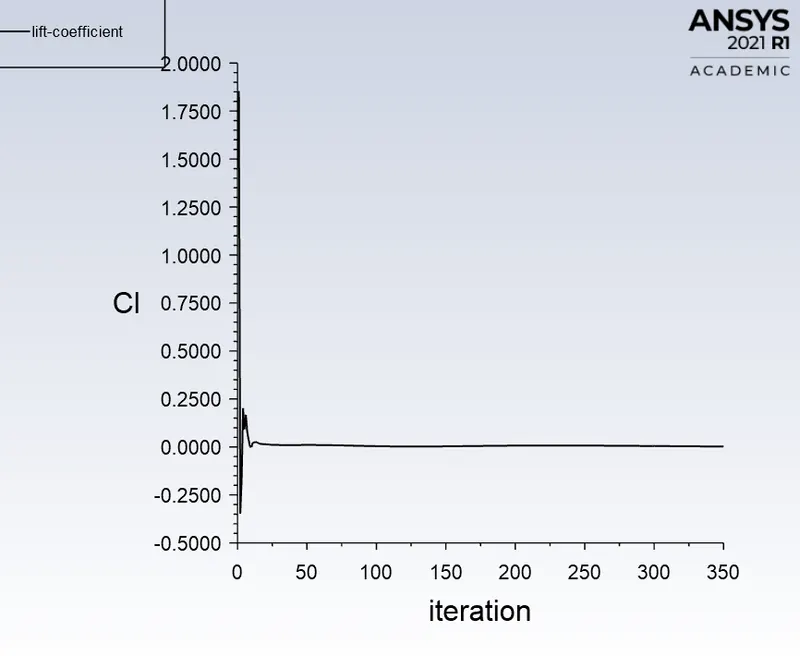
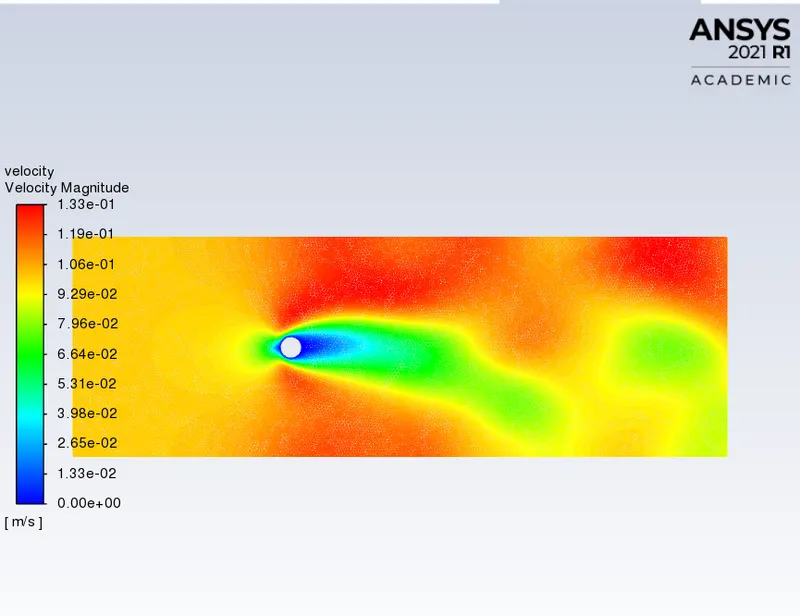
CASE:2 FOR Re =10 WHERE VISCOSITY = 0.02 AND VELOCITY = 1 m/sec
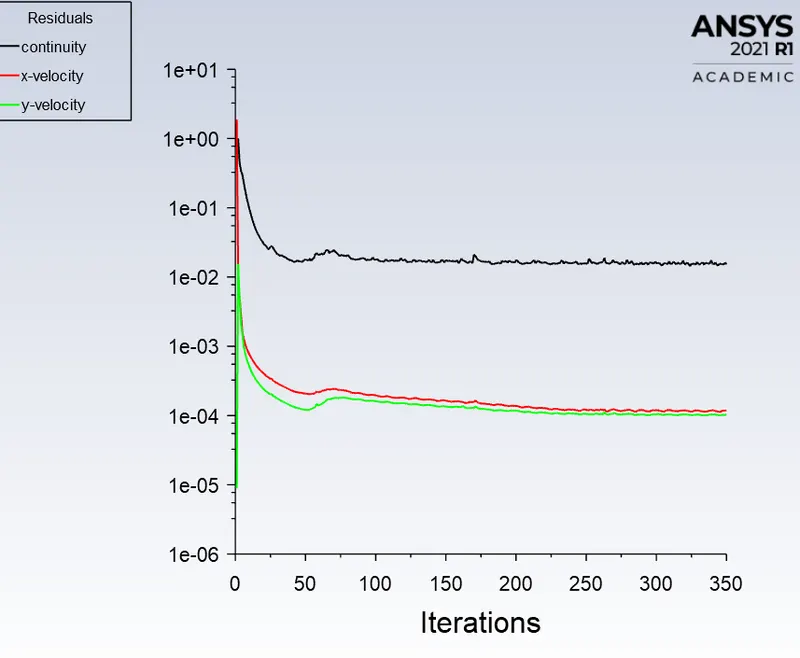
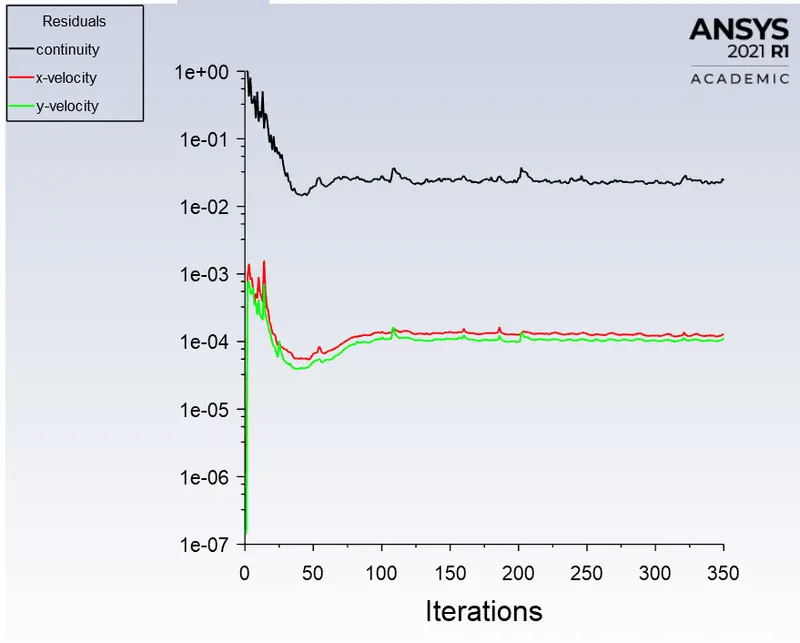
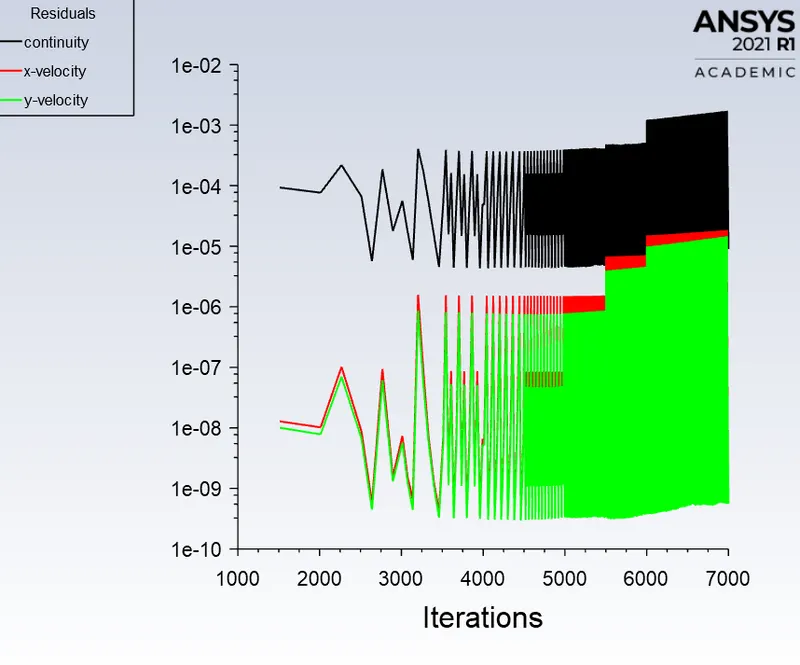
Residual point: residual plot helps us in knowing the convergence points of the simulations.
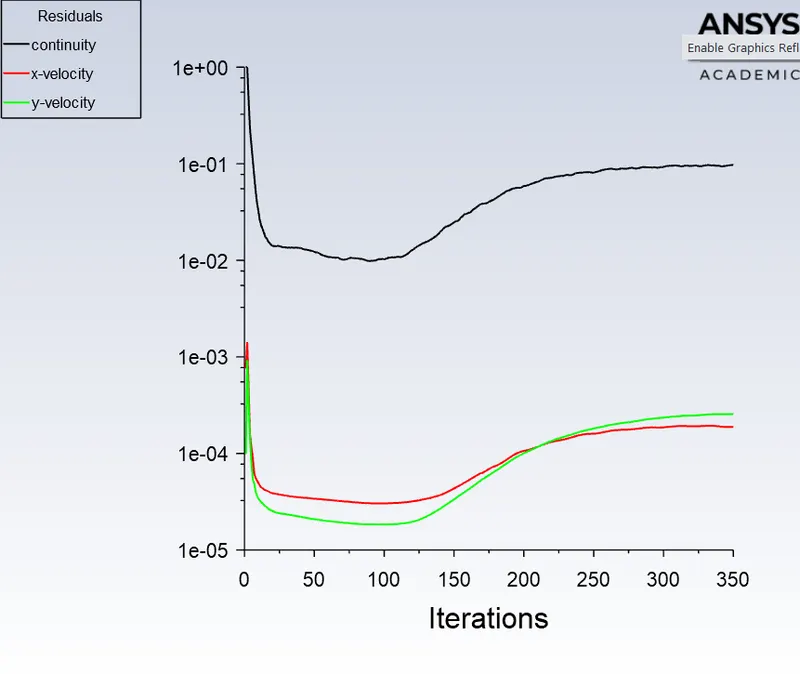
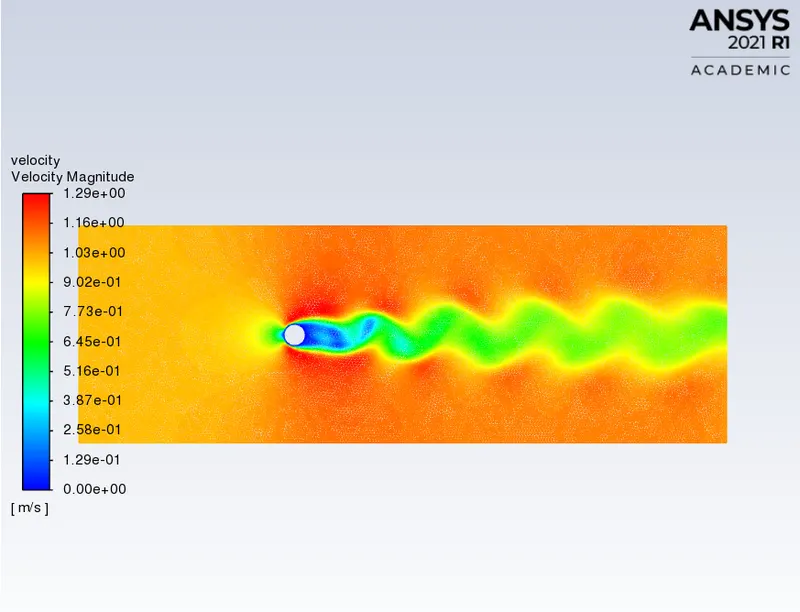
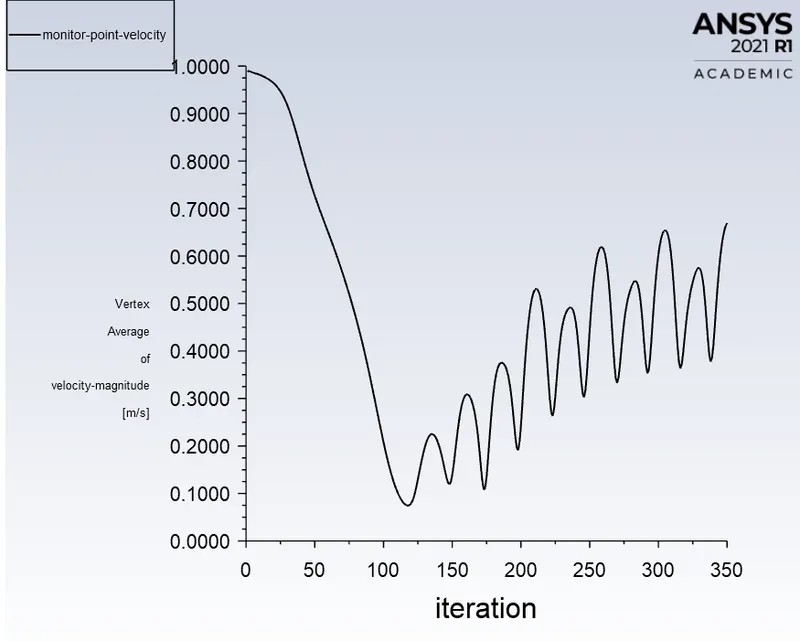
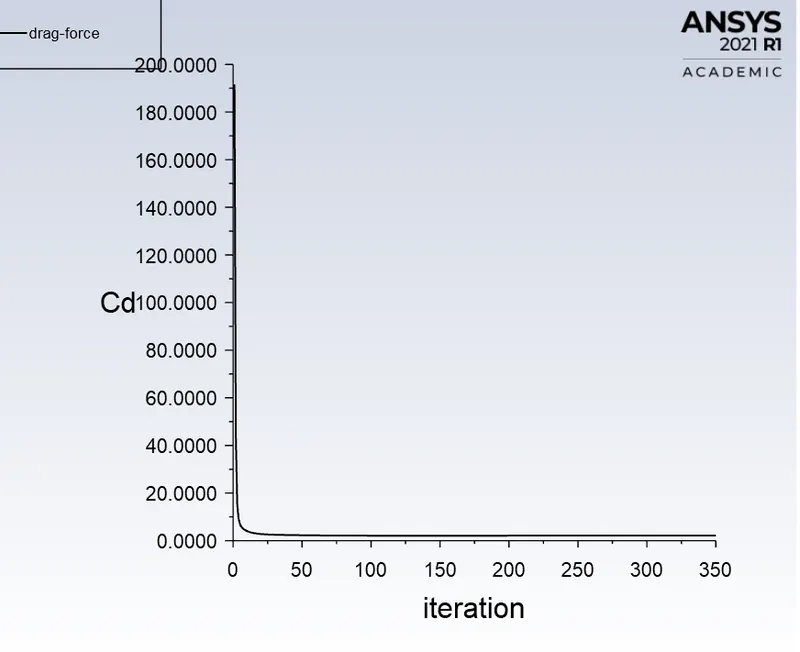
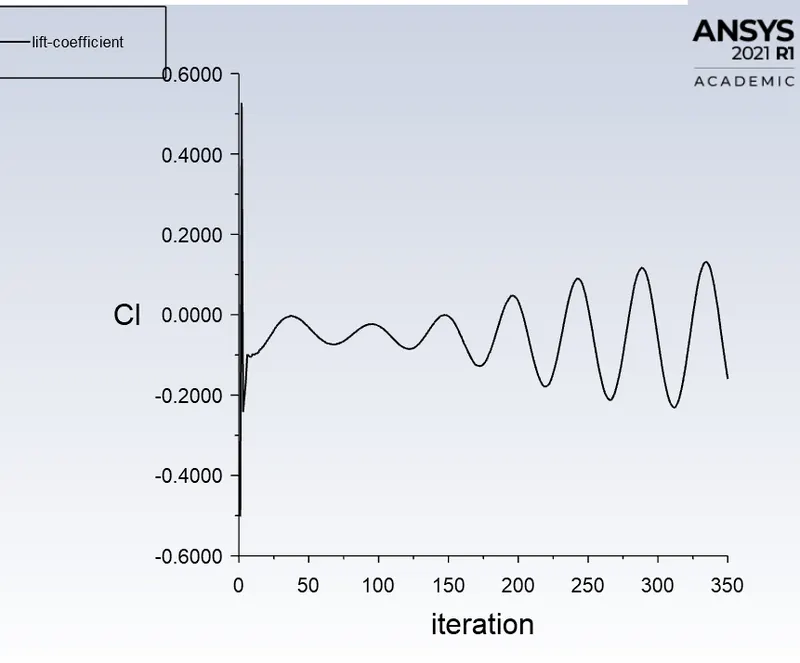
CASE : 3 FOR Re = 1000 WHERE VISCOSITY = 0.02 AND VELOCITY = 10 m/sec
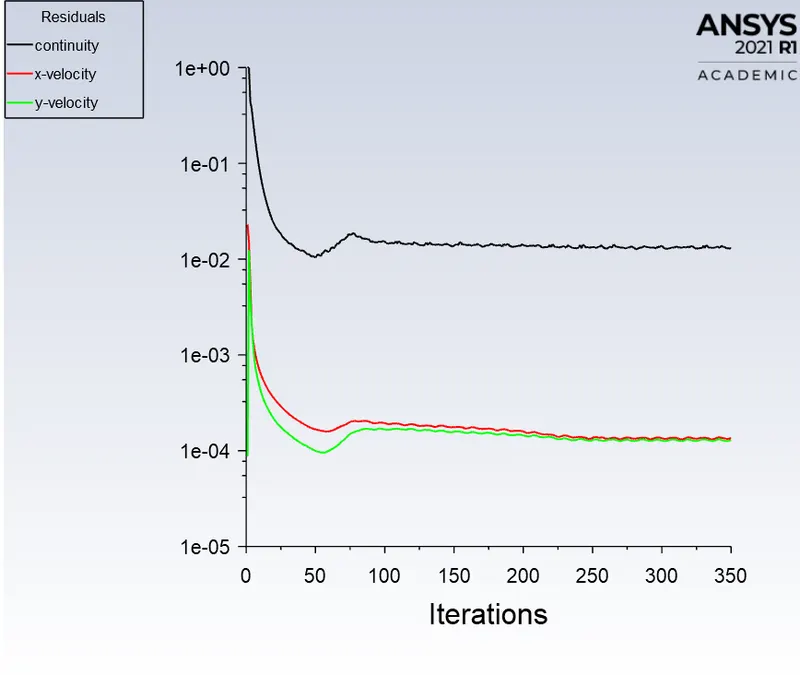
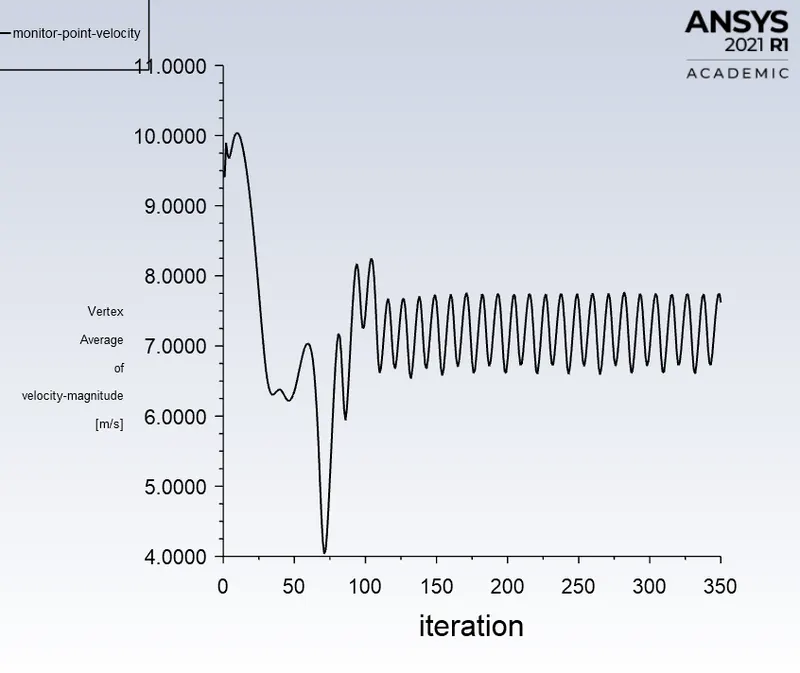
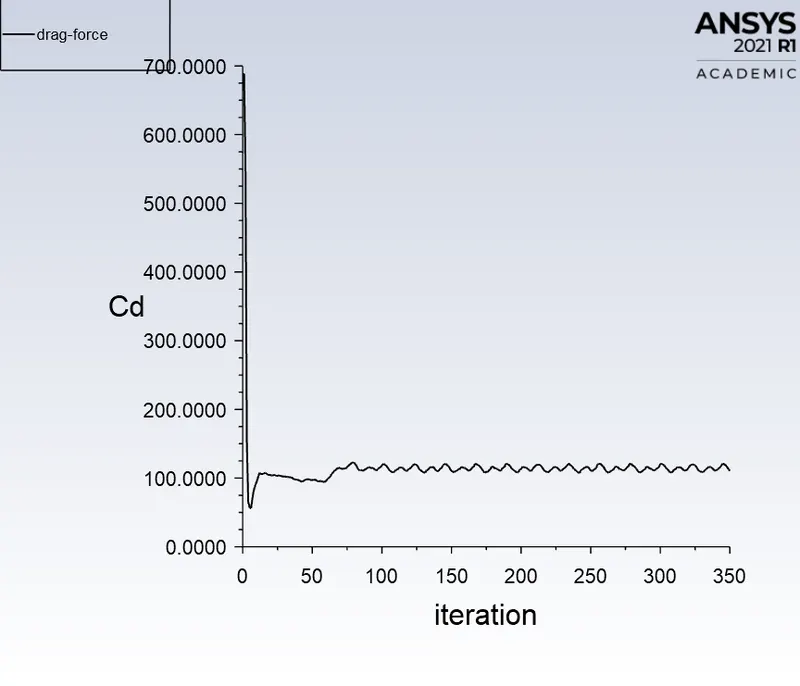
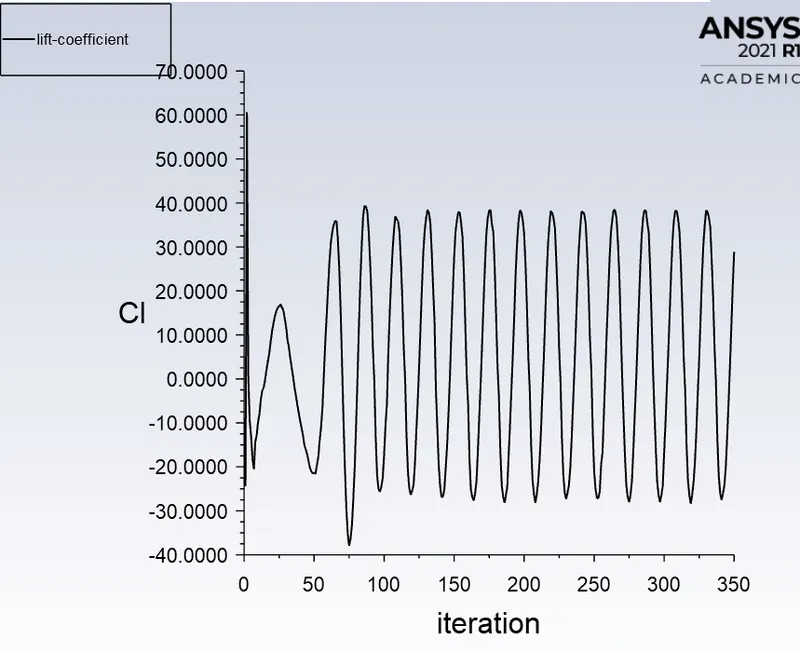
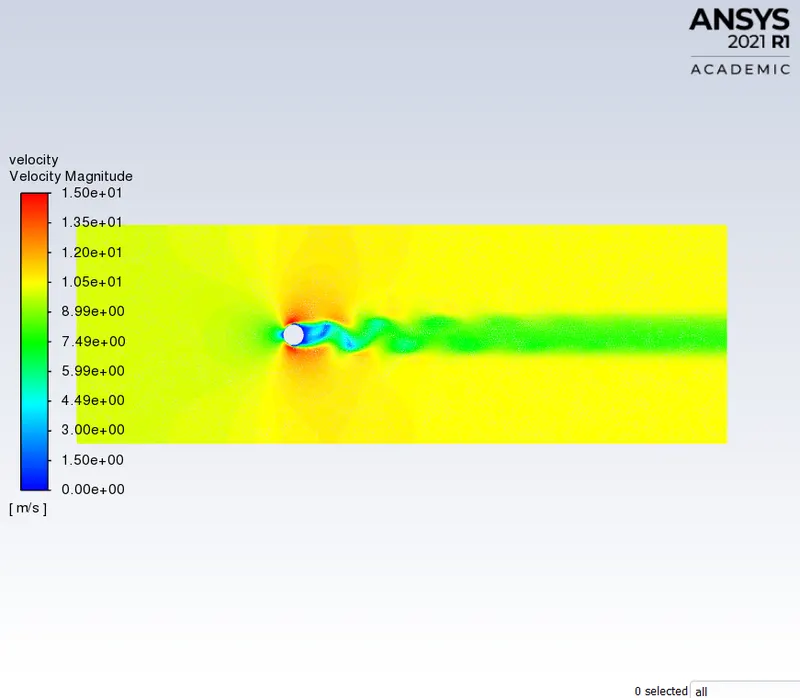
CASE:4 FOR Re = 10000 WHERE VISCOSITY = 0.02 AND VELOCITY = 100m/sec
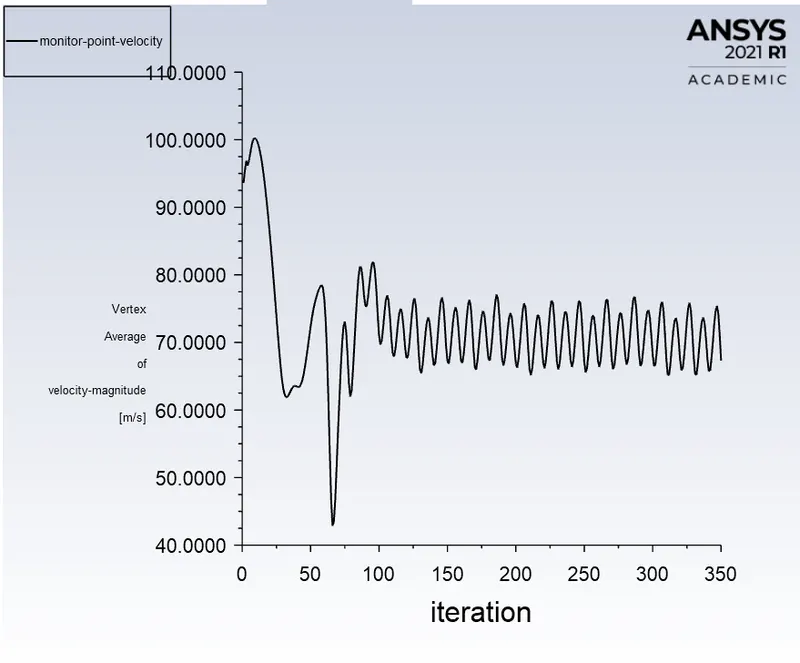
CASE:5 FOR Re = 100000 WHERE VISCOSITY = 0.00002 AND VELOCITY =1m/sec
| Reynolds number(Re) | Drag coefficient (Cd) | Lift coefficient |
| 10 | 3.328 | 0.00094 |
| 100 | 1.331 | 0.01 |
| 1000 | 0.727 | 0.10 |
| 10000 | 0.806 | 0.30 |
| 100000 | 0.781 | 0.18 |
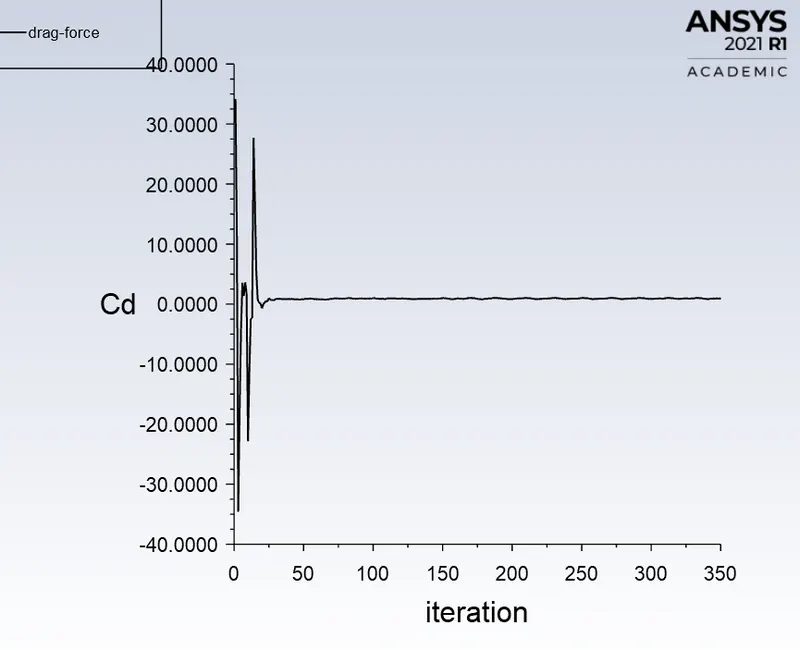
- As we can see from the table as Reynold's number is increasing, the drag coefficient is decreasing till Reynolds number 1000 but after Re =10000, it increases, and the drag coefficient decreases.
UNSTEADY STATE SIMULATION:
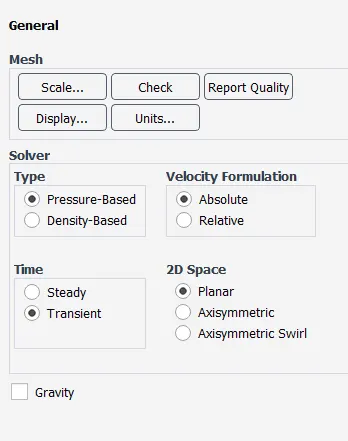
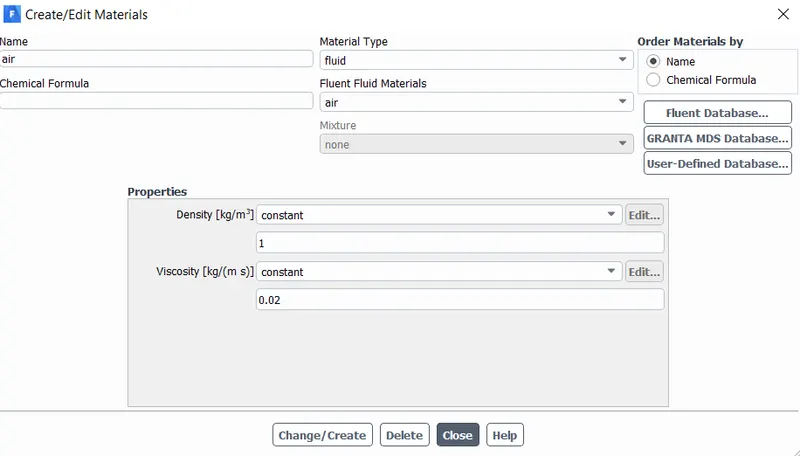
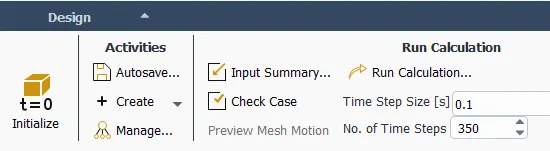
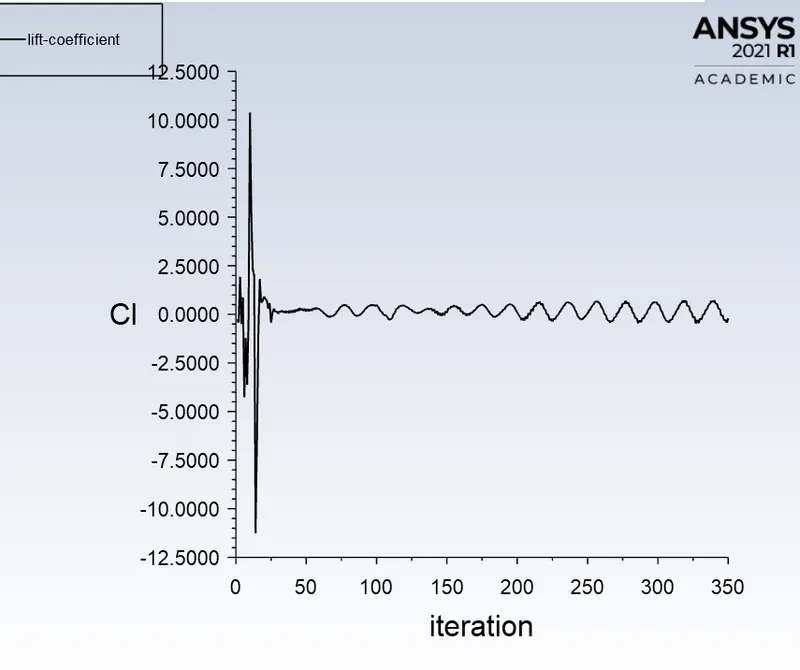
CASE :for Re = 100 where viscosity = 0.02 and velocity = 1m/sec
time step size = 0.1
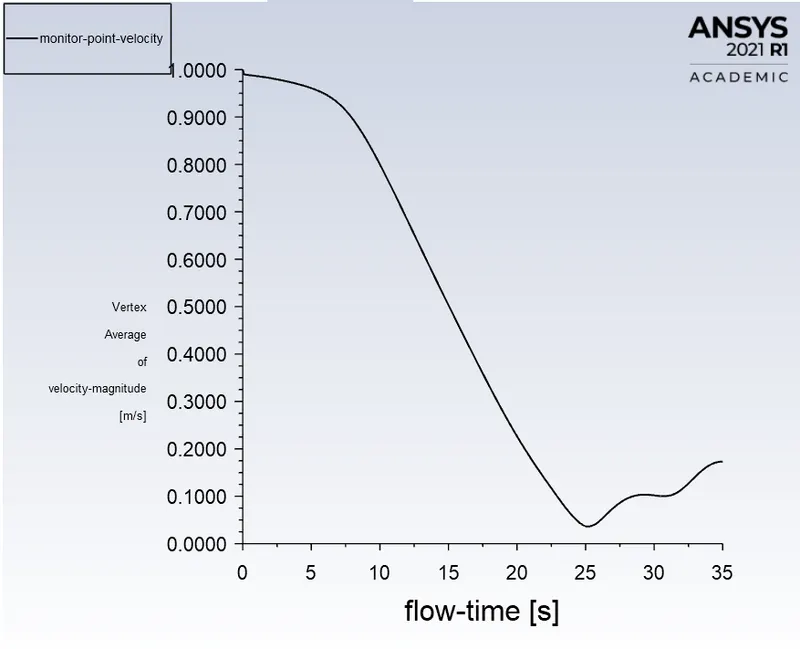
RESIDUAL PLOT:
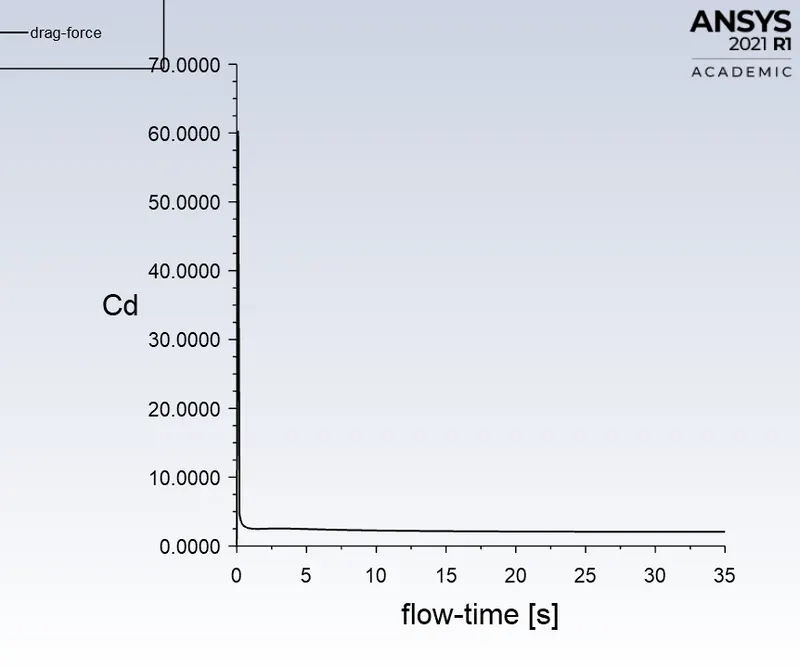
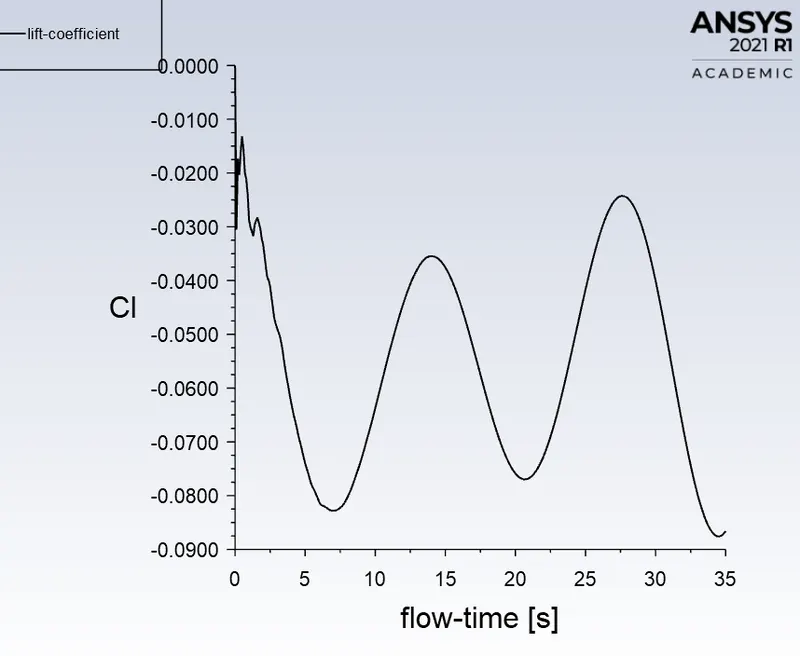
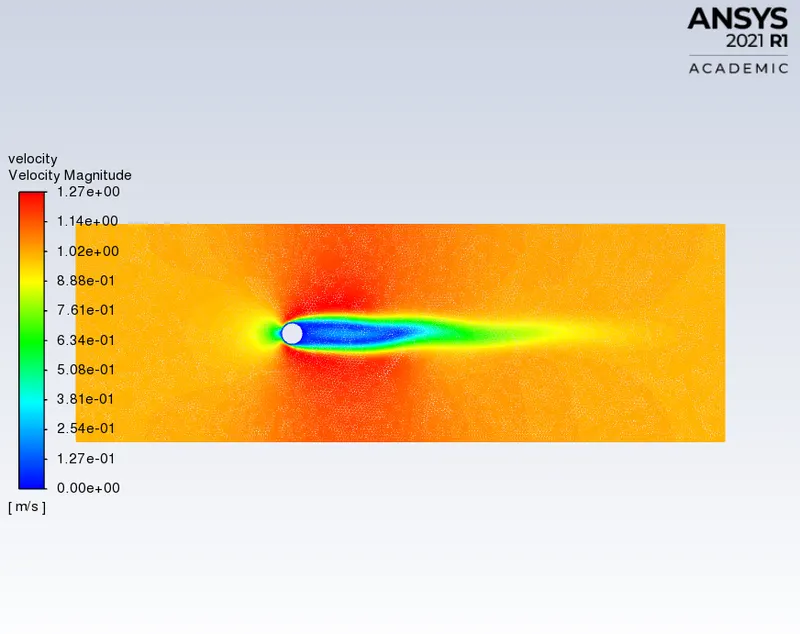
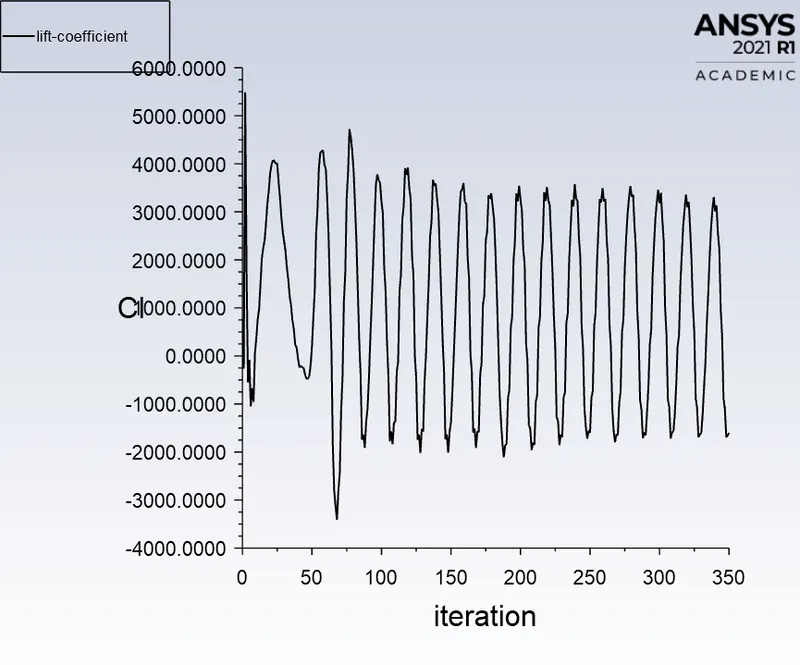
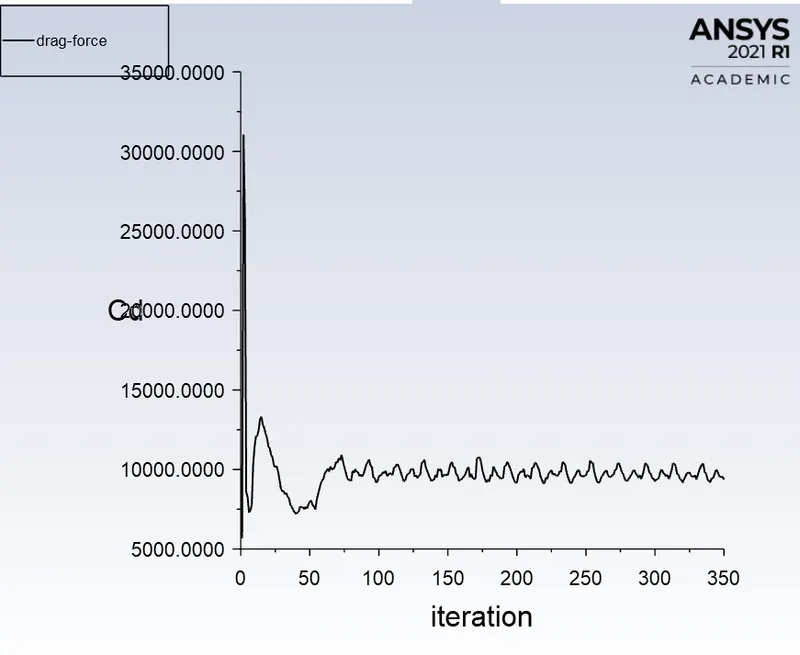
| drag coefficient | lift coefficient |
| 1.33 | 0.25 |
STROUHAL CALCULATION:
Strouhal Number can be defined as St = (fL)/U
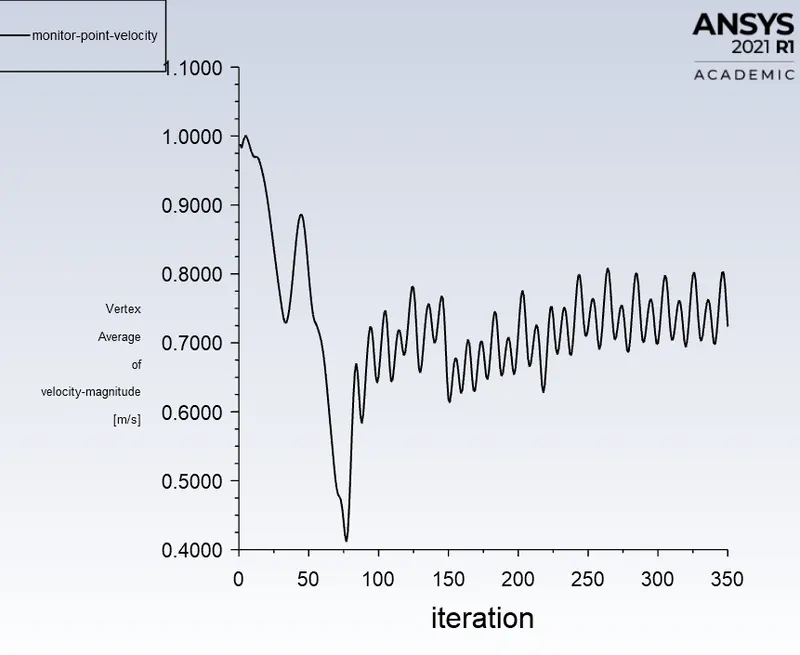
f = no of peaks / flow time
f = 4/20
f = 1.5 Hz
V = 1 m/sec
St = (1.5 .2)/1 = 0.3
VALIDATION OF Cd value obtained for Re =100, with respect to any standard literature:
- Cd value from literature for 2-D is 1.3353
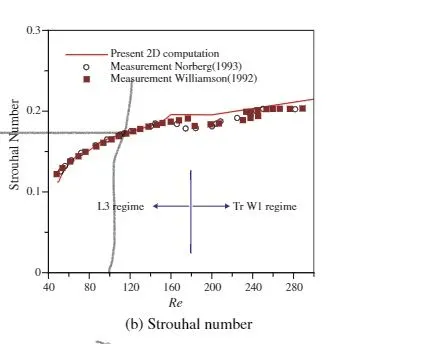
and Cd value obtained from simulation is 1.33
percentage error = [(1.3353 - 1.33) / 1.3353] *100
= 0.91 %
hence we can say the percentage error is within 5% after comparing the value of Cd from literature and Cd from simulation.
CONCLUSION:
- steady and unsteady simulations were carried out for the flow over the cylinder and residual, monitor point velocity, drag, and lift values were computed and plotted.
- different Reynolds number was introduced to check the vortex shedding and how lift and drag vary accordingly.
- strouhal number is calculated for transient flow.
REFERENCES:
1]. Numerical simulation of laminar flow past a circular cylinder, "B.N. RajaniA. KandasamySekhar Majumdar", Science direct.