Week 2 - Flow over a Cylinder.
Objective: - To simulate Flow over a cylinder using unsteady and steady state solvers with different Reynold numbers.
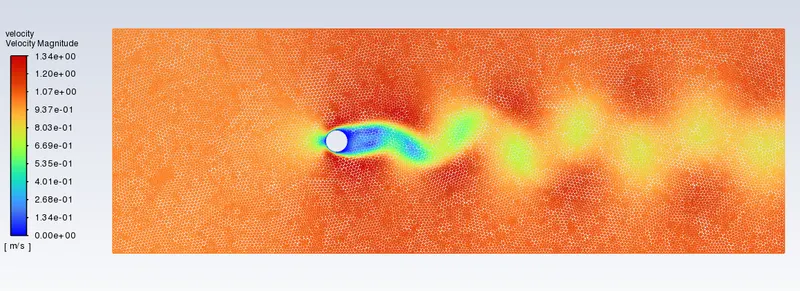
Theory: - Vortex shedding is an oscillating flow that takes place when a fluid such as air or water flows past a bluff (as opposed to streamlined) body at certain velocities, depending on the size and shape of the body. In this flow, vortices are created at the back of the body and detach periodically from either side of the body forming a Von Karman vortex street. The fluid flow past the object creates alternating low-pressure vortices on the downstream side of the object. The object will tend to move toward the low-pressure zone.
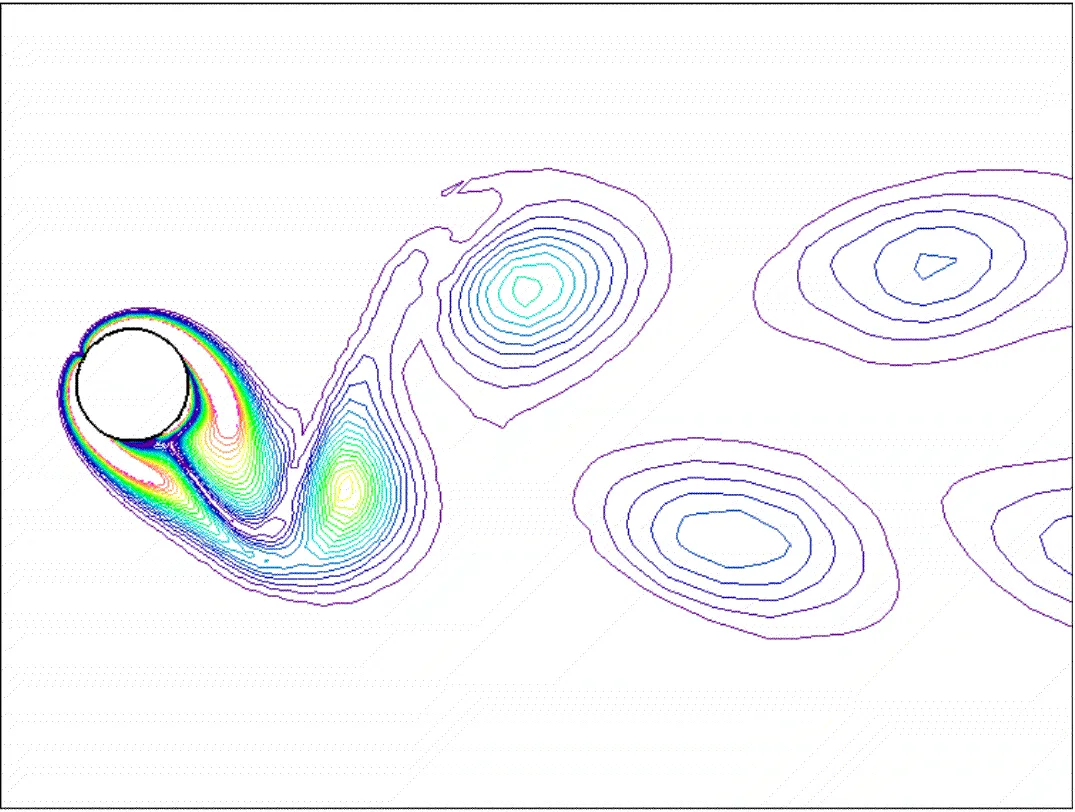
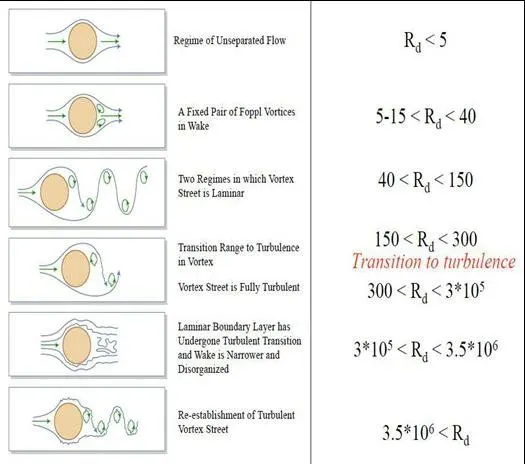
Vortex Shedding Formation and Reynolds No.(Re):-
Strouhal number: - Strouhal number is a dimensionless number describing oscillating flow mechanisms. The Strouhal number is often given as,
`St = (f *L)/U`
Where, f is the frequency of vortex shedding, L is the characteristic length and U is the flow velocity.The Strouhal Number represents the ratio of inertial forces due to the unsteadiness of the flow or local acceleration to the inertial forces due to changes in velocity from one point to another in the flow field.
PreProcessing :-
Geometry :-
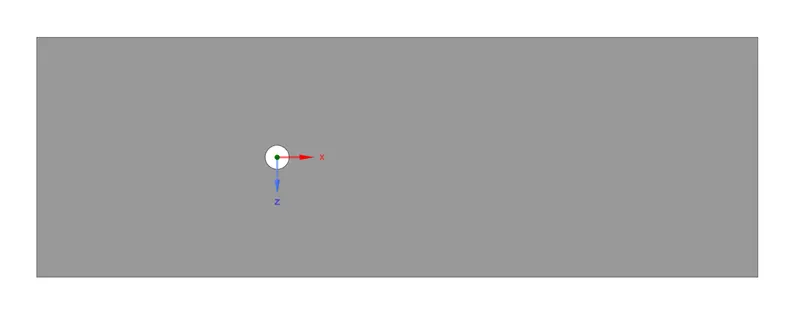
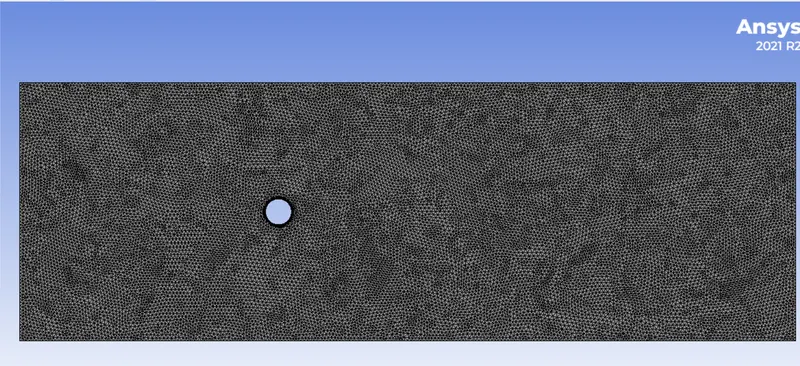
Mesh Generated:-
Case setup:-
Fluid:- Air
Viscosity = 0.02 Kg/m-s,
Density = 1 kg/m3,
Method:-
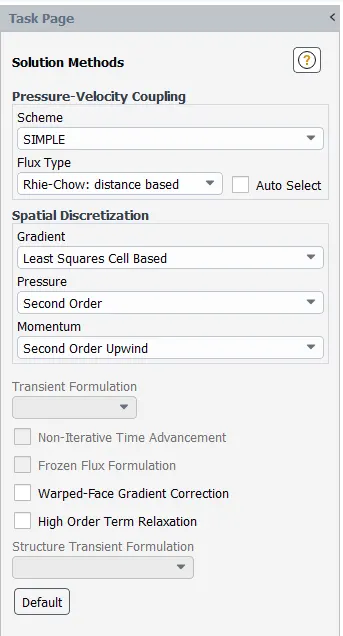
Part 1:- Unsteady state CFD Analysis
Velocity = 1 m/s
Re = 100,
Viscous Model :- Laminar
Time step size = 0.1,
No. of Time steps = 1250,
Residual Plot:-
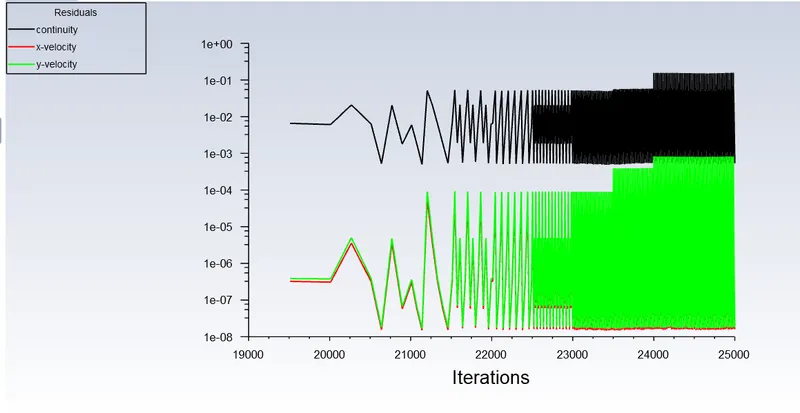
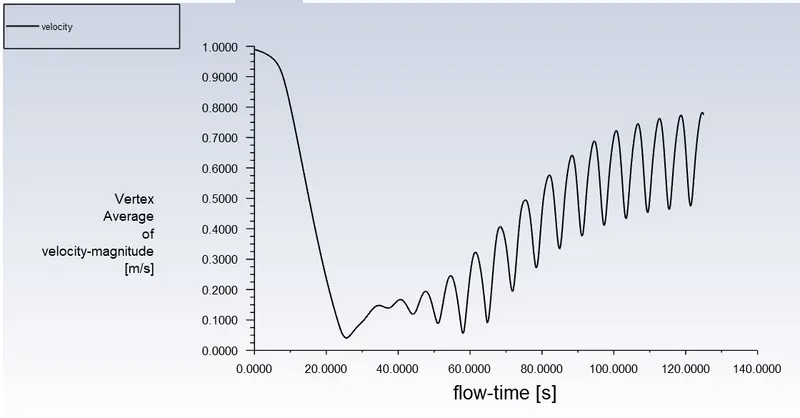
Moniter point Velocity:-
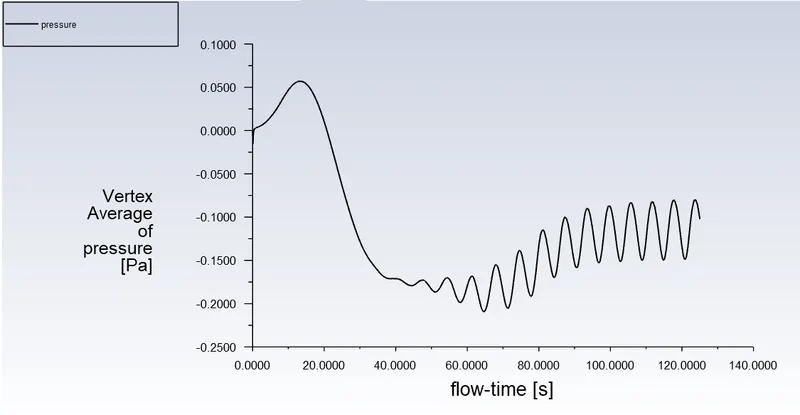
Moniter point Pressure:-
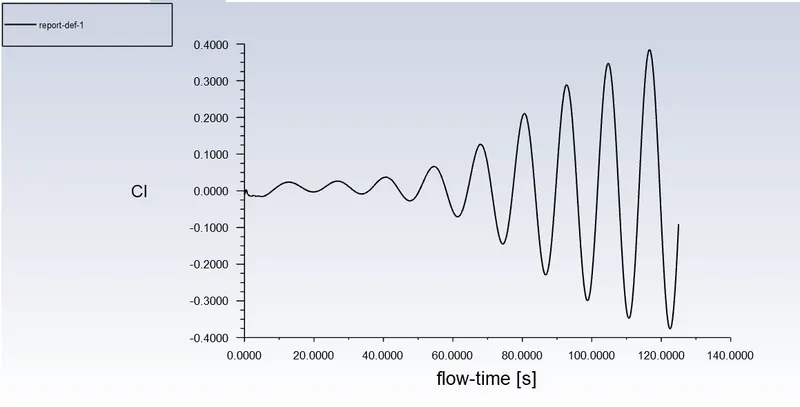
Lift Coefficient plot:-
Velocity Contour:-
Values of Cd and Cl for Transient Simulation :-
Cd = 1.378,
Cl = 0.211,
Calculationg Strouhal Number:- Freqency for calculating Strouhal Number can be obtained from lift plot as follows,
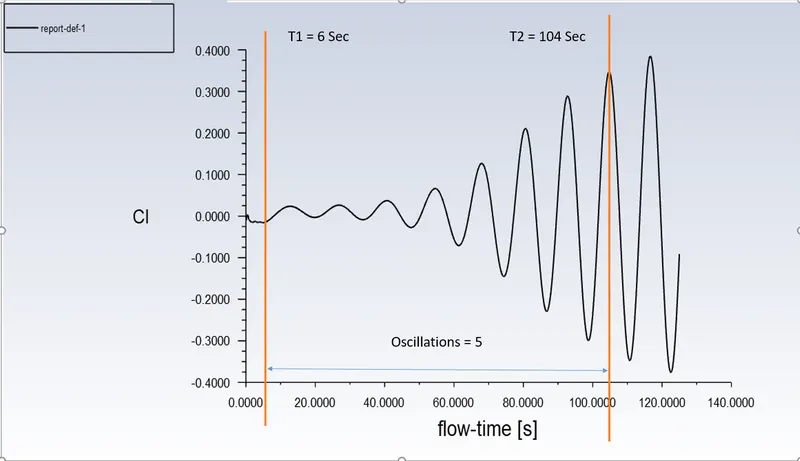
f = no. of oscillations/ Time
f = 5/ 98 = 0.0510.
St = f * D/ U = 0.0510*2 / 1
St = 0.102
Part 2:- Steady state CFD Analysis
Case 1:-
Velocity = 0.1 m/s
Re = 10,
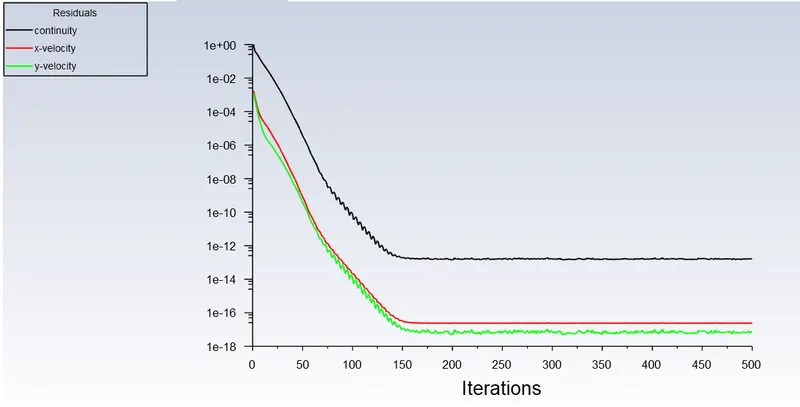
Residual Plot:-
Moniter point Velocity:-
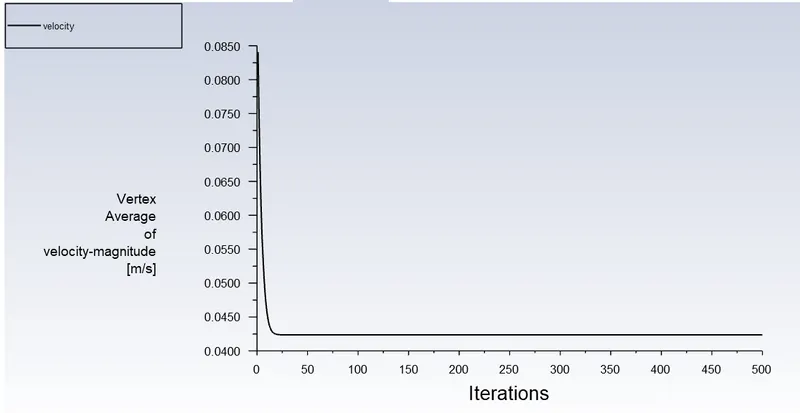
Moniter point Pressure:-
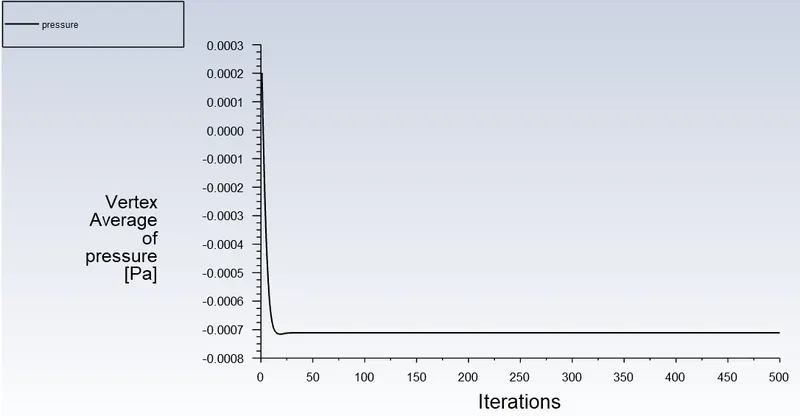
Drag Coefficient plot:-
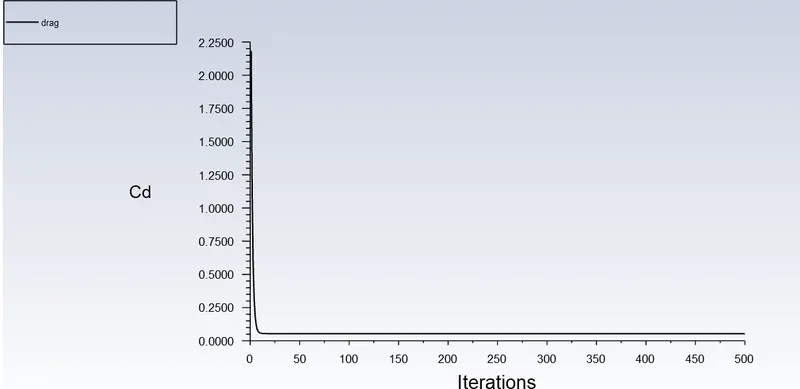
Lift Coefficient plot:-
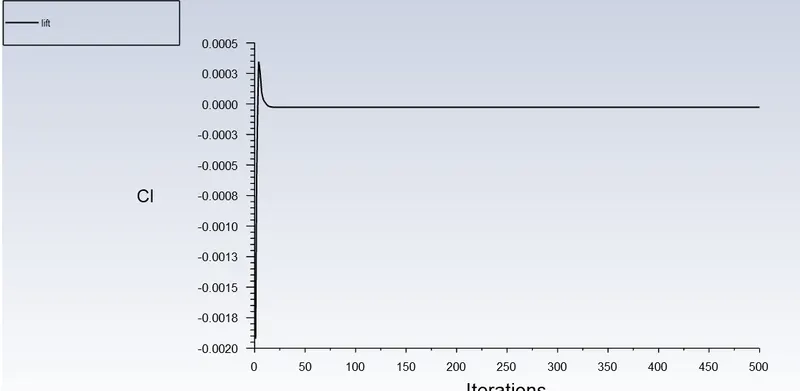
Velocity Contour:-
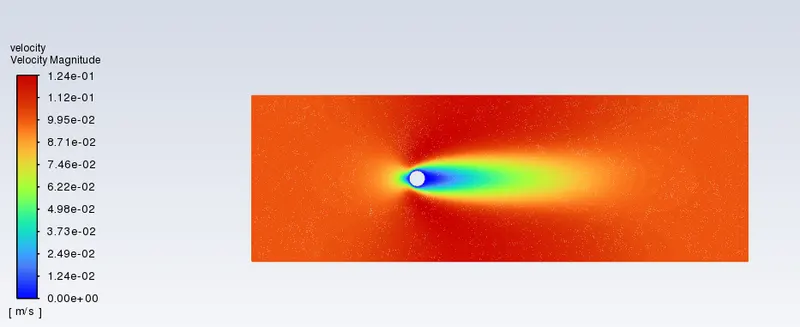
Case 2:-
Velocity = 1 m/s
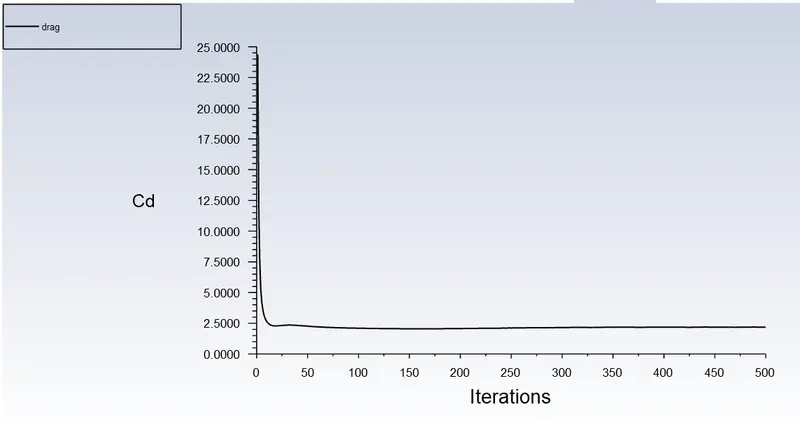
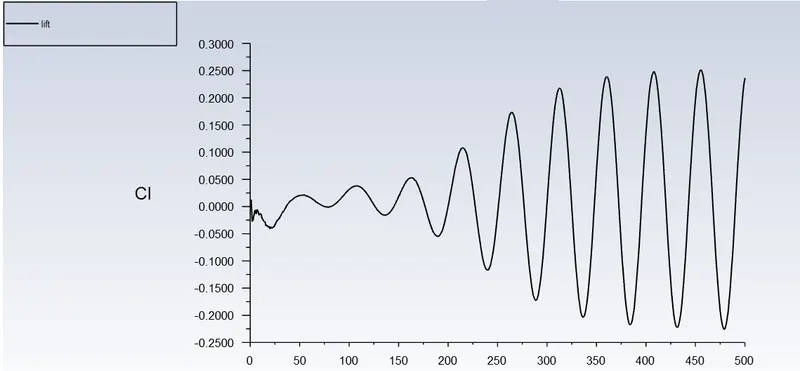
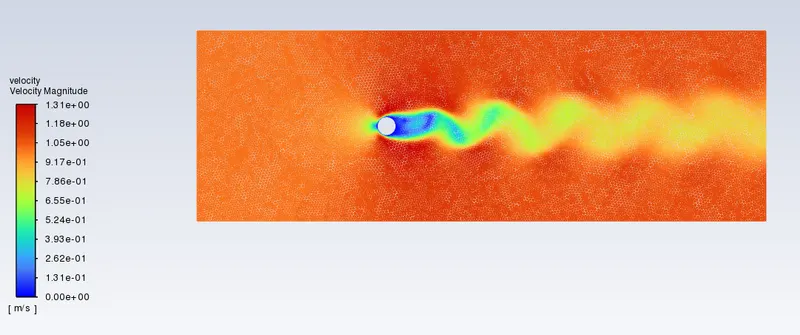
Re = 100,
Residual Plot:-
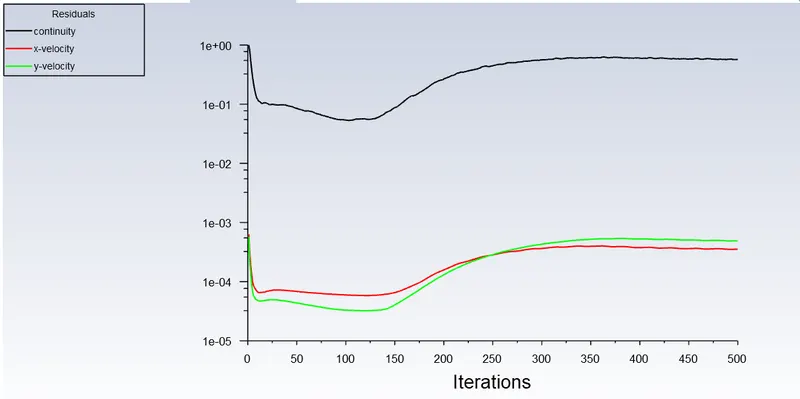
Moniter point Velocity:-
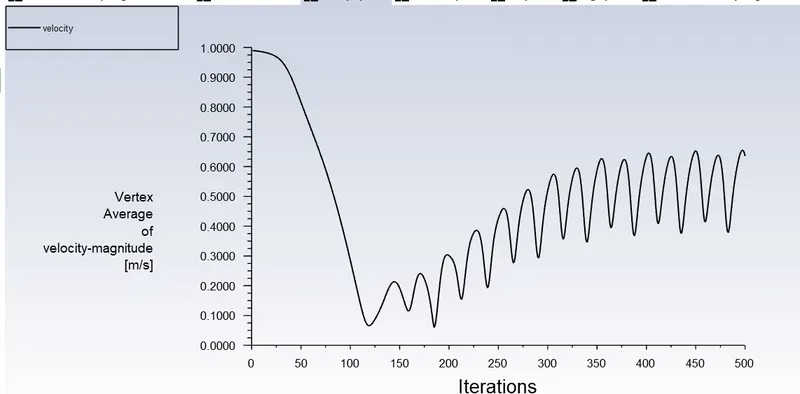
Moniter point Pressure:-
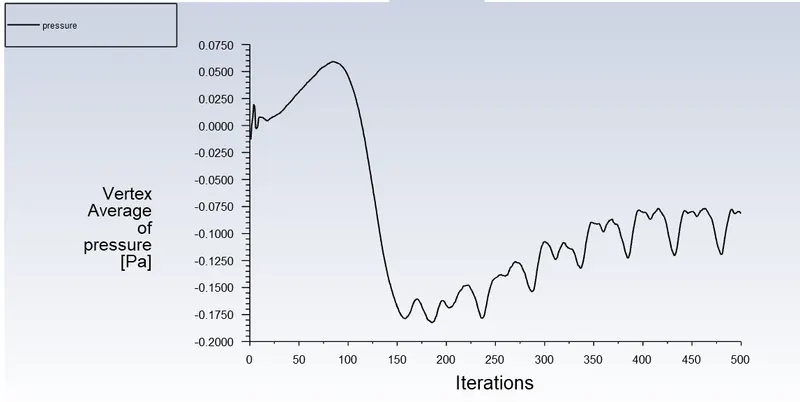
Drag Coefficient plot:-
Lift Coefficient plot:-
Velocity Contour:-
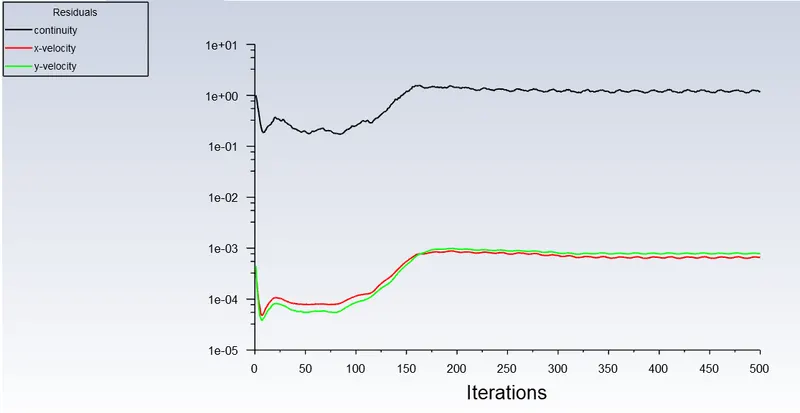
Case 3:-
Velocity = 10m/s
Re = 1000,
Residual Plot:-
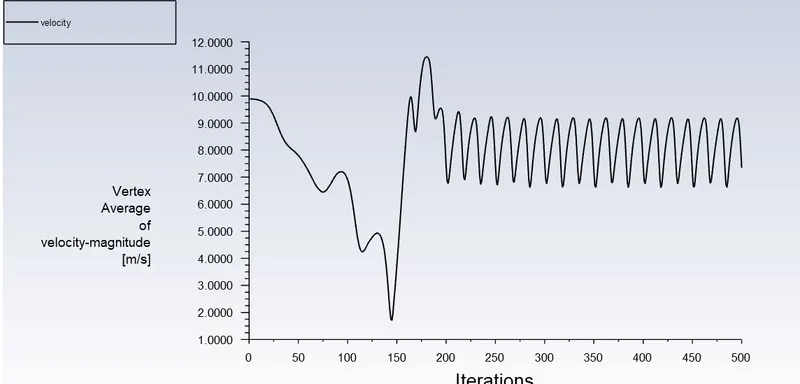
Moniter point Velocity:-
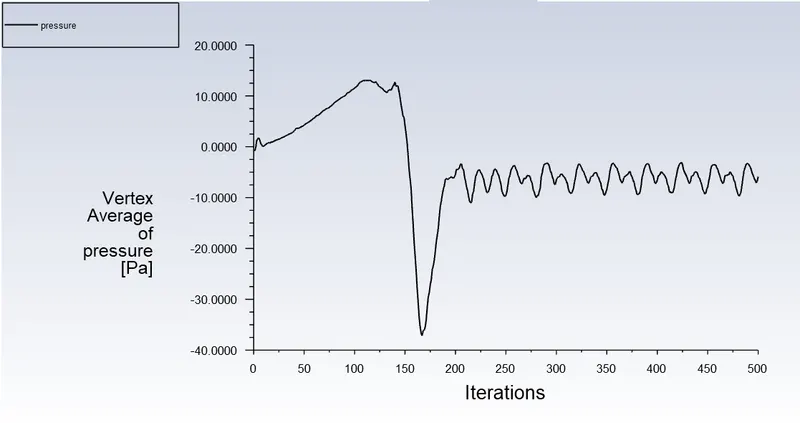
Moniter point Pressure:-
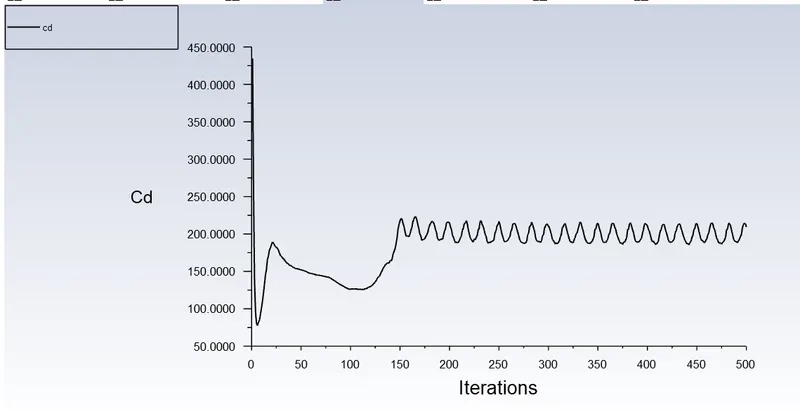
Drag Coefficient plot:-
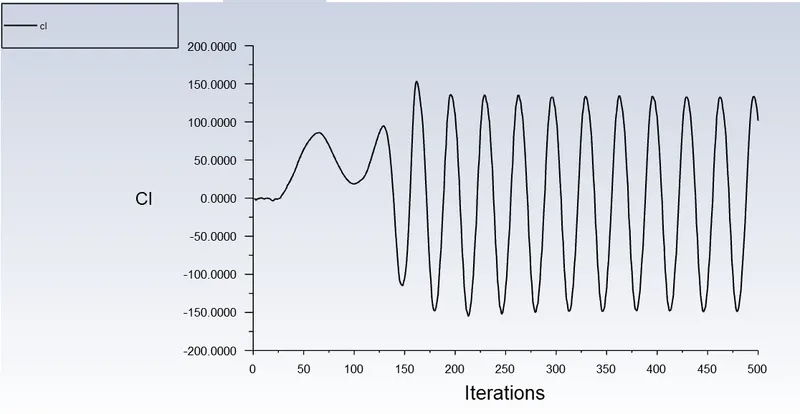
Lift Coefficient plot:-
Velocity Contour:-
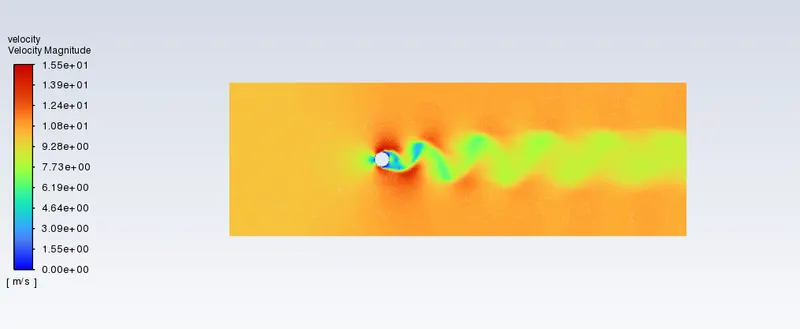
Case 4:-
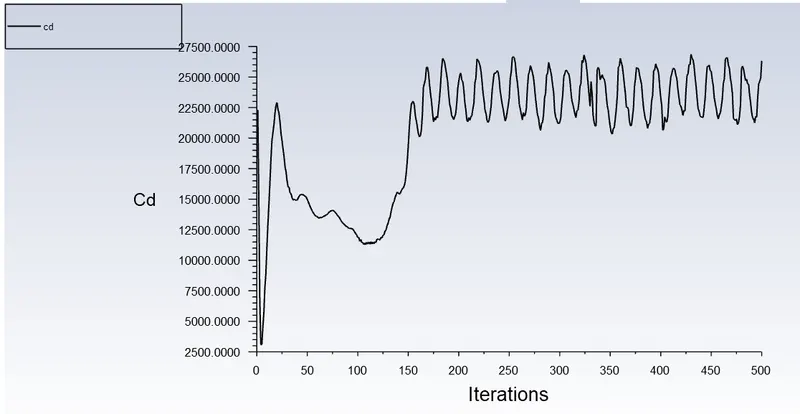
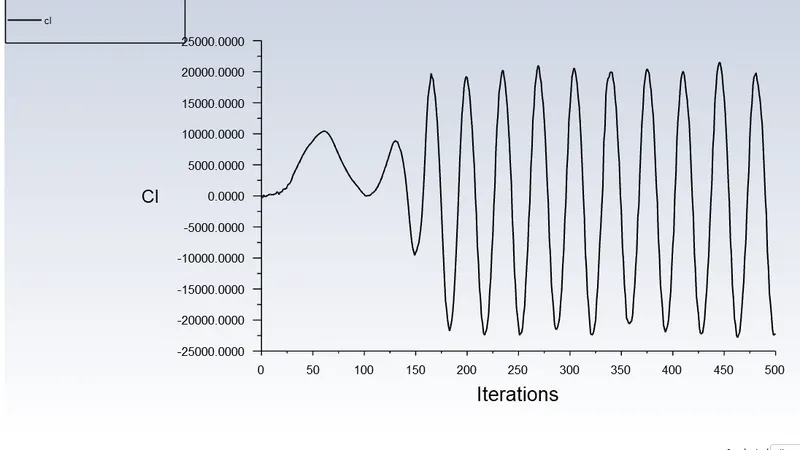
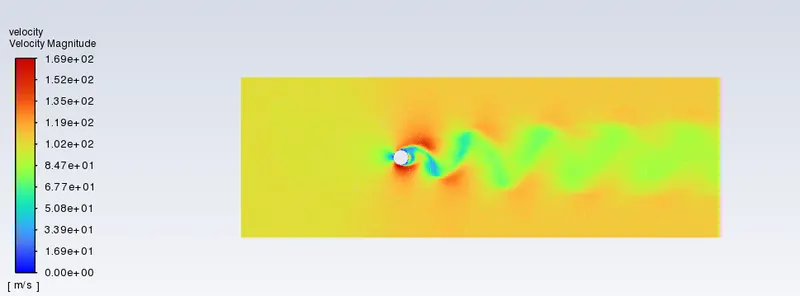
Velocity = 100 m/s
Re = 10000,
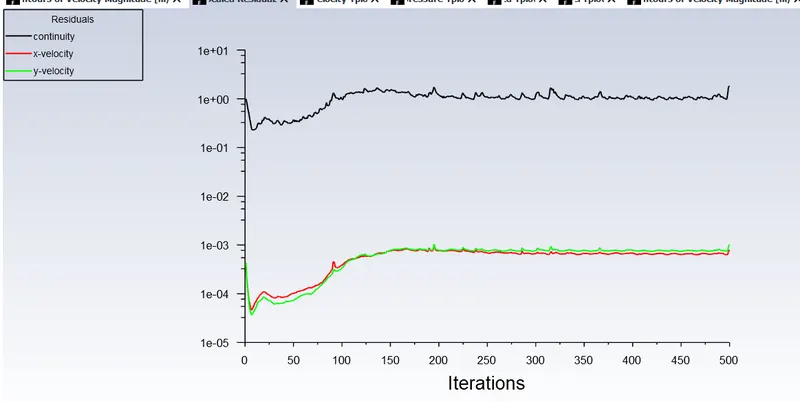
Residual Plot:-
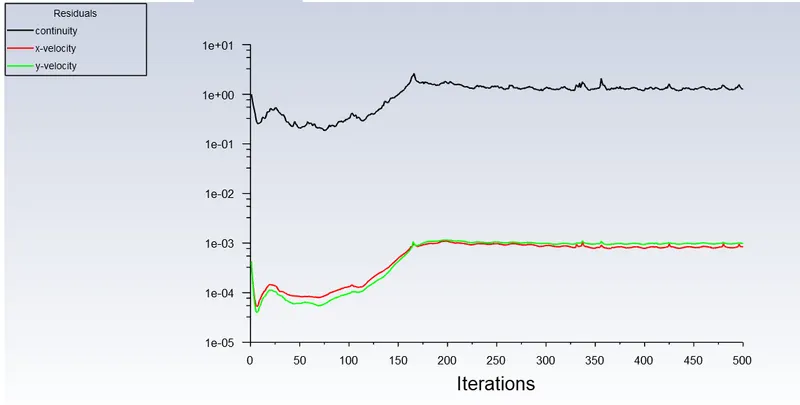
Moniter point Velocity:-
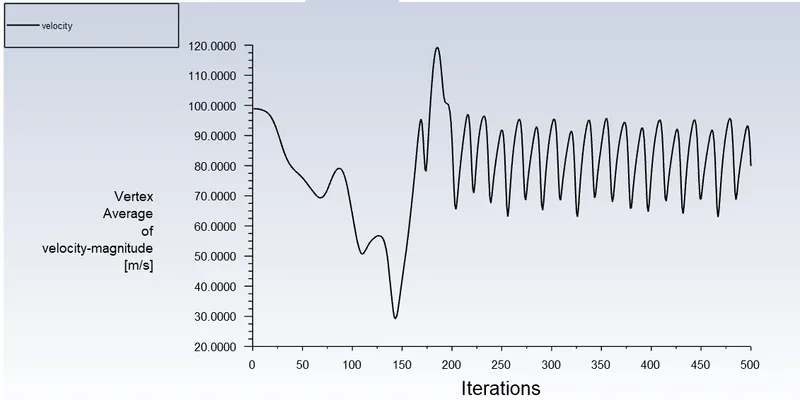
Moniter point Pressure:-
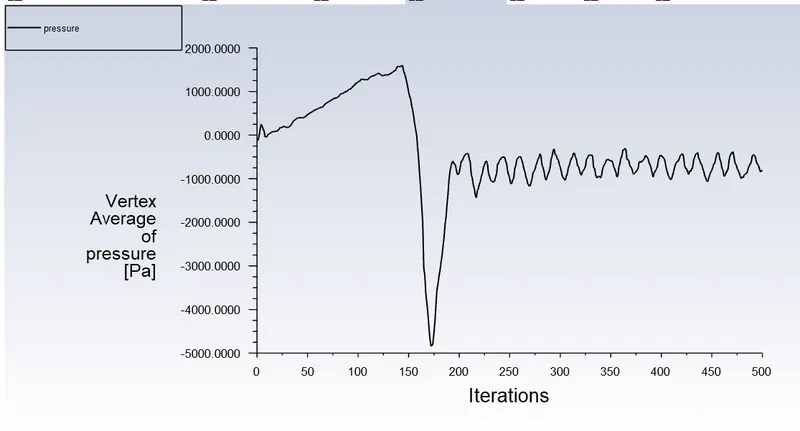
Drag Coefficient plot:-
Lift Coefficient plot:-
Velocity Contour:-
Case 5:-
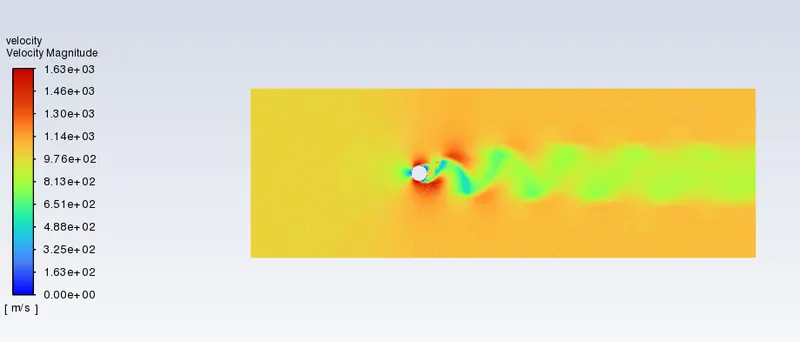
Velocity = 1000 m/s
Re = 100000,
Residual Plot:-
Moniter point Velocity:-
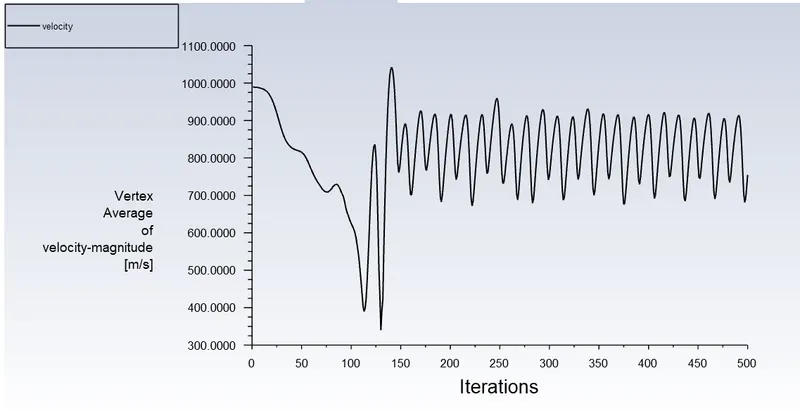
Moniter point Pressure:-
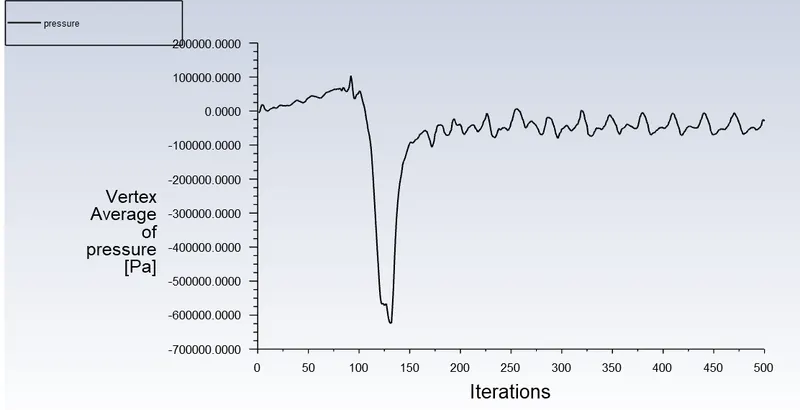
Drag Coefficient plot:-
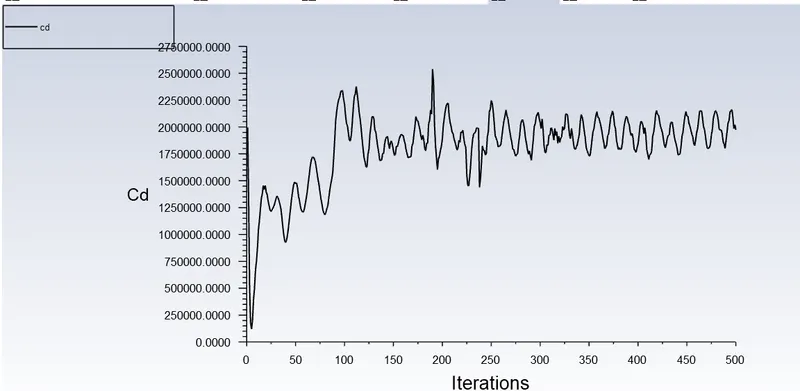
Lift Coefficient plot:-
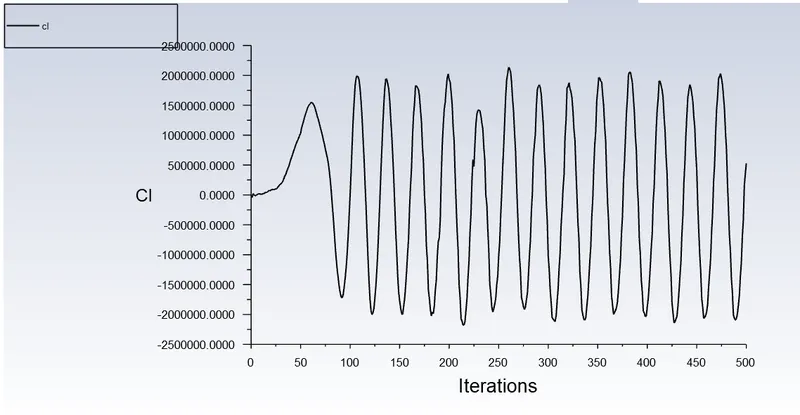
Velocity Contour:-
Cd and Cl :-
| Reynolds No. (Re) | Coefficient of Drag (Cd) | Coefficient of Lift (Cl) |
| 10 | 3.326 | 0.00093 |
| 100 | 1.332 | 0.01 |
| 1000 | 0.726 | 0.11 |
| 10000 | 0.807 | 0.29 |
| 100000 | 0.783 | 0.17 |
Conclusion:-
1. As Reynolds number value increases coefficent of drag (Cd) decreases acting on walls.
2. For lower Reynolds no. = 10 there is no vortex formation. From Re = 100 and above vortex shedding is formed.
Reference:- Numerical study of the flow over a circular cylinder in the
near wake at Reynolds number 3900. (Y. M. Shim1, Rajnish N. Sharma2, and P. J. Richards3
The University of Auckland, Auckland 1142, New Zealand )