Week 2 - Flow over a Cylinder.
Flow over a Cylinder.
Aim:-
To simulate the flow over a cylinder and explain the phenomenon of Karman vortex street. Understanding the vortex shedding for different Reynolds numbers by changing the inlet velocities accordingly.
Objective:-
- PART-I
- Simulate the flow with the steady and unsteady case and calculate the Strouhal Number for Re= 100.
- PART-II
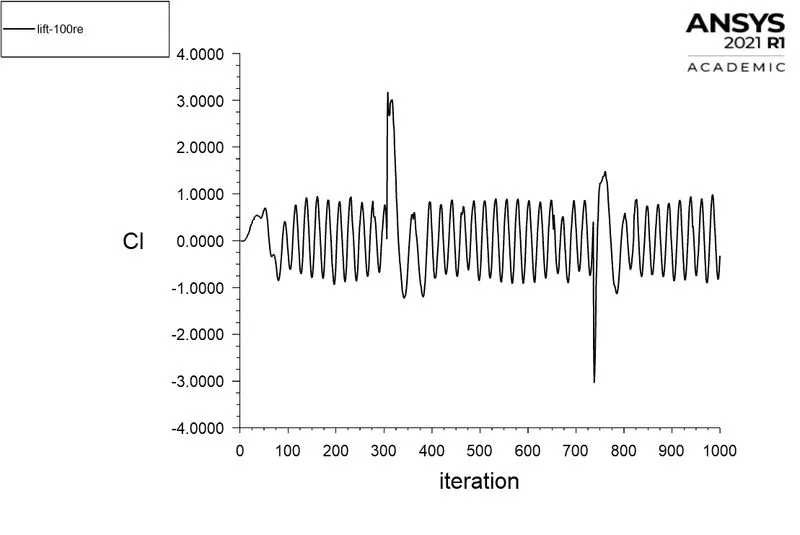
- Calculate the coefficient of drag and lift over a cylinder by setting the Reynolds number to 10,100,1000,10000 & 100000. (Run with steady solver)
- Discuss the effect of Reynolds number on the coefficient of drag. [ Results should be validated with any standard literature and error should be within 5 %]
- PLOT
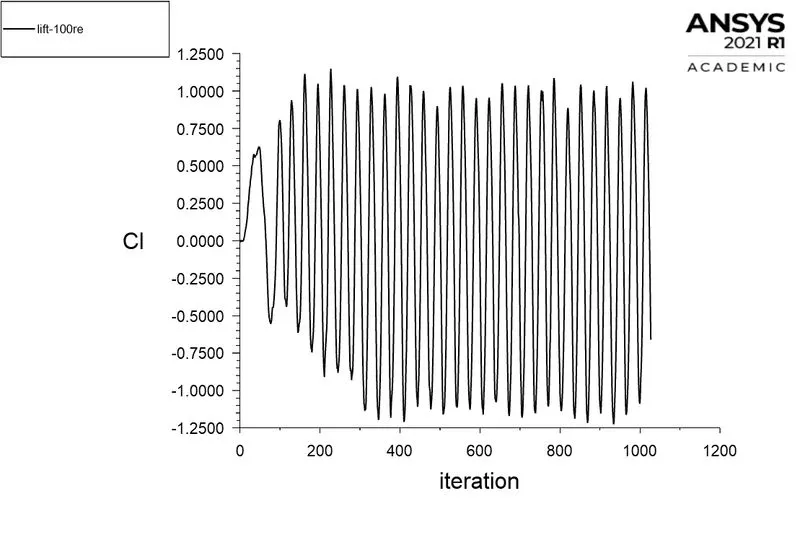
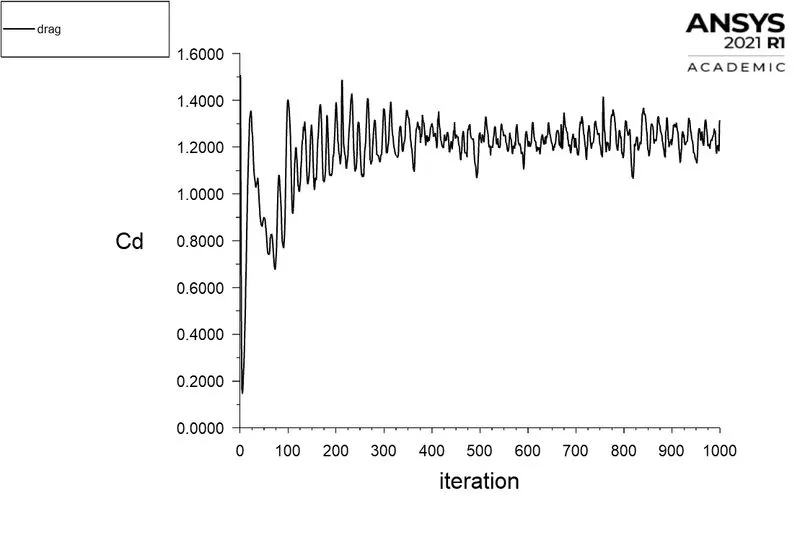
- Plots of the coefficient of drag and lift.
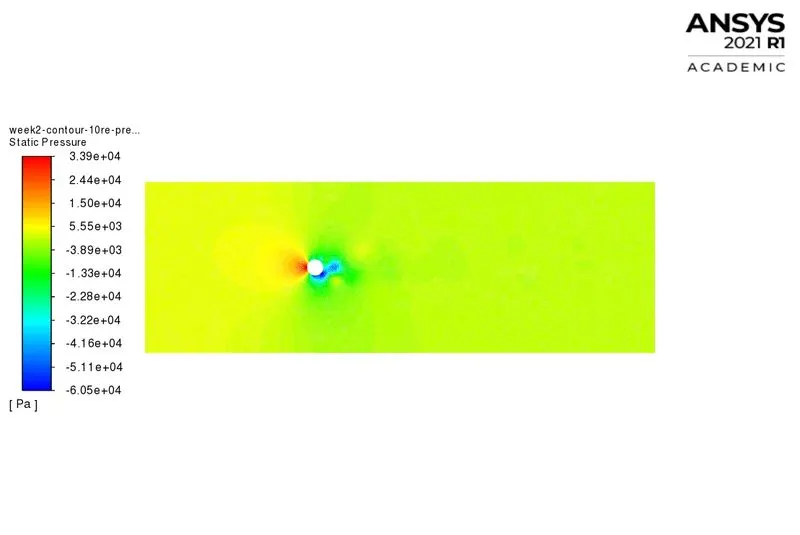
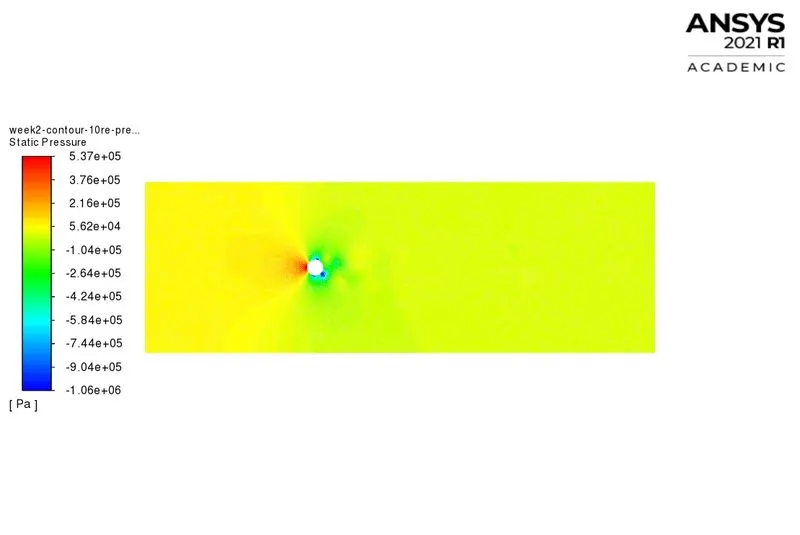
- Plots to show vortex shedding behind the cylinder.
- Mention the preferred material at the end of the challenge submission page.
- THEORY:-
The flow over bluff bodies like spheres and circular cylinders are classical problems in fluid mechanics focused on the influence of turbulence on the wind pressure and aerodynamic behavior of smooth circular cylinders studied numerically the flow past a yawed circular cylinder using large eddy simulation. They pointed out that the boundary condition of the two end-plates has a significant effect on the flow behaviors in the wake of investigating experimentally the effect of a rod on the flow around a square cylinder at incidence carried out an experimental study on nonstationary three-dimensional aspects of flow past a circular cylinder and found that the flow behaviors are critically affected by the presence of a separation bubble. focused on the vortex shedding and transition frequencies associated with the flow around a circular cylinder. During an oil drilling process, complex motion of the drill string and the settling velocity of drill cuttings in drilling fluids have been the focus of investigations in the field of petroleum engineering presented a biomass devolatilization model describing both spherical and cylindrical particles for suspension firing investigated the flow and heat transfer past a sphere, and the first proposed the appropriate drag coefficient to replace the inertia type definition proposed by Sir Isaac Newton.
The flow over a circular cylinder is a classic example of flow over a bluff body and frequently serves as a benchmark to help understand flow separation and vortex shedding. Extensive studies have been carried out on this classic problem in the past century. A literature survey indicates that resistance formulas for a wide range of Reynolds (Re) numbers are rarely reported, especially concerning the absence of a classical drag relationship in the entire range of Re numbers.
Karman vortex street:-
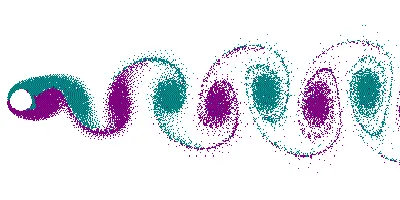
- In karman vortex street there is a repeating pattern of swirling vortices caused by vortex heading which is due to unsteady separation of the flow of a fluid around blunt bodies.
- A vortex street will form only at a certain range of flow velocities specified by a range of Re.
- The Reynolds number for a flow is a measure of the ratio of inertial to viscous forces in the flow nondimensional parameter of the global speed of the whole fluid flow.
GEOMETRY CREATION:-
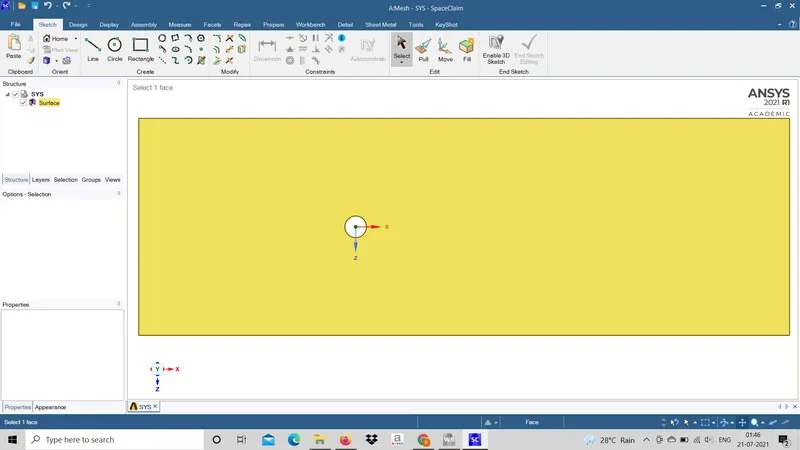
Creat geometry of diameter as given below and select pull.
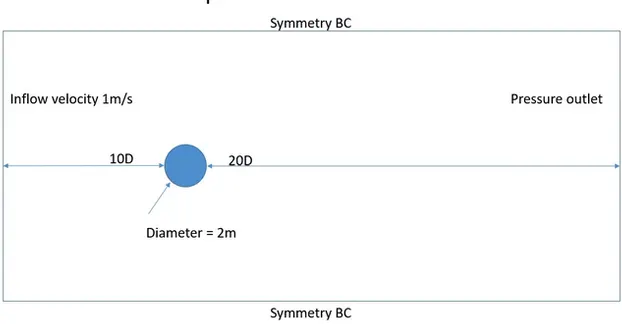
Model
Meshing:-
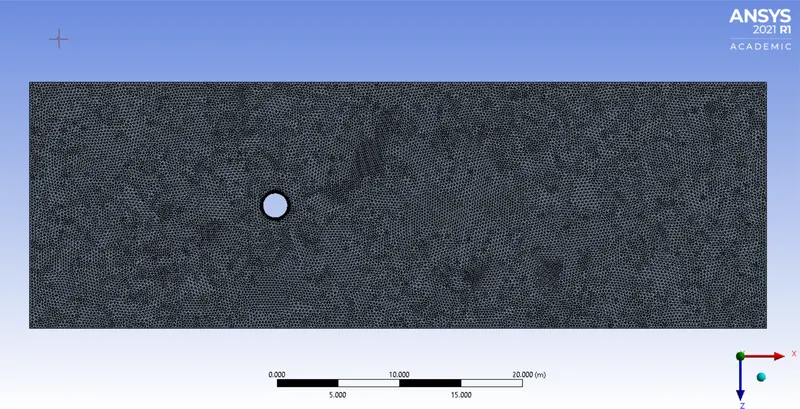
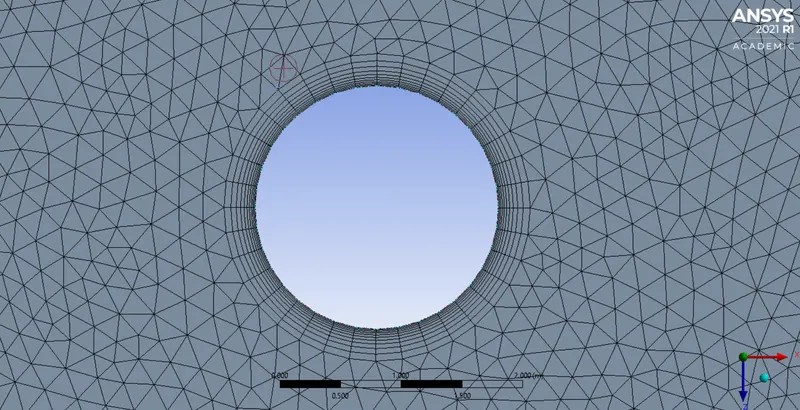
Mesh size:-0.22889 m
Method- All triangle
edge sizing:- 36
Inflation layer:- 10
once the messing is done name inlet, outlet, wall & symmetry.
Simulation set up:-
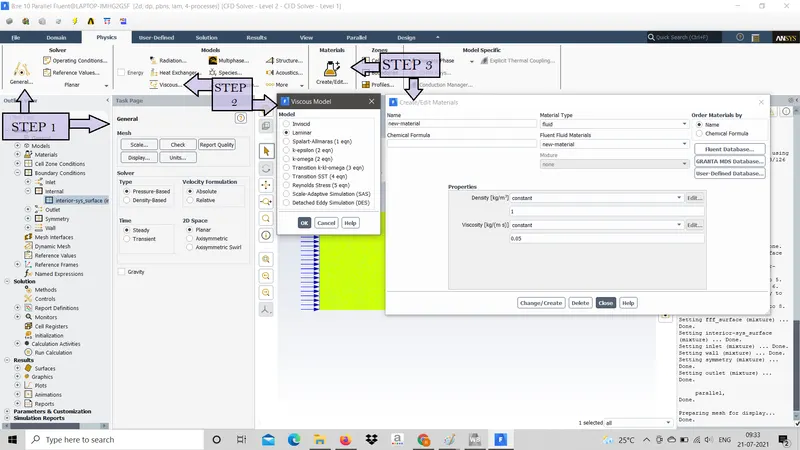
- STEP 1
- Genral -> solver -> select stead and select transient state solver for unsteady condition
- STEP 2
- Viscous.. -> Laminar.
- STEP 3
- Material -> Create/edit -> Creat new material by copying fluent database and change velocity to 0.05 and density to 1.
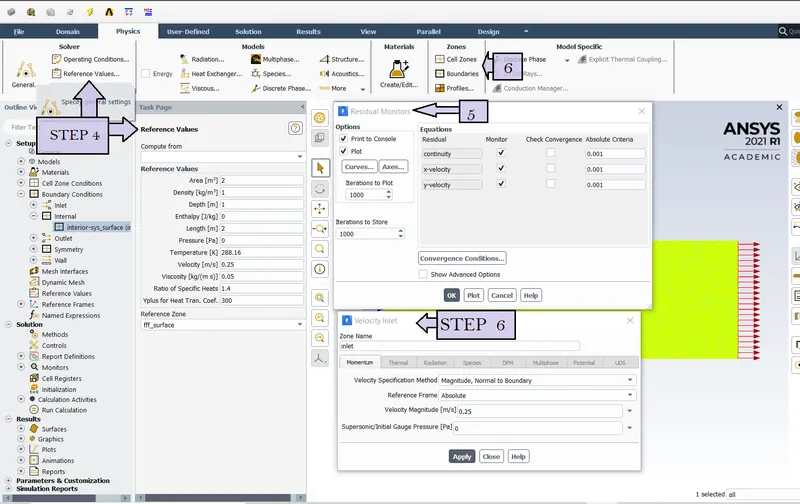
- STEP 4
- Reference values -> area=2; length=2; velocity=0.25 & visvocity=0.05
- STEP 5
- SOLUTION -> Residual monitors -> uncheck convergence.
- STEP 6
- Zone -> select cell zones -> edit surface and select new-material; Boundary -> Inlet -> velocity magnitute=0.025.
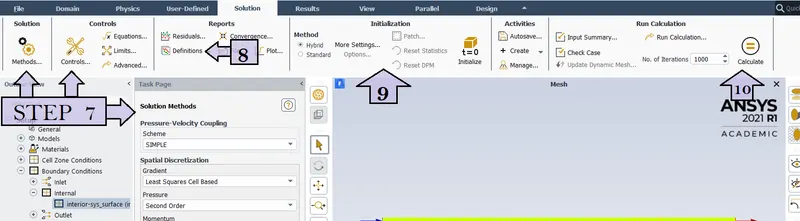
- STEP 7
- Method -> solution method -> SIMPLE. Control -> default.
- STEP 8
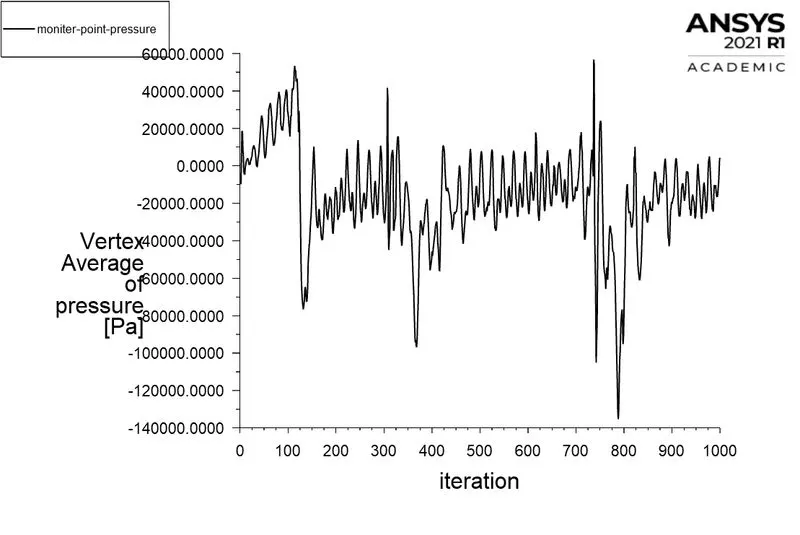
- Definitions -> New -> surface report -> vortex Average -> creat velocity and pressure at monitor point.Note- before creating definitions creat a monitering point at x-10,y-0.
- STEP 9
- Set Method to -> hybrid -> Initialize.
- STEP 10
- No. of iteration=1000 & Hit calculate.
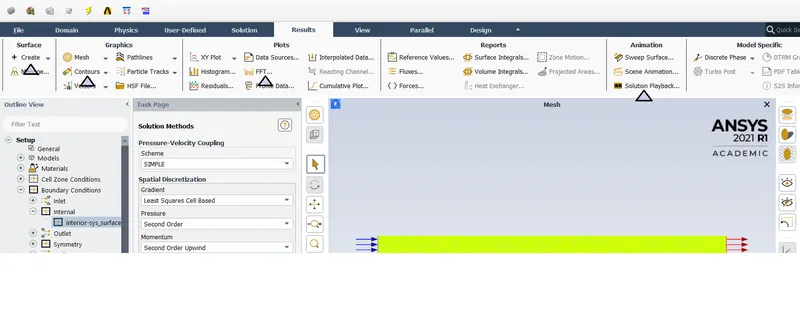
- +Create to generate a monitering point at (10,0)
- Contours -> new -> gerate contour for pressure and velocity
- FFT for generating strouhal number:- Input file (input velocity file) -> x axis strouhal number -> y axis -> magnitude.
- Solution playback To creat animation select SOLUTION -> Activities -> + create -> solution animation -> generate animation using the contours.
PART 1-
CASE 1
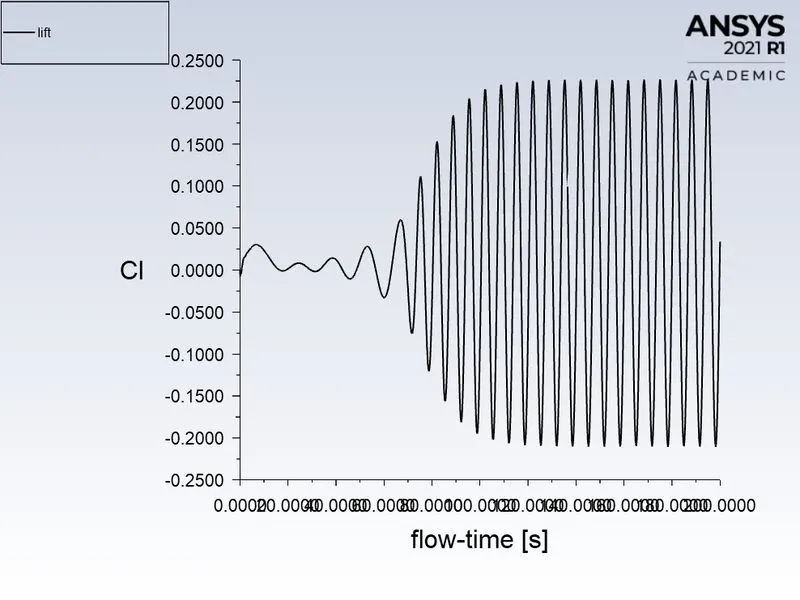
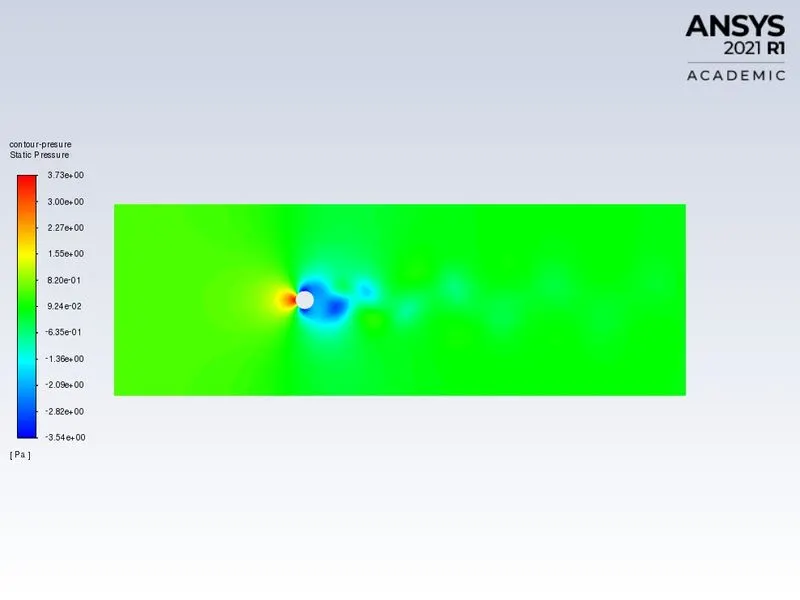
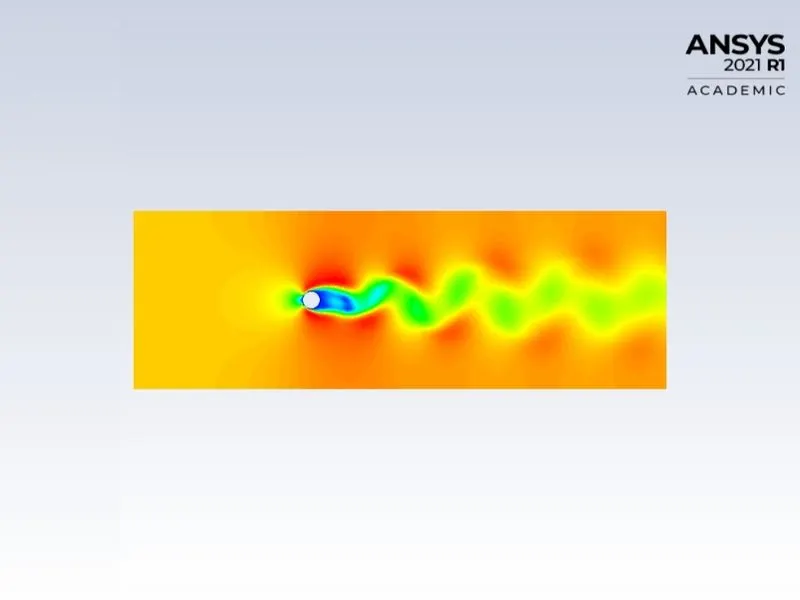
Simulation of flow with the steady and unsteady case and calculation of Strouhal Number for Re= 100.
- Steady
considering the fluid property having density of 1 kg/m^3 and viscosity of 0.05mPa.
We know, Renolds number
`Re = (rho*U*L) /mu`
`therefore U= (Re)/L *(mu/rho)`
where,
Re = Reynolds number,
`rho` = density of fluid
`mu`= dynamic viscosity
L = linear dimension
U= velocity.
As the diameter of cylinder is 2m so our characteristic length will be 2m
`U = 100/2 times (0.05)/1`
`U = 2.5`m/s.
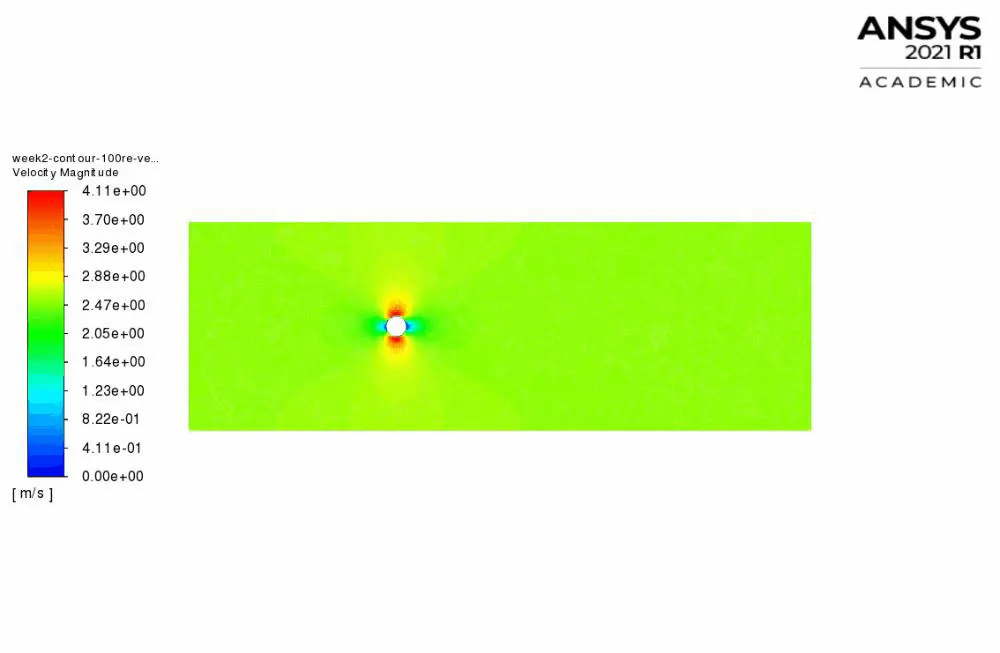
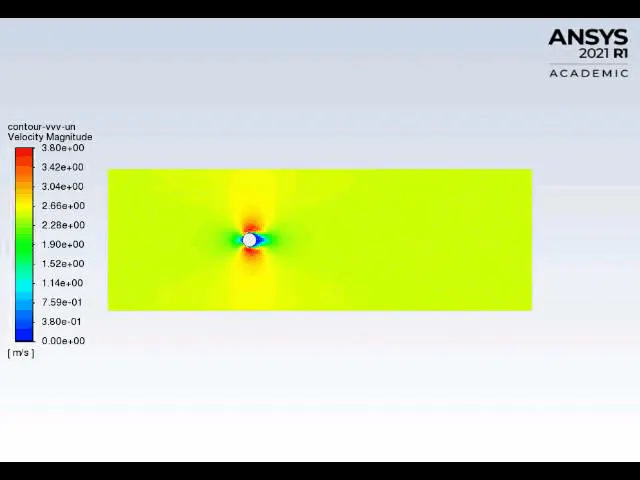
- Unsteady
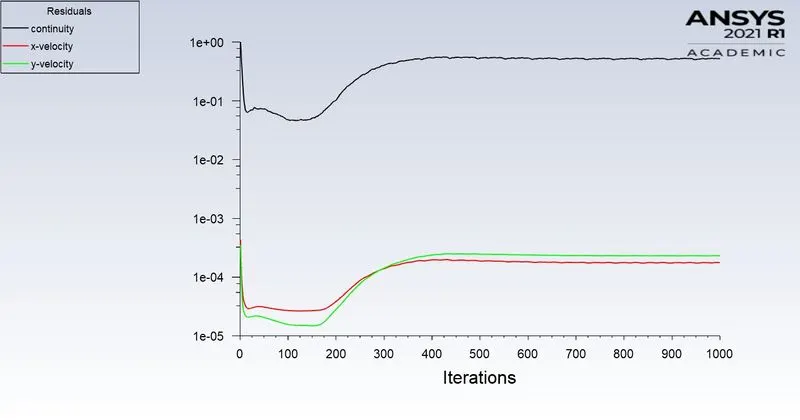
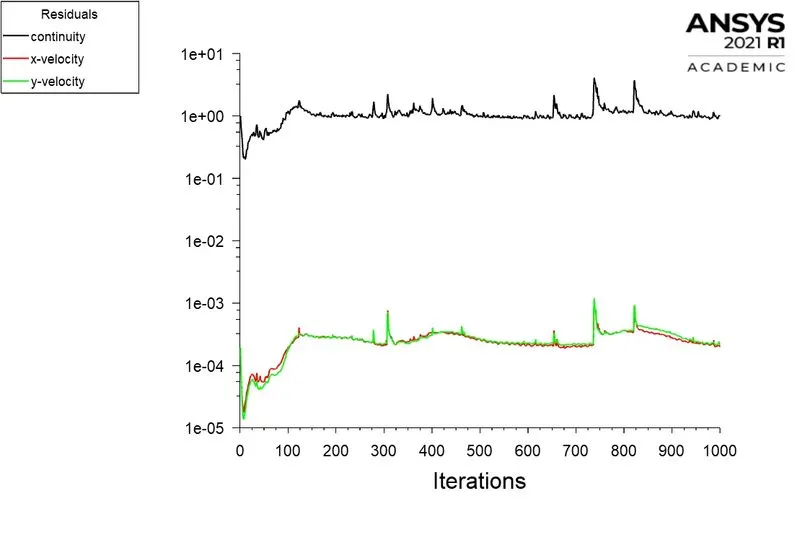
Residual plot
- Steady
- Unsteady
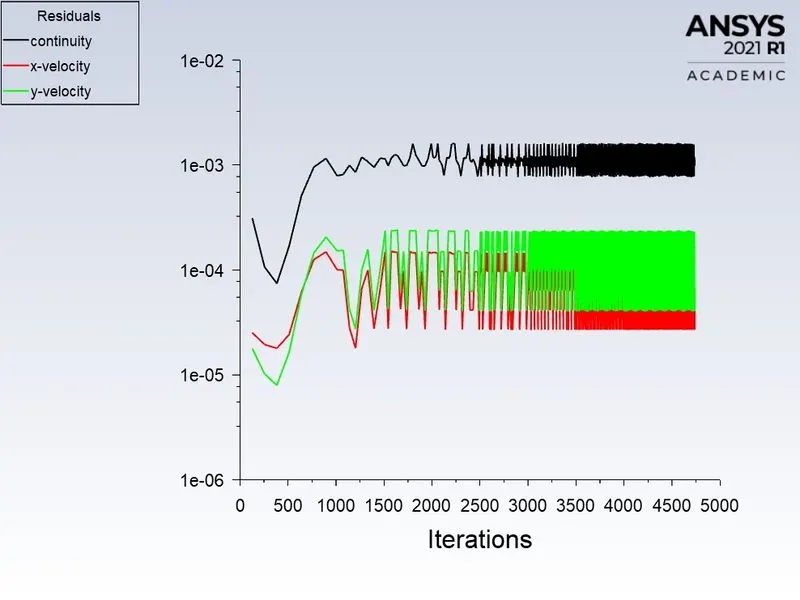
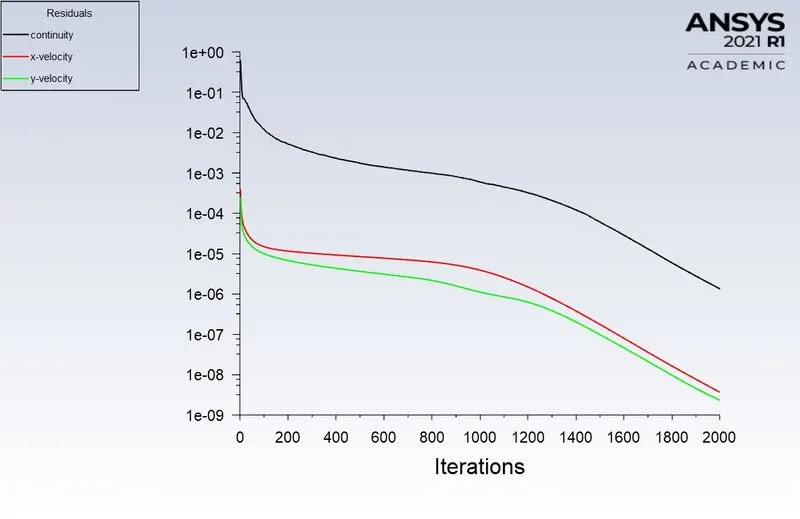
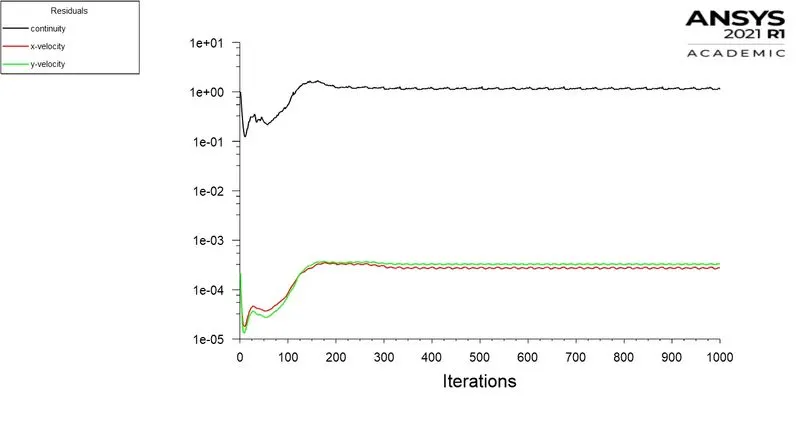
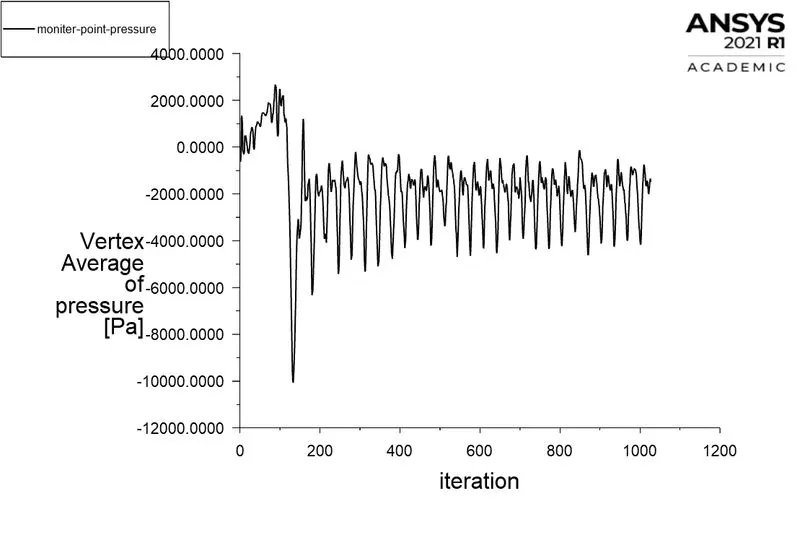
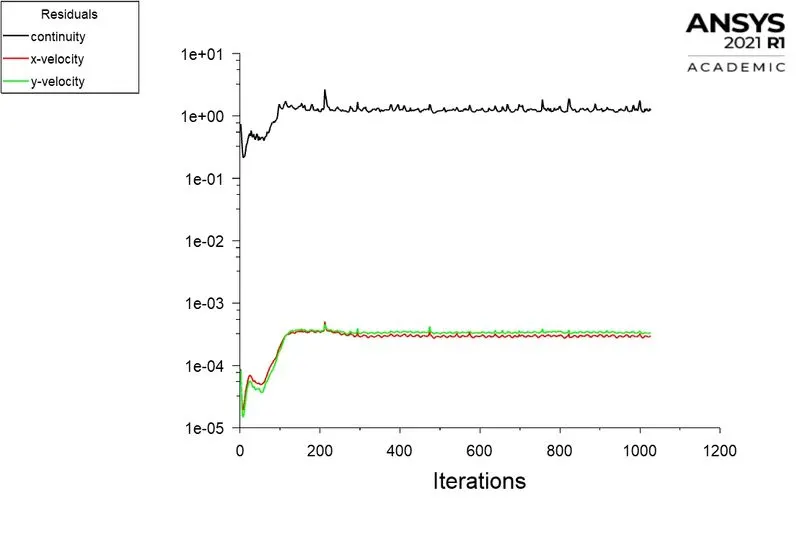
From the above plots, we can see the steady-state getting converged around 500 iterations, but in the transient state, we can predict when the flow is getting converged.
- Result and plot steady state.
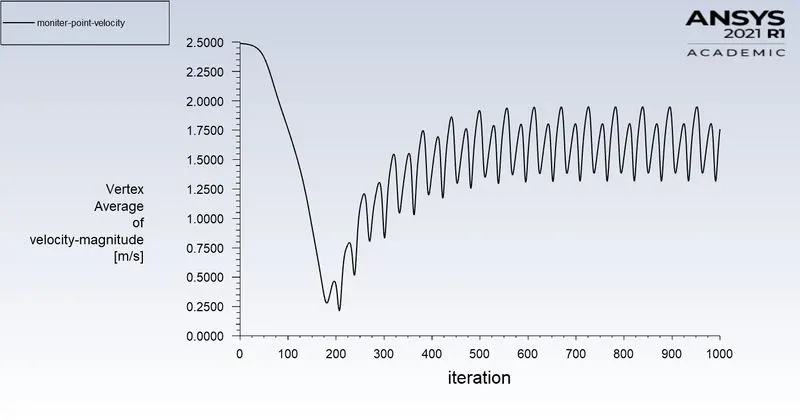
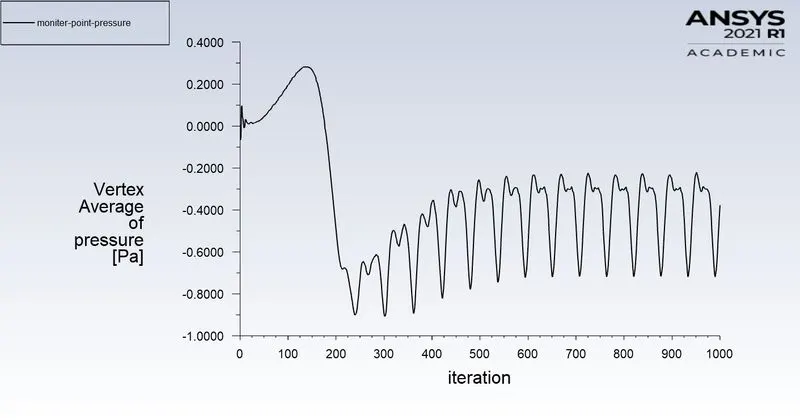
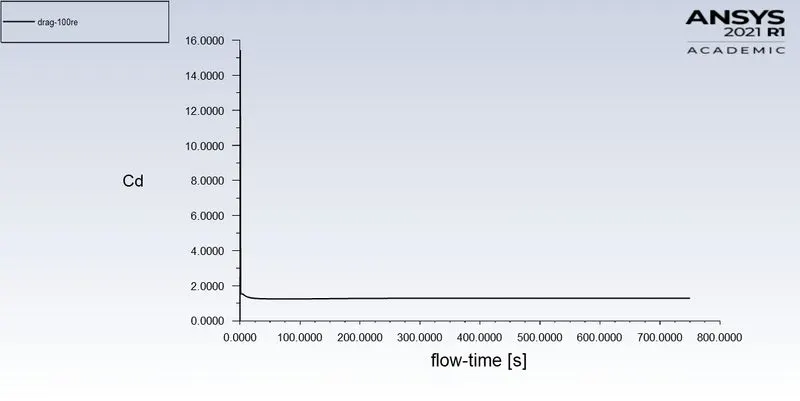
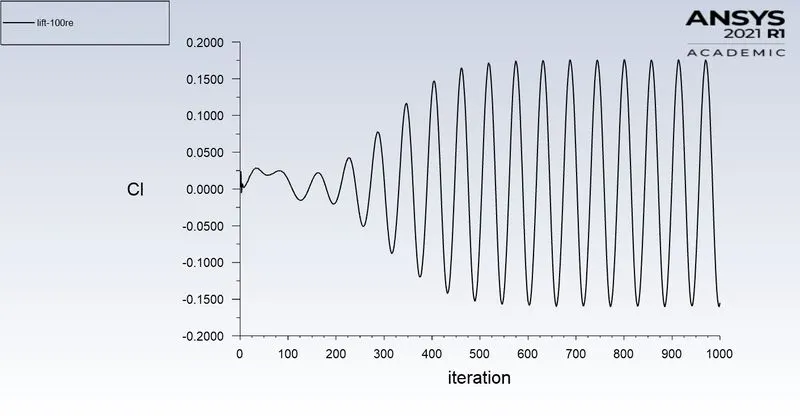
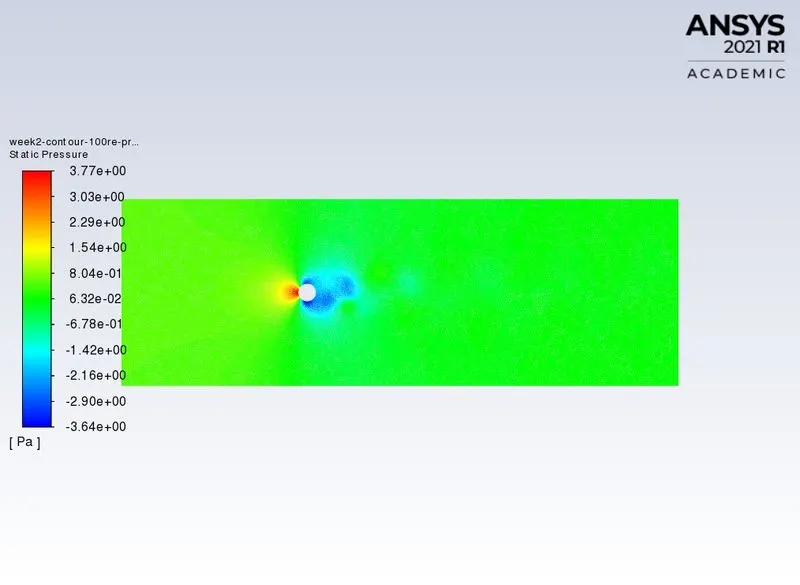
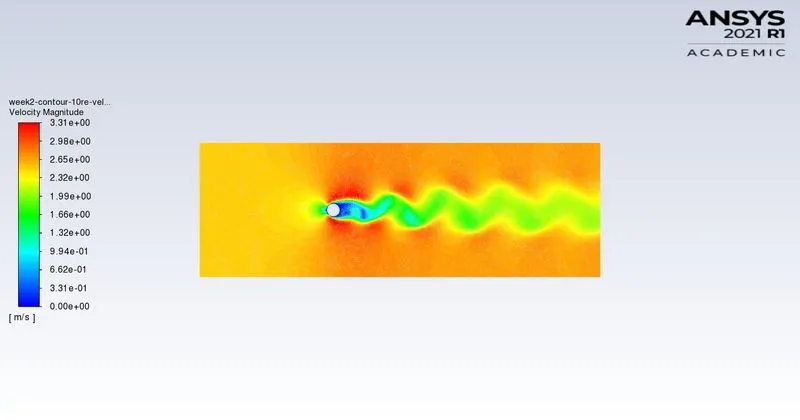
- Result and plot unsteady state.
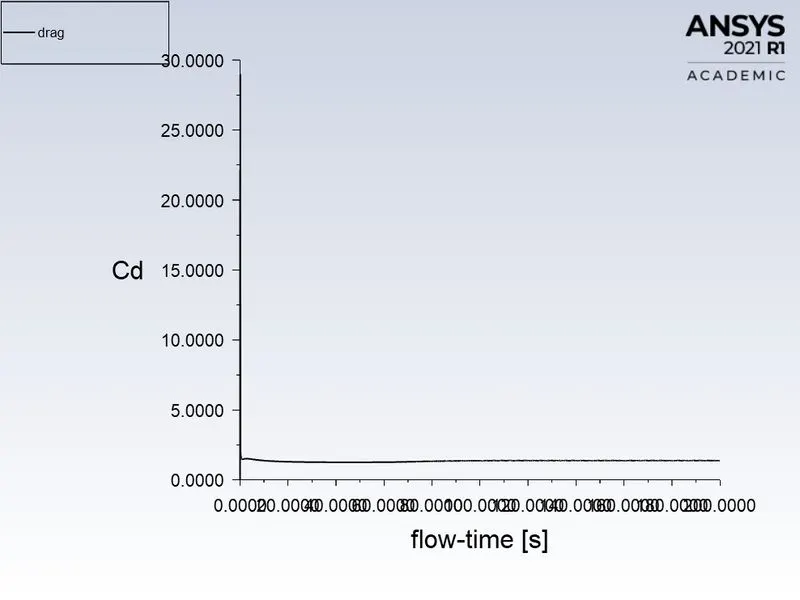
CASE 2
Calculate the coefficient of drag and lift over a cylinder by setting the Reynolds number to 10,100,1000,10000 & 100000 using steady solver
Part 1
For Re=10
considering the fluid property having density of 1 kg/m^3 and viscosity of 0.05mPa.
We know, Renolds number
`Re = (rho*U*L) /mu`
`therefore U= (Re)/L *(mu/rho)`
As the diameter of cylinder is 2m so our characteristic length will be 2m
`U = 10/2 times (0.05)/1`
`U = 0.25` m/s.
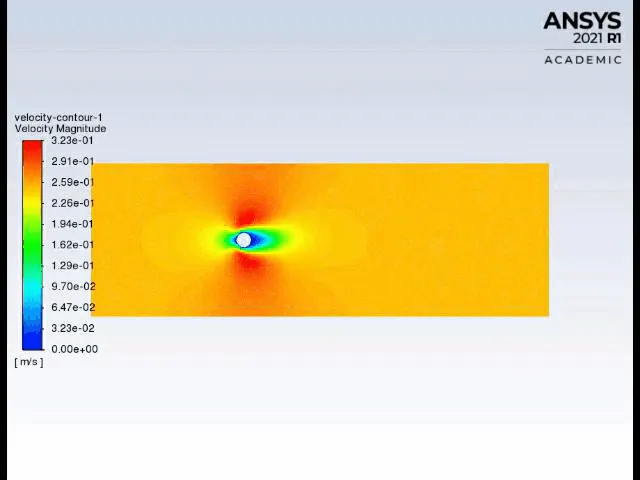
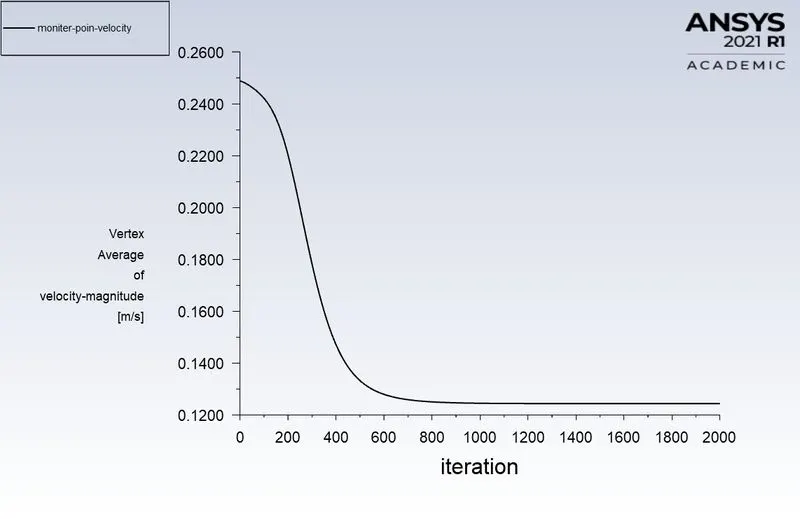
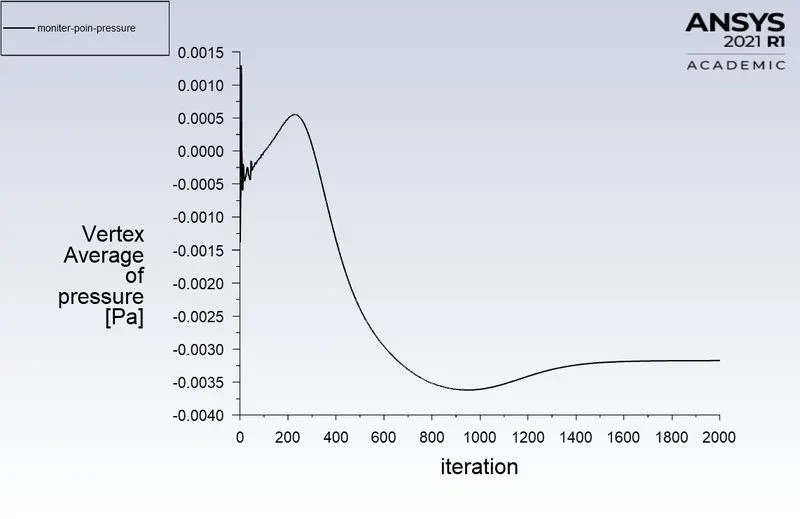
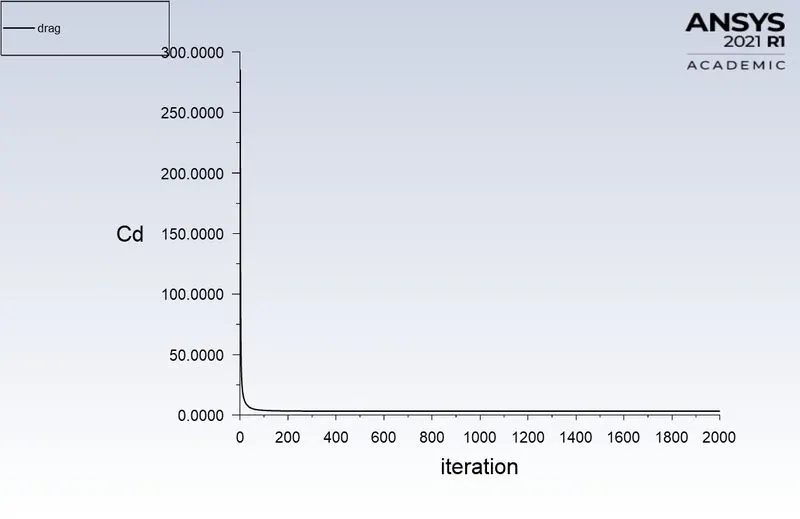
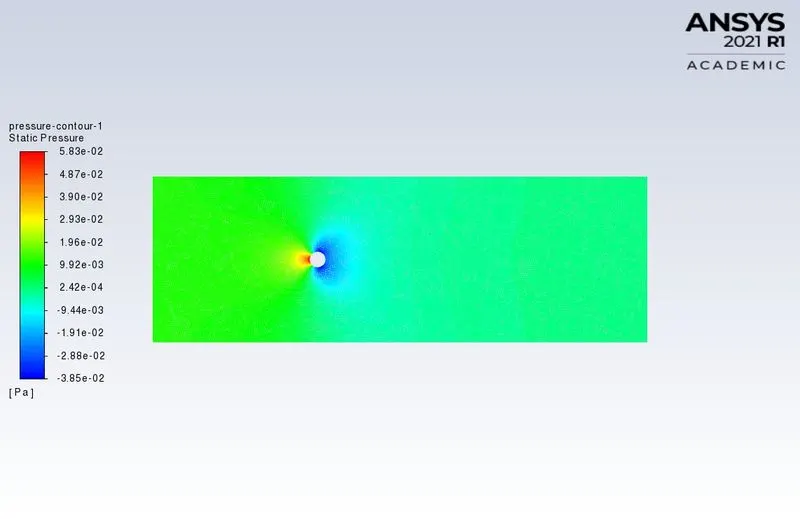
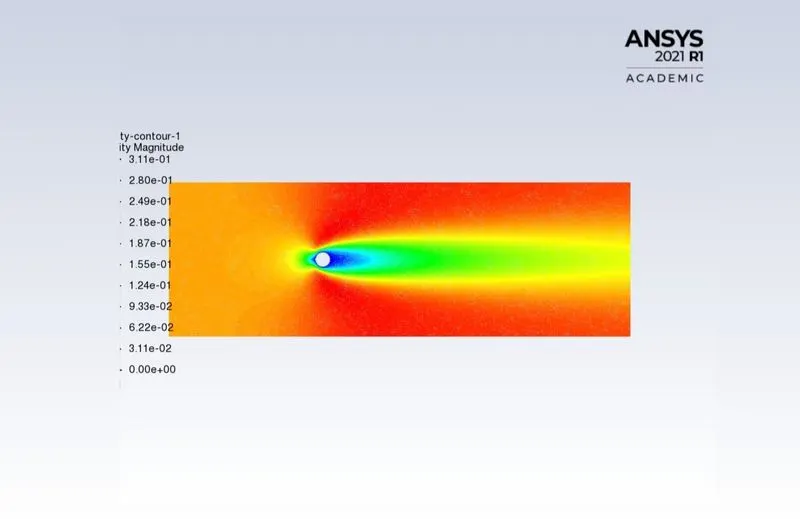
- Result and plot steady state for Re=10
For Re=100
considering the fluid property having density of 1 kg/m^3 and viscosity of 0.05mPa.
We know, Renolds number
`Re = (rho*U*L) /mu`
`therefore U= (Re)/L *(mu/rho)`
As the diameter of cylinder is 2m so our characteristic length will be 2m
`U = 100/2 times (0.05)/1`
`U = 2.5` m/s.
- Result and plot steady state for Re=100
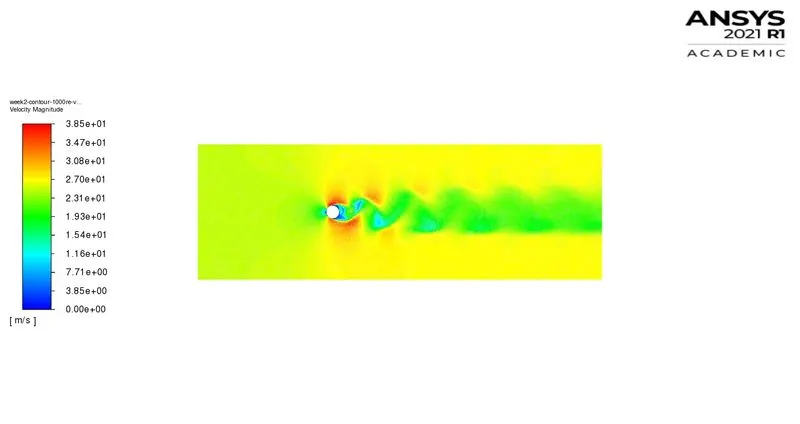
For Re=1000
considering the fluid property having density of 1 kg/m^3 and viscosity of 0.05mPa.
We know, Renolds number
`Re = (rho*U*L) /mu`
`therefore U= (Re)/L *(mu/rho)`
As the diameter of cylinder is 2m so our characteristic length will be 2m
`U = 1000/2 times (0.05)/1`
`U = 25` m/s
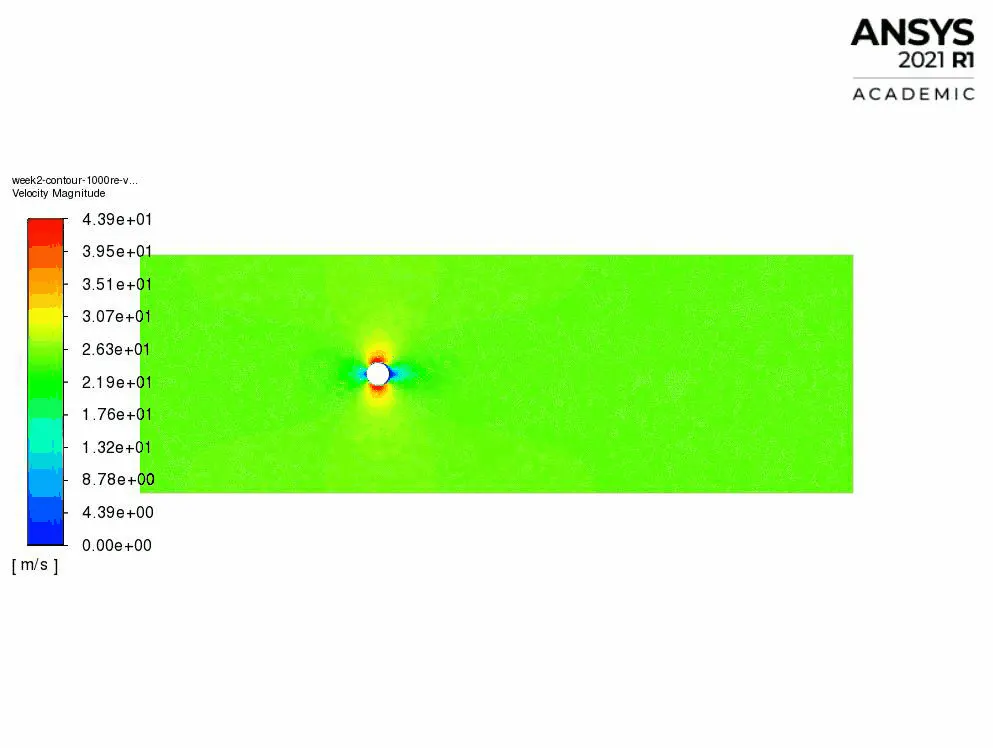
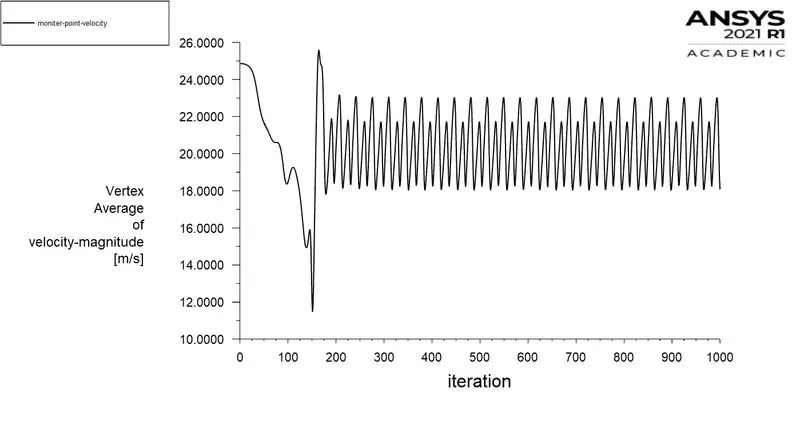
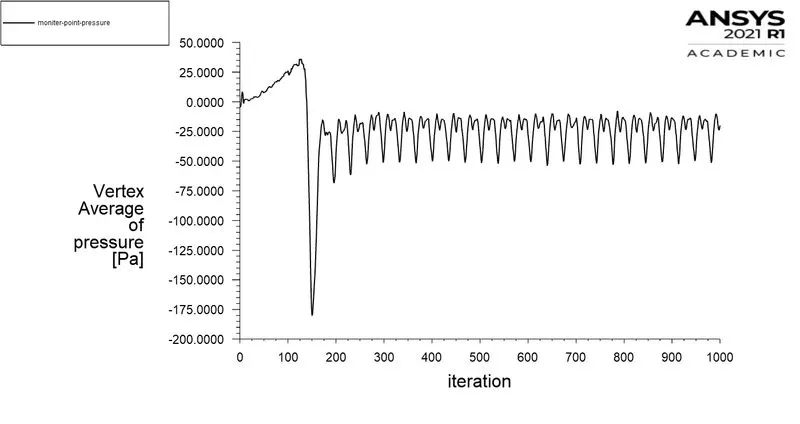
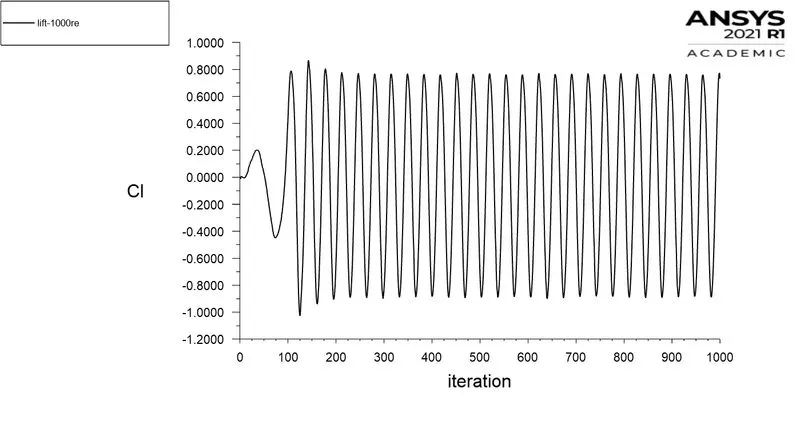
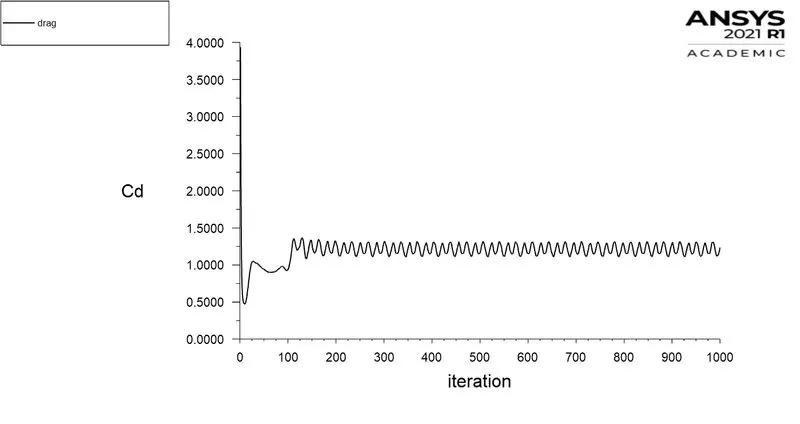
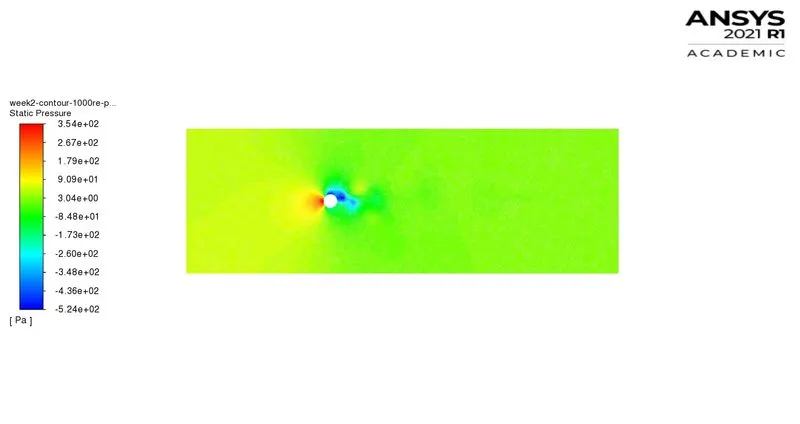
- Result and plot steady-state for Re=1000
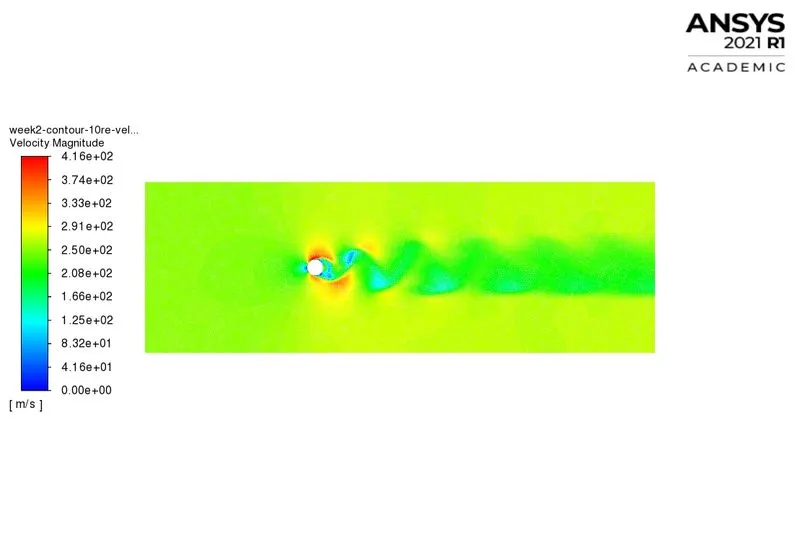
For Re=10000
considering the fluid property having density of 1 kg/m^3 and viscosity of 0.05mPa.
We know, Renolds number
`Re = (rho*U*L) /mu`
`therefore U= (Re)/L *(mu/rho)`
As the diameter of cylinder is 2m so our characteristic length will be 2m
`U = 10000/2 times (0.05)/1`
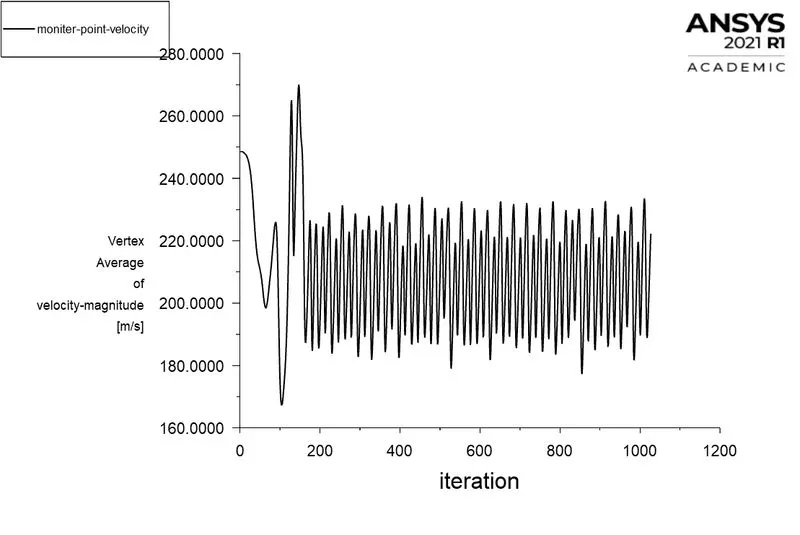
`U = 250` m/s
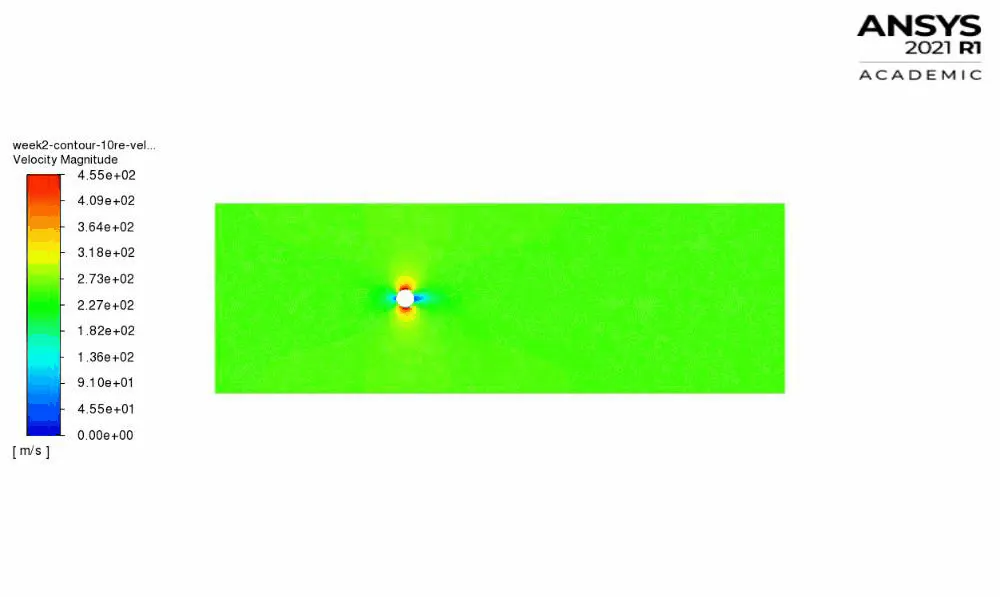
- Result and plot steady-state for Re=10000
For Re=100000
considering the fluid property having density of 1 kg/m^3 and viscosity of 0.05mPa.
We know, Renolds number
`Re = (rho*U*L) /mu`
`therefore U= (Re)/L *(mu/rho)`
As the diameter of cylinder is 2m so our characteristic length will be 2m
`U = 100000/2 times (0.05)/1`
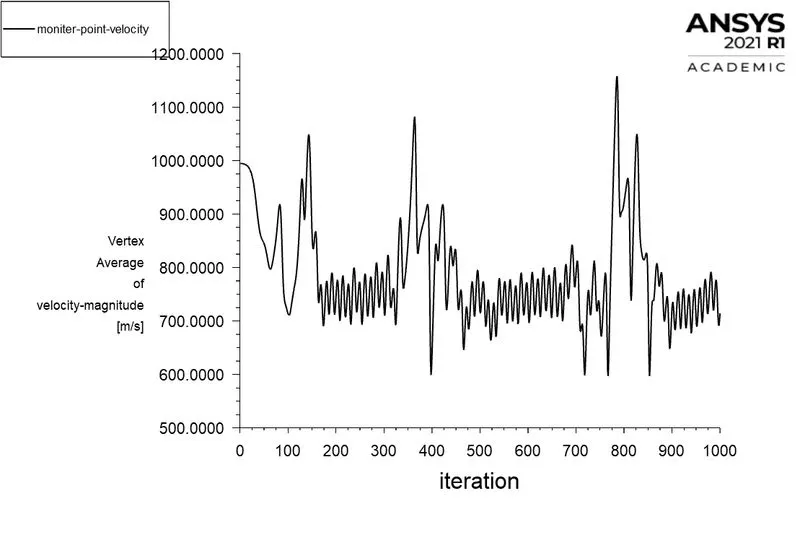
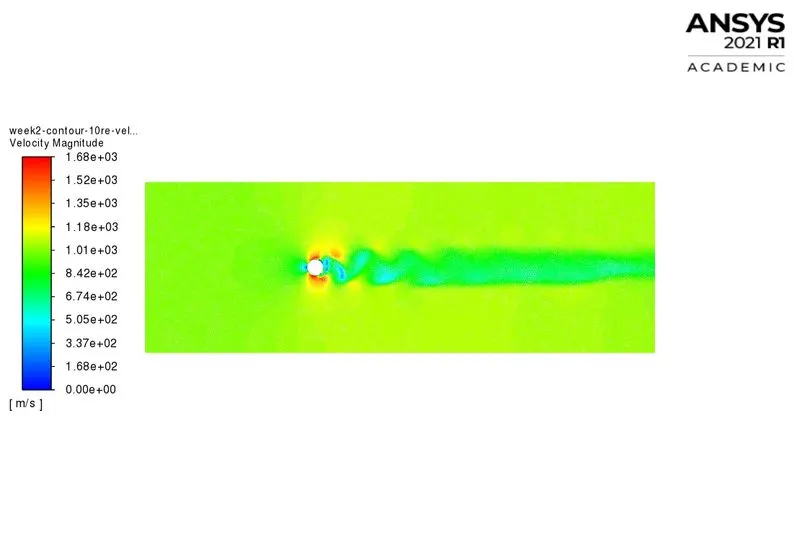
`U = 2500` m/s
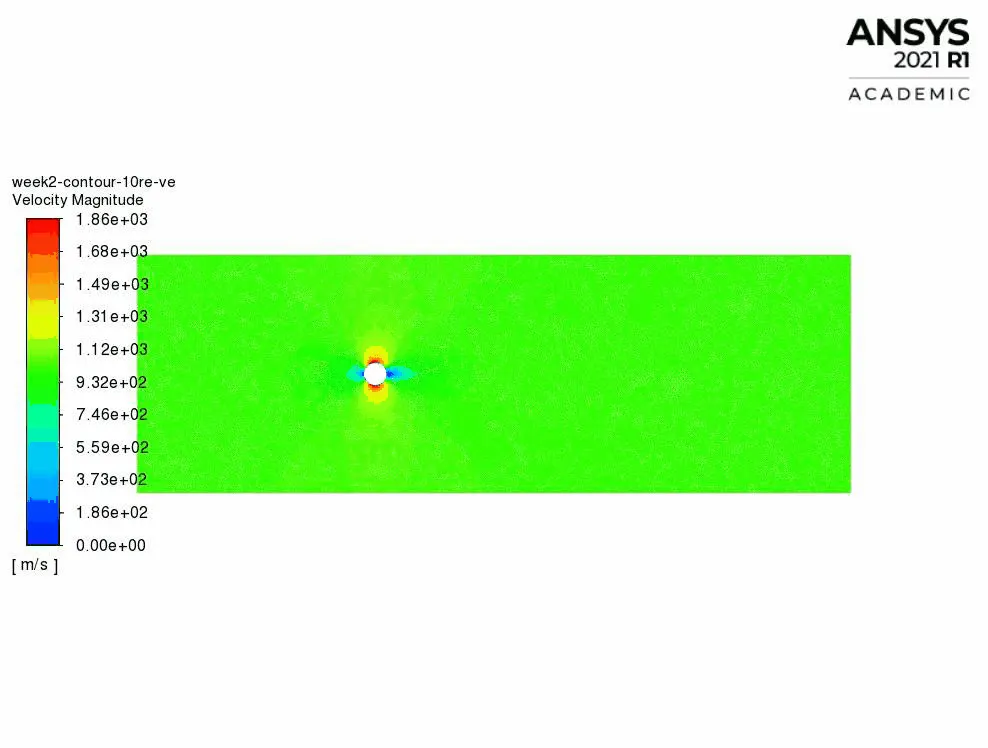
- Result and plot steady-state for Re=100000
CONCLUSION:-
- Basic study of space clame about modeling simple geometry & implementation of fine geometry.
- When fluid flows over the cylinder, wake region is formed next to cylinder due to decrease in pressure and recirculation of flow occurs and hence flow separation occurs
- In a comparison of steady-state and transient methods, analyzing a laminar flow, for Reynolds number more than 100 it is vital to use the time-dependent momentum equations to resolve the vortex-shedding characteristics
- As the Reynolds number increased further, the vortices are shed alternately from the upper and lower cylinder surface at a definite frequency depending on the Reynolds number. And for the value of Re more than 1000, the flow starts to transform from laminar to turbulent.
- As flow over cylinder is being transient we are unable to observe flow separation at low Reynolds number.
- As the Reynolds number increases the coefficient of drag decreases.