Week 2 - Flow over a Cylinder.
Aim :
- To Analyze the two-dimensional fluid flow over a cylinder with steady and transient cases at a density of 1kg/m^3 and a viscosity of 0.02 Kg/m-s.
- To calculate the coefficient of drag and lift by setting the different Reynolds number of 10, 100, 1000, 10000 and100000.
- To calculate the strouhal number for the transient case.
Introduction :
Flow over a cylinder still remains a challenging problem in fluid mechanics, where intensive investigations are continued even today to understand the complex unsteady dynamics of the cylinder wake flow. For a cylinder, where the point of flow separation is decided by the nature of the upstream boundary layer, the physics of the flow is much more complex than what its relatively simple shape might suggest.
Governing Equations :
The below mentioned equations are used to solve this problem.
- Momentum Equation(Conservation form)
X component :
∂(ρu)/∂t + ∇ . (ρuV) = -∂p/∂x + ∂τxx/∂x + ∂τyx/∂y + ∂τzx/∂z + ρfx
Y component :
∂(ρv)/∂t + ∇ . (ρuV) = -∂p/∂y + ∂τxy/∂x + ∂τyy/∂y + ∂τzy/∂z + ρfy
- Reynolds number :
It is defined as the ratio of inertia force to viscous force. It is a dimensionless number.
Re = ρVD/μ
where,
ρ - density of a fluid
D - characteristic length of an object
V - velocity of a fluid
μ - Dynamic viscosity of an object
- Strouhals Number :
It is used to detect vortex shedding.
S = f D/ u
where,
f - frequency of shedding
D - characteristic length of an object
u - velocity of the fluid
Geometry Definitions :
Cylinder Diameter - 2m
Upstream distance of cylinder - 20m
Downstream distance of cylinder - 40m
Meshing :
It is the process of discretizing the larger component into smaller elements and every smaller element is solved by governing equations. An unstructured triangular mesh method is used and a fine mesh is generated to get the accuracy values of velocity and pressure due to vortex shedding.
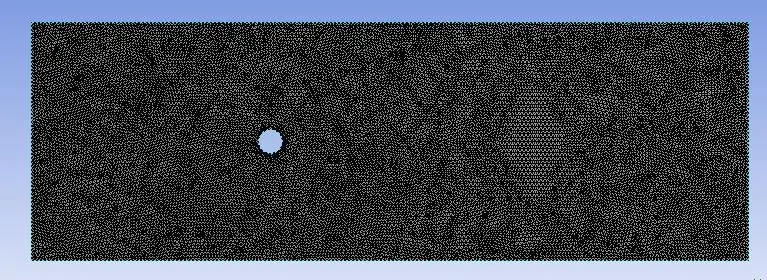
The velocity is decreased to zero near the wall when it moves towards the wall of the cylinder at freestream due to no-slip condition. By applying the inflation layer with a first-layer thickness of 1e-3 m nearby the cylinder to achieve the proper mesh.
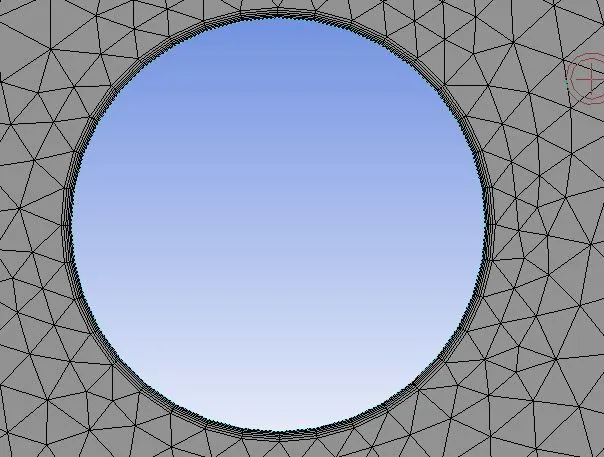
Mesh Details :
Element type: Triangular
Element size : 0.2m
Number of Inflation layers: 6
First layer thickness: 5e-3 m
Growth size: 1.2
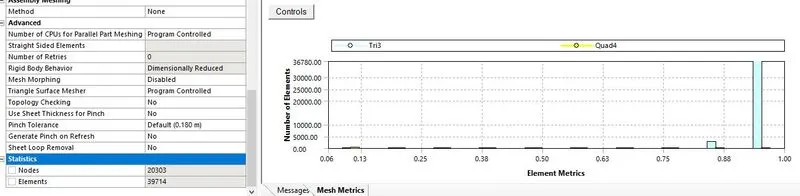
Mesh metrics: Element quality
PART l :
Settings :
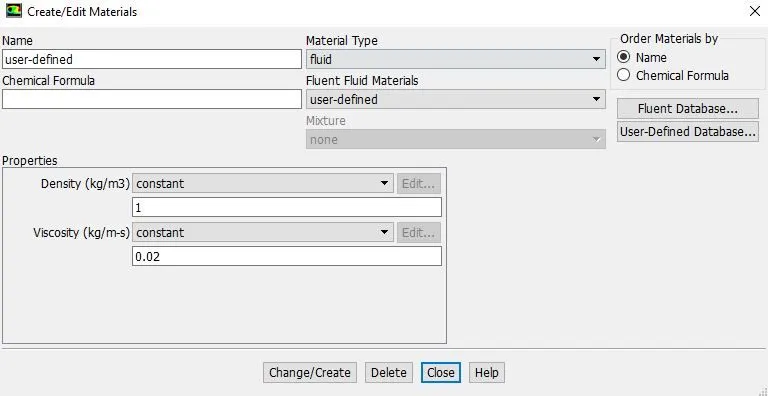
Material : User-defined fluid
Density of fluid - 1kg/m^3
Viscosity : 0.02Kg/m-s
Reynolds number : 100
Case (1) : Steady state analysis
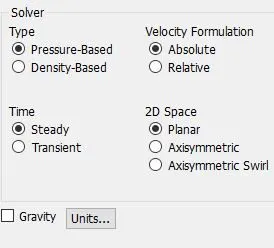
The steady-state analysis is used for this simulation. Pressure based solver is used for 2D planar space at an absolute velocity formulation.
Case (2): Transient analysis
Similarly, the double-precision solver with pressure-based and transient state analysis is better to approach such a problem which is naturally transient in nature.
Boundary Conditions :
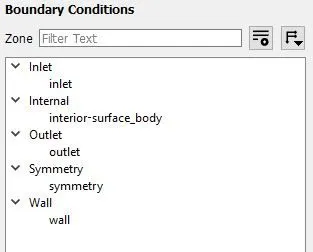
Inlet velocity - 1 m/s
Pressure outlet - 0 pa
Wall - No-slip condition
Report Definition :
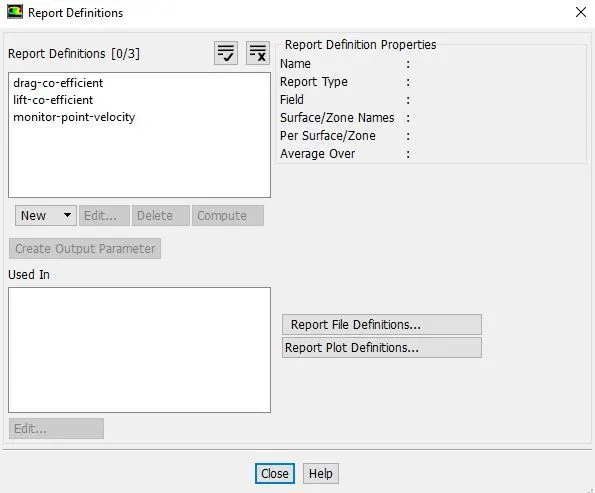
In the report definition, the additional quantities of interest are required while post-processing results are included using the report definition tab.
Initialization :
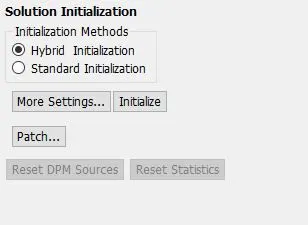
Hybrid Initialization is used to initialize the flow field. In this initialization, the solver solves the potential flow equations i.e. Euler's equation.
Solution Monitoring :
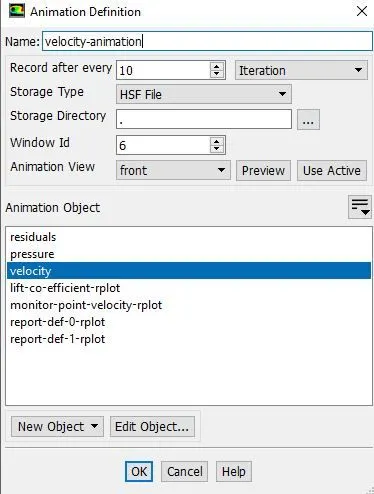
The run-time animation is created to monitor the flow of fluid over a cylinder.
Results :
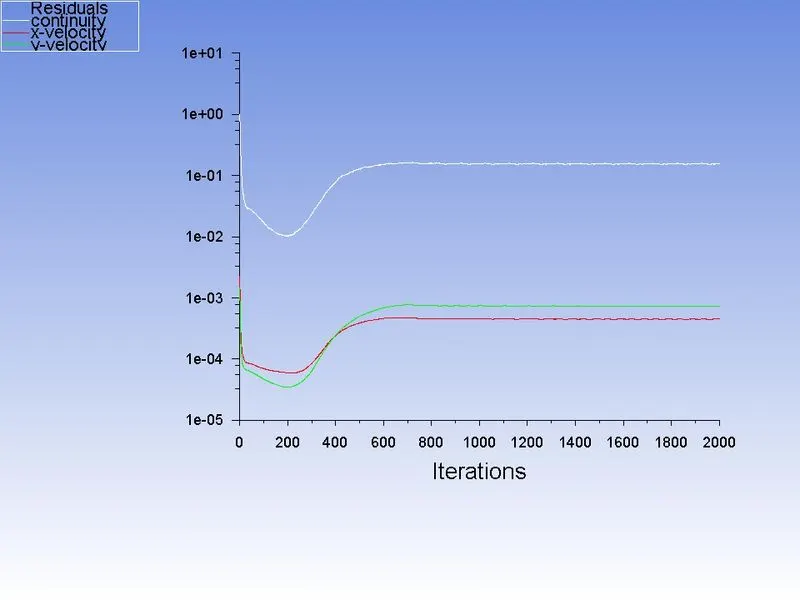
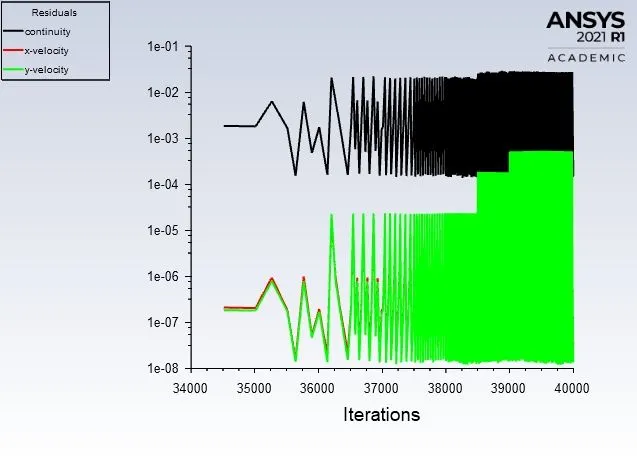
Results for both the cases i.e. Steady and unsteady state solvers.
- Residuals :
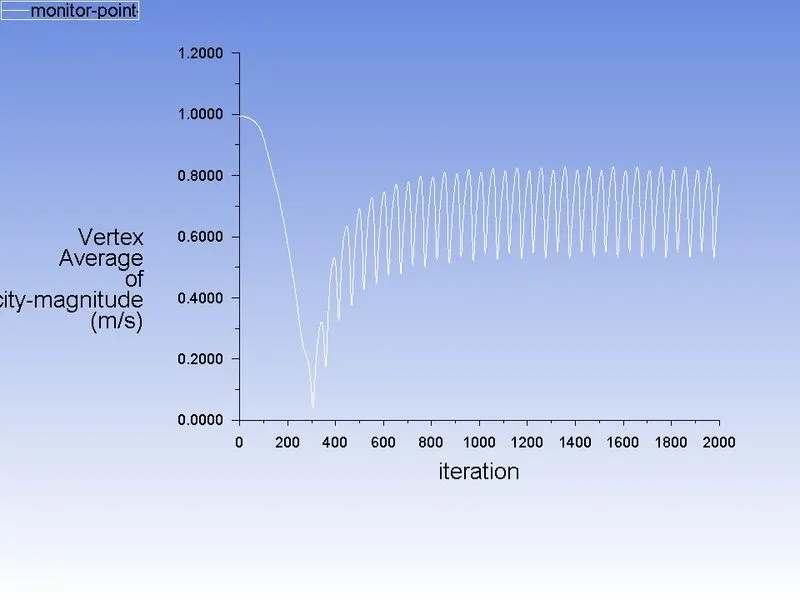
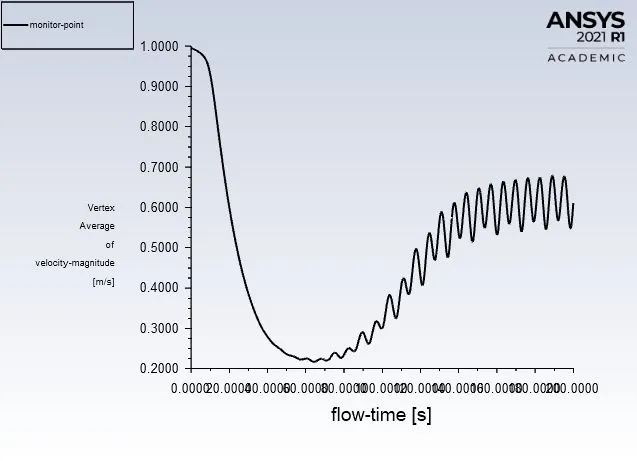
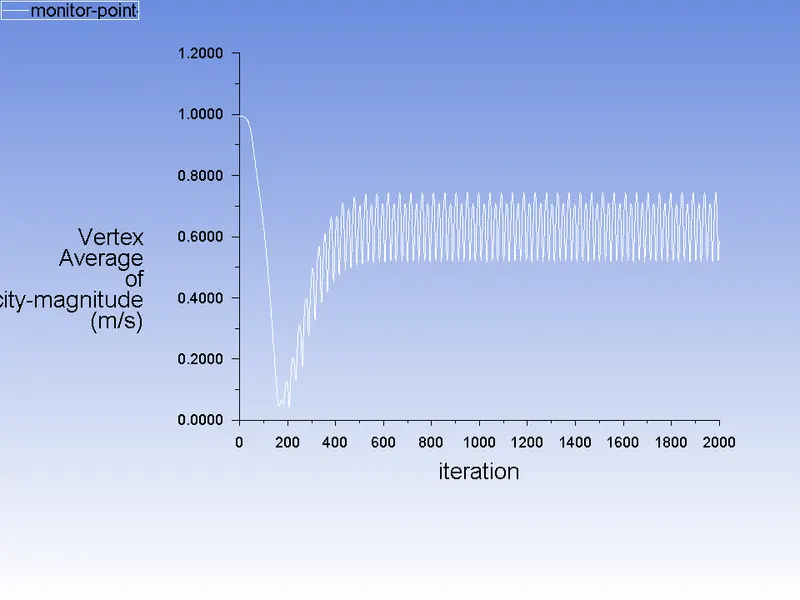
- Velocity fluctuations at monitor point :
- Lift Co-efficient plot :
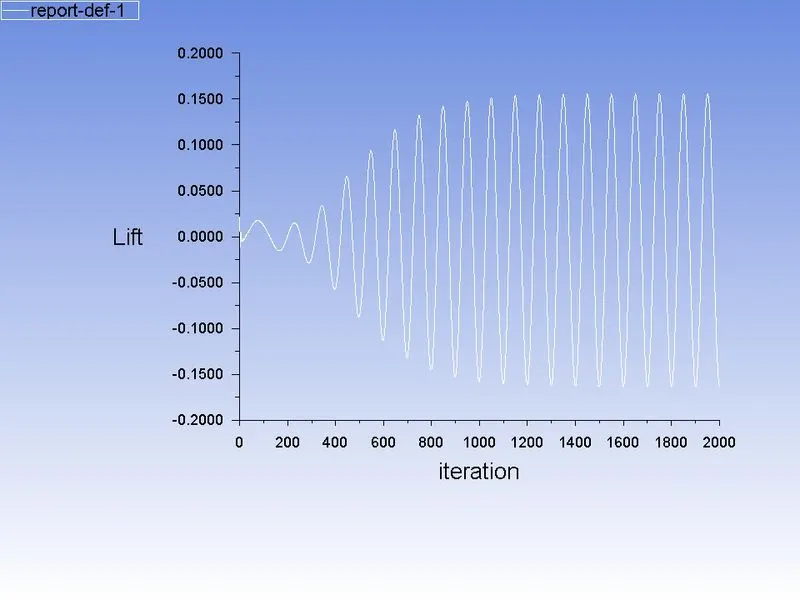
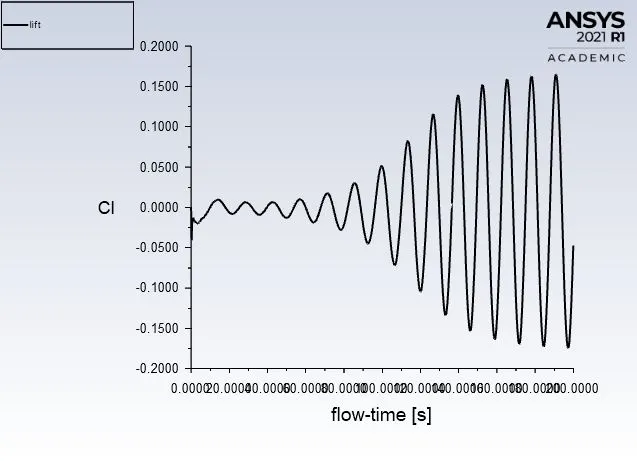
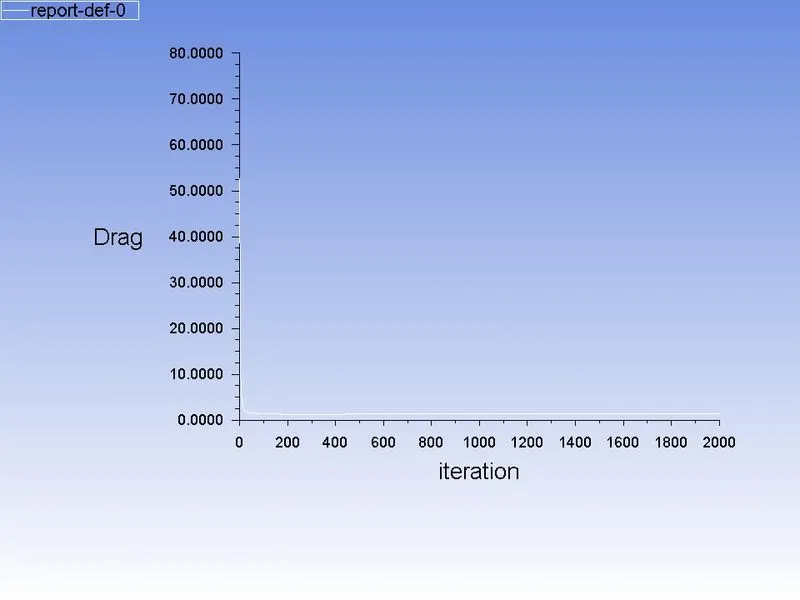
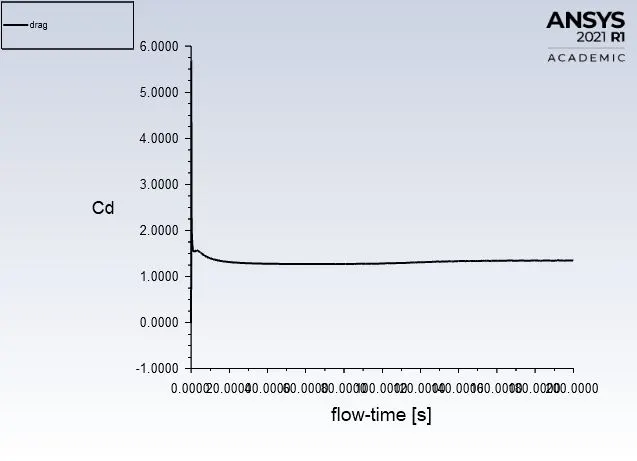
- Drag Co-efficient plot :
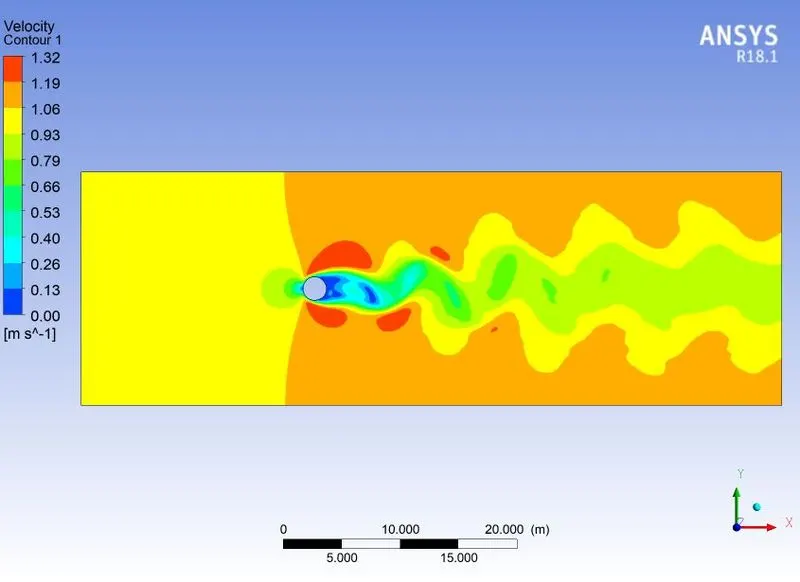
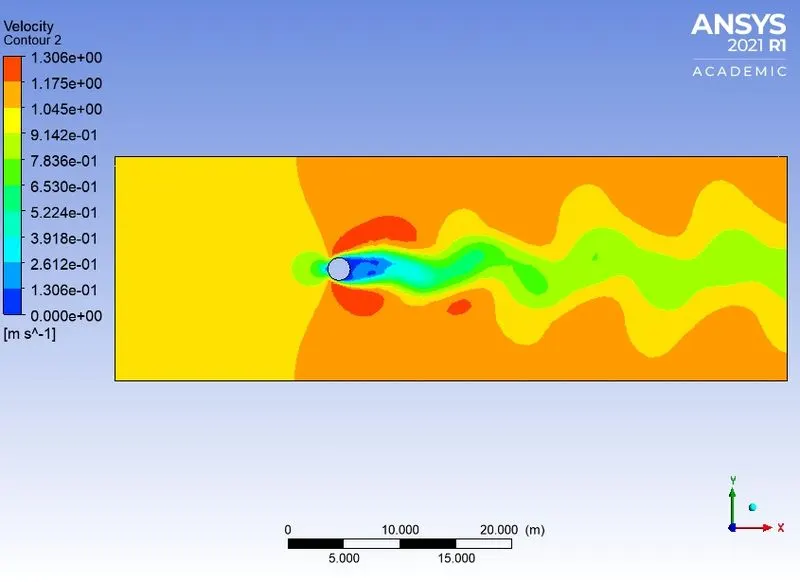
- Velocity contour :
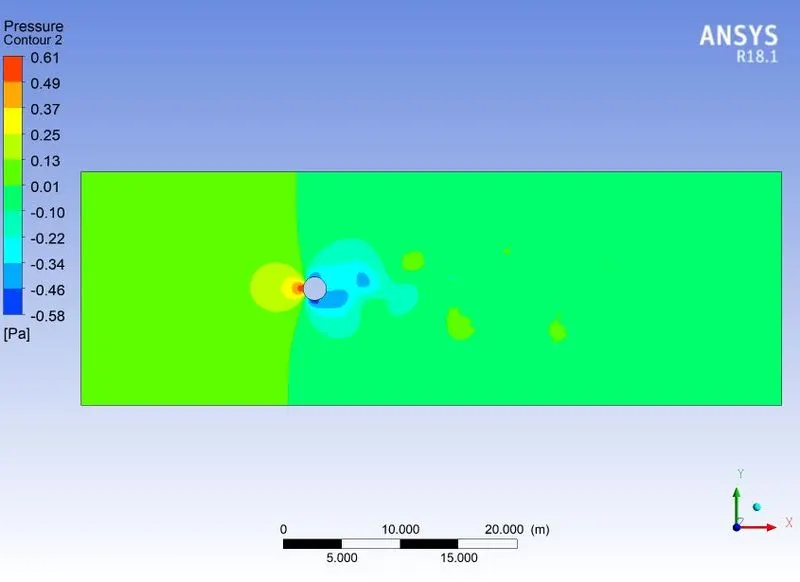
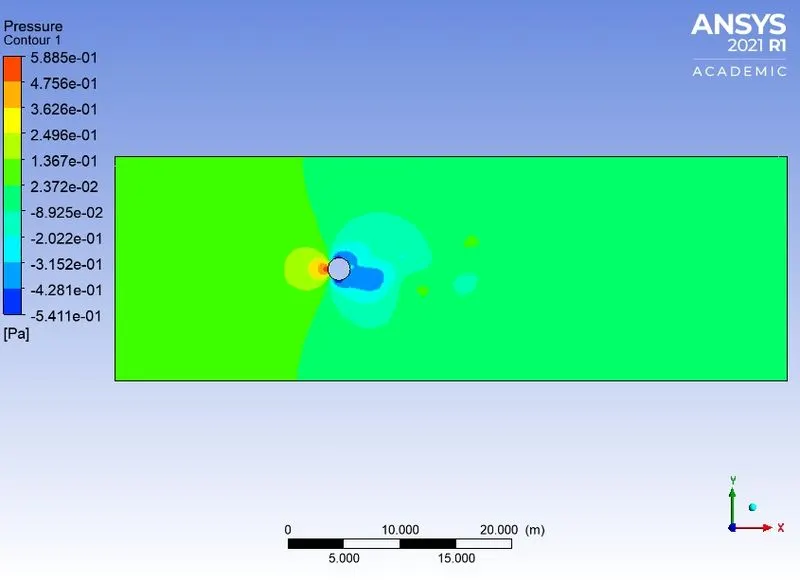
- Pressure contour :
Strauhal Number Calculation :
- Steady-state simulation :
Strauhal number is directly proportional to the frequency of the vortex shedding.
S = f D/ u
It is not possible to calculate the frequency of vortex shedding for steady-state simulation, hence we cannot calculate the strouhal number.
- Transient simulation :
In the transient simulation, the strouhal number is calculated from the FFT plot.
With the help of the FFT plot, the values of strouhal number are written in a file. Further reference in the saved file, the median of strouhal number values are calculated and which comes out to be near to 0.2
PART-ll
To calculate the coefficient of drag and lift over a cylinder by setting the Reynolds number to 10,100,1000,10000 & 100000 is run with a steady solver.
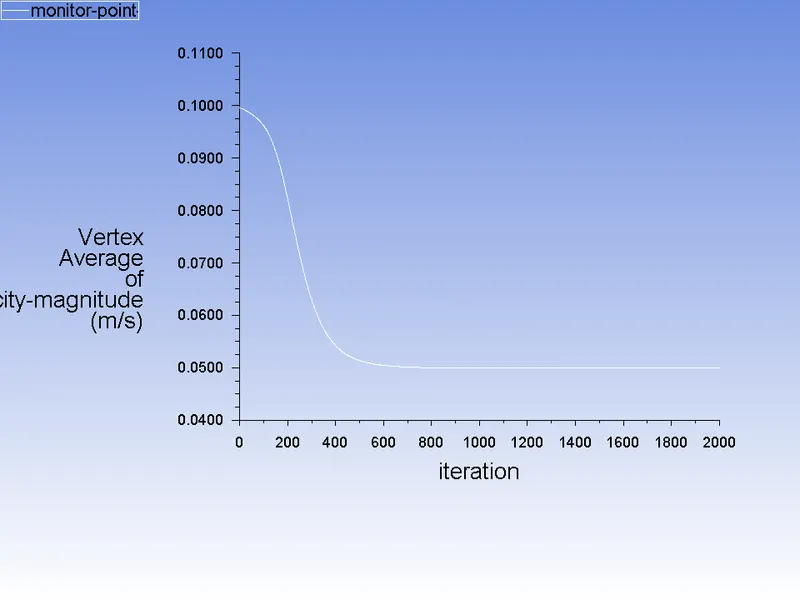
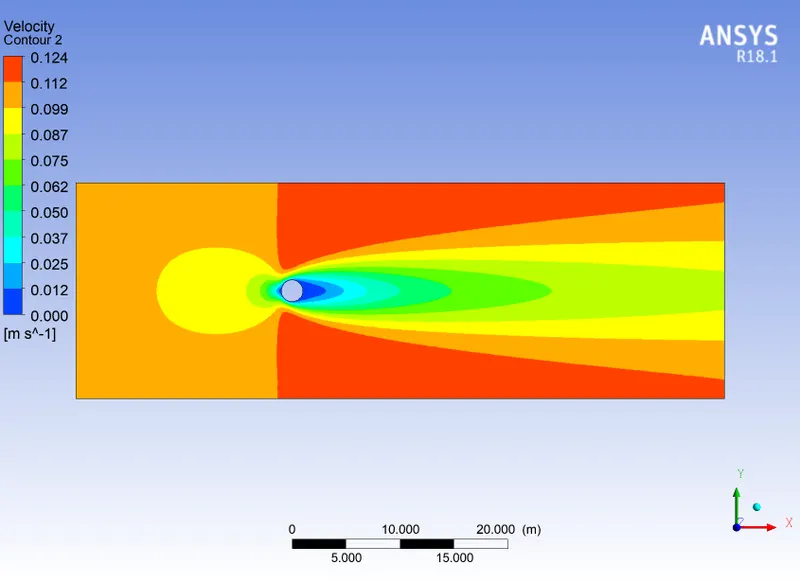
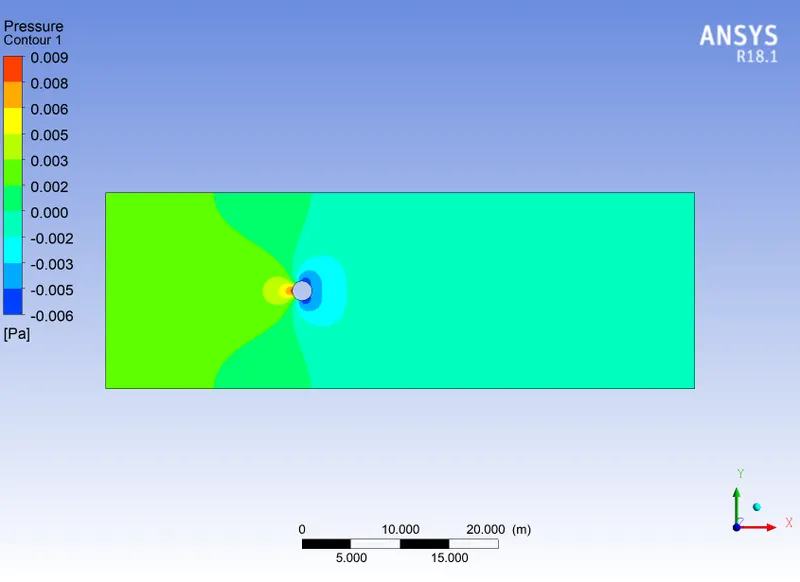
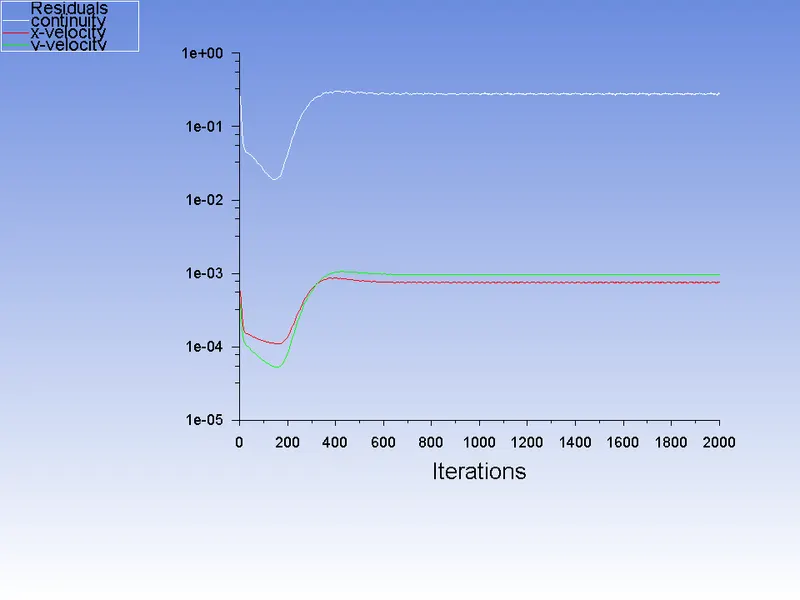
Case (3) : Re = 10, V=0.1m/s, viscosity = 0.02 Kg/m-s
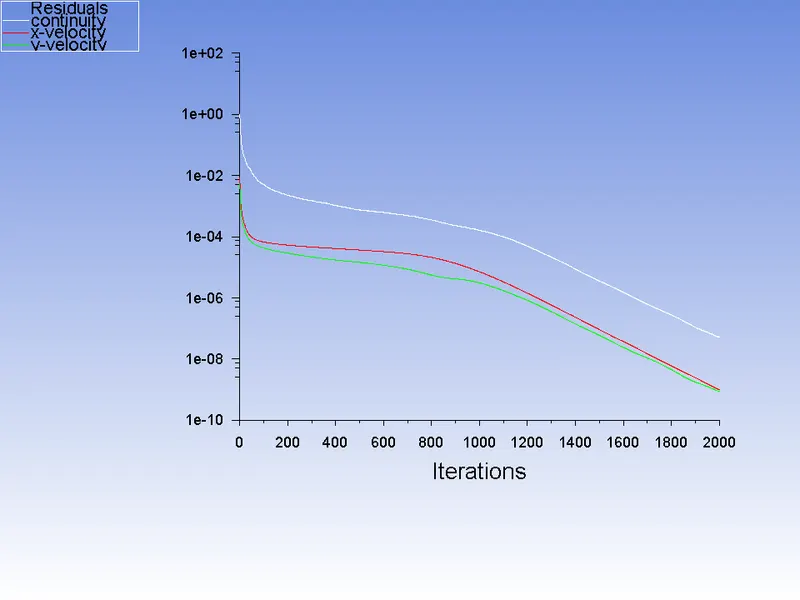
Residual plot :
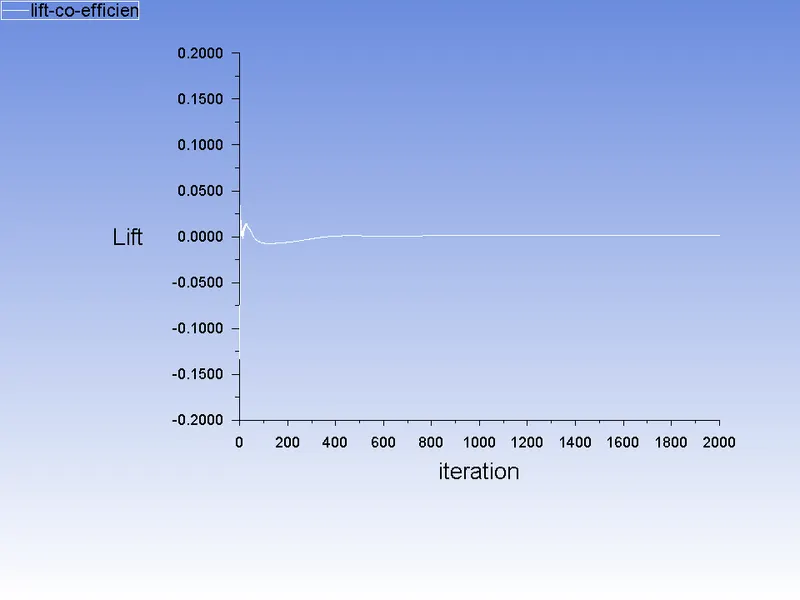
Lift Co-efficient :
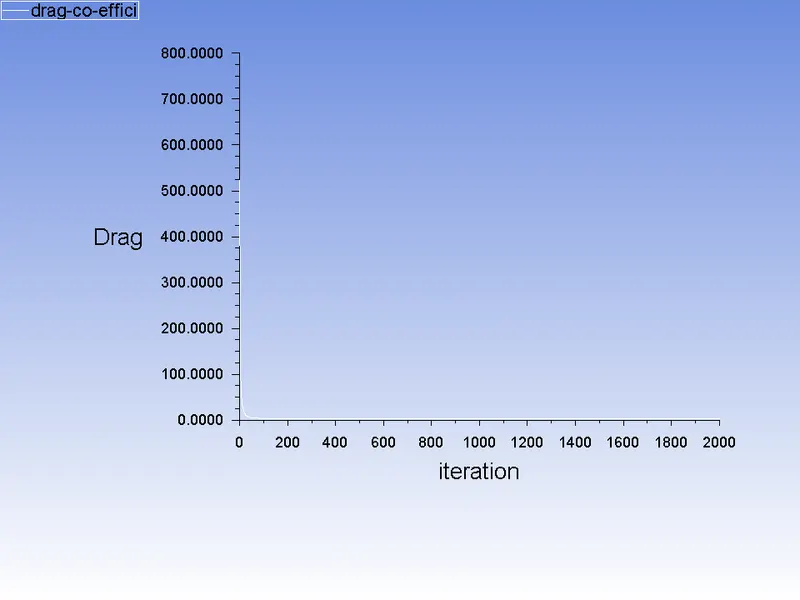
Drag Co-efficient :
Lift and Drag Co-efficient values :
Monitor point velocity :
Velocity contour :
Pressure contour :
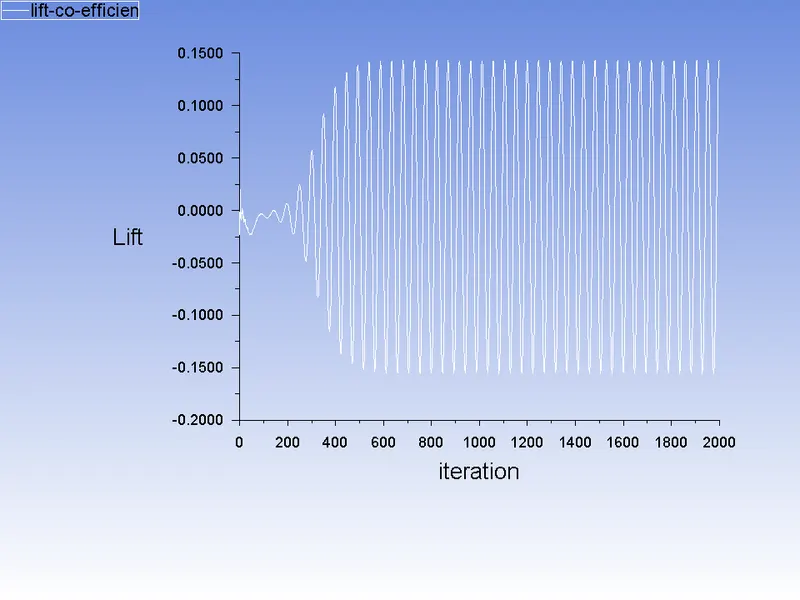
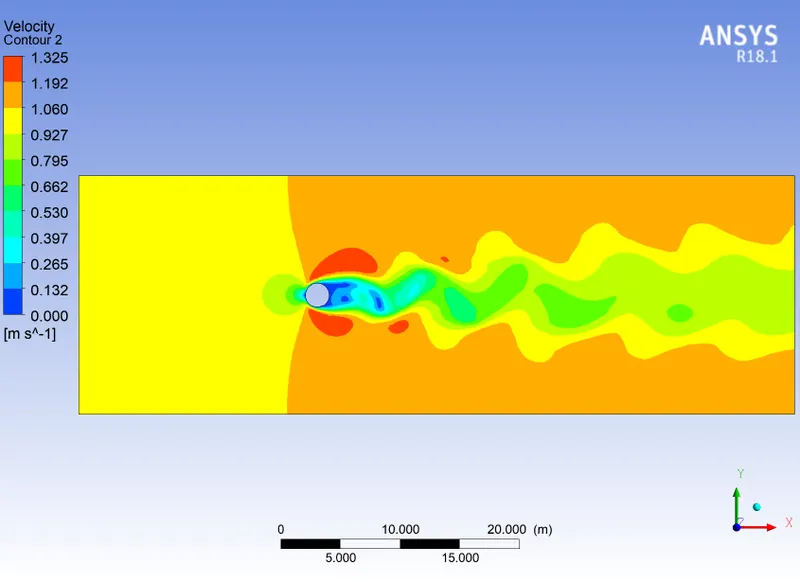
Case (4) : Re = 100, V=1m/s, viscosity = 0.02 Kg/m-s
Residual plot :
Lift Co-efficient :
Drag Co-efficient :
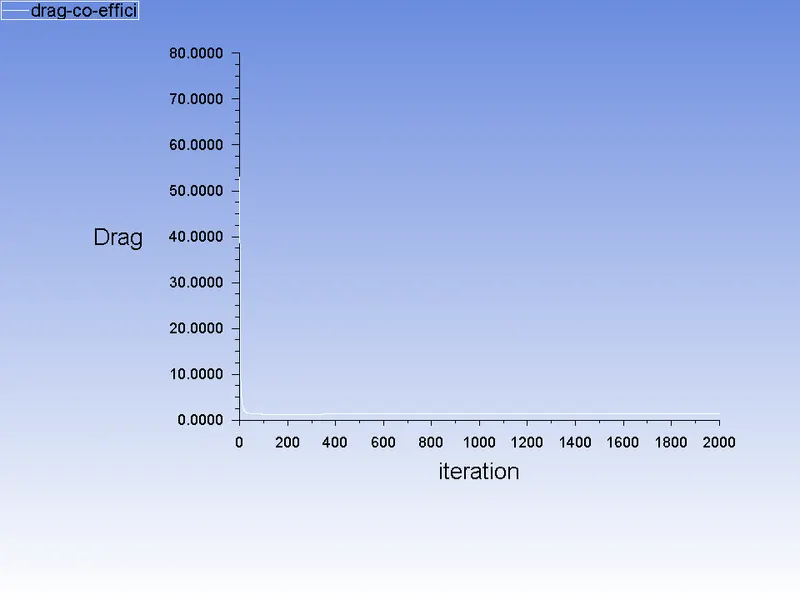
Lift and Drag Co-efficient values :
Monitor point velocity :
Velocity contour :
Pressure contour :
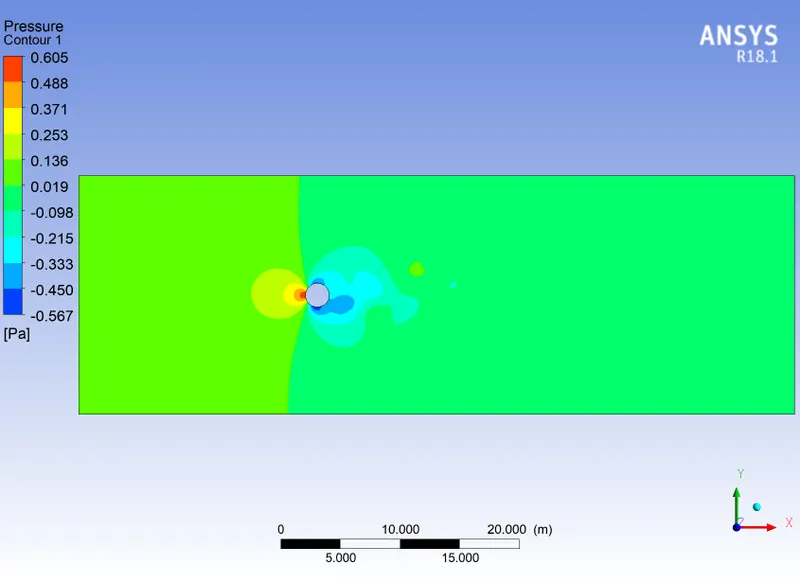
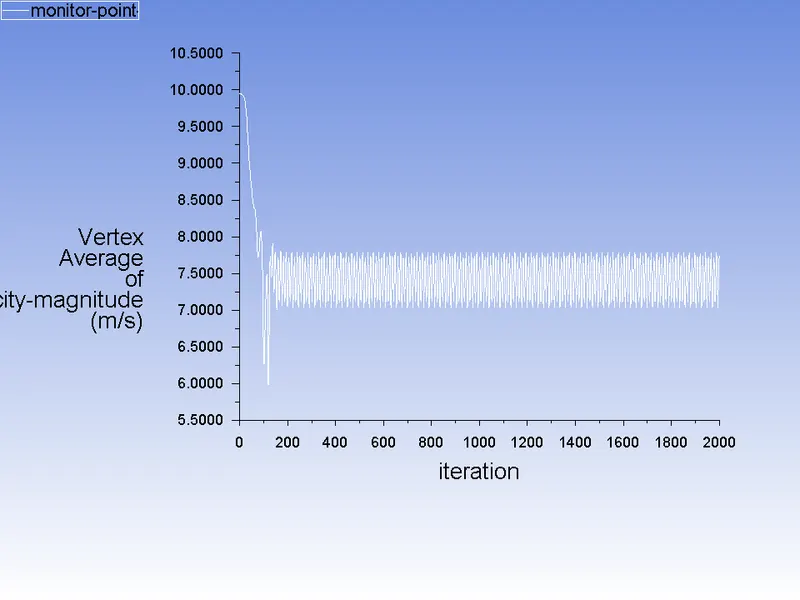
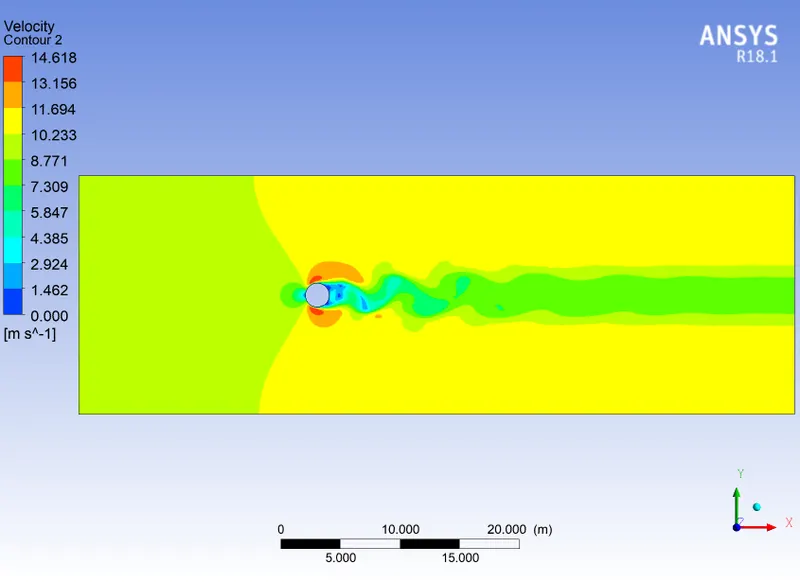
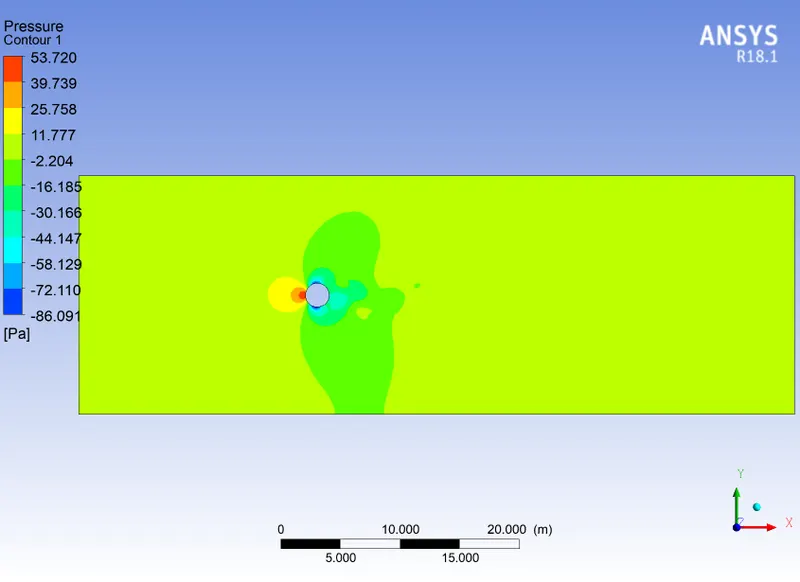
Case (5) : Re = 1000, V=10m/s, viscosity = 0.02 Kg/m-s
Residual plot :
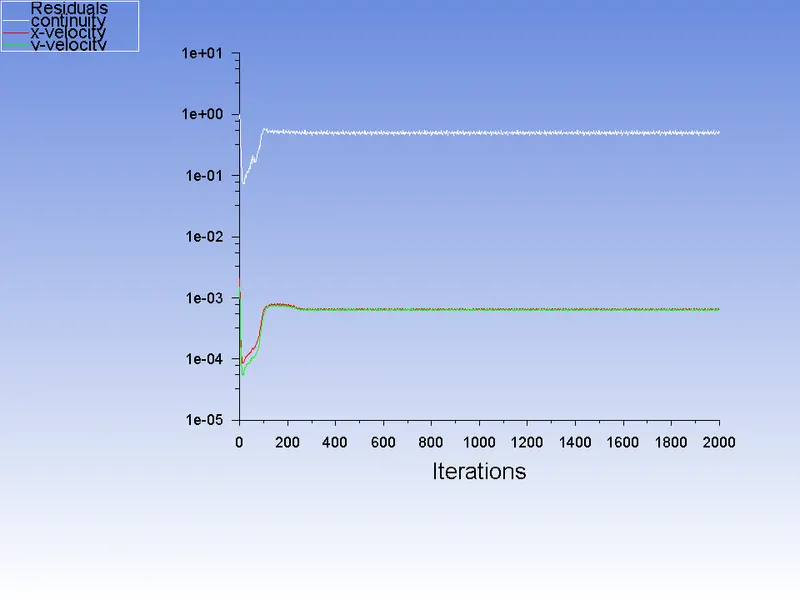
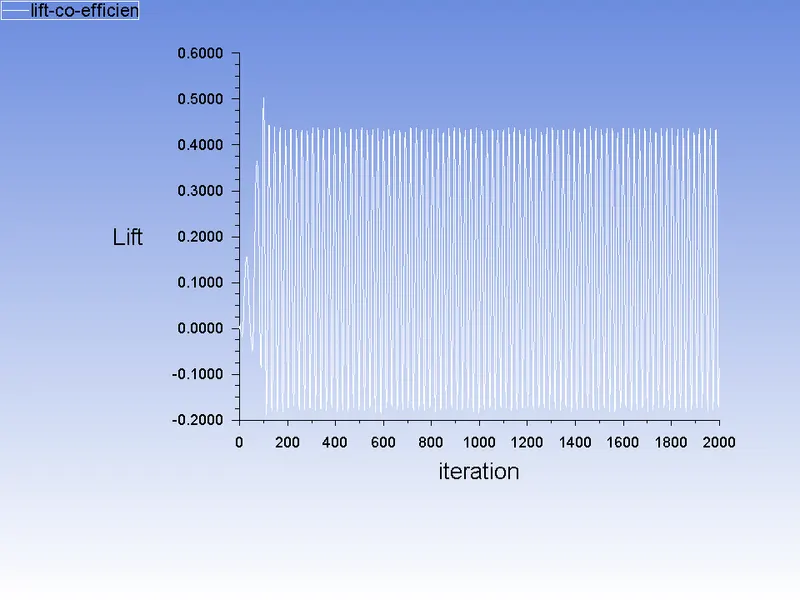
Lift Co-efficient :
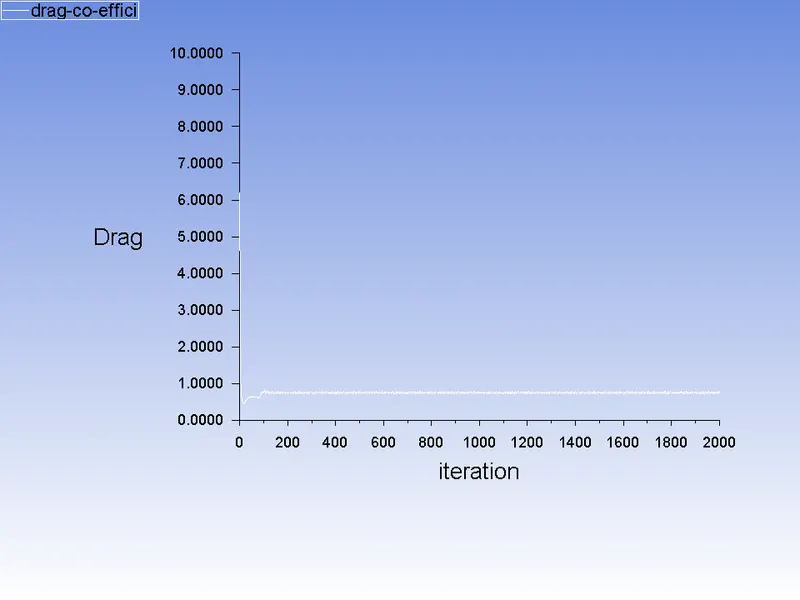
Drag Co-efficient :
Lift and Drag Co-efficient values :
Monitor point velocity :
Velocity contour :
Pressure contour :
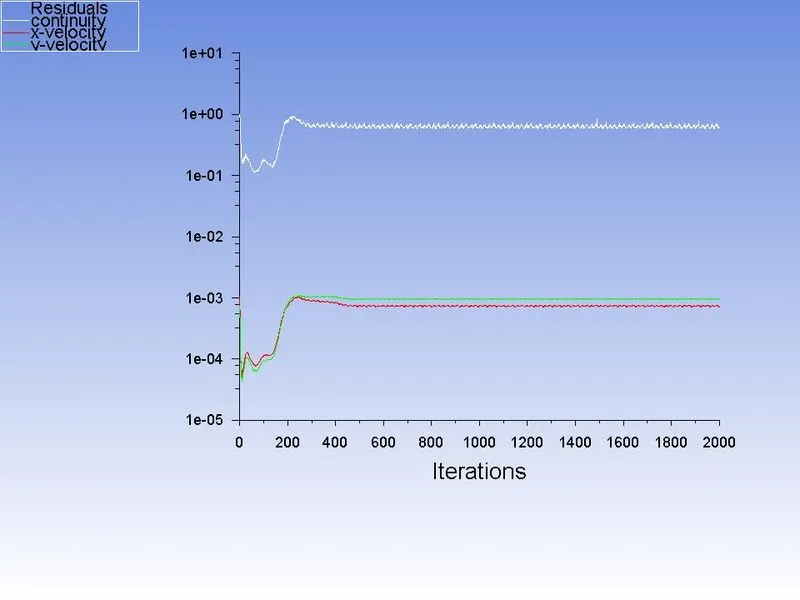
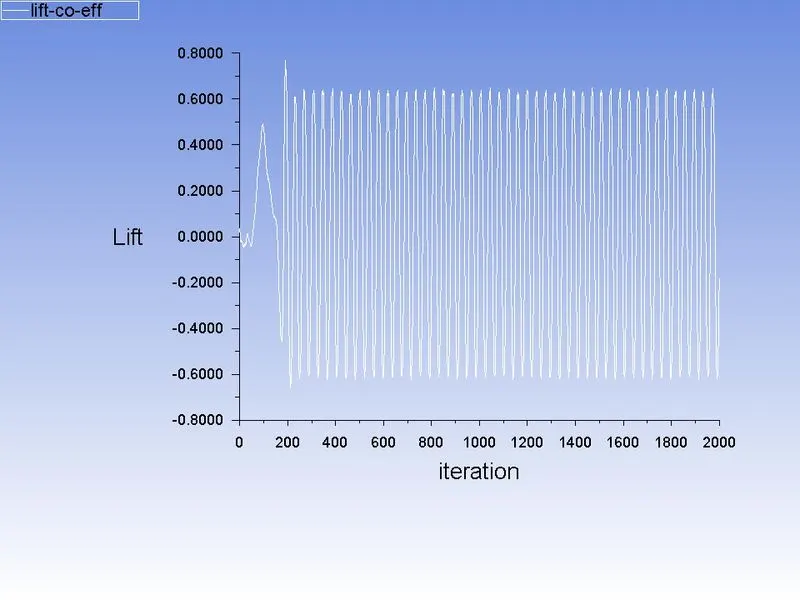
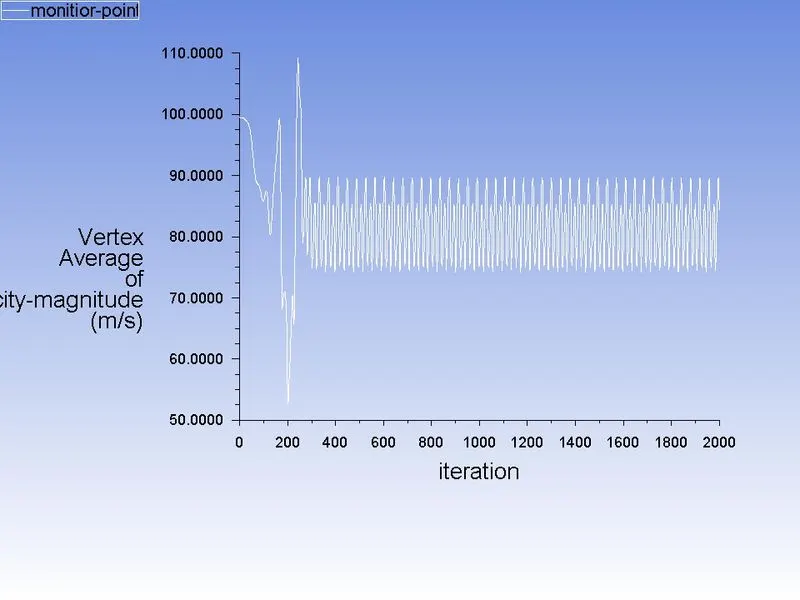
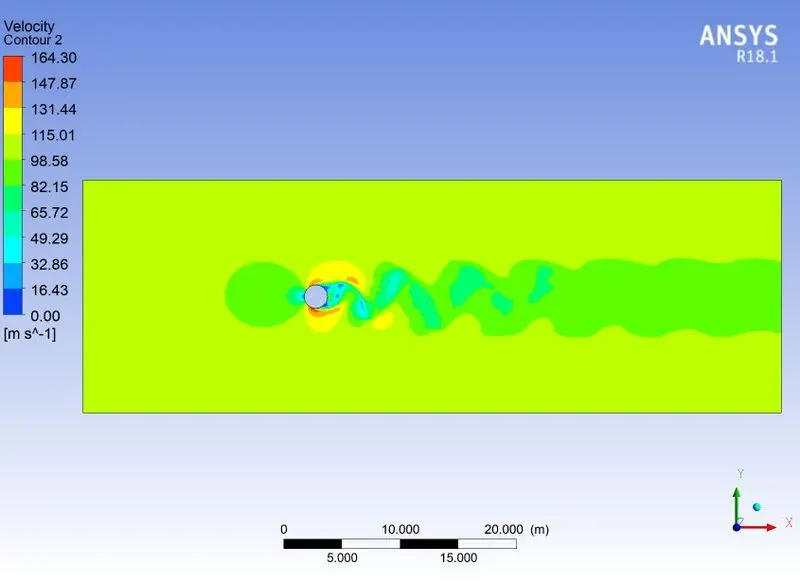
Case (6) : Re = 10000, V=100m/s, viscosity = 0.02 Kg/m-s
Residual plot :
Lift Co-efficient :
Drag Co-efficient :
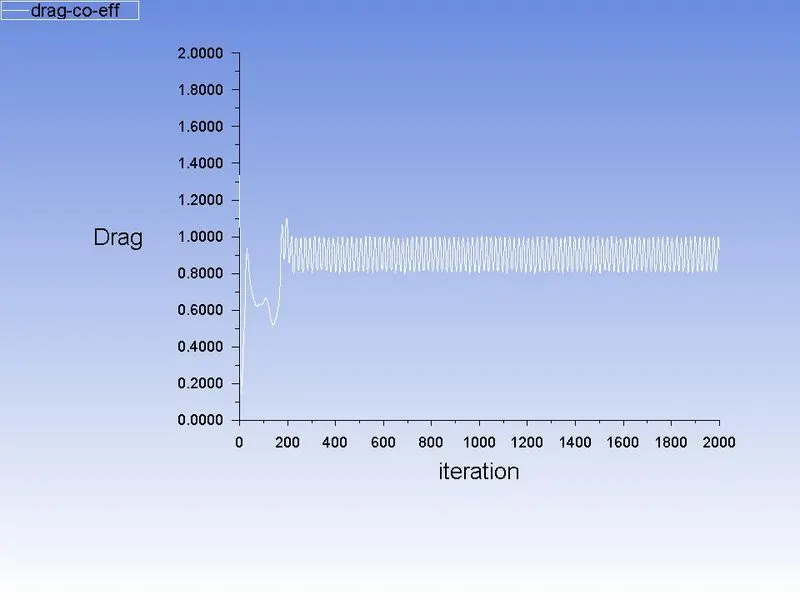
Lift and Drag Co-efficient values :
Monitor point velocity :
Velocity contour :
Pressure contour :
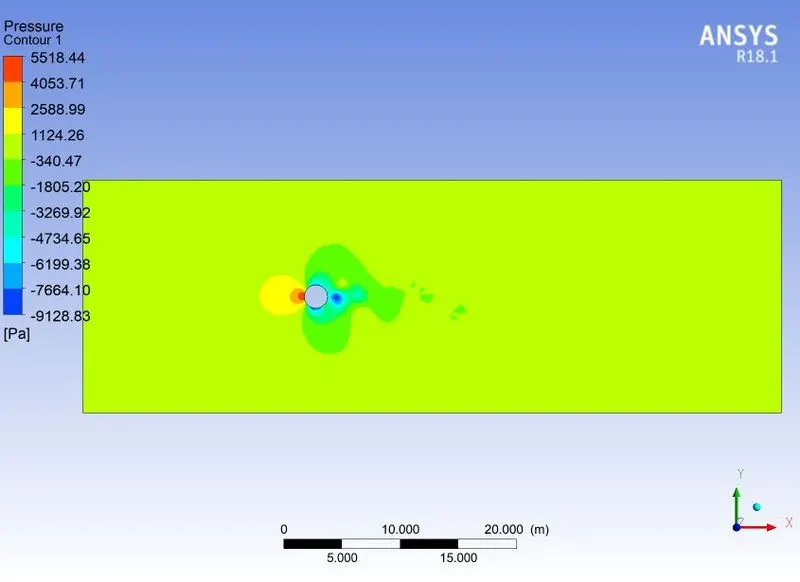
Case (7) : Re = 100000, V=1000m/s, viscosity = 0.02 Kg/m-s
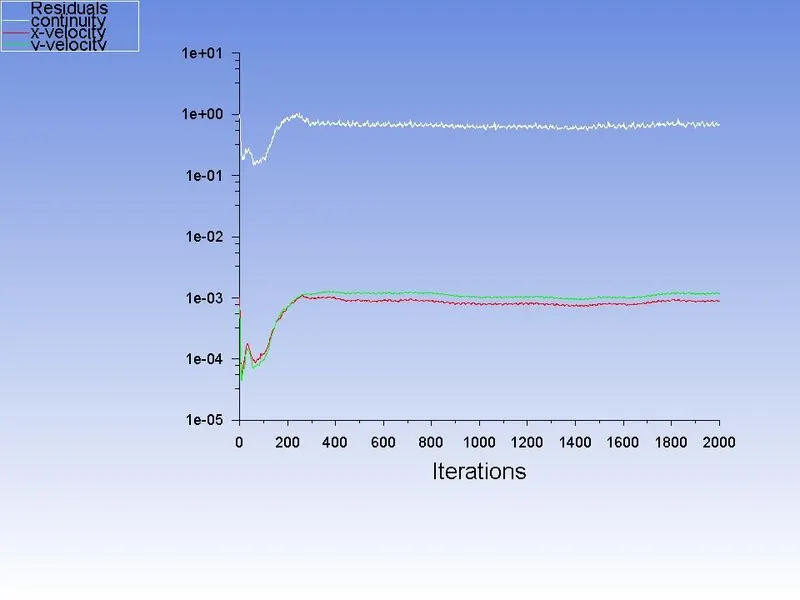
Residual plot :
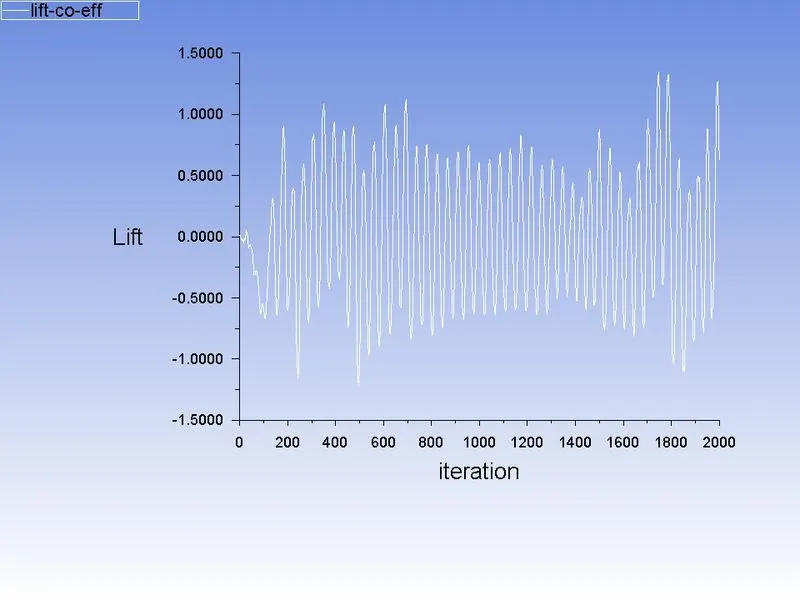
Lift Co-efficient :
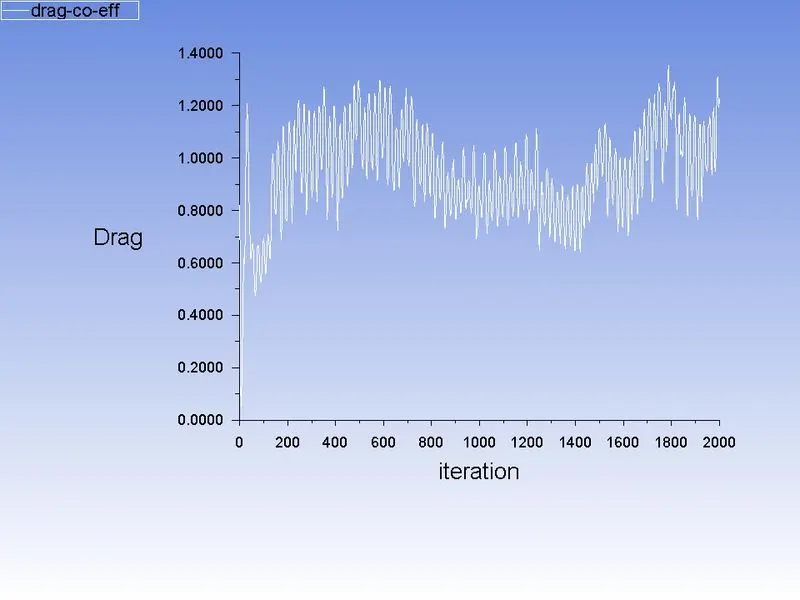
Drag Co-efficient :
Lift and Drag Co-efficient values :
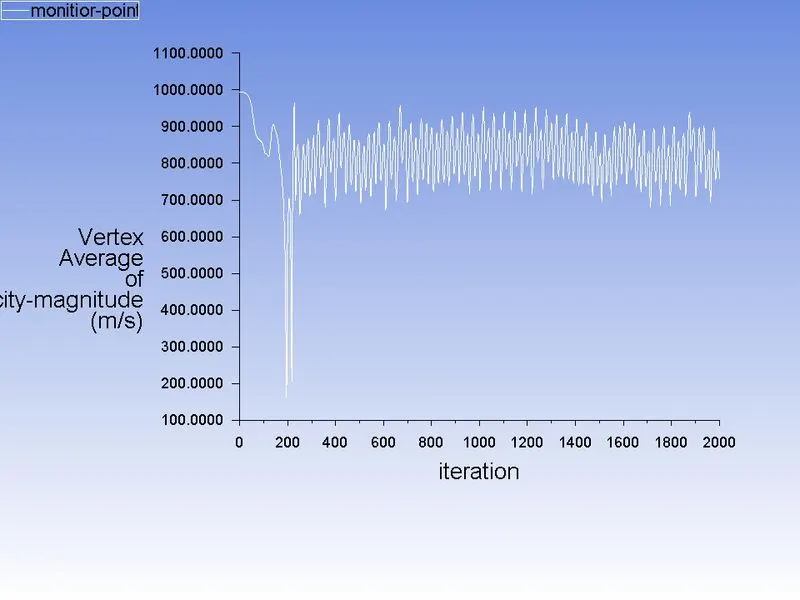
Monitor point velocity :
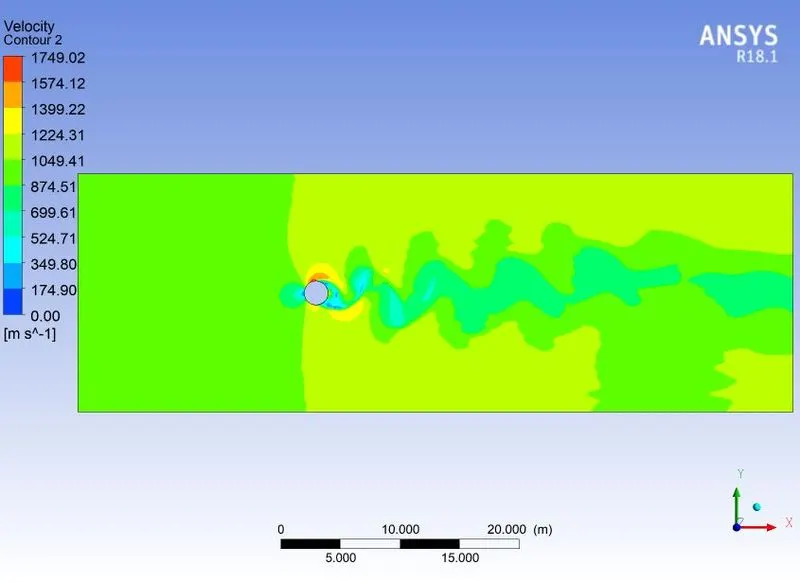
Velocity contour :
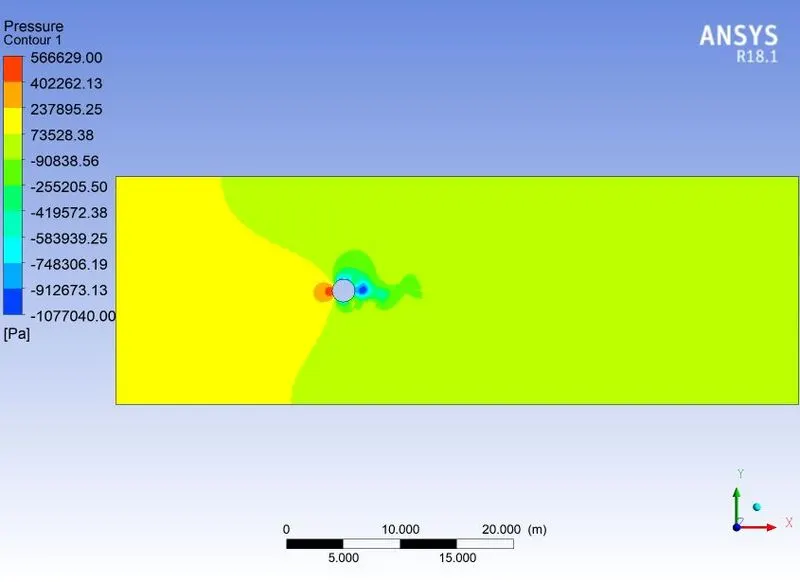
Pressure contour :
| Re | Cd | Cl |
| 10 | 3.3242803 | 0.000988091 |
| 100 | 1.350724 | 0.14306135 |
| 1000 | 0.76857603 | -0.087267039 |
| 10000 | 0.93063699 | -0.18502468 |
| 100000 | 1.2224635 | 0.63180351 |
Conclusion :
- Finally, the Von Karman vortex street is generated in both steady and unsteady state solvers as well as for the different Reynolds number which was mentioned in the question.
- The Velocity and pressure contours for easy cases are listed above.
- Finally, Plots of the coefficient of drag and lift are listed. Thus the frequency of vortices is calculated for transient simulation and the value of strouhal number is also founded.
- From the above study, if we can increase the value of Reynolds number, the vortex shedding occurs with maximum deviation.
- In this problem, viscosity is not changed and I use the default value of 0.02 Kg/m-s. If we decrease the value of viscosity, the vortex shedding occurs easily.