Week 1- Mixing Tee
Aim :
To investigate the flow of fluids(air) through mixing tee and heat transfer between the fluids.
Introduction :
The flow of fluid mixing tee is mostly encountered in the piping system. The turbulence model at the no-slip condition is to predict the heat transfer between fluids using Ansys fluent.
Theory :
The mixing of two streams normally leads to hydrodynamic disturbances and dislocation downstream the point of mixing. It will also affect the heat transfer as well.
Importance in practical applications :
- The mixing of two fluids at different temperatures in Tee joint in the field of nuclear safety.
- Mixing of two air streams i.e. hot inlet and cold inlet temperature.
Modeling approach :
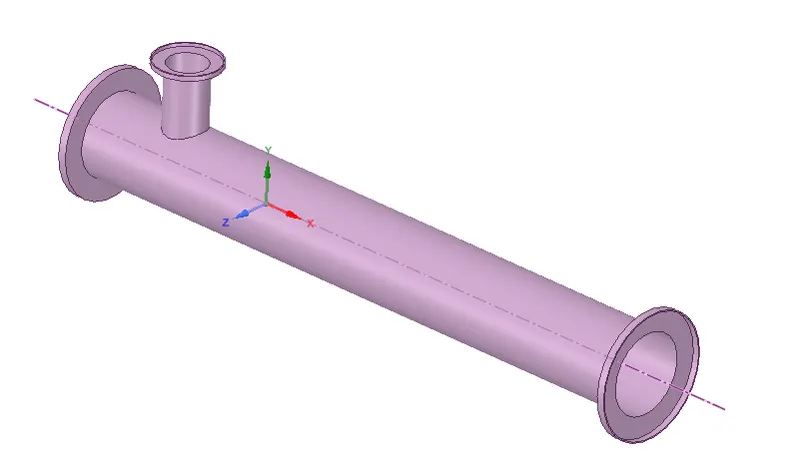
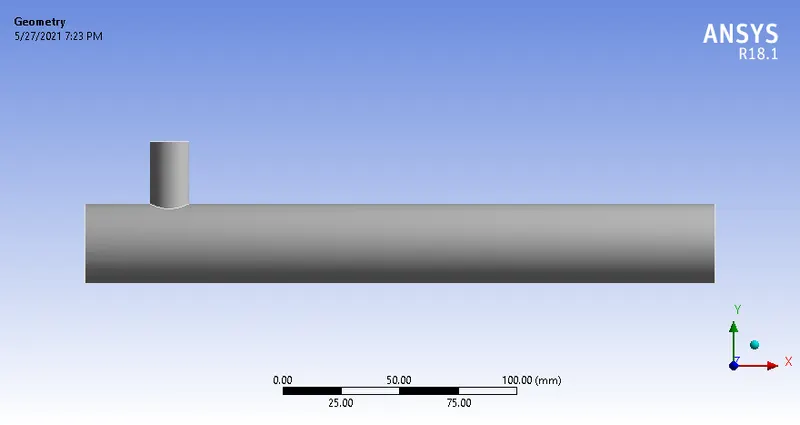
The two different models of Tee section are one long and one short Tee.
Pre-processing :
- Geometry - Initially, we need to import the geometry using SpaceClaim.
- Short Length Tee
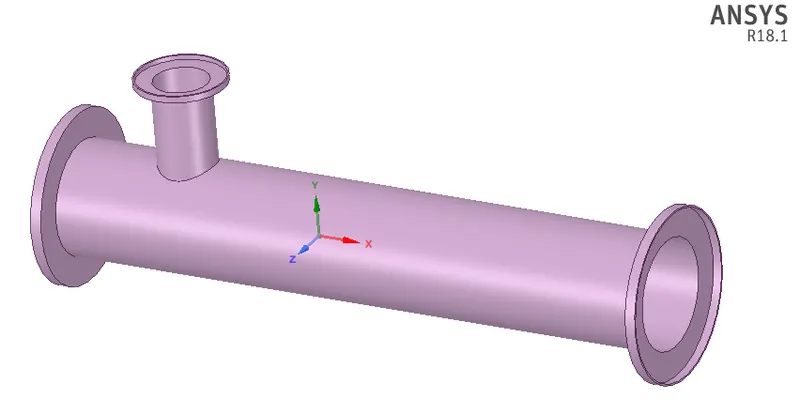
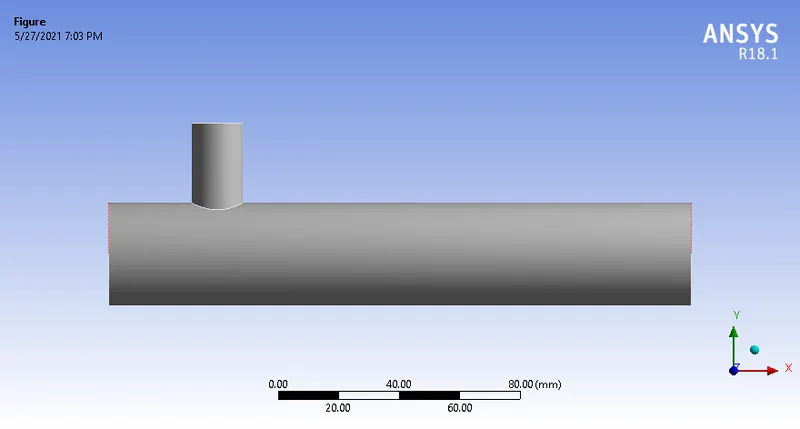
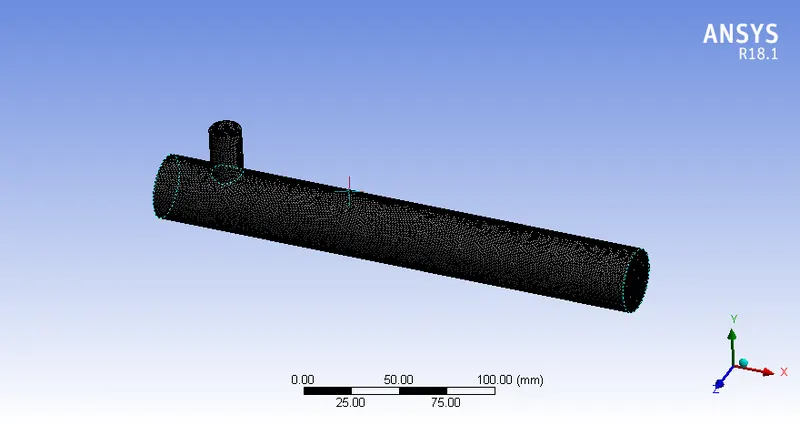
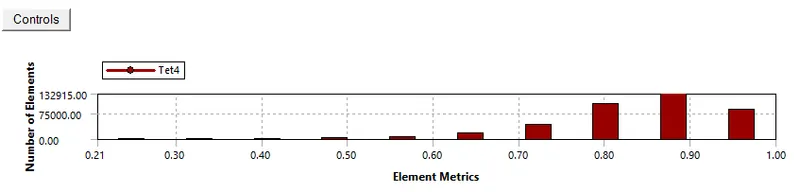
- Mesh - Then, the geometry has meshed in the Ansys workbench.
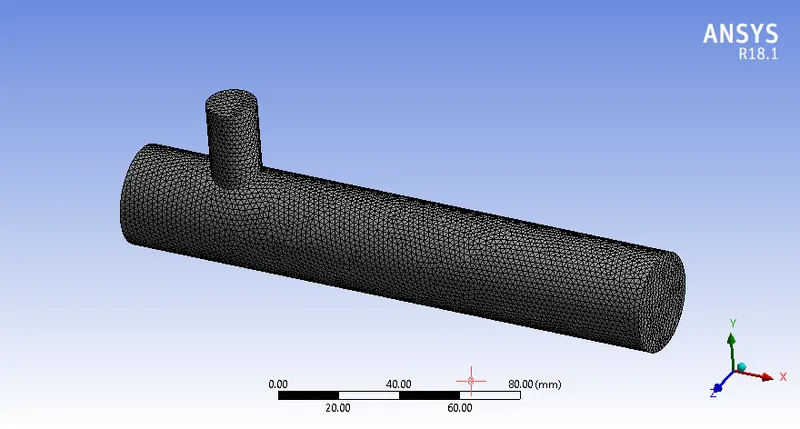
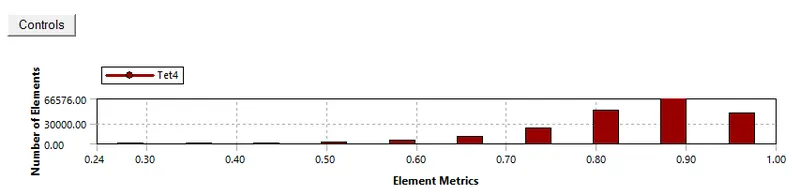
- Long Length Tee
Solver Setting :
- Solver - Pressure based, Steady-state
- Energy - on
- Viscous - K-ε Realizable
- Fluid - Air
Boundary Conditions :
- Inlet x - Velocity inlet
- Inlet y - Velocity inlet
- Outlet - Pressure outlet
- Wall - Stationary wall, No-slip condition
- PV coupling scheme - SIMPLE
Results :
| Cases |
Case (1) |
Case (2) |
Case (3) |
Case (4) |
|
Short (MR-2, K-epsilon Realizable) |
Short (MR-4, K-epsilon Realizable) |
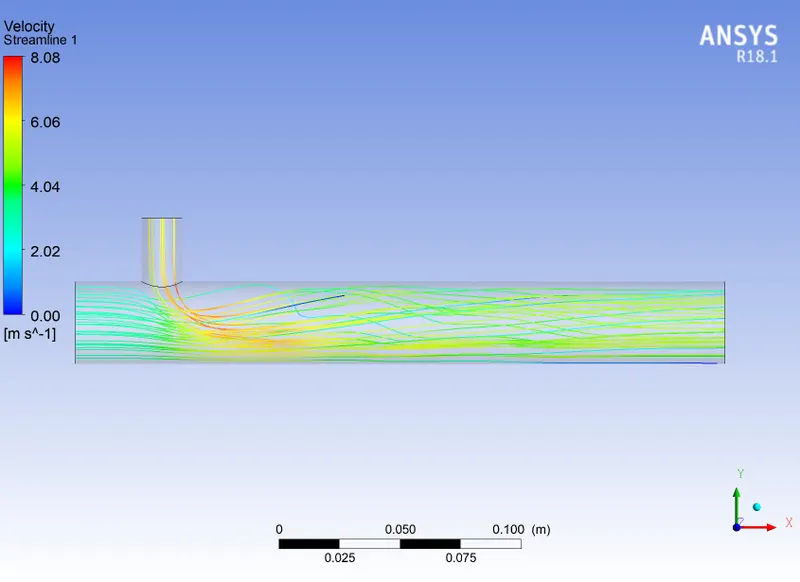
Long (MR-2, K-epsilon Realizable) |
Long (MR-4, K-omega SST) |
|
| No. of elements | 196817 | 196817 | 385071 | 385071 |
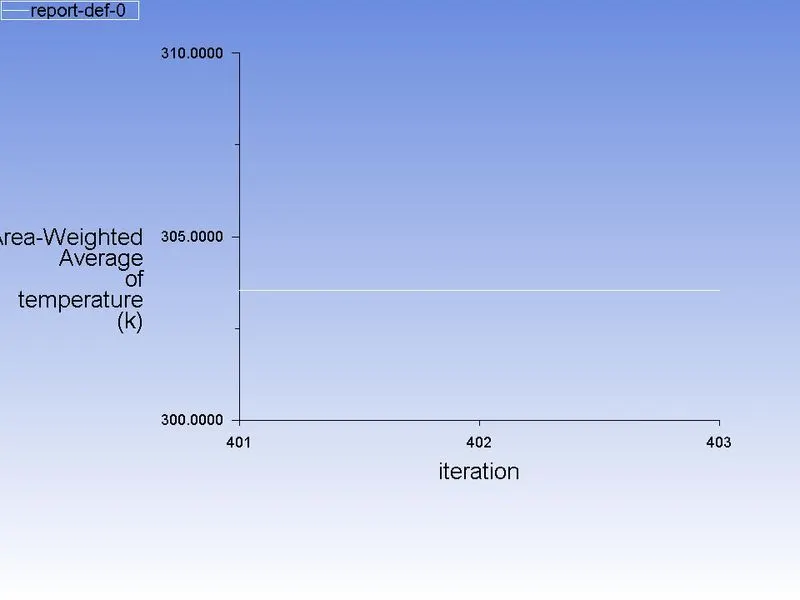
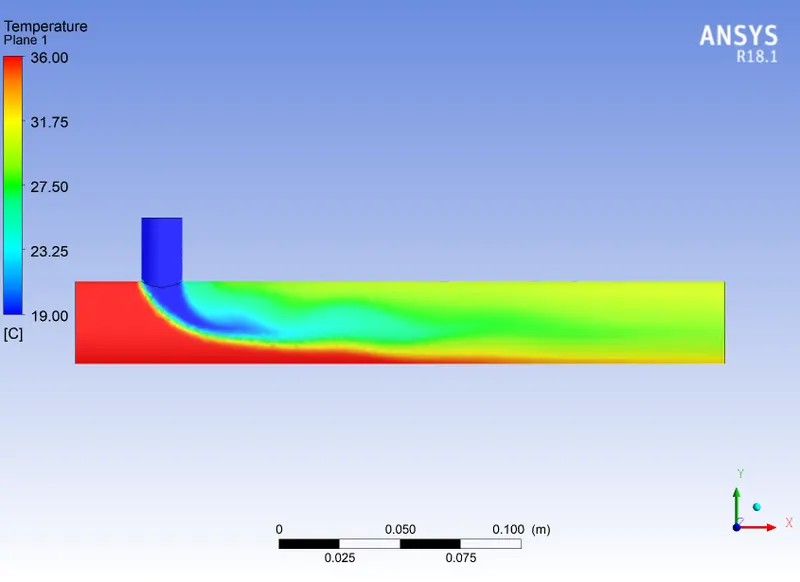
| Avg outlet Temperature | 30.375 | 27.55 | 30.48 | 27.563 |
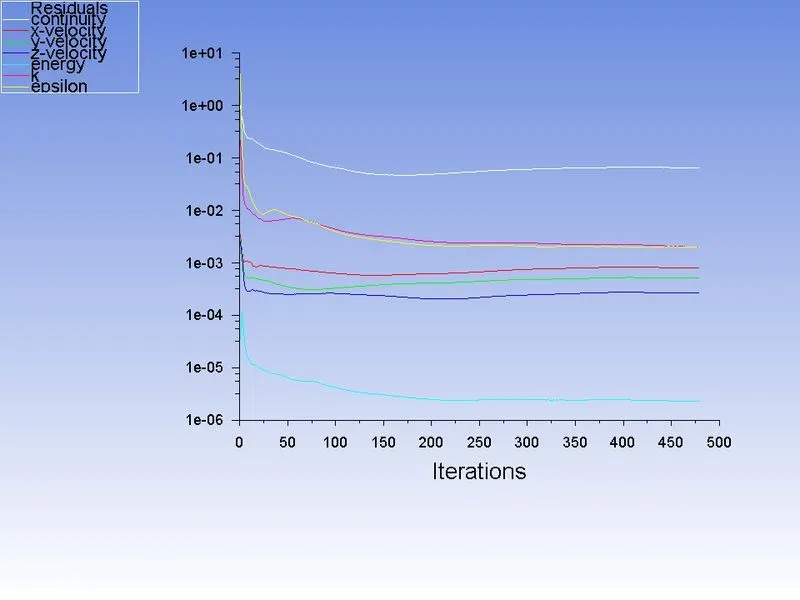
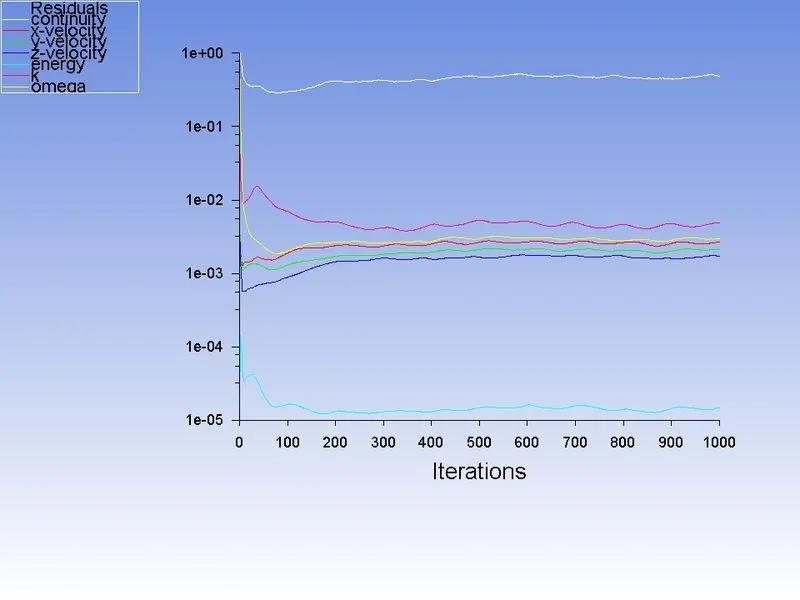
| No of iterations till convergence | 400 | 747 | 478 | 1000 |
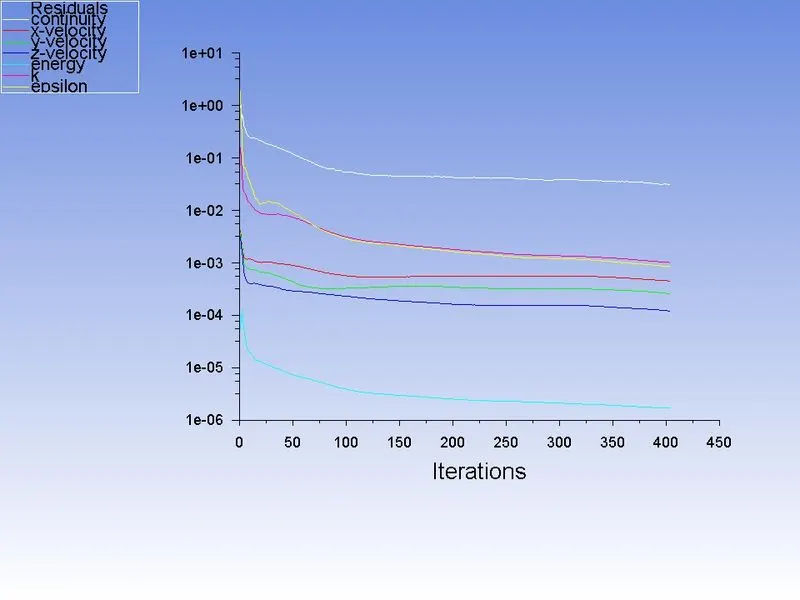
Case (1)
Residuals:
Outlet Mixing Temperature :
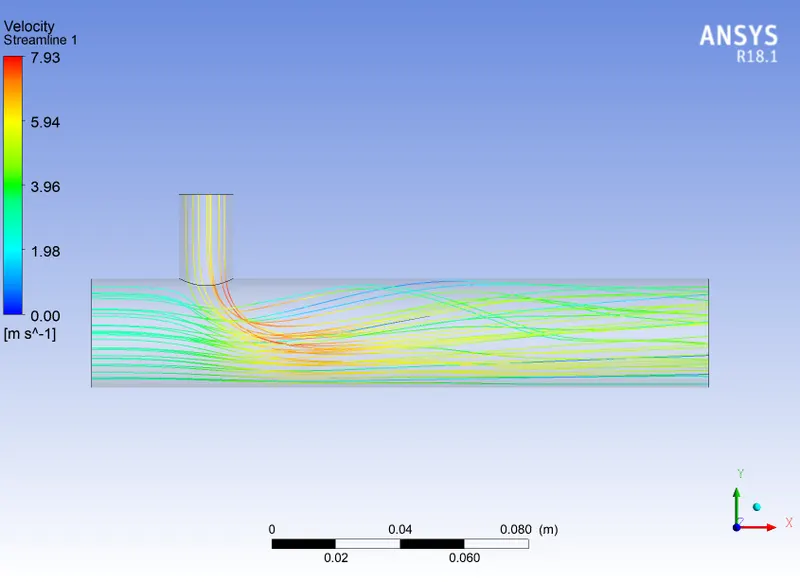
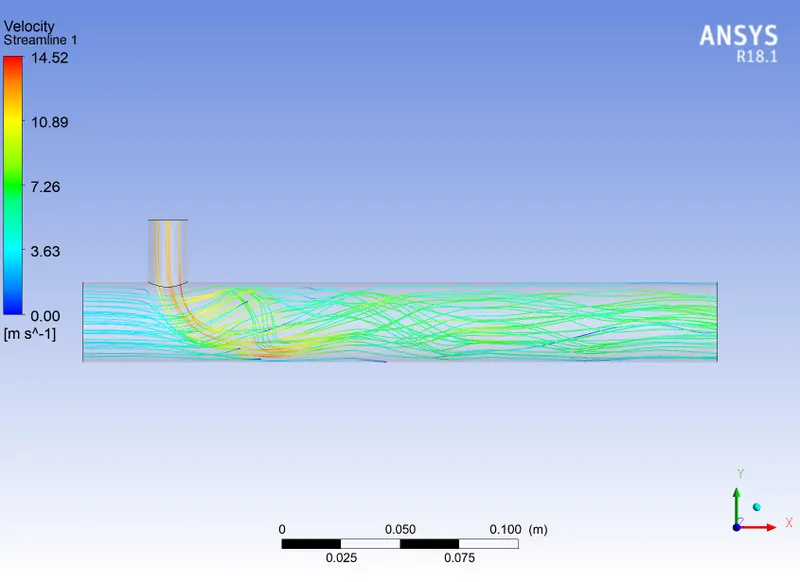
Streamline of velocity :
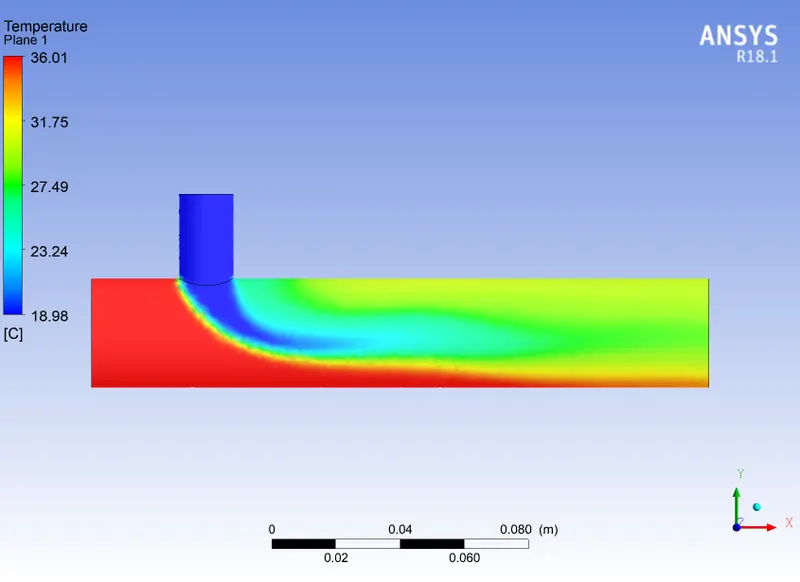
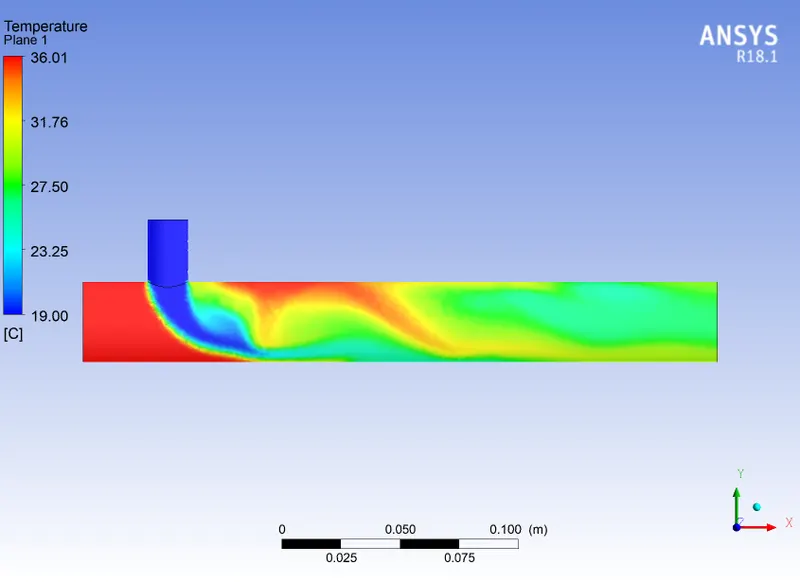
Contour plots of Temperature :
Case (2)
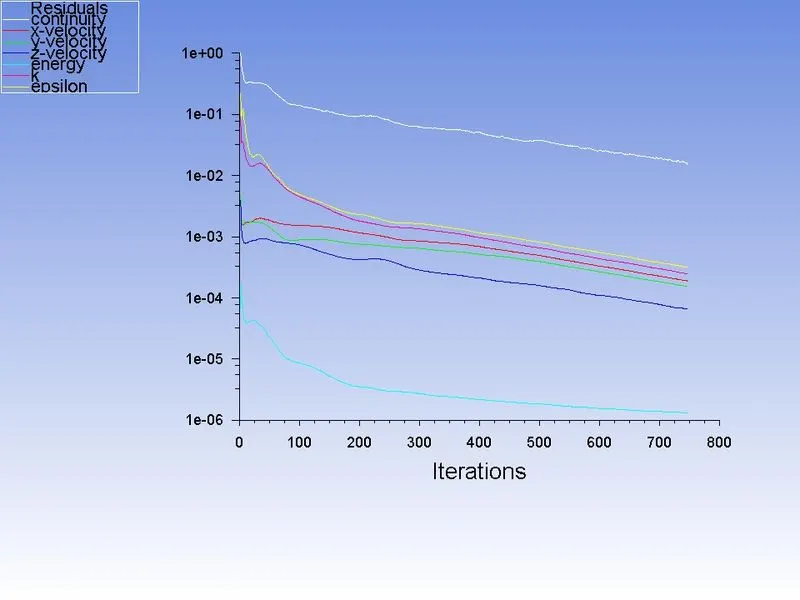
Residuals:
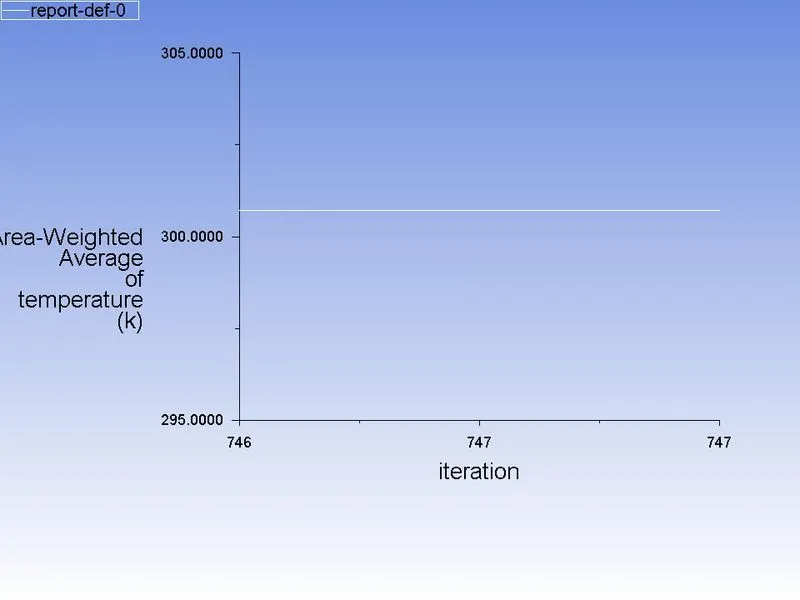
Outlet Mixing Temperature :
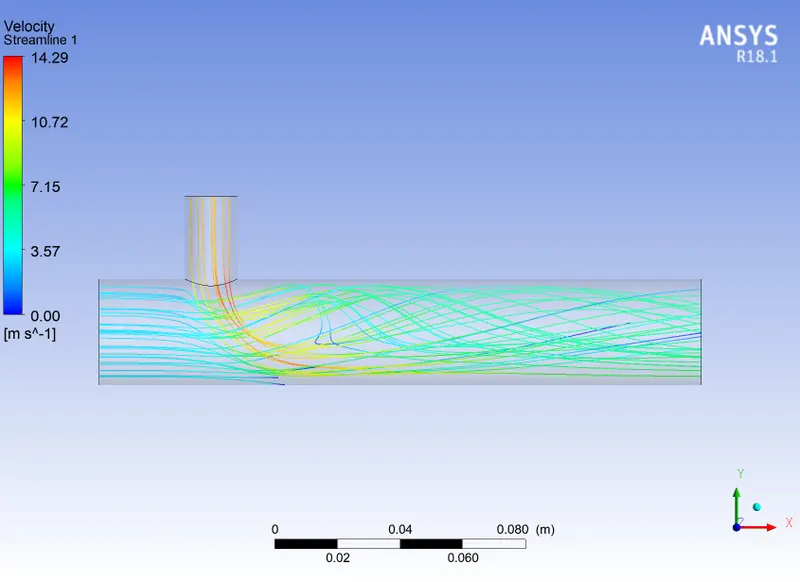
Streamline of velocity :
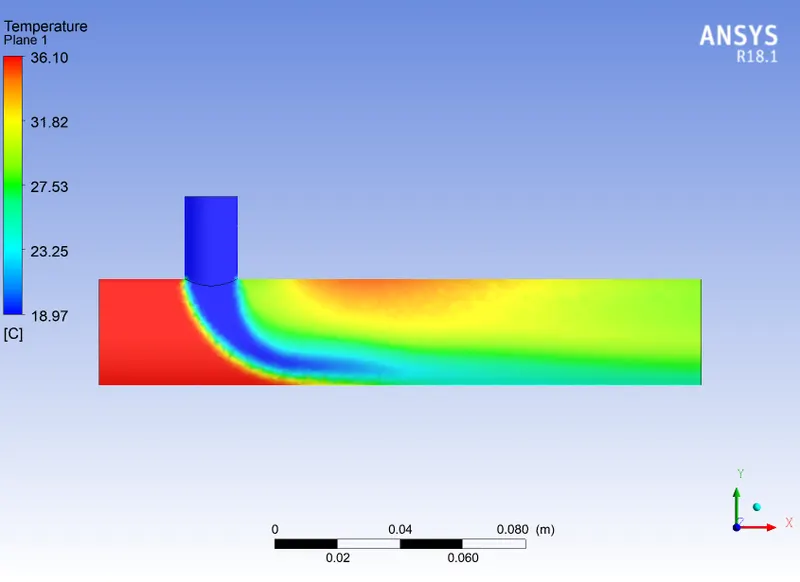
Contour plots of Temperature :
Case (3)
Residuals:
Streamline of velocity :
Contour plots of Temperature :
Case (4)
Residuals:
Streamline of velocity :
Contour plots of Temperature :
MESH INDEPENDENCE STUDY(Short length Tee) :
| S.No. | No. of Elements | Turbulence model | Momentum ratio | Average outlet temperature | Number of iterations till convergence |
| 1 | 24773 |
K-epsilon Realizable |
4 |
27.541 | 500 |
| 2 | 65018 |
K-epsilon Realizable |
4 |
27.552 | 800 |
| 3 | 1555873 |
K-epsilon Realizable |
4 |
27.56 | 400 |
Conclusion :
From the above result, it is observed that the solution is converged and the measure of effectiveness i.e. the standard deviation of temperature at an outlet is near to 1. Therefore the mixing is achieved nicely. Also, the plot of area-weighted average of temperature, that too with no variation as solution proceeds.
In order to check the authenticity of the solution, the simulation is done by changing certain parameters such as turbulence model and momentum ratio.
where,
Momentum ratio = cold fluid velocity / hot fluid velocity
From this above study, it is observed that K-epsilon realizable model predicts better mixing than the k-omega SST model.
While checking the effect of momentum ratio and length of pipe after a joint on mixing efficiency, it is observed that increasing length after joint is not helping us to improve the mixing process but increasing the momentum ratio does. As the momentum ratio is doubled the standard deviation of outlet temperature is decreased.