Week 2 - Flow over a Cylinder.
AIM: Simulate the flow over a cylinder and explain the phenomenon of Karman vortex street.
WKT Reynold's number is given by Re= ρ V D/μ
Solution:
Simulation of flow over a cylinder with steady and unsteady case.
In this case,we are going to simulate the flow over the cylinder for a Reynold's number of Re=100.
Geometry:
The geometry used is shown below:
Meshing:
Meshing Element Type:Triangular
Element size : 0.1m
Inflation: First Layer Thickness
- First layer height : 5 e-003m
- Number of layers : 6
- Growth rate :1.2
Sizing: Edge Sizing
- Number of divisions: 36
Number of Nodes: 20720
Number of Elements : 40520
Fluent Setup:
Material Specification: Fluid - Air
Physical Model : Laminar
Boundary Conditions: Inlet -
Outlet - Pressure Outlet(Gauge Pressure = 0 Pa)
wall - symmetry
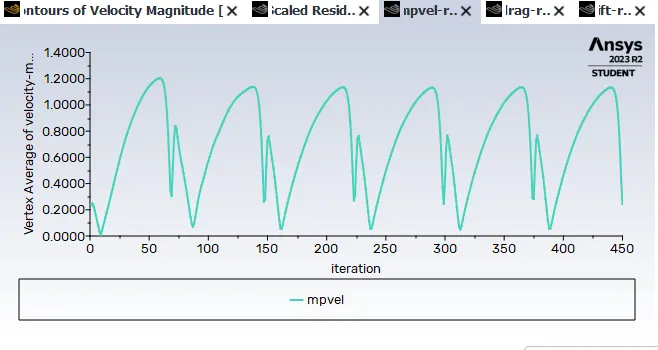
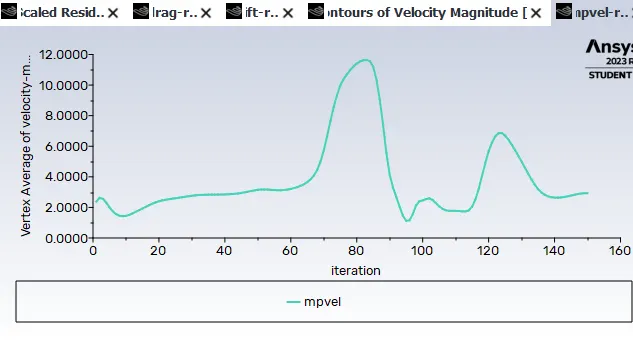
- A monitor point was created at a distance of 10 m from the centre of the cylinder along the x axis, for the measurement of vortex average.
Type of Initialisation: Hybrid Initialisation
CASE 1:
For Re to be 100,
ρ = 1 kg/m^3
V = 1 m/s
D = 2 m
μ = 0.02
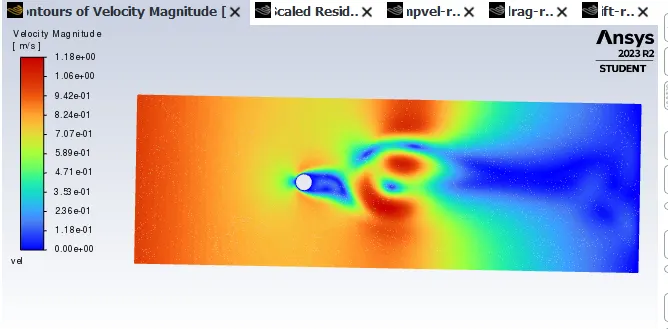
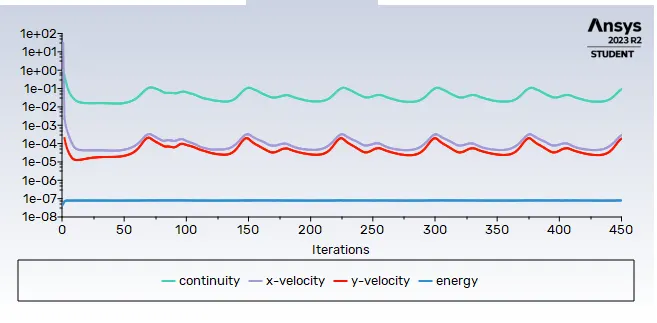
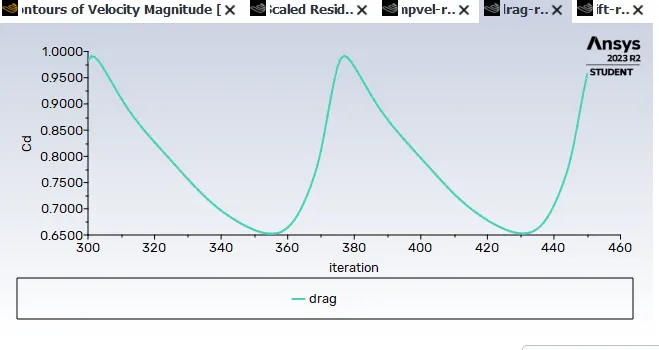
Steady state results:
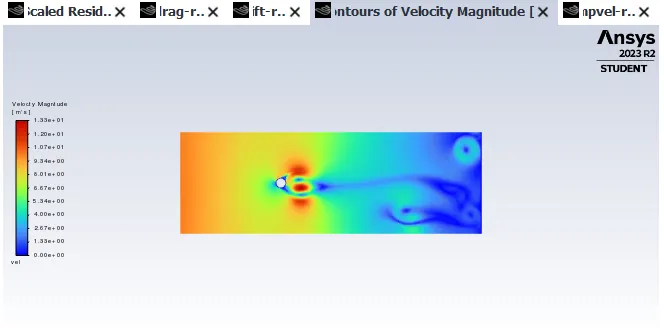
Velocity contours:
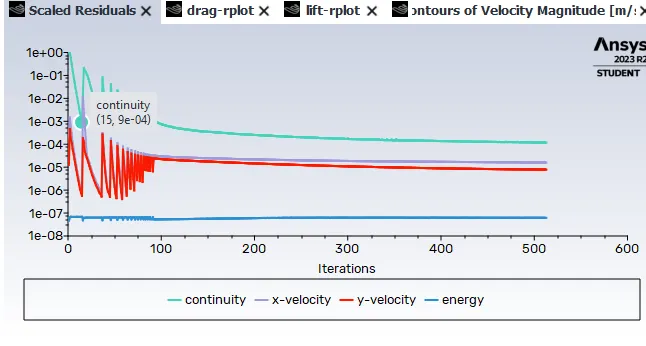
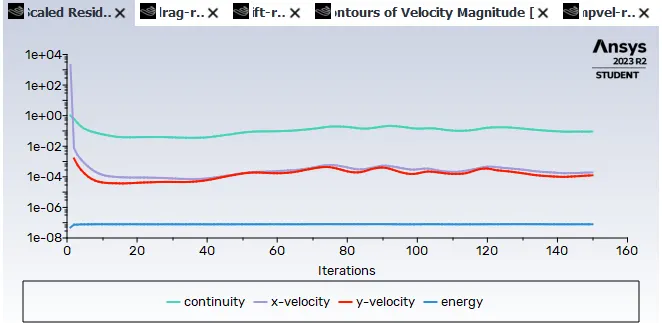
Scaled residuals:
Monitor point velocity:
Drag:
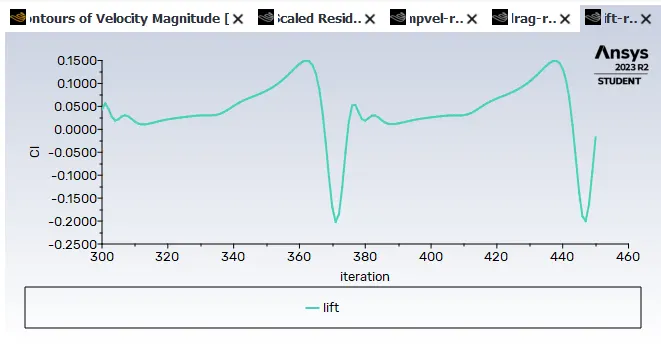
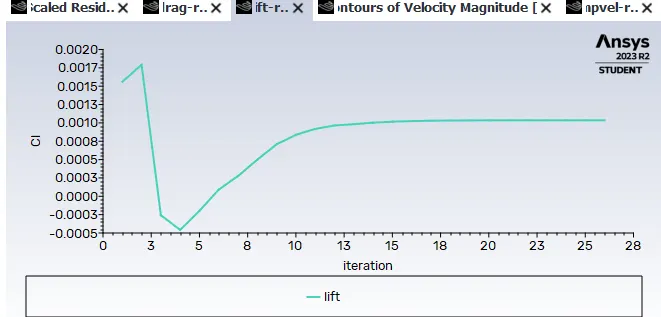
Lift:
Transient results:
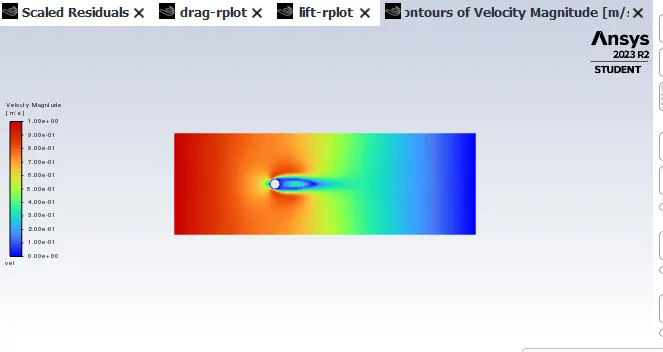
Velocity contours:
Scaled residuals:
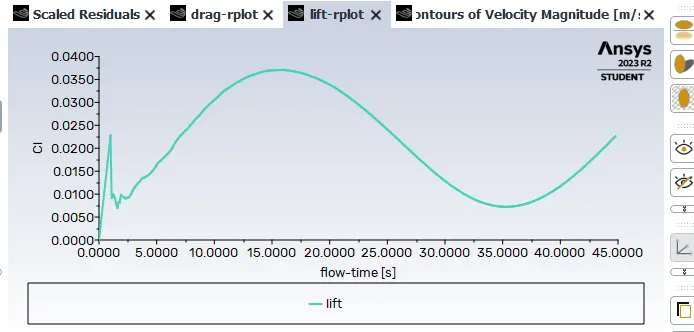
Lift:
CASE 2:
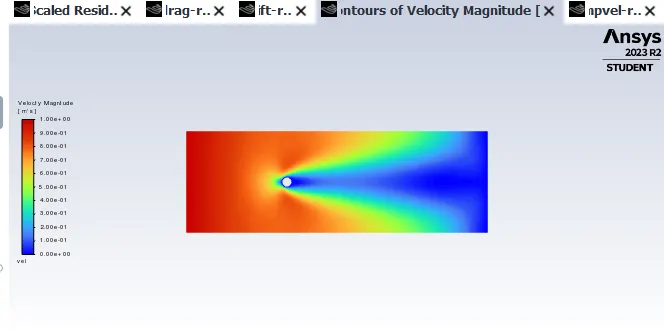
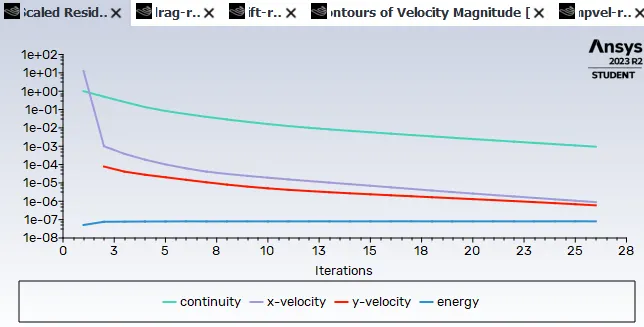
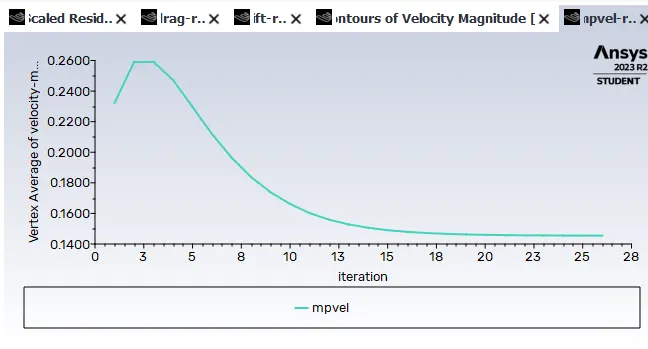
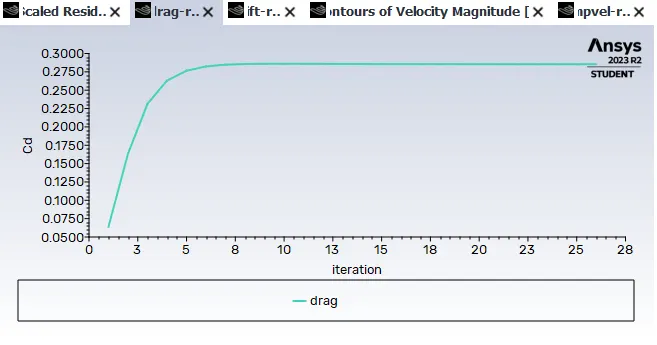
1} Re = 10
ρ = 1 kg/m^3
V = 0.1 m/s
D = 2 m
μ = 0.02
Velocity contours:
Scaled residuals:
Monitor point velocity:
Drag:
Lift:
2} Re = 100
ρ = 1 kg/m^3
V = 1 m/s
D = 2 m
μ = 0.02
Velocity contours:
Scaled residuals:
Monitor point velocity:
Drag:
Lift:
3} Re = 1000
ρ = 1 kg/m^3
V = 10 m/s
D = 2 m
μ = 0.02
Velocity contours:
Scaled residuals:
Monitor point velocity:
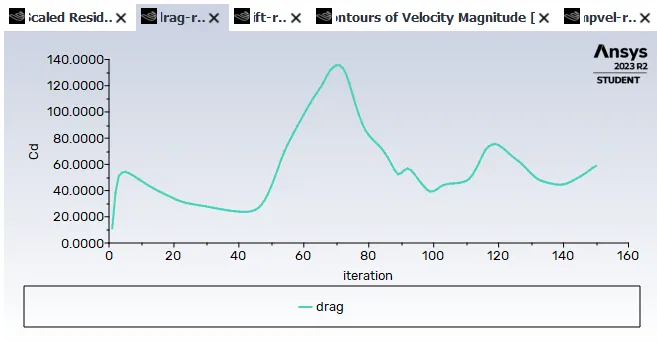
Drag:
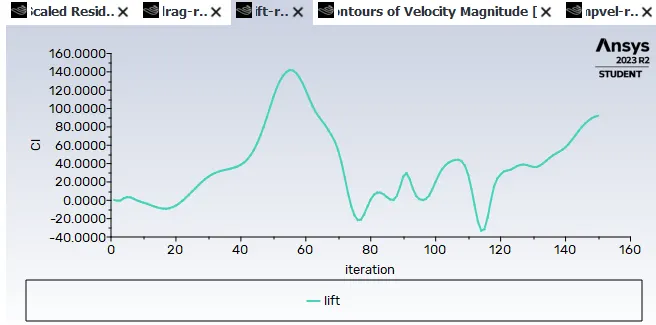
Lift:
4} Re = 10000
ρ = 1 kg/m^3
V = 100 m/s
D = 2 m
μ = 0.02
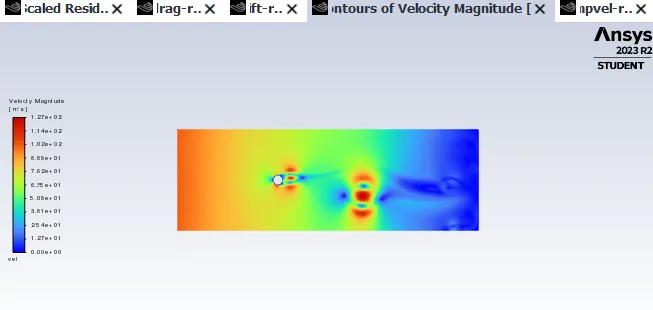
Velocity contours:
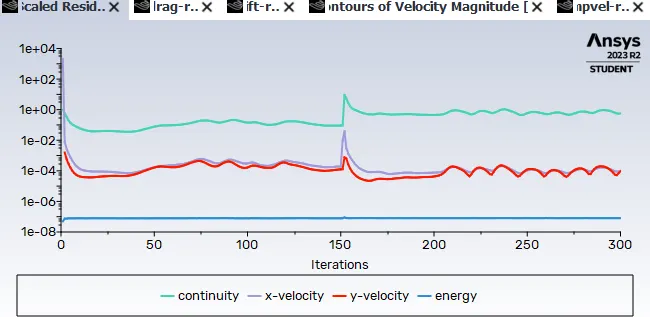
Scaled residuals:
Monitor point velocity:
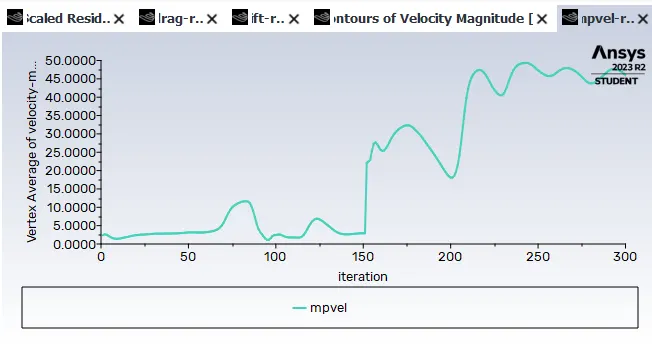
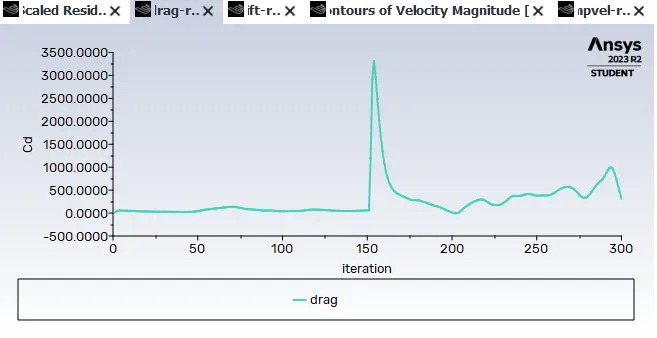
Drag:
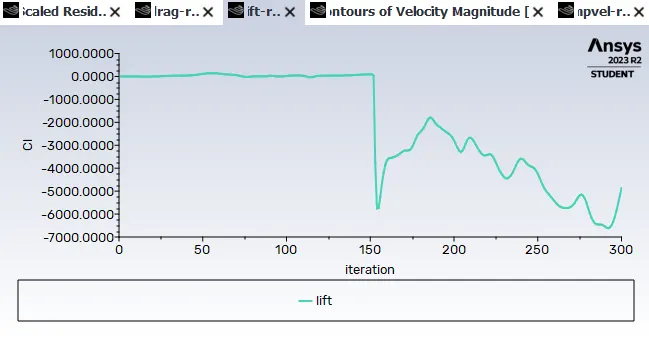
Lift:
RESULTS:
The flow pattern becomes asymmetrical with respect to the axis perpendicular to the flow direction as the Reynolds number increases.
The force that the flowing fluid applies to the cylinder, or drag force, is dependent on the flow's Reynolds number.
It is evident that as the Reynolds number rises, so do the coefficients of lift and drag.