Week 2 - Flow over a Cylinder.
Aim:- Simulation Of Flow Over a Cylinder
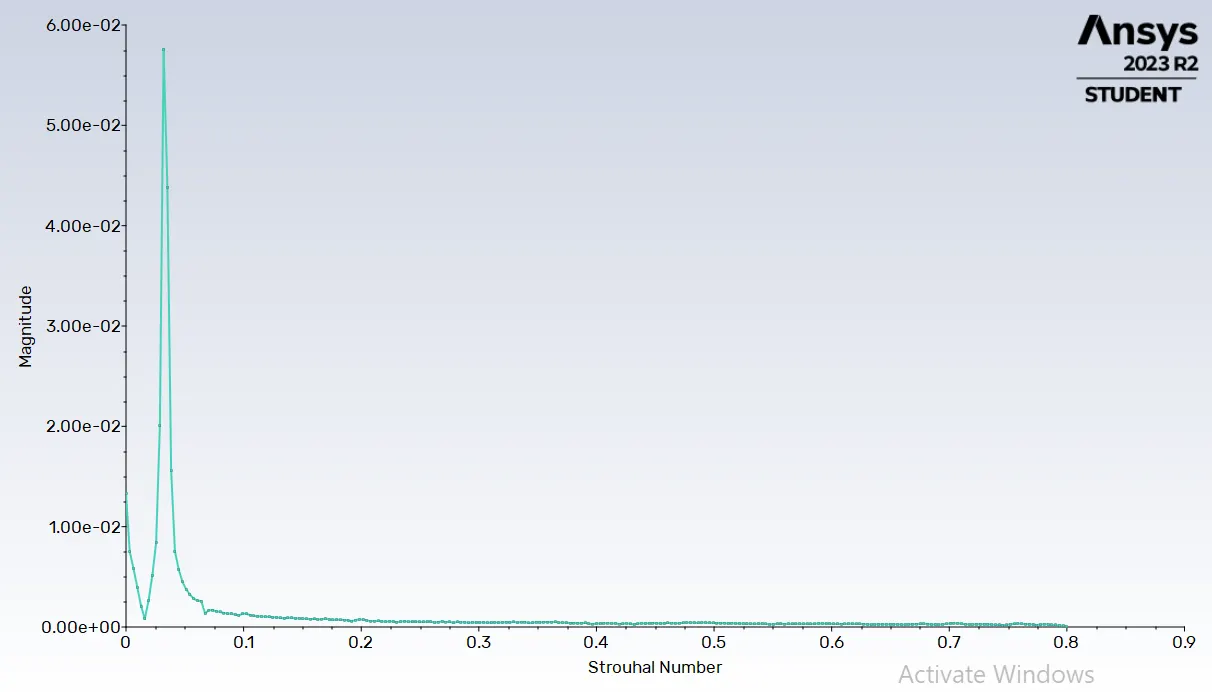
Part 1:- To Simulate the flow with steady and unsteady case and calculate the Strouhal number for Re=100.
Part 2:
- Calculate the lift and drag coefficient over a cylinder by setting the Reynold No. to 10,100,1000,10000 & 100000 (Run with steady solver).
- Discussed the effect of Reynold No. on the coefficient of drag.
Karmon Vortex Street
Vortex Street is a fluid dynamic phenomenon that occurs when a fluid flow around a bluff body or blows around a structural member, vortices are shed alternately from one side to other and where alternating low pressure zone are generated on downwind of the strucure giving rise to a fluctuating force acting at right angle to the wind direction.
To increase the pressure gradient pushes against the flow and causes the slowest of the flow, those immediately adjacent to the surface, to reverse direction. At this point the boundary layer has separated from the body and the combination of flow in two direction induces a wake of turbulent vortices show in diag.
For Slender and lightly damped building, large amplitude vibration in the plane normal to wind may develop when the vortex shedding is in resonance with one of the natural frequencies of vibration.
Characterstics:-
The character of vortex shedding force depends on the shape of the building Ex.for Supertall building, Burj Kalifa, Wind Tunnel, tested was used to shape the building to minimise wind effect through disturbance on vortex sheddig over the height of tower.
Frequency of Vortex Shedding Calculation:-
Strouhal Number (St) depnds on cross section of building or object which flow passes over, and is also depends on the velocity of the flow or Reynold Number.
`S_t =((D.F_v)/U)`
Where,
St = Strouhal Number
D = Widthe of building or object
Fv = frequency of vortex shedding
U = Velocity of flow speed
Lift Coefficient :- Lift Coefficient is Number that aerodynamicists used to model all of the complex dependencies of shape, inclination and some flow condition on lift.
`C_l=((F_l)/(rho*A*V^2))`
Where,
Fl = Lift Force
`rho`= fluid density
A= projected area of object with respect to which lift force is calculated.
v = Flow Velocity.
Drag Oefficient:- Drag coefficient is a dimensionless quantity that measure the resistance of an object in a fluid environment it is a fundamental parameter in determining the shear stess or drag force between a fixed object and moving over it.
`C_d = ((2*F_D)/(rho*A*V^2))`.
Where
FD = Drag force
`rho`= density of fluid
A= projected area of object with respect to which lift force is calculated.
v = Flow Velocity.
A lower drag coefficient indicates the object will have less aerodynamic or hydrodhynamic drag.
Reynold Number (Re):- Reynold number is a dimensionless quantity which used for determine the type fow of pattern which are laminar or turbulent whlie flowing through a pipe.
Reynold Number = (Inertial Force)/(Viscous Force).
`Re = ((rho*V*D)/mu)`
To Calculation of velocity against the Reynold number.
| Case | Flow | Reynold Number | Velocity(m/s) |
| 1 | Steady | 10 | 0.125 |
| 2 | Steady | 100 | 1.25 |
| 3 | Unsteady | 1000 | 12.5 |
| 4 | Steady | 10000 | 125 |
| 5 | Steady | 100000 | 1250 |
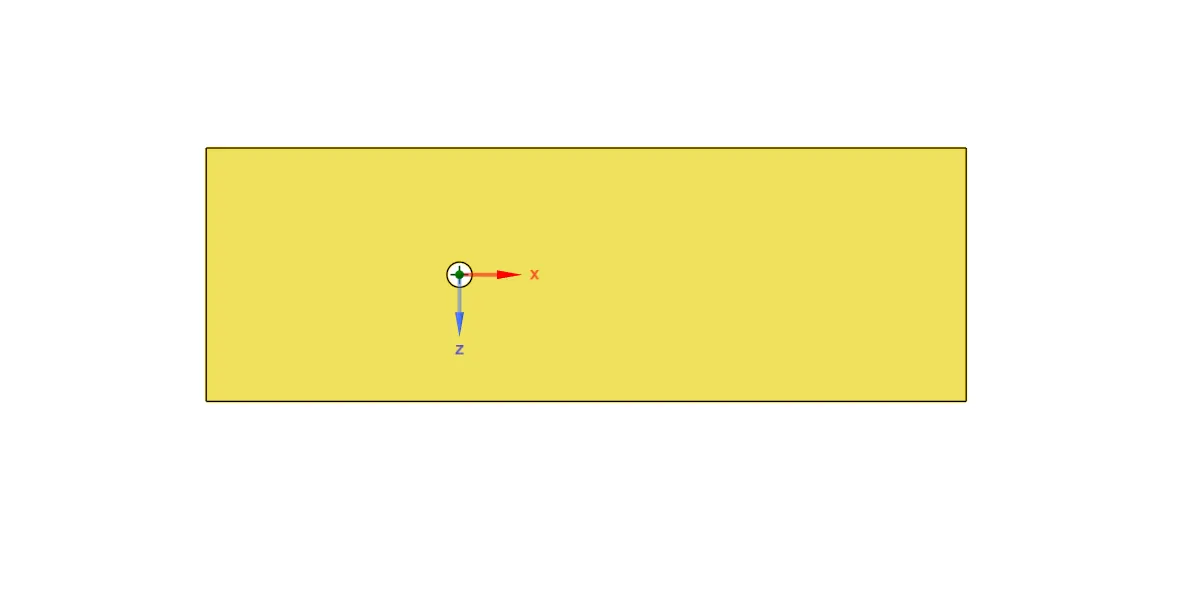
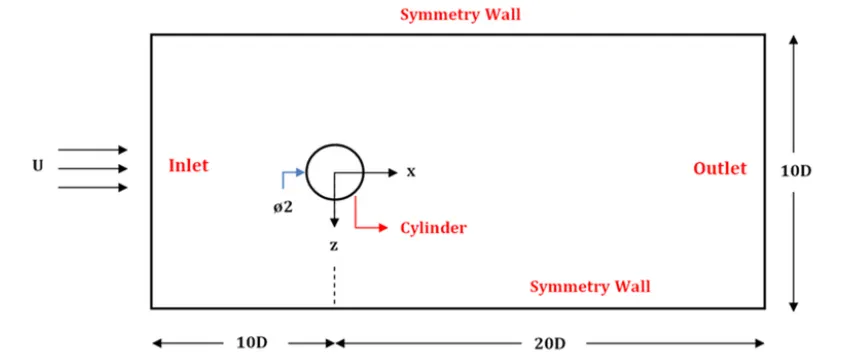
Creation of Model
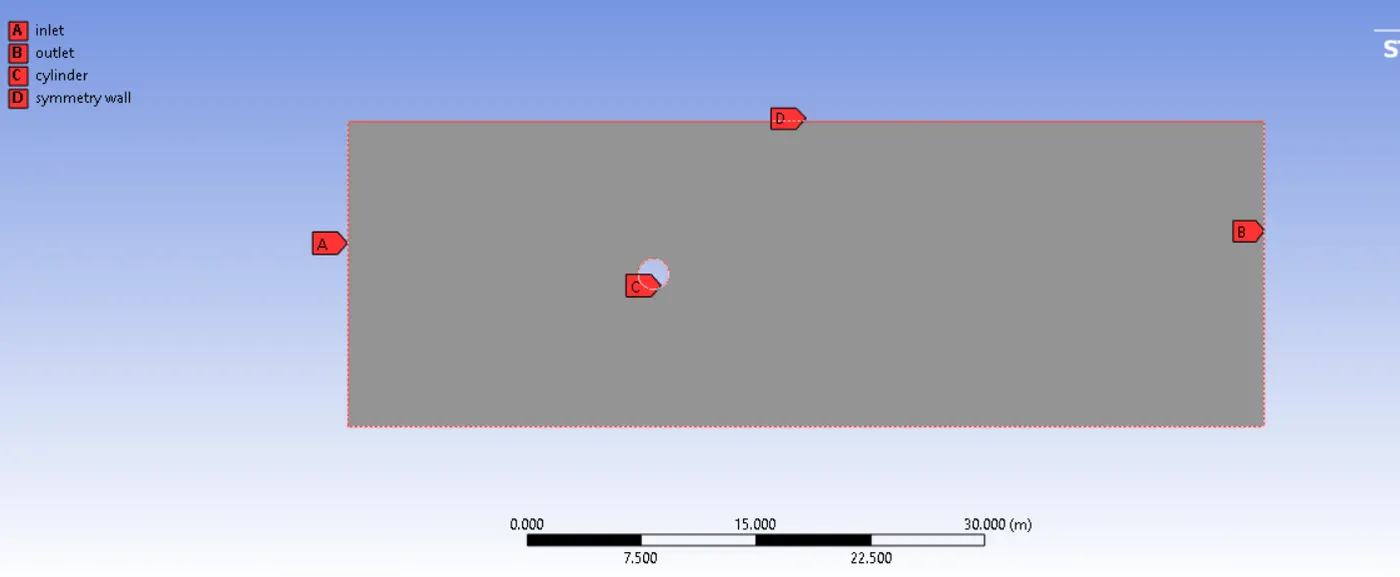
Selection of BC
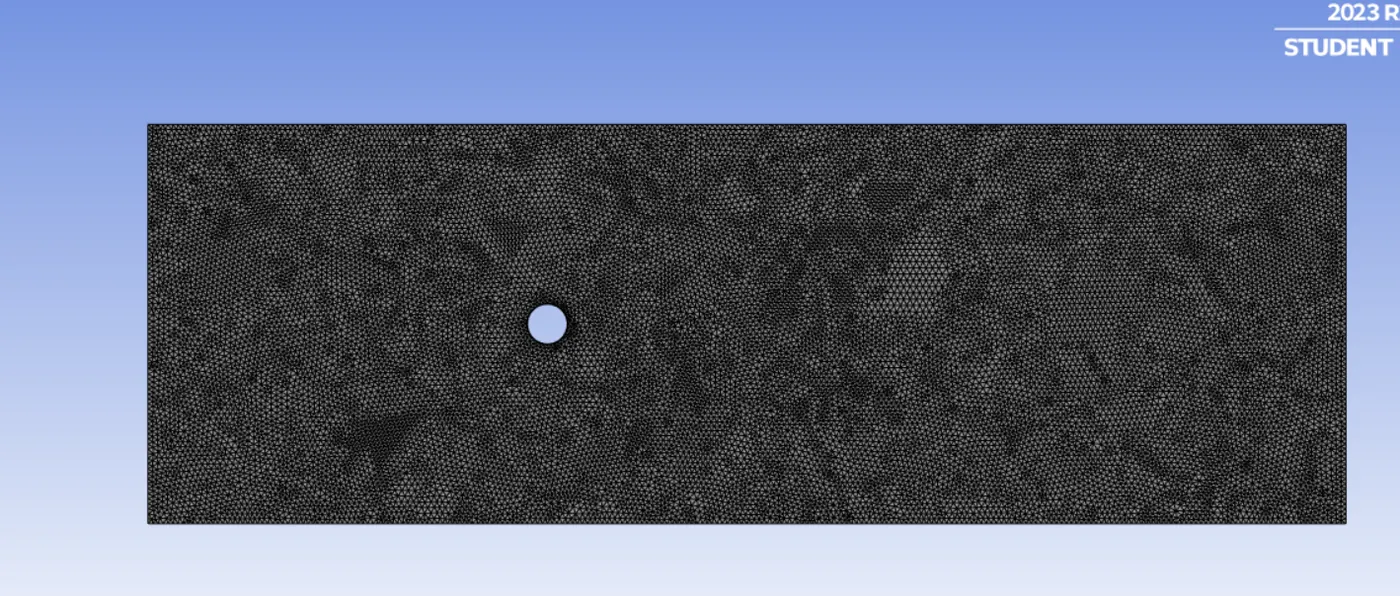
Generation Of Mesh
Element size = 0.25 inflation Layer with body fitted mesh.
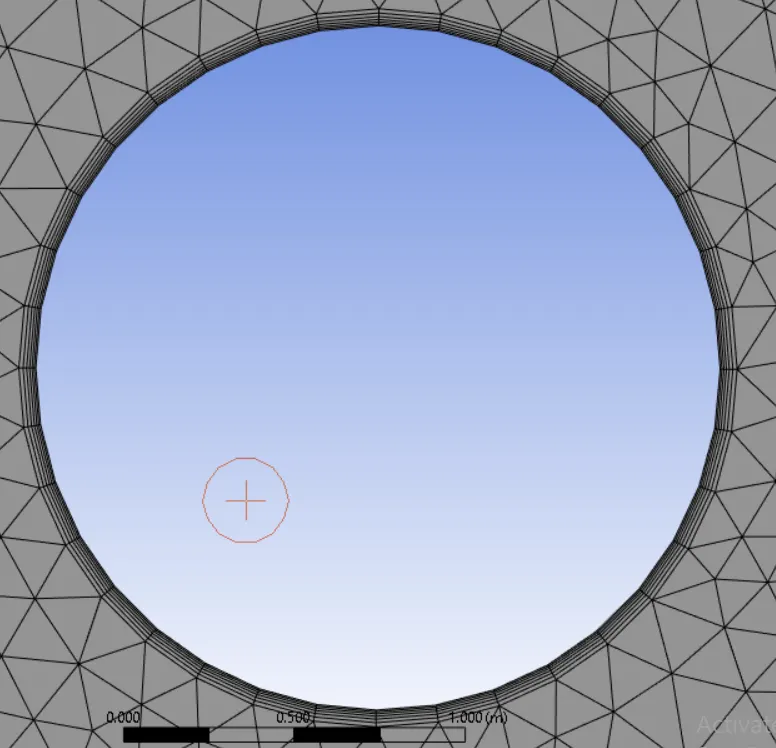
Case 1: Re = 10, V = 0.125m/s
Flow: Steady State
Residual Scale
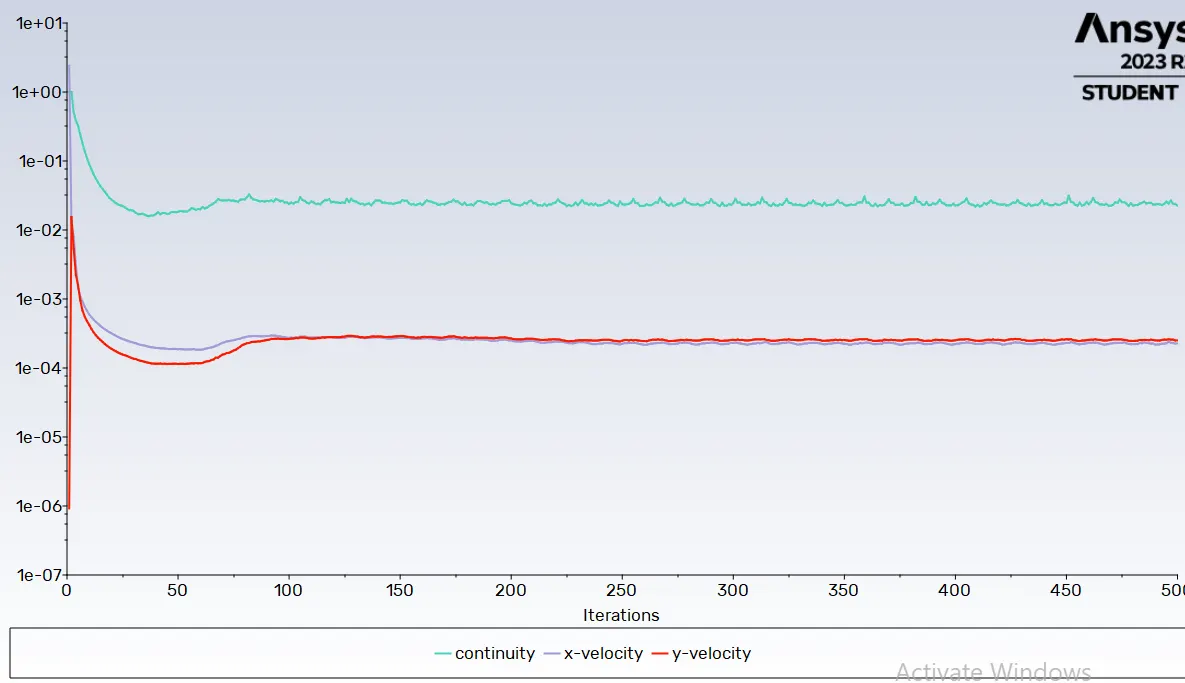
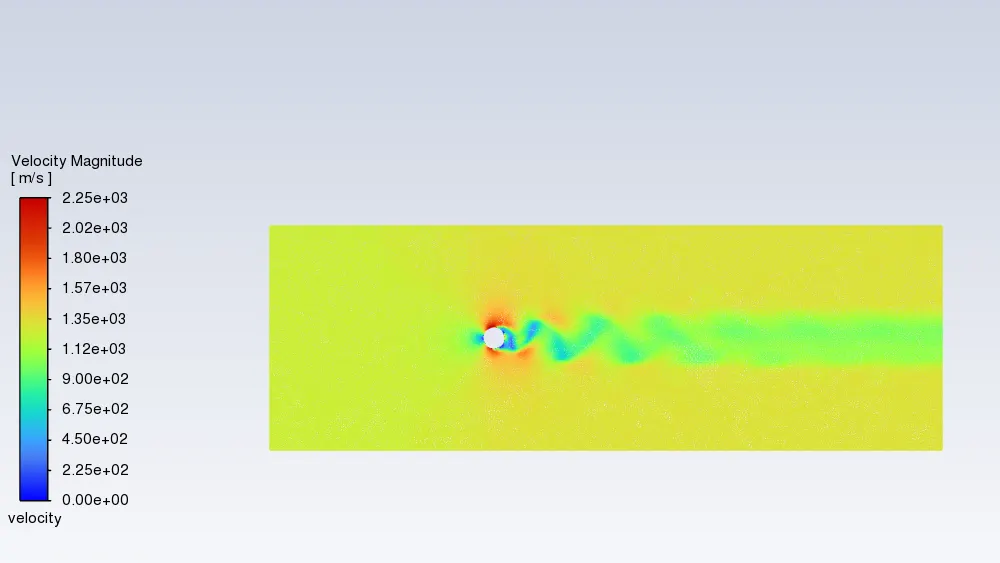
Velocity Contour
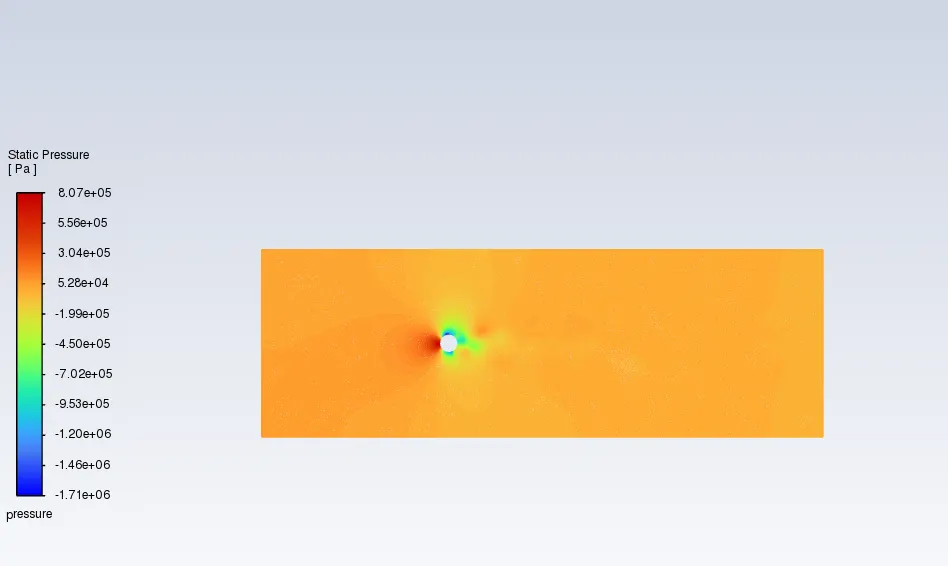
Pressure Contour
Vortex Velocity
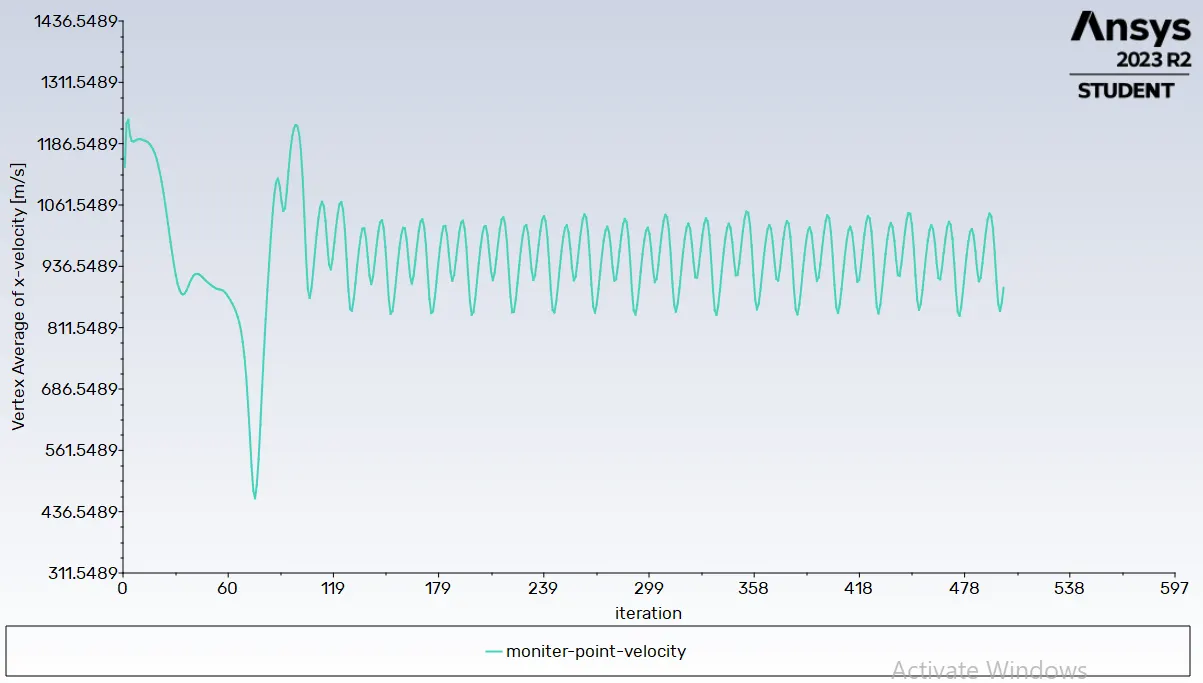
Lift Coefficient
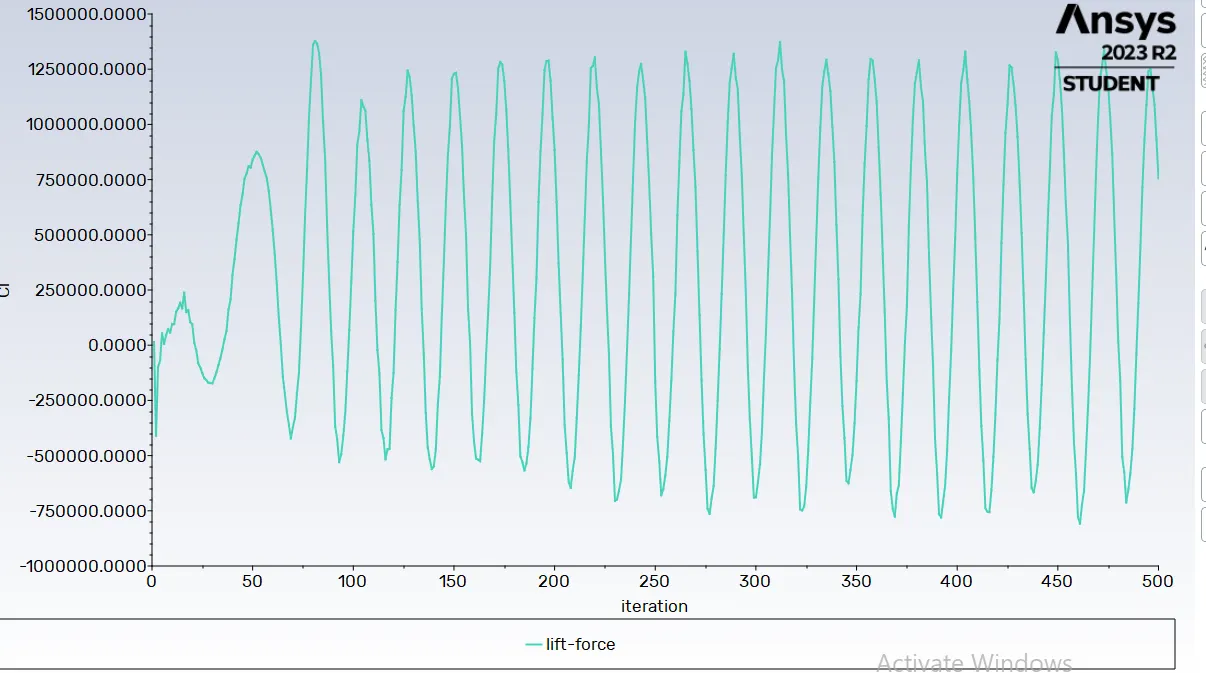
Drag Coefficient
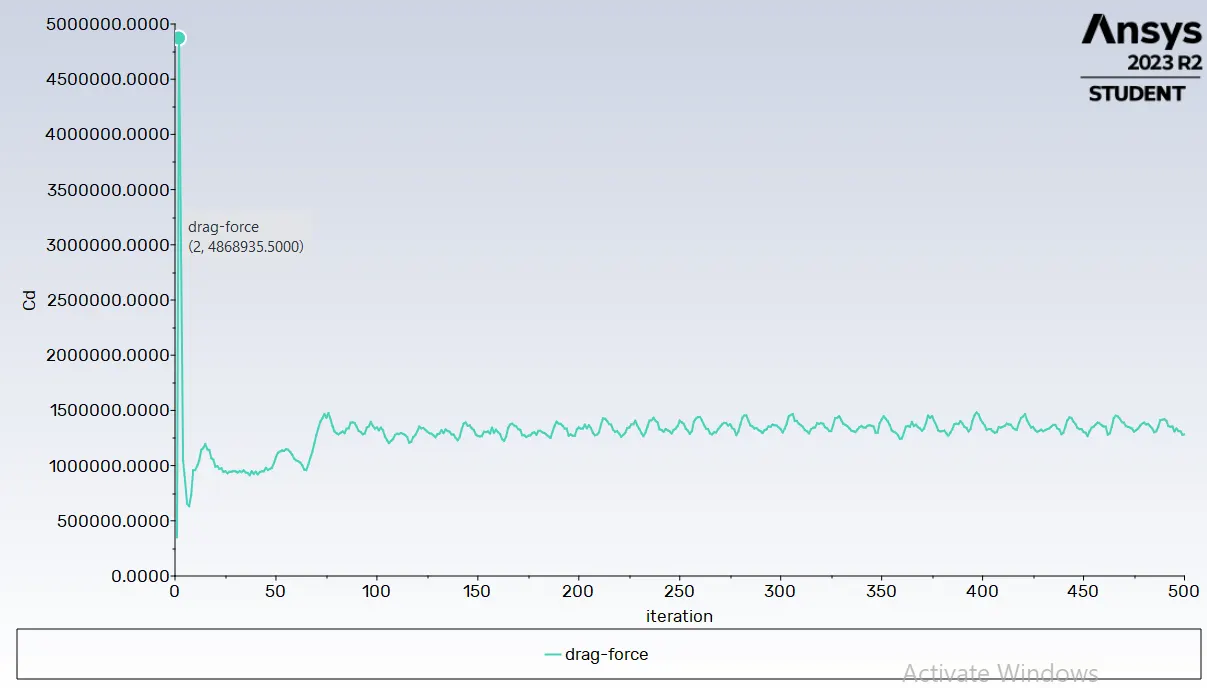
Strouhal Number
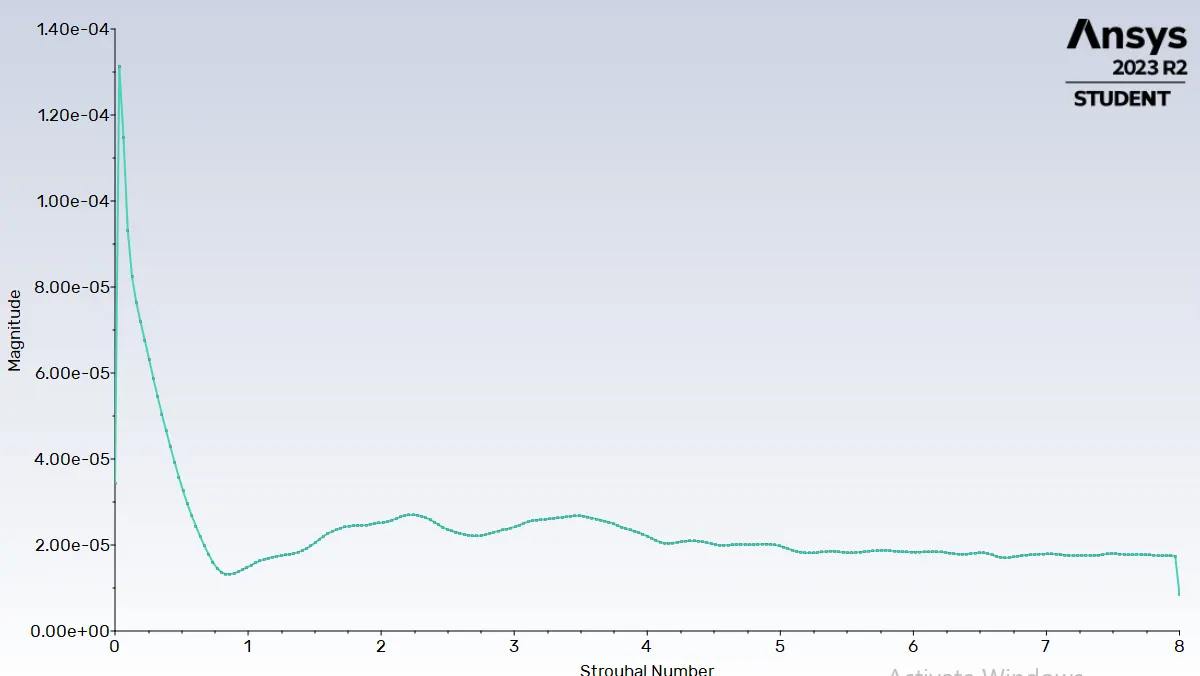
CFD Velocity Animation
Case 2: Re = 100 V = 1.25 m/s
Flow : Steady State
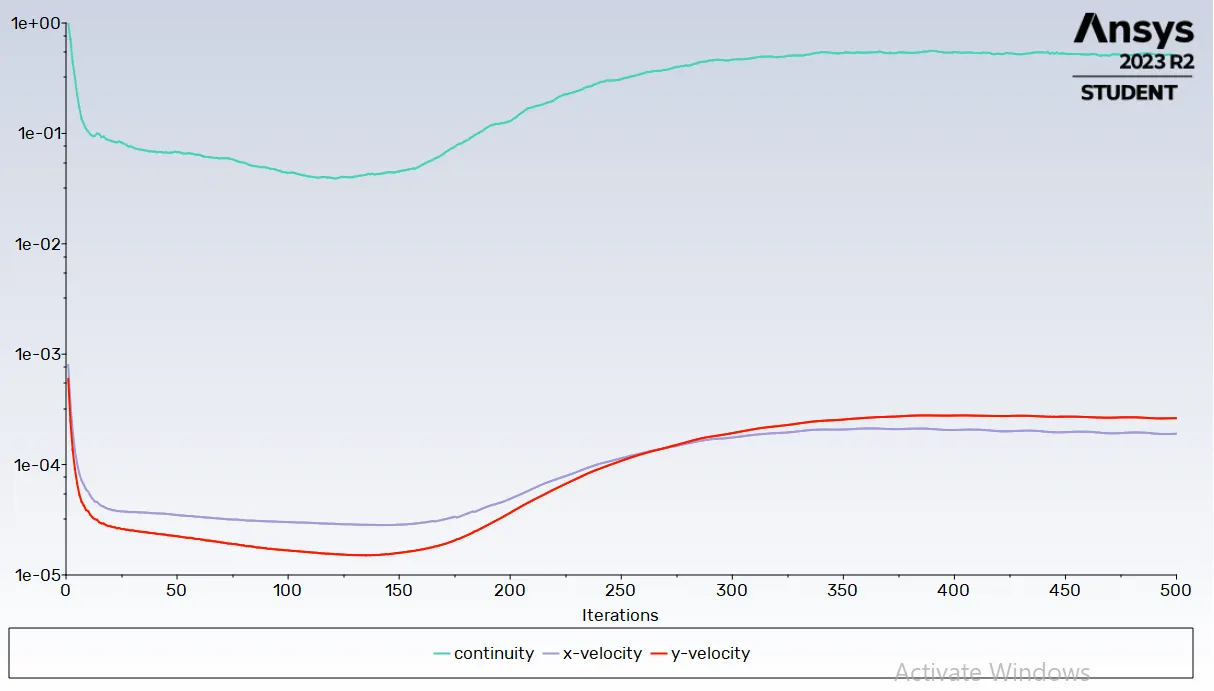
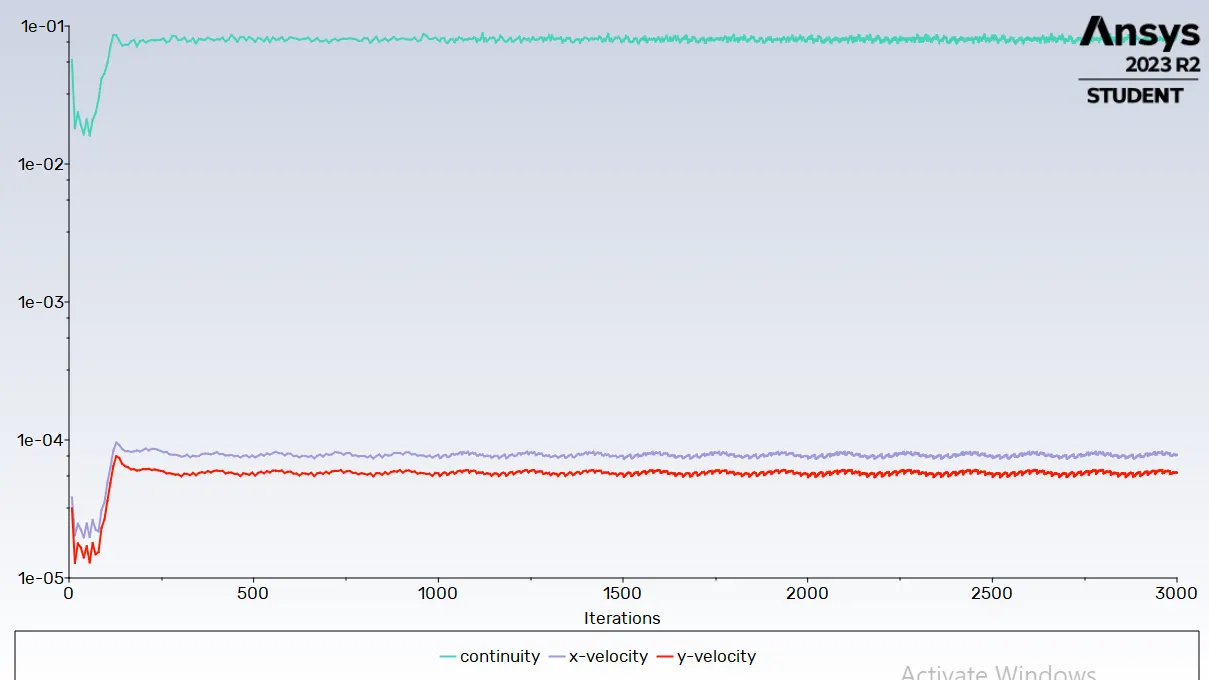
Residual Scale
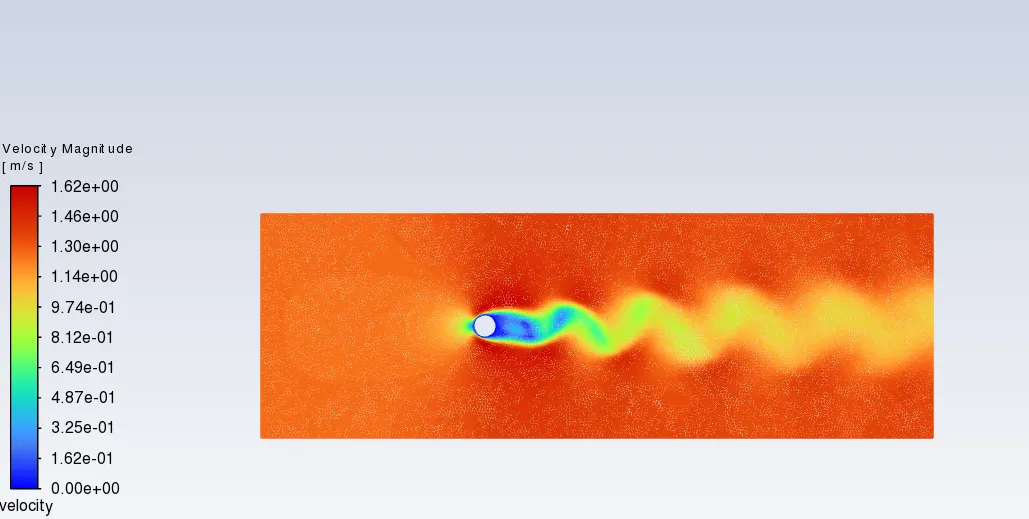
Velocity Contour
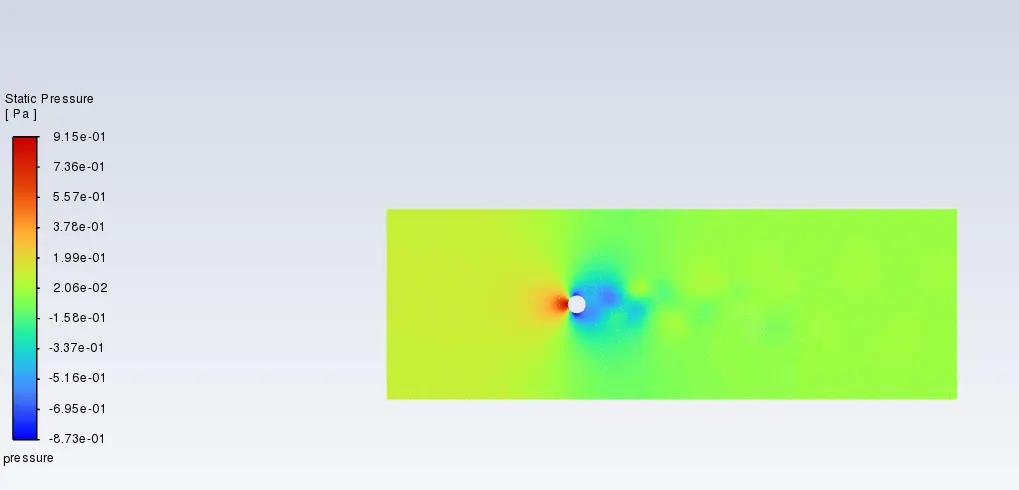
Pressure Contour
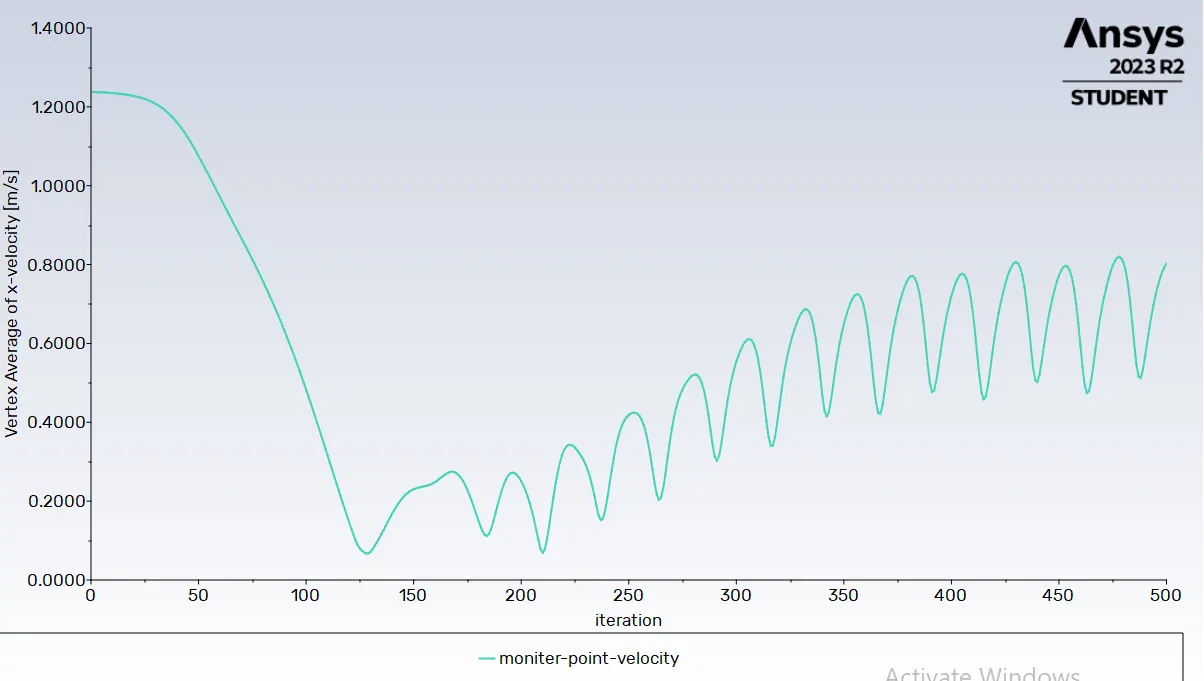
Vortex Velocity
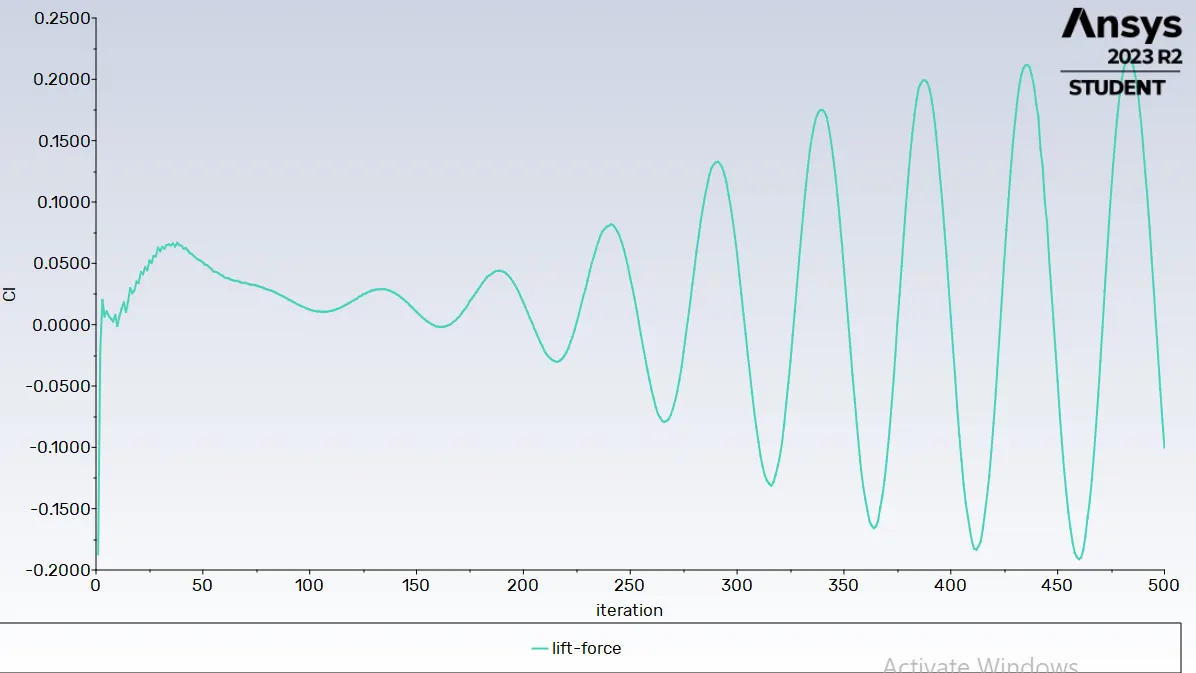
Lift Coefficient
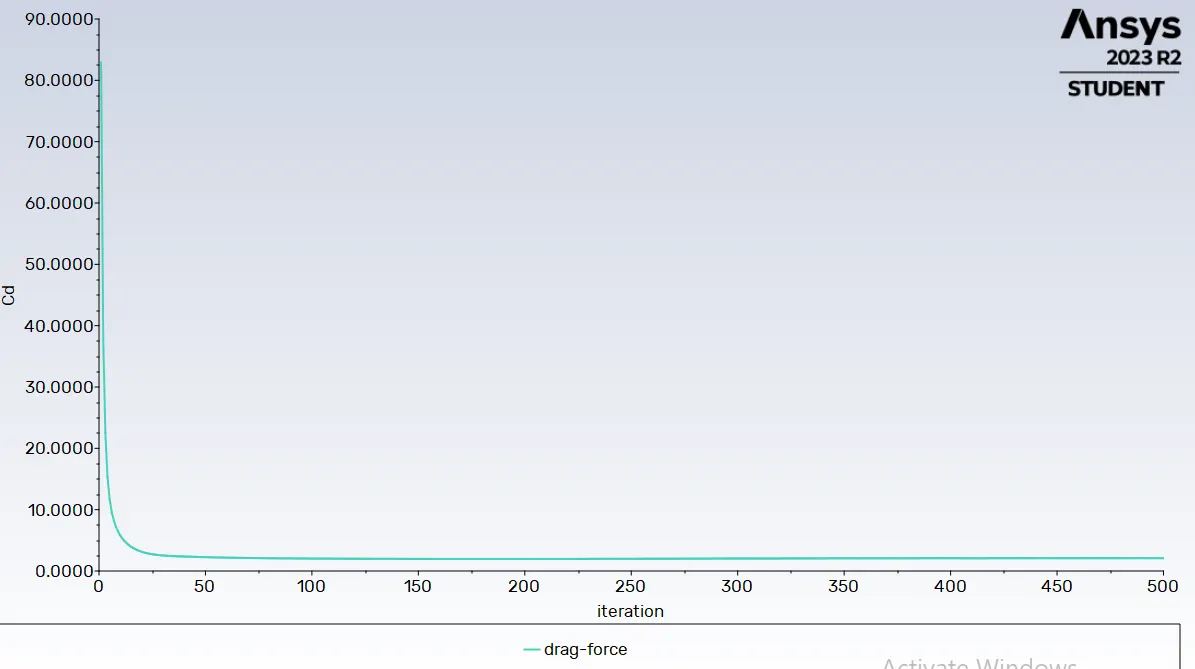
Drag Coefficient
Strouhal Number
Case 3: Re = 1000, V= 12.5m/s
Flow: Unsteady
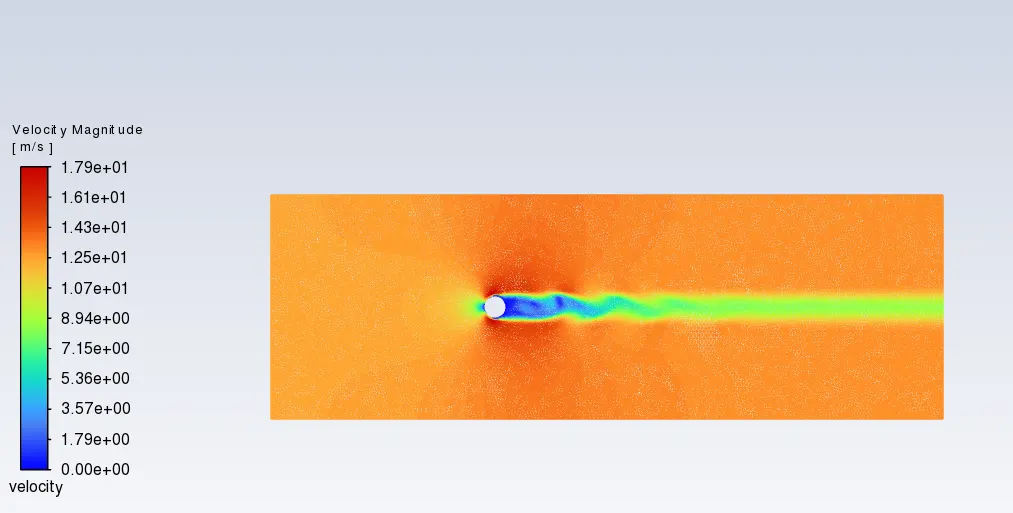
Velocity Contour
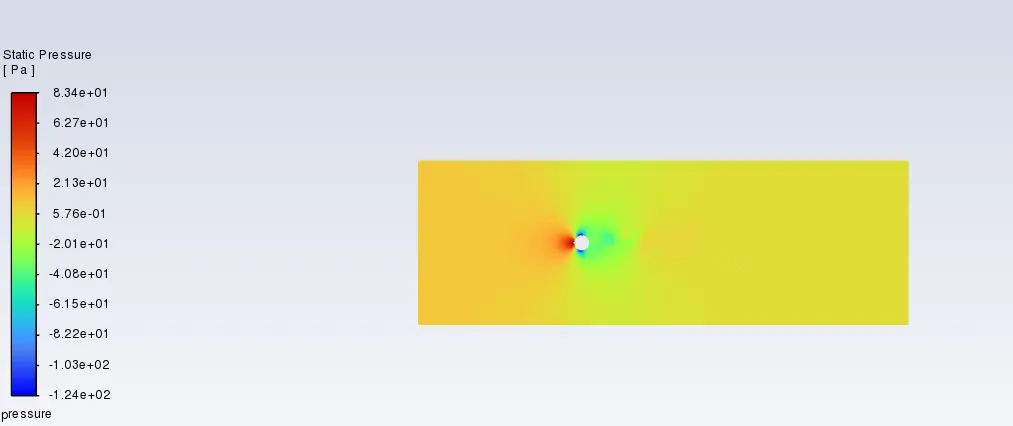
Pressure Contour
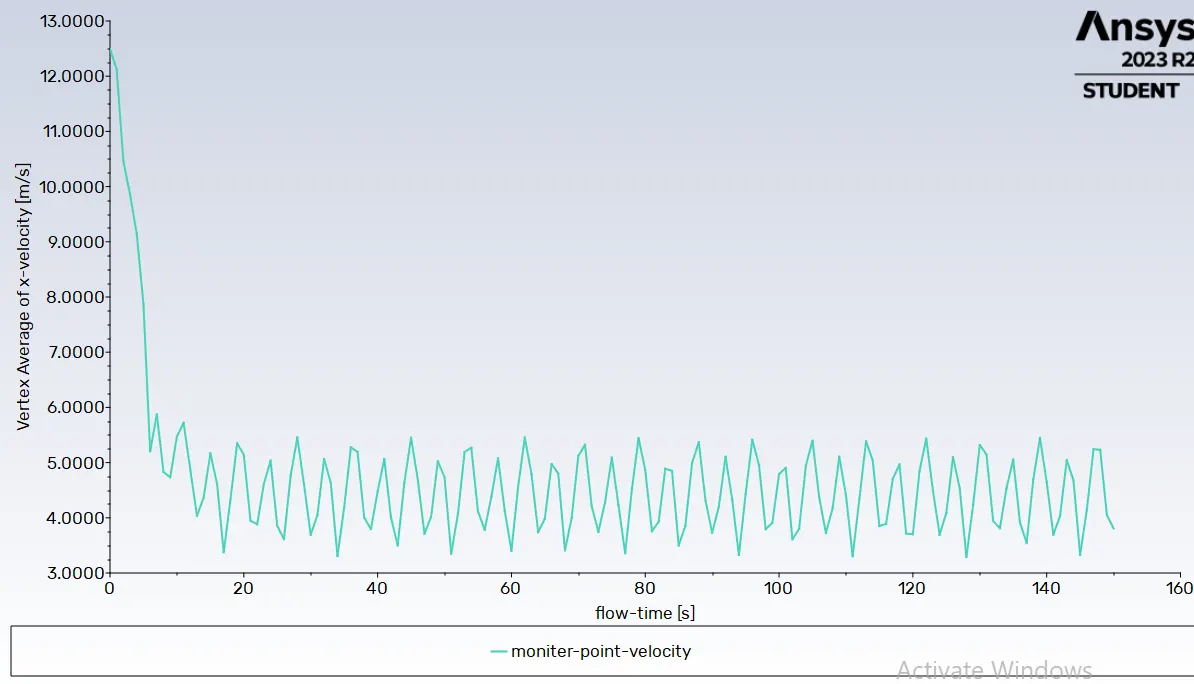
Vortex Velocity
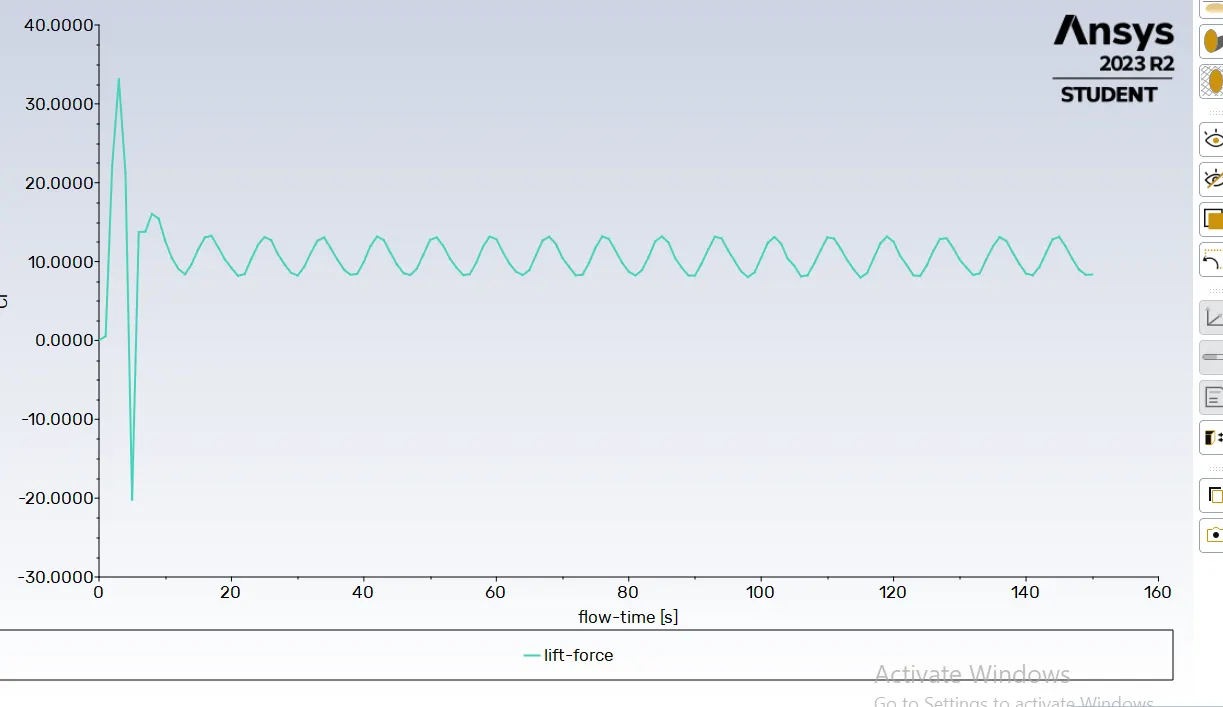
Lift Coefficient
Drag Coefficient
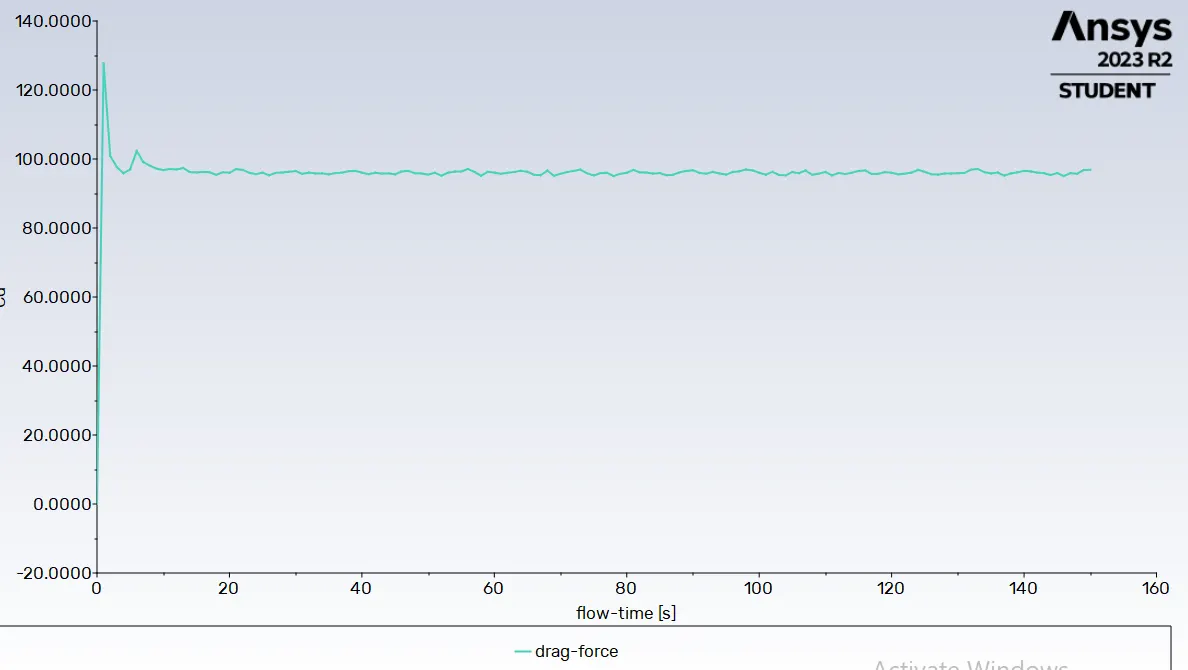
Strouhal Number
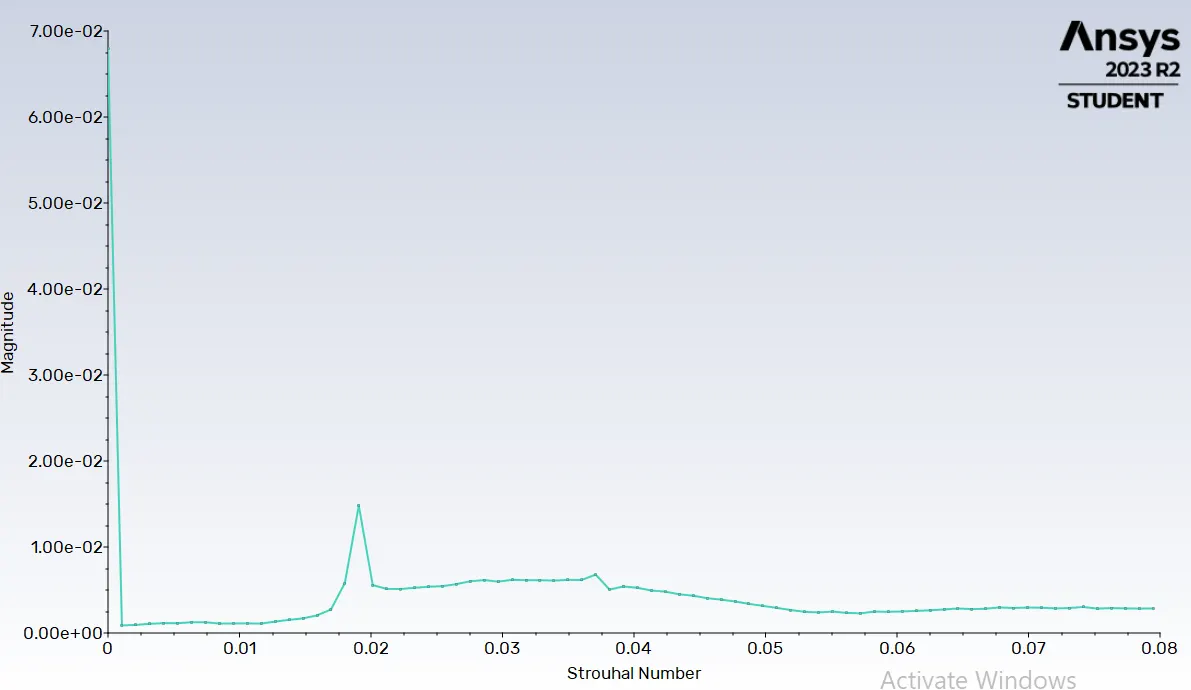
Unsteady Simulation
Case:4 Re = 10000, V=125m/s
Flow : Steady
Residual Scale
Velocity Contour
Pressure Contour
Vortex Velocity
Lift Coefficient
Drag Coefficient
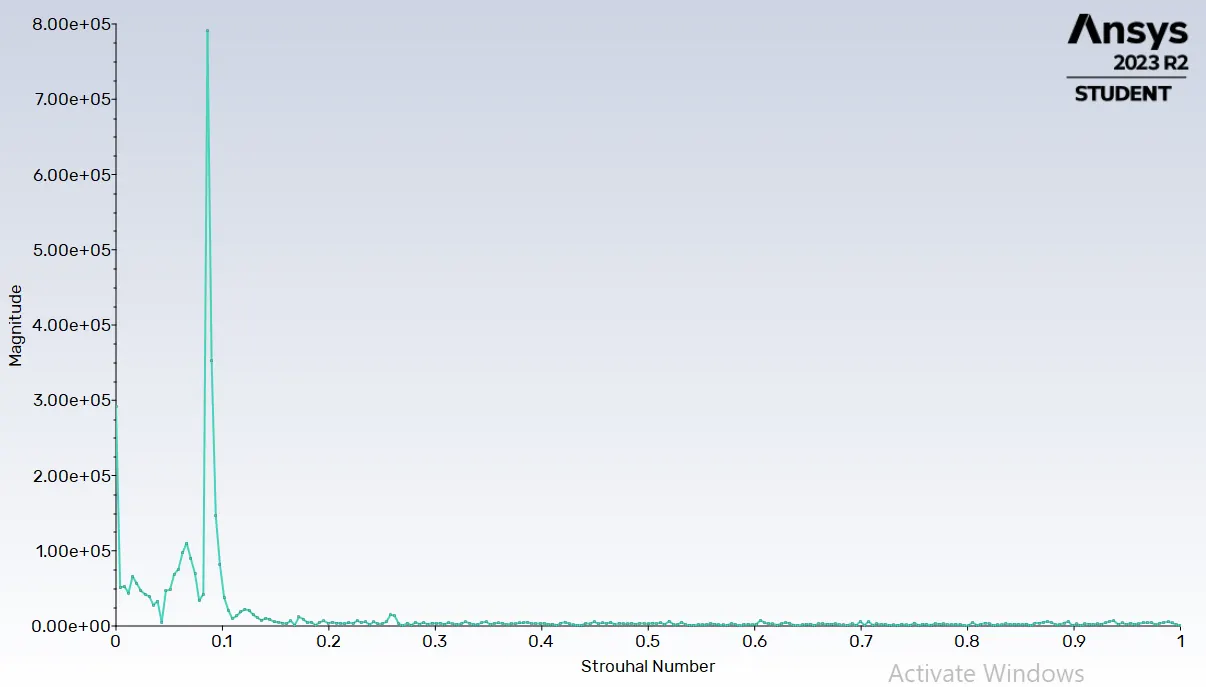
Case:5 Re = 100000 V = 1250m/s
Flow: Steady
Residual Scale
Velocity Contour
Pressure Contour
Vortex Velocity
Lift Coefficient
Drag Coefficient
Strouhal Number
Case:6 Re = 1000000 V = 12500m/s
Flow: Steady
Residual Scale
Velocity Contour
Pressure Contour
Vortex Velocity
Lift Coefficient
Drag Coefficient
Strouhal Number
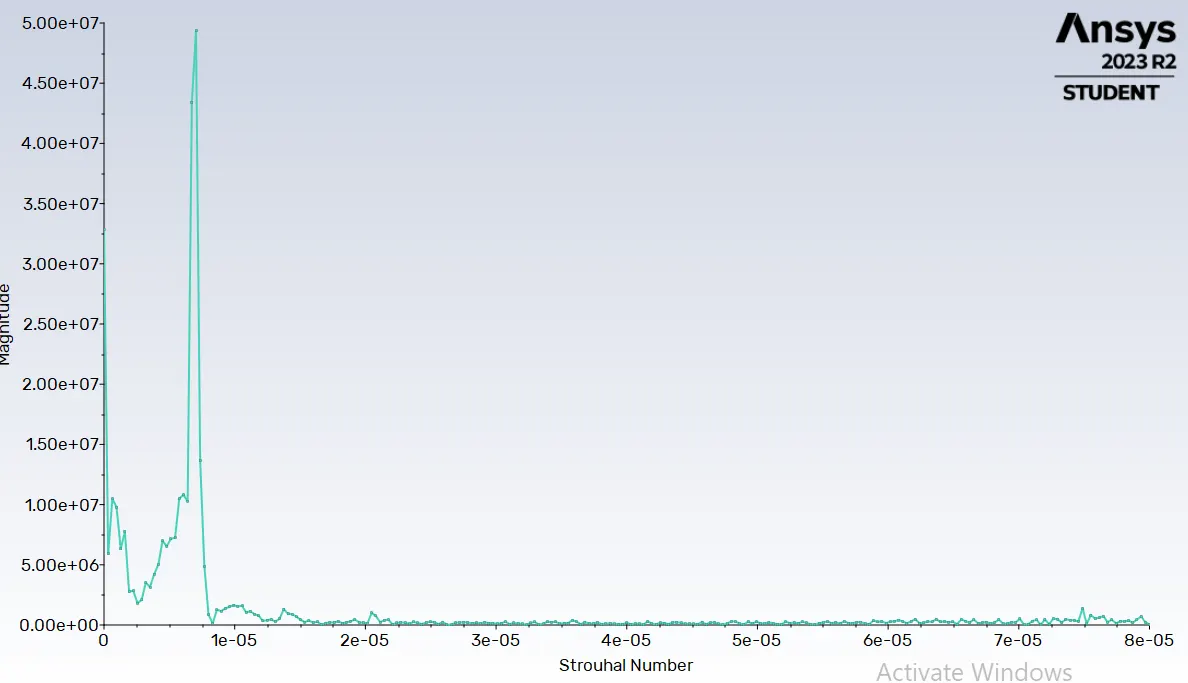
Conclusion:-
- Vortex Velocity are totally depending on the Reynold number in case 1 (Re = 10) the flow is steady and vortex region not develope at the end of cylinder wake region due to the no slip boundary condition which shows in vortex scaled graph. If gradually increasing the velocity at inlet in different cases we observe vortex region and transient simulation occurs at the end of cylinder flow.
- Velocity contour shows the vortex velocity at transient solution or Re = 1000,10000,100000,1000000 at different.
- From the transient simulation we observe very high time to compute the simulation result and number of iteration or time steps it takes to reach a steady state is also very high, therefore transient state simulation requires very much higher.
- From the numerical result obtained from simulation we can observe that as the Reynold Number increases the drag coefficient is substantially decreasing
- As the Re increasing the lift coefficient increases & drag coefficient decreases.
- Transient State capture more accurate vortex shedding than steady state solving.
References
- .https://web1.eng.famu.fsu.edu/~shih/succeed/cylinder/cylinder.htm#:~:text=Near%20the%20cylinder%2C%20flow%20separates,called%20the%20vortex%20formation%20region.
- https://cfdflowengineering.com/cfd-modeling-of-flow-over-a-cylinder/
- https://imechanica.org/files/Sato_MDAC_final_2232012.pdf
- https://en.wikipedia.org/wiki/Potential_flow_around_a_circular_cylinder