Week 2 - Flow over a Cylinder.
Aim-
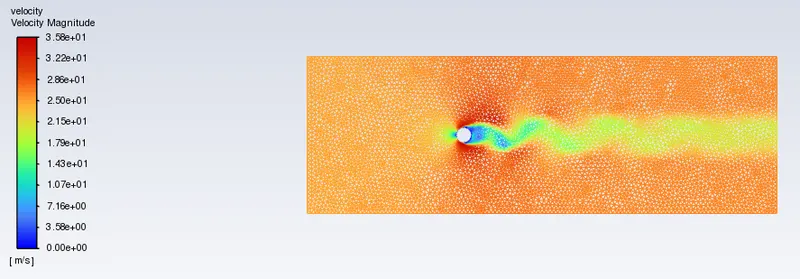
To simulate the flow over a cylinder and explain the phenomenon of Karman vortex street.
Introduction & Theory-
Drag-
The component of total force in the direction of the flow of the fluid is called as drag.
Lift-
The component of total force in the dircetion perpendicular to the flow or motion of the fluidis known as lift. If the axis of the body is parallel to the direction of the flow, lift force is zero.
`Fd= CD*A* ((rhoU^2)/2)``FL = CL*A((rhoU^2)/2)`
CD = Coefficient of Drag
CL = Coefficient of Lift
A = Projected area of the body perpendicular to the direction of flow.
Drag on a cylinder-
If Re of the flow is less than 0.2 the inertia force is negligibly small as compared to viscous force and hence flow pattern about cylinder will be symmetrical. As the Re increases intertia force also increases and flow pattern becomes unsymmetrical w.r.t the axis perpendicular to the direction of flow. The drag force depends upon the Re of the flow.
From experiments-
1. When Re<1, the drag force is directly proportional to the velocity and hence drag coefficient CD is inversly proportional to the Re.
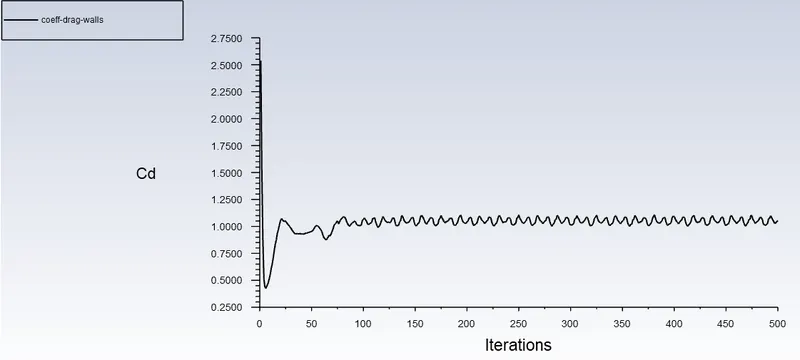
2. With Re increasing from 1 to 2000, CD reaches min value of 0.95 at Re = 2000.
3. With further increase of Re from 2000 to `3*10^4` , CD increases and attains max value 1.2 at Re = `3 * 10^4`
4. CD decreases to 0.3 at `3 * 10^5` if Re is increased beyond `3 * 10^4` to `3 * 10^5`.
5. If Re increases to `3 * 10^6` CD increases and becoms 0.7 in the end.
Note- Above Introduction & Theory section is refered from a book called 'A Textbook of Fluid Mechanics' by Dr. R. K. Bansal.
Modelling, Solving, Pre-Processor and solver settings-
1. I created the model as it is described in the very first video and saved it in spaceclaim file format so that I can use it as and when required.
2. Then I opened Mesh section of the Fluent stanalone system.
3. I created named selection of Inlet, Outlet, Symmetry and wall to apply boundary conditions to them.
4. Then I chose 0.5 m mesh size.
5. I introduced Method, Sizing and Inflation. Method to make meshing with triangular elements. Sizing of 36 no of section to make circular surface look more circular and Inflation 6 layers to capture flow phenomena close to the boundary of the cylinder.
6. I now closed mesh and opened Setup.
7. There I first created User- Defined material. Properties of which include denisty as 1 Kg/m^3 and dynamic viscosity 0.05 kg/m-s.
8. I then assigned this material to the meshed model and deleted the already existed air material.
9. I then applied velocity boundary condition with velocity varrying from 0.25 m/s for Re 10 to 2500 m/s for Re 100000 with the mulitples of 10 for the all the upcoming analysis.
10. Then I defined the variables to record like CD Coefficient of Drag and CL Coefficient of Lift.
11. I the defined contour plot for velocity and pressure in the direction of flow.
12. I removed all the concergence criterias.
13. I chose laminar flow option for all the analysis except for the Re 10000 and 100000.
14. I initialized the solution and ran analysis for 500 iterations.
Results-
Re 10-
Coefficient of Drag-
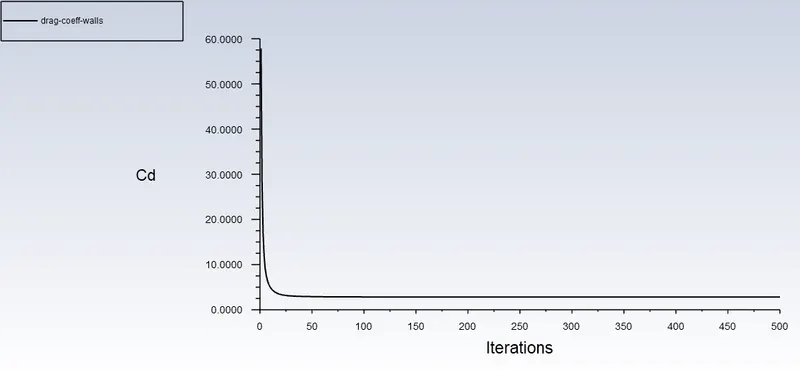
Coefficient of Lift-
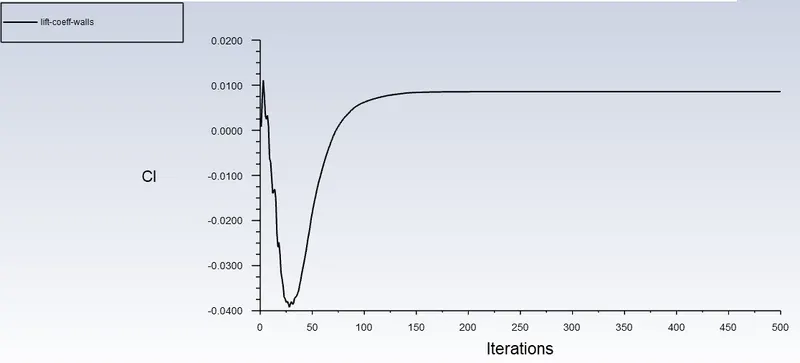
Velocity contour plots-
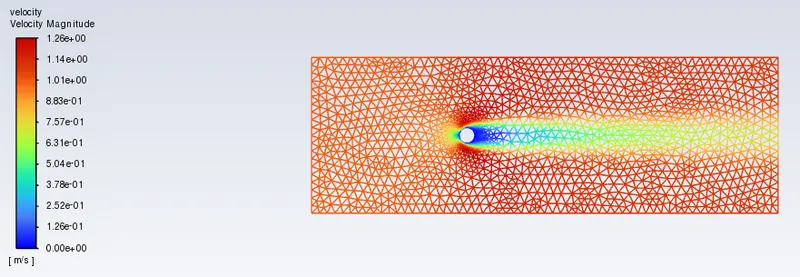
Pressure contour plots-
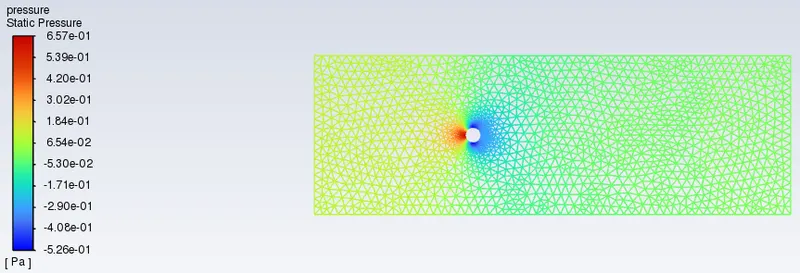
Re 100-
i) Steady Condition-
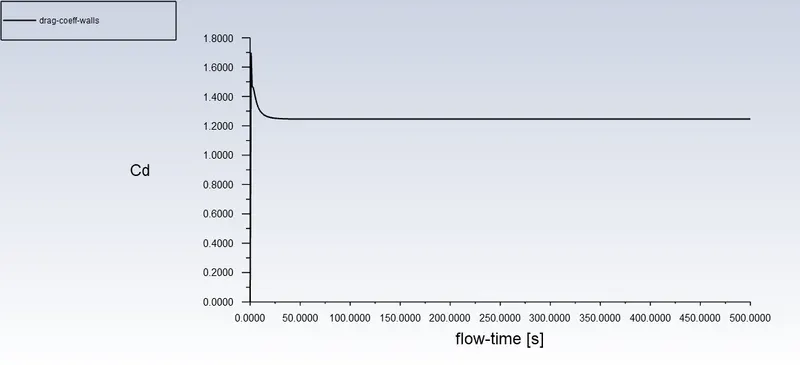
Coefficient of Drag-
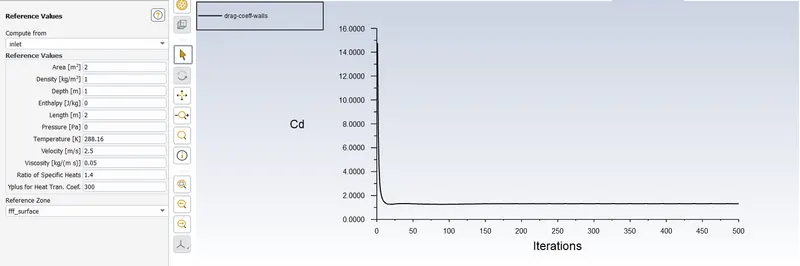
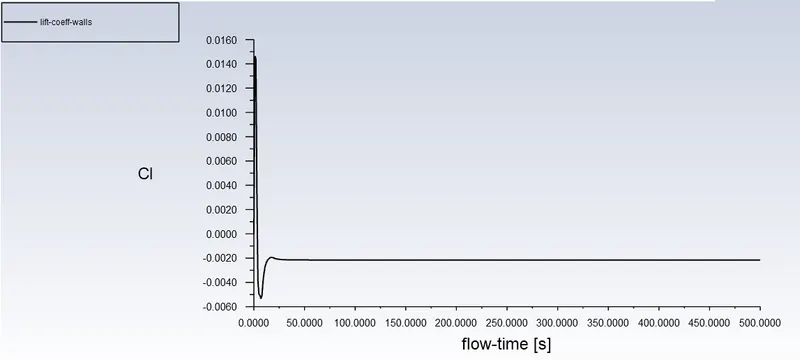
Coefficient of lift-
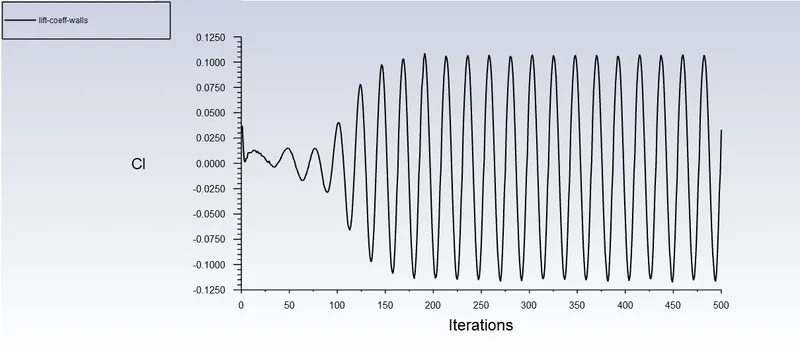
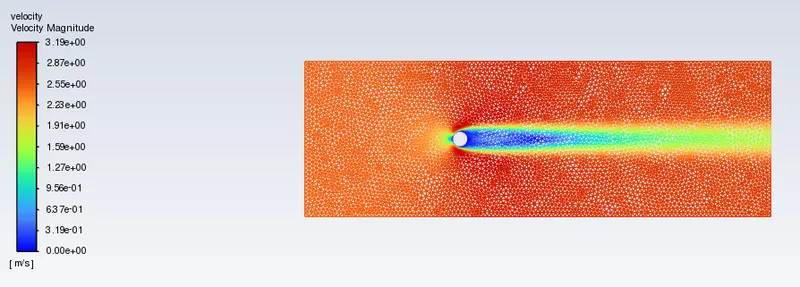
Velocity Contour Plot-
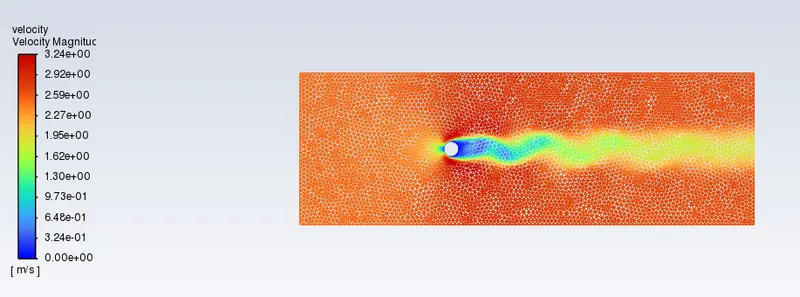
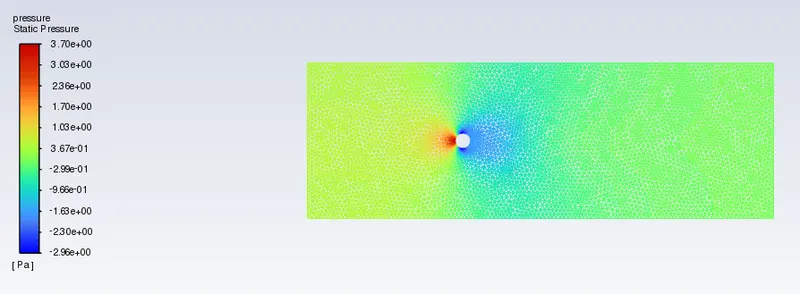
Pressure Contour Plots-
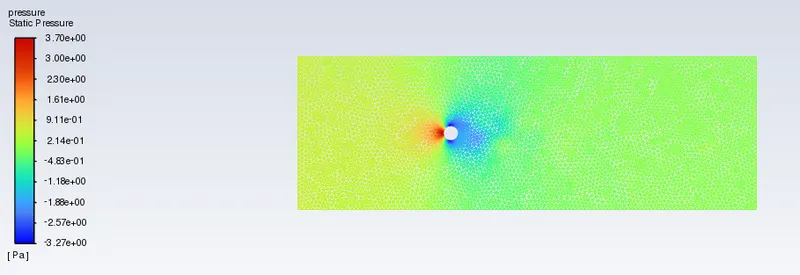
ii) Unsteady Condition-
Coefficient of Drag-
Coefficient of Lift-
Velocity contour plot-
Pressure contour plot-
Re 1000-
Coefficient of Drag-
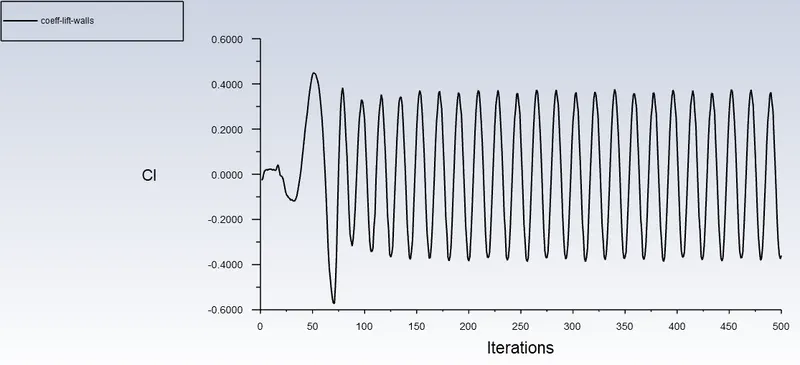
Coefficient of Lift-
Velocity contour plot-
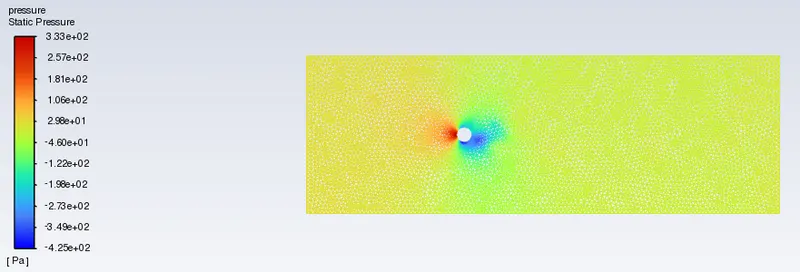
Pressure contour plot-
Re 10000-
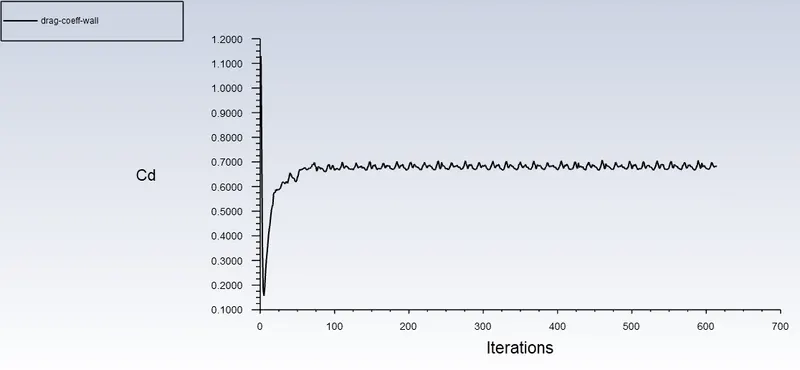
Coefficient of Drag-
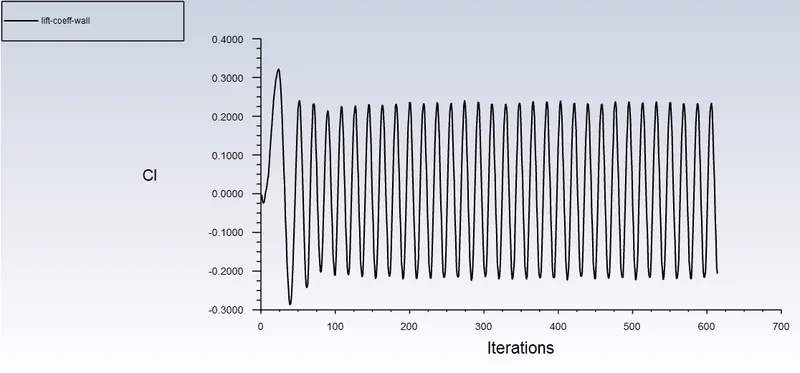
Coefficient of Lift-
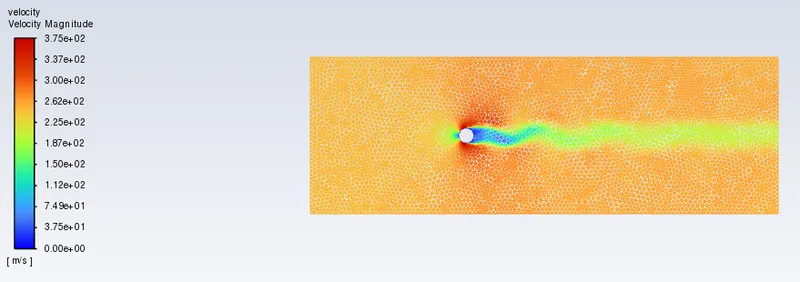
Velocity contour plot-
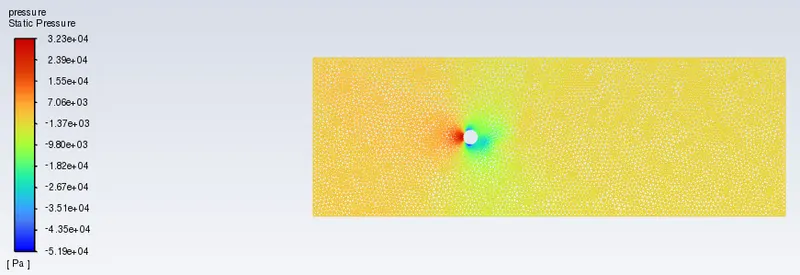
Pressure contour plot-
Re 100000-
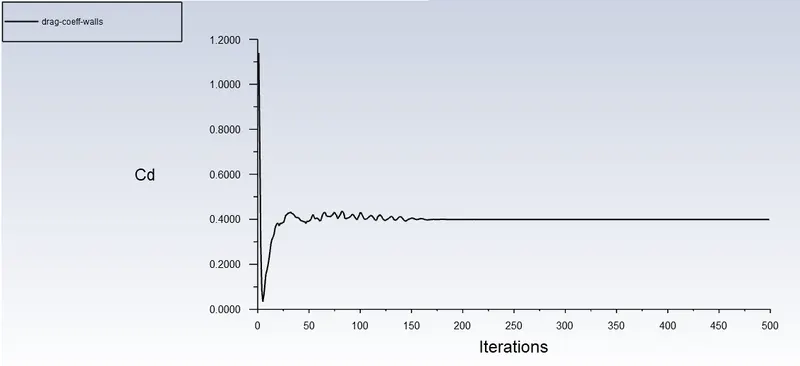
Coefficient of Drag-
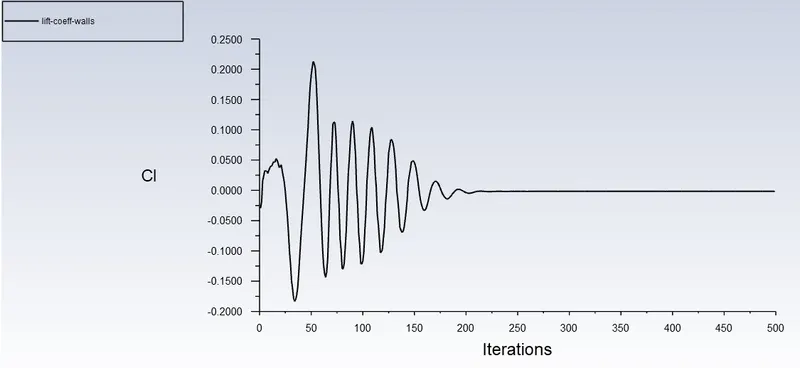
Coefficient of Lift-
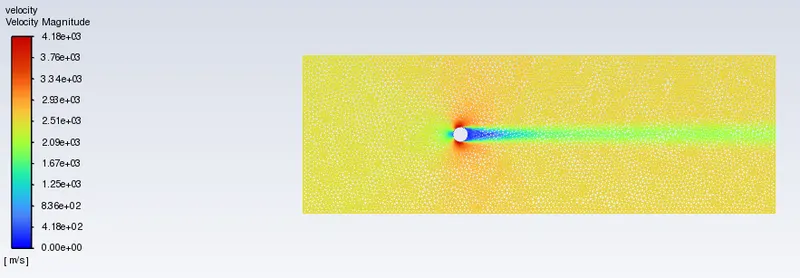
Velocity contour plot-
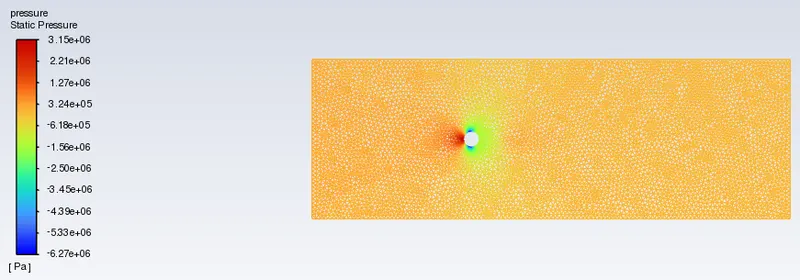
Pressure contour plot-
Note- Above Introduction & Theory section is refered from a book called 'A Textbook of Fluid Mechanics' by Dr. R. K. Bansal.