Week 2 - Flow over a Cylinder.
OBJECTIVE : Simulate the flow over a cylinder and explain the phenomenon of Karman vortex street.
PART-I
- Simulate the flow with the steady and unsteady case and calculate the Strouhal Number for Re= 100.
PART-II
- Calculate the coefficient of drag and lift over a cylinder by setting the Reynolds number to 10,100,1000,10000 & 100000. (Run with steady solver)
- Discuss the effect of Reynolds number on the coefficient of drag. [ Results should be validated with any standard literature and error should be within 5 %]
GEOMETRY AND MESH
To simulate the flow over a cylinder, 2D geometry is used due to the symmetric nature of the results.
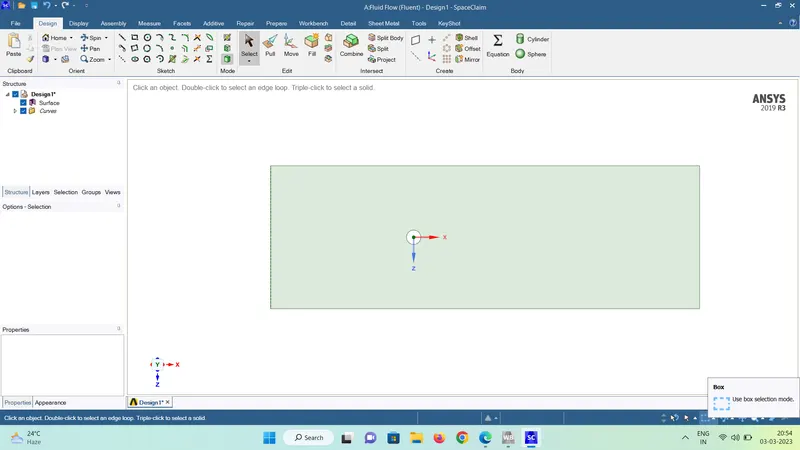
Fig 1 : Geometry Preparation
- Cylinder Diameter = 2 metre
- Cylinder Rear = 20D; Cylinder Front = 10D; Top & Bottom = 5D
- Element Size = 0.25 metre
- Mesh around the cylinder needs to be fine in order to capture the boundry layer forming around it, but fine mesh is not necessary in the whole domain, this issue is solved by intoducing edge sizing around the cylinder wall and making 36 divisions in the edge
- All triangles methods is used to make the mesh triangular
- To capture the geometry of the cylinder accurately, infaltion layers are introduced
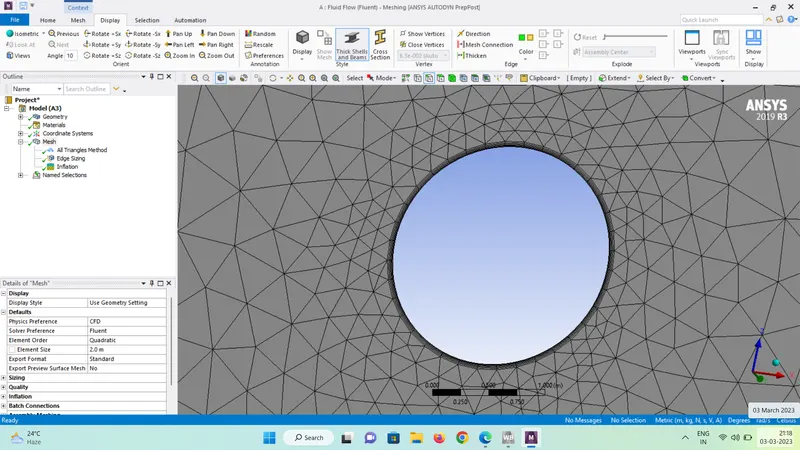
Fig 2 : Inflation Layers
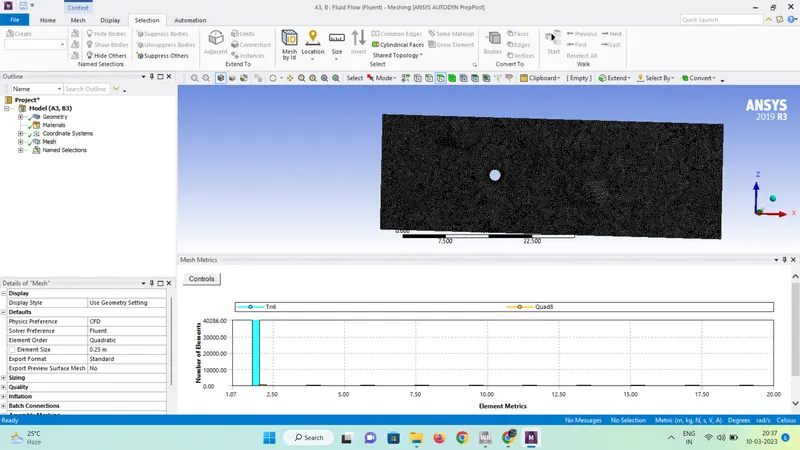
Fig 3: Mesh Quality
7. Named selections are done for cylinder wall, symmetry, inlet and outlet
STEADY CASE - Re = 100
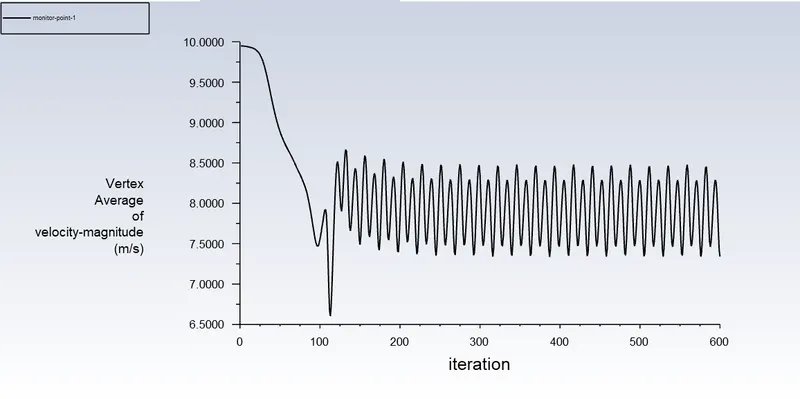
In the steady simulation, the result is not time dependent and is solved until a stable solution is arrived. For checking on convergence of the solution, a point is introduced to monitor the velocity in the domain
Model : Laminar
Flow Velocity at inlet : 1 m/s
Viscosity : 0.02 kg /m-s
Fluid Density : 1 kg /m3
Reynolds Number : ( Flow Velocity * Characterstic Length ) / Viscosity = 100
RESULTS
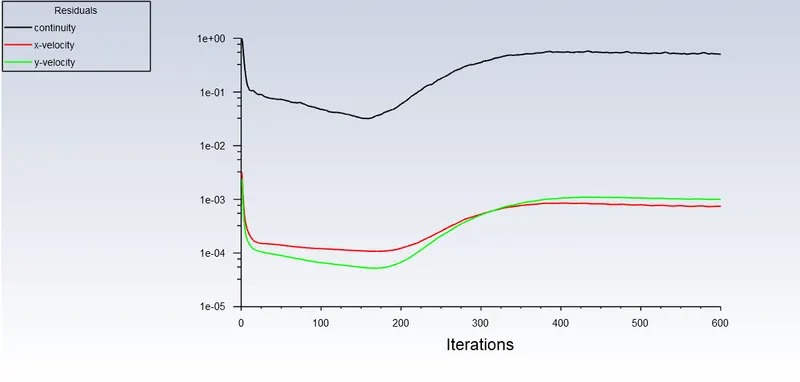
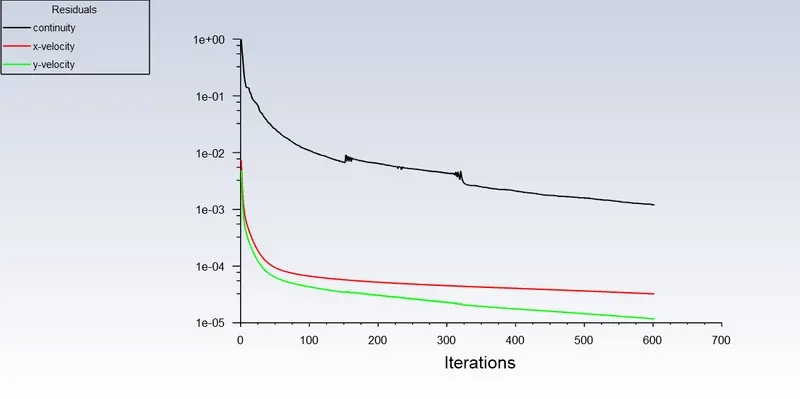
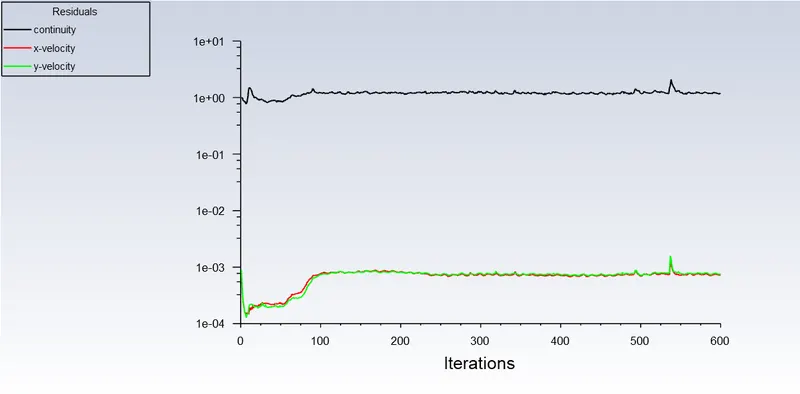
Fig 4 : Residuals
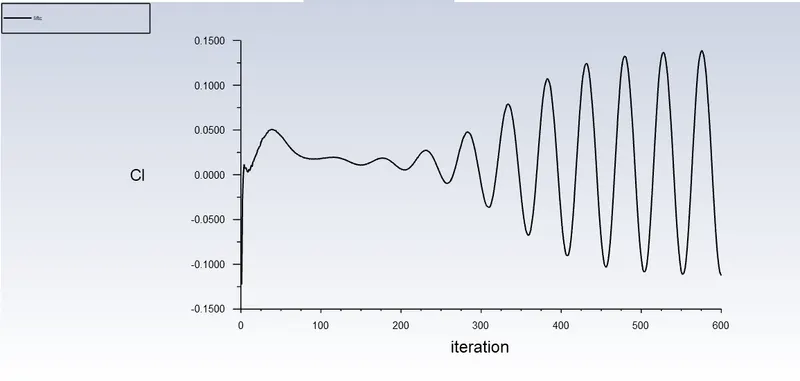
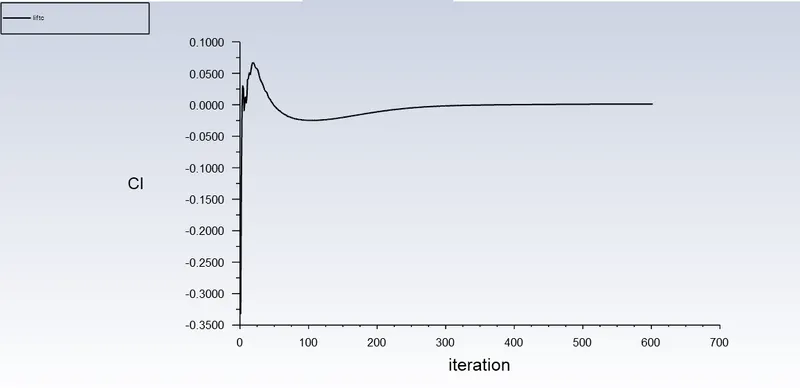
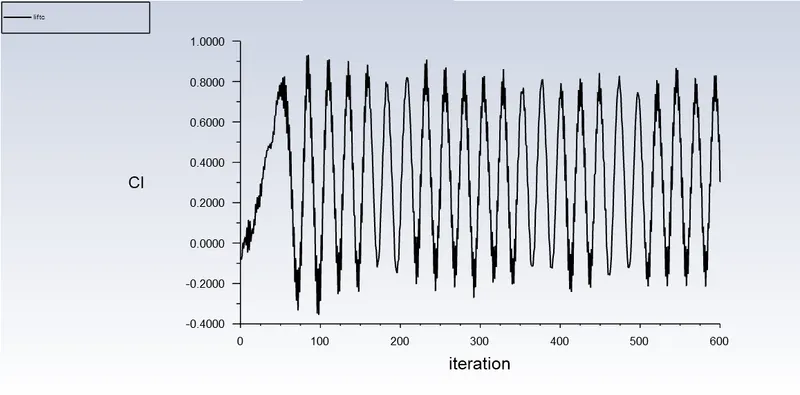
Fig 5 : Lift Coefficient
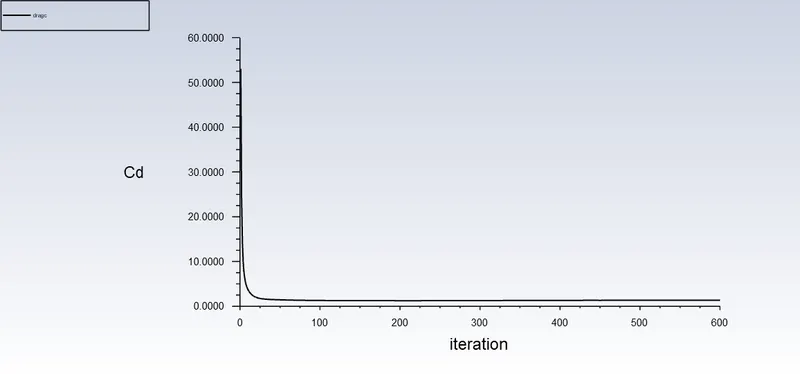
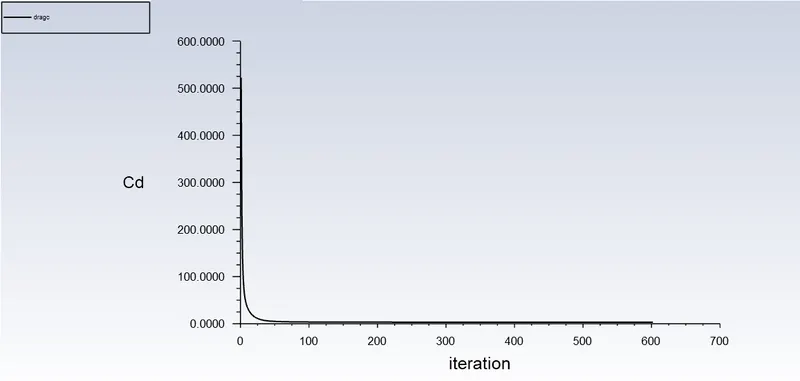
Fig 6 : Drag Coefficient
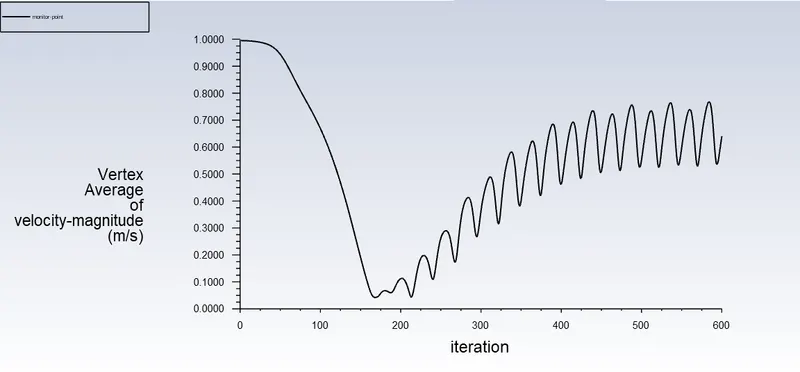
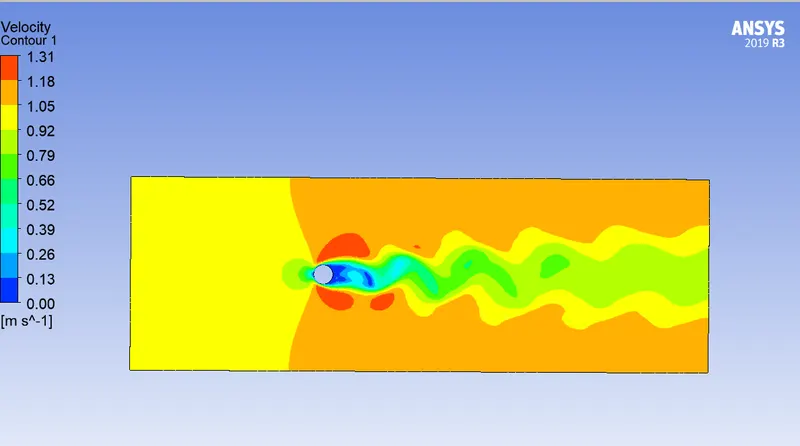
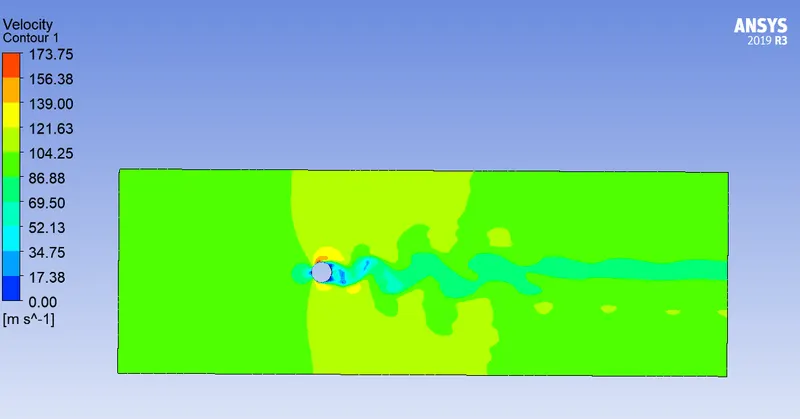
Fig 8 : Velocity Contour
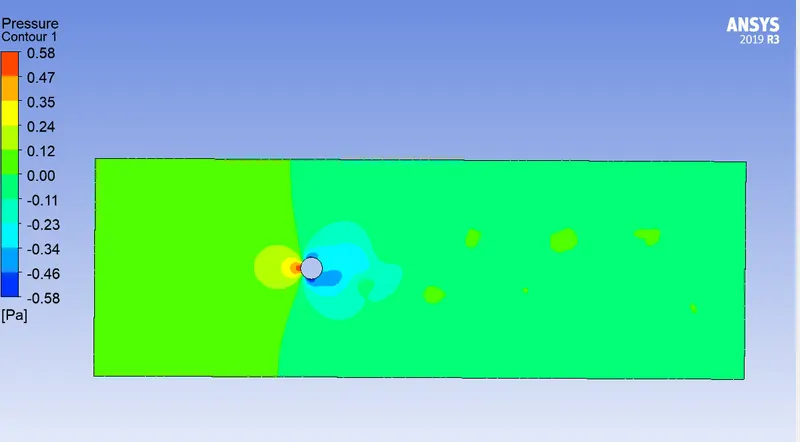
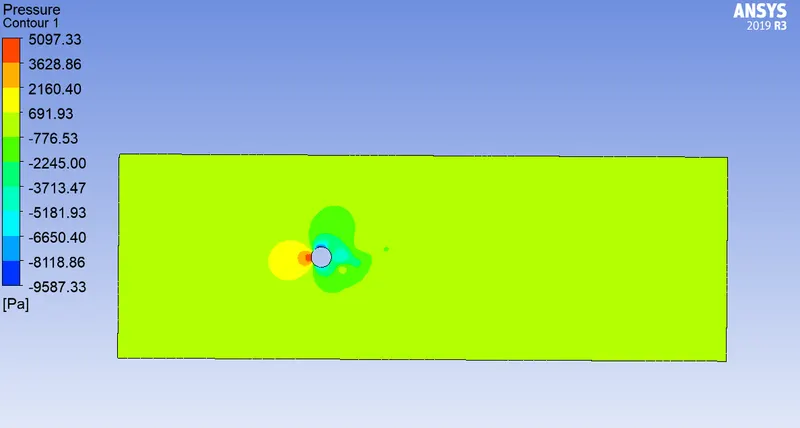
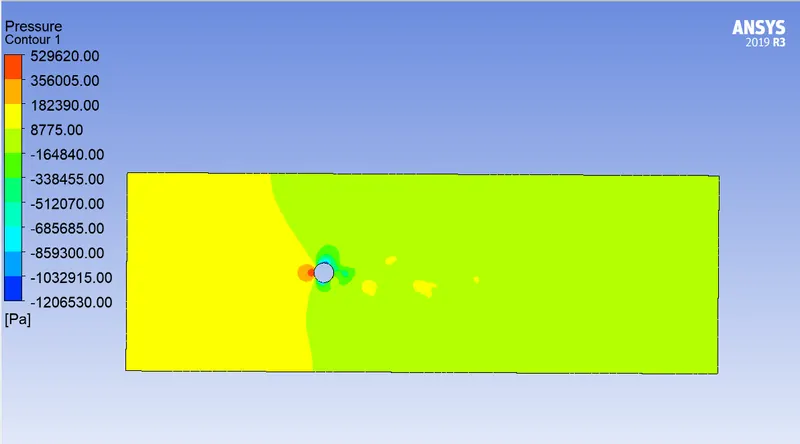
Fig 9 : Pressure Contour
Strouhal Number cannot be calculated in a steady solver, as the frequency of the vortex shedding is a time dependent quantity. In the steady solver there is no reference of the velocity change wrt time.The Strouhal Number represents a measure of the ratio of the inertial forces due to the unsteadiness of the flow or local acceleration to the inertial forces due to changes in velocity from one point to an other in the flow field.
Strouhal Number = ( vortex shedding frequency * diameter of the cylinder) / Flow velocity.
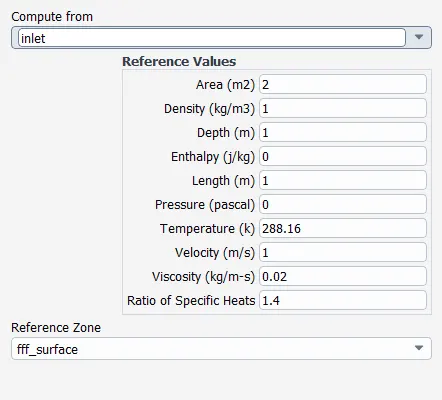
For calculating strouhal number, it is necessary to set-up reference values in fluent
UNSTEADY CASE - Re = 100
In the unsteady simulation, the result is time dependent and is solved for a given value of time with a designated time step
Model : Laminar
Flow Velocity at inlet : 1 m/s
Viscosity : 0.02 kg /m-s
Fluid Density : 1 kg /m3
Time Step = 0.1 s
Reynolds Number : ( Flow Velocity * Characterstic Length ) / Viscosity = 100
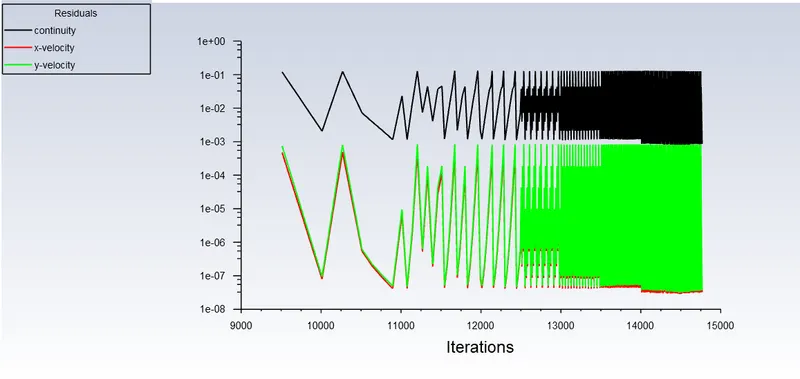
Fig 10 : Residuals
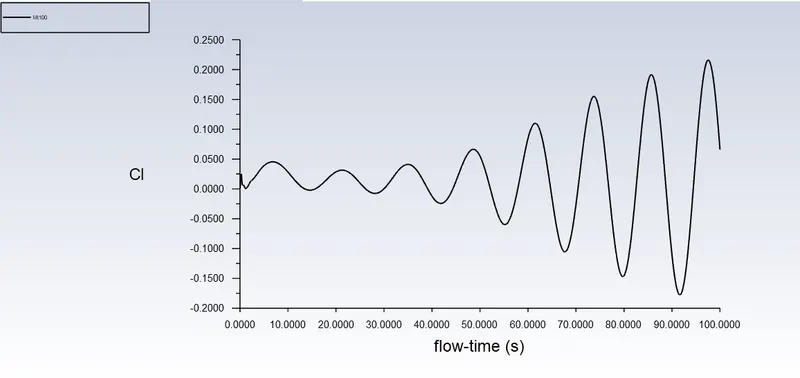
Fig 11: Lift Coefficient
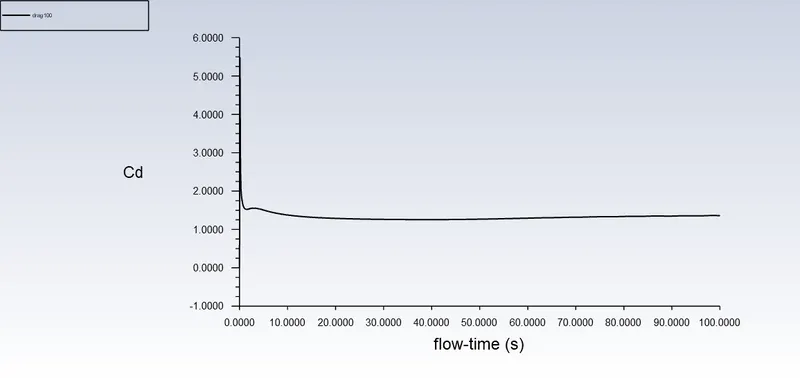
Fig 12 : Drag Coefficient
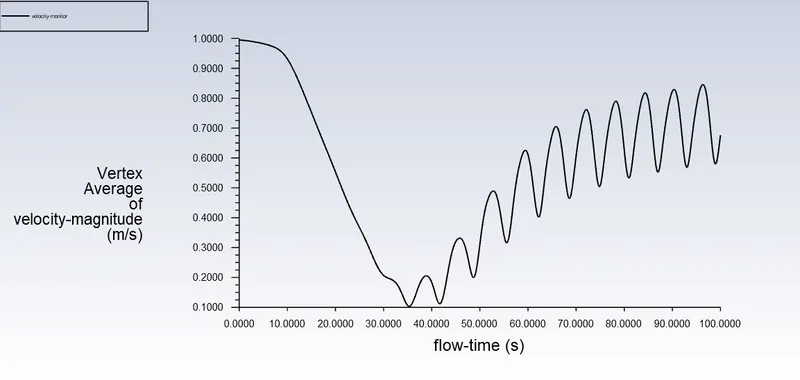
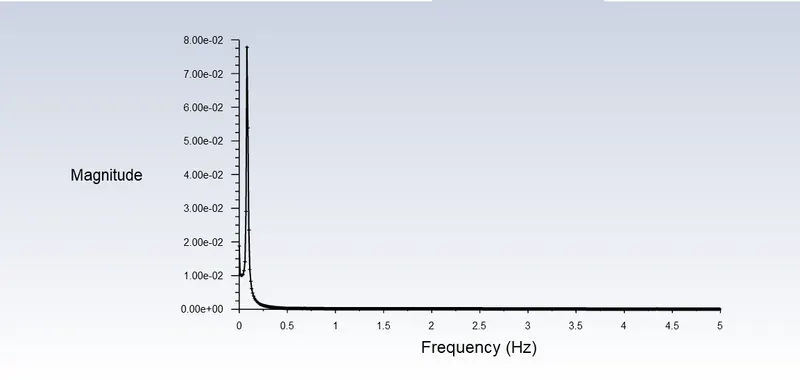
Fig 14 : Strouhal Number (0.15)
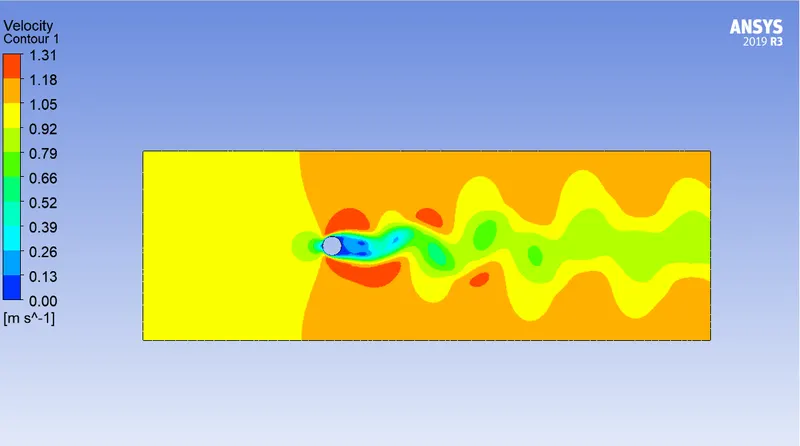
Fig 15 : Velocity Contour
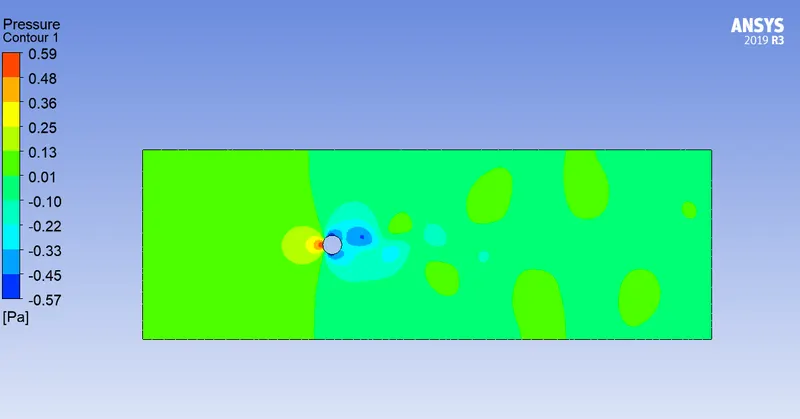
Fig 16 : Pressure Contour
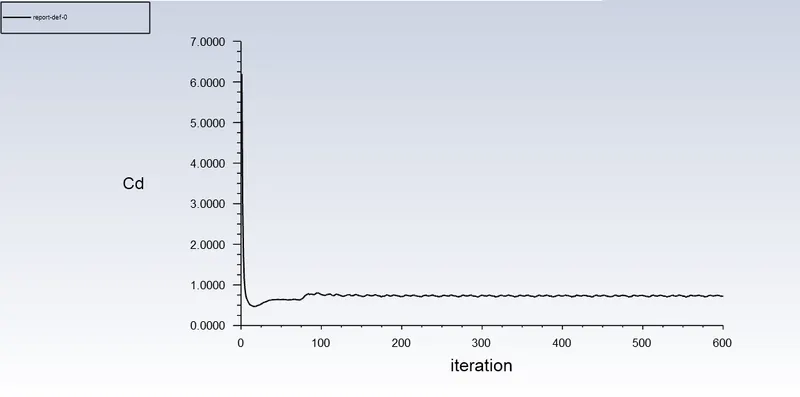
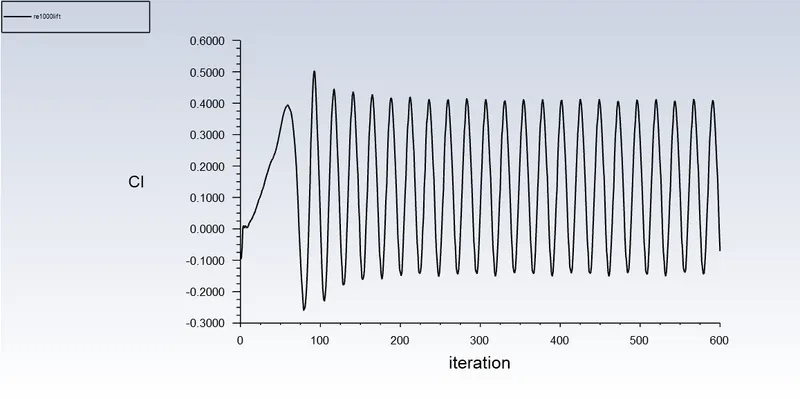
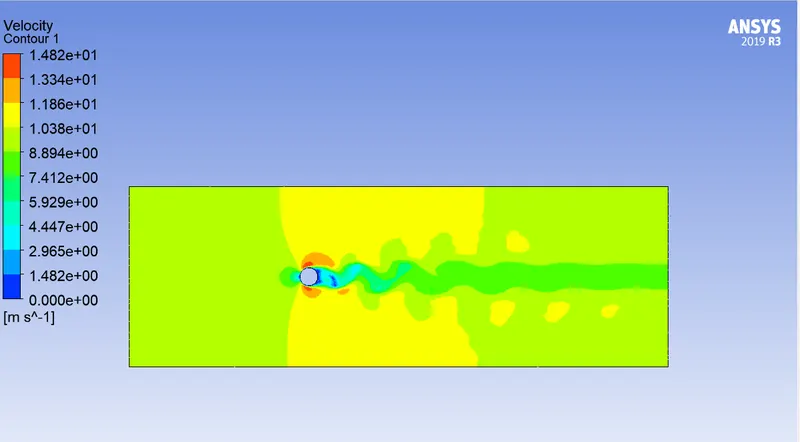
DRAG COEFFICIENT COMPARISON (STEADY CASE)
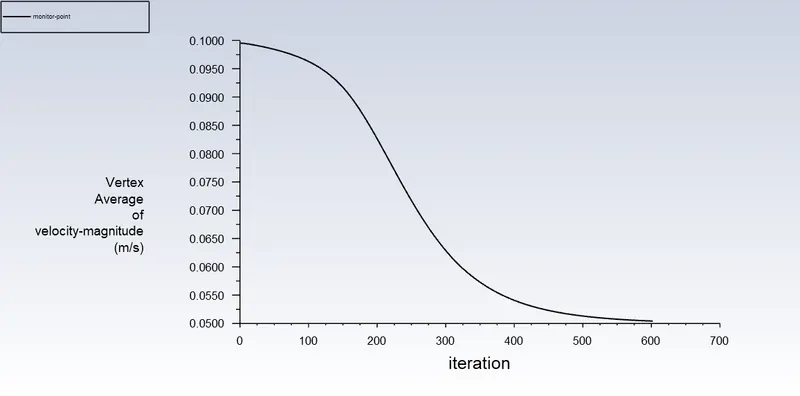
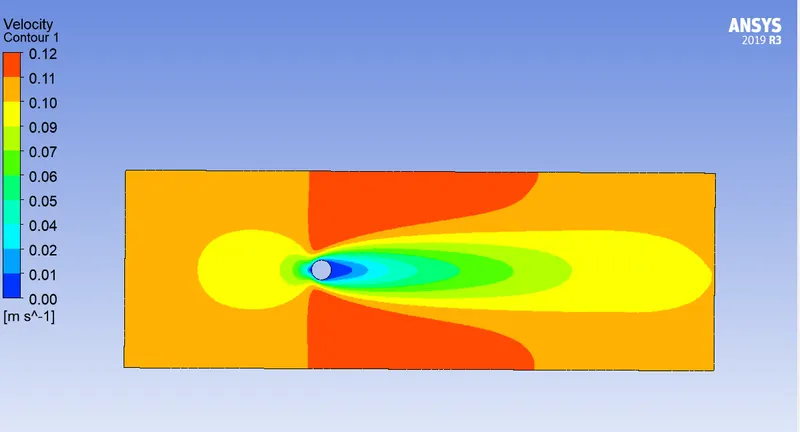
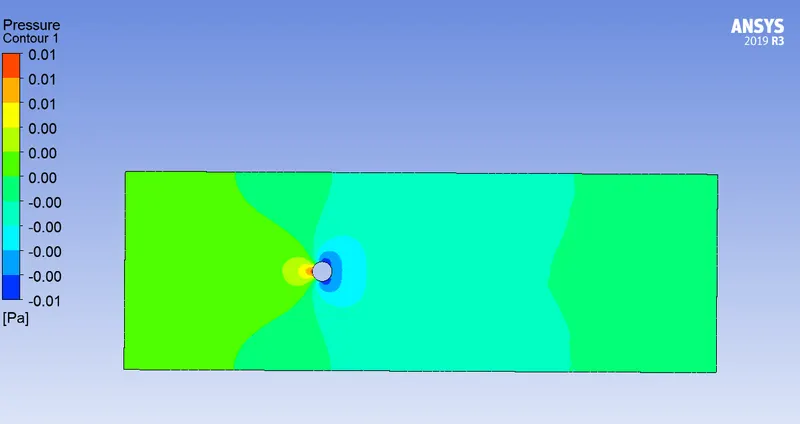
RE - 10
Velocity = 0.1 m/s
RE - 1000
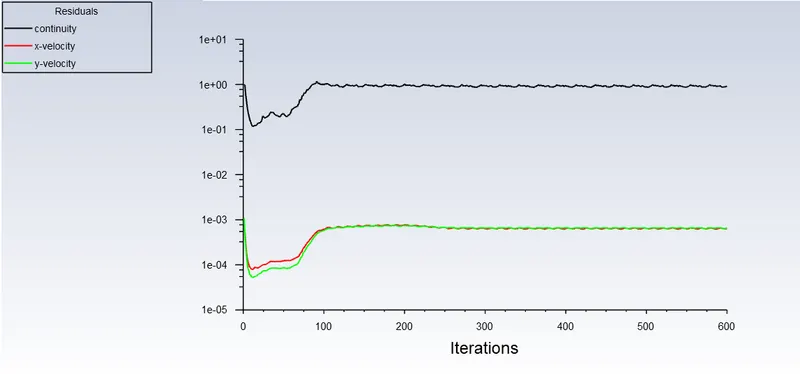
Velocity = 10 m/s
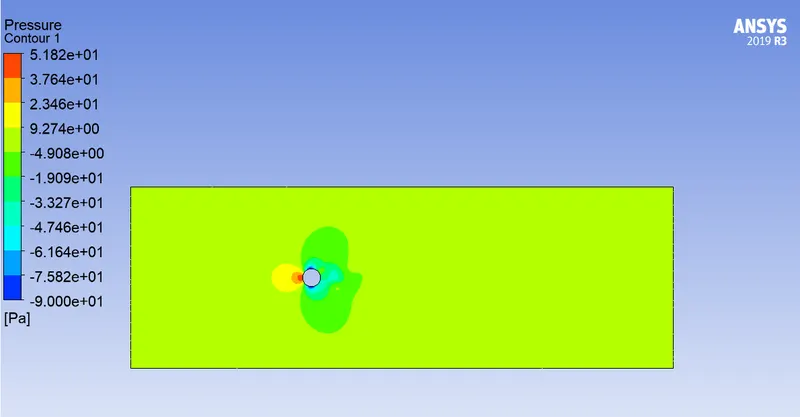
RE - 10000
Velocity = 100 m/s
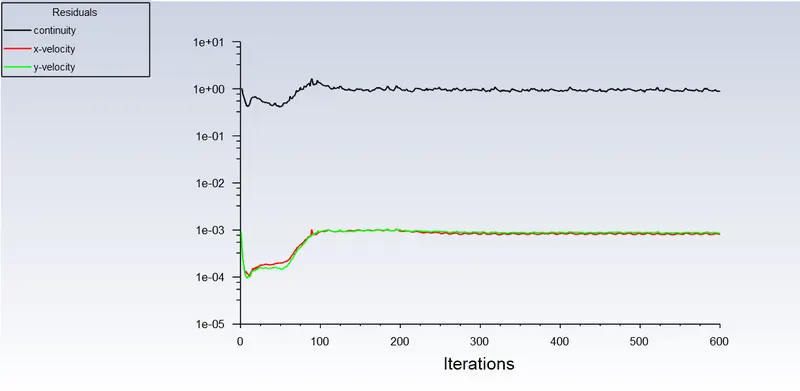
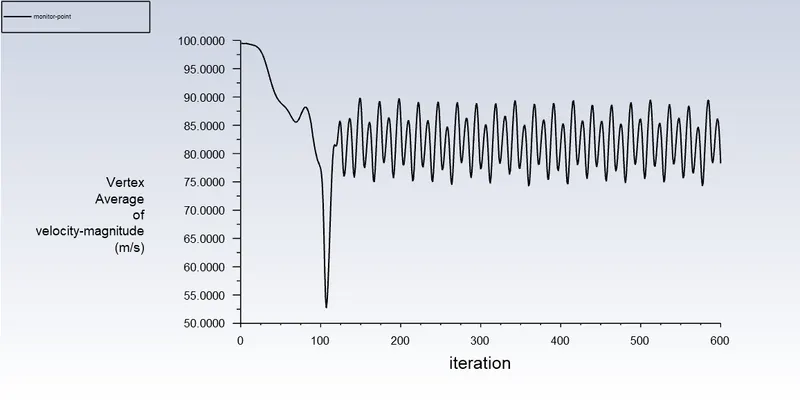
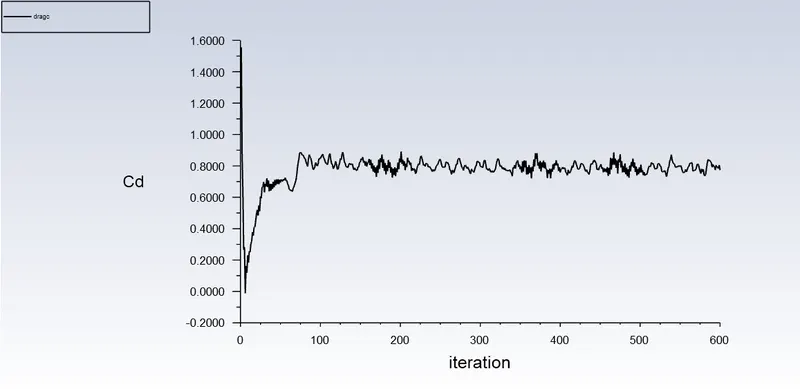
RE - 100000
Velocity = 1000 m/s
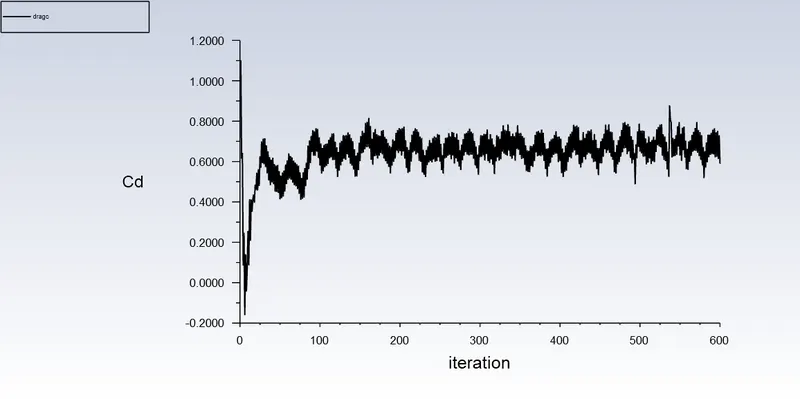
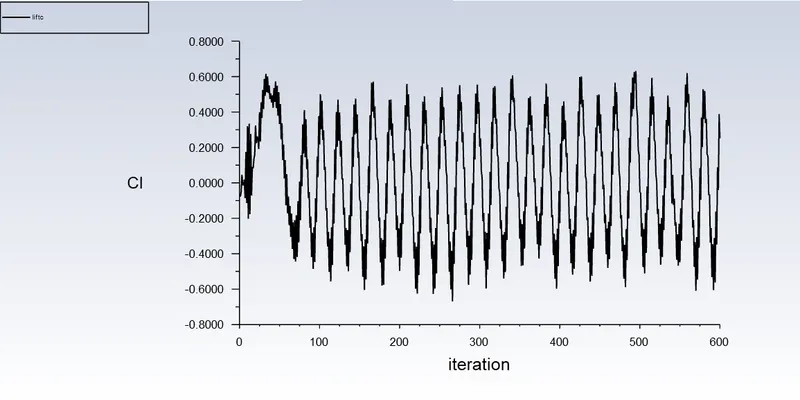
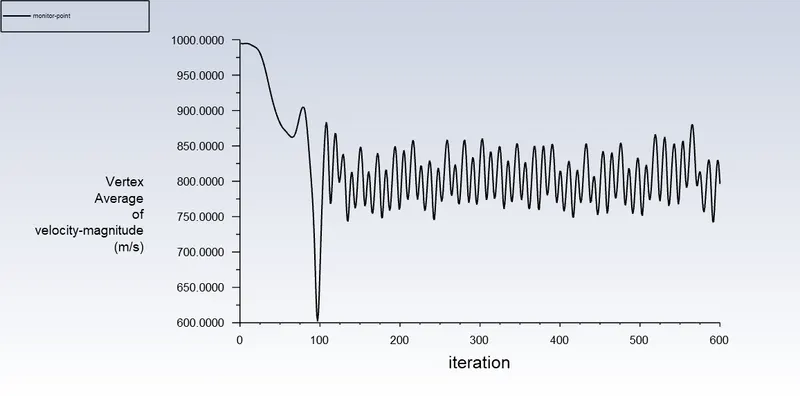
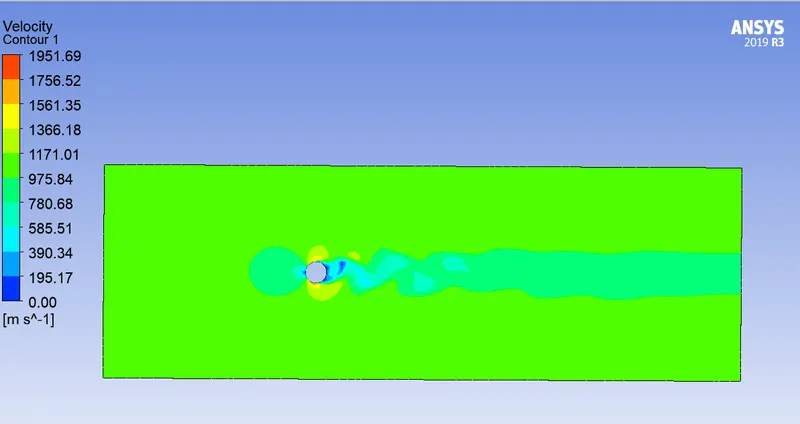
| Velocity | Reynold's Number | Drag Coeffcient | Lift Coefficient |
| 10 | 0.1 m/s | 3.32 | 0.0010 |
| 100 | 1 m/s | 1.33 | -0.11 |
| 1000 | 10 m/s | 0.75 | -0.71 |
| 10000 | 100 m/s | 0.77 | 0.301 |
| 100000 | 1000 m/s | 0.59 | 0.251 |
RESULT VALIDATION
The simulation set-up is validated by comparing the results generated in a research paper mentioned in the reference paper (1)
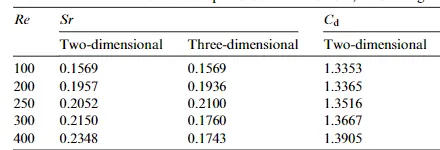
The Coefficient of Drag = 1.33 for Re = 100 in the research paper, which is accurately calculated in the current simulation set-up
OBSERVATIONS
- It is observed that steady state solution converges quickly than the unsteady solution
- Vortex street is observed after Reynolds number crosses 90
- By increasing reynolds number, the coeffcient of drag is decreasing and the formation of vortex street is diminishing
- Formation of boundry layer in the cases with higher reynolds number is not prominent
REFERRED MATERIAL
Numerical Simulation of Laminar Flow past a circular cylinder
https://www.sciencedirect.com/science/article/pii/S0307904X08000243