Week 2 - Flow over a Cylinder.
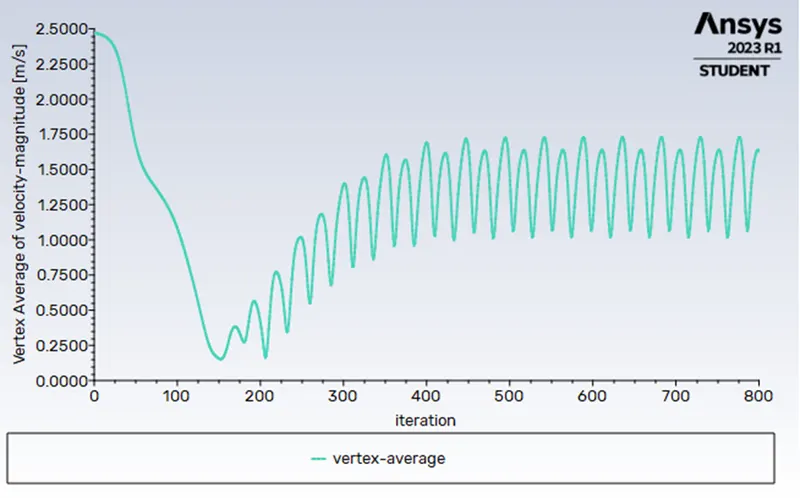
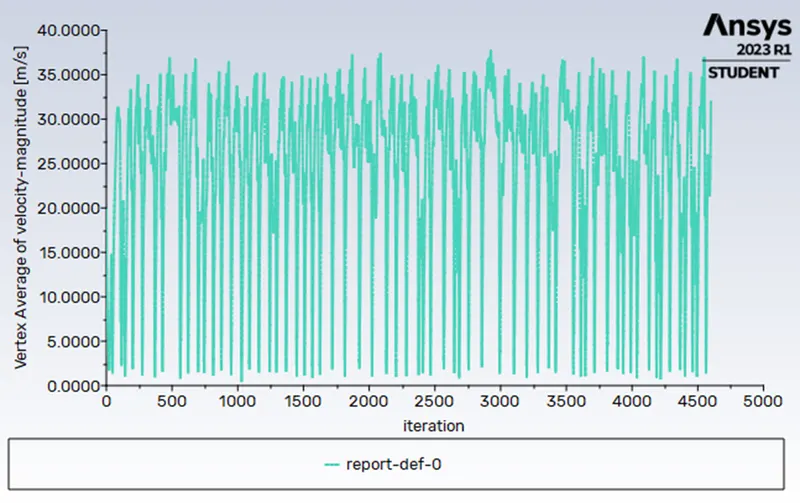
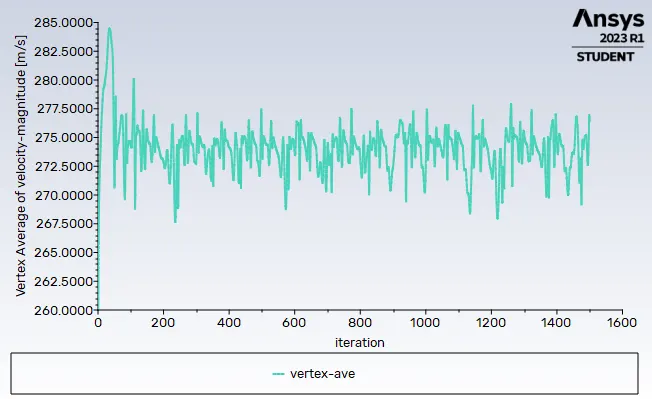
AIM: Simulate the flow over a cylinder and explain the phenomenon of Karman vortex street. Understanding the vortex shedding for different Reynolds numbers by changing the inlet velocities accordingly. Create a monitor point behind the cylinder at a distance 4 times the diameter which can be used to calculate and analyze the vortex shedding.
OBJECTIVE:
- To setup case of steady state and Unsteady state simulation.
- To calculate Reynolds number and its significance over cylinder flow.
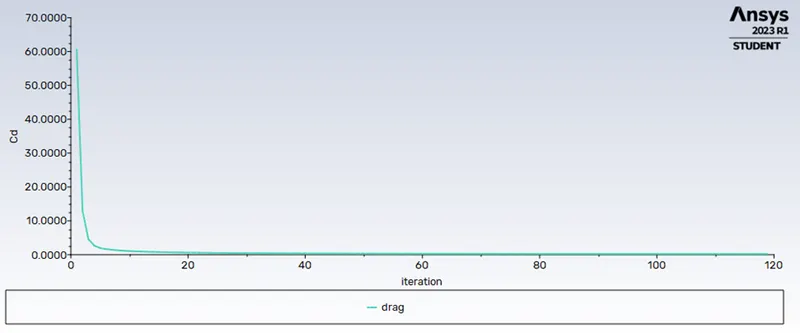
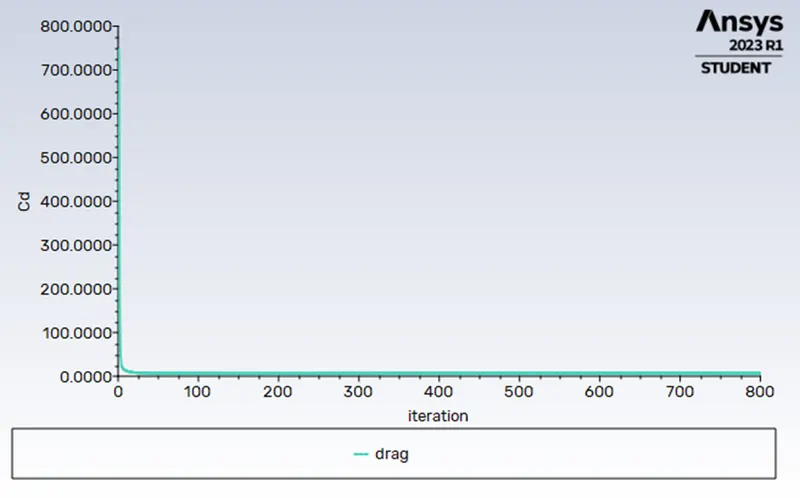
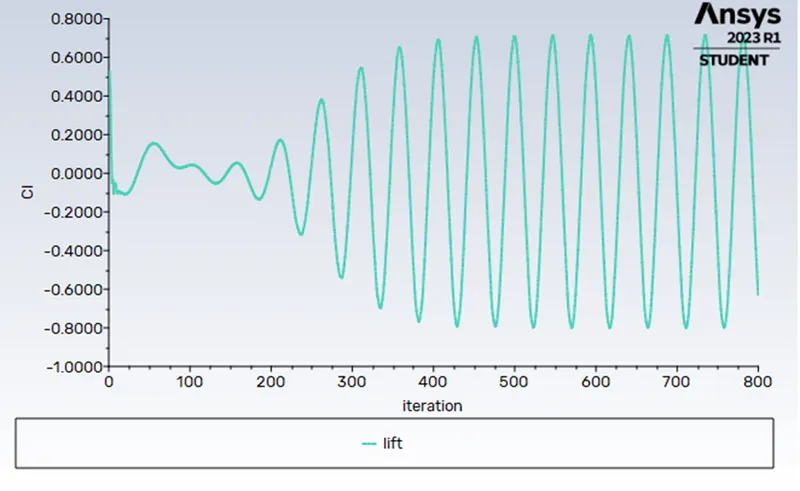
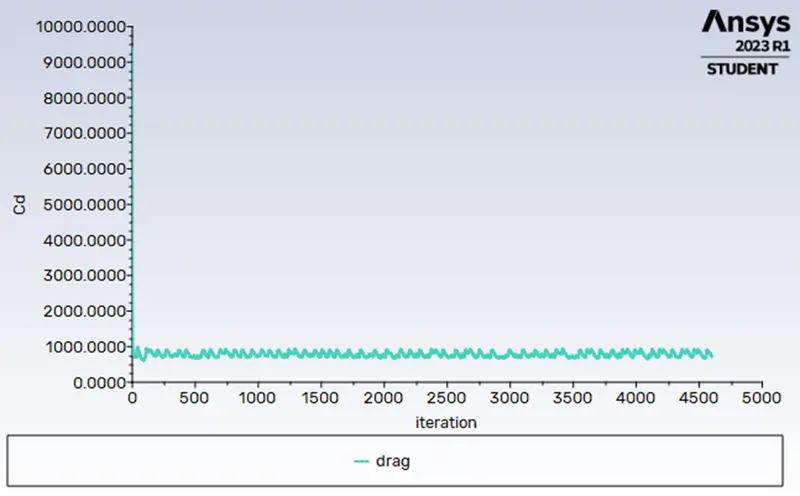
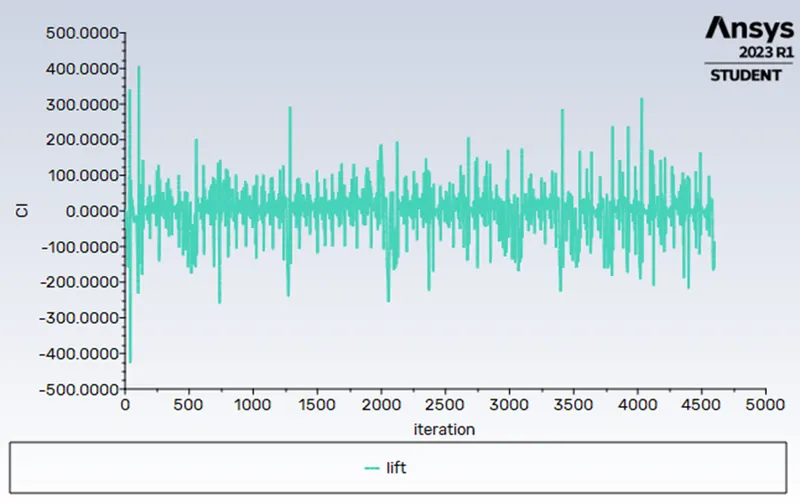
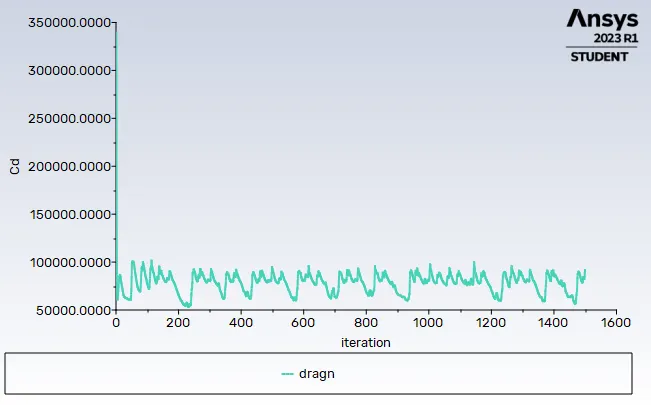
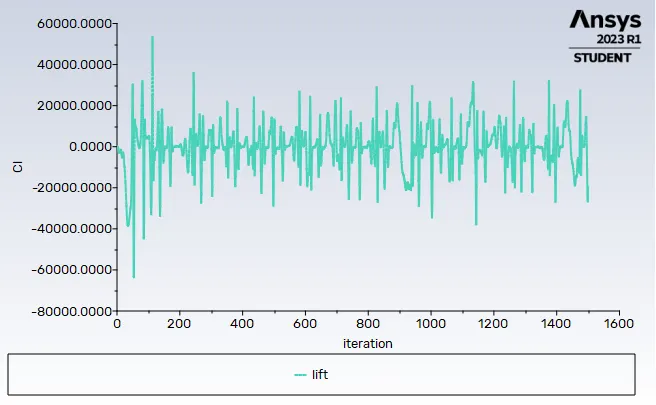
- To calculate and plots lift and drag force over the cylinder region.
- To calculate the strouhal number and plot accordingly.
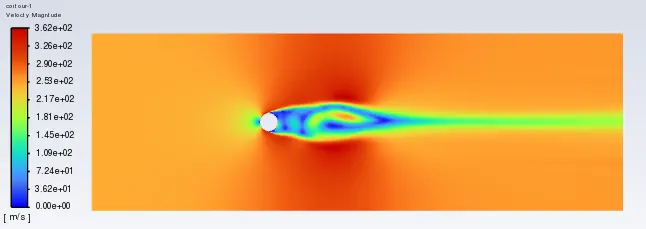
- Plots to show vortex shedding behind the cylinder.
- To use Non-iterative time advancement method to lower the calculation time.
- Simulate the flow with the steady and unsteady case and calculate the Strouhal Number for Re= 100
- Calculate the coefficient of drag and lift over a cylinder by setting the Reynolds number to 10,100,1000,10000 & 100000. (Run with a steady solver)
- Discuss the effect of the Reynolds number on the coefficient of drag. [ Results should be validated with any standard literature and error should be within 5 %]
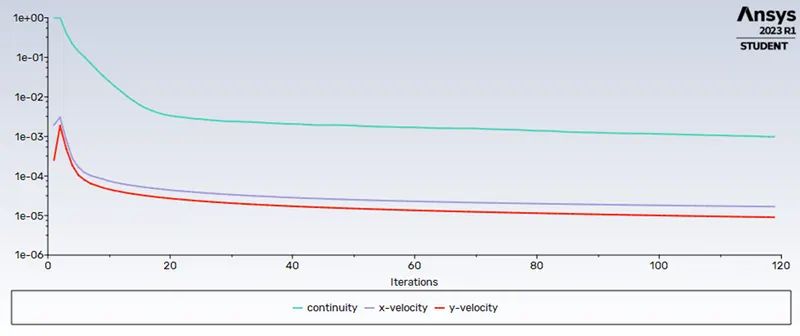
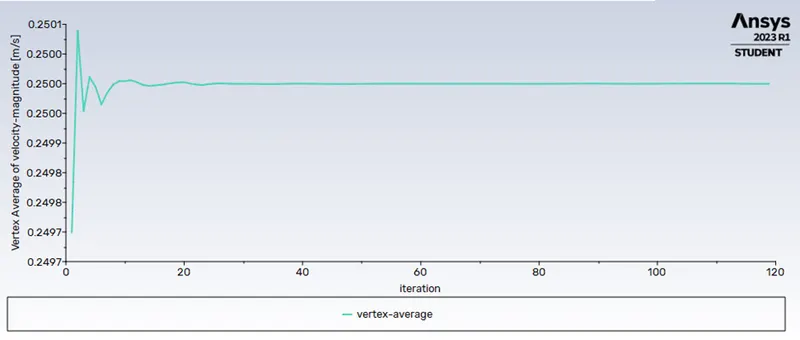
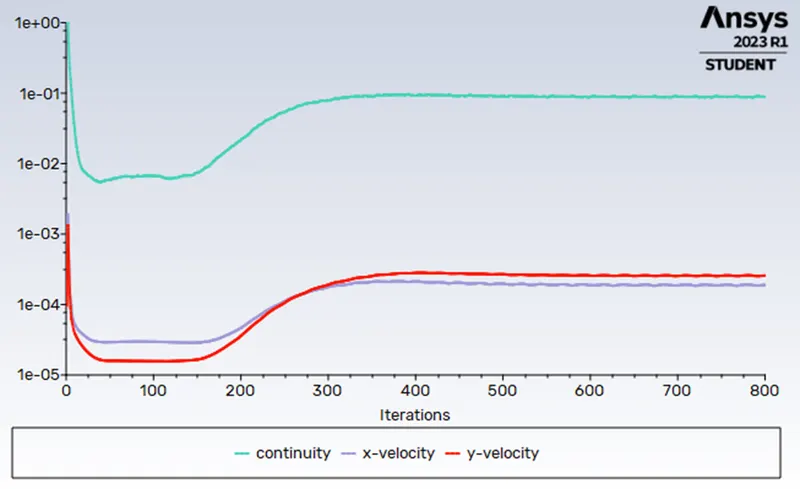
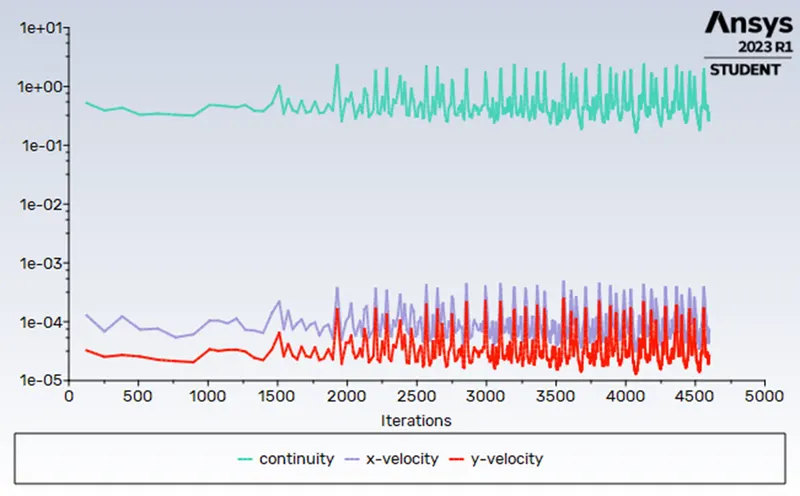
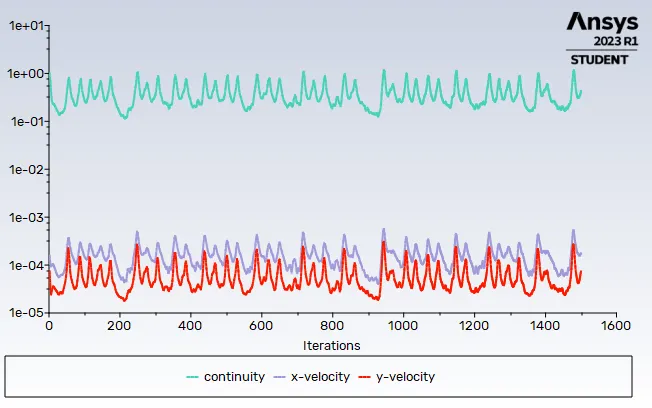
- In both approaches, show that the flow has converged. That is, what quantities or plots need to be looked at to determine that the flow has converged?
- Mention the preferred material at the end of the challenge submission page.
Reynold’s Number
Reynold’s number is a dimensionless quantity that is used to determine the type of flow pattern as laminar or turbulent while flowing through a pipe. Reynolds number is defined by the ratio of inertial forces to that of viscous forces.
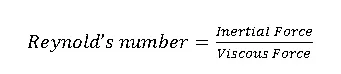
The formula is given by,
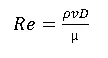
Where,
ρ = Density of fluid Kg/m3
D = Diameter of Cylinder m
v = Velocity of Fluid m/s
µ= Kinematic Viscosity of Fluid m2/s
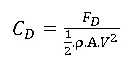
| Case | Flow |
Reynold’s number (Re) |
Velocity of Fluid (m/s) |
| Case-1 | Steady | 10 | 0.25 |
| Case-2 | Steady | 100 | 2.5 |
| Case-3 | Steady | 1000 | 25 |
| Case-4 | Steady | 10000 | 250 |
| Case-5 | Steady | 100000 | 2500 |
Procedure:
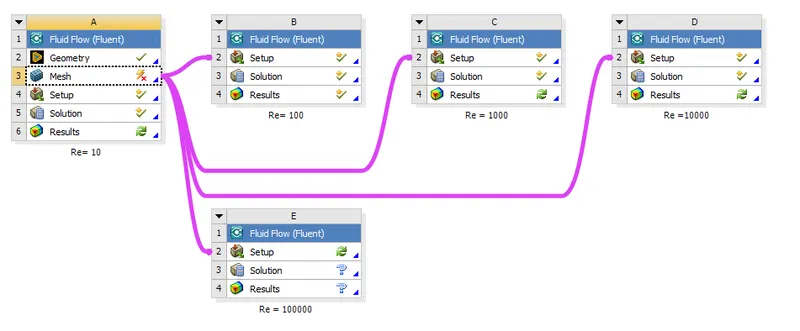
Geometry:
A plate with the dimension of 20*60m is created using spaceclaim.
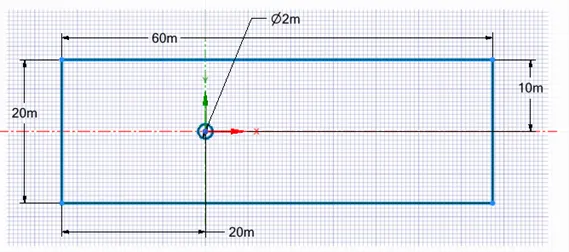
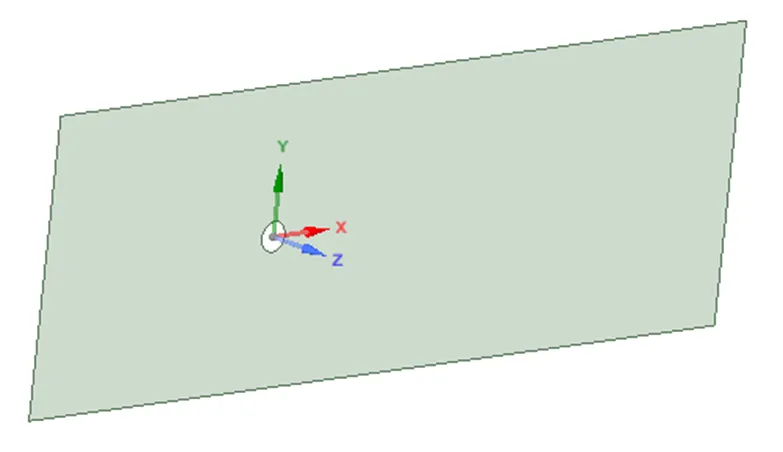
Now,we want to simulate effect of fluid flow over cylinder, select the circle and delete it.
Meshing:
1.select the edges of geometry and named them as inlet,outlet ,wall and symmetry.
2.Now select the body and go to mesh and click on generate mesh with mesh size 0.25 m.To ensure triangular mesh, go to mesh > insert > select triangular mesh type.
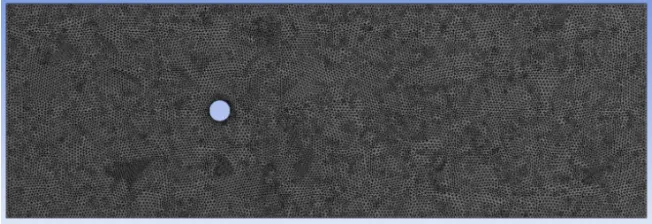
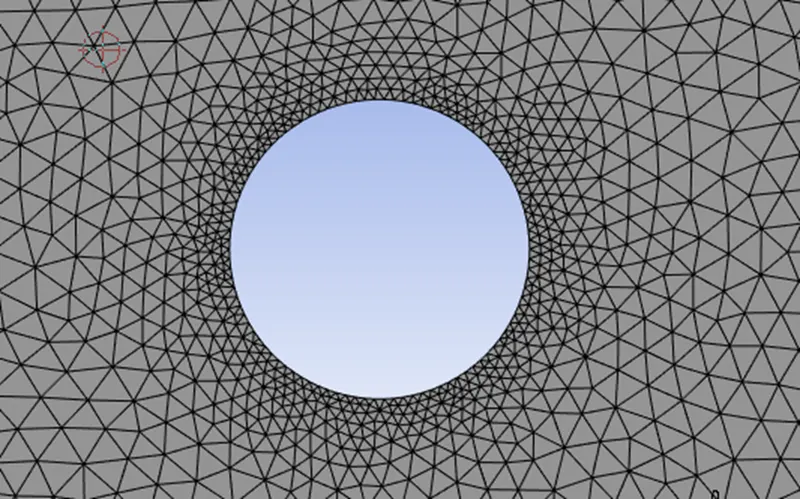
3.After generating mesh,it is seen that size of cirle looks distoreted.
go to mesh > sizing > select circular edge > deffinition >type > no,of divisions >36.
RESULT:
| Case |
Pressure |
Velocity |
Residual plot: |
Drag |
Lift |
Vertex Average |
|
Re= 10 |
 |
 |
 |
 |
 |
 |
| Re= 100 | 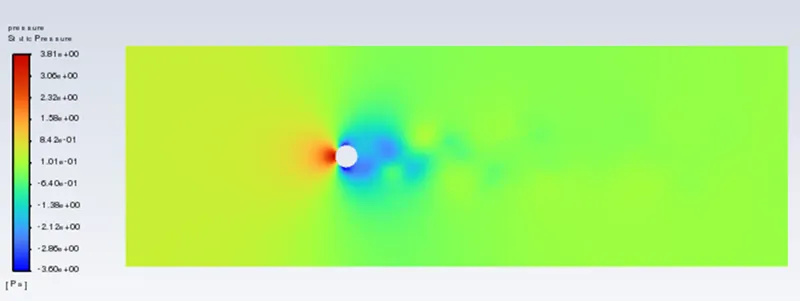 |
 |
 |
 |
 |
 |
| Re= 1000 | 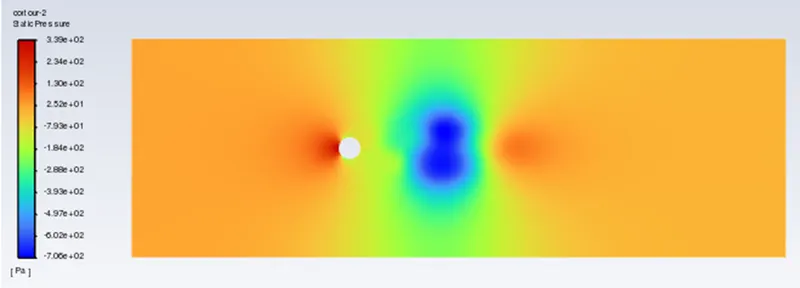 |
 |
 |
 |
 |
 |
| Re= 10000 | 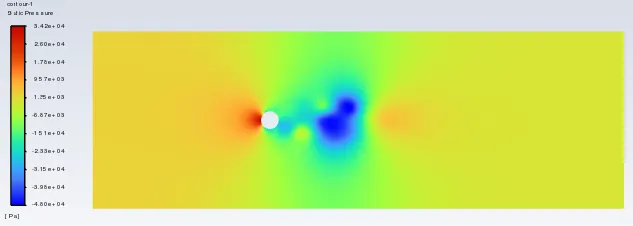 |
 |
 |
 |
 |
 |
Drag Coefficient -
Drag coefficient is a dimensionless factor of proportionality between the overall hydrodynamic force vector on a body in a fluid and the product of reference area of the body and velocity head.
Effect of Re number on Drag -
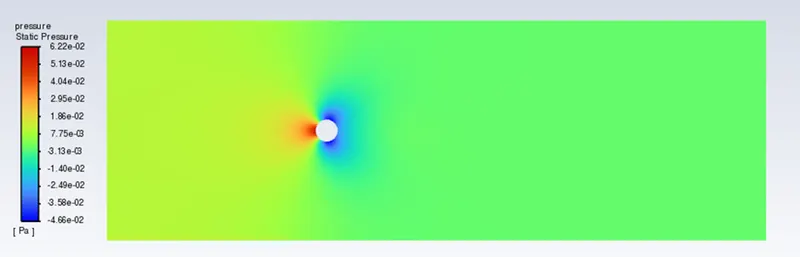
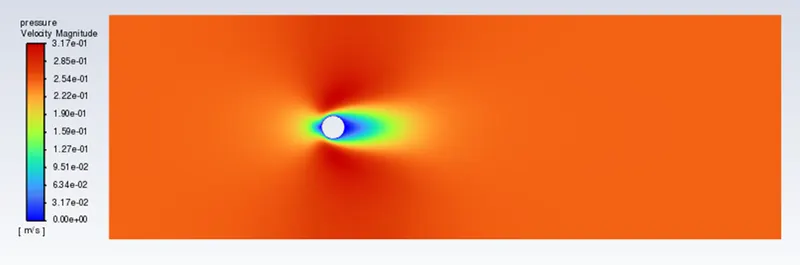
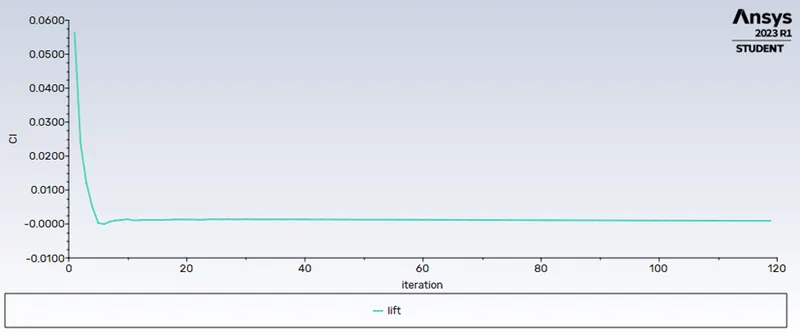
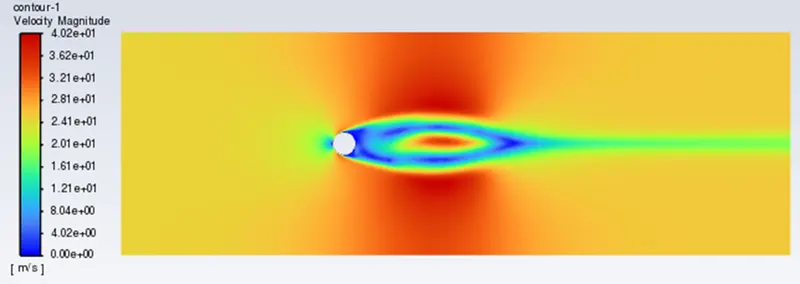
As it can be seen through the results,the coefficient og drag keeps decreasing whe the reynolds number is increasing.This is because, the flow becomes turbulent for reynolds number greater than 2000,which means laminar flow though present is negligible leading to a lower skin friction drag.Also,for low reynolds number(Re=10),the alternating vortices cannot be visualized due to the low velocity values.In such case only boundary layer separation occured.
@ Re = 10
At very slow flow there is no separation of flow and no wake downstream of the cylinder,as wee have neglected viscosity.Since the flow
is symmetric from upstream to downstream,there is no drag on the cylinder.But this type of flow does not occur in nature,where there
is always some small amount of viscosity is present in the fluid.
@ Re = 100
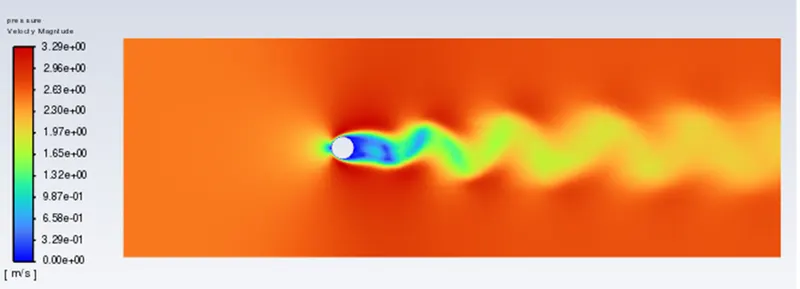
Stable vortices are formed.The flow is separated but steady.The vortices gererate a high drag on the cylinder.
@ Re = 1000
As the flow velocity increases,the down stream vortices becomes unstable,separate from the body and are alternatively shed from the downstream.The wake is wide and generate large amount of drag.
@ Re = 10000
The flow velocity is increased even more and the periodic flow breaks down into chaotic wake.The flow is laminar and orderly while on the back side of the cylinder,it is turned into a chaotic wake causing drag.
@ Re = 100000
The boundary layer transioned into turbulent flow and vortices of different scales are being shed in the wake region.But since the separation point is slightly downstream from the laminar separation point,which cause a slightly smaller wake and the drag is than the corresponding laminar drag.
Conclusion:
1.When fluid flows over cylinder, wake region is formed next to cylinder due to decrease in pressure and recirculation of flow occures and hence flow separation occures.
2.As flow over cylinder is being transient meaning time dependent phenomenon, we are unable to observe flow separation at low reynolds no.(say 50).
3.In this assignment we have kept all parameters constant and have only varried velocity to change reynolds number. So as the reynolds no. increases coefficient of drag decreases.however after reynolds no. = 4000, flow is turbulent and hence coefficient of drag is lower.