Project 1 : CFD Meshing for Tesla Cyber Truck
Project 1 : CFD Meshing for Tesla Cyber Truck
Objective:- The main objective of this work,
To finding & clean-up all the topological errors in the Tesla Cyber Truck Car model.
To assign appropriate PIDs and to create a surface mesh.
To Create a wind tunnel around Tesla Cyber Truck Car.
To create a volumetric mesh to wind tunnel.
To perform meshing with the suitable Target length and element Quality criteria.
To select the Target lengths based on their different parts of a model lengths.
Procedure:- Load model (Tesla Cyber Truck) in ANSA CFD layout (-performance_mode 3)
This is our raw geometry when we activated single cons we can see whole geometry covered in single cons, To avoid single cons do topo for whole geometry this will solve issue of single cons.
Before performing any topo clean up , you can observe that the resoution of compenents are not very much good . So to have a better resolution let us first go to mesh deck and decrease the mesh length by selecting the whole model and giving 1mm mesh length .Now you can observe that in the below image the resolution of car is pretty much good.
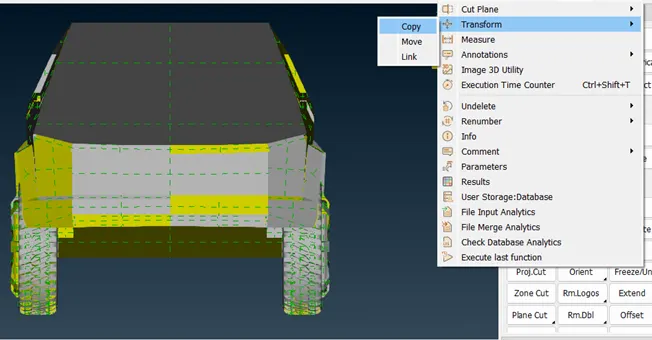
Create cut on geometry so that geometry could be divided in half
Delete half geometry, Always delete the side where you see less work had to be done in order to fix geometry.
Patch open surfaces
Delete overlapping and extra surfaces
convert triple cons to double cons
PID's Assigned
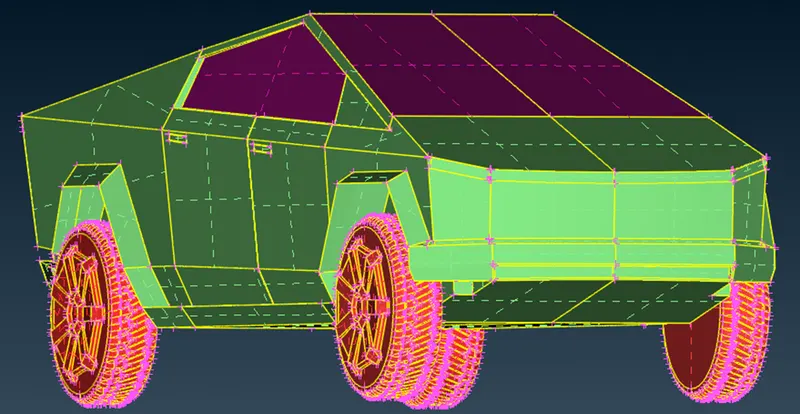
Geometry is ready to go for meshing
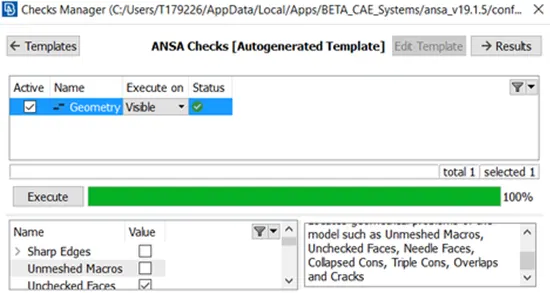
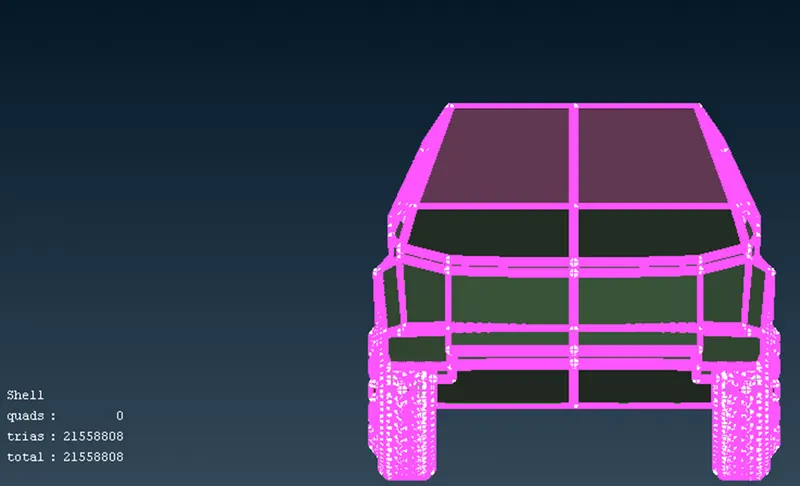
Mesh length for differnt PID's
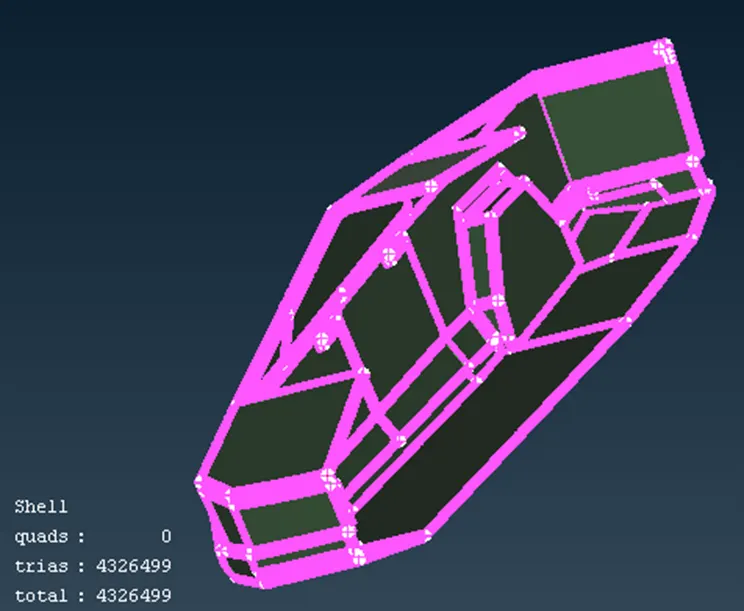
Body - 3 mm
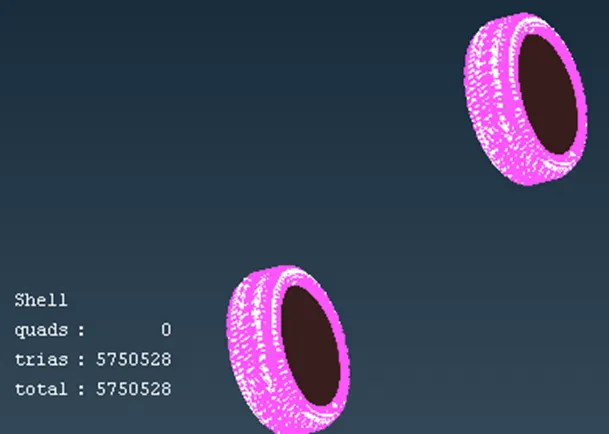
Rims and Tyres – 1.5 mm
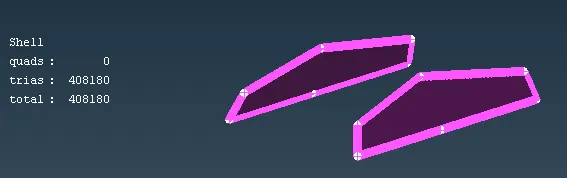
Window - 3 mm
Gives the Quality criteria and mesh parameters
1. Window Front and Back
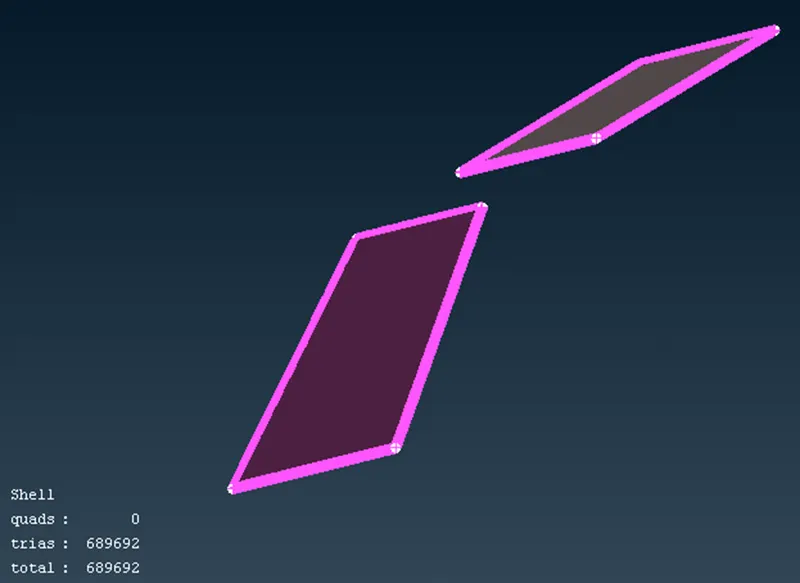
2. Window Side Glass
3.Body Part
4.Rims and Tyres Back Side
Wind Tunnel
Inorder to create a Wind tunnel, first create a point by selecting relative at 650mm from body to bottom by selecting a hot point at a distance of 650 mm to bottom .
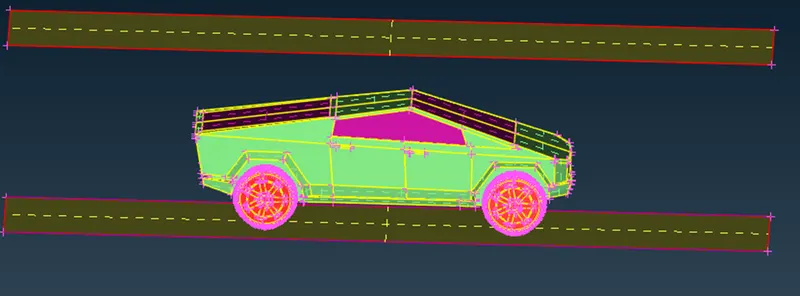
Now we create and assign PID's for the wind tunnel walls.In the below image we can see that PID's are created and assigned .
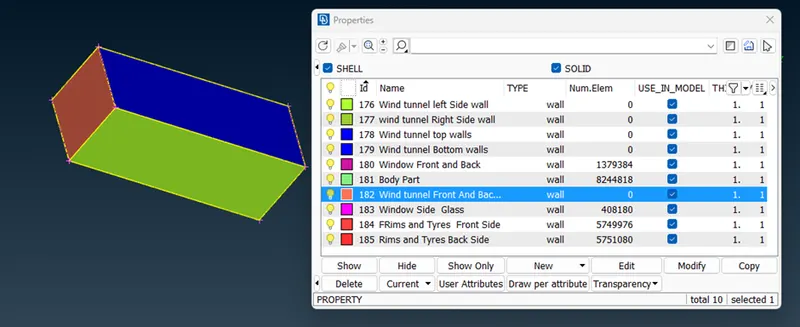
Next thing is to do surface mesh to the wind tunnel .
Now that the wind tunnel has been modelled, it has to be surface meshed first, such that the mesh size gradually grows from top to bottom.
If we have refined mesh length at the top ,then we will have lot of cells and lot of computational effort is required to solve .So , we give varying mesh length .
This can be done by using the spacing option under perimeters in mesh utility menu.
Then generate surface mesh. In the below image we can see that the mesh length is varying and increasing from bottom to top.
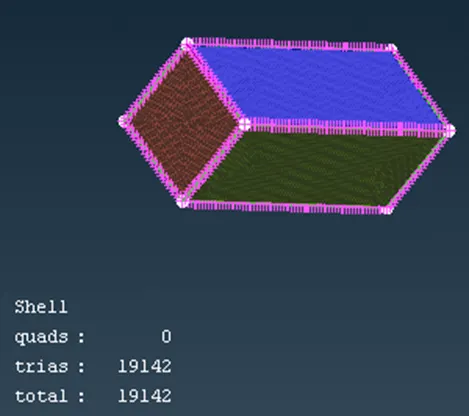
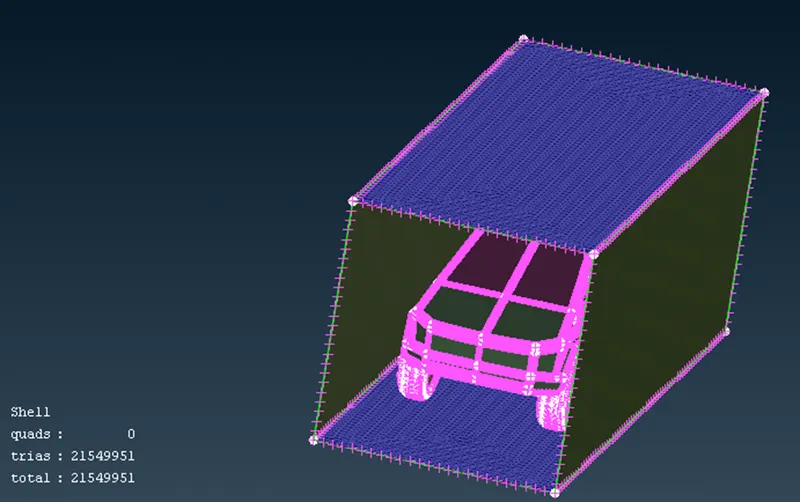
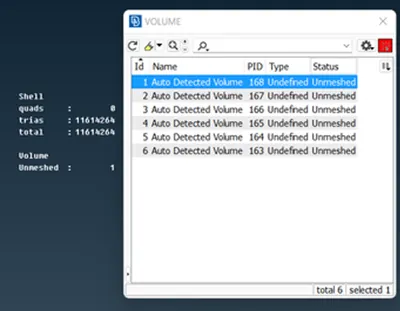
In the below image we can see the volumes which are not required and needs to be deleted.
Conclusion:
Working on tesla model gave ideas about different meshing tools available in ANSA.
Surface mesh is generated with the required element size.
Reconstructed the mesh as per the mesh quality required at Corners & at Intersection of edges.
Worked with the errors occurred in the Mesh.
Created a wind tunnel for external aerodynamic analysis.