Week 2 - Flow over a Cylinder.
AIM:
Simulate the flow over a cylinder and explain the phenomenon of Karman vortex street.
OBJECTIVE:
PART-I
- Simulate the flow with the steady and unsteady case and calculate the Strouhal Number for Re= 100.
PART-II
- Calculate the coefficient of drag and lift over a cylinder by setting the Reynolds number to 10,100,1000,10000 & 100000. (Run with steady solver)
- Discuss the effect of Reynolds number on the coefficient of drag. [ Results should be validated with any standard literature and error should be within 5 %]
THEORY:
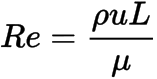
- REYNOLDS NUMBER
- Reynolds number is a dimensionless quantity that is used to determine the type of flow pattern as laminar or turbulent while flowing through a pipe.
- Reynolds number is defined by the ratio of inertial forces to that of viscous forces.
-

= reynolds number 
= density of the fluid 
= flow speed 
= characteristic linear dimension 
= dynamic viscosity of the fluid
- TYPES OF FLOWS
- LAMINAR FLOW:
- If a fluid travels smoothly in a ragular path then it is called as laminar flow.
- For internal flow Reynolds number is less than 2400, than flow will be laminar.
- For external flow upto 2×10^5 Reynolds number the flow will be laminar.
- TURBULANT FLOW:
- If a fluid flows in a irregular path insted of regular path, than it is called as turbulant flow.
- For internal flow Reynolds number is greater than 4000 than flow will be turbulant.
- For external flow Reynolds number is greater than 5*10^5 than flow will be tubulant.
- LAMINAR FLOW:
- LIFT AND DRAG FORCE:
-
LIFT FORCE:
-
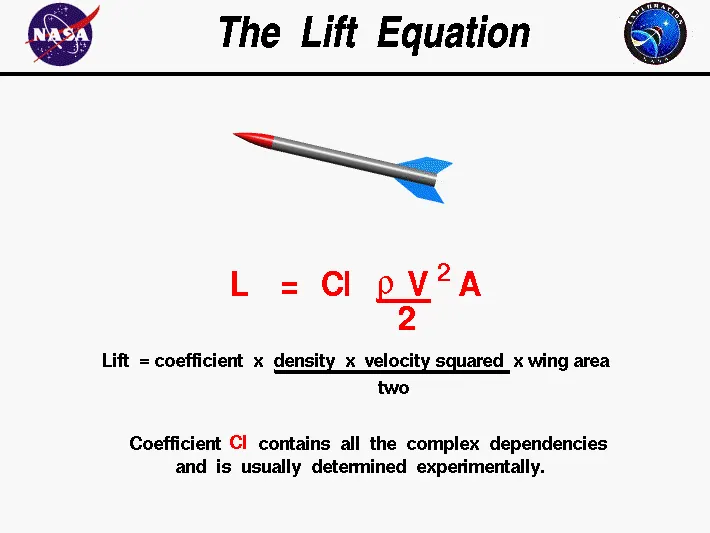
A fluid flowing around an object exerts a force on it. Lift is the component of this force that is perpendicular to the oncoming flow direction.[1] It contrasts with the drag force, which is the component of the force parallel to the flow direction. Lift conventionally acts in an upward direction in order to counter the force of gravity, but it can act in any direction at right angles to the flow.
-
- EQUATION OF LIFT
- DRAG FORCE:
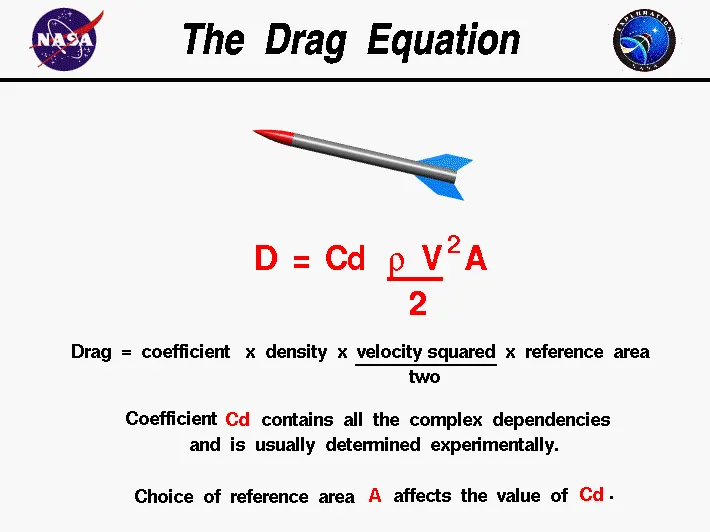
- In fluid dynamics, drag (sometimes called air resistance, a type of friction, or fluid resistance, another type of friction or fluid friction) is a force acting opposite to the relative motion of any object moving with respect to a surrounding fluid.[1] This can exist between two fluid layers (or surfaces) or between a fluid and a solid surface. Unlike other resistive forces, such as dry friction, which are nearly independent of velocity, the drag force depends on velocity
- EQUTION OF DRAG
- FLOW SAPERATION:
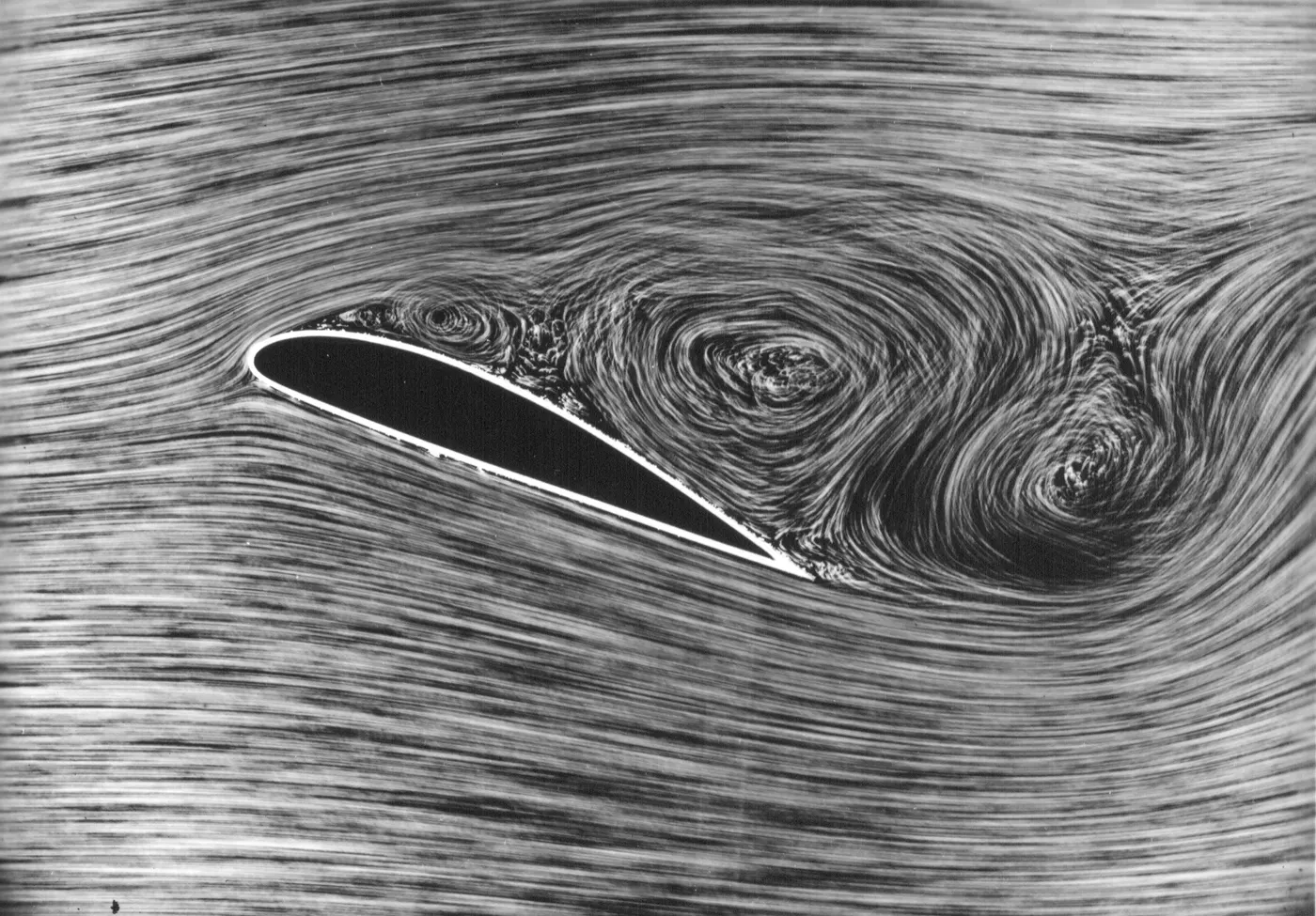
- When a fluid is forced to flow over a curved surface at high velocities. A fluid follows the front portion of the curved surface with no problem, but it has difficulty attatched to the surface on the back side. At sufficiently with high velocities the fluid stream detaches itself from the surface of the body. This is called flow separation.
- The location of the separation points depands on the following facters such as Reynolds number, surface roughness, and level of the fluctuation of the free stream, and it is usually difficult to predict exectly where the separation occur unless there are sharp corners or abrupt changes in the shape of the solid surface.
- VON KARMAN VORTEX STREET
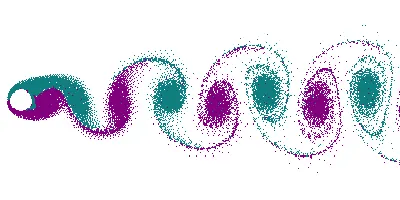
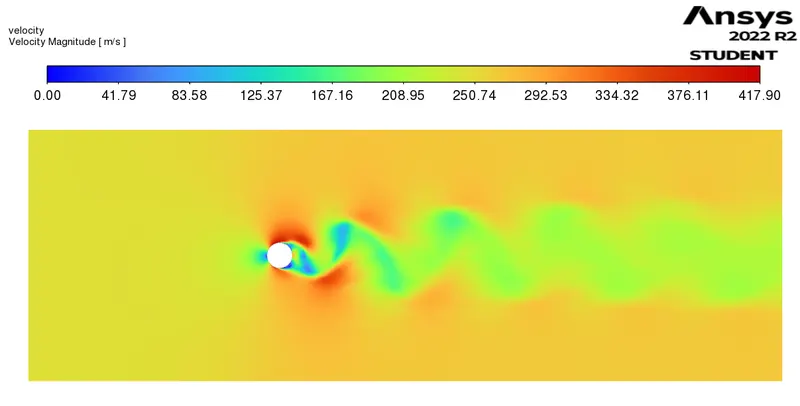
- In fluid dynamics, a Kármán vortex street (or a von Kármán vortex street) is a repeating pattern of swirling vortices, caused by a process known as vortex shedding, which is responsible for the unsteady separation of flow of a fluid around blunt bodies.
- STROUHAL NUMBER:
- The Strouhal number is defined as St = fstD/U, where fst is the vortex shedding frequency (or the Strouhal frequency) of a body at rest, D is the diameter of the circular cylinder and U is the velocity of the ambient flow.
PROCEDURES:
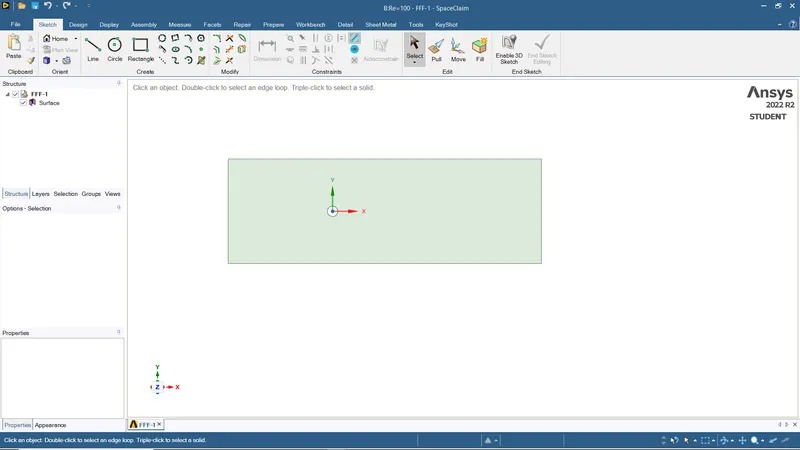
- First we sketch the model in the space claim.
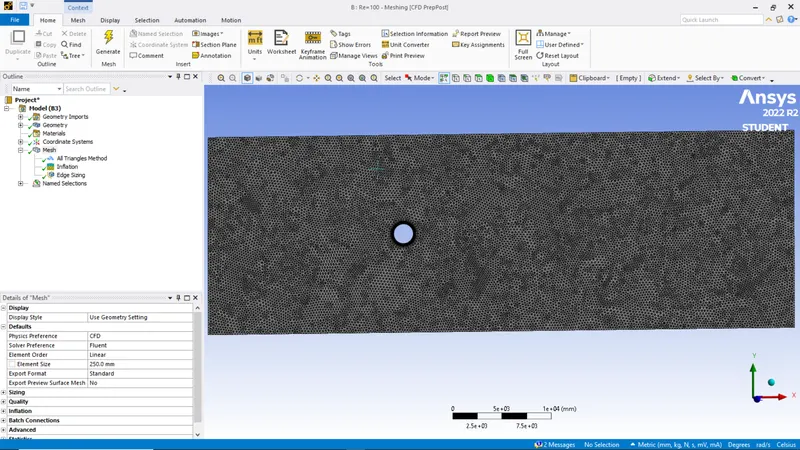
- Then we go to mesh the model with element size 250mm and genrate the mesh.
- We got the number of element is 40758
- And create the inflation layer on the cylinder wall.
- Then we go to setup solve the flow over the cylinder.
PART-I
- Simulate the flow with the steady and unsteady case and calculate the Strouhal Number for Re= 100.
FOR Re= 100 With Velocity = 2.5m/s and Coefficient of viscosity is 0.05
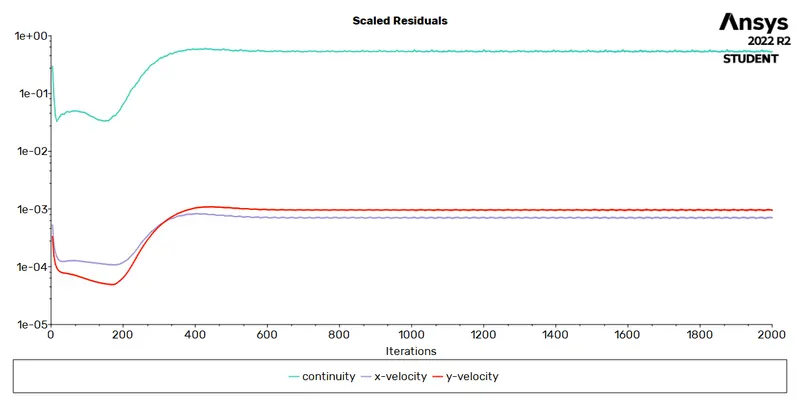
RESIDUAL PLOT
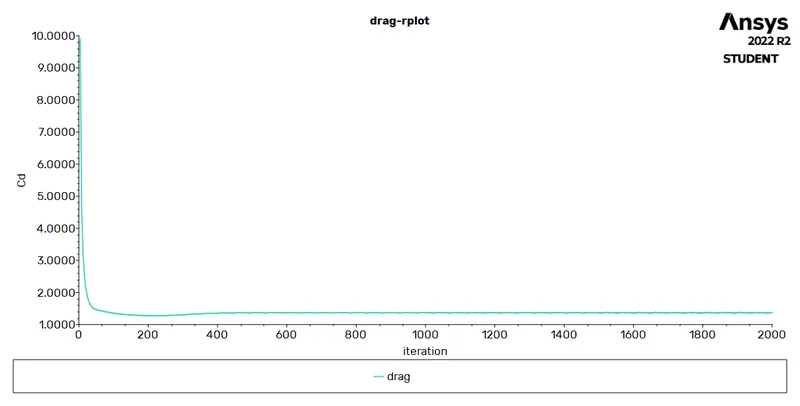
DRAG PLOT
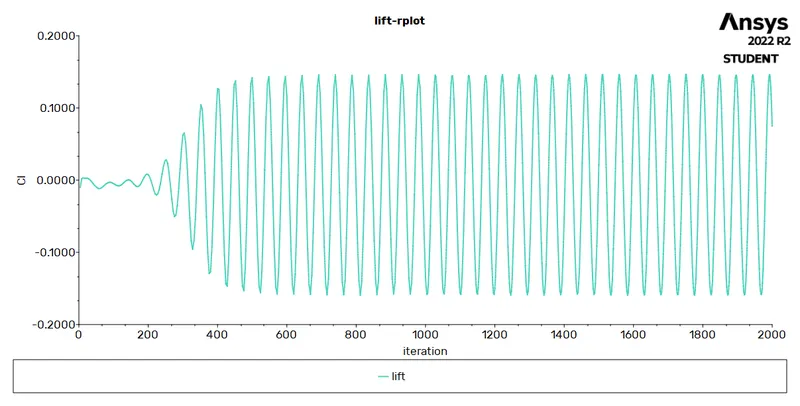
LIFT PLOT
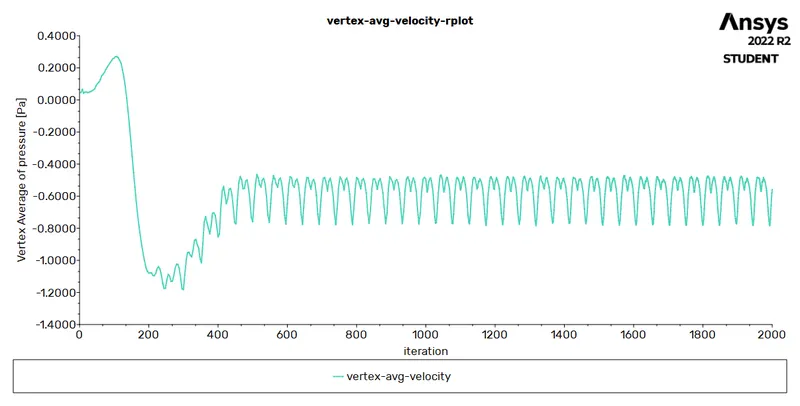
VORTEX AVERAGE VELOCITY PLOT
VELOCITY CONTOUR
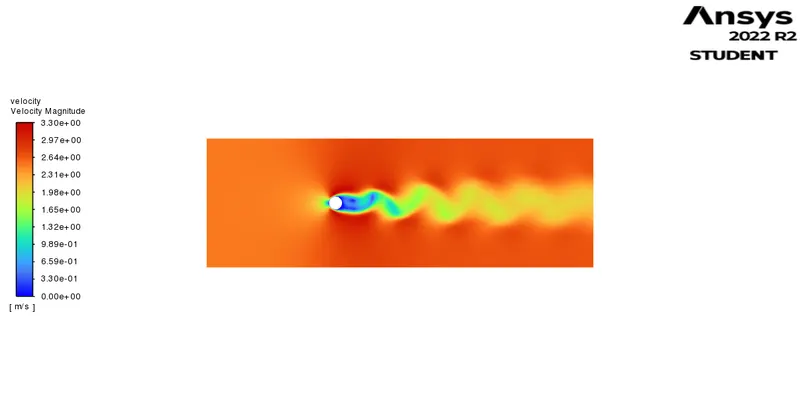
ANIMATION OF VELOCITY FLOW SEPARATION
- We get the coefficient of drag on the cylinder wall is Cd=1.3675288.
- And the coefficient of lift on the cylinder wall is Cl= -0.13373243.
- And the vertex average velocity on the monitor point is 1.6948218 m/s.
FOR Re= 10 With Velocity = 0.25m/s and Coefficient of viscosity is 0.05
RESIDUAL PLOT
DRAG PLOT
LIFT PLOT
VORTEX AVERAGE VELOCITY PLOT
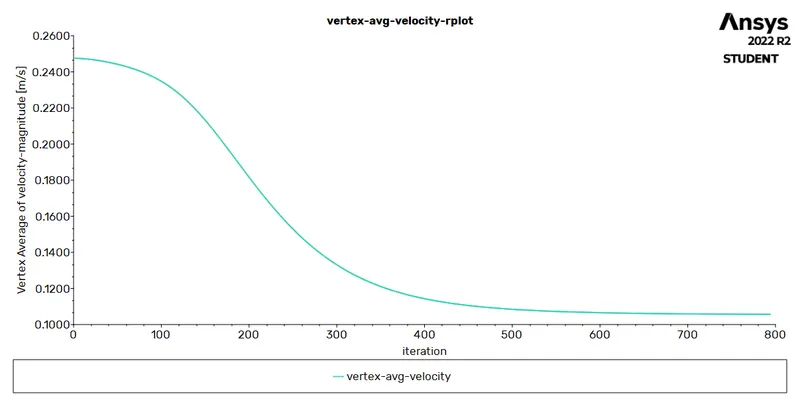
VELOCITY CONTOUR
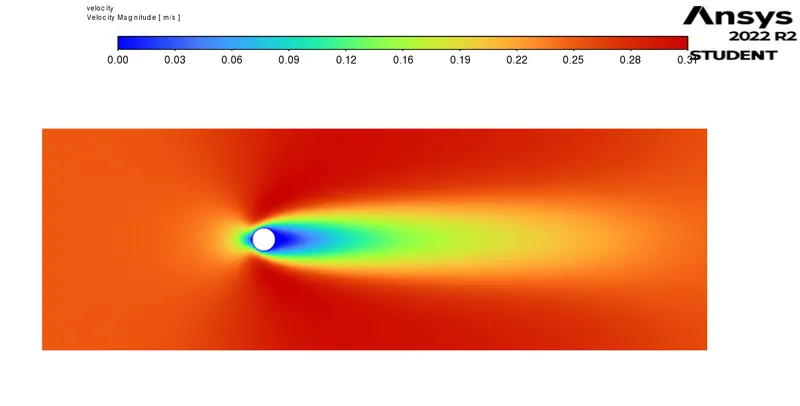
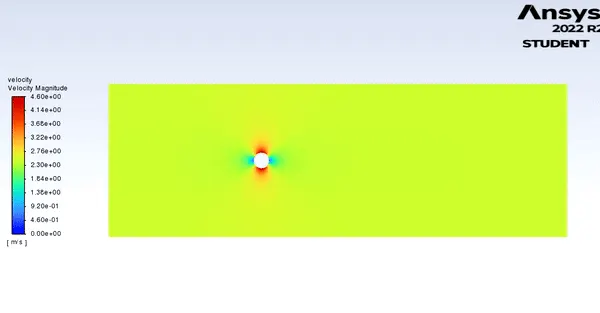
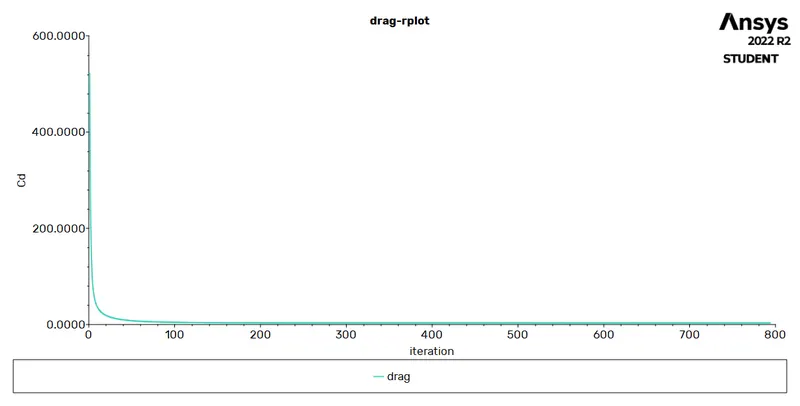
- We get the coefficient of drag on the cylinder wall is Cd=3.3361851.
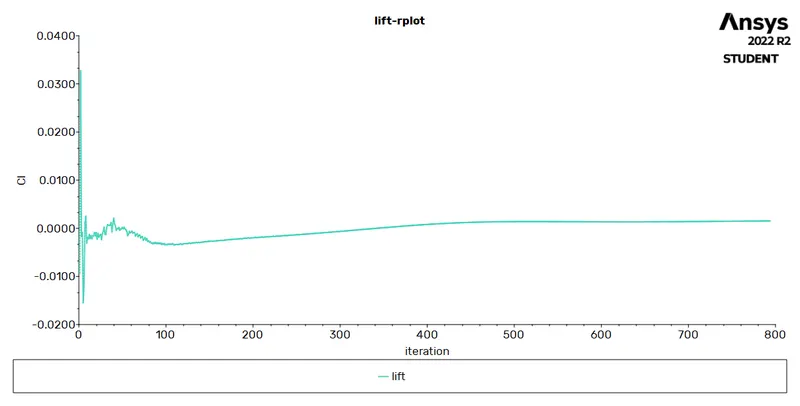
- And the coefficient of lift on the cylinder wall is Cl=0.0015297142.
- And the vertex average velocity on the monitor point is 0.10563356 m/s.
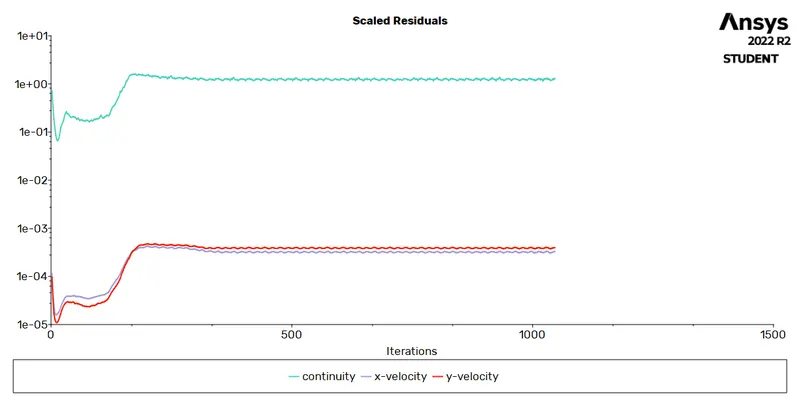
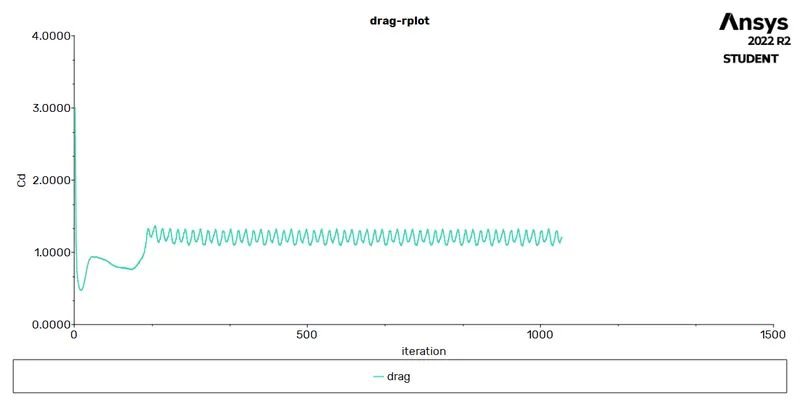
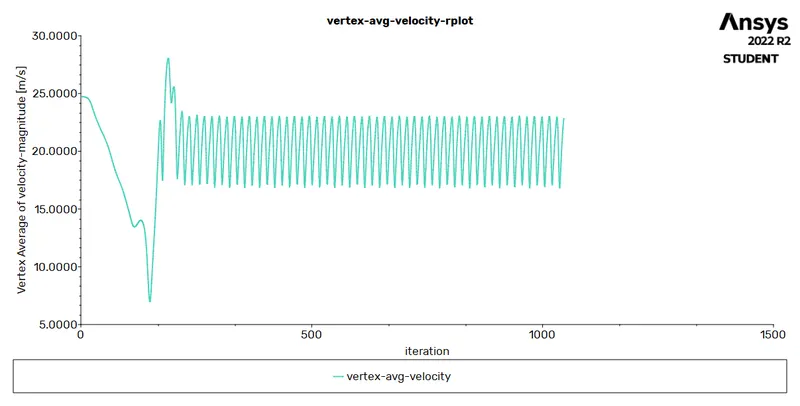
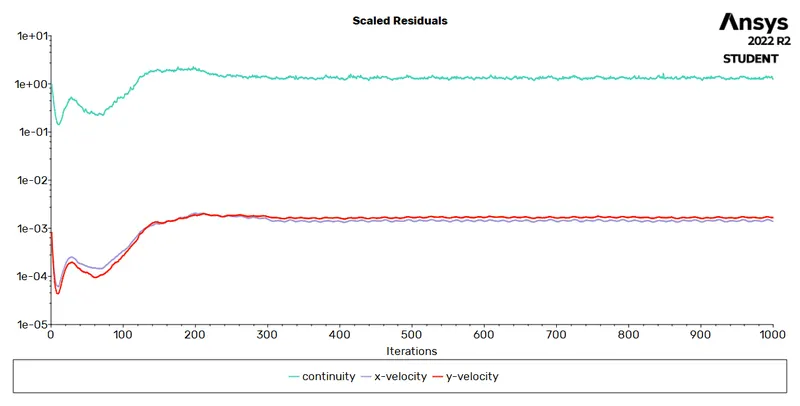
FOR Re= 1000 With Velocity = 25m/s and Coefficient of viscosity is 0.05
RESIDUAL PLOT
DRAG PLOT
LIFT PLOT
VORTEX AVERAGE VELOCITY PLOT
VELOCITY CONTOUR
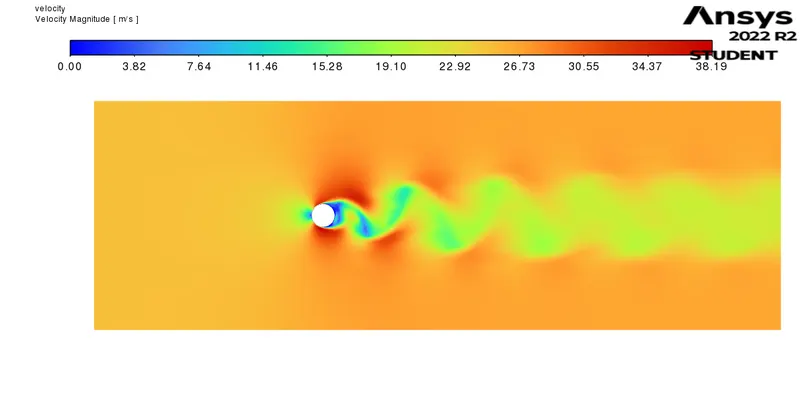
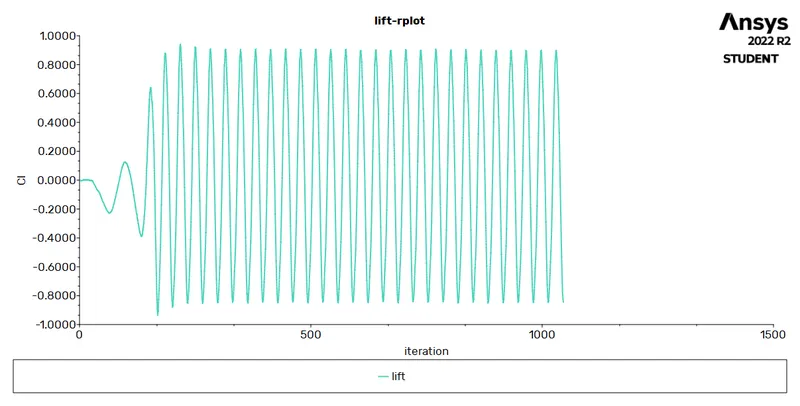
- We get the coefficient of drag on the cylinder wall is Cd=1.2051286.
- And the coefficient of lift on the cylinder wall is Cl= -0.84468602.
- And the vertex average velocity on the monitor point is 22.839045 m/s.
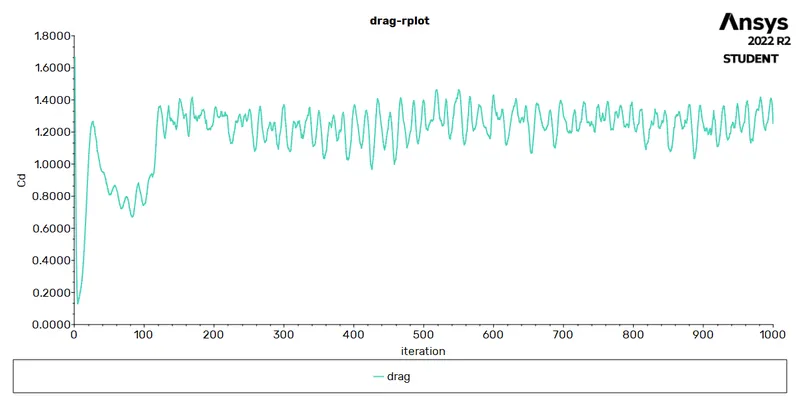
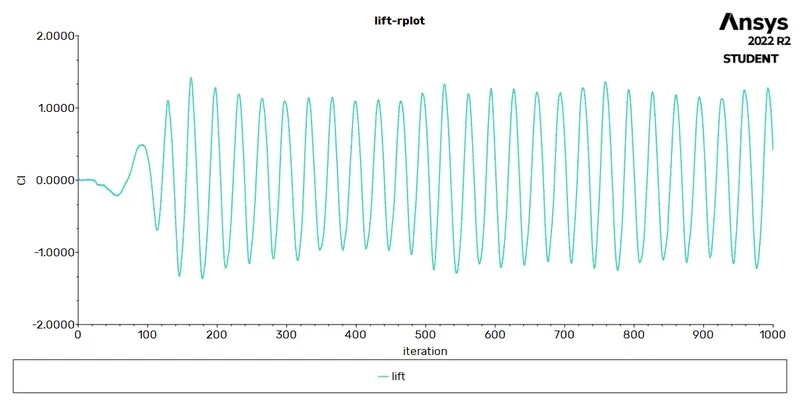
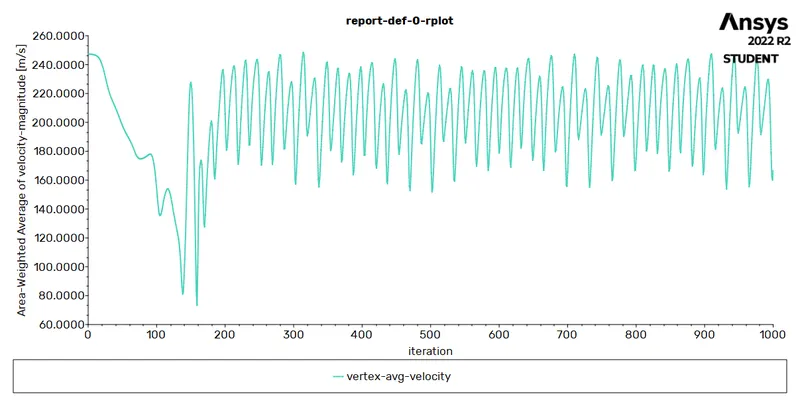
FOR Re= 10000 With Velocity = 250m/s and Coefficient of viscosity is 0.05
RESIDUAL PLOT
DRAG PLOT
LIFT PLOT
VORTEX AVERAGE VELOCITY PLOT
VELOCITY CONTOUR
- We get the coefficient of drag on the cylinder wall is Cd=1.2539914.
- And the coefficient of lift on the cylinder wall is Cl=0.40866902.
- And the vertex average velocity on the monitor point is 167.18602 m/s.
FOR Re= 100000 With Velocity = 2500m/s and Coefficient of viscosity is 0.05
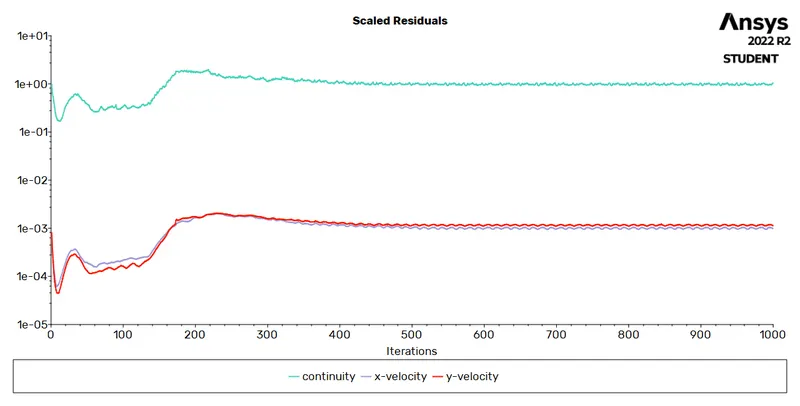
RESIDUAL PLOT
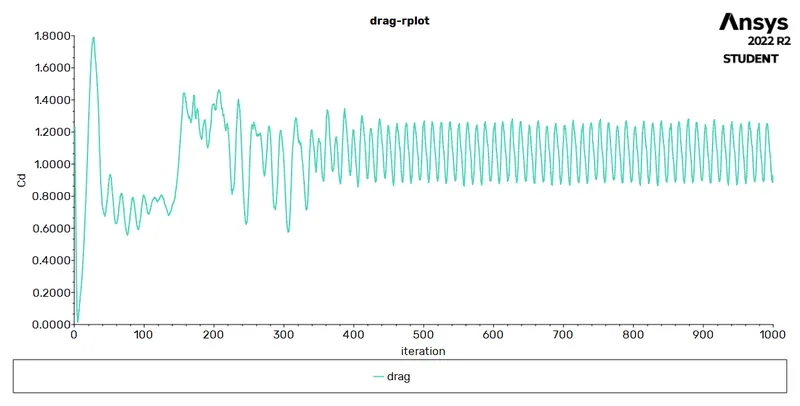
DRAG PLOT
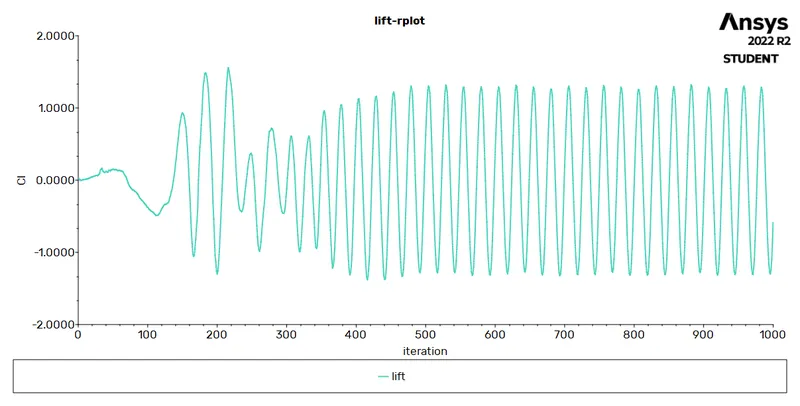
LIFT PLOT
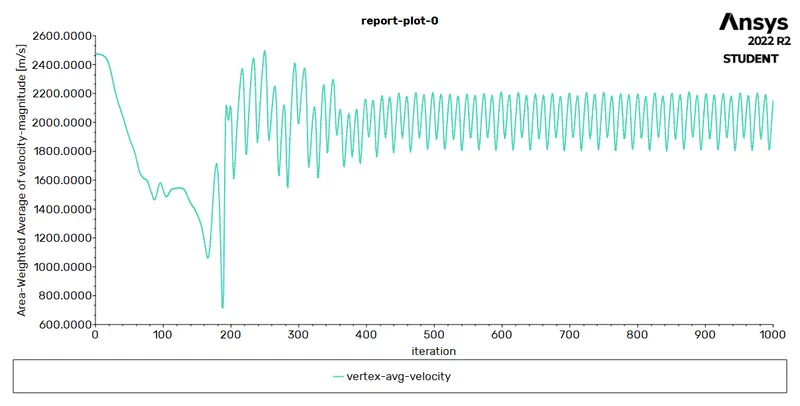
VORTEX AVERAGE VELOCITY PLOT
VELOCITY CONTOUR
- We get the coefficient of drag on the cylinder wall is Cd= 0.93283981.
- And the coefficient of lift on the cylinder wall is Cl= -0.57895305.
- And the vertex average velocity on the monitor point is 2148.3789 m/s.
CONCLUSION:
| Re = 10 | Re= 100 | Re = 1000 | Re = 10000 | Re = 100000 | |
| Cd | 3.3361851 | 1.3675288 | 1.2051286 | 1.2539914 | 0.93283981 |
| Cl | 0.0015297142 | -0.13373243 | -0.84468602 | 0.40866902 | -0.57895305 |
| Vertex Velocity | 0.10563356 m/s | 1.6948218 m/s | 22.839045 m/s | 167.18602 m/s | 2148.3789 m/s |
- When we increase the reynolds number coefficient of drage is decreases.
- When we increase the reynolds number coefficient of lift is decreases.
- And vertex velocity will increases
- We perform the laminar fluid flow .
- Default fluid as air