Week 2 - Flow over a Cylinder.
Aim:
To Simulate the flow over a cylinder and explain the phenomenon of Karman vortex street.
OBJECTIVE:
1. Simulate the flow with the steady and unsteady case and calculate the Strouhal Number for Re= 100
2. Calculate the drag and lift coefficient over a cylinder by setting the Reynolds number to 10,100,1000,10000 & 100000. (Run with steady solver)
Introduction:
Vortex shedding:
vortex shedding is an oscillating flow that occurs when a fluid such as air or water flows past a bluff (as opposed to a streamlined) body at certain velocities, depending on the size and shape of the body. In this flow, vortices are created at the back of the body and detach periodically from either side of the body forming a Von Karman vortex street. The fluid flow past the object creates alternating low-pressure vortices on the downstream side of the object. The object will tend to move toward the low-pressure zone.
Suppose the bluff structure is not mounted rigidly and the frequency of vortex shedding matches the resonance frequency of the structure. In that case, the structure can begin to resonate, vibrating with harmonic oscillations driven by the energy of the flow. This vibration is the cause of overhead power line wires humming in the wind, and the fluttering of automobile whip radio antennas at some speeds. Tall chimneys constructed of thin-walled steel tubes can be sufficiently flexible that, in airflow with speed in the critical range, vortex shedding can drive the chimney into violent oscillations that can damage or destroy the chimney.
Reynolds Number (Re):
The Reynolds number for a flow measures the ratio of inertial to viscous forces in fluid flow around a body.
Re = rho*V*d/Dynamic Viscosity
The range of Re values will vary with the size and shape of the body from which the eddies are being shed, as well as with the kinematic viscosity of the fluid. Over a sizeable Red range (47<Red<105 for circular cylinders; reference length is d: diameter of the circular cylinder) eddies are shed continuously from each side of the circle boundary, forming rows of vortices in its wake. The alternation leads to the core of a vortex in one row being opposite the point midway between two vortex cores in the other row, giving rise to the distinctive pattern shown in the picture. Ultimately, the energy of the vortices is consumed by viscosity as they move further downstream, and the standard way disappears.
Strouhal number (St):
Strouhal number is a dimensionless number describing oscillating flow mechanisms.
The Strouhal number is often given as
St = f*d/u
Where,
f is the frequency of vortex shading,
L is the characteristic length and
U is the flow velocity.
Procedure:
Geometry:
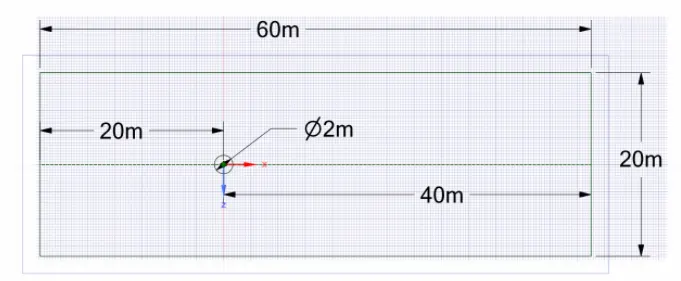
A plate with the dimension of 20*60m is created using SpaceClaim.
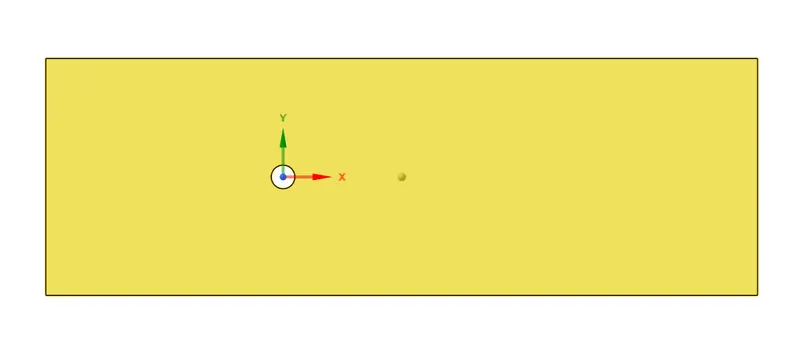
Now, we want to simulate the effect of fluid flow over the cylinder, select the circle and delete it.
Meshing:
1. select the edges of geometry and name them inlet, outlet, wall, and symmetry.
2. Now select the body and go to mesh and click on generate a mesh with a mesh size of 250 mm. To ensure triangular mesh, go to mesh > insert > select triangular mesh type.
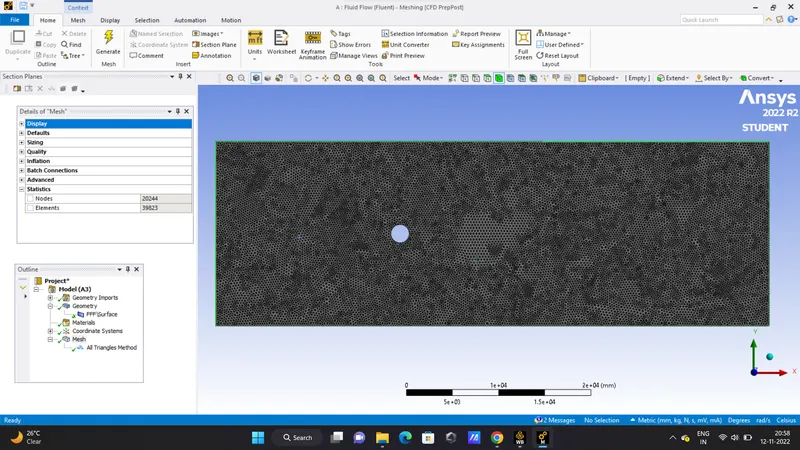
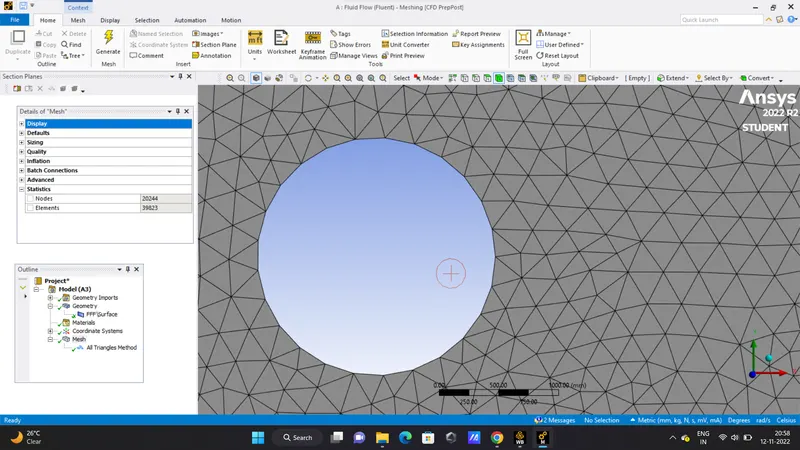
3. After generating the mesh, it is seen that size of the circle looks distorted.
go to mesh > sizing > select circular edge > deffinition >type > no.of divisions >36.
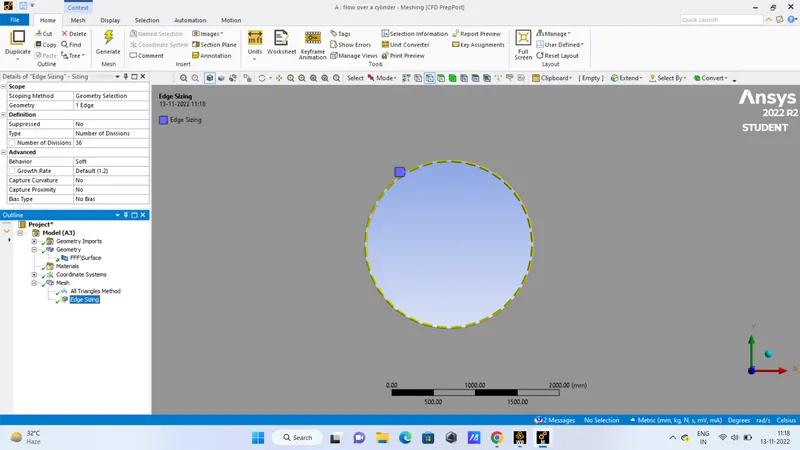
4. To capture better results near the cylinder wall, go to mesh > inflation > select the body and edge > inflation option: 1st layer thickness >1 st layer height:5.0mm >maximum layers:20 > Growth rate: 1:2
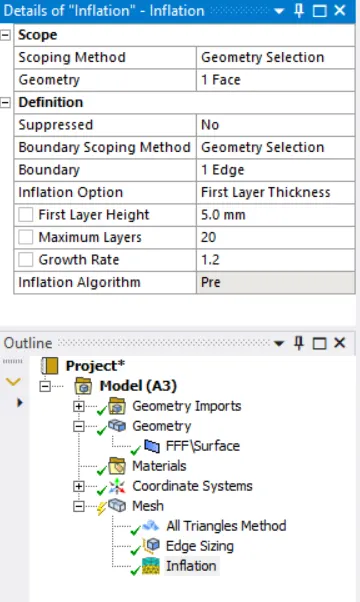
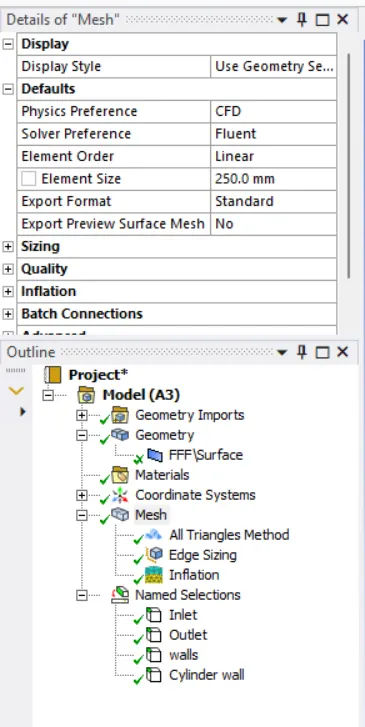
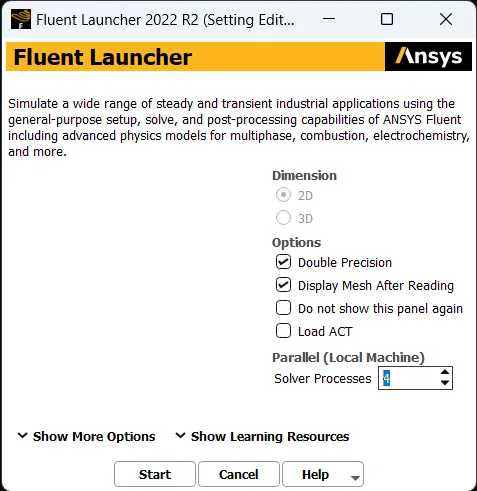
Solving :
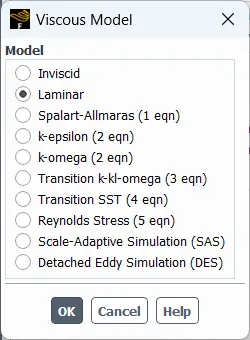
1. select laminar flow inside the viscous model.
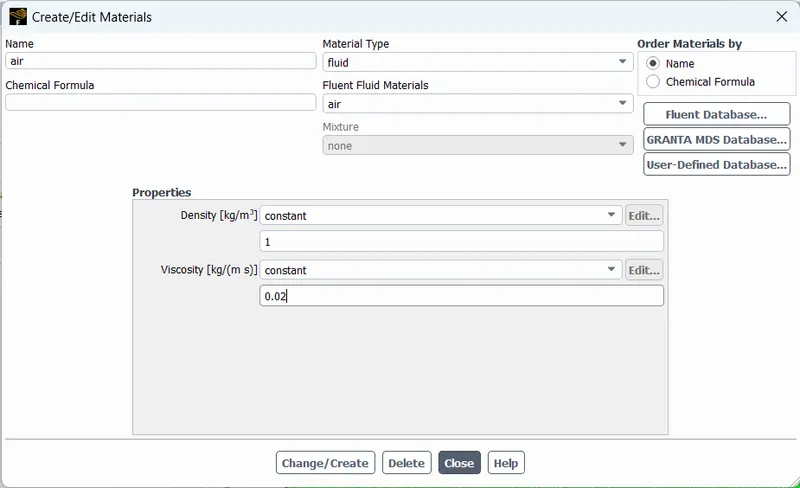
2. As we wanted to customize material property for simulation, go to materials > fluent database > select the material (air) > copy it> rename the name of the material.
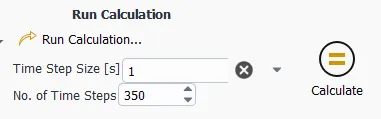
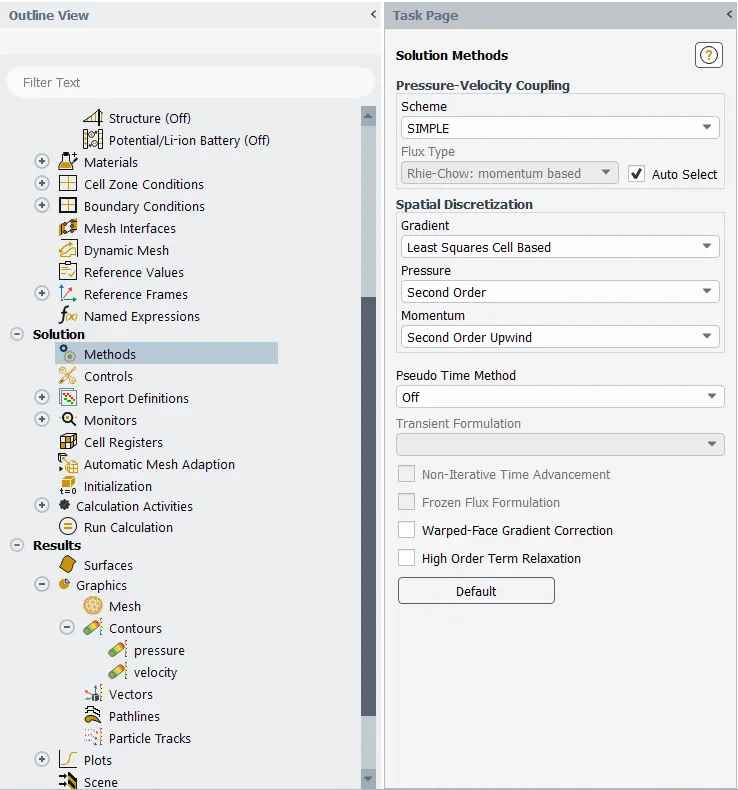
Steady-state simulation:
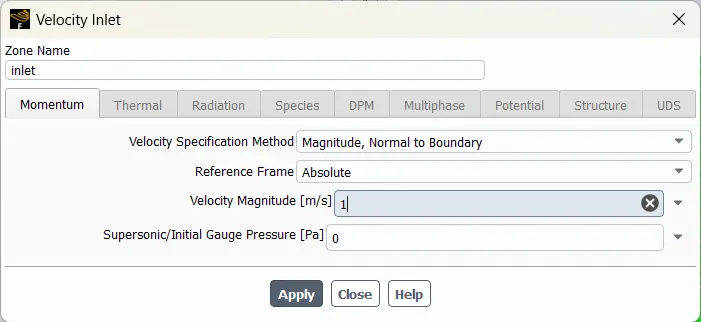
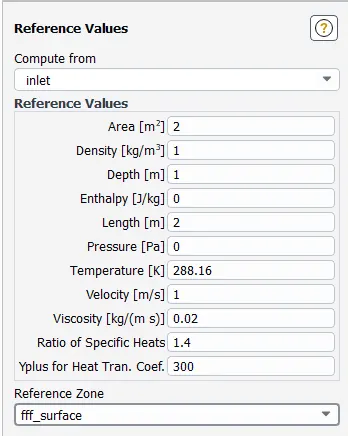
1.Reynolds number = 10.
velocity = 1 m/s.
density = 1 kg/m3.
viscosity = 0.02 Pa-s.
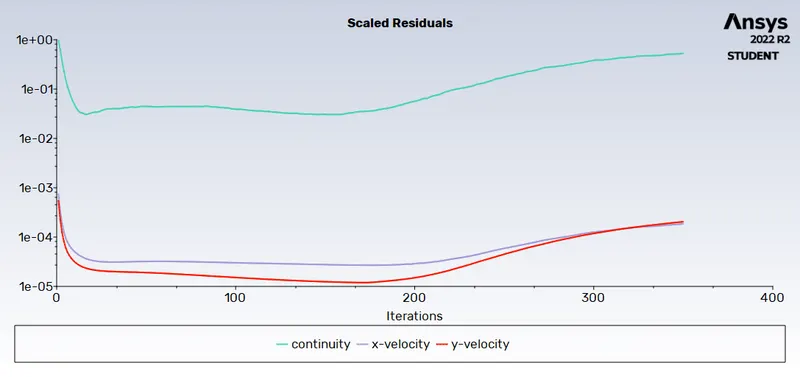
Residual plot:
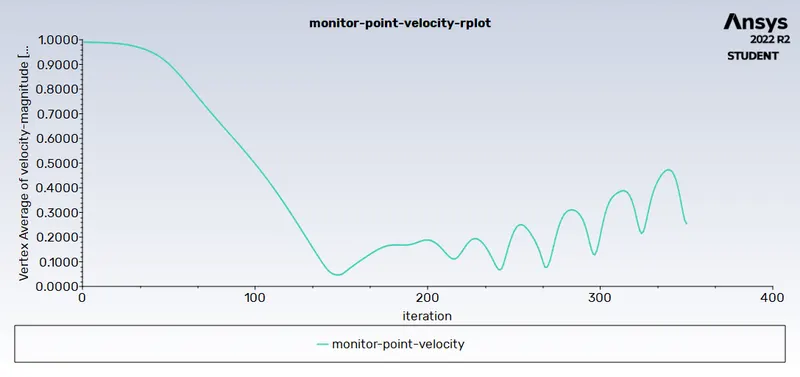
Monitor point velocity:
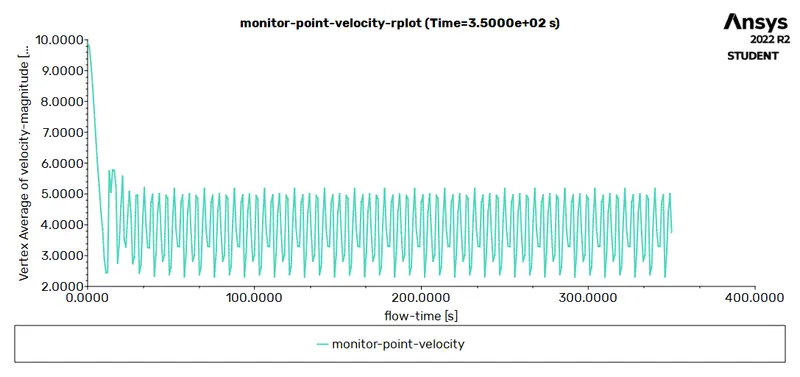
monitor point: A point is created at 8 m in the x direction from the axis of the cylinder to check velocity.
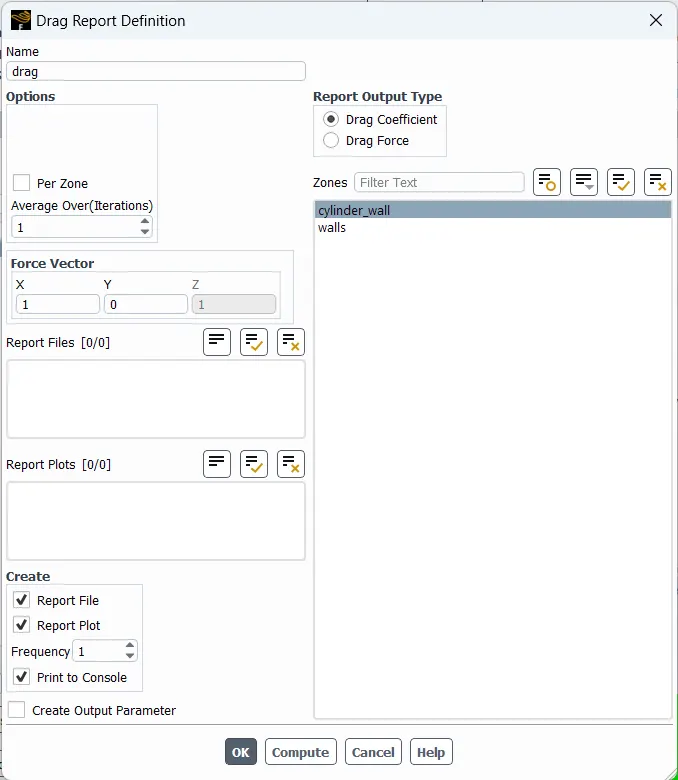
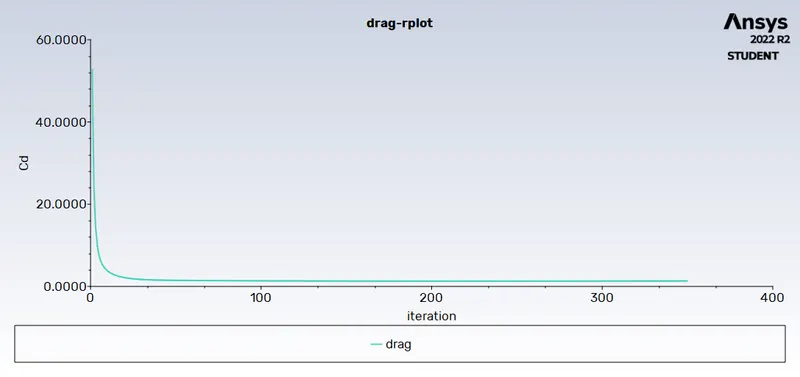
Coefficient of drag:
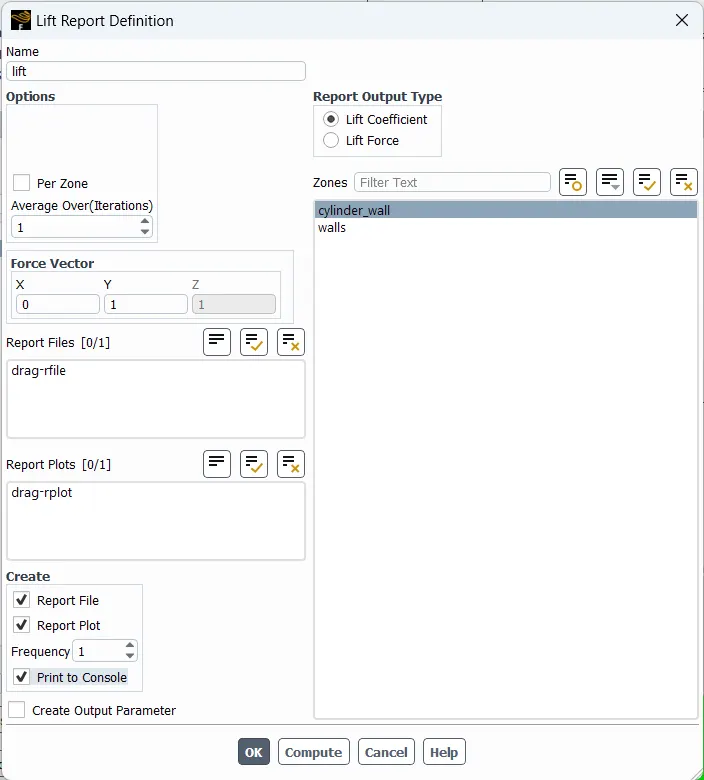
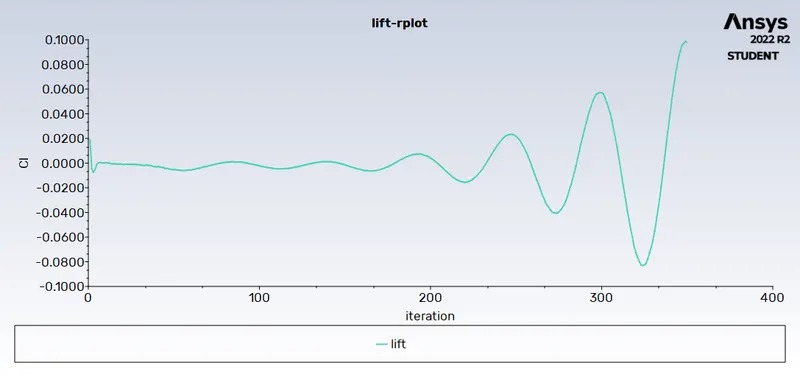
Lift Coefficient:
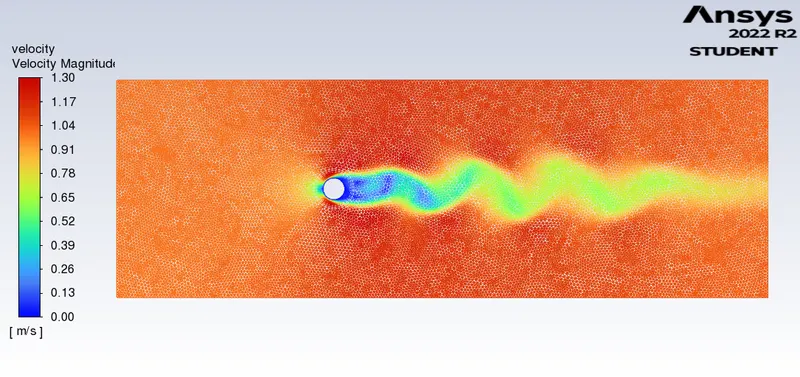
Velocity contour:
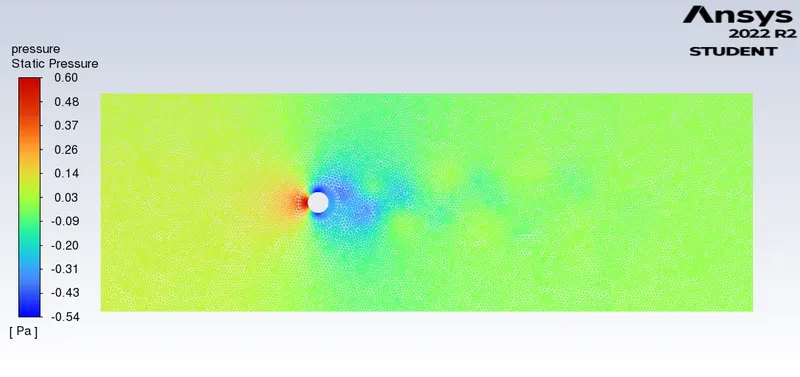
Pressure contour:
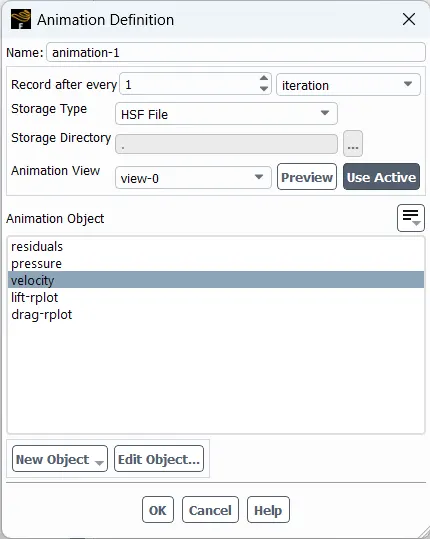
Animation :
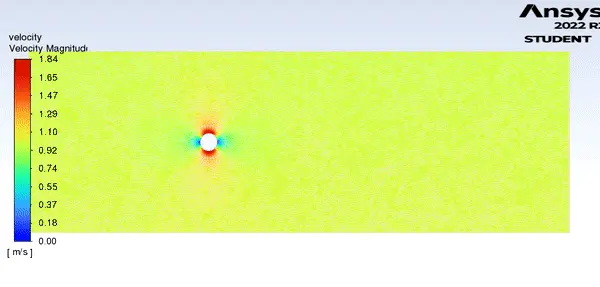
2.Reynolds number = 100.
velocity = 10 m/s.
density = 1 kg/m3.
viscosity = 0.02 Pa-s.
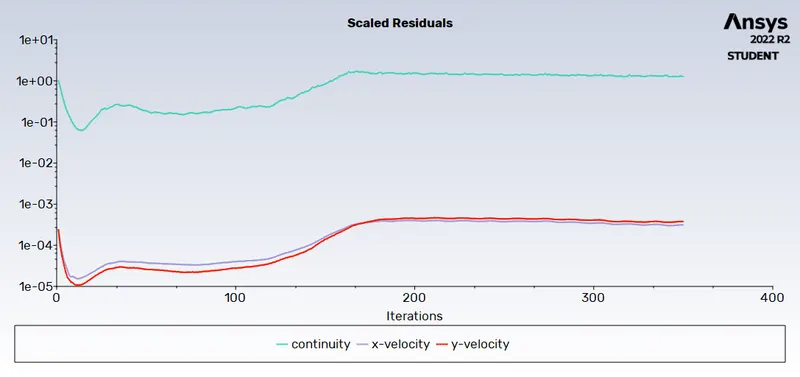
Residual plot:
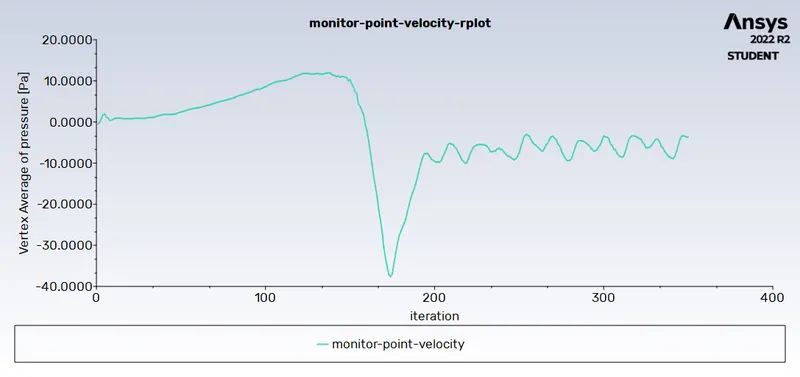
Monitor point velocity:
monitor point: A point is created at 8 m in the x direction from the axis of the cylinder to check velocity.
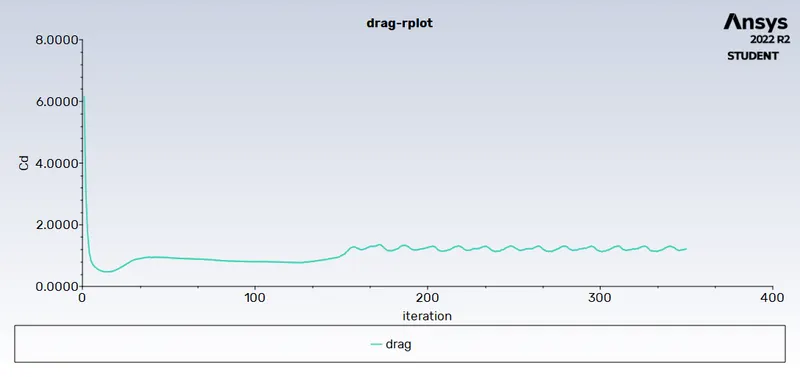
Coefficient of drag:
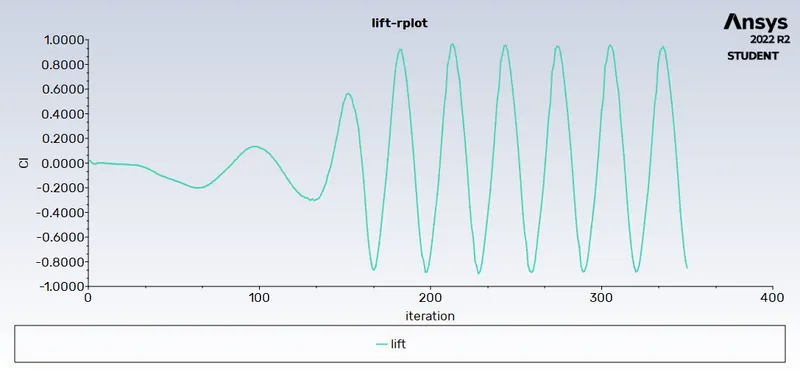
Lift Coefficient:
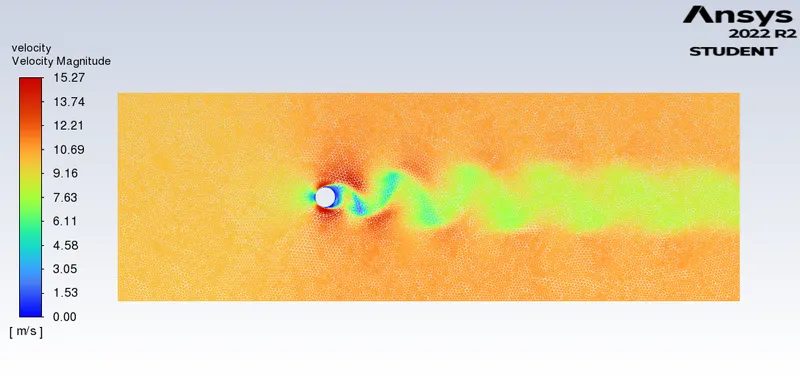
Velocity contour:
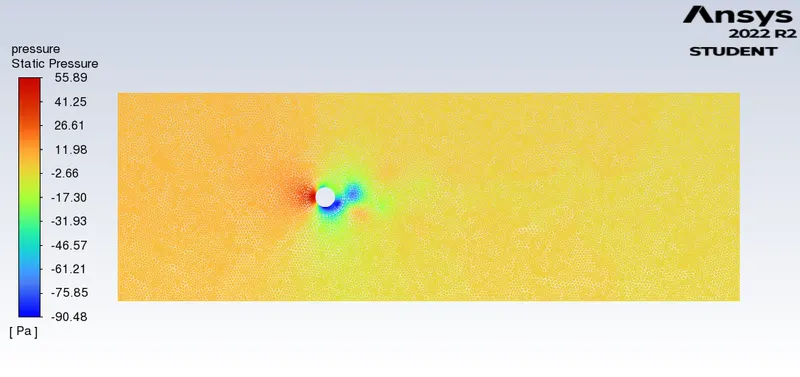
Pressure contour:
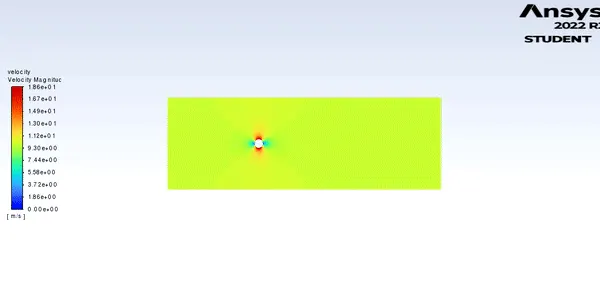
Animation file:
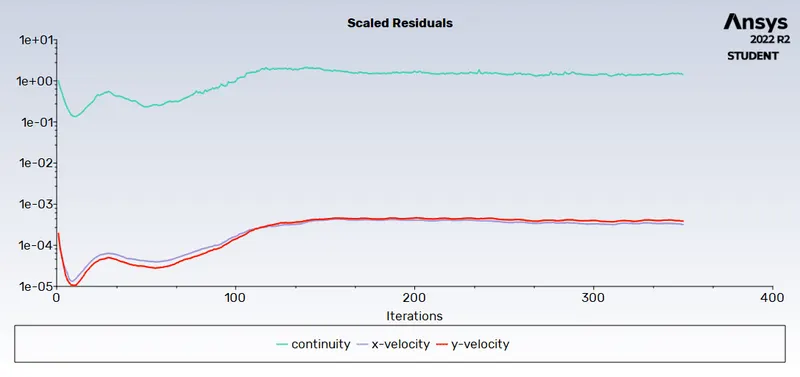
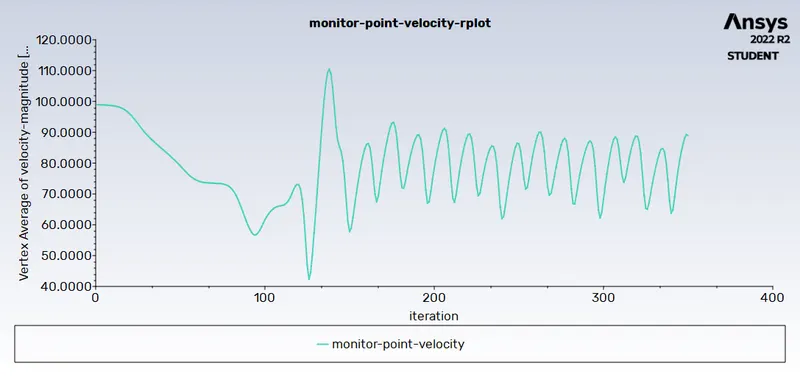
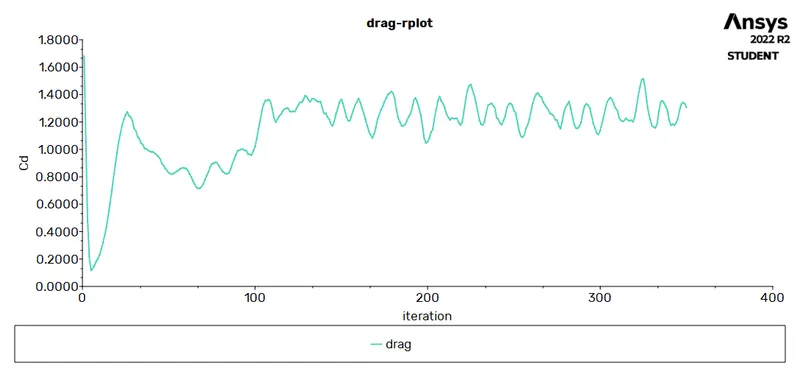
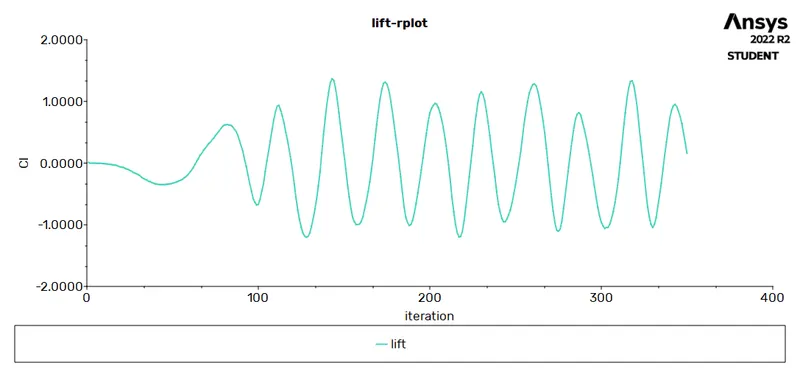
3.Reynolds number = 1000.
velocity = 100 m/s.
density = 1 kg/m3.
viscosity = 0.02 Pa-s.
Residual plot:
Monitor point velocity:
monitor point: A point is created at 8 m in the x direction from the axis of the cylinder to check velocity.
Coefficient of drag:
Lift Coefficient:
Velocity contour:
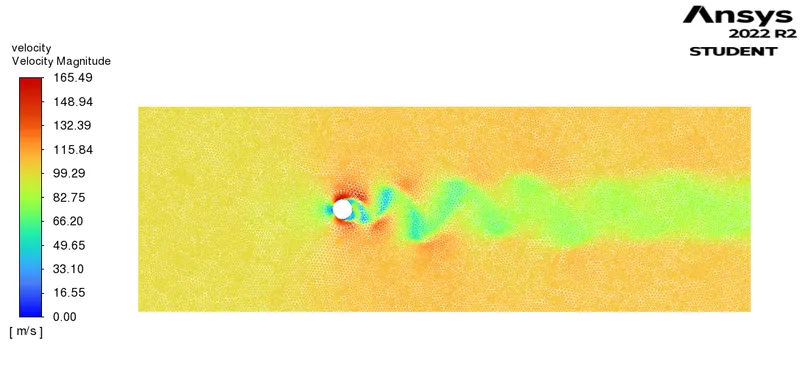
Pressure contour:
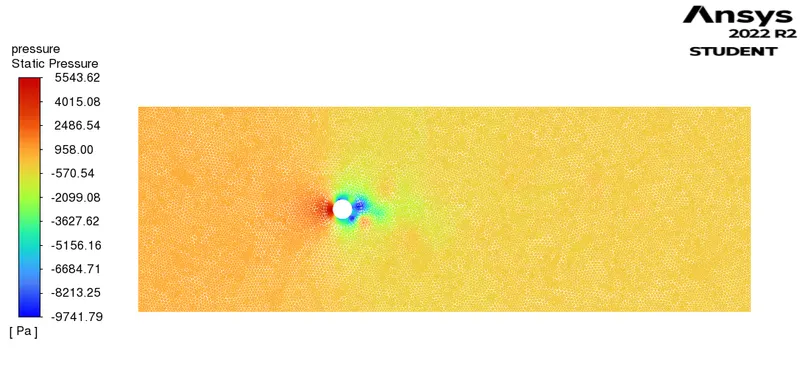
Animation :
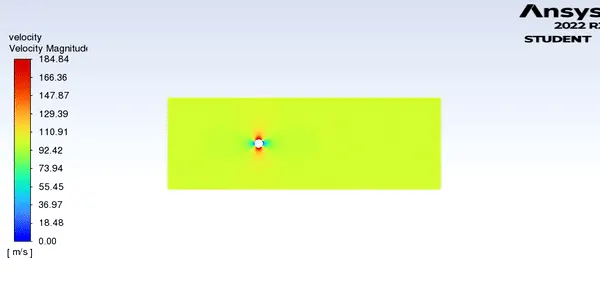
4.Reynolds number = 10000.
velocity = 1000 m/s.
density = 1 kg/m3.
viscosity = 0.02 Pa-s.
Residual plot:
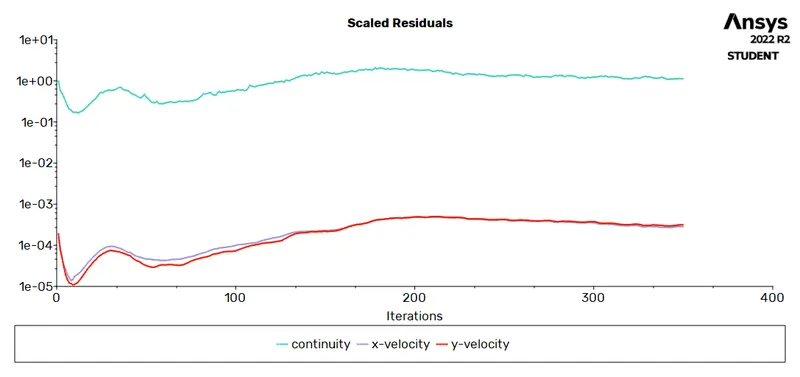
Monitor point velocity:
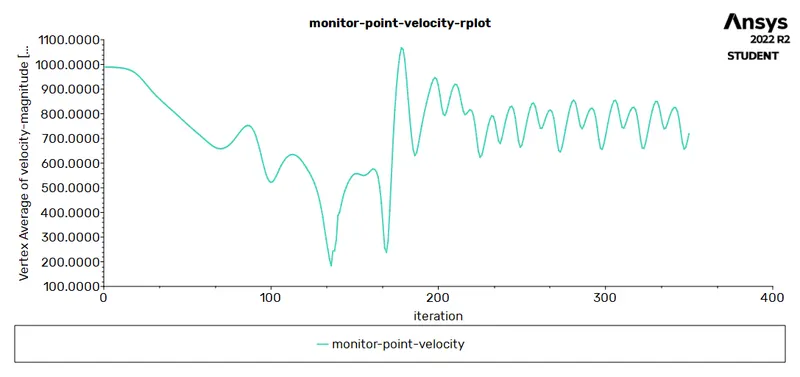
Coefficient of drag:
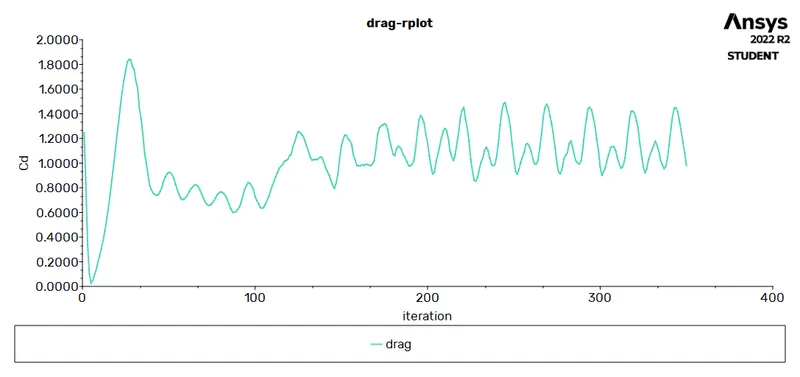
Lift Coefficient:
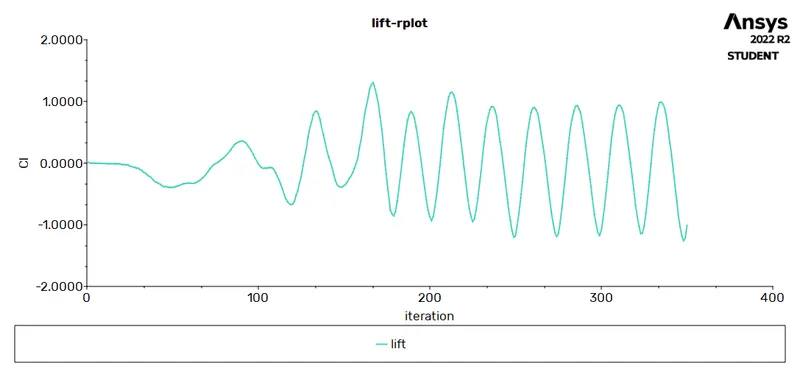
Velocity contour:
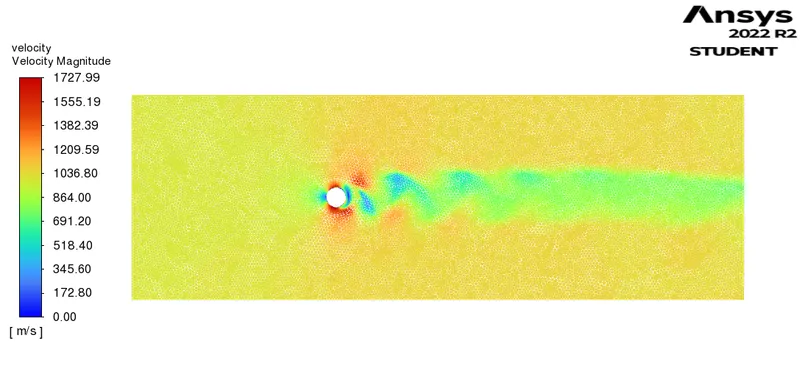
pressure contour:
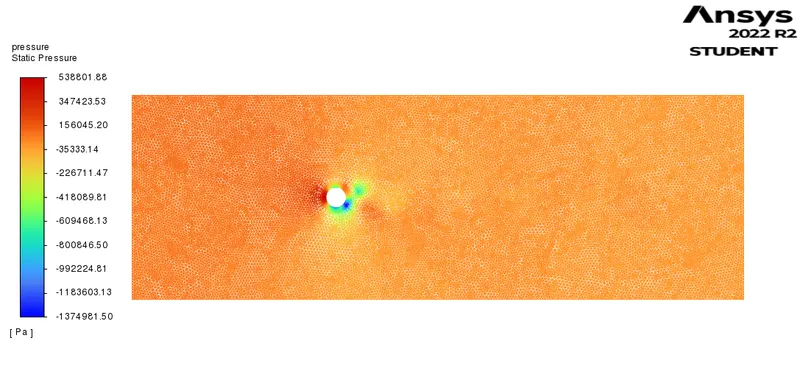
Animation file:
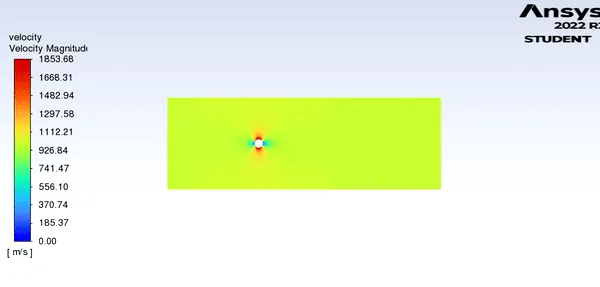
5.Reynolds number = 100000.
velocity = 10000 m/s.
density = 1 kg/m3.
viscosity = 0.02 Pa-s.
Residual plot:
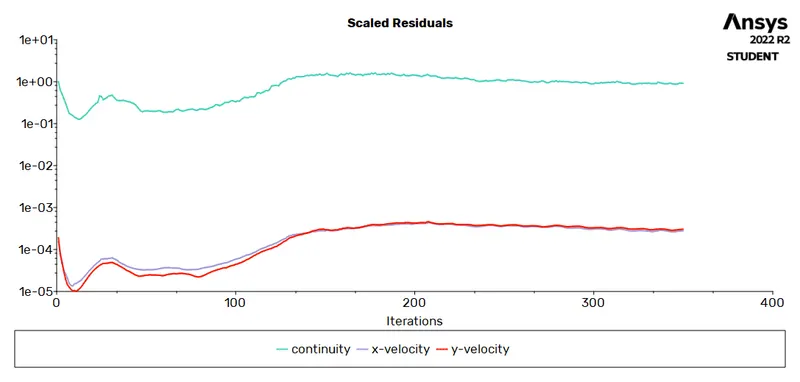
Monitor point velocity:
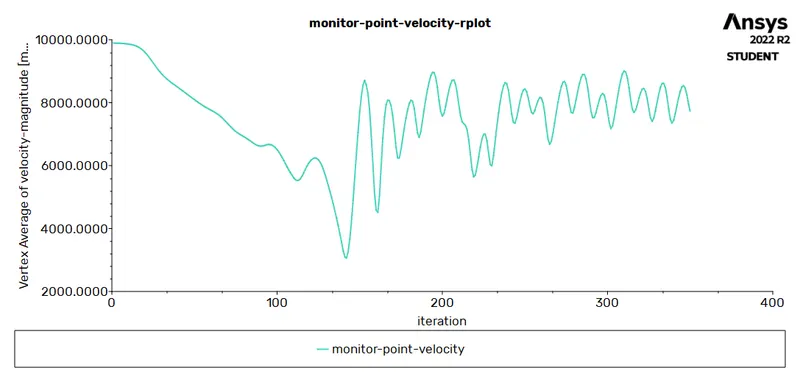
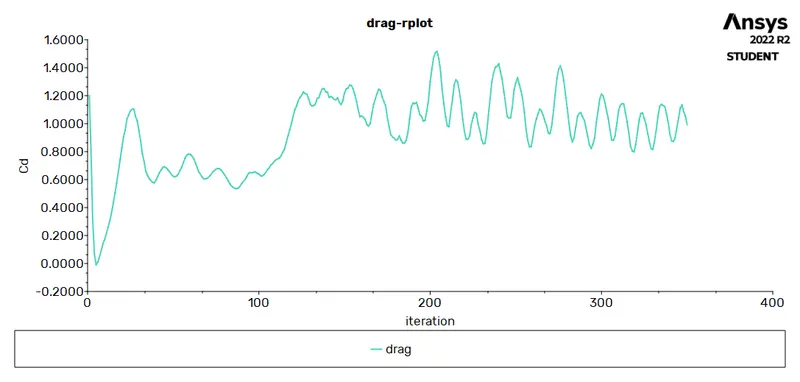
Coefficient of drag:
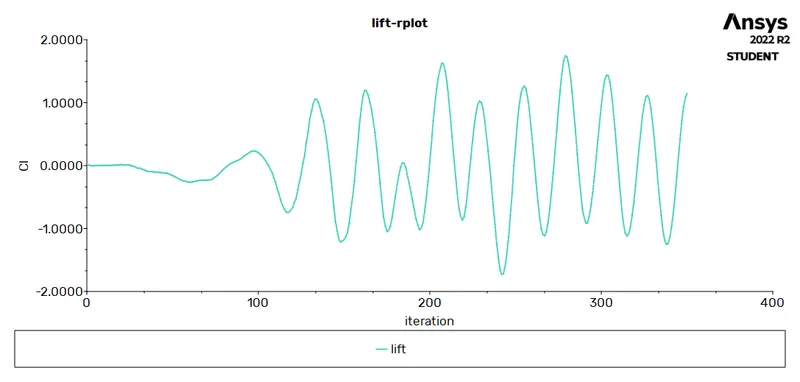
Lift Coefficient:
Velocity contour: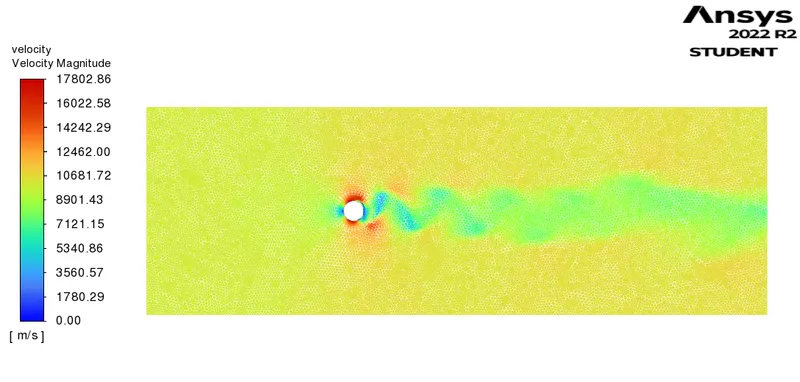
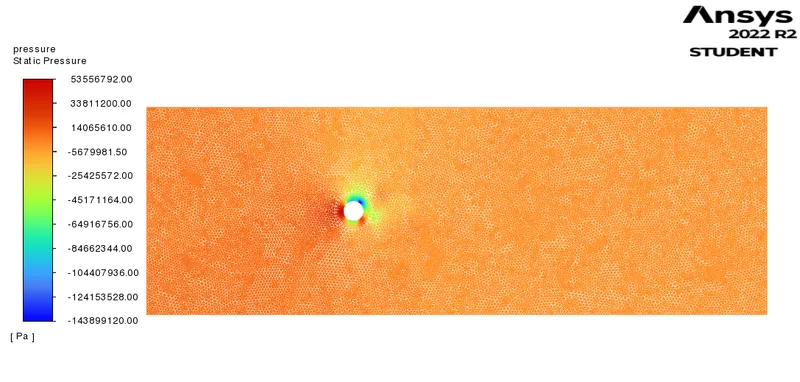
Pressure contour:
Animation:
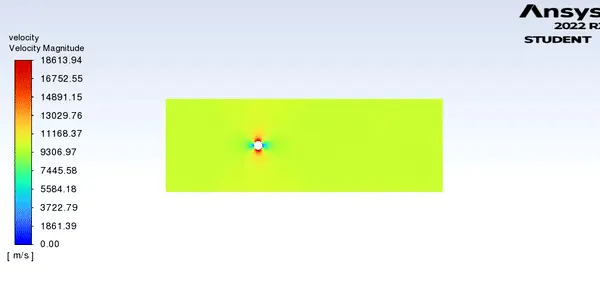
Unsteady state solver:
Reynolds number = 100.
velocity = 10 m/s.
density = 1 kg/m3.
viscosity = 0.02 Pa-s.
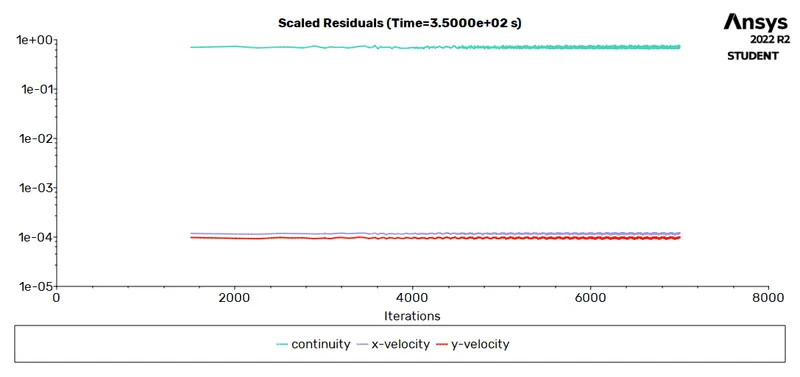
Residual plot:
Monitor point velocity:
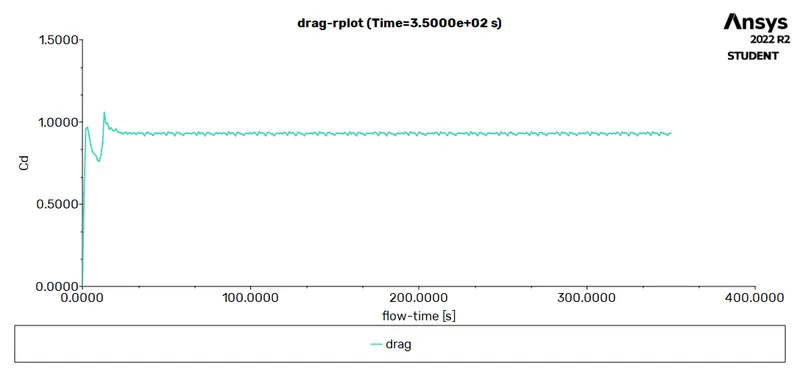
Coefficient of drag:
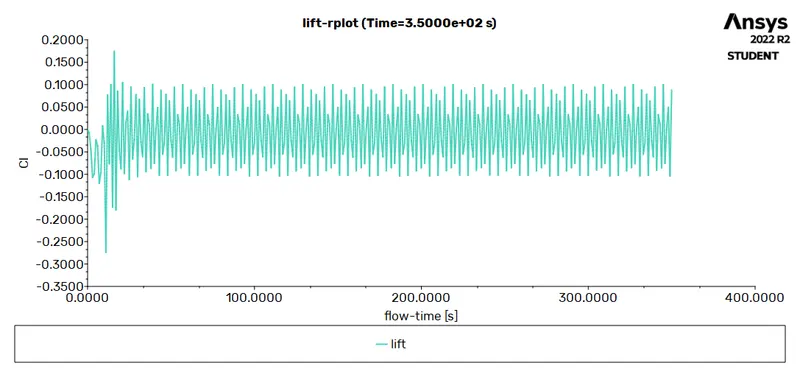
Lift Coefficient:
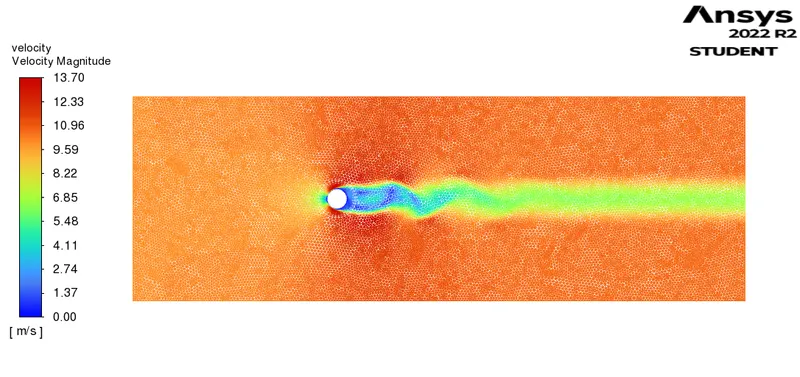
Velocity contour:
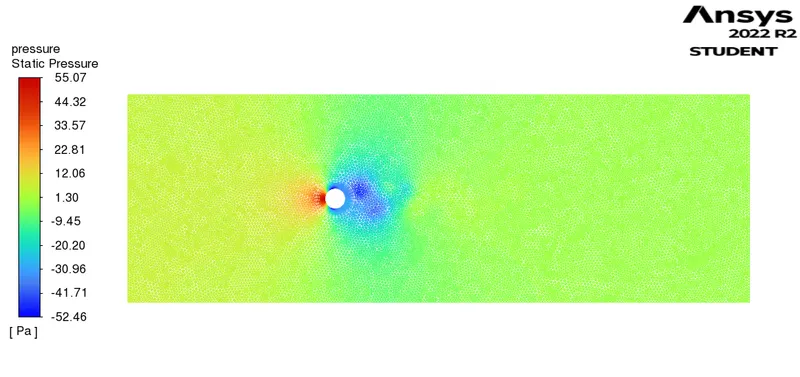
Pressure contour:
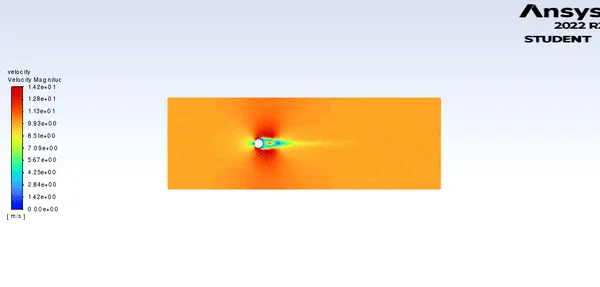
Animation file:
Strouhal number:
Strouhal number is a dimensionless number describing oscillating flow mechanisms.
The Strouhal number is often given as
St = f*d/u
Here, we have calculated starch no. using Ansys fluent.
1.Go to fluent solver > results > FFT analyser > load lift coefficient field > select plot FFT
Here, the x-axis denotes the Strouhal Number and the y-axis denotes magnitude.
2. To get the magnitude of the Strouhal Number,
go to results > FFT analyzer> click on write FFT to file > click on write FFT.
open the file in excel 1st column denotes the frequency and 2nd column denotes the strouhal number. use the command max and select the 2nd row and find the magnitude of the Strouhal Number.
Strouhal Number for RE 100 (steady state)
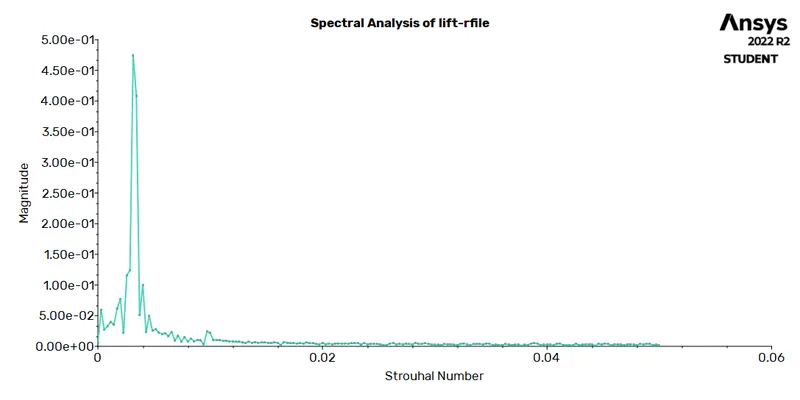
Strouhal Number = 0.05
Strouhal Number for RE 100 (Unsteady state)
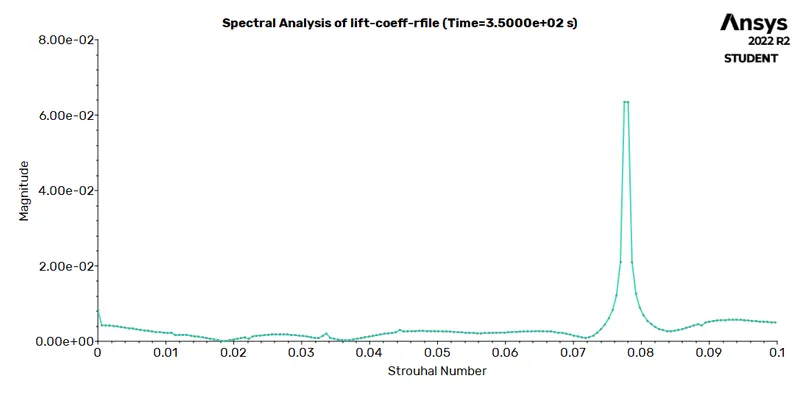
Strouhal Number = 0.099715
Result:
Values of the coefficient of drag and lift coefficient for respective Reynolds number is tabulated as follows:
| Reynolds Number | Coefficient of drag (Cd) | Lift coefficient (Cl) |
| 10 | 1.3313695 | 0.09761365 |
| 100 (steady) | 1.2133816 | -0.853363 |
| 100 (Unsteady) | 0.93113385 | 0.087346514 |
| 1000 | 1.3054287 | 0.15173058 |
| 10000 | 0.98115909 | -1.0110378 |
| 100000 | 0.70476696 | 0.0098345 |
Strouhal Number for Re 100 (steady state)=0.05
Strouhal Number for Re 100 (Unsteady state)= 0.099715
Conclusion:
- In the first case, the flow over a cylinder is simulated for both Steady and unsteady cases with Re=100, and with the results generated the phenomena of Von Karman Vortex Street are also observed.
- Necessary plots are plotted in order to observe that the flow is converged and the vortex shedding is happening.
- Contours are generated in order to observe the flow over a cylinder.
- In the second case,
- six different simulations i.e (Re = 10,100,1000,10000,100000,1000000) are simulated to observe the behavior of the drag and lift coefficients by changing the Reynolds number.
- In order to observe the behavior of the drag coefficients for the simulations, the velocity of the flow is varied to change the Reynolds number and the rest of the parameters are kept constant.
- As we know if the Reynold number is less than 2000, then flow in a pipe is Laminar. Hence we use the Viscous model = Laminar.
- For Re=10, it is observed that there is no formation of vortex shedding and in the rest of the cases, it is clearly observed.
- As per the basic conditions and parameters, the results are validated from the literature.
- As we refine the mesh we need to run more iterations.
- From the above table, it can be concluded that the error percentage is less than 5%.