Week 2 - Flow over a Cylinder.
AIM:- Simulate the flow over a cylinder and explain the phenomenon of Karman vortex street.
PART-I
- Simulate the flow with the steady and unsteady case and calculate the Strouhal Number for Re= 100.
-
PART-II
- Calculate the coefficient of drag and lift over a cylinder by setting the Reynolds number to 10,100,1000,10000 & 100000. (Run with steady solver)
- Discuss the effect of Reynolds number on the coefficient of drag. [ Results should be validated with any standard literature and error should be within 5 %]
Expected results:-
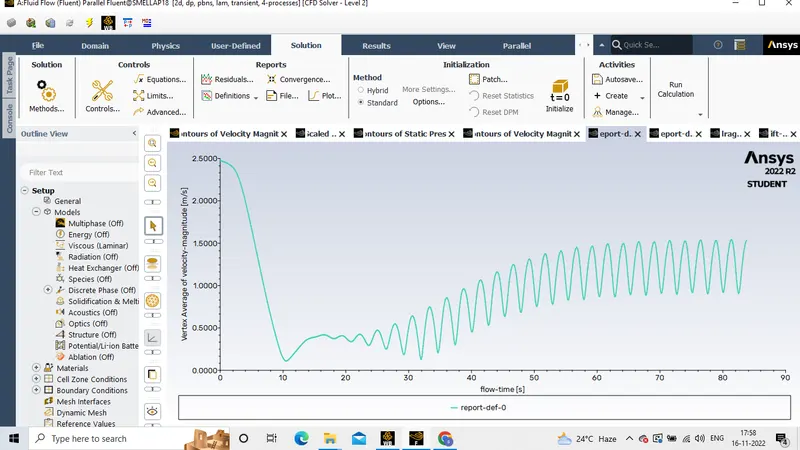
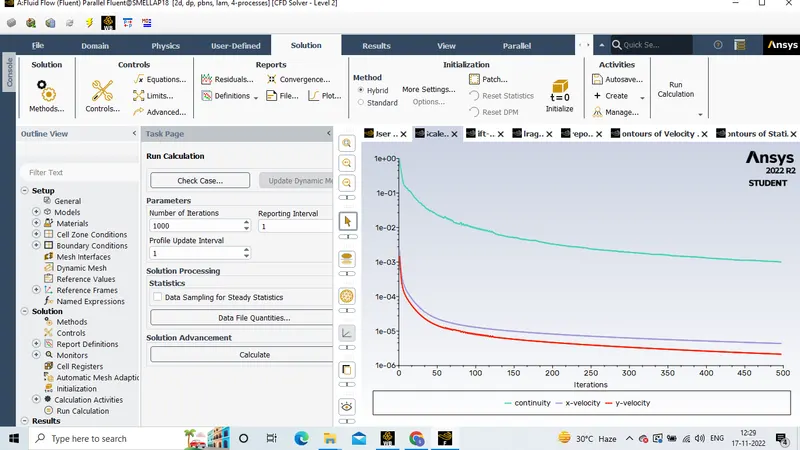
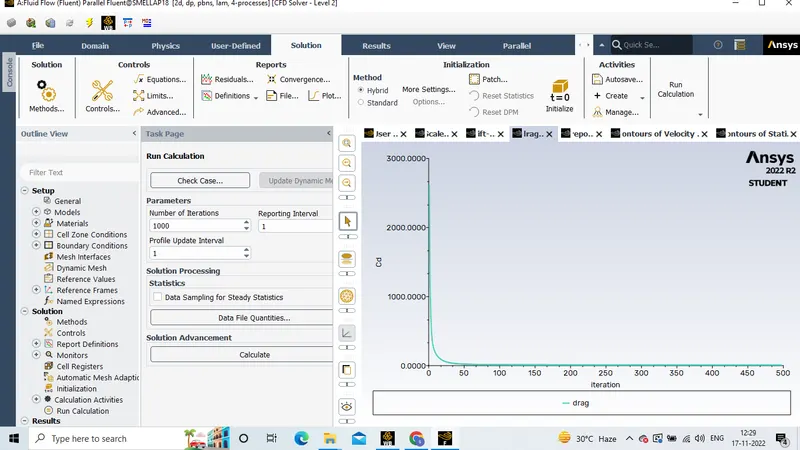
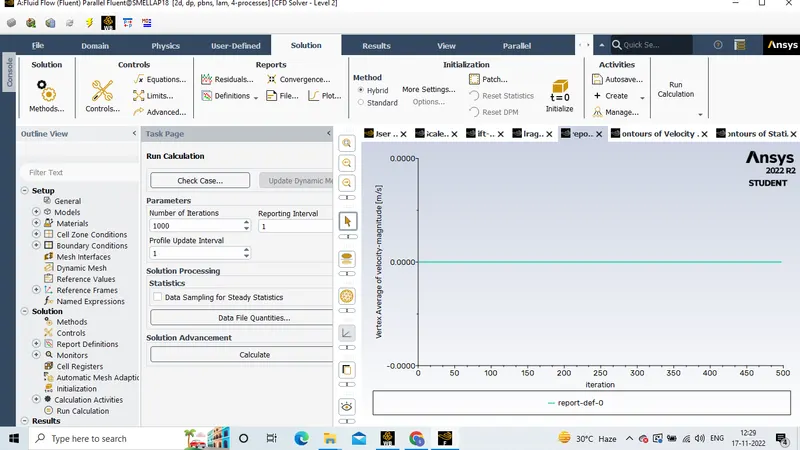
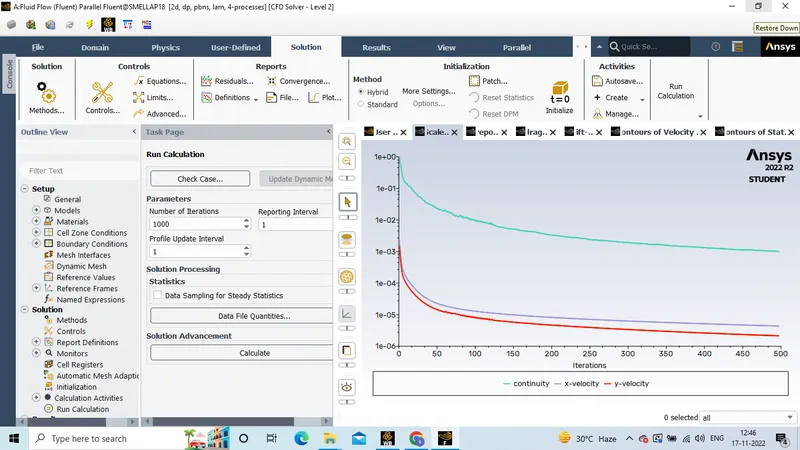
- In both approaches, show that the flow has converged. That is, what quantities or plots need to be looked at to determine that the flow has converged?
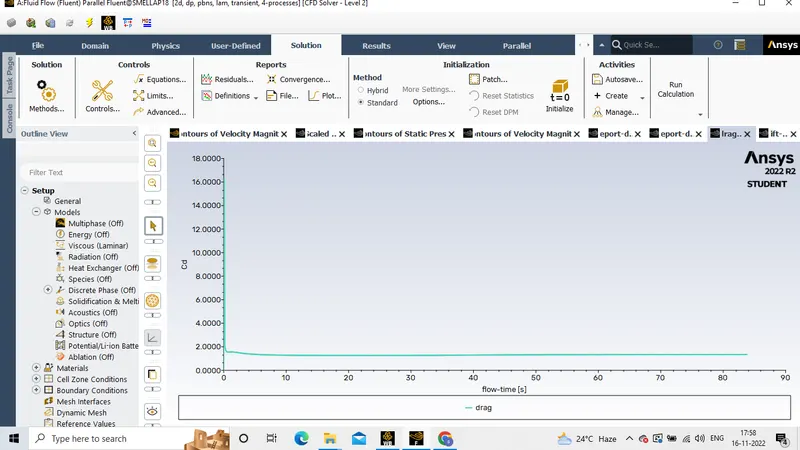
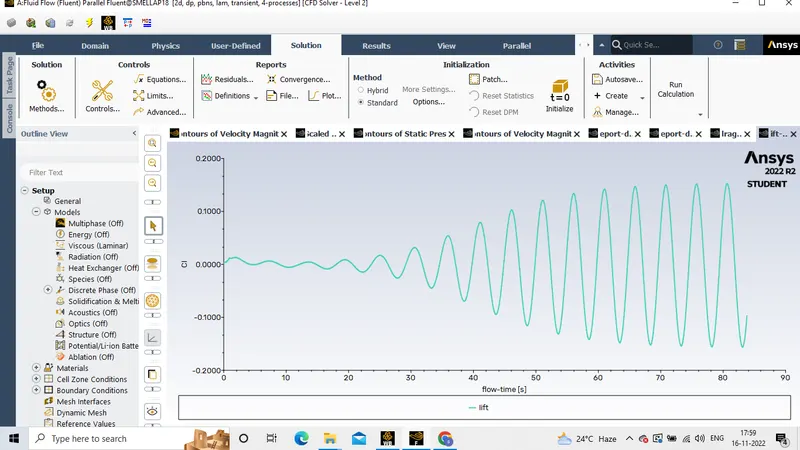
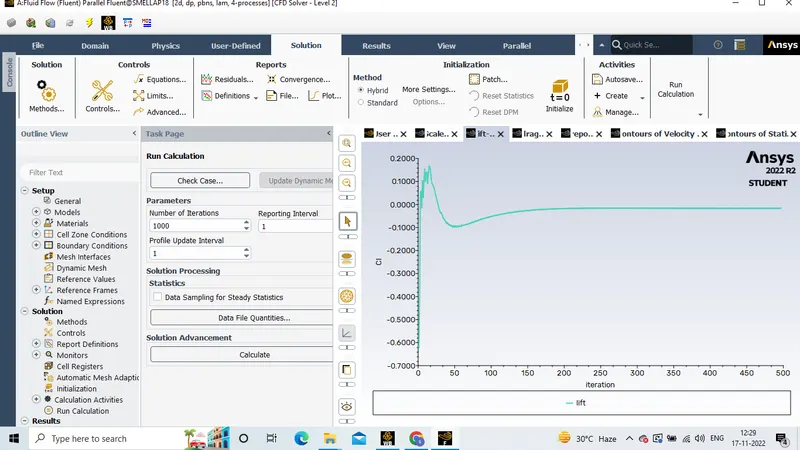
- Plots of the coefficient of drag and lift.
OBJECTIVE:-
1. TO Calculate the reynolds nos of state state and transient state.
2. In this challenge we have calculate the velocities with the help of reynolds no.
3. To plot the drag and lift co-efficients.
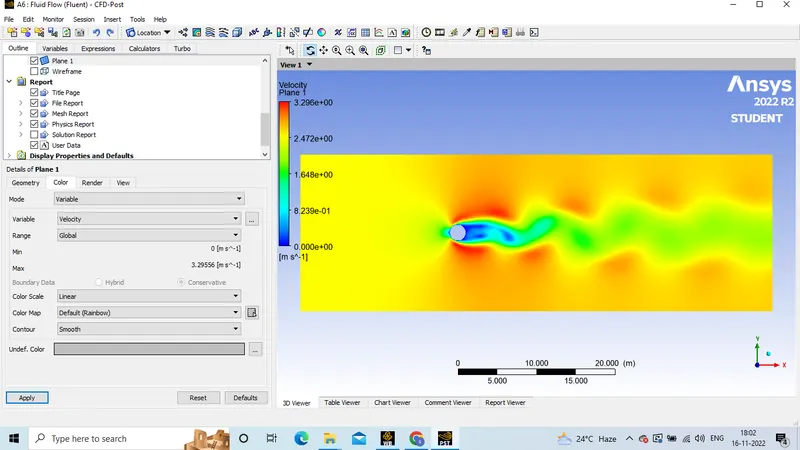
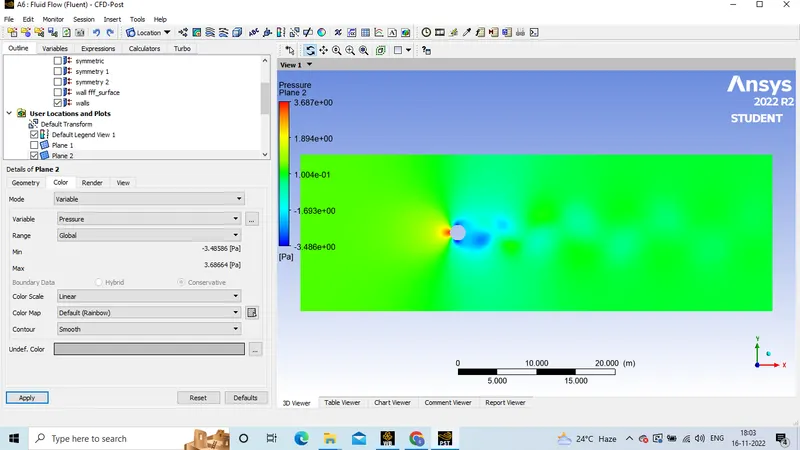
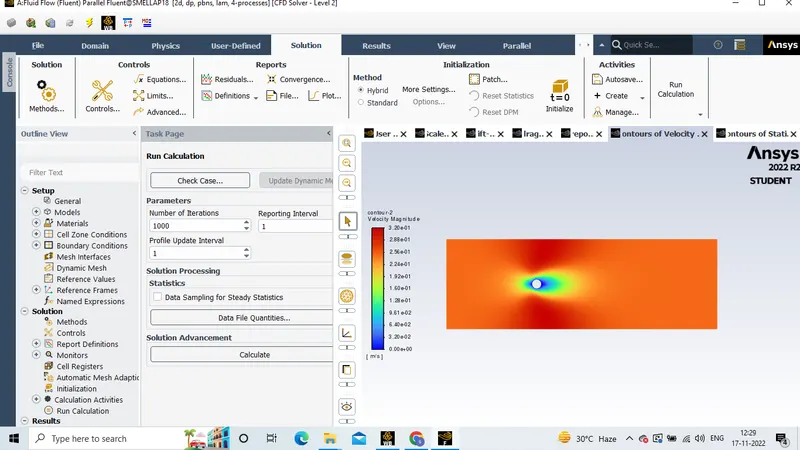
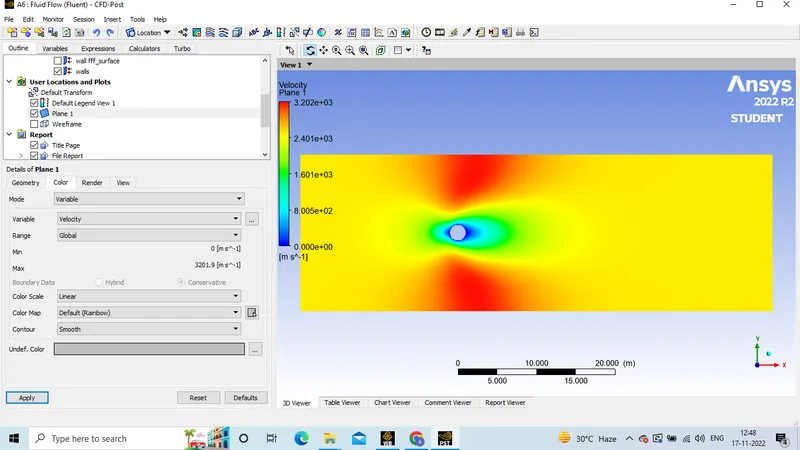
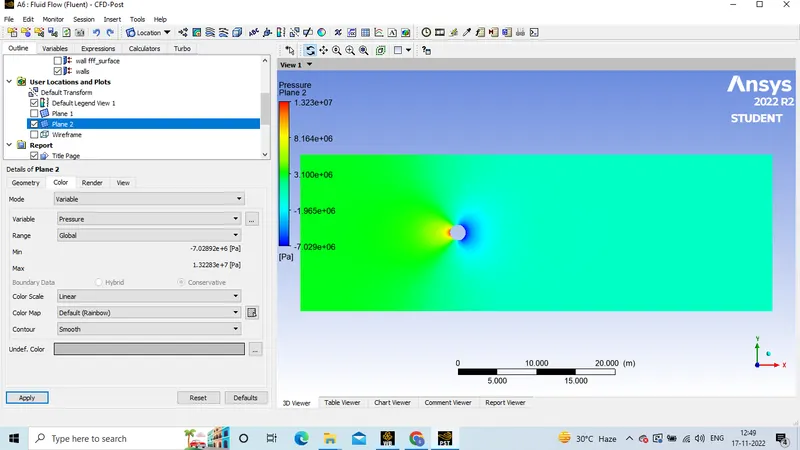
4. To plot the velocity contour and pressure contour.
CONDITIONS:-
1. STEADY STATE CONDITION
2. UN-STEADY STATE CONDITION.
STEADY STATE:- Steady-state conduction is said to exist when the temperature at all locations in a substance is constant with time, as in the case of heat flow through a uniform wall. In steadyb state condition time derivative will be constant.
UN-STEADY STATE CONDITION:- This transfer of thermal energy may occur under steady or unsteady state conditions. Under Steady state conditions the temperature within the system does not change with time. Conversely, under unsteady state conditions the temperature within the system does vary with time. In unsteay state discritezation properties will changed.
CALCULATIONS:-
1. STEADY STATE CALCULATE FOR REYNOLS NO = 100:-
REYNOLDS NO:- RE = `rho`*v*d/`mu`.
100 = 1*v*2/0.05
v = 2.5 M/S
2. TRANSIENT STATE OF CALCULATIONS FOR REYNOLD NO:-
REYNOLDS NO:- RE = `rho`*v*d/`mu`.
100 = 1*v*2/0.05
v = 2.5 M/S
PART-2 REYNOLD NO CALCULATIONS
REYNOLDS NO:- RE[10] = `rho`*v*d/`mu`.
10 = 1*V*2/0.05
V = 0.25
RE = 100
REYNOLDS NO:- RE = `rho`*v*d/`mu`.
100 = 1*v*2/0.05
v = 2.5 M/S
RE = 1000
REYNOLDS NO:- RE[1000] = `rho`*v*d/`mu`.
1000 = 1*V*2/0.05
V = 25M/S
RE = 10000
REYNOLDS NO:- RE[10000] = `rho`*v*d/`mu`.
10000 = 1*V*2/0.05
V = 250M/S
RE = 100000
REYNOLDS NO:- RE[10000] = `rho`*v*d/`mu`.
100000 = 1*V*2/0.05
V = 2500M/S.
FOR STEADY STATE OUT PUT PLOTS:-
GEOMETRY:-
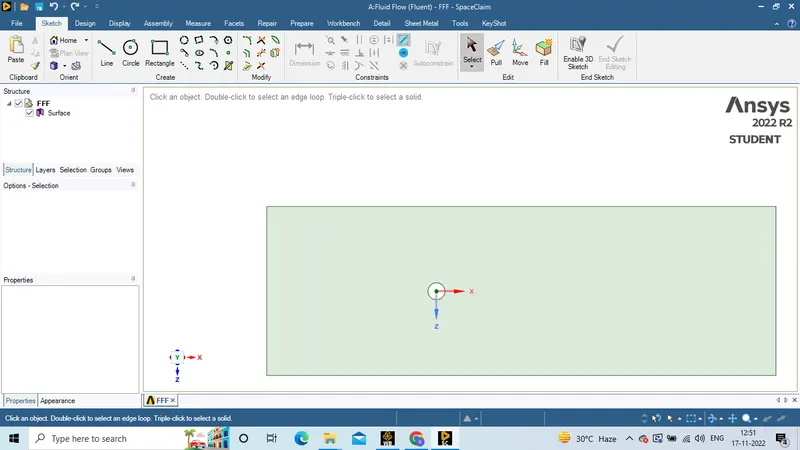
IN geometry section we have taken circle diameter 2m and the construction line left side 20m, the construction from right side 40m and select the line we have take the 10m from both sides and we have select the rectangle option to create the length of the cylinder.
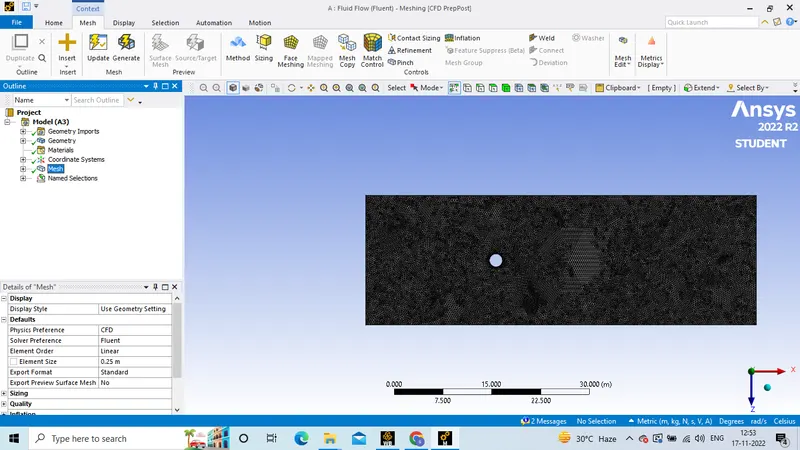
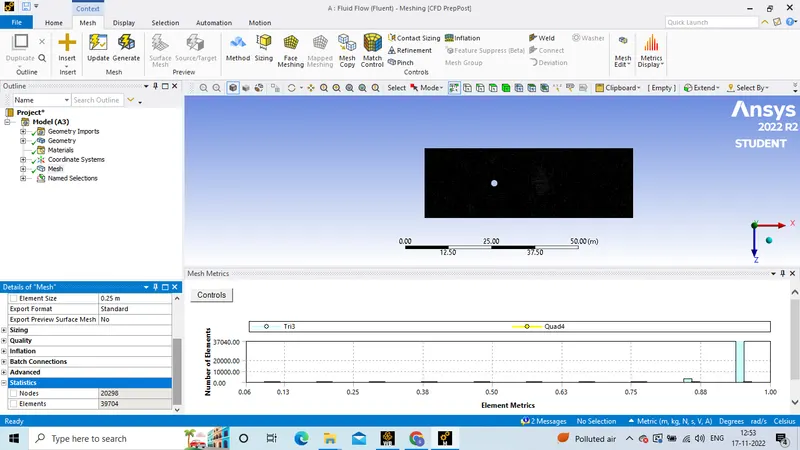
meshing:-
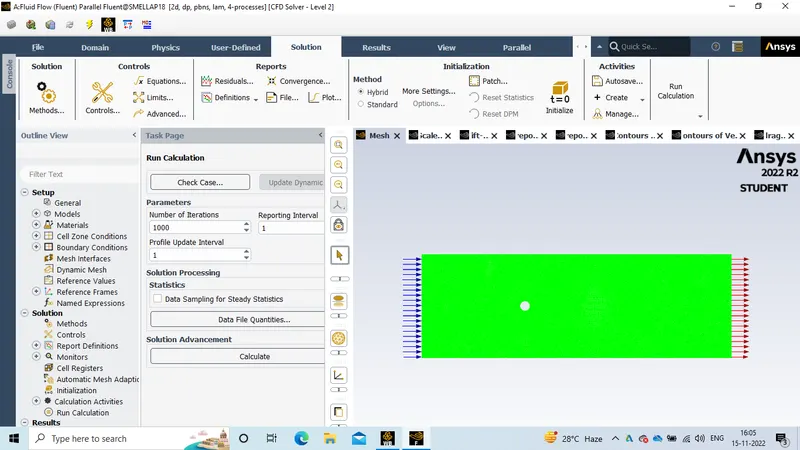
set up plots for steady state:-
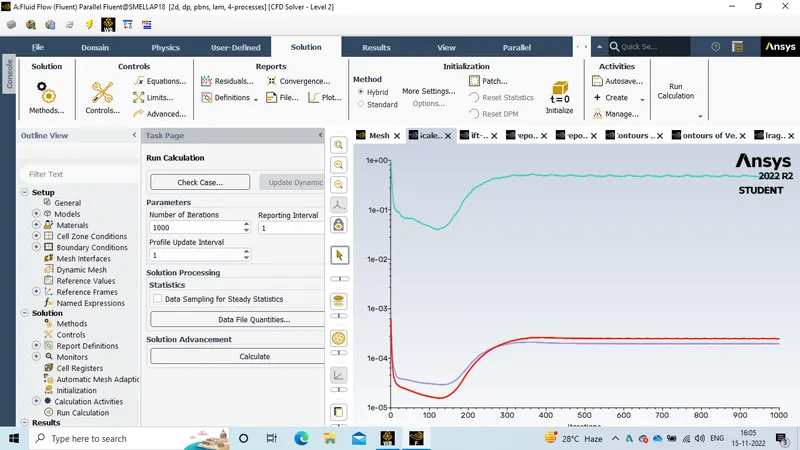
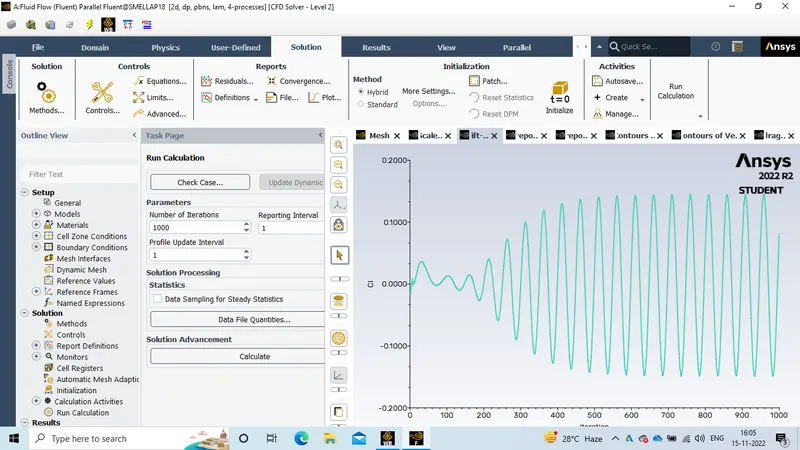
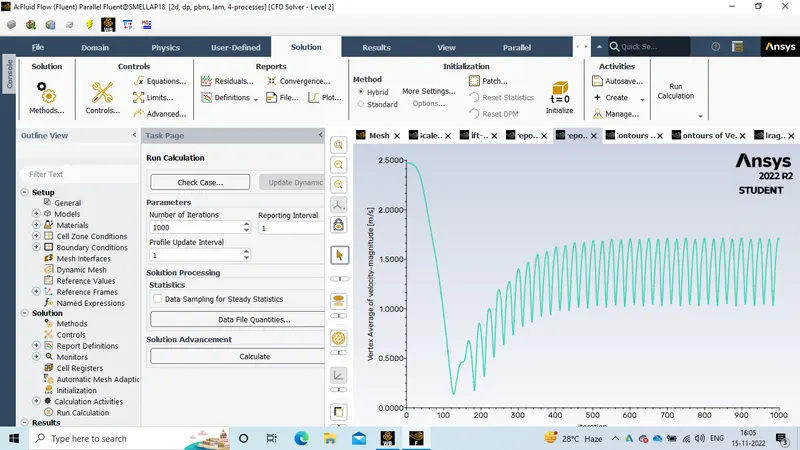
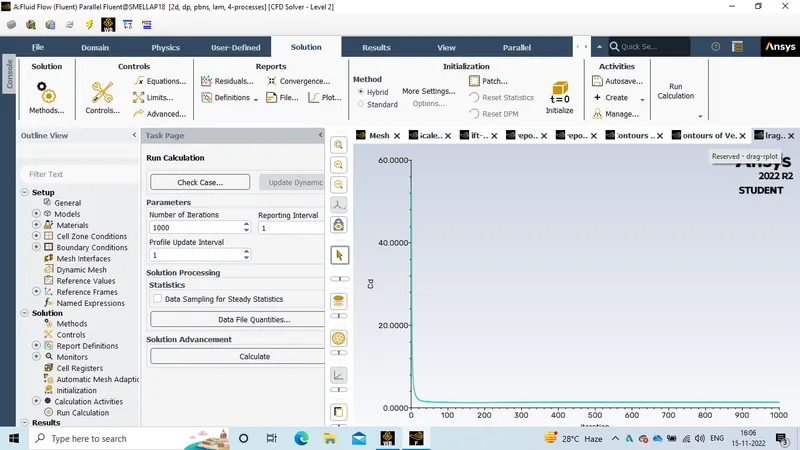
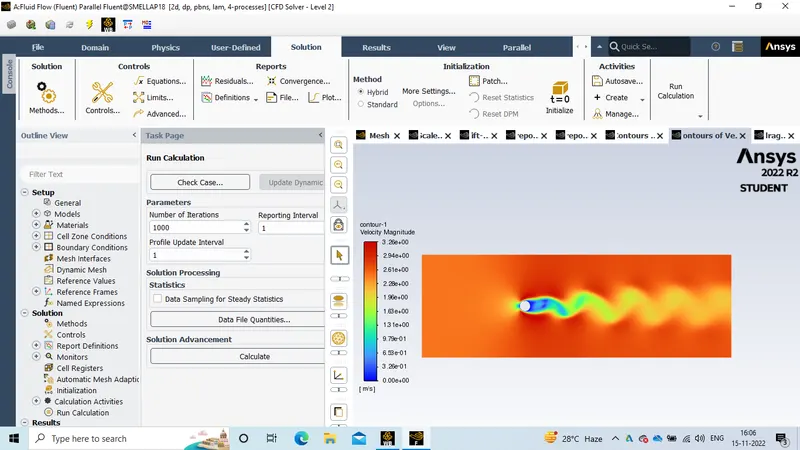
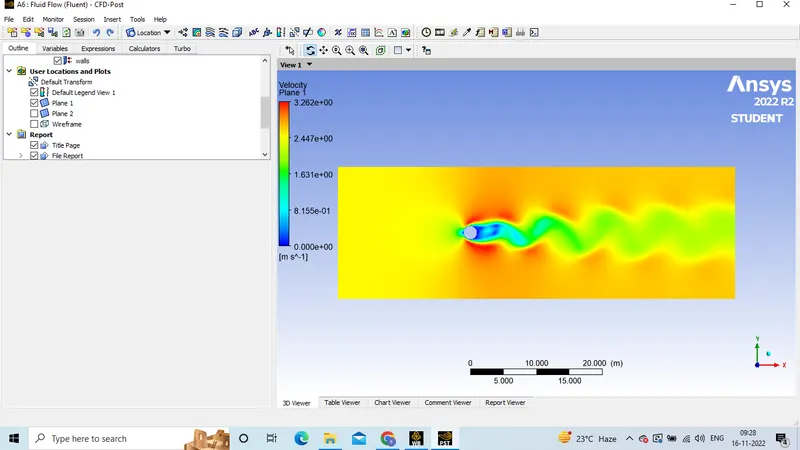
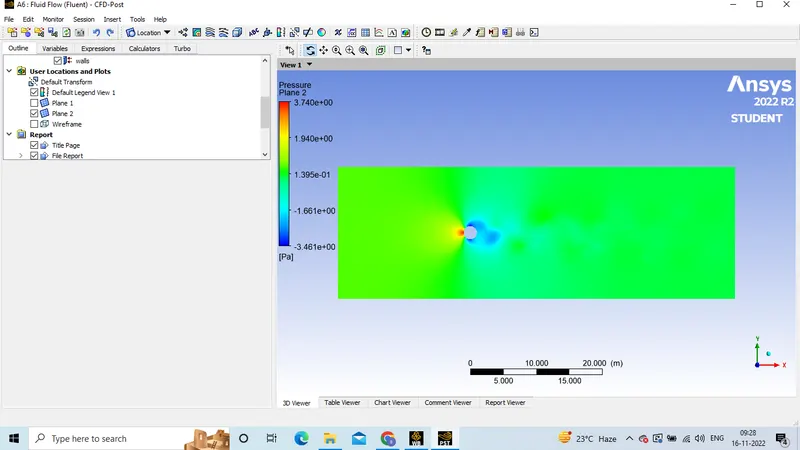
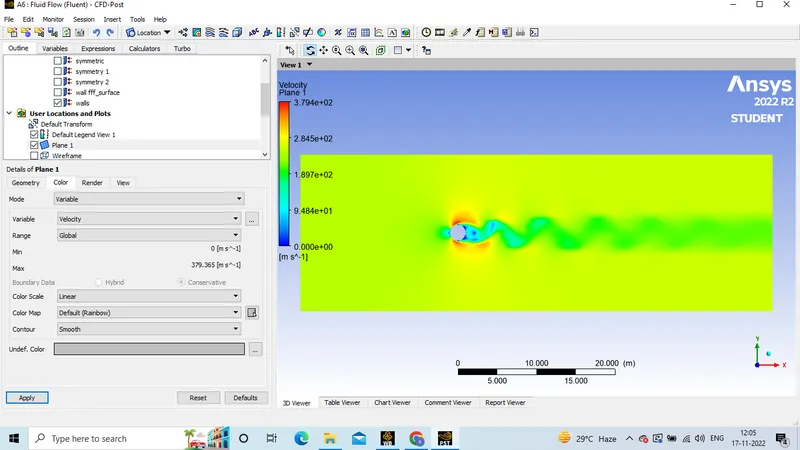
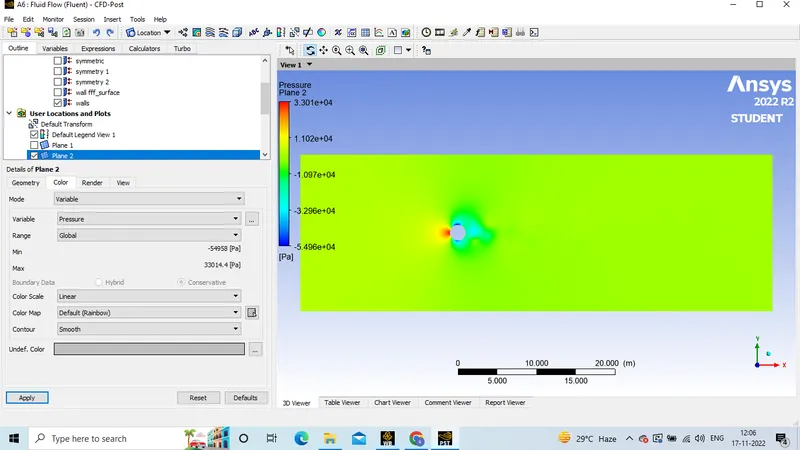
RESULTE [VELOCITY AND PRESSURE CONTOURS]:-
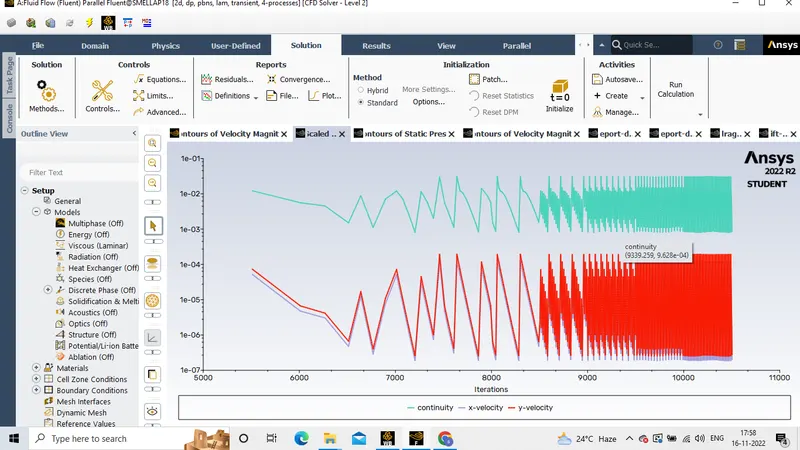
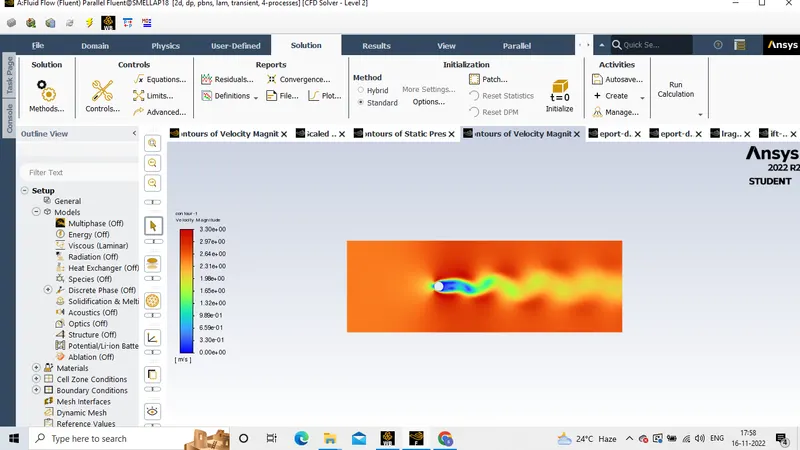
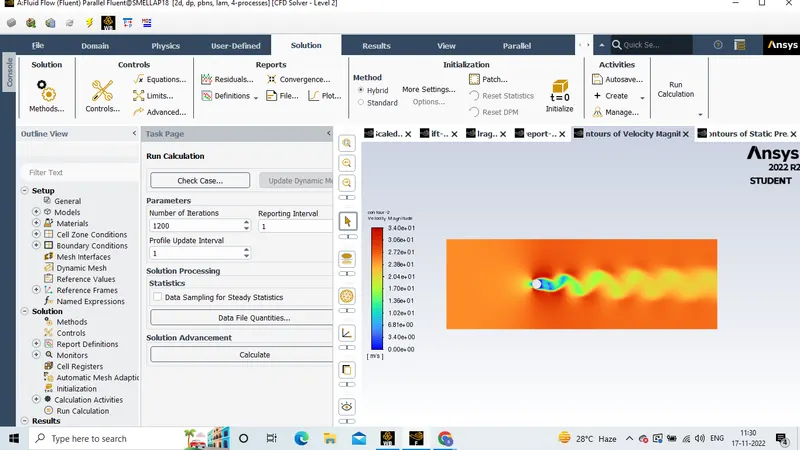
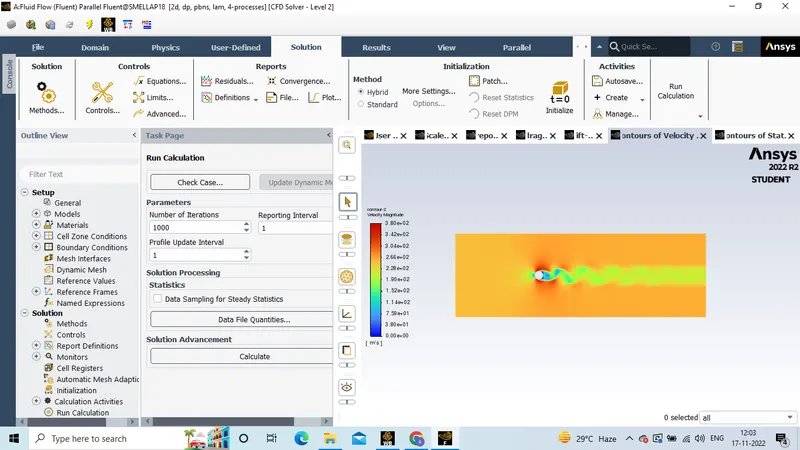
TRANSIENT STEADY CASE OUTPUTS:-
RESULTS:-
STEADY STATE RE = 10 OUTPUTS:-
RESULTS:-
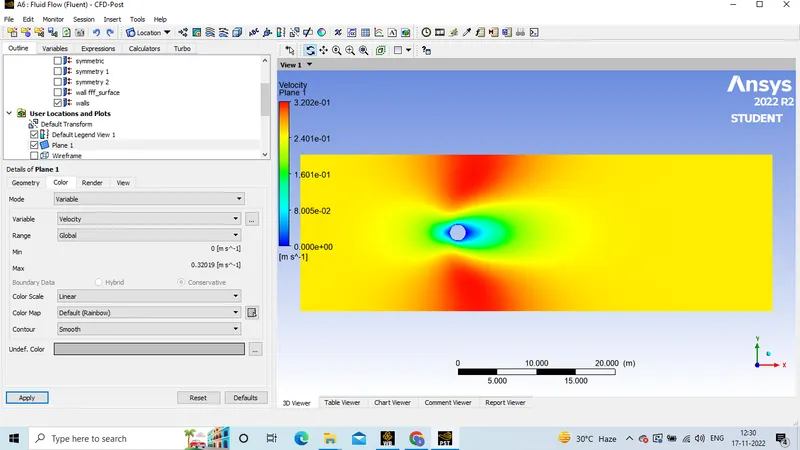
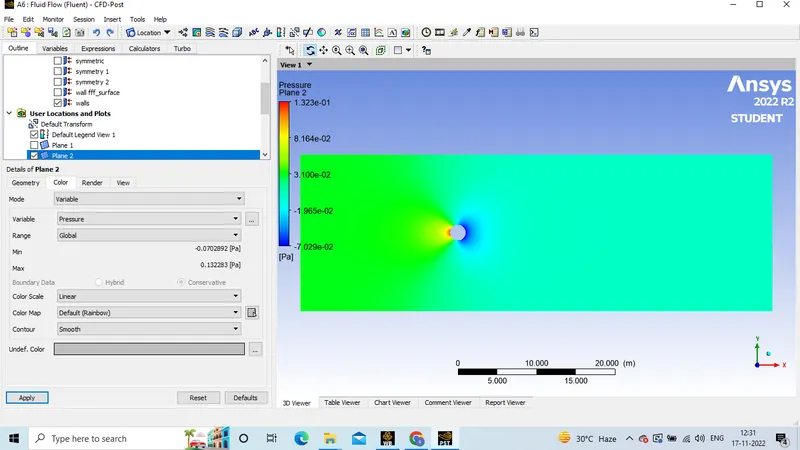
FOR RE = 1000
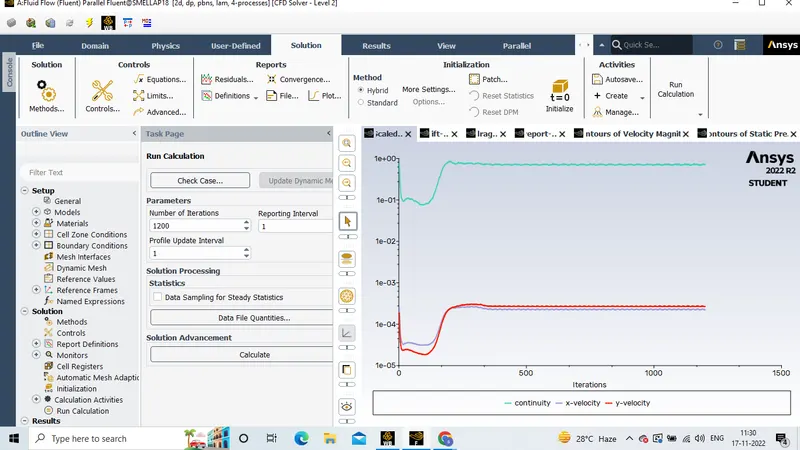
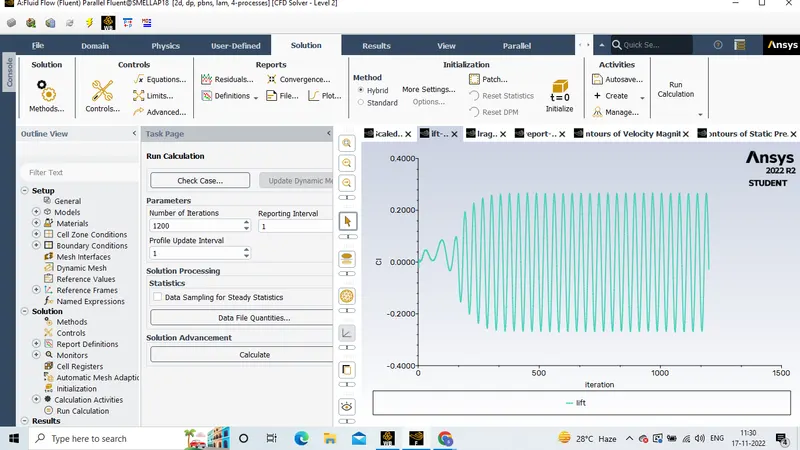
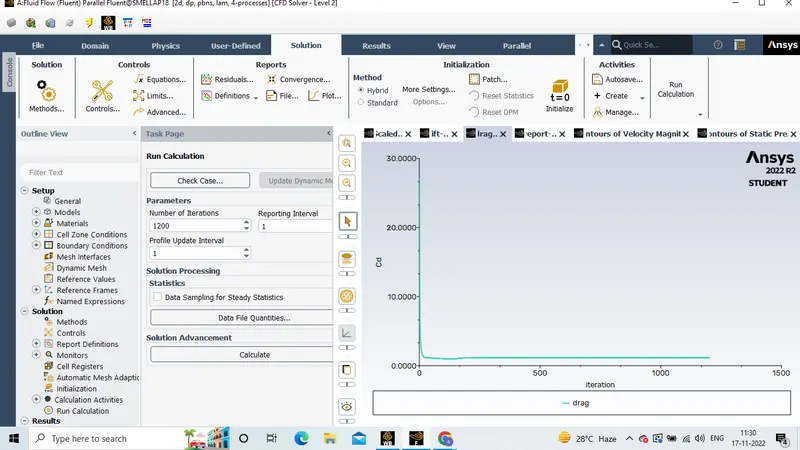
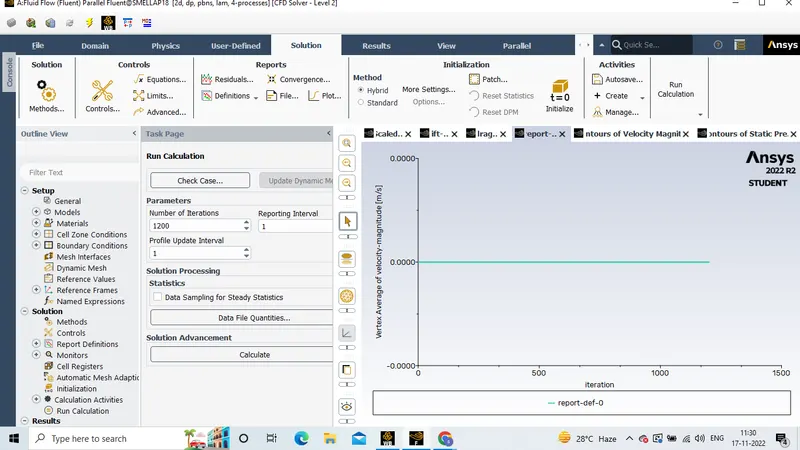
RESULTS:-
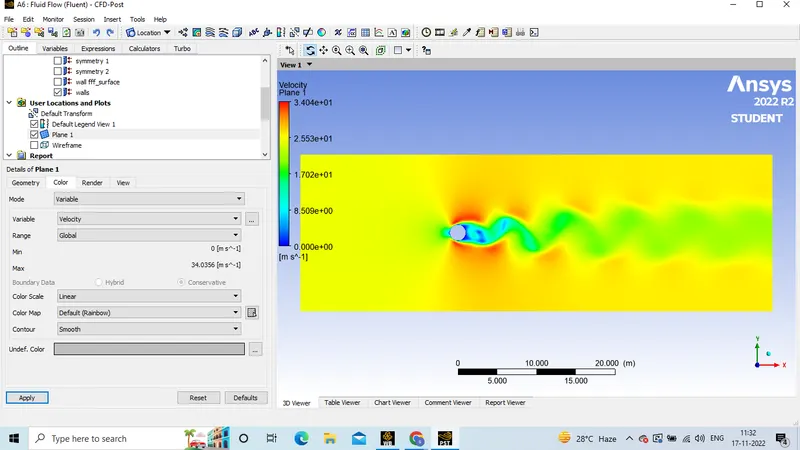
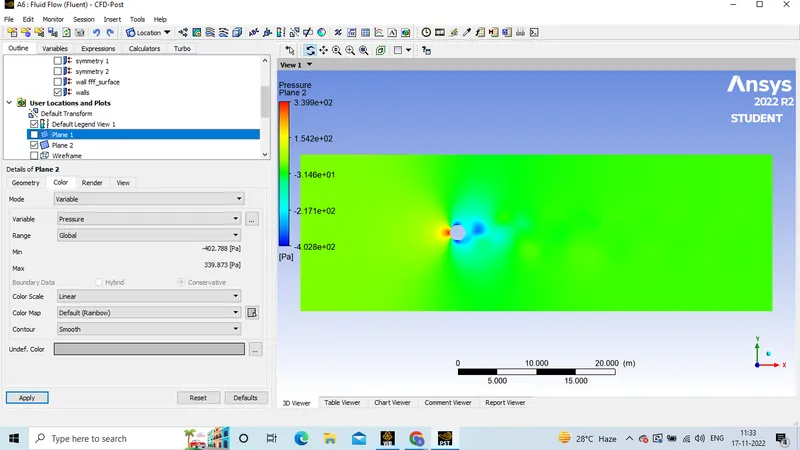
FOR RE = 10,000
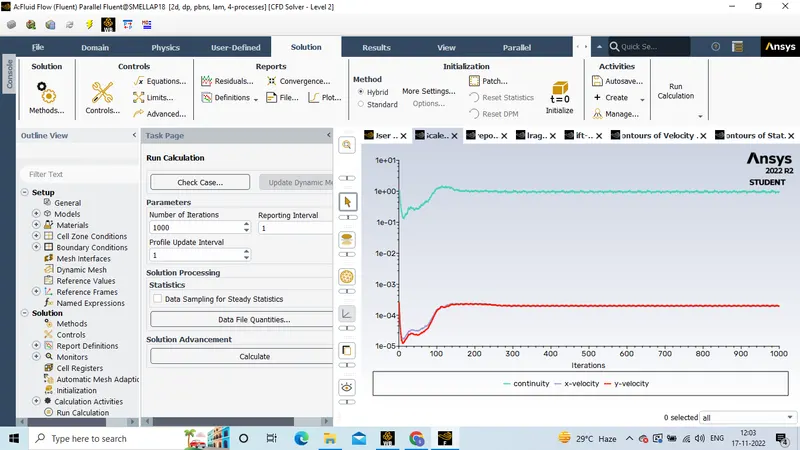
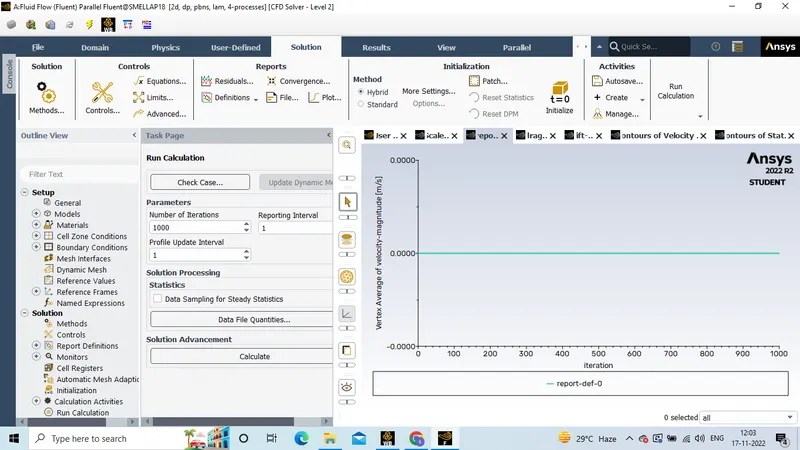
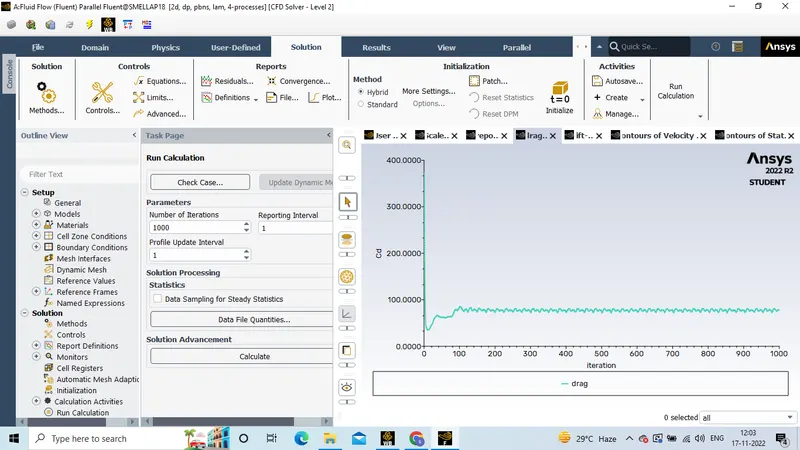
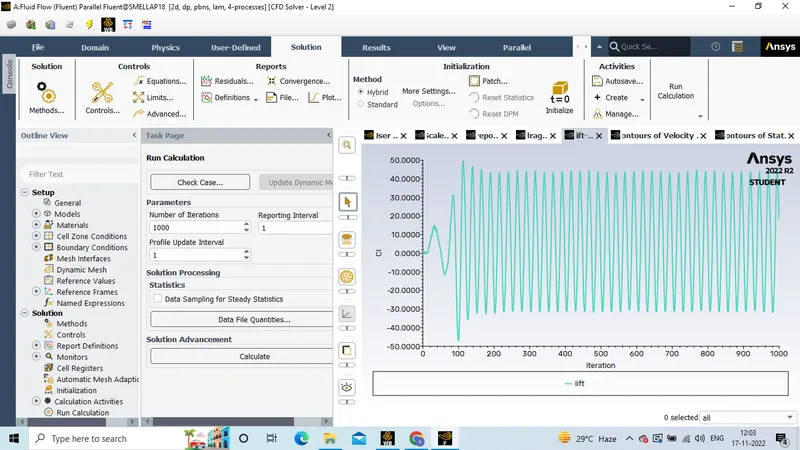
RESULTS:-
FOR RE = 10,0000
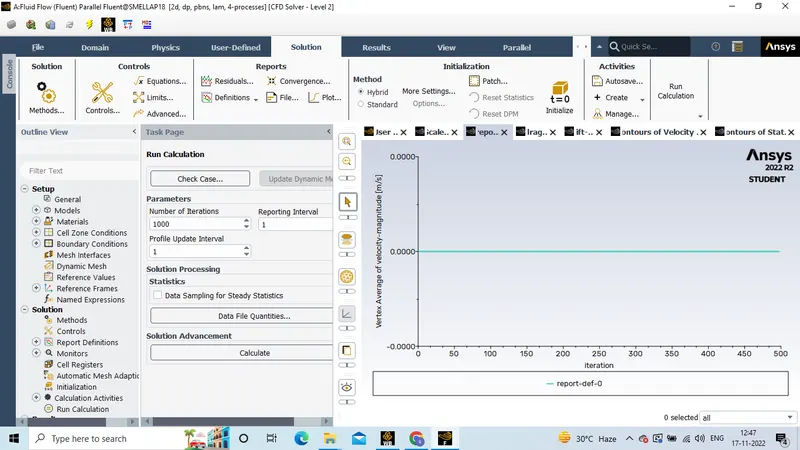
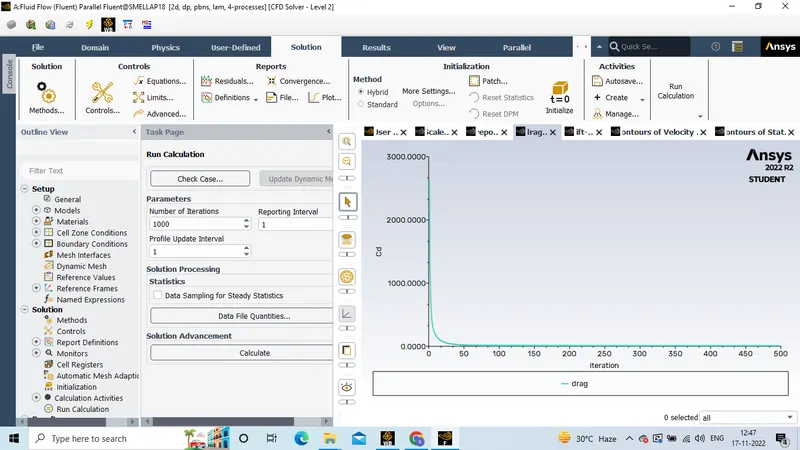
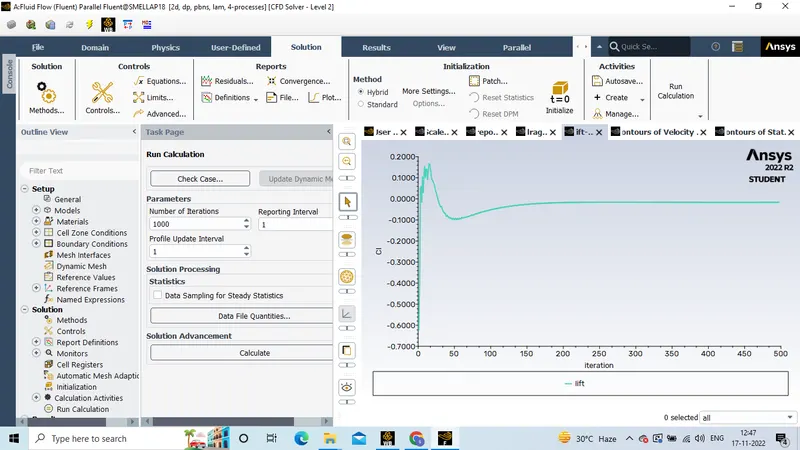
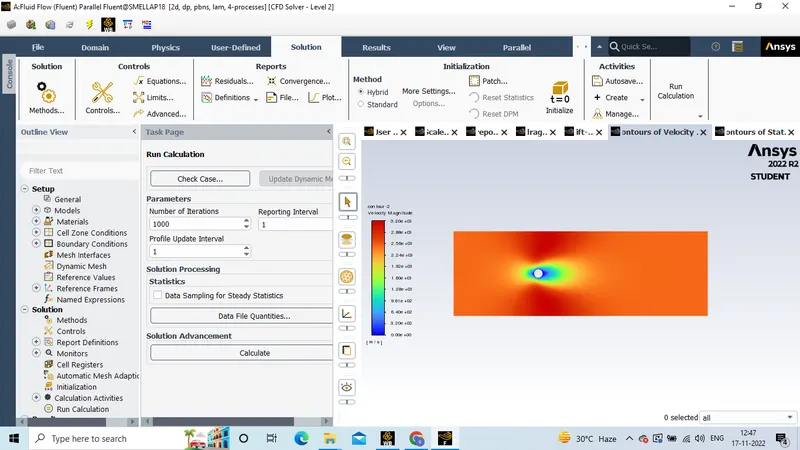
RESULTS:-
CONCLUSIONS:-
1. In this challenge we compare the velocites of steady and unstate plots.
2. in this case meshing is the imporatant part of the simulation both steady and un-steady.
3. steady state solution will converged very earliy because in this case time will be constant.
4. un-steady or transient case it is taken long time we have changed the no of iterations and time step.
5. Both cases are shown vertex sheding
6. To save the time it was good practice to use Non-Iterative Time Advancement method provided in PISO pressure-velocity coupling method. As it has drastically lower the time of solution compared to SIMPLE pressure-velocity method.