Week 2 - Flow over a Cylinder.
AIM:Simulate the flow over a cylinder and explain the phenomenon of Karman vortex street.
OBJECTIVES
- Simulate the flow with the steady and unsteady case and calculate the Strouhal Number for Re= 100.
- Calculate the coefficient of drag and lift over a cylinder by setting the Reynolds number to 10,100,1000,10000 & 100000. (Run with steady solver)
- Discuss the effect of Reynolds number on the coefficient of drag. [ Results should be validated with any standard literature and error should be within 5 %]
Expected results:-
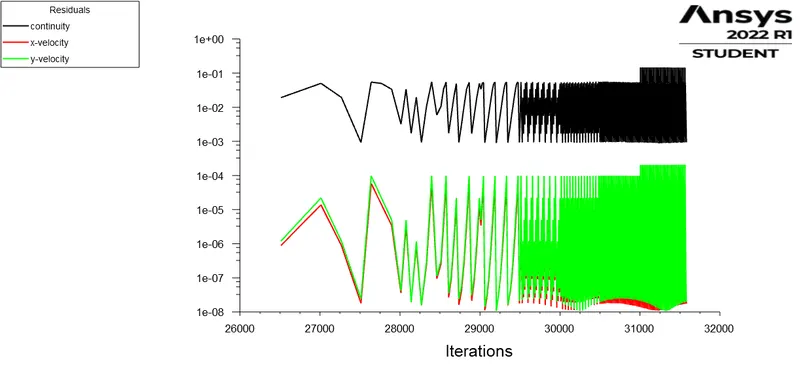
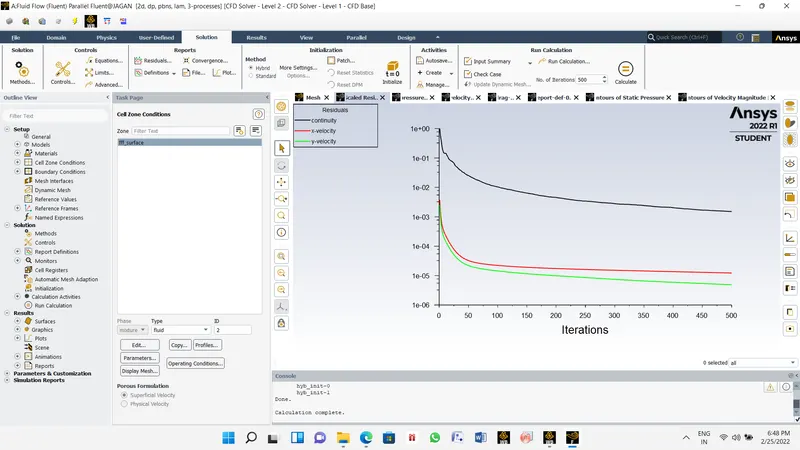
- In both approaches, show that the flow has converged. That is, what quantities or plots need to be looked at to determine that the flow has converged?
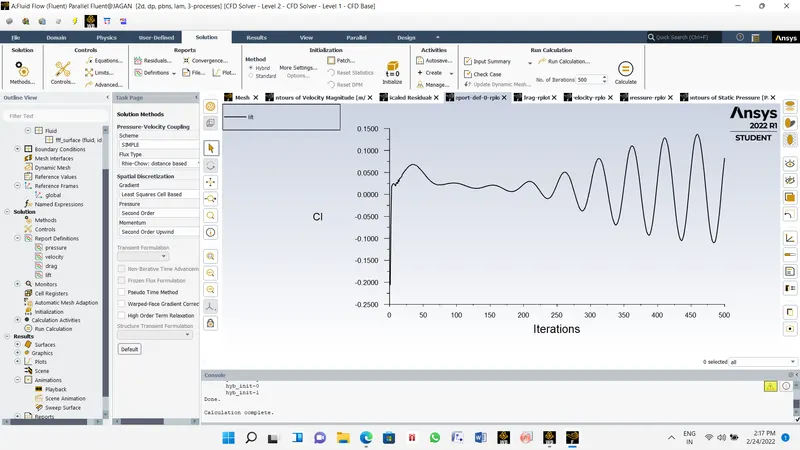
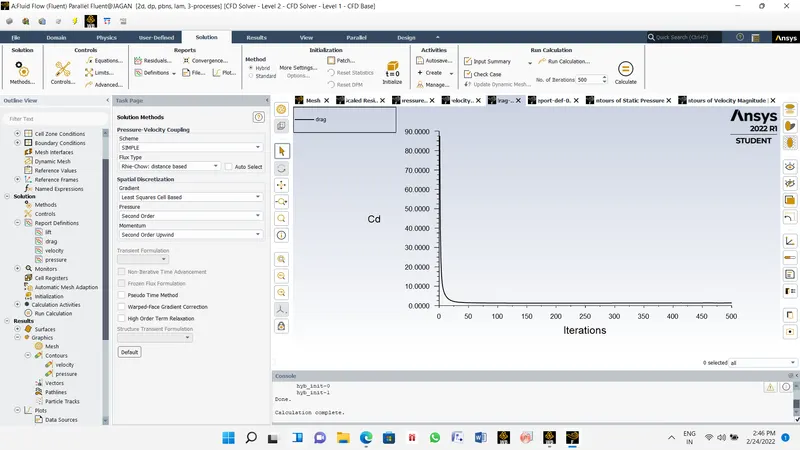
- Plots of the coefficient of drag and lift.
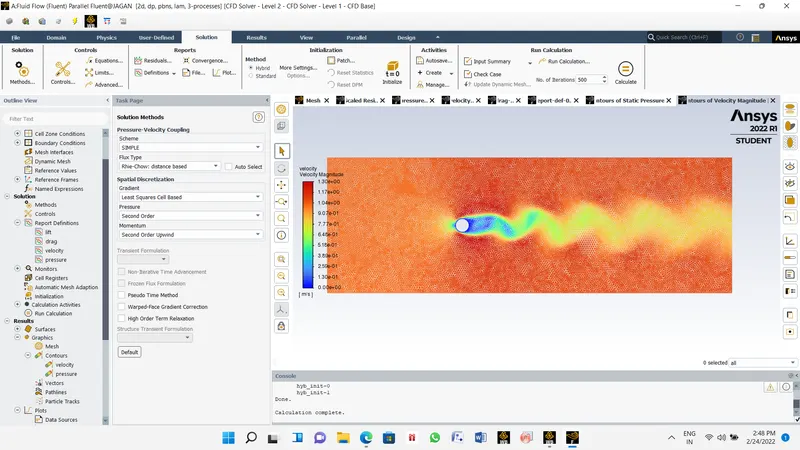
- Plots to show vortex shedding behind the cylinder.
- Mention the referred material (Reference Paper or Fluid Mechanics Textbook) at the end of the challenge submission page.
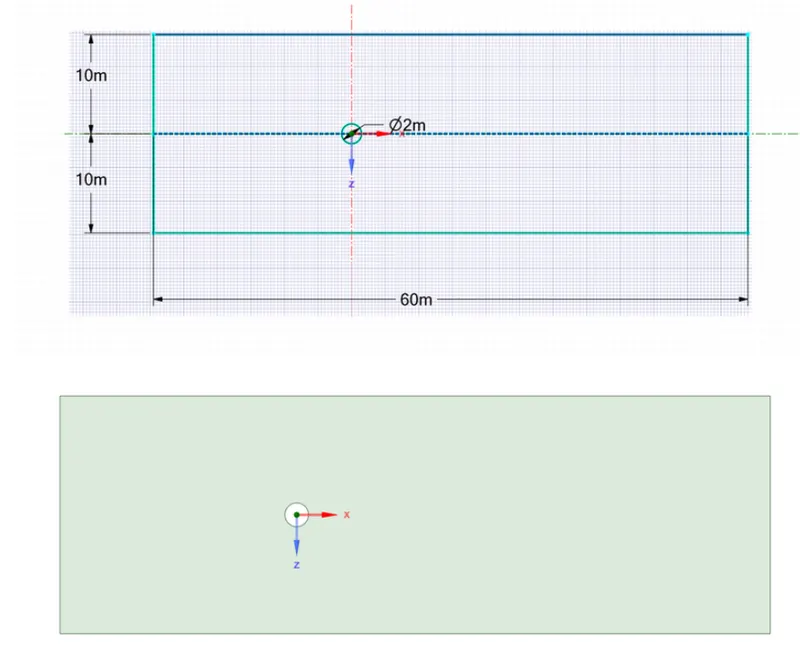
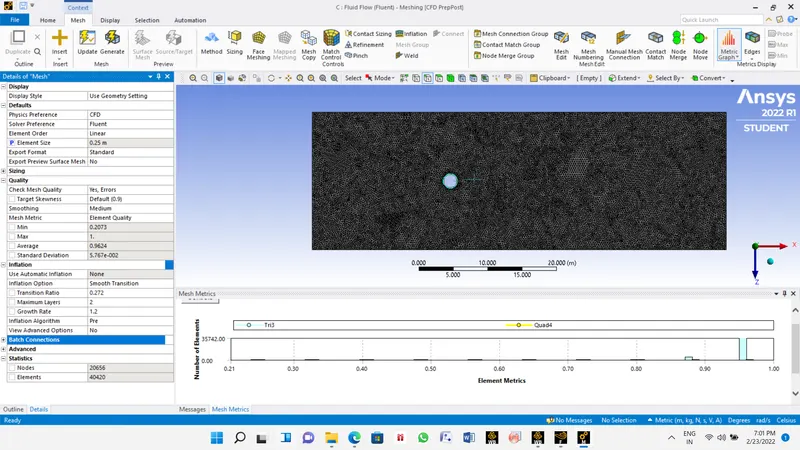
2.Meshing
3. set up for steady and transient state
performing mesh check
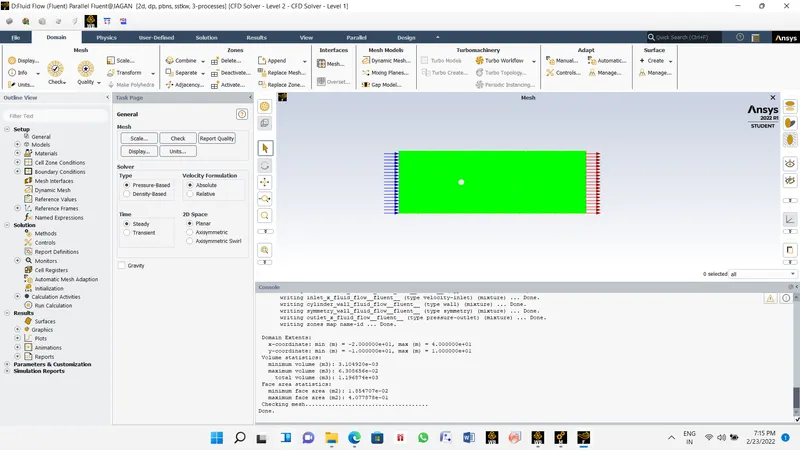
defining the physics of the problem
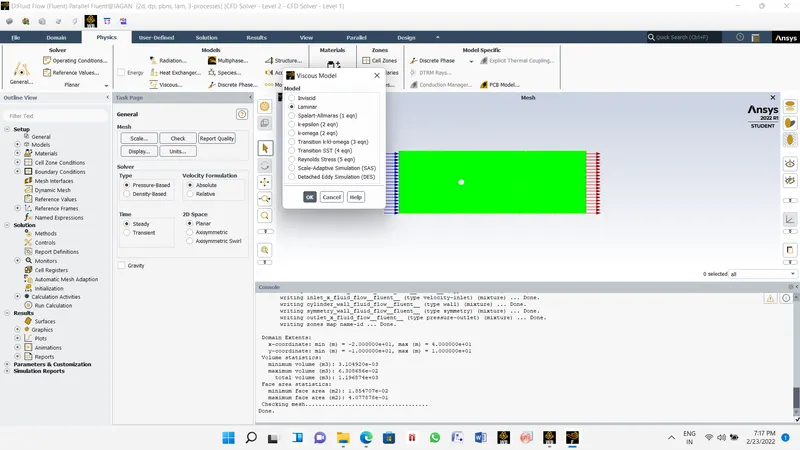
defining material properties (air density and viscosity)

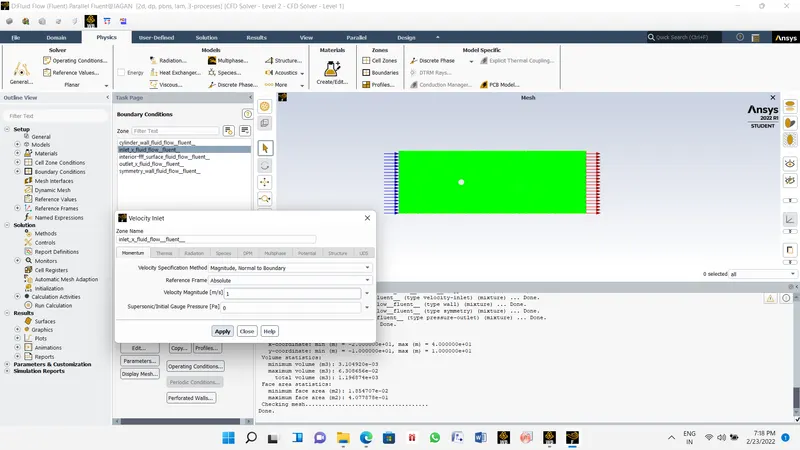
defining inlet boundery conditions
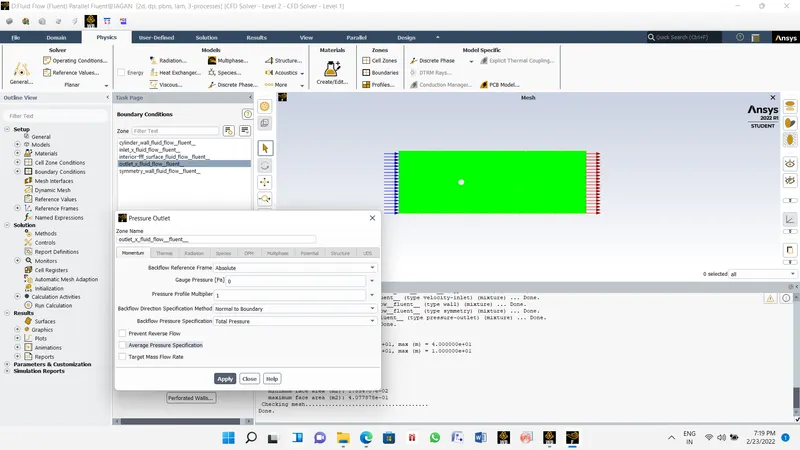
defining outlet bounderyy conditions
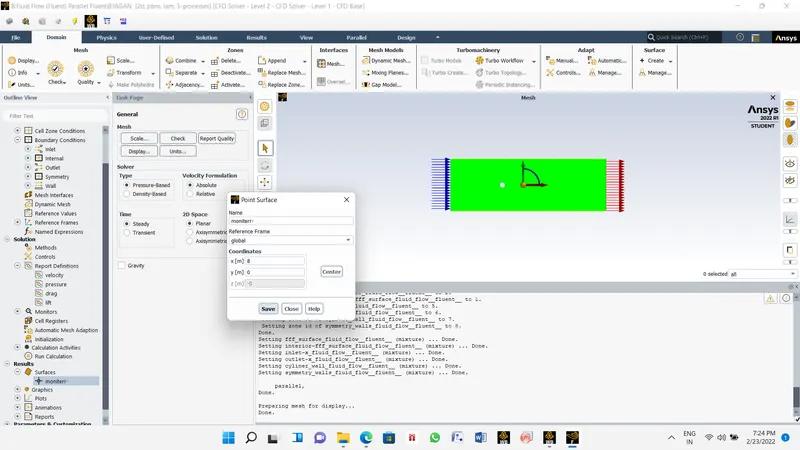
creating moniter point
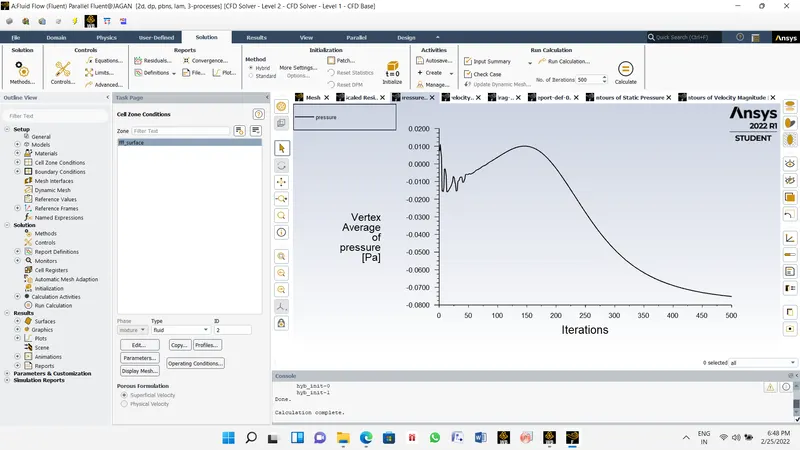
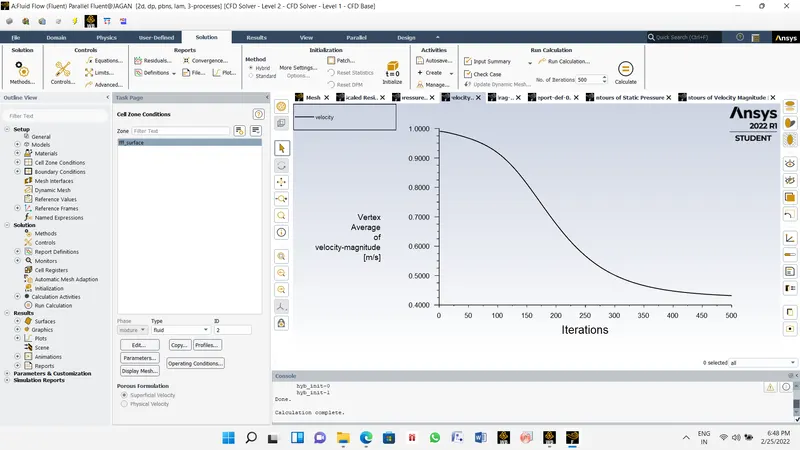
velocity and pressure plots at monitering points


references
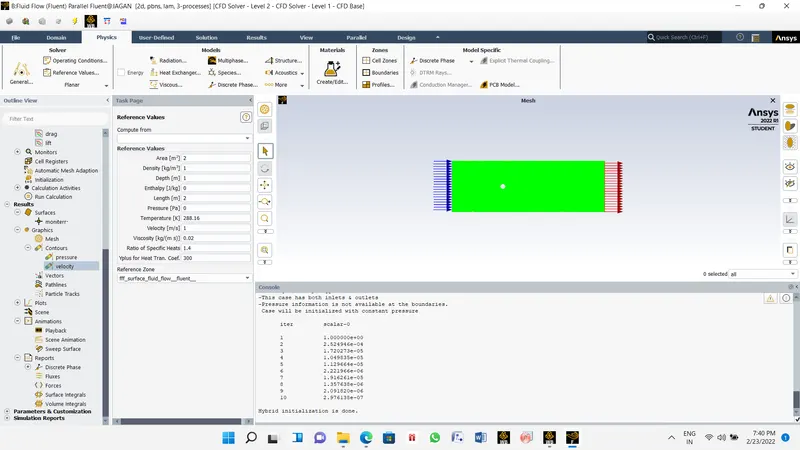
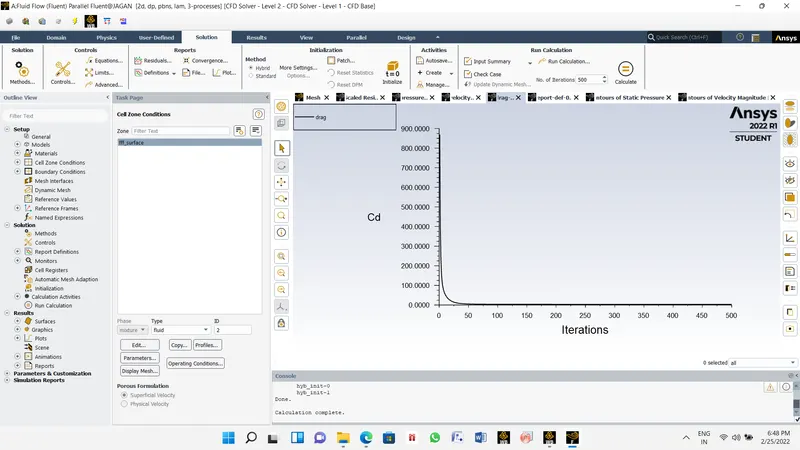
for calculationn of drag

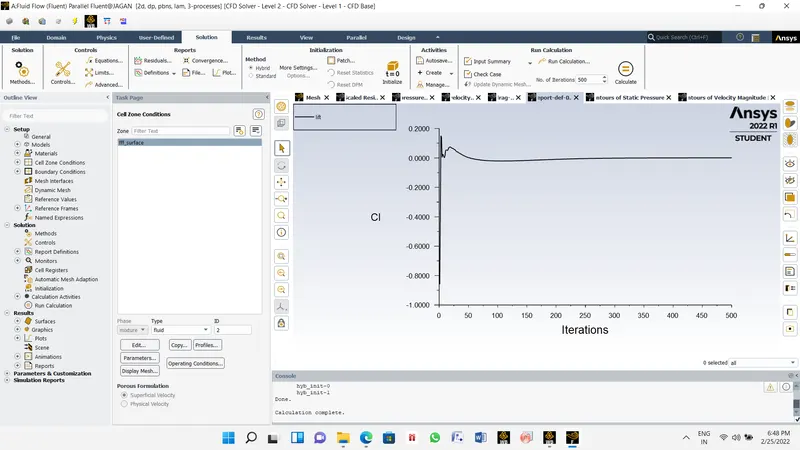
for calculation of lift

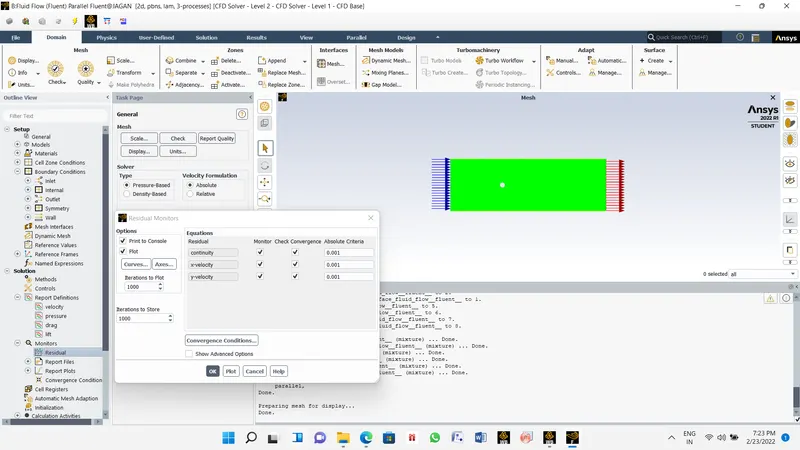
residual plots
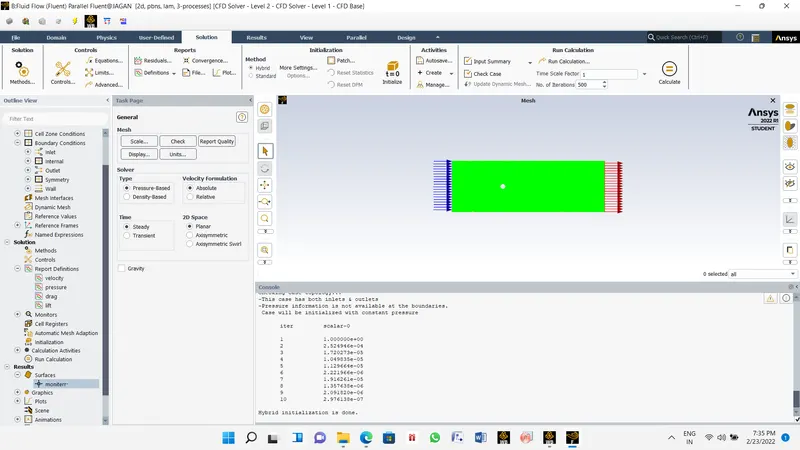
initialization
creating solution animation
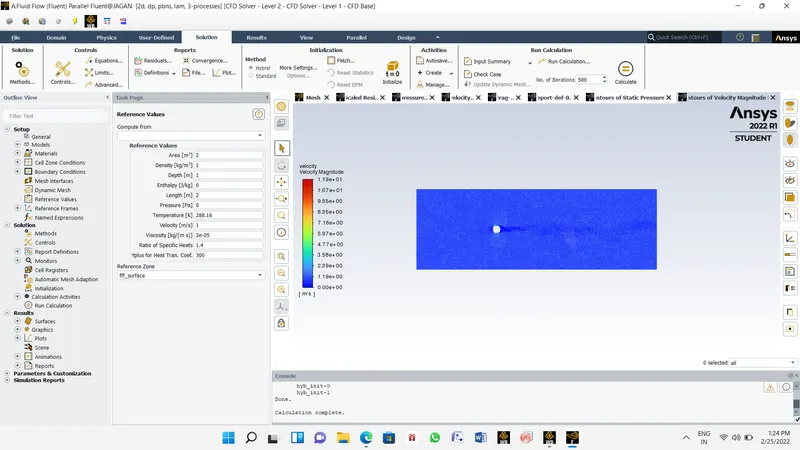
velocity and pressue contours


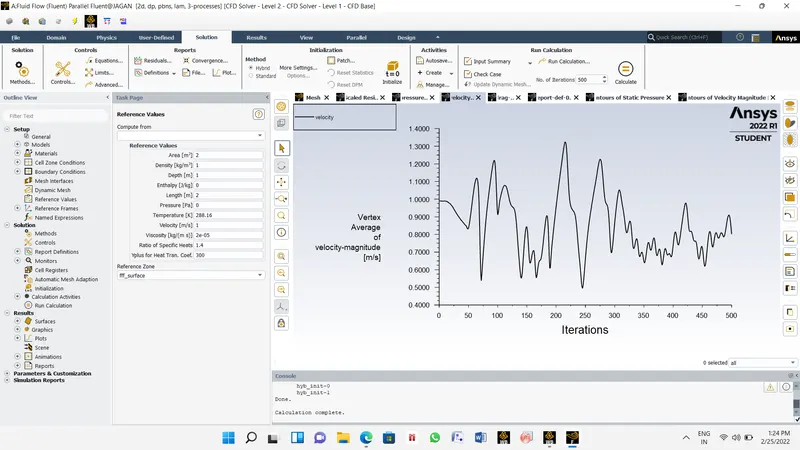
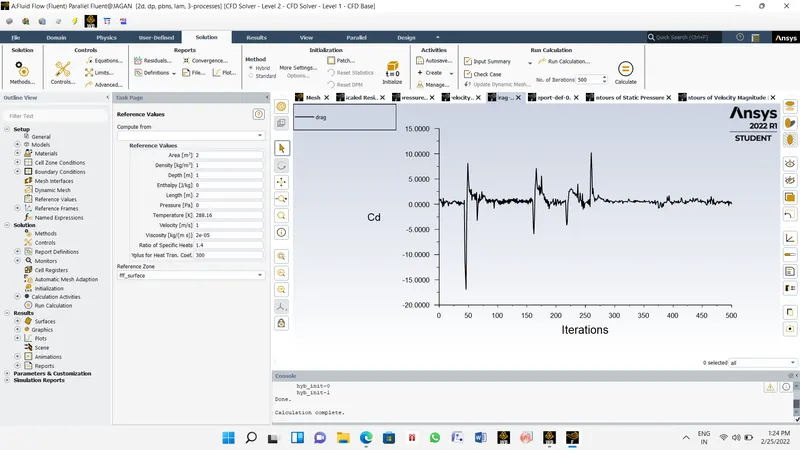
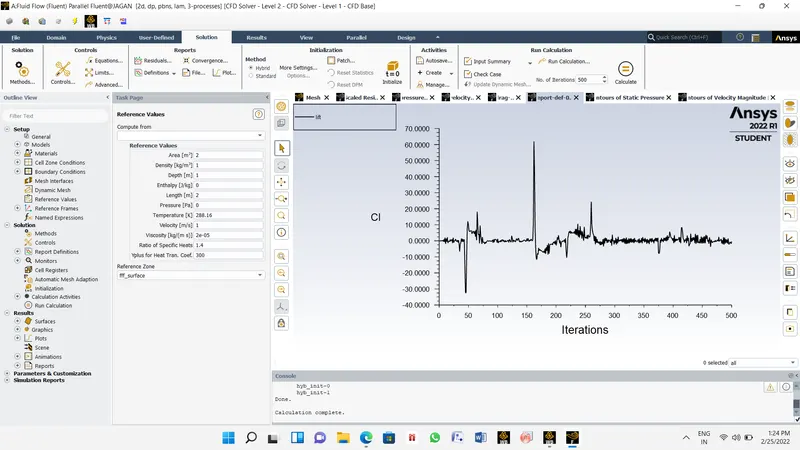
results for steady state Re= 100
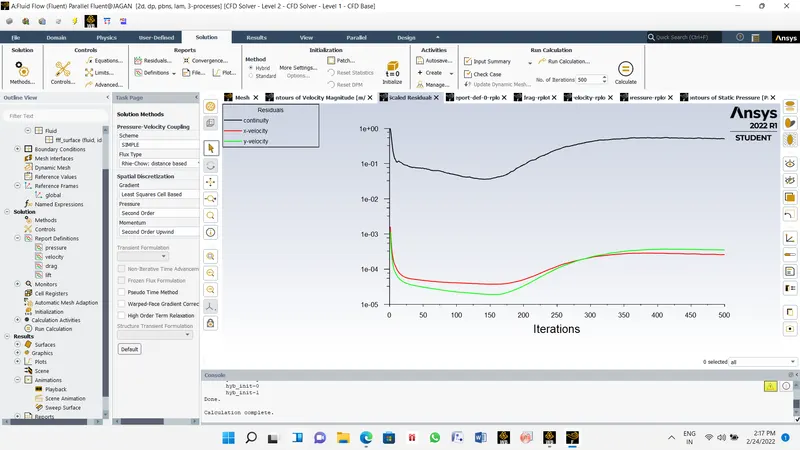
residual plots
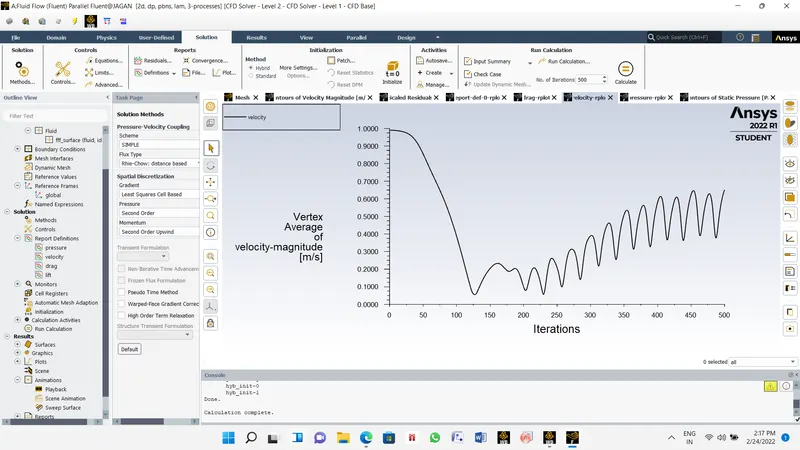
velocity plot
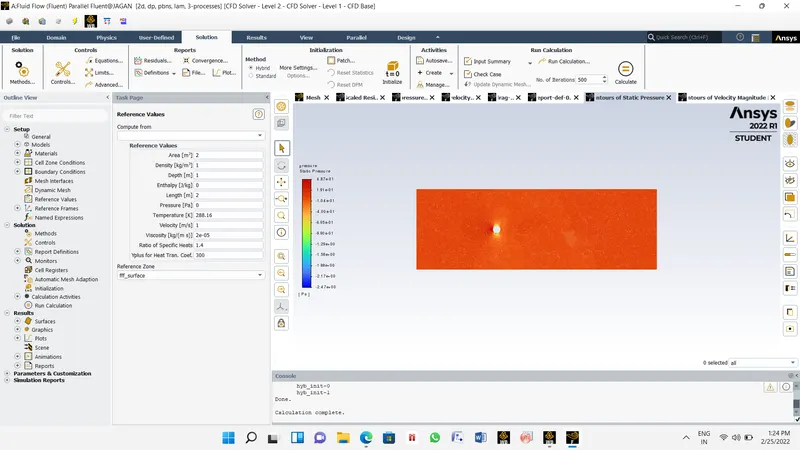
prssure plot
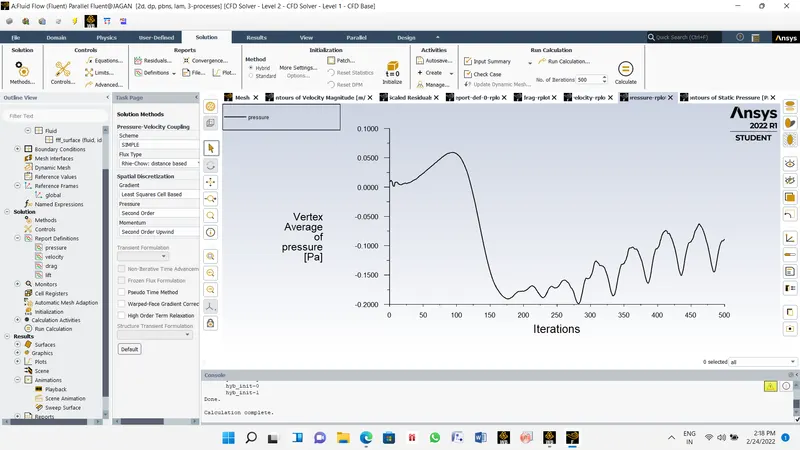
coeffcient of lift plot
coefficient of drag
velocity and pressure contours
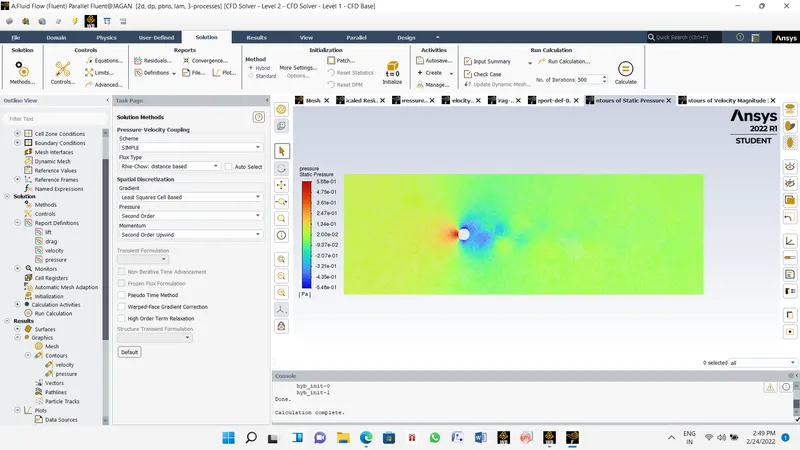
at cfd post
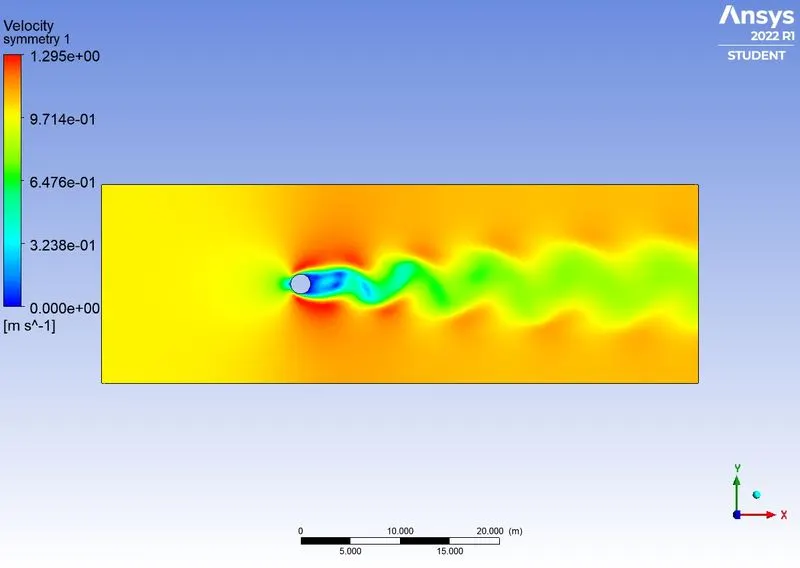
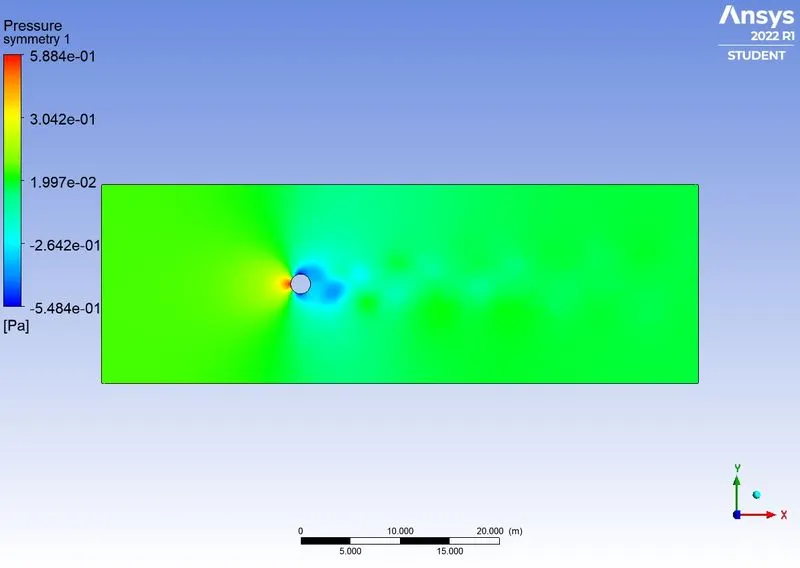
TRANSIENT SIMULATION RESULTS AT RE=100
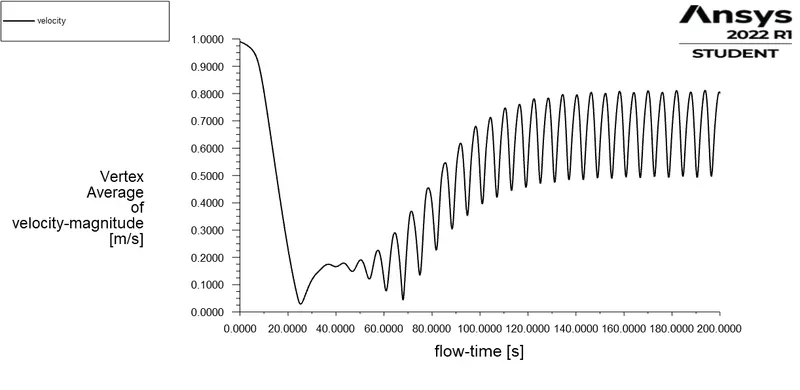
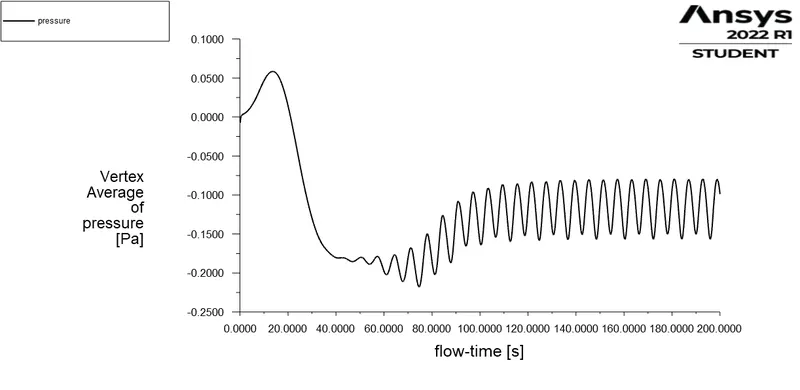
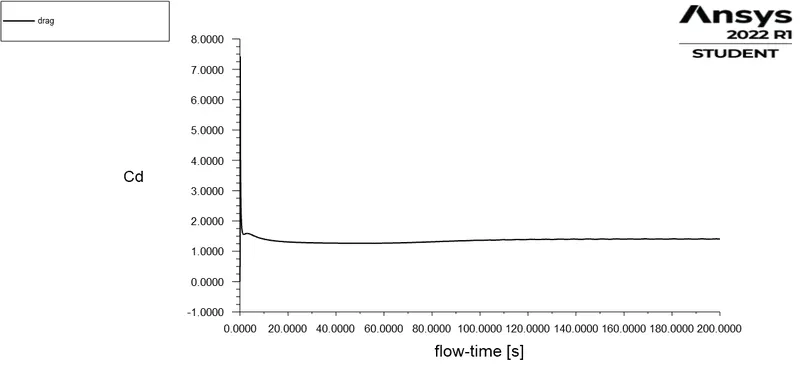
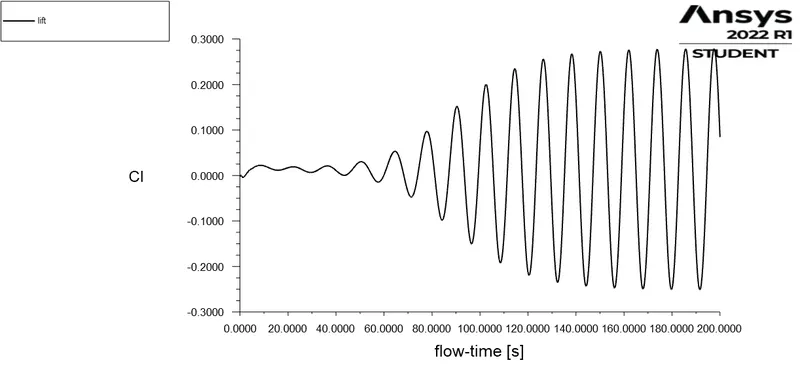
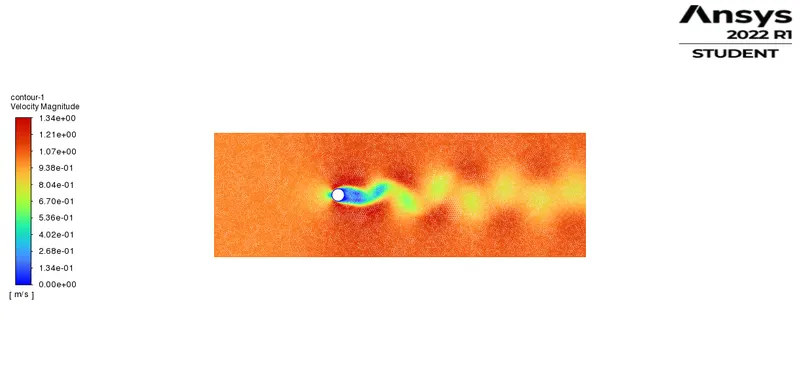
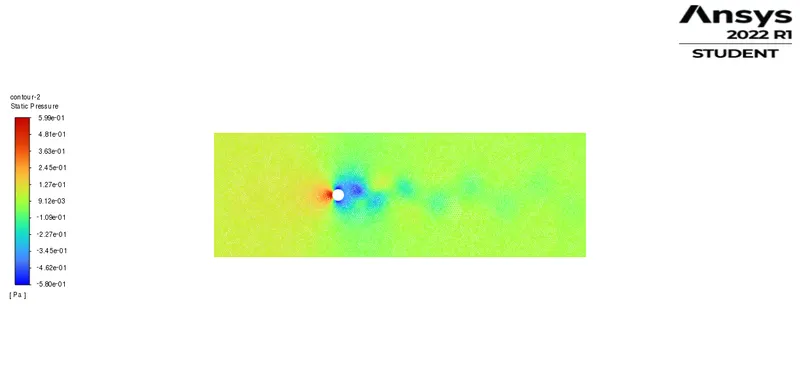
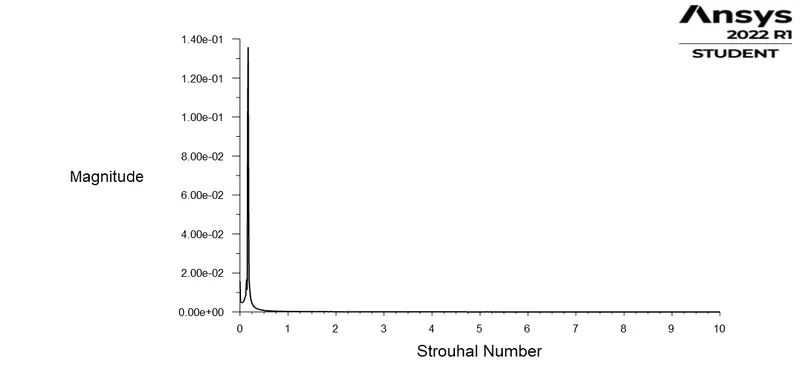
STROUHAL NUMBER=1.3579
Re=10
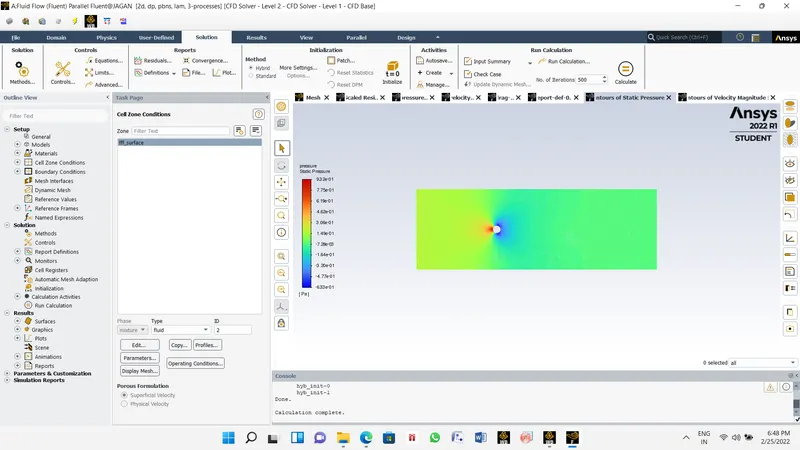
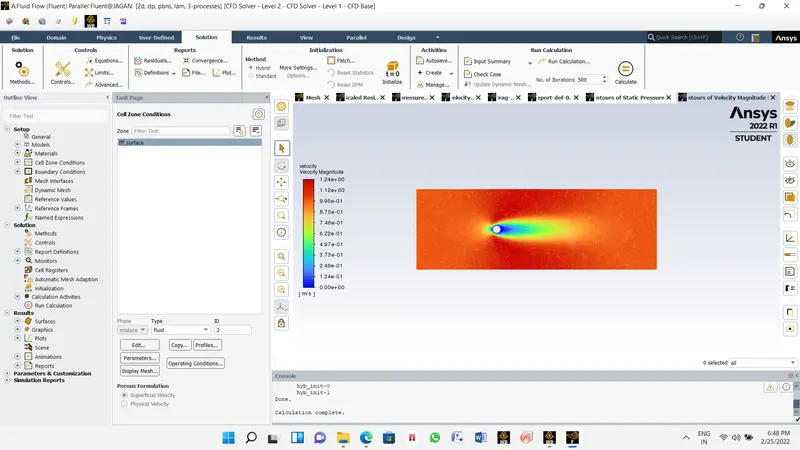
steadt state Re=1000
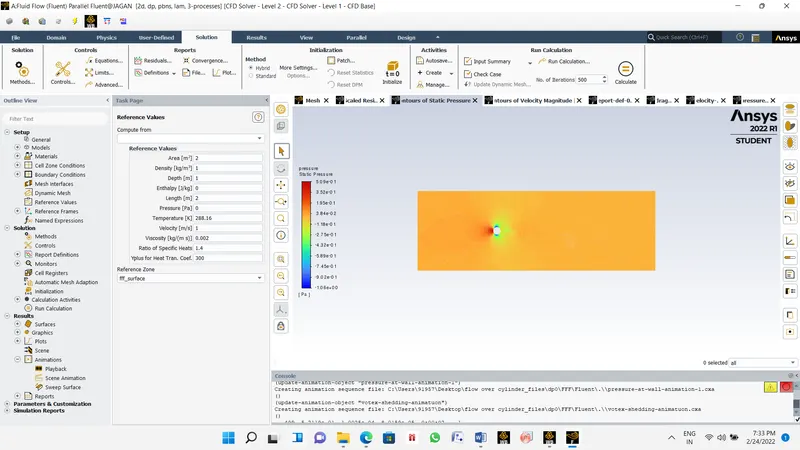
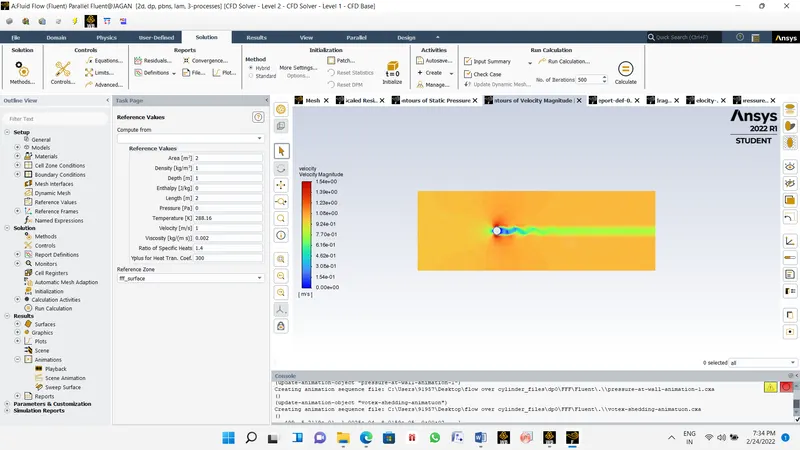
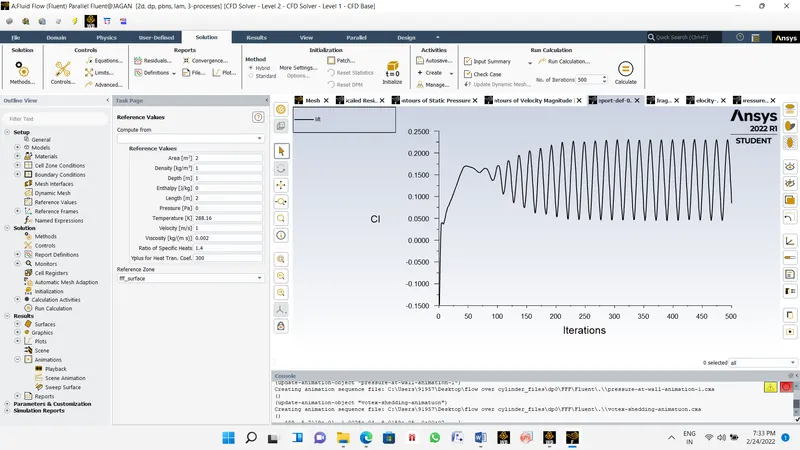
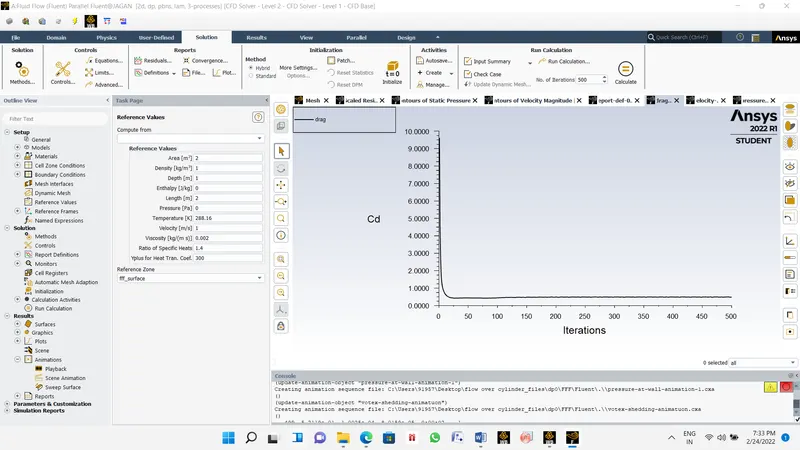
AT Re10000
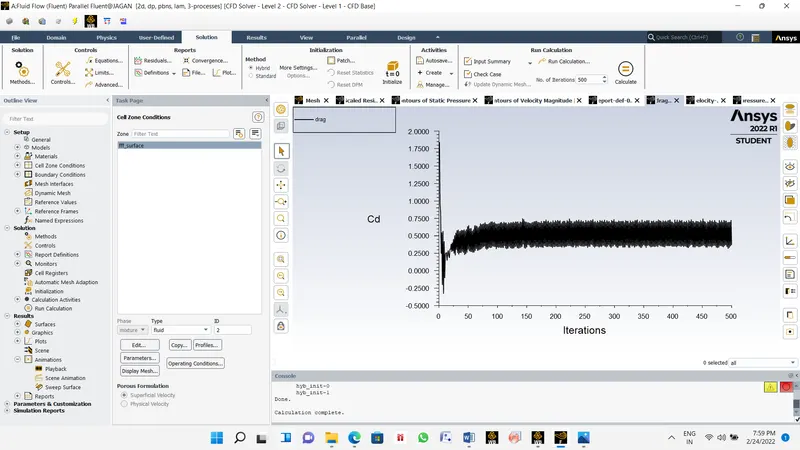
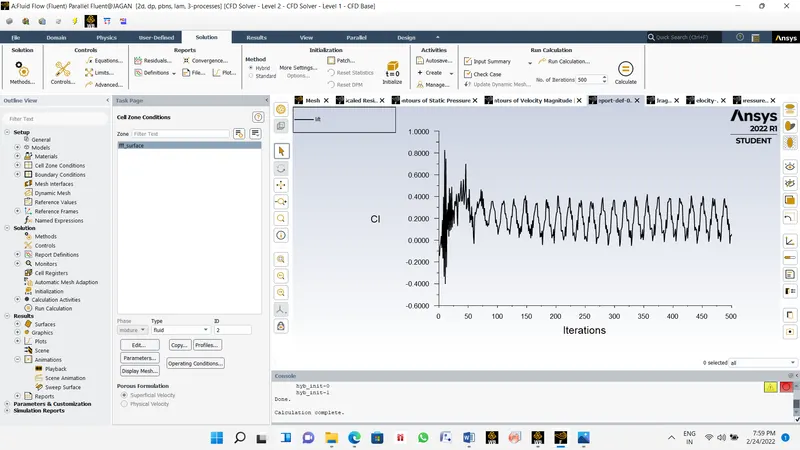
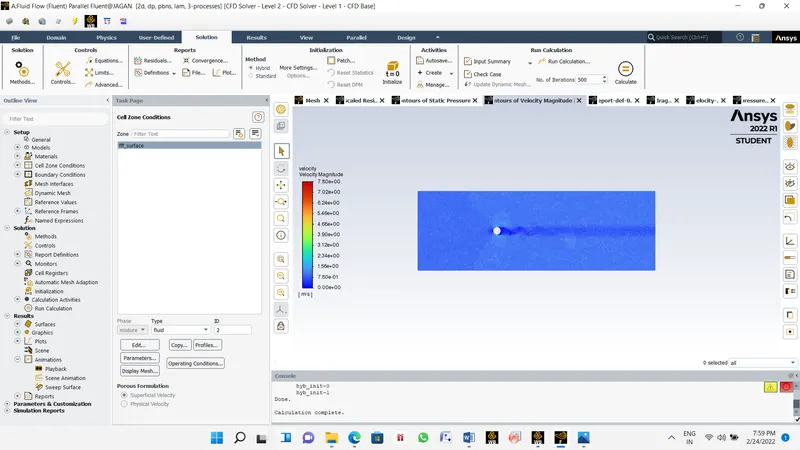
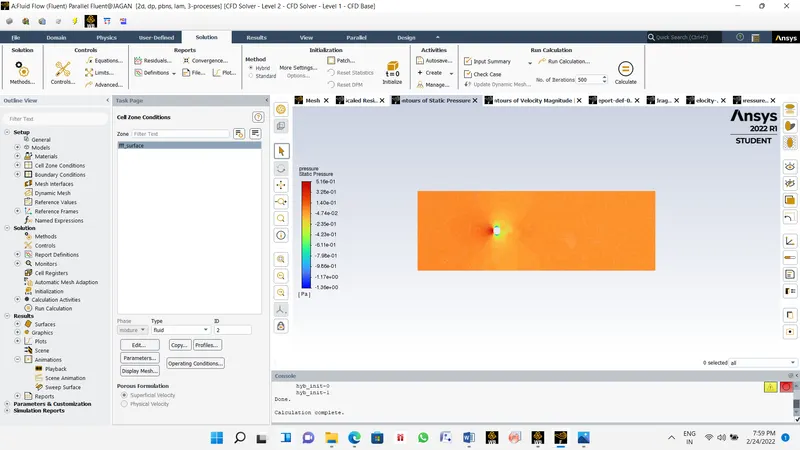
Re 100000
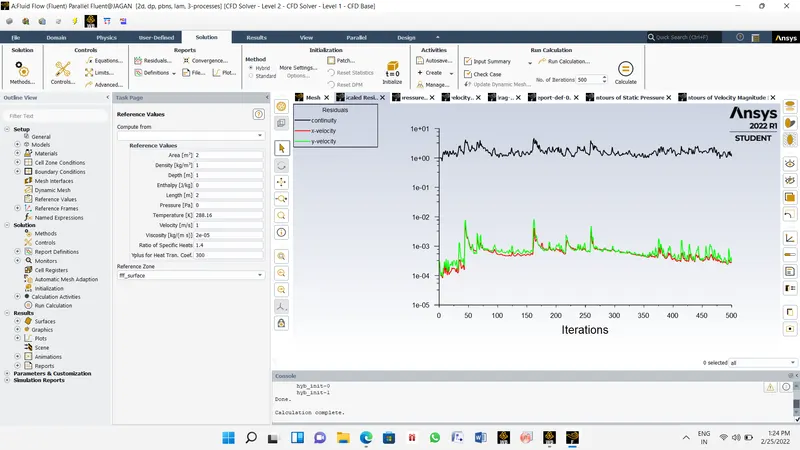
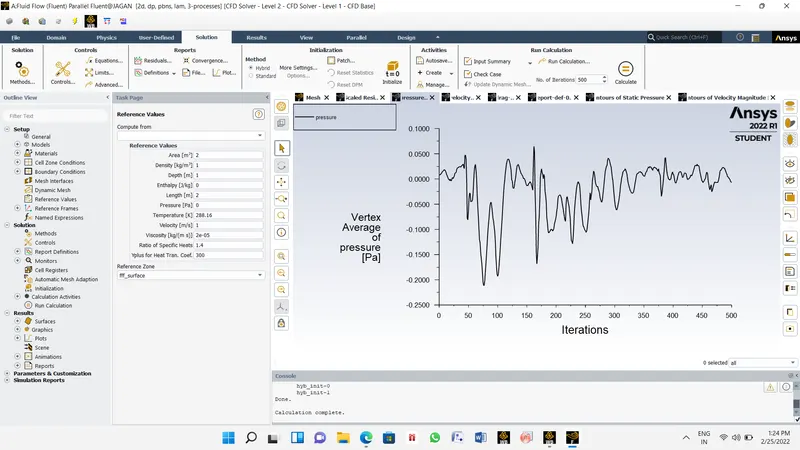
REFERENCE PAPER
https://www.sciencedirect.com/science/article/pii/S0307904X08000243
CONCLUSIONS
1 transient simulation captures the data more accurately than the steady-state, because of the number of time steps
2 the von Karman vortex shedding has been visualized
3 Cd is inversely proportional to velocity and Re.
4 @Re=1=100 Cd=1.375