Week 2 - Flow over a Cylinder.
Aim:
Simulate the flow over a cylinder and explain the phenomenon of Karman vortex street.
Introduction:
Part I:
- Simulate the flow with the steady and unsteady case and calculate the Strouhal Number for Re= 100.
Part II :
- Calculate the coefficient of drag and lift over a cylinder by setting the Reynolds number to 10,100,1000,10000 & 100000. (Run with steady solver)
- Discuss the effect of Reynolds number on the coefficient of drag. [ Results should be validated with any standard literature and error should be within 5 %]
Theory:
Flow over cylinder:
in spite of extensive experimental and numerical studies almost over a century, flow over a circular cylinder still remains a challenging problem in fluid mechanics. where intensive investigations are continued even today to understand the complex unsteady dynamics of wake flow over a cylinder. crossflow to the axis of the stationary circular cylinder and the associated problems of heat and mass transfer are encountered in many engineering applications.
Von karmen vortex street:
Karman vortex street or Vonkarman vortex street is a repeating pattern of swirling vortices caused by a process known as Vortex shedding which is responsible for the unsteady separation of flow or fluid around blunt bodies.
A vortex street will form only at a certain range of flow velocities, specified by a range of Reynolds number (Re), typically a limited Re value of about 90.
`Re=(rho.V.D)/mu=(V.D)/nu`
where `rho`=Density of flowing fluid
V= Free stream velocity
D=charectristic dimension of body
`mu`=dynamic viscosity of fluid, `(N-s)/m^2`
`nu`=Kinematic viscosity of fluid, `m^2/s`
Note: energy of vortices is consumed by the viscosity as they move further downstream and the regular pattern disappears.
Strouhal Number: it is a dimensionless number and describes the oscillation flow mechanism.
`St=(fL)/U`
where,
f=frequency of vortex shedding
L= Charectristic length
U= Flow velocity
Co-efficient of drag(`C_d`): it is a dimensionless quantity used to quantify the drag or resistance of an object in a fluid environment like air or water. lower drag coefficient indicates the object will have less aerodynamics drag.
`C_d=(2F_d)/(rhoAU^2)`
where,
`F_d`= drag force, force component in the direction of fluid flow velocity.
U=speed of the object relative to the fluid.
A=refrence area
Co-efficient of lift (`C_L`): it is a dimensionless coefficient that relates the lift generated by a lifting body, to the fluid density around the body, the fluid velocity and an associated reference area. `C_L`is a function of the angle of the body to the flow, its Reynold number and Mach Number.
`C_L=L/(pA)=L/(1/2rhoU^2A)=(2L)/(rhoU^2A)`
where,
L=lift force, A=relevant surface area, p=fluid dynamic pressure, in turn, linked to fluid density and to the flow speed u.
steps that we are going to follow to simulate the flow over a cylinder:
Geometry:
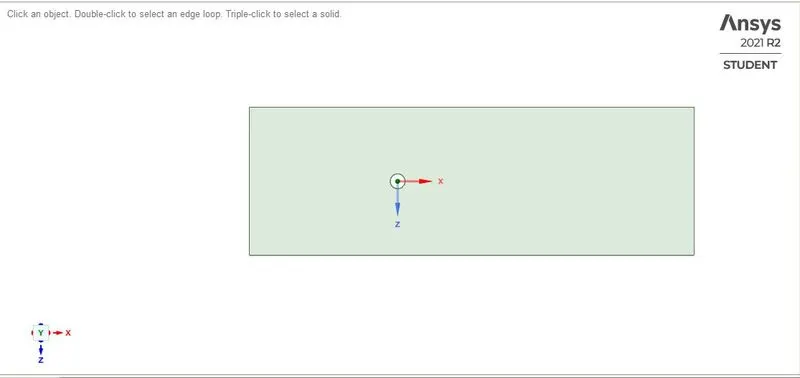
first, make the 2-dimensional geometry in space claim. its dimension is a 2meter circle placed at a distance of 20 meters from the inlet and 40 meters from the outlet. symmetry boundary conditions are 10 meters apart from the centre of the cylinder. size of the computational domain is 20*60.
Meshing: now click on mesh in the workbench to open the mesh.
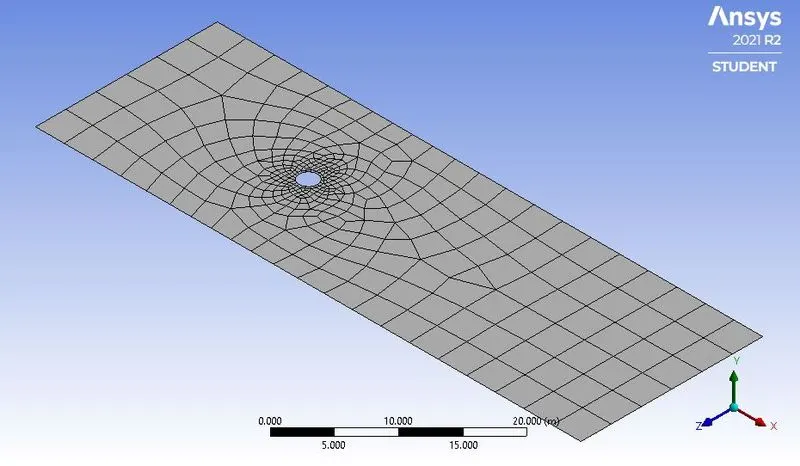
the above figure is an automated generated mesh. almost all mesh elements are in a quadrilateral shape. very few elements are in a triangular shape. so first we will convert all mesh elements into a triangular shape.
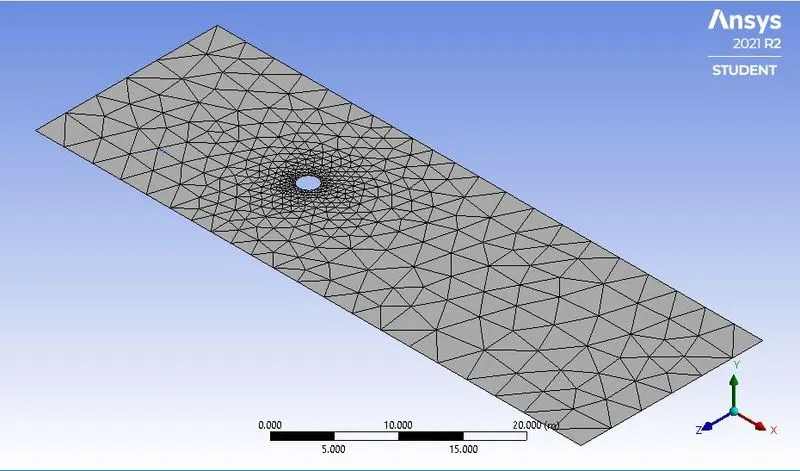
now mesh elements have been converted into a triangular shape. here Nodes= 450, Elements=826
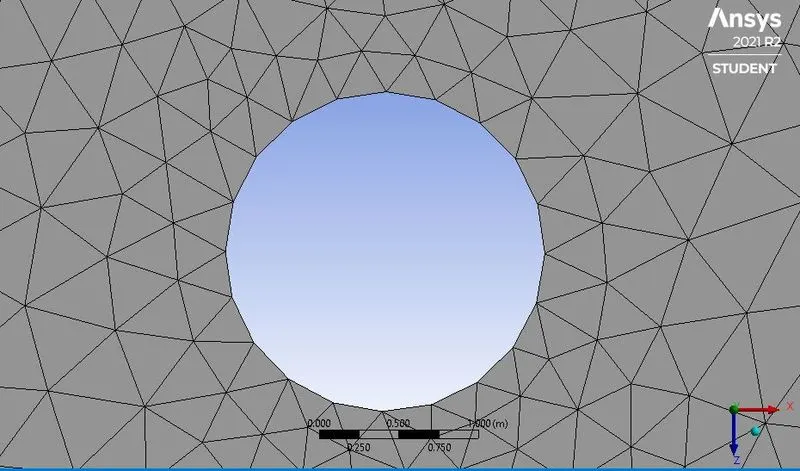
the above figure is showing the zoom of the cylinder. here the circumference of the cylinder is not perfectly circular. instead, it is looking like polygons which will affect the flow. so first change it into a perfect circular shape. this is done by selecting the edge sizing of the circle. and change the number of divisions to 76 let's say.
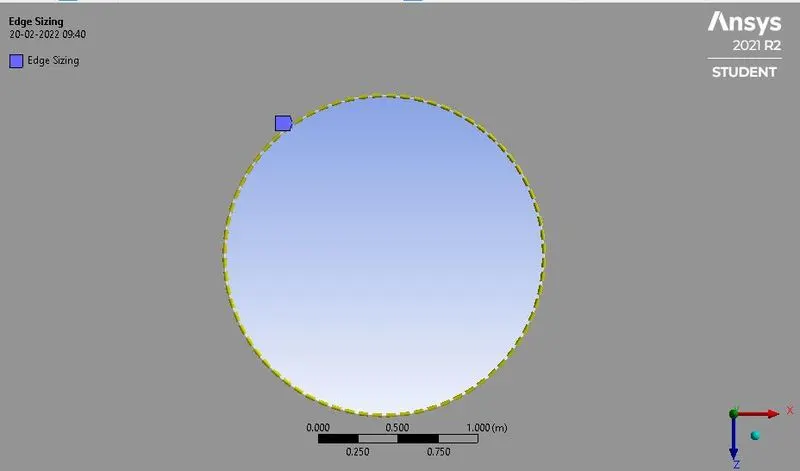
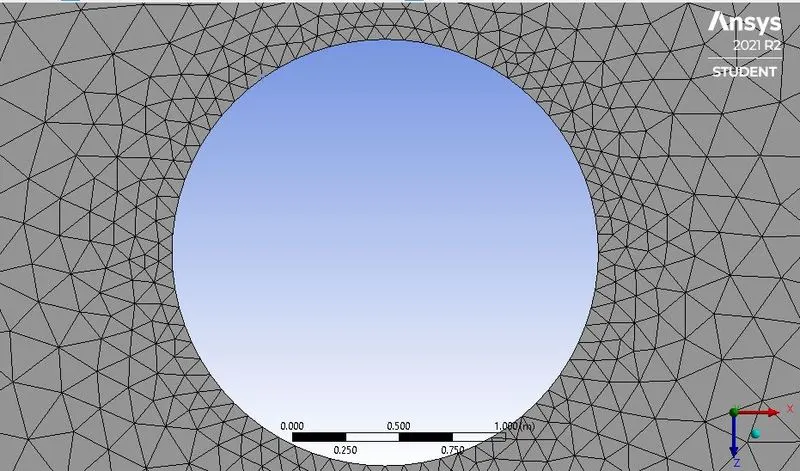
now we can see that the circumference of the cylinder has become perfectly circular. no more polygons it has.
Inflation layer: inflation layers are inflated from a triangular surface mesh to create high-quality geometry aligned elements capable of resolving boundary layer growth.
it is a thin element near the wall that capture the normal gradients of velocity and temperature.
Inflation layer thickness: first inflation layer height I have chosen is 5mm. and the maximum layers are 6. and the growth rate is 1.2. which means each inflation layer thickness is increasing 20%.
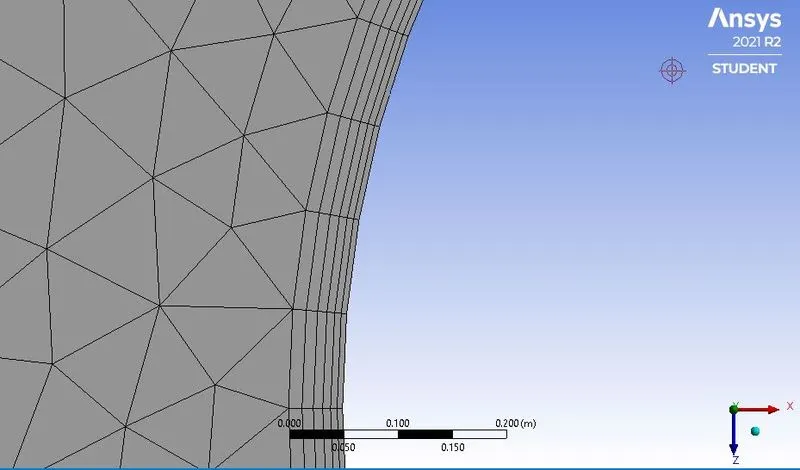
Boundary Conditions: now define the boundary conditions namely inlet, outlet, wall and symmetry boundary conditions.
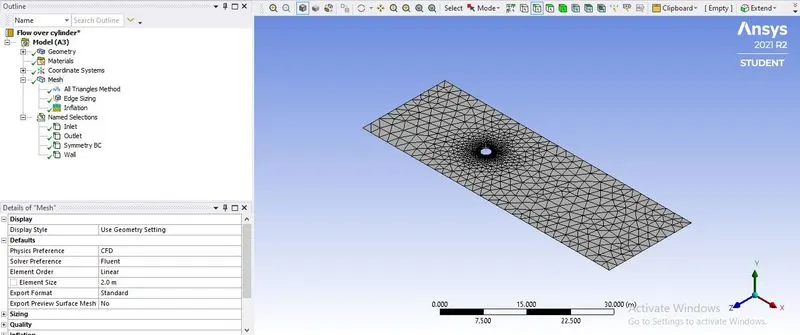
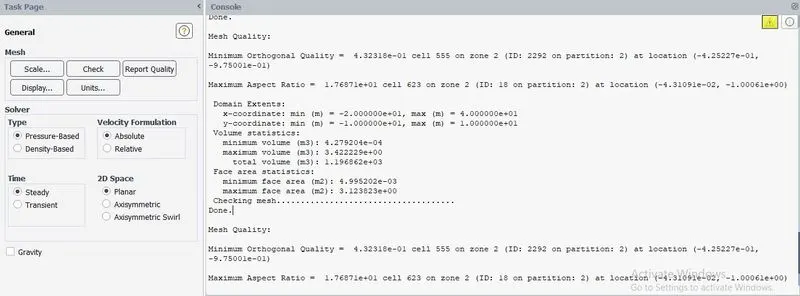
Now meshing is completed. and it is ready to import in Ansys Fluent.
Fluent:
Part I:
- Simulate the flow with the steady and unsteady case and calculate the Strouhal Number for Re= 100.
`R_e=(rho VL)/mu`
`100=(1*V.2)/0.05`
`V=2.5`m/s
Steady case:
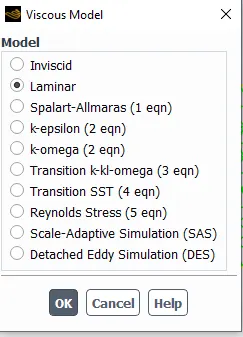
we select a laminar option in the viscous model because Reynold number is low. Re changes with change in flow velocity or by changing the fluid that means dynamic viscosity.
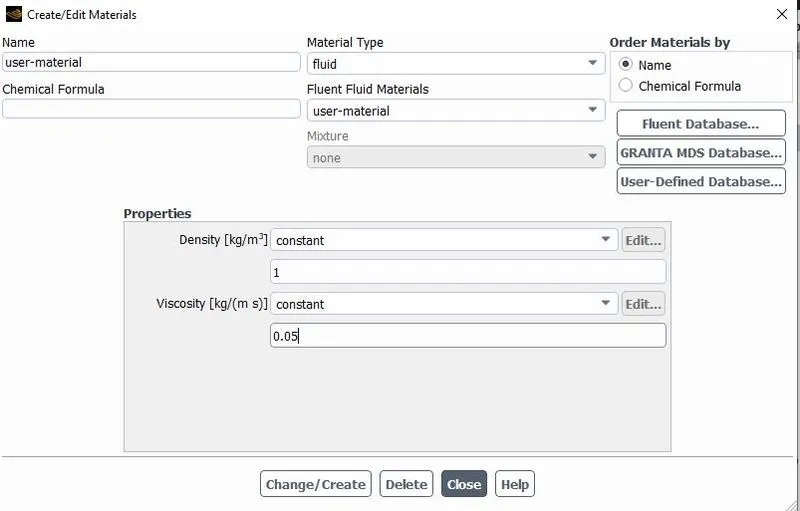
now we create a material name is "user-material" whose density is 1kg/m3 and dynamic viscosity is 0.05 kg/m-s
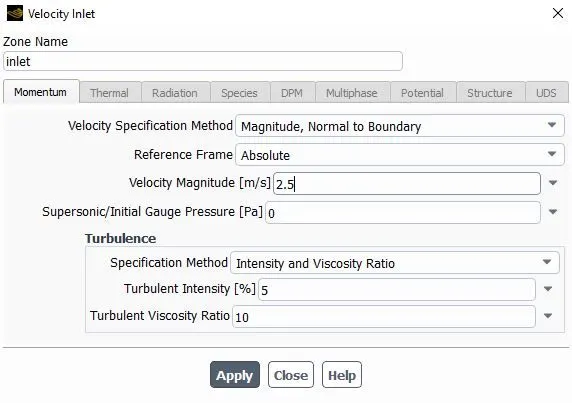
Boundary Conditions: Inlet velocity=2.5 m/s, outlet pressure(Gauge)=0 Pa
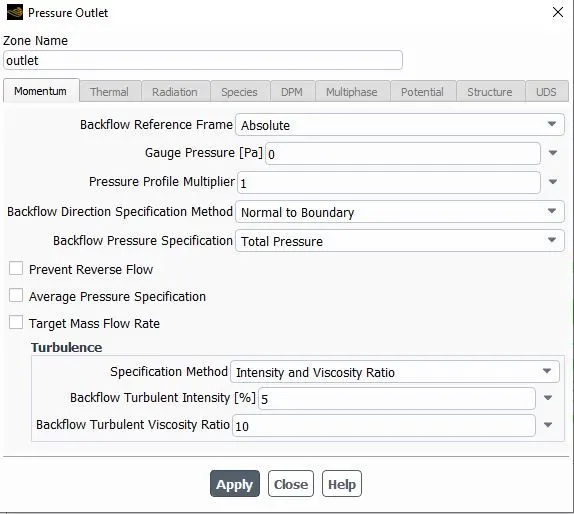
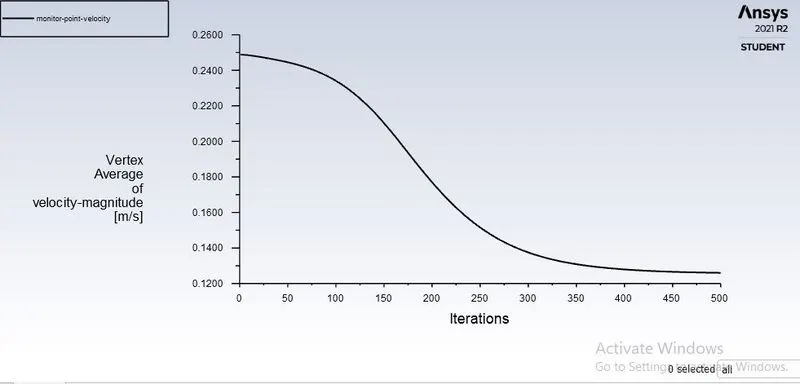
now select monitor point. location of the monitor point is 10 m from the centre of the cylinder.
what is a monitor point:
monitor points are the locations in the model on which result quantities are plotted in the convergence plot throughout the analysis. they provide a way to track the trends and monitor the convergence at specific locations.
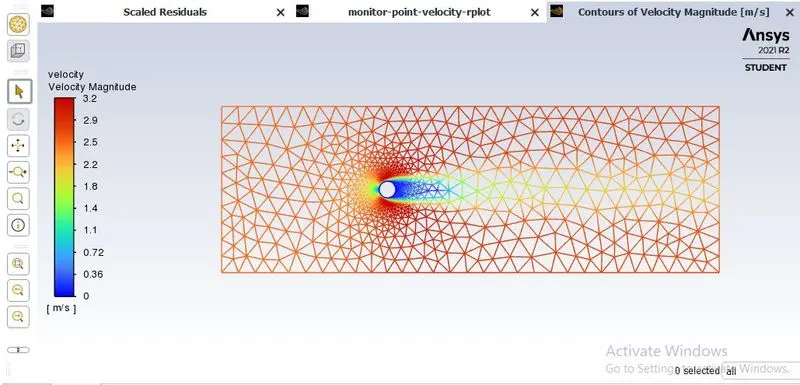
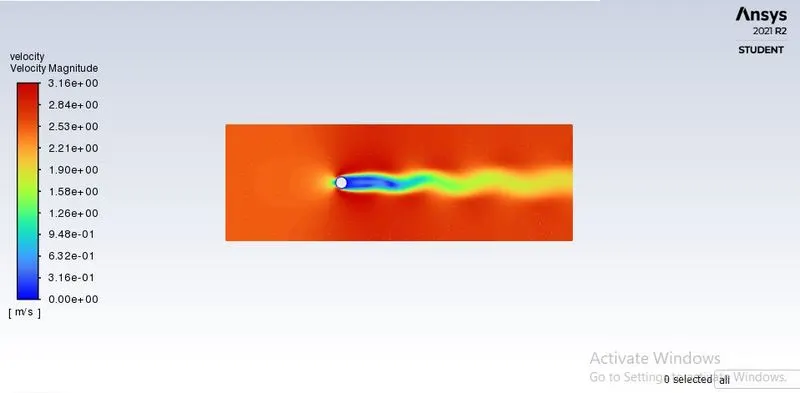
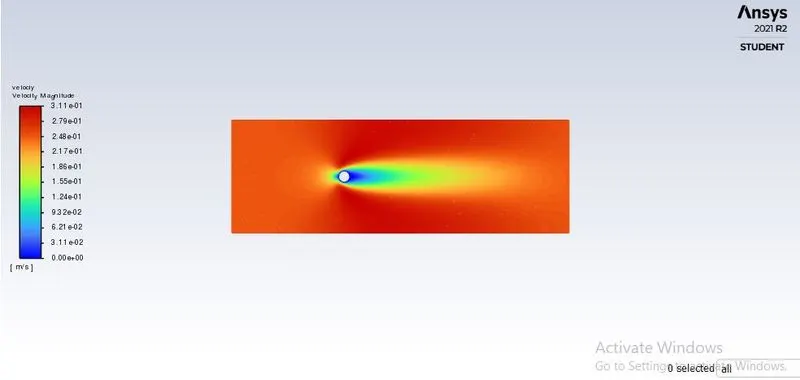
Figure: Contours of velocity magnitude (m/s)
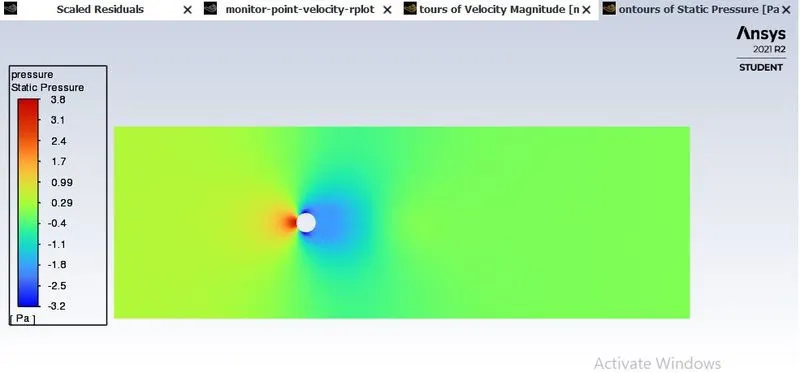
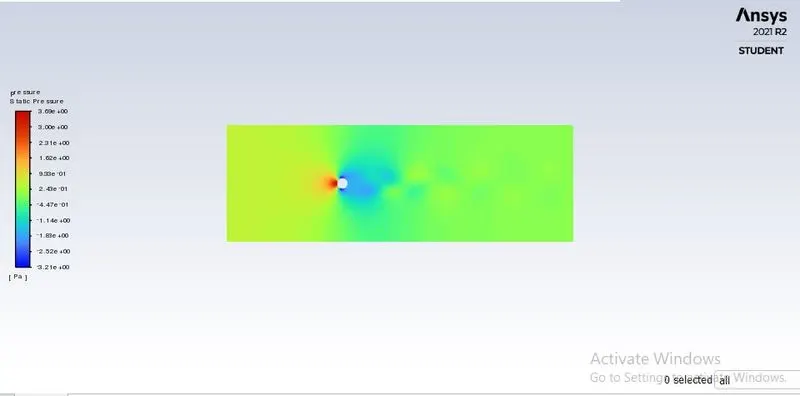
Figure: Contours of static pressure(Pa)
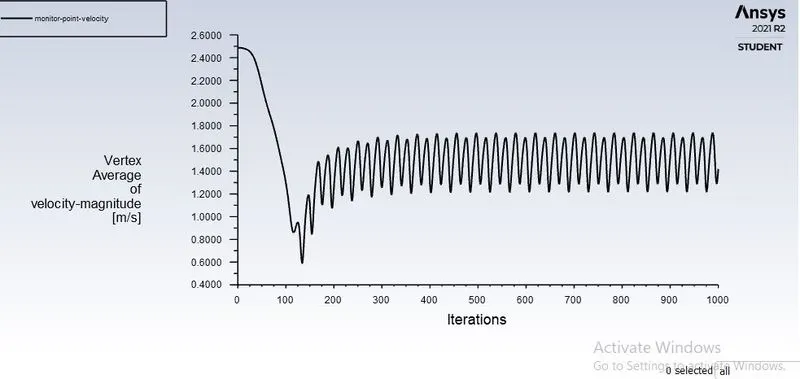
Figure: monitor point velocity residual plot
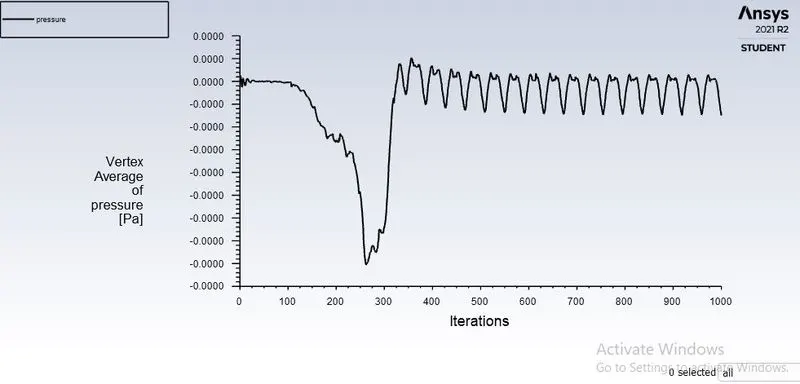
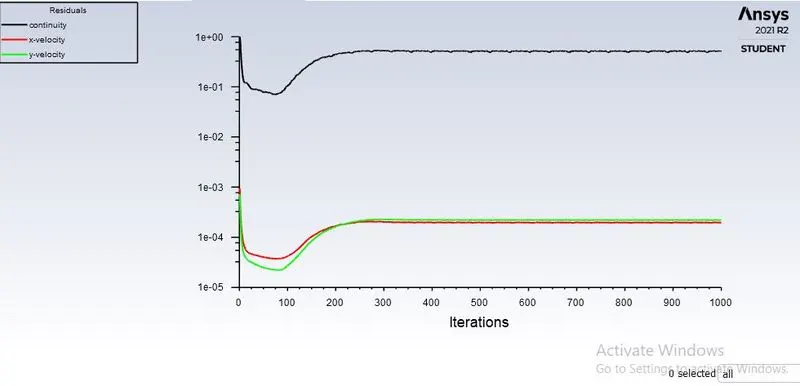
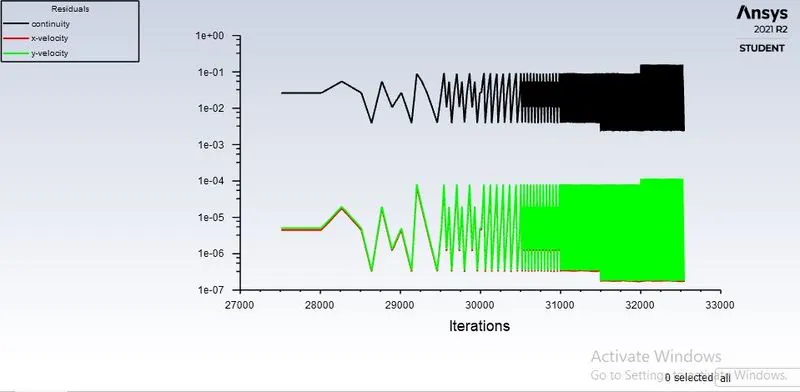
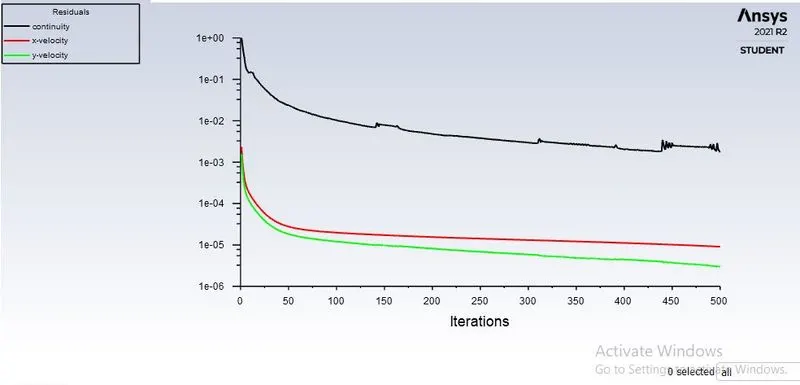
Figure: scaled residuals
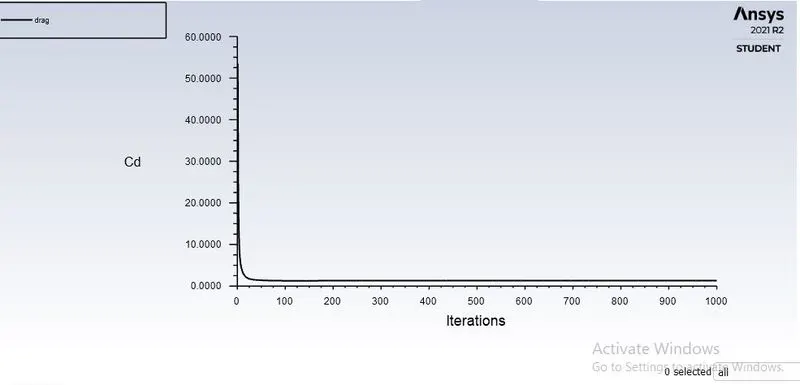
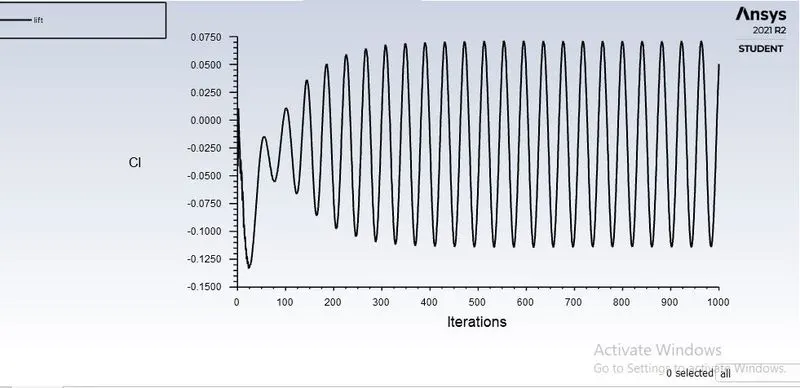
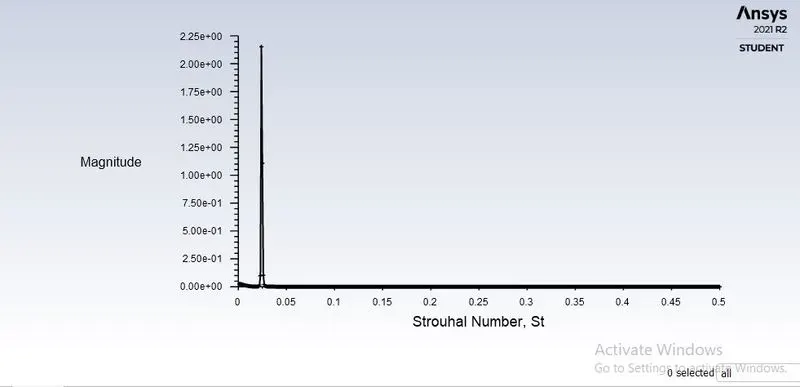
Unsteady Case: (when Re=100)
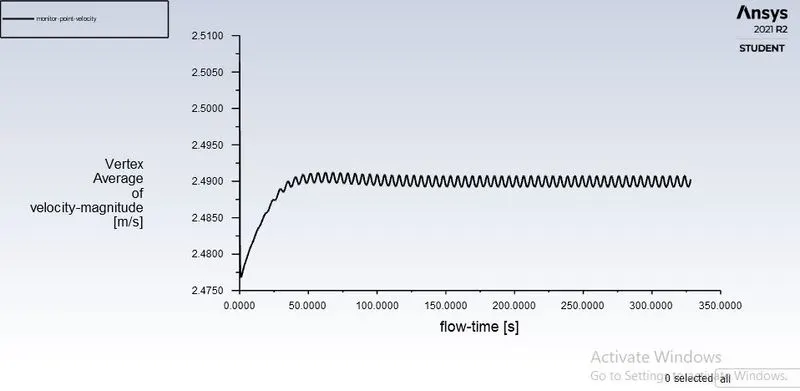
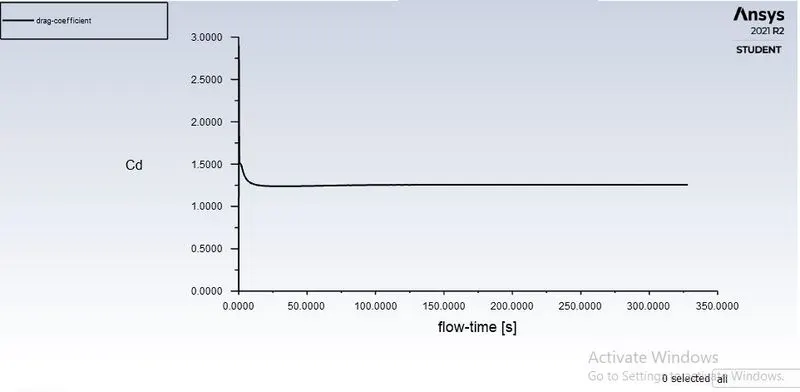
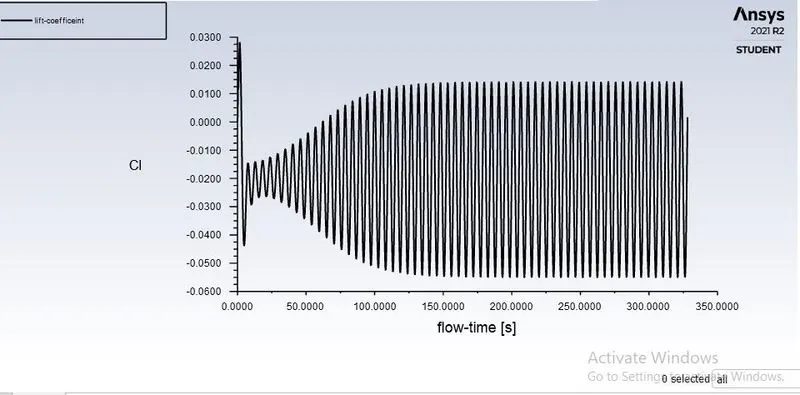
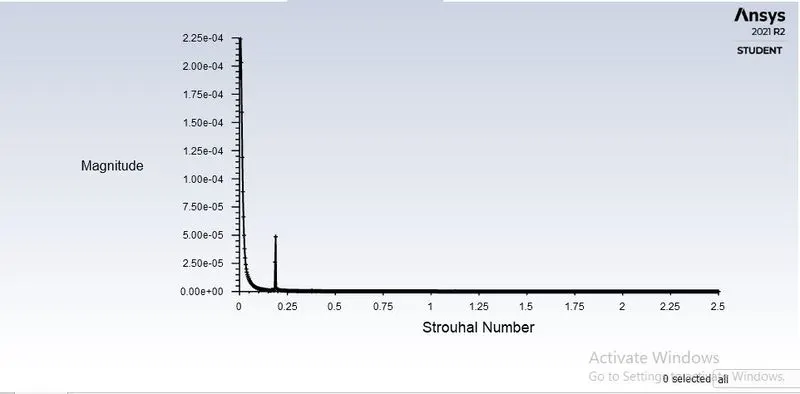
| Re=100 | Cd | CL |
| Steady | 0.52696346 | 0.26482823 |
| Transient |
1.256411 |
0.0048211282 |
Part-II
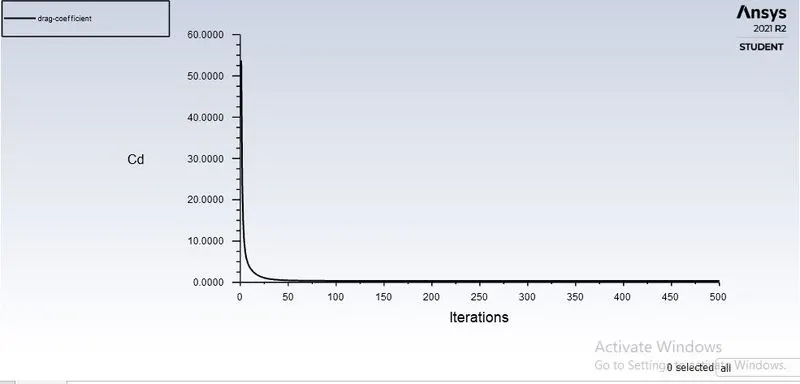
Steady flow(Re=10 and velocity=0.25m/s)
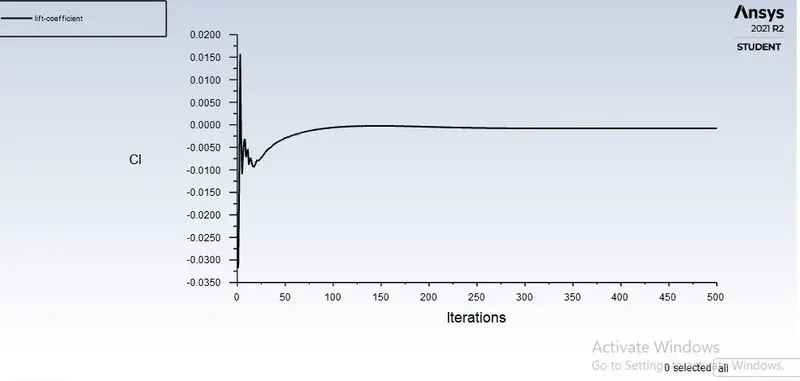
Re=1000 and v=25 m/s
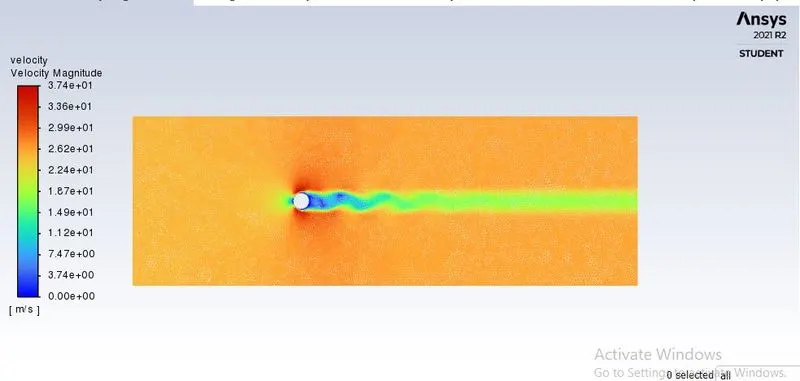
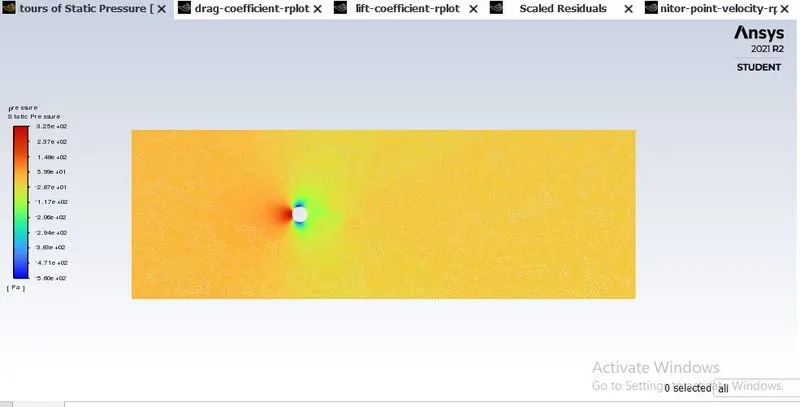
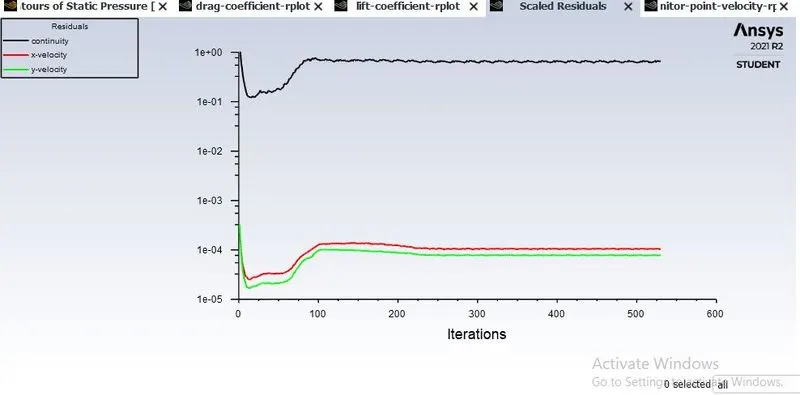
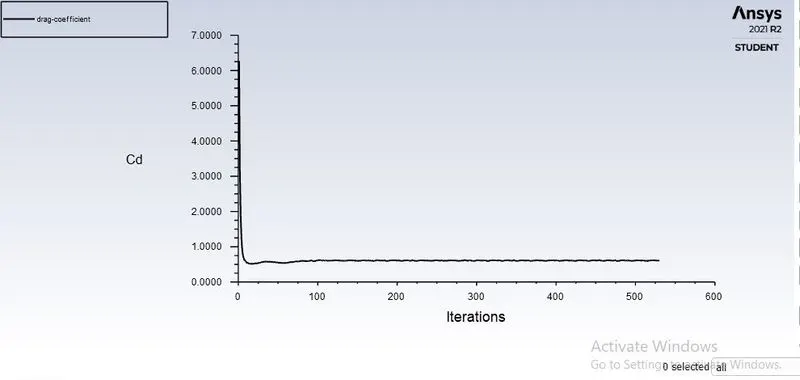
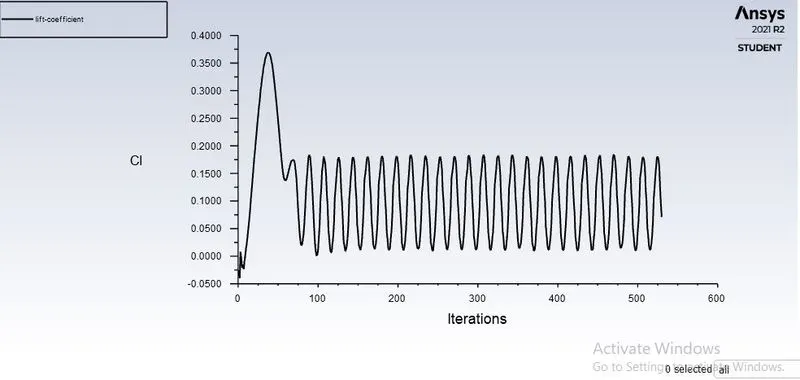
(Re=100000 and v=2500 m/s)
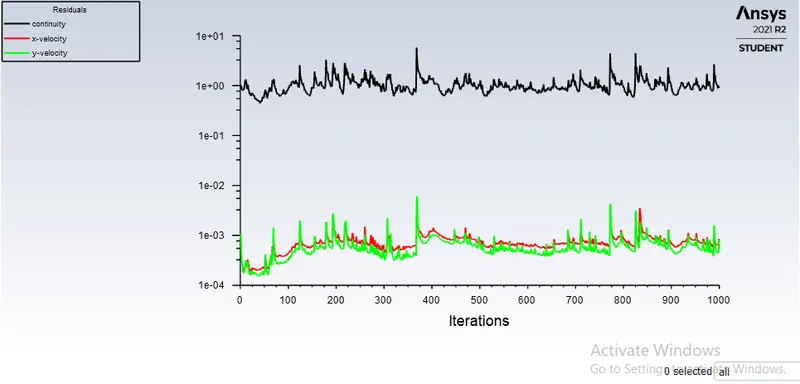
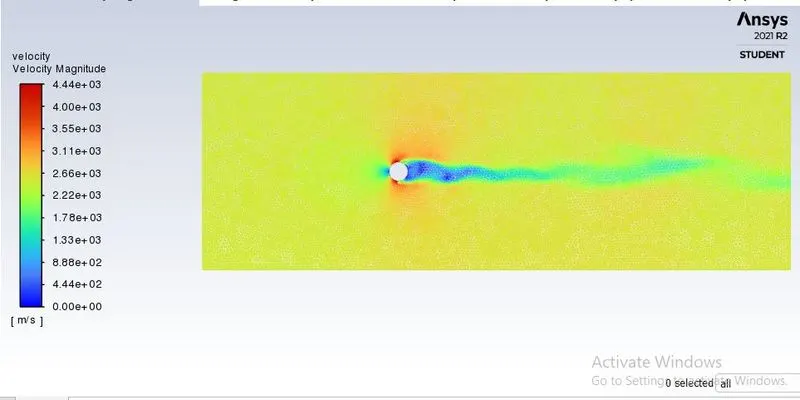
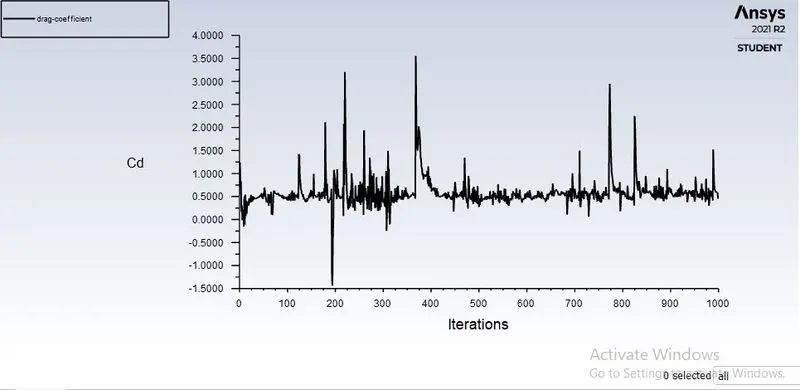
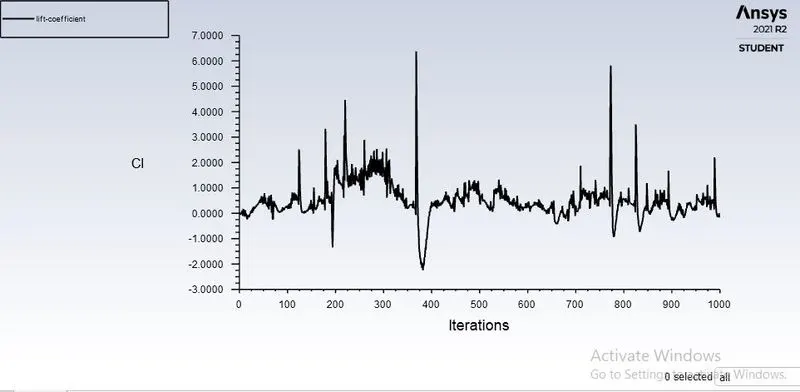
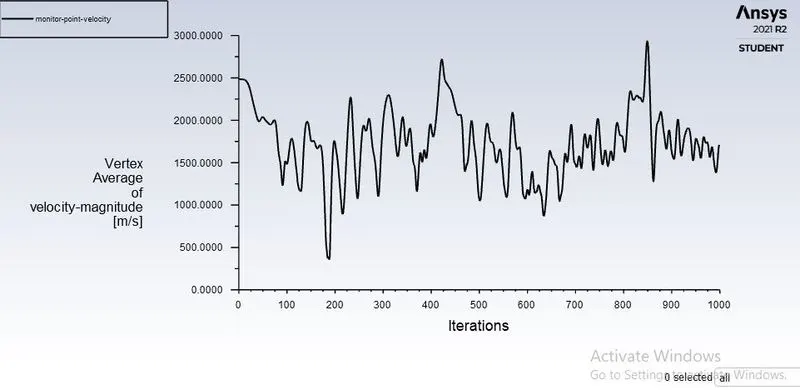
| `R_e` | `C_d` | `C_L` |
| 10 |
0.33866829 |
-0.00080266013 |
| 100 |
0.52696346 |
0.26482823 |
| 100 (Unsteady) |
1.256411 |
0.0048211282 |
| 1000 |
0.60312253 |
0.071217716 |
|
100000 |
0.44826835 | -0.11529921 |