Week 2 - Flow over a Cylinder.
Aim: To Simulate the flow over a cylinder and explain the phenomenon of Karman vortex street.
Flow over a Cylinder
PART-I
- Simulate the flow with the steady and unsteady case and calculate the Strouhal Number for Re= 100.
PART-II
- Calculate the coefficient of drag and lift over a cylinder by setting the Reynolds number to 10,100,1000,10000 & 100000. (With steady state solver)
- Discuss the effect of Reynolds number on the coefficient of drag. [ Results validated with any standard literature]
Expected results:-
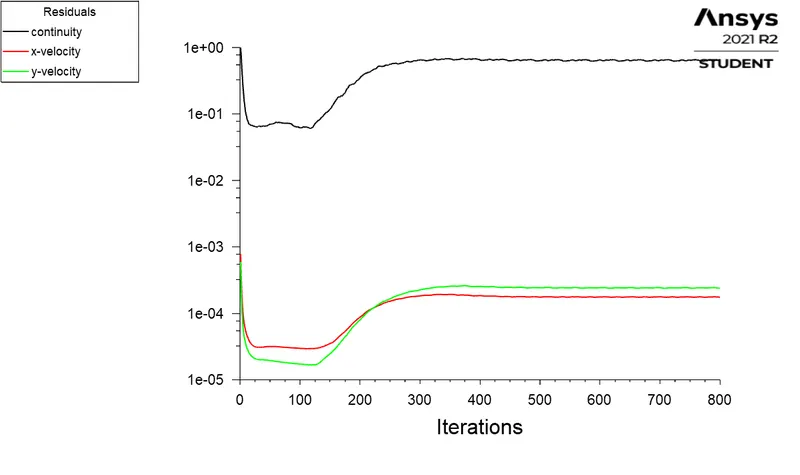
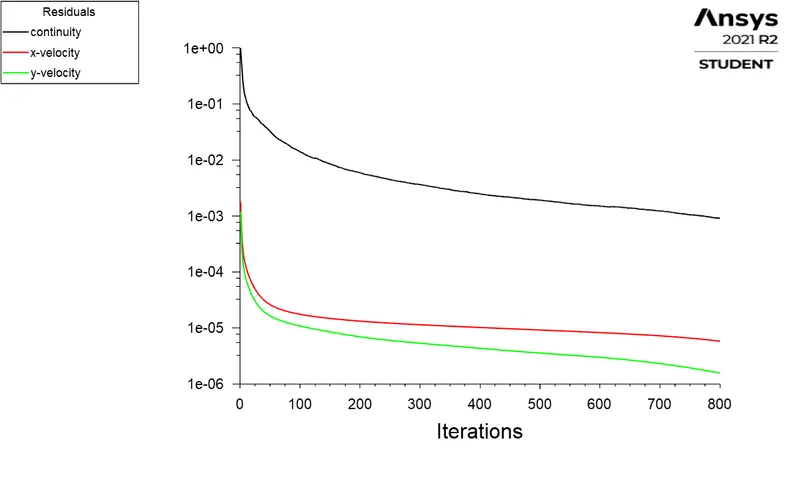
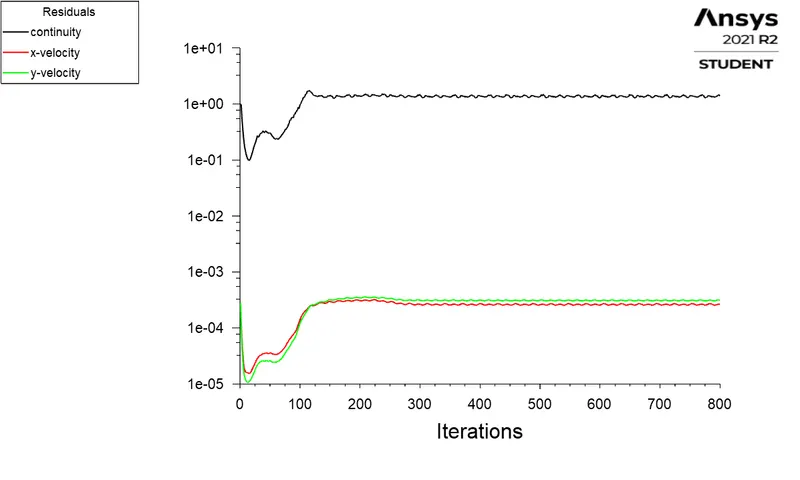
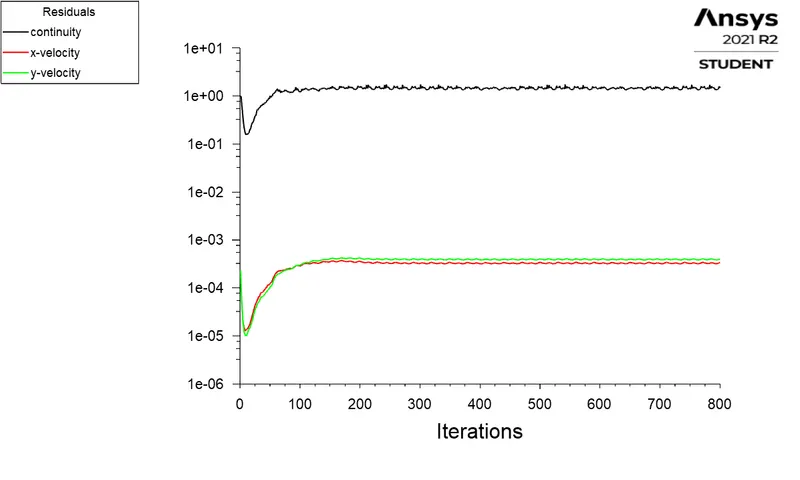
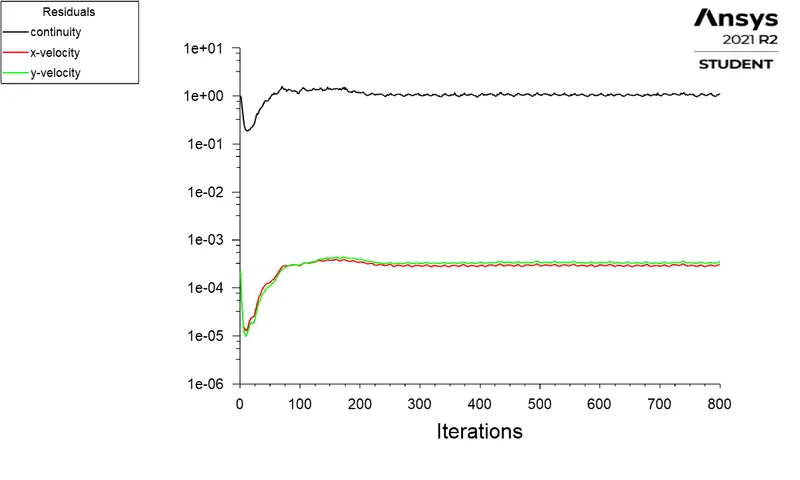
- In both approaches, show that the flow has converged. That is, what quantities or plots need to be looked at to determine that the flow has converged?
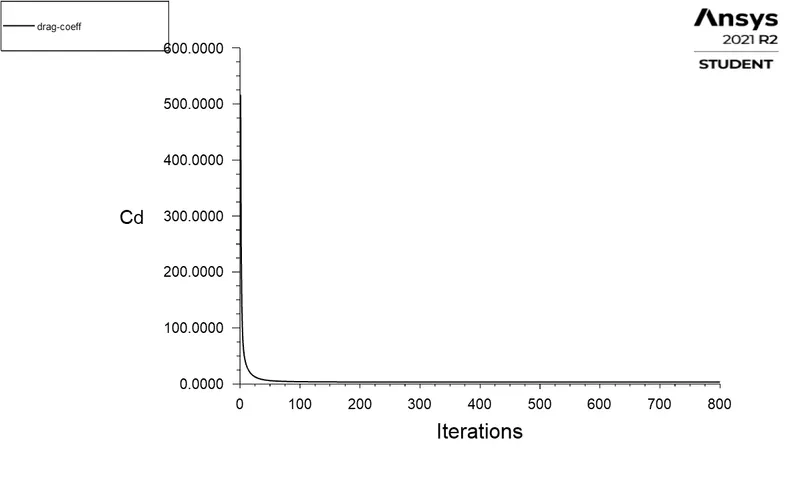
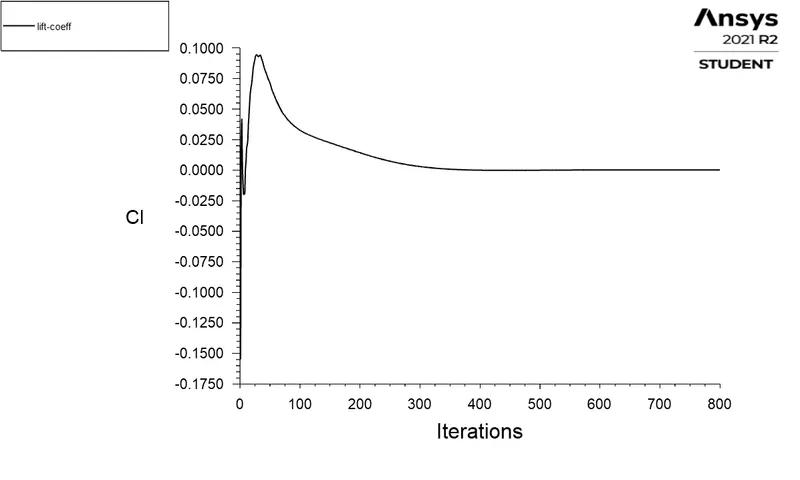
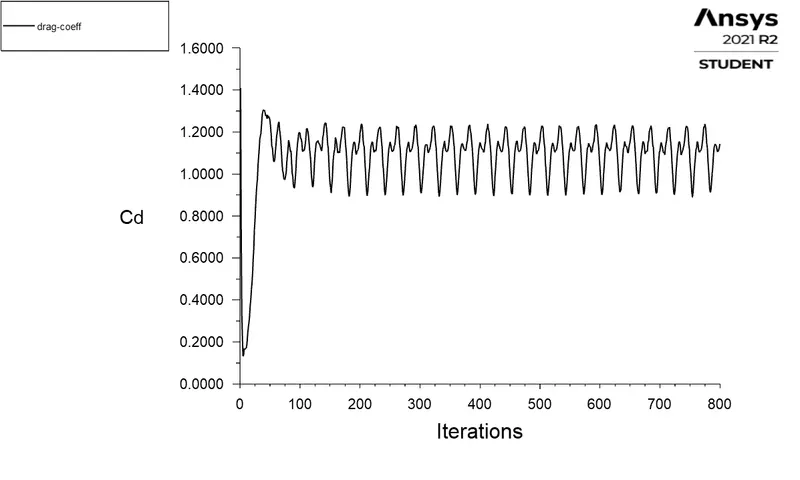
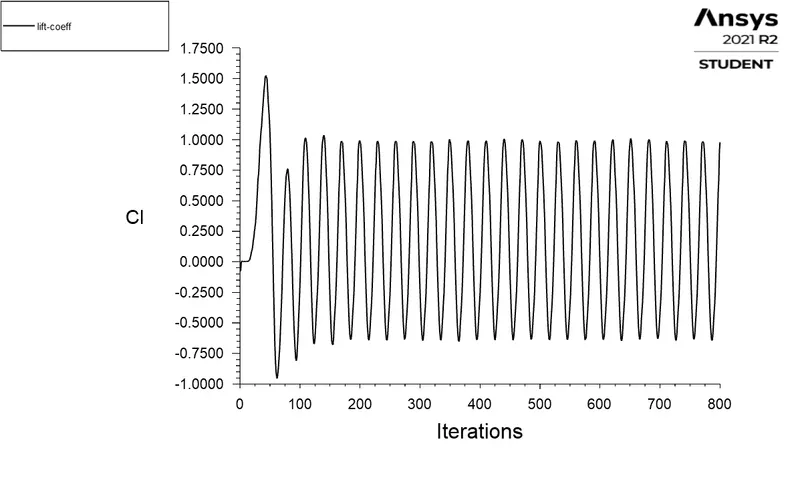
- Plots of the coefficient of drag and lift.
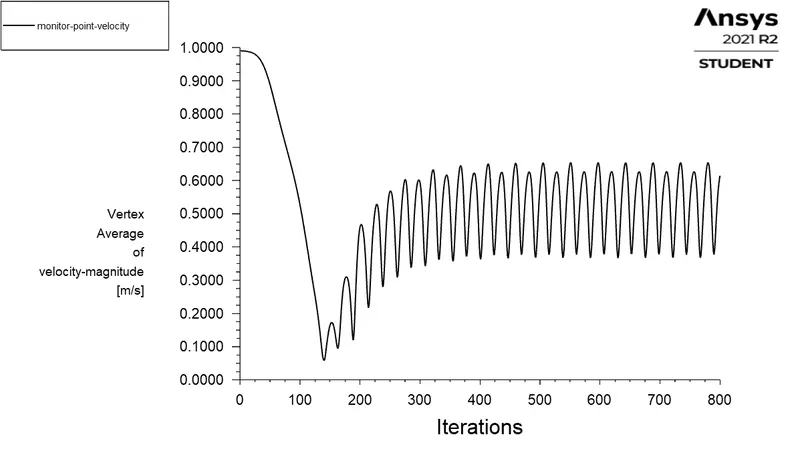
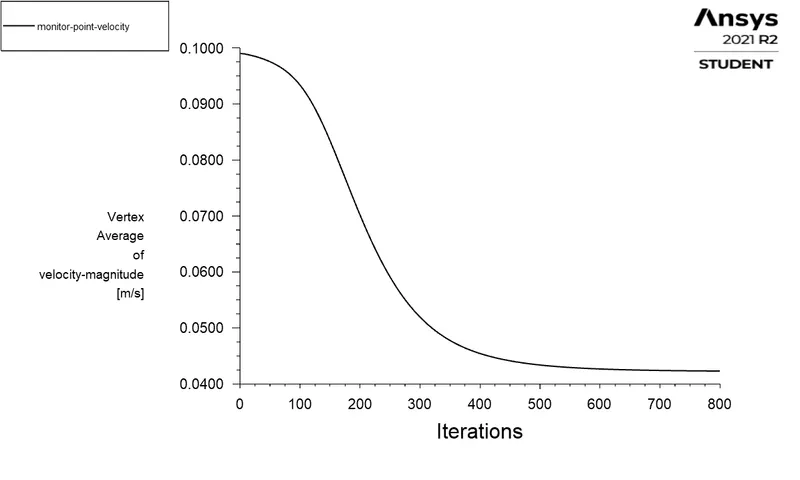
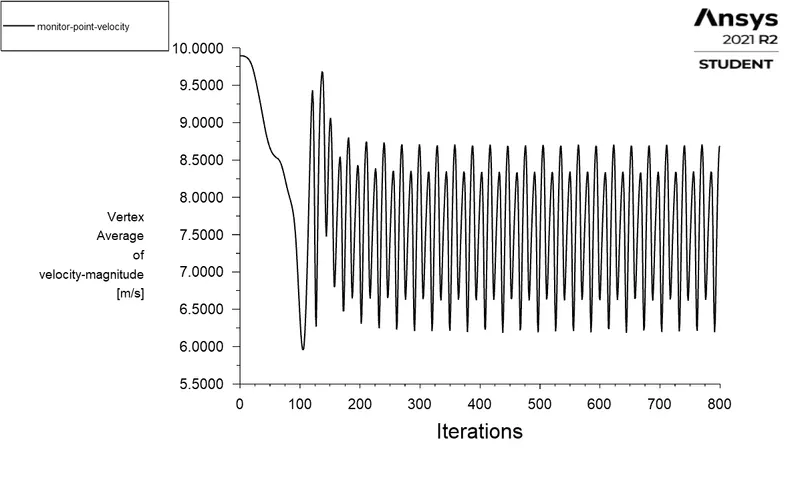
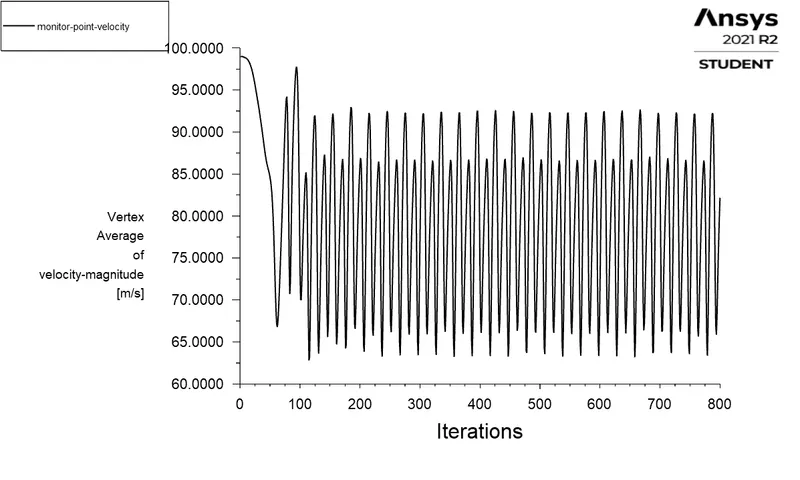
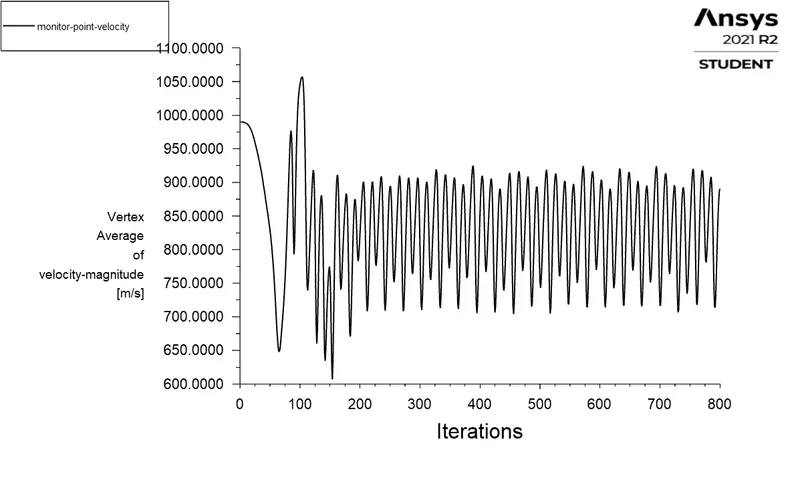
- Plots to show vortex shedding behind the cylinder (Monitor point velocity plots)
- References (Reference Paper or Fluid Mechanics Textbook)
Von Karman Vortex Street:
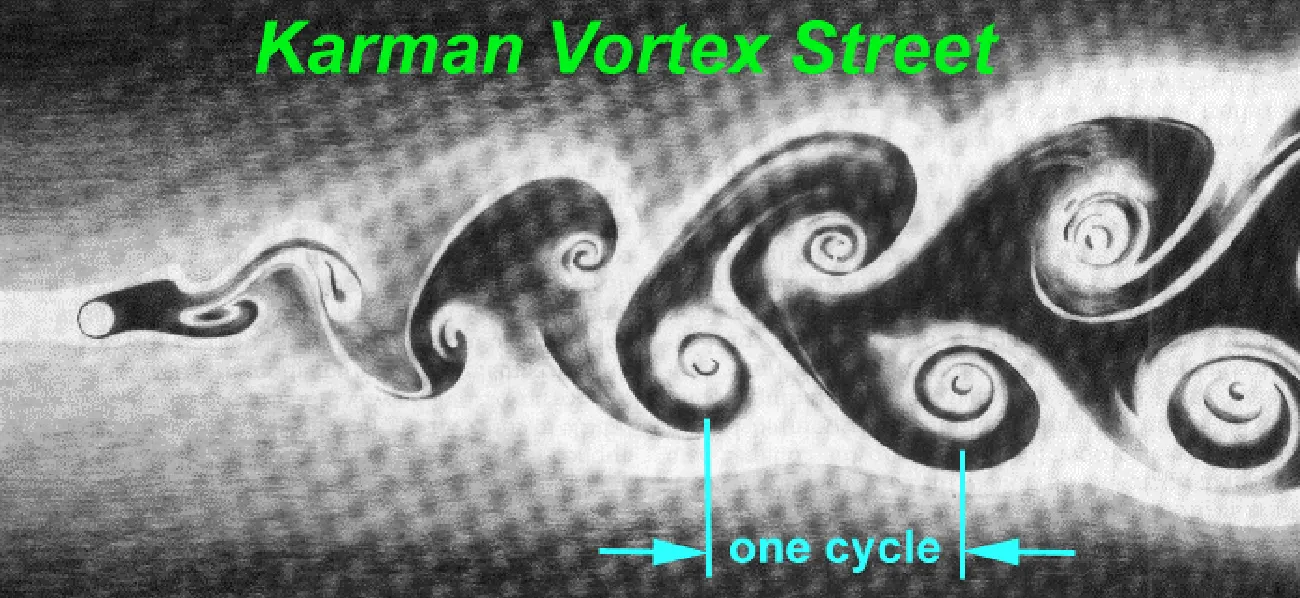
When a fluid flows over a blunt body the repeating pattern of swirling vortices are observed due to unsteady separation of flow of fluid from blunt body surface, is called the Von Karman Vortex Street and the phenomenon is called Vortex shedding.
This phenomenon will occur only at a specific range of flow velocities which are indeed expressed in the form of Reynolds Number (Re).
The Following figure shows Von Karman Vortex Street [1]:
Also,
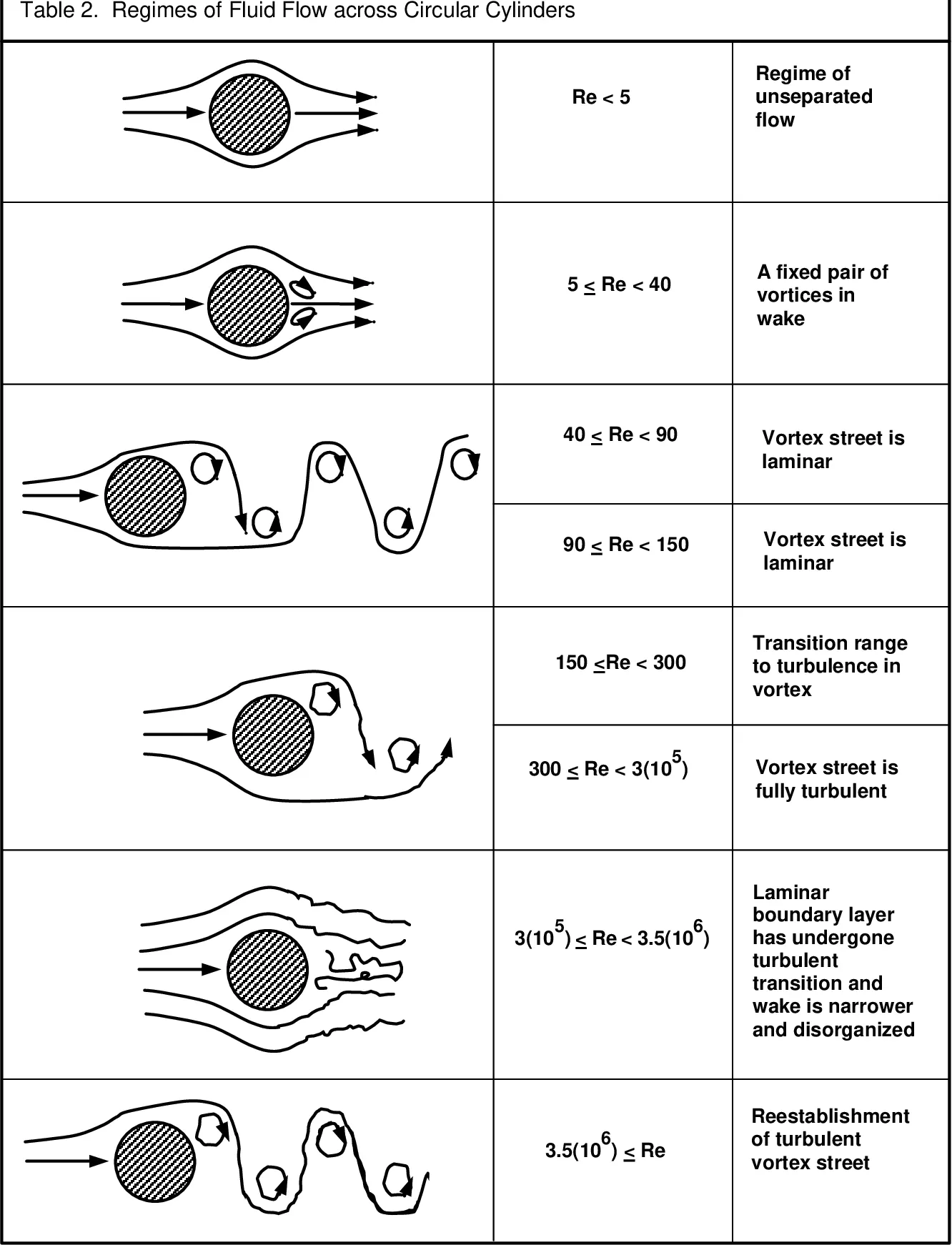
The following table (Table 2) [1] enlists the flow patterns for flow with different Reynolds Number over a circular cylinder.
Strouhal Number (St):
Strouhal Number (St) is the dimensionless number describing the oscillating flow mechanisms. It is dimensionless frequency.
` St = (fL)/U`
where
`St - "Strouhal Number"` ,
`f - " Frequency of Oscillations (Hz)" ` ,
`L - "Characteristic Length (m)" "here L= Diameter of Cylinder (D)" ` ,
`U - "Freestream Velocity (m/s)"` .
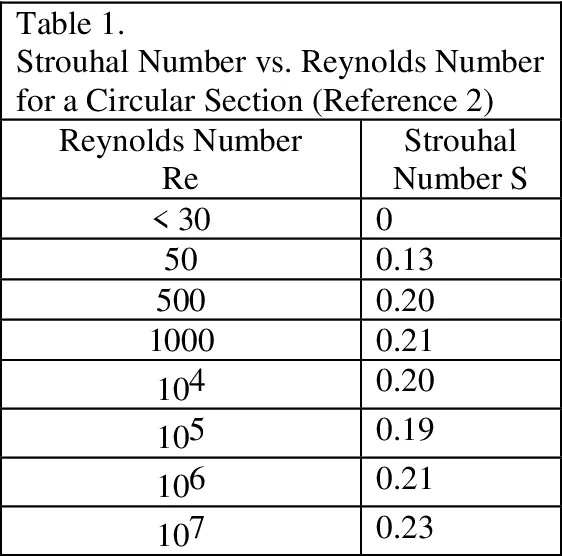
The Following Table (Table 1) [1] gives the variation of Strouhal Number (St) with Reynolds Number for a flow over a circular section:
Calculations:
For this simulation we are considering the imaginary fluid with density(`rho`) of `1 (kg)/m^3` and dynamic viscosity (`mu`) of `0.02 (kg)/(m*s)` . Hence for cylinder with diameter (`D`) of `2 m` the list for velocities to achieve specific Reynolds number (`Re`) is calculated by
`V = (Re * mu)/ (rho * D)`
| Sr.No. | Reynolds Number (`Re`) | Velocity of flow (`U`) in `m/s ` |
| 1 | 10 | 0.1 |
| 2 | 100 | 1 |
| 3 | 1000 | 10 |
| 4 | 10000 | 100 |
| 5 | 100000 | 1000 |
Workflow:
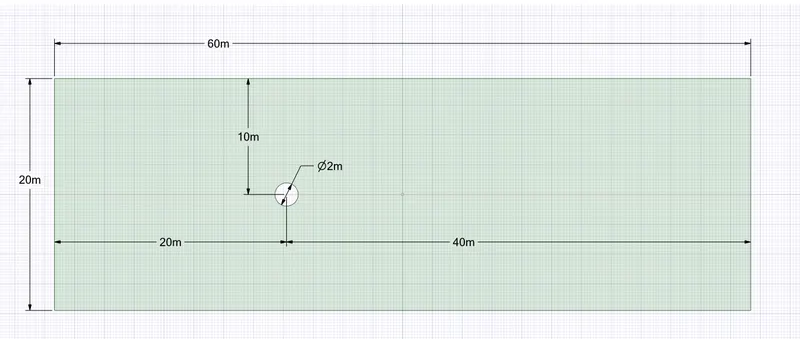
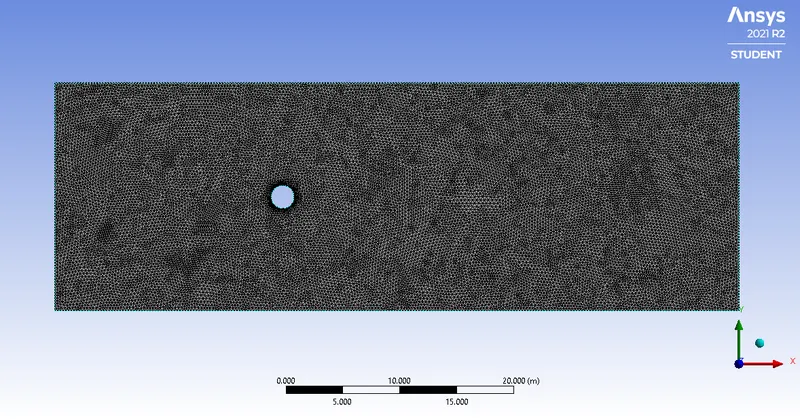
- 2D geometry for flow over a cylinder is prepared in spaceclaim, with 2 m cylinder dia, 20 m upstream distance , 40 m of downstream distance and 10 m distance above and below the cylinder. All distances are from the center of cylinder.
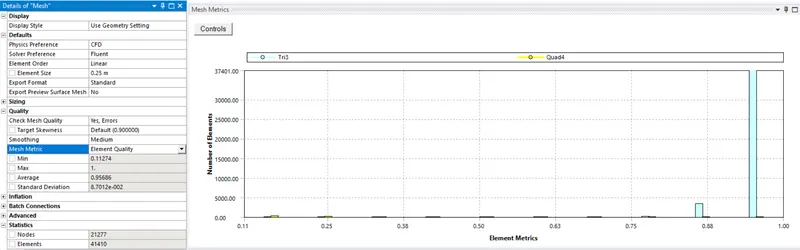
- In Meshing tool, named selections has been assigned to respective geometry elements. Meshing around the cylinder is done using element sizing and inflation methods. Remaining mesh is prepared in triangle dominant mode. Mesh Metrics and Details are as follows:
- In setup the simulation settings are done. Properties to user defined material are assigned. Material used in cellzone is changed to user defined material. Inlet Boundary conditions are assigned as per the case. Reference parameters are updated as per inlet BC. Monitor point , contours and animation settings are done as per requirement. Under Solution > Reports > Definitions , reports for monitor point velocity, for coefficient of drag and lift are set.
- Solution is initialised with Hybrid settings and thereafter run for required number of iterations.
- The required Post processing is done.
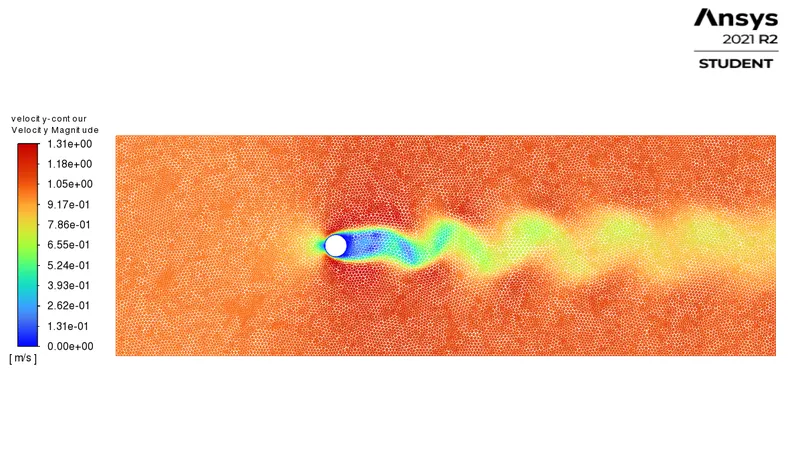
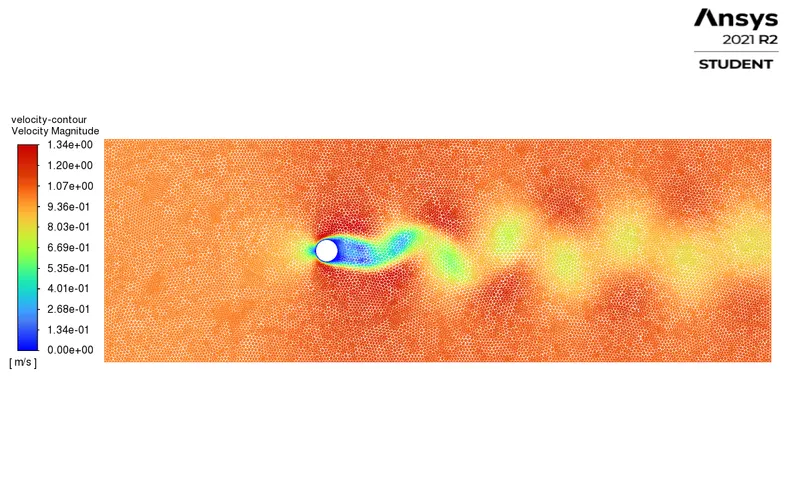
- The monitor point velocity plots show the vortex shedding behind the cylinder.
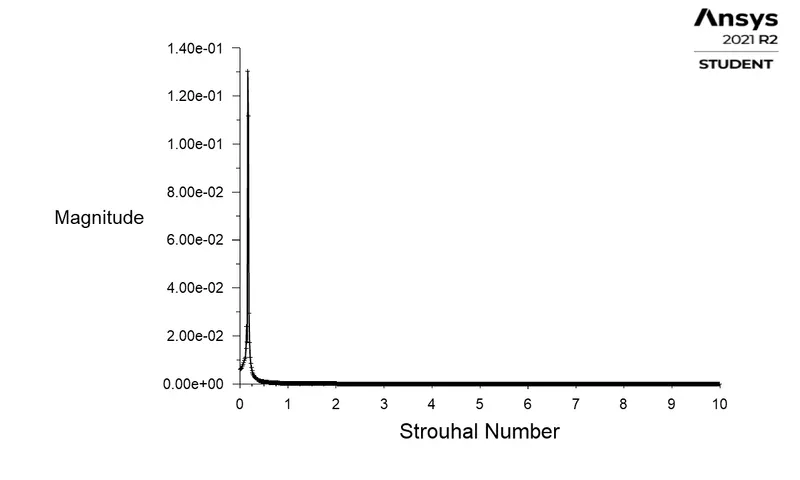
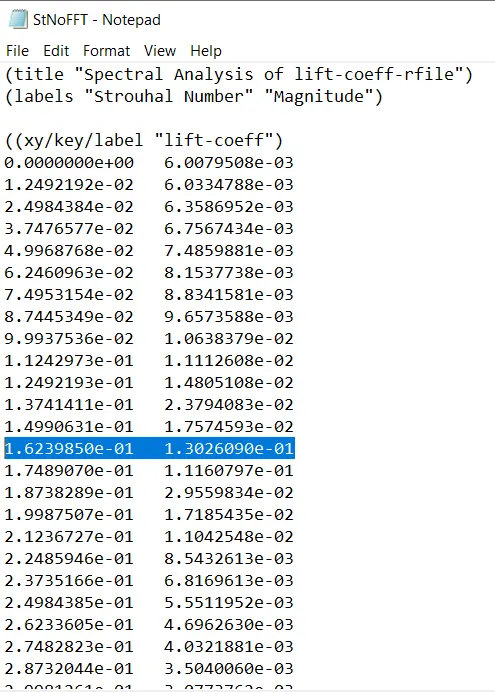
- For Transient simulation FFT for coefficient of Lift is performed to find out Strouhal Number(St).
Simulation Outputs:
Part I:
Reports
1) Steady State Simulation for Re = 100 and `mu = 0.02 (kg)/(m*s)`
| 1 | Residuals Plot: |
 |
|
| 2 | Monitor Point Velocity plot : |
 |
|
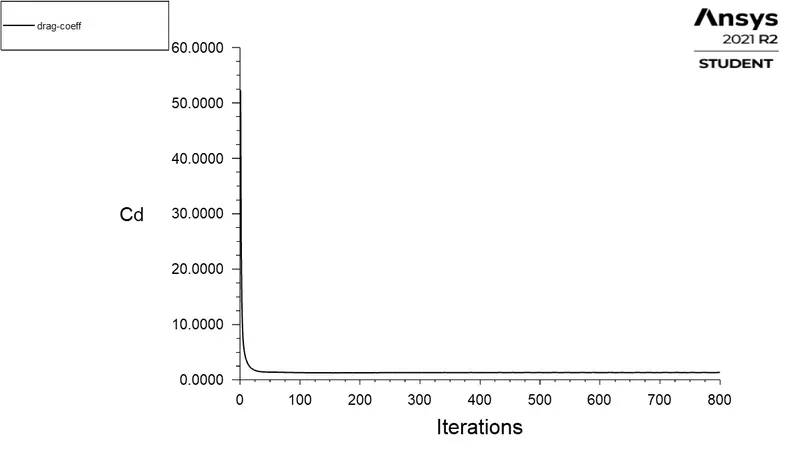
| 3 | Coefficient of Drag (`C_d`): |
 |
|
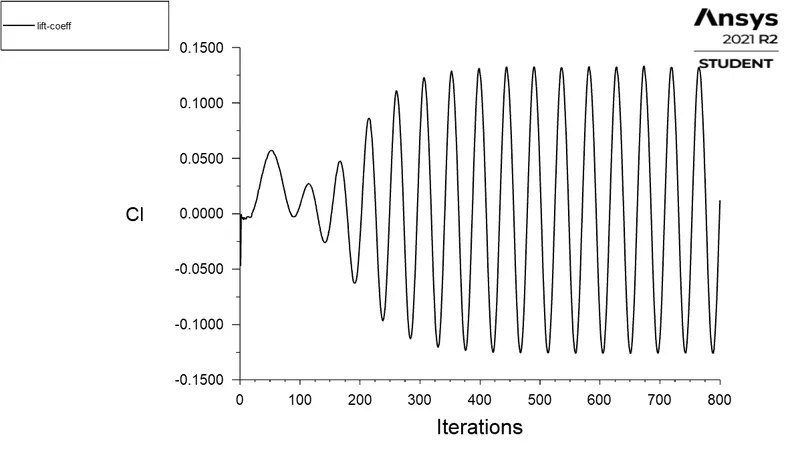
| 4 | Coefficient of Lift (`C_l`): |
 |
|
| 5 | Velocity contours : |
 |
|
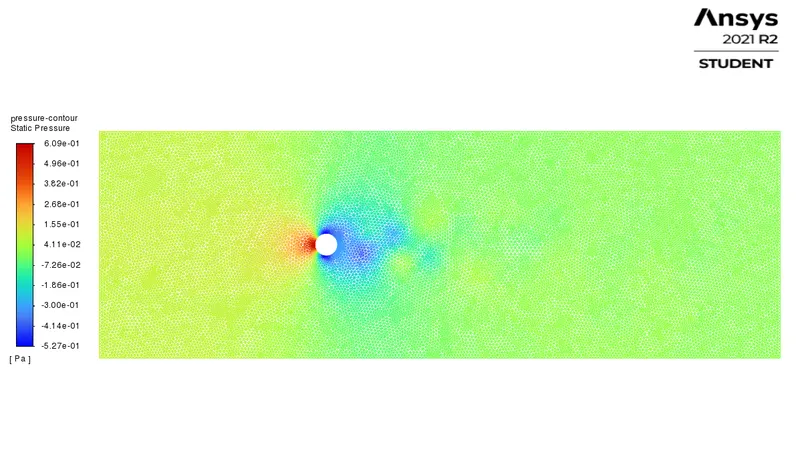
| 6 | Pressure contours: |
 |
|
2) Transient Simulation for Re = 100 and `mu = 0.02 (kg)/(m*s)`
| 1 | Residuals Plot: |
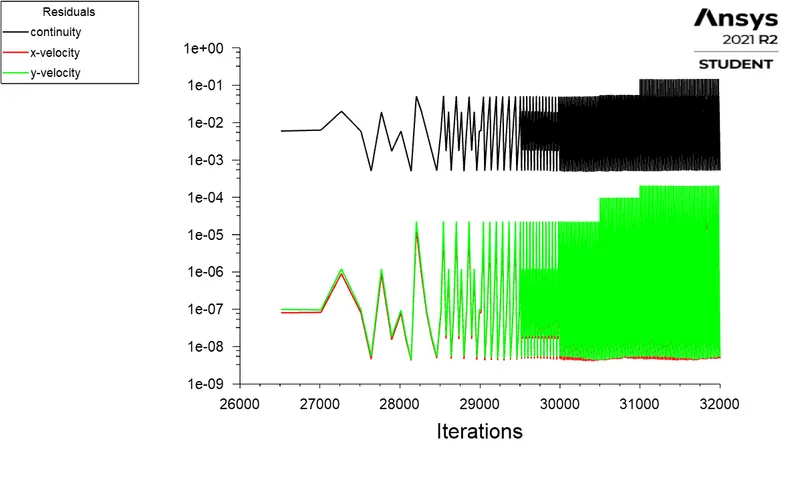 |
|
| 2 | Monitor Point Velocity plot : |
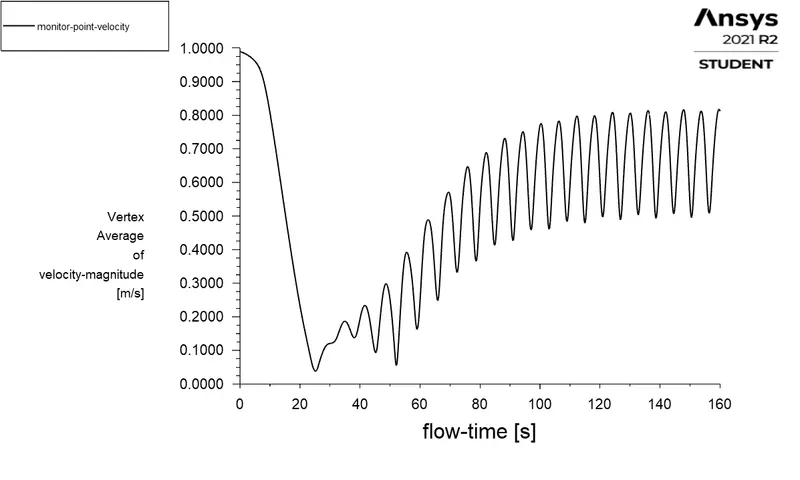 |
|
| 3 | Coefficient of Drag (`C_d`): |
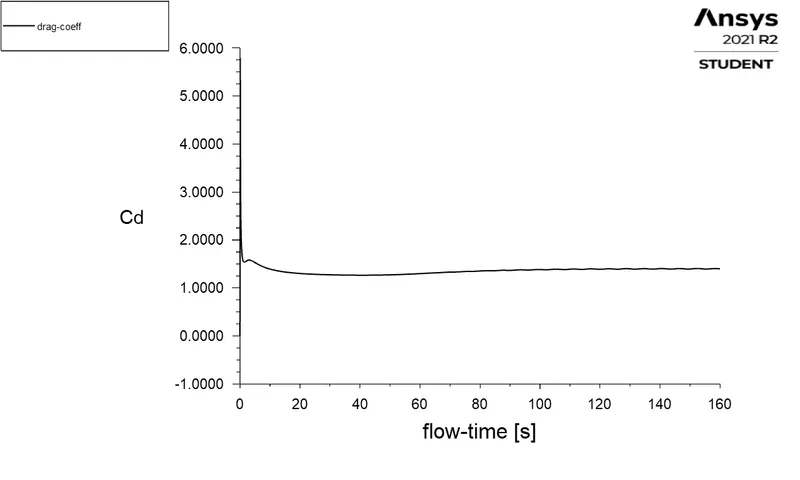 |
|
| 4 | Coefficient of Lift (`C_l`): |
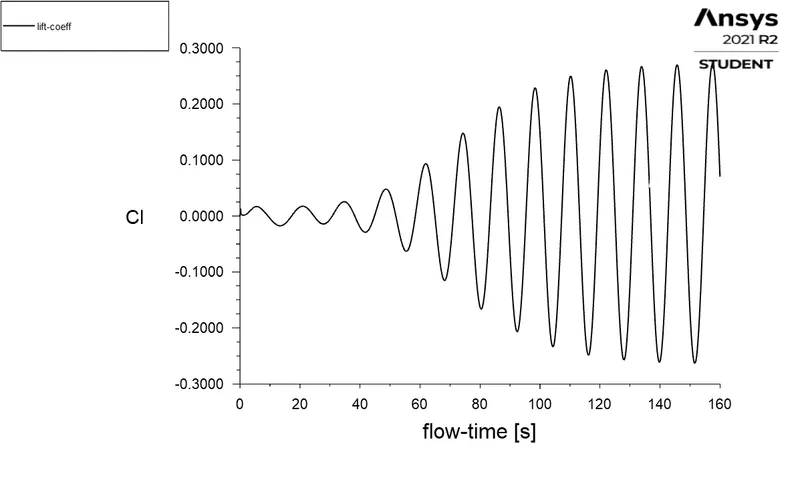 |
|
| 5 | Magnitude Vs Strouhal No Plot (FFT over Coeff of Lift): |
 |
|
| The Value of Strouhal Number from the data written from FFT, is found to be 0.1624 | |
 |
|
| 6 | Velocity contours: |
 |
|
| 7 | Pressure contours: |
 |
Part II:
Repots:
1) Steady State Simulation for Re = 10 and `mu = 0.02 (kg)/(m*s)`
| 1 | Residuals Plot: |
 |
|
| 2 | Monitor Point Velocity plot : No Vortex Shedding |
 |
|
| 3 | Coefficient of Drag (`C_d`): |
 |
|
| 4 | Coefficient of Lift (`C_l`): |
 |
|
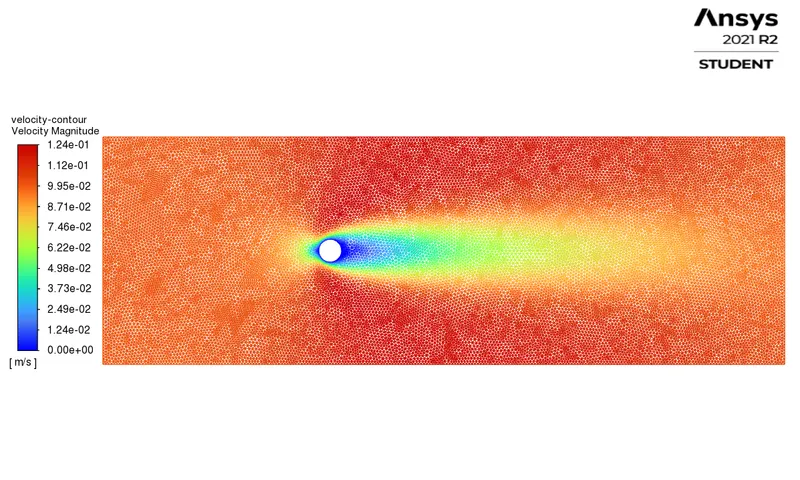
| 5 | Velocity contours : No sign of vortices formation |
 |
|
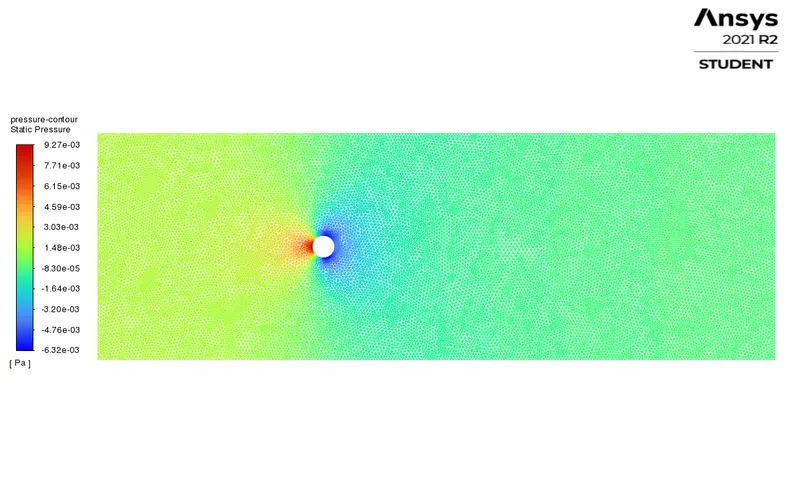
| 6 | Pressure contours: |
 |
|
2) Steady State Simulation for Re = 100 and `mu = 0.02 (kg)/(m*s)`:
The results obtained from Part I are considered here.
3) Steady State Simulation for Re = 1000 and `mu = 0.02 (kg)/(m*s)`
| 1 | Residuals Plot: |
 |
|
| 2 | Monitor Point Velocity plot : |
 |
|
| 3 | Coefficient of Drag (`C_d`): |
 |
|
| 4 | Coefficient of Lift (`C_l`): |
 |
|
| 5 | Velocity contours : |
 |
|
| 6 | Pressure contours: |
 |
|
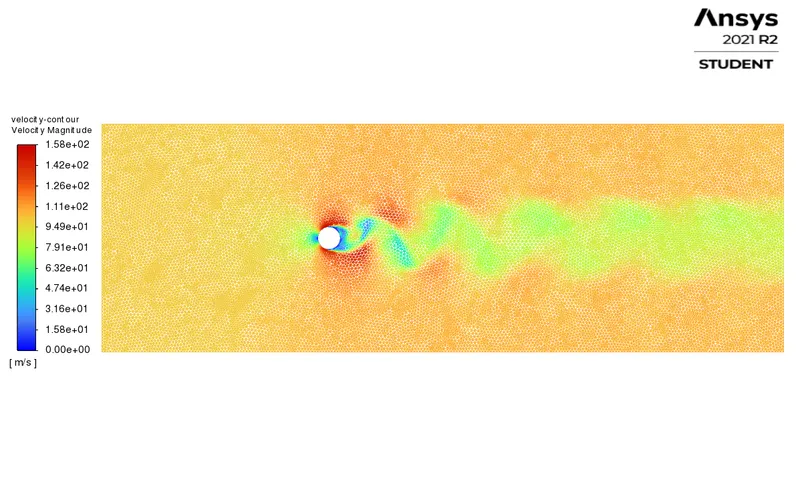
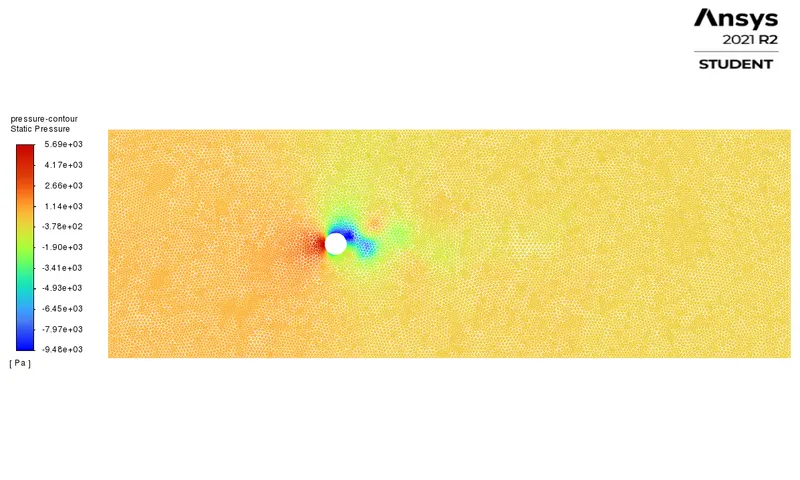
4) Steady State Simulation for Re = 10000 and `mu = 0.02 (kg)/(m*s)`
| 1 | Residuals Plot: |
 |
|
| 2 | Monitor Point Velocity plot : |
 |
|
| 3 | Coefficient of Drag (`C_d`): |
 |
|
| 4 | Coefficient of Lift (`C_l`): |
 |
|
| 5 | Velocity contours : |
 |
|
| 6 | Pressure contours: |
 |
|
5) Steady State Simulation for Re = 100000 and `mu = 0.02 (kg)/(m*s)`
| 1 | Residuals Plot: |
 |
|
| 2 | Monitor Point Velocity plot : |
 |
|
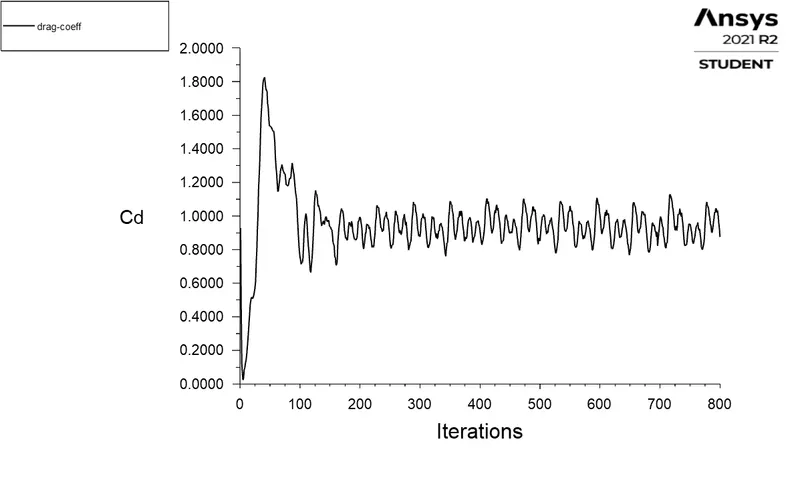
| 3 | Coefficient of Drag (`C_d`): |
 |
|
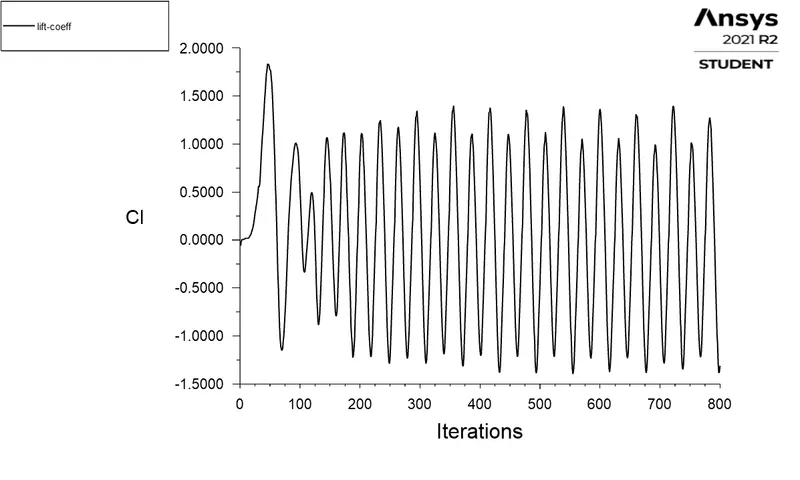
| 4 | Coefficient of Lift (`C_l`): |
 |
|
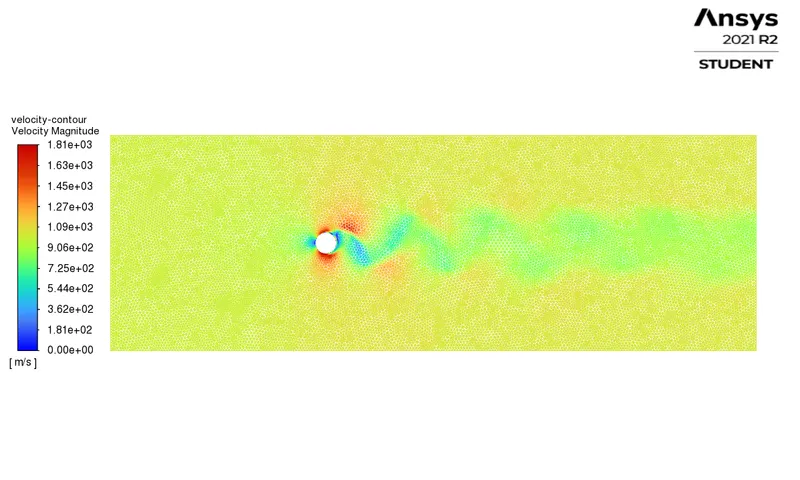
| 5 | Velocity contours : |
 |
|
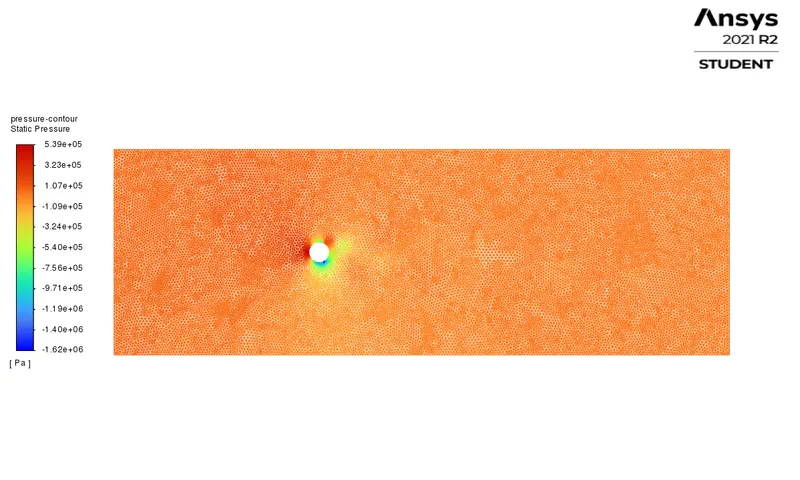
| 6 | Pressure contours: |
 |
|
Results:
Study of Effect of Reynolds Number of the coefficeint of Drag for Flow over a cylinder:
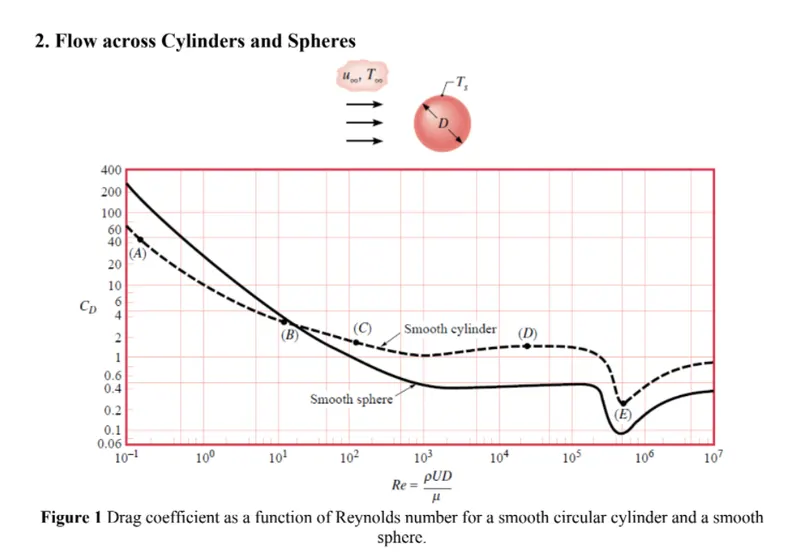
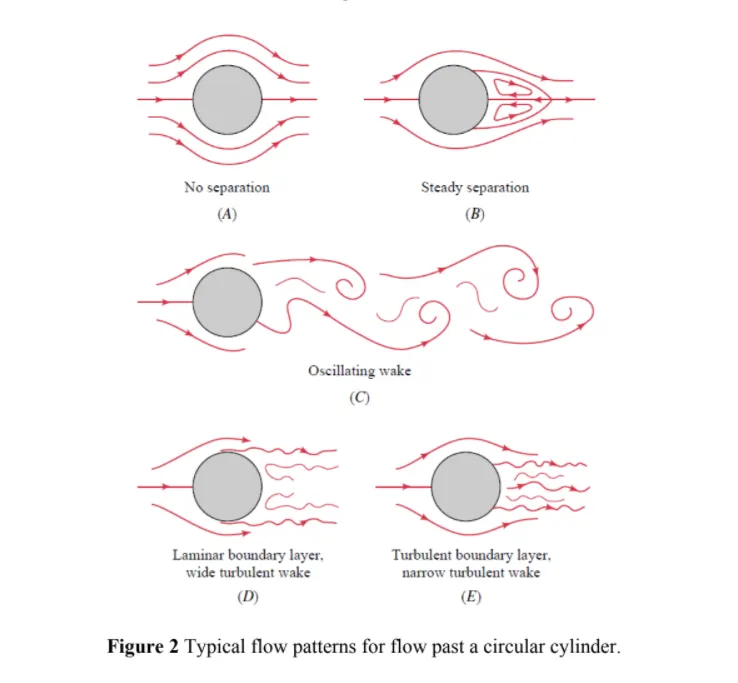
Above figures are taken from the book of " Fundamentals of Heat and Mass Transfer " by Frank Incropera.[2] (Source Internet)
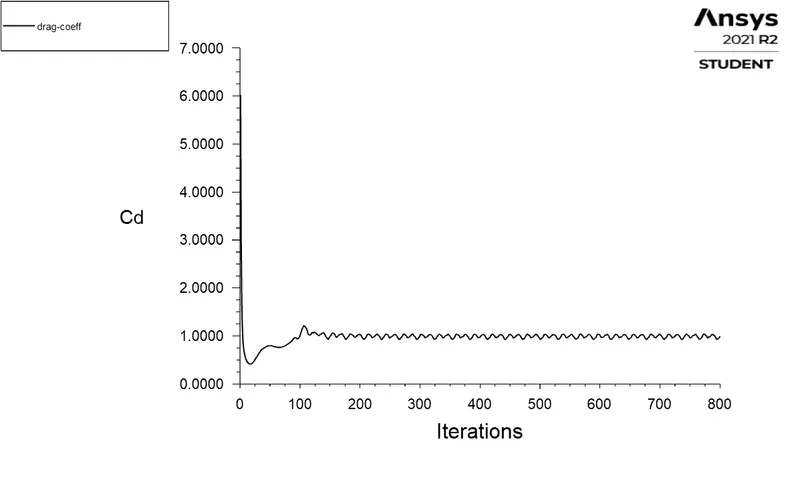
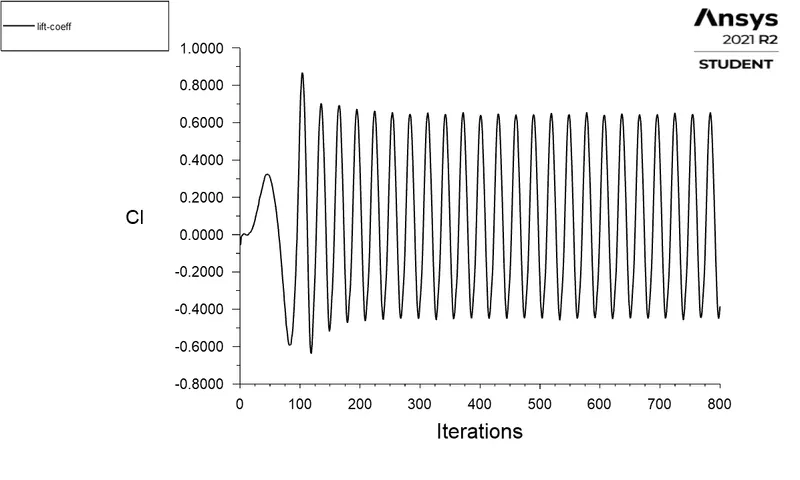
As the values of coefficient of lift are oscillating the rms values of coefficient of lift are calculated from the lift coefficients data for maximum and minimum values (peak to peak), similarly for lower Reynolds number the values of coefficient of drag are constant but for Reynolds number more than 1000 the values are pulsating hence average over the 200 number of iterations is considered here
Table of Drag and Lift Coefficients for flow over a smooth cylinder for various Reynolds numbers:
| Sr.No. |
Reynolds |
Solver Type |
Numerical value of Coefficient of Lift (`C_l`) | Numerical Average value of Coefficient of Drag (`C_d`) | Experimental value of Coefficient of Drag (`C_d`) | Percentage error for Coefficient of Drag (`C_d`) |
| 1 | 10 | Steady | 0.0021 | 3.3330 | 2.87 | 16.13 % |
| 2 | 100 | Steady | 0.0919 | 1.3494 | 1.33 | 1.46 % |
| 3 | 100 | Transient | 0.1874 | 1.3990 | 1.33 | 5.19 % |
| 4 | 1000 | Steady | 0.4924 | 0.9967 | 0.984 | 1.29 % |
| 5 | 10000 | Steady | 0.6915 | 1.1433 | 1.09 | 4.89 % |
| 6 | 100000 | Steady | 0.9220 | 0.9761 | 1.21 | -19.33 % |
Conclusions:
- From the above table it is clear that the numerically computed values are in decent match with the experimental values for coefficient of drag for flow with different Reynolds Number. As the Reynols number increases from 10 to 1000 the value of coefficient of drag decreases from 3.333 to 0.9967 then it slightly increases over 1 and stays constant upto Reynolds number of 100000.
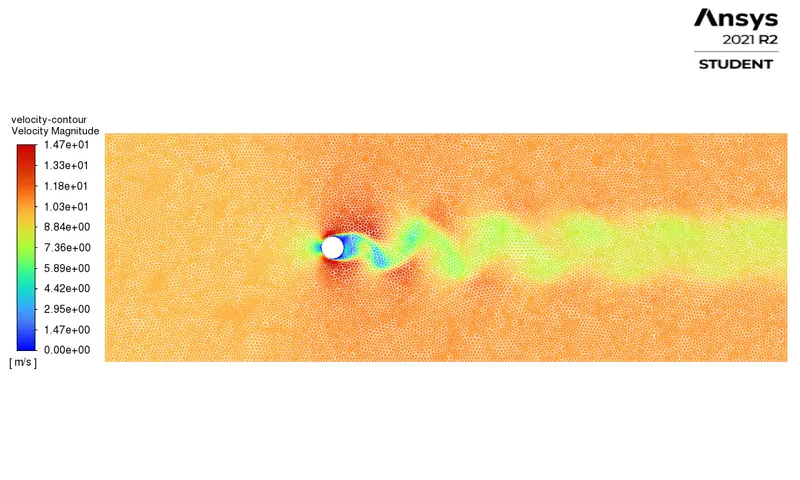
- The effect of vortex shedding is not observed for Reynolds Number of 10. From Reynolds number 100 and above vortex shedding is observed.
- The value of Strouhal Number (St) obtained from the FFT of coefficient of lift data for the transient simulation (for Re=100) is well acceptable, as the it lies between the values 0.13 and 0.20 which are standard Strouhal Number values for Reynolds number 50 and 500 respectively. [1]
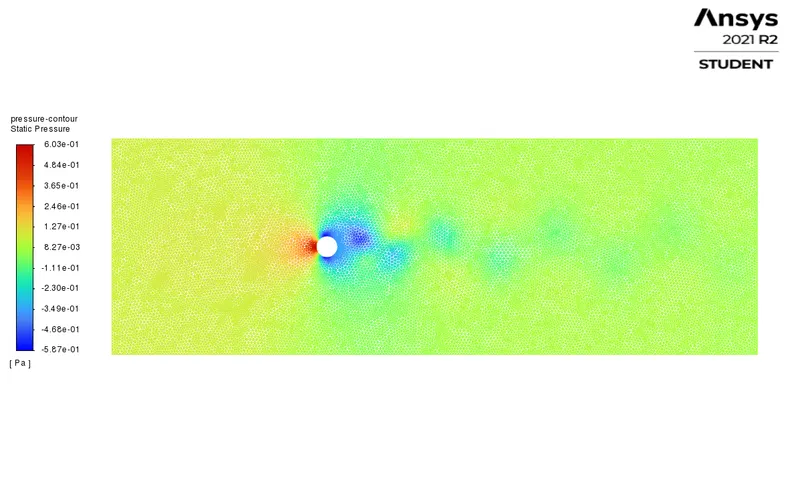
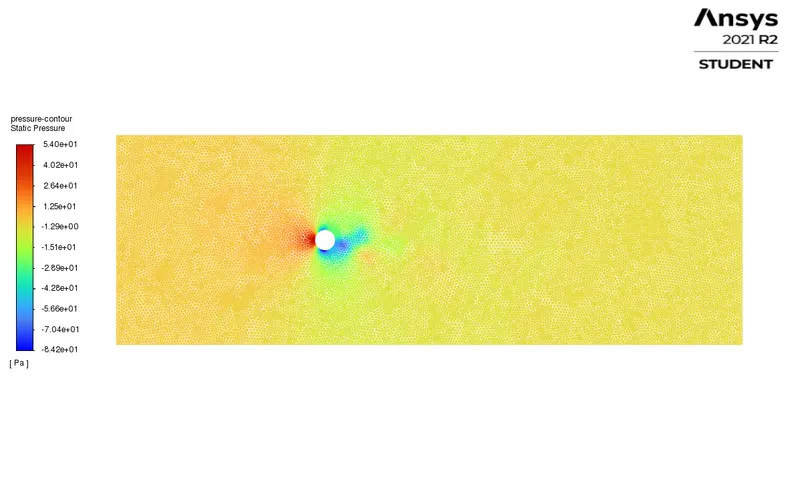
- The flow patterns observed are similar to the standard flow patterns provided by the references [1] & [2].
Reference:
[1] Irvine, Thomas F.. “KARMAN VORTEX SHEDDING AND THE STROUHAL NUMBER.” (1999).
[2] " Fundamentals of Heat and Mass Transfer " by Frank Incropera. (Source Internet)