Week 2 - Flow over a Cylinder.
Aim : Simulate the flow over a cylinder and explain the phenomenon of Karman vortex street.
Theory
Consider a stream of fluid flow past a circular cylinder. As fluid passes te topmost point of the cylinder, it finds itself unable to negotiate the rear half of the cylinder where there is anuphill pressure gradient. Hence the fluid separates from the leading surface and the flow is seperated individually with highly organised and typically consists of two sequence of vortices, one from each side of the body with circulation of opposite sign. Depending on the shape and motion of the body more complicated patterns of vortices may arise.
In the wake of the cylinder, the flow patterns consists of an alternating system of vortices or region of rotation as shown in the fig. This repeating pattern of swirling vortices at the wake of the cylinder is known as Karman vortex street.
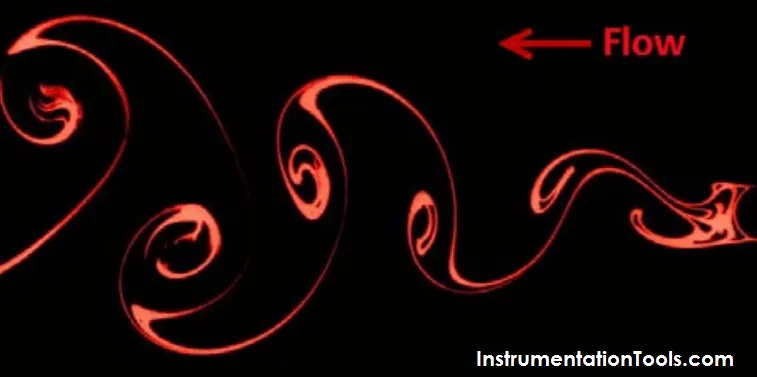
It is important to note that even if te incoming flow is steady (i.e. does not change with time) , the unsteadiness is intrinsically generated and the karman street is formed downstream of the body.
A vortex street can be observed only over a givn range of Reynold's number . Normally one finds that for
`Re<Re_s<5` the flow is steady and attached to the cylinder . At `Re_s` the flow separated and two symmetric recirculation zones are formed but the flow remains steady. Beyond `Re_cirt~~46` the flow becomes unsteady and the karman vortex street appears. At sufficiently large Reynolds number the vortex persists for many cylinder diameters but it can break down far downstream and reorganise itself into a secondary structure.
The Reynolds number is a measure of the ratio of inertial to viscous force in the flow of a fluid and may be defined as :
`Re = (rho V D)/(mu)`
`rho` = Density
D = the diameter of the cylinder around which the fluid is flowing
V = the steady velocity of the flow upstream of the cylinder
`mu` = the dynamic viscosity of the fluid
Strouhl made the first measurment of the frequencies associated with the shedding of vortices by defining the strouhals number (S)
`S = (f D) / (U)`
D = Dieameter
U = Velocity
f = Frequency
Both the Reynolds number and strouhals number are dimensionless number.
On the practical side ,the karman street can lead to unwanted noise or even cause failure of structure when the vortex shedding fequency coincides with the natural frequency of structure .This type of vortex-induced oscillation can occur in a variety of situtaion such as chimneys, bridges, heat exchanger tubes , overhead power cables and marine structures. Therefore understanding of the physics of the karman vortex stret is crucial to avoid disasters in these stuations.
Case : 1
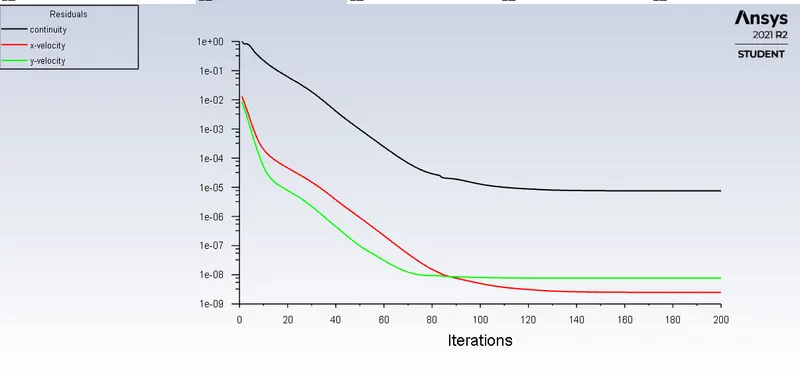
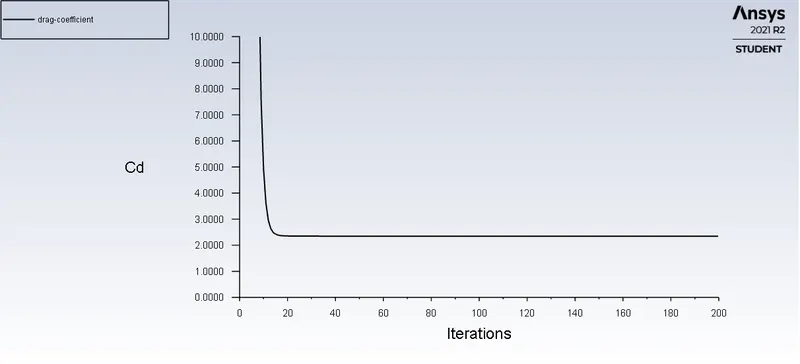
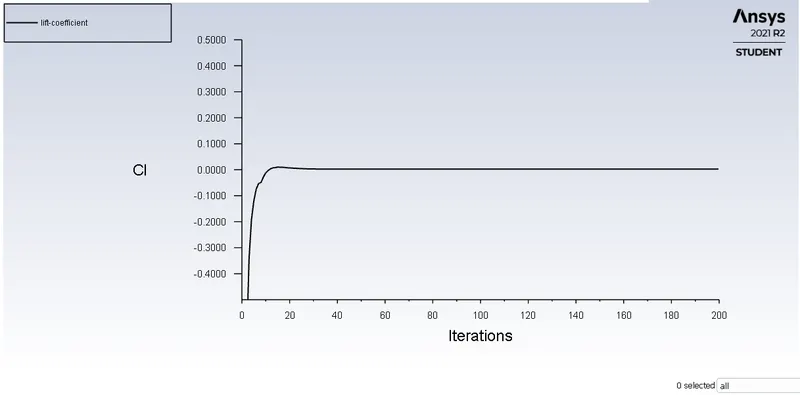
Steady state , Re = 100 ,
mesh size = 0.25m , velocity = 1 m/s
Residuals
Drag Coefficient
Lift Coefficient
Vortex shadding
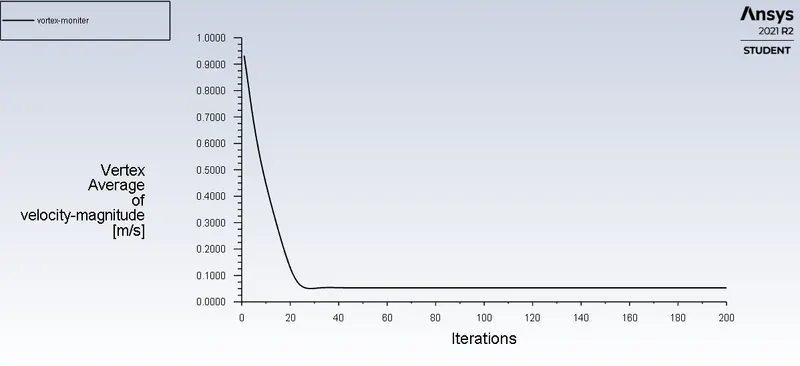
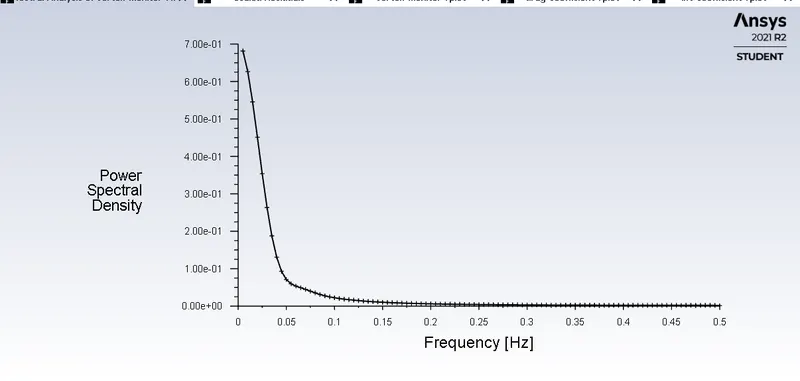
Strouhl Number
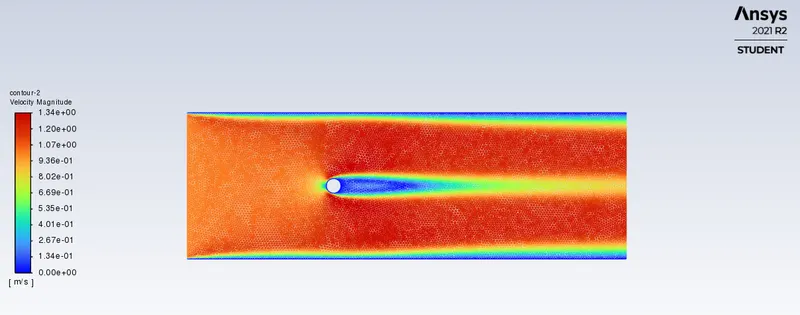
Contour
Unsteady State , Re = 100
mesh size = 0.25m , velocity = 1 m/s
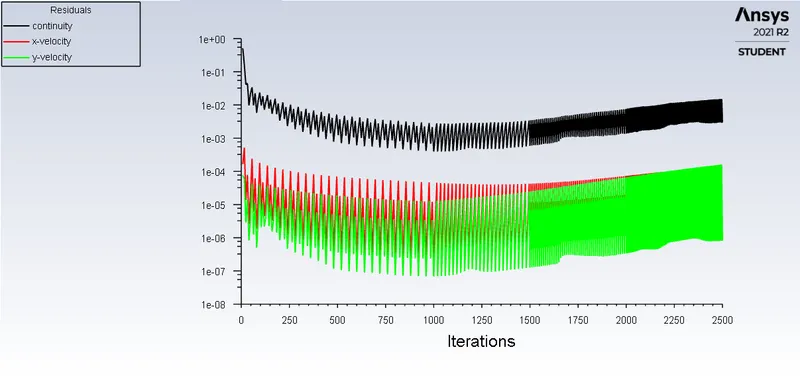
Residuals
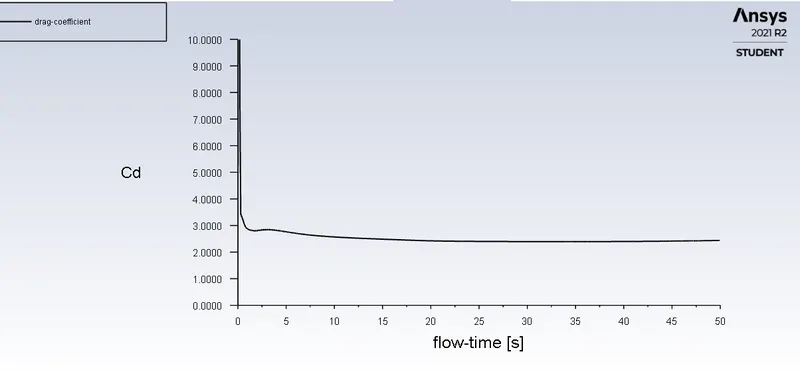
Drag Coefficient
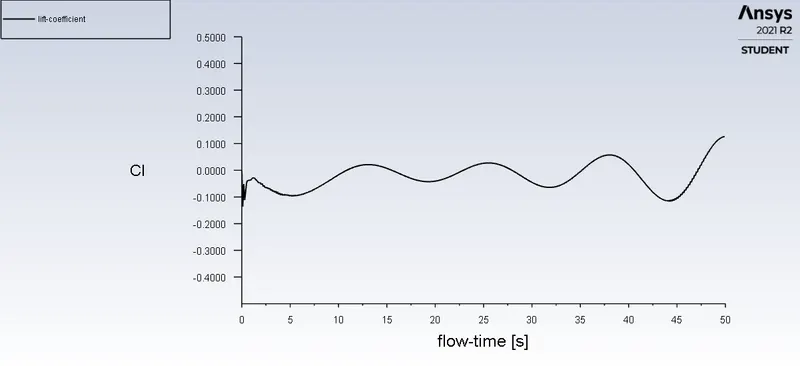
Lift Coefficient
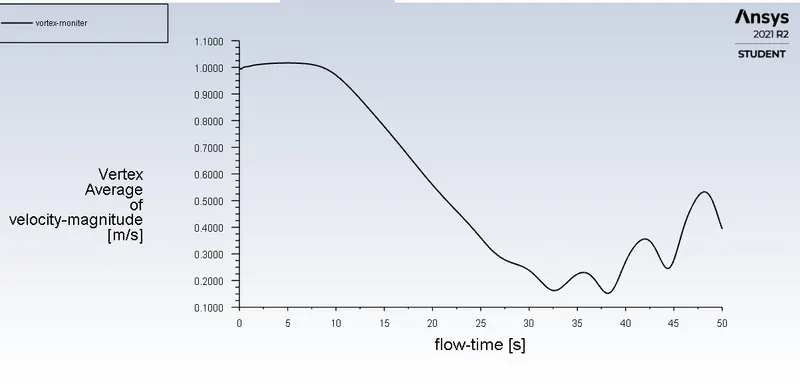
Vortex Shadding
Strouhl Number
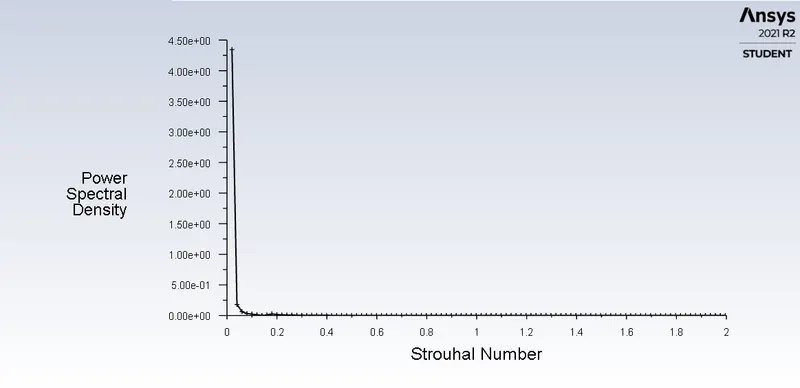
From the above graph we can say that the strouhal number is 0.14.
Contour
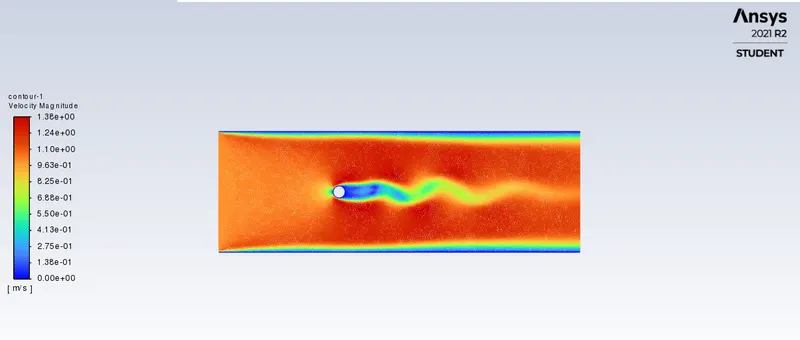
Case : 2
1) Steady state at Re = 10, Velocity = 0.25 m/s, Density = 1 kg/cm^3 , Viscosity = 0.05 kg/m.s
Residual
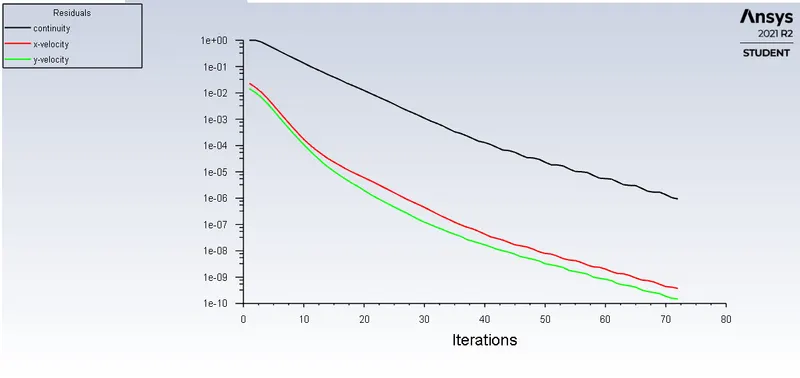
Drag Coefficient
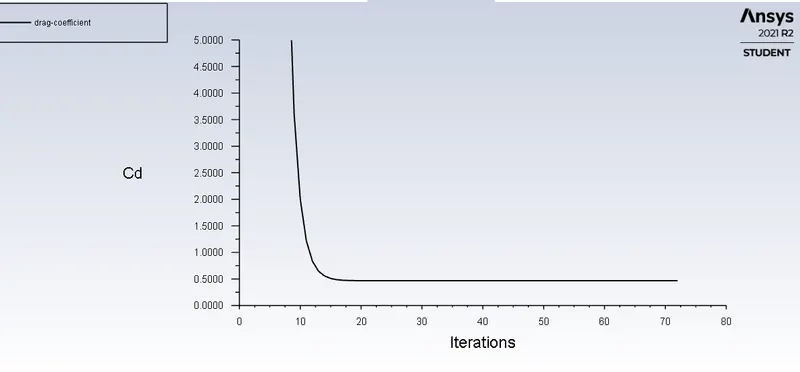
Lift Coefficient
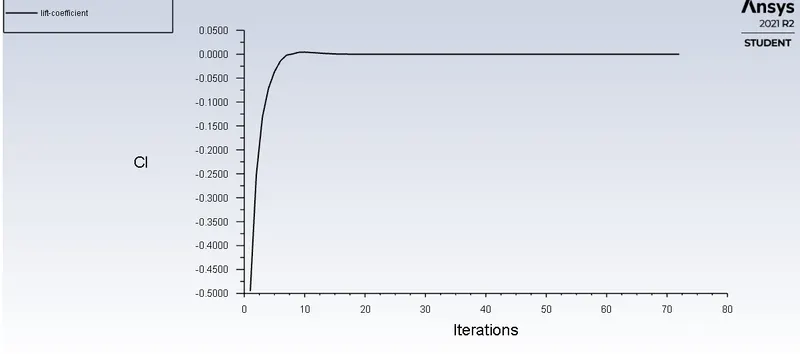
Contour
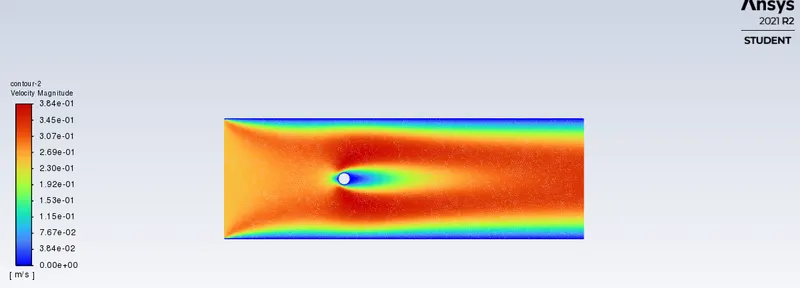
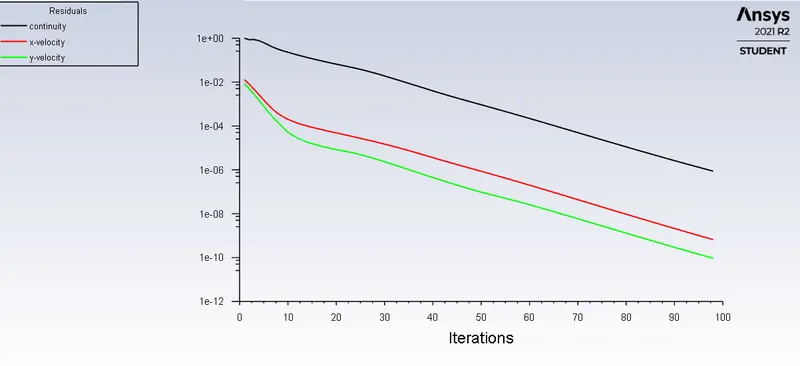
2)Steady state at Re = 100 , Velocity = 2.5 m/s
Residual
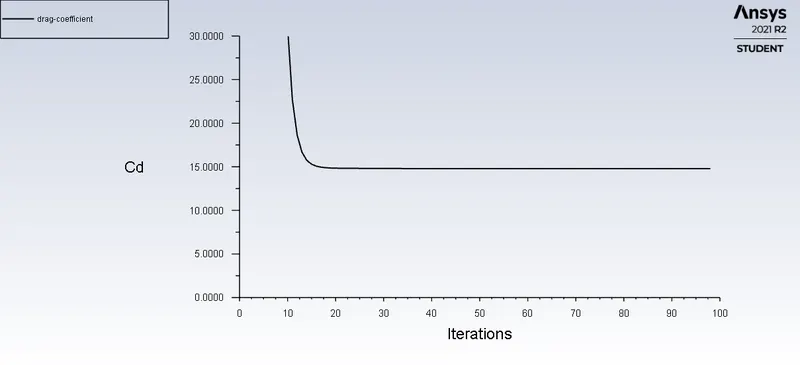
Drag Coefficient
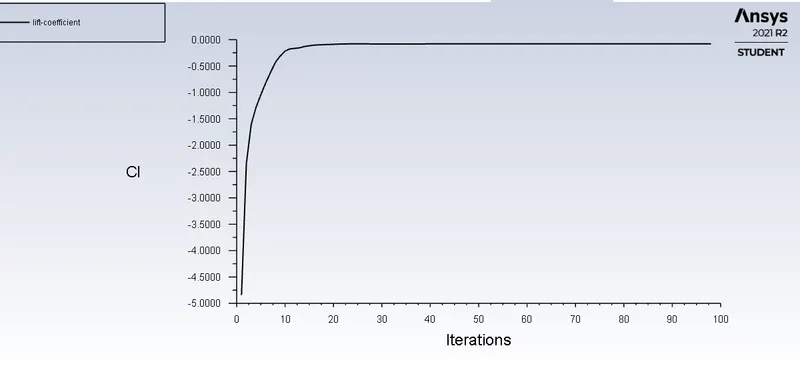
Lift Coefficient
Contour
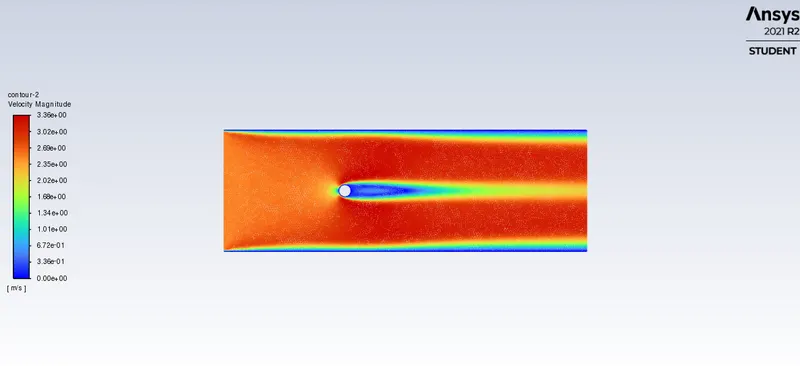
3) Steady state at Re = 1000 , Velocity = 25 m/s
Residual
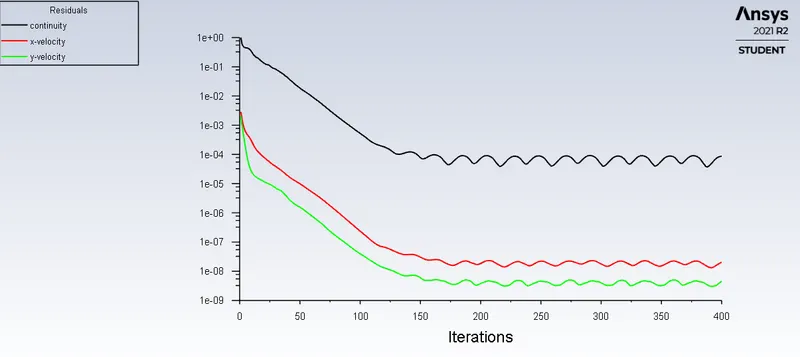
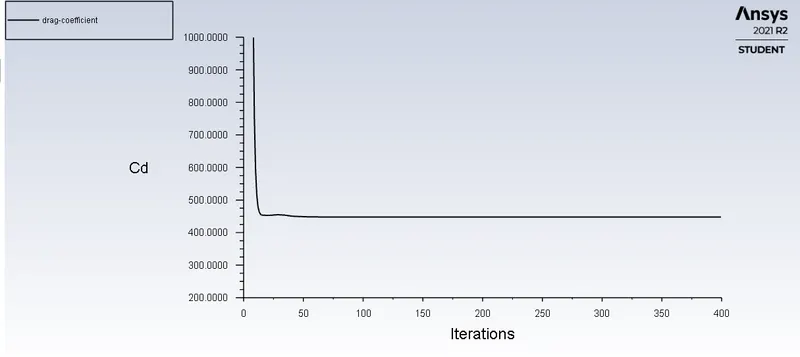
Drag Coefficient
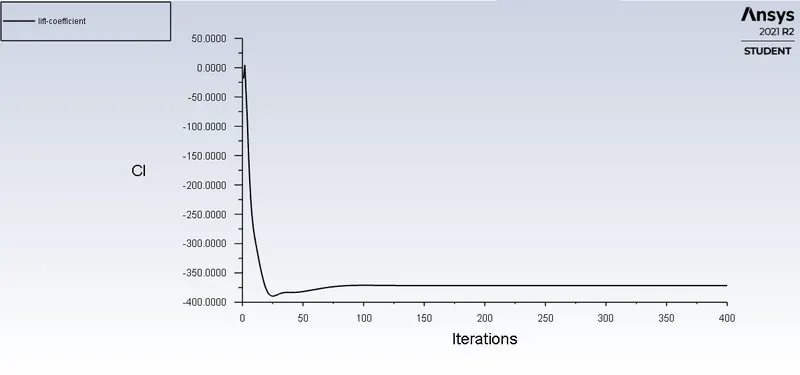
Lift Coefficient
Contour
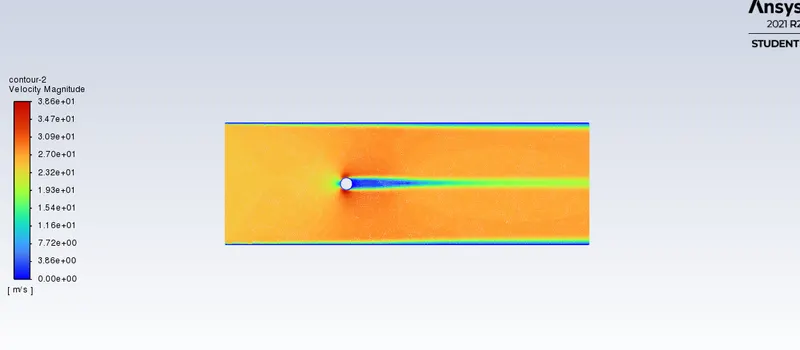
Here i am using K-omega SST model because at Re > 2000 flow is turbulent.
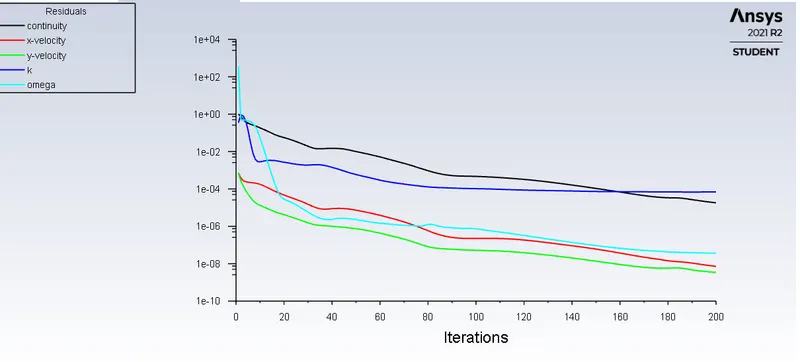
4) Steady state at Re = 10,000 , Velocity = 250 m/s
Residual
Drag Coefficient
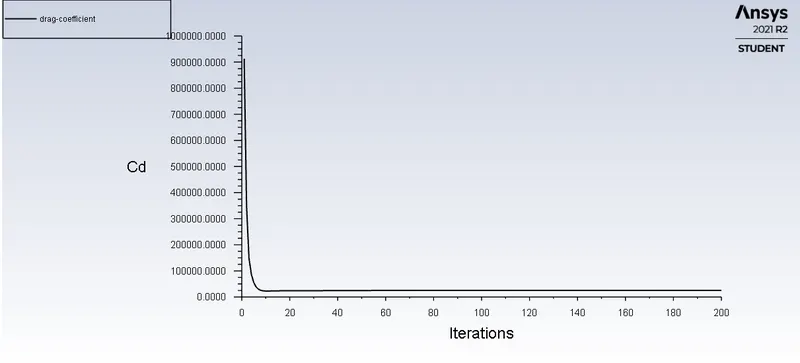
Lift Coefficient
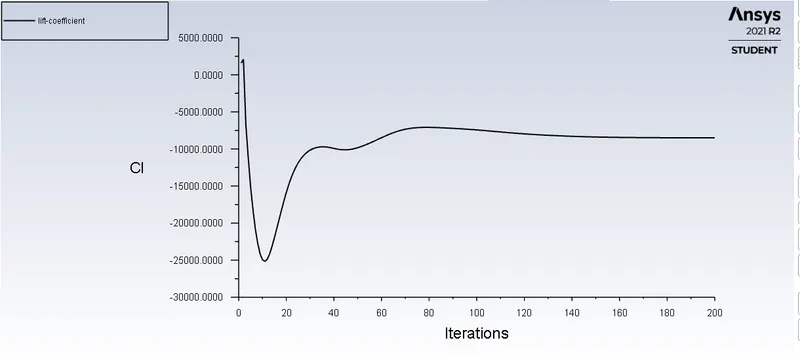
Contour
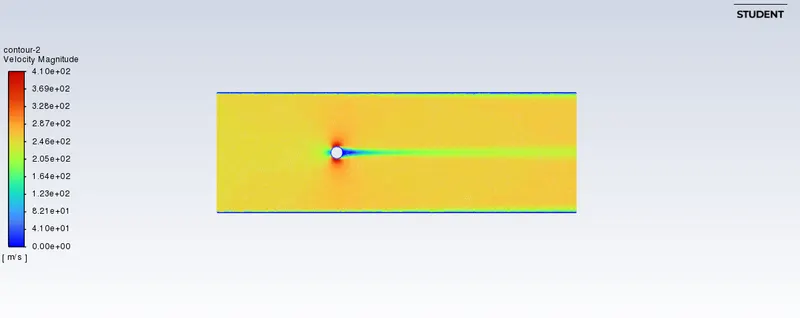
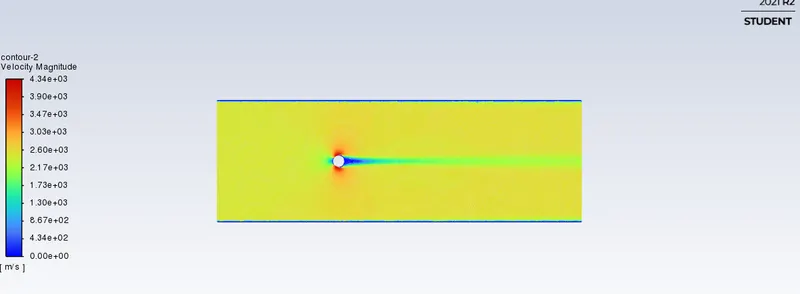
5) Steady state at Re = 1,00,000 , Velocity = 2500 m/s
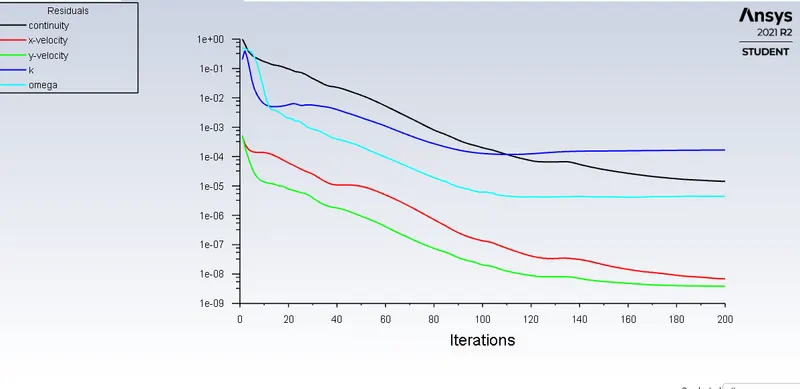
Residual
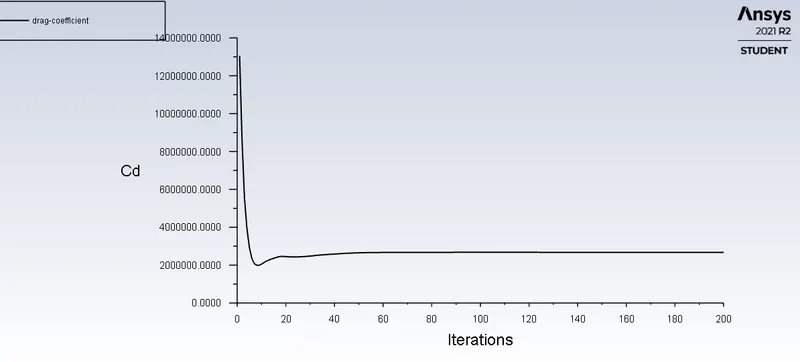
Drag Coefficient
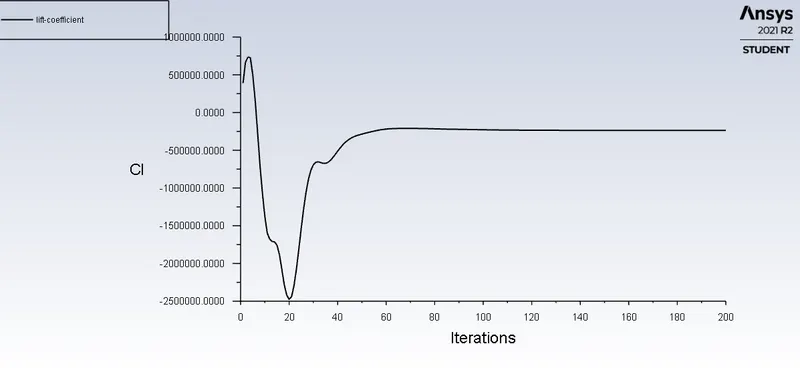
Lift Coefficient
Contour
Effect of Reynold's number on the coefficient of Drag
- As we increase the Reynolds number, drag coefficient value increases.
- At Re = 10, the value of drag coefficient is very low which is 0.4.
- At Re = 100, the value of drag coefficient is 14.79.
- At Re = 1000, the value of drag coefficient is 447.71
- At Re = 10,000, the value of drag coefficient is 25374.
- And then if we increase the Reynolds number drag coefficient even increase more.
- But there is region between laminar and turbulent called transition region where drag coefficient is less than laminar region.
- As the flow velocity is increase, vortices are formed and the downstream vortices become unstable, even more increasing of Reynolds number, the wake is high and they generates large amount of drag.
Conclusion
Hence drag coefficient value is increasing as we increase the Reynolds number but there us certain region where drag coefficient is less. The region between laminar and turbulent called transition region where drag is less than the laminar region.Also as we increase the Reynolds number, vortices start to form there their value start increase.
Referance
https://www.sciencedirect.com/science/article/pii/S0307904X08000243