Week 2 - Flow over a Cylinder.
Assignment-simulation of flow over cylinder
Aim-Simulate flow over a cylinder and explain the phenomena of Karman vortex street and vortex shedding
Objective –
- To understand concept of vortex shedding
- To understand concept of Karman vortex street
- compare simulation run in both steady and unsteady(transient) state solver with Reynold number equal to 1000
- Compare the simulation at different Reynold number for steady state solver
- How relate Reynold number and Strouhal number
Study part-
1.Simulate the flow with steady state and unsteady state case and calculate the Strouhal Number of Reynold number equal to 100
2.calculate the coefficient of drag and lift over a cylinder by setting Reynold number to 10,100,1000,10000,100000 with steady state and transient state
3.compare effect Reynold number on the coefficient of drag (compare with standard literature review)
Theory and introduction
1.vortex shedding- in fluid dynamic, vortex shedding is an oscillating flow that takes place when fluid such as air or water flows past a bluff (as opposed to streamlined) body at certain velocity, depending upon size and shape of body. In this flow vortices are created back of the body and detach periodically from either side of the body forming a Karman vortex street
2.bluff body-body that, as a result of its shape, has separated flow over substantial part of its surface. Usually, bluff body induce flow separation at position where the velocity at edge of the boundary layer is greater than free stream velocity
3.karman vortex street – In fluid dynamics a Karman vortex street is repeating pattern of swirling vortices caused due to vortex shedding.it is responsible for unsteady separation of flow of fluid around the bluff body.it is perform at a certain range of velocity, specified by range of Reynold number typically above Re value about 40
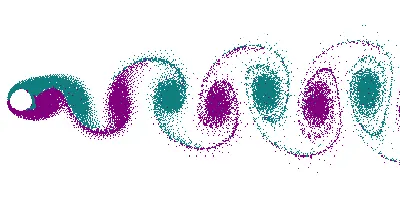
Fig:Vortex street for cylindrical object

Fig:Vortex street for 2D liquid of hard disks
4. Reynold number (Re)-it decide the flow is laminar or turbulent, whenever Reynold number is less than 2000 flow is laminar and greater than 2000 flow is turbulent (for internal flow only) and for flow over cylinder: it will be an external flow for which the Reynolds number less than 1 e 5 will be considered as laminar
Re=
Where,
=Density
V= flow Velocity
D=Diameter
µ=Kinematic viscosity
5.strouhal number-the Strouhal number is dimensionless quantity describing the oscillatory flow mechanism
St=(fD/V)
f=frequency at which vortex shedding is take place and it’s related to Strouhal number
D=diameter of cylinder
V=flow velocity
Strouhal number is depends upon Reynold number it is generally take 0.22. but over the four order of Reynold number varies between 0.18-0.22
Steps involved in the simulations
- Geometry
- Mesh
- Setup
- Solution
- Results
Case-1. Simulate the flow with steady state and unsteady state case and calculate the Strouhal Number of Reynold number equal to 100
Subcase 1.1 flow over cylinder: steady state
Geometry creation-create geometry of cylinder with diameter of 2m and close create computational domain

Mesh-create mesh with element size of 0.25m and named your boundary condition
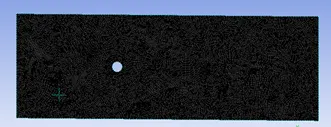
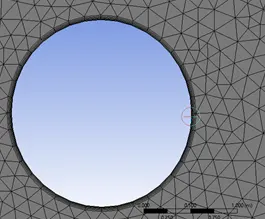
And inflation layer is generated for capturing detail physic near the wall with the number of layers is 6
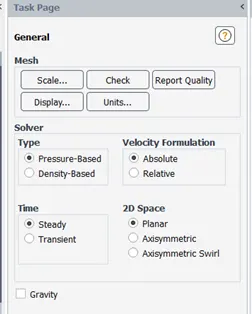
Setup-
Here we can set up your physics and viscous model as laminar, also create material and boundary condition
Reynold number donate as Re
Re=
For Re=100 I have consider density=1kg/m^3, velocity=1m/s, viscosity=0.02
Re= (1*1*2)/0.02
Re=100
Note -if you consider velocity=2.5m/s then your viscosity will be 0.05
Steady State simulation (Re=100)
Choose method=simple
Initialization=hybrid
Solution
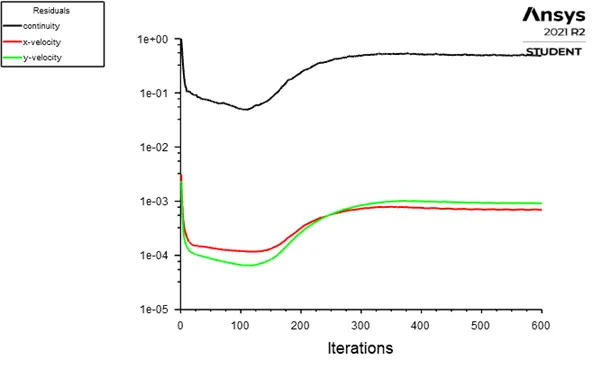
Residual plot-
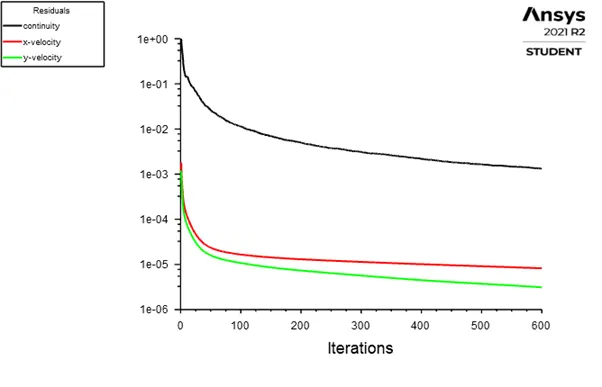
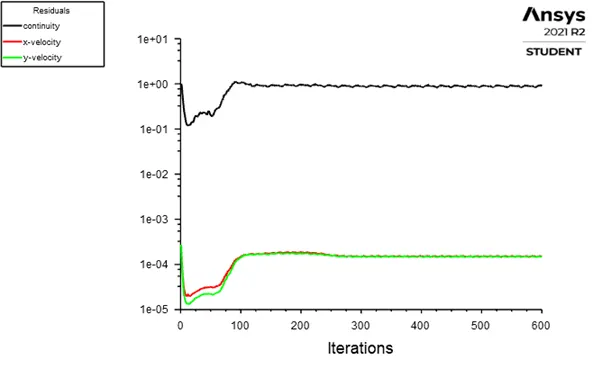
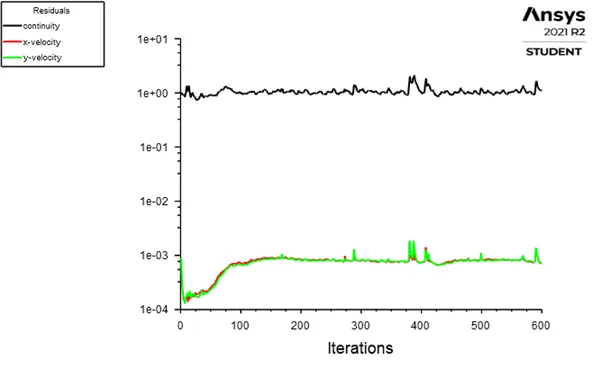
From residual plot we can say that solution is converge after approximately 350 to 400 iterations because after 400 iterations in residual plot there is not any change
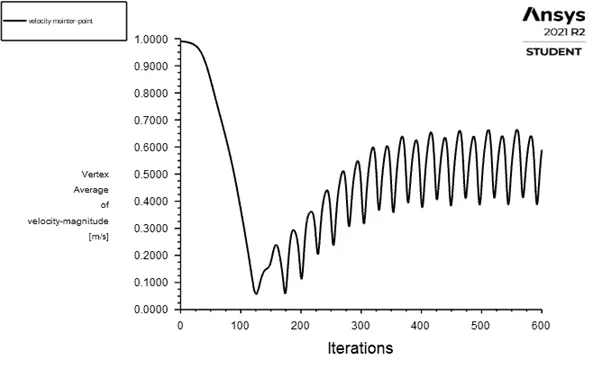
Vertex Average of velocity magnitude
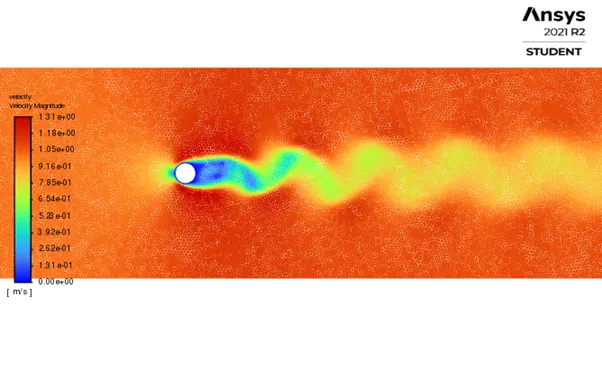
Velocity contour
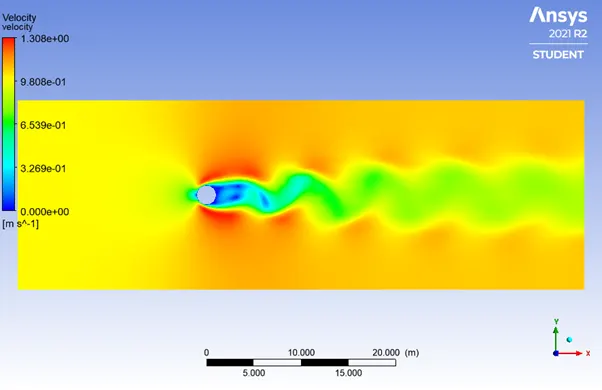
Velocity contour by insert plane
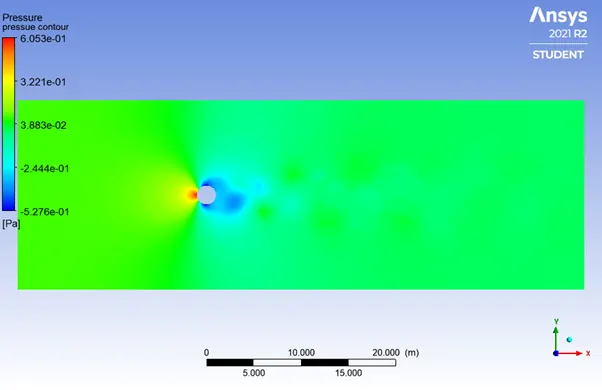
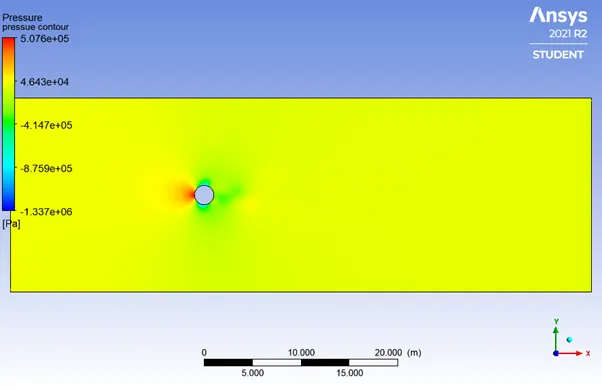
Pressure contour
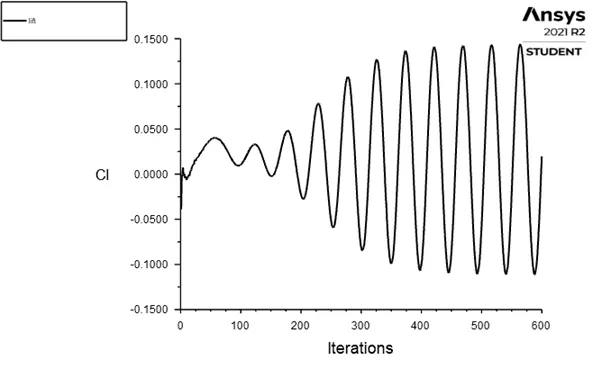
Lift coefficient-
It is dimensionless coefficient that relates lift generated by lifting body and fluid density around body
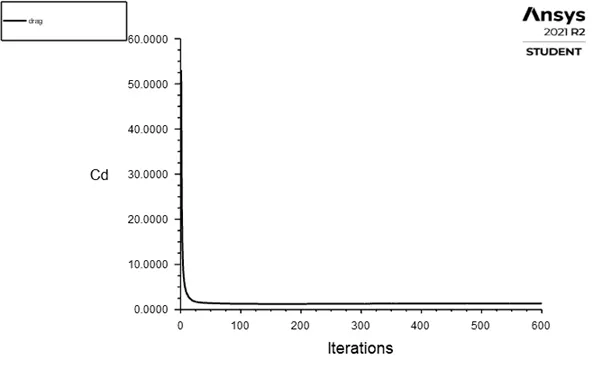
Drag coefficient-it is dimensionless quantity used to quantify the drag and resistance of the objecting a fluid environment such as air and water
sub case 1.2-Unsteady State (transient state) simulation (Re=100)
Choose method=simple
Initialization=hybrid
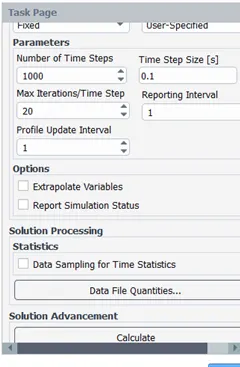
Solution
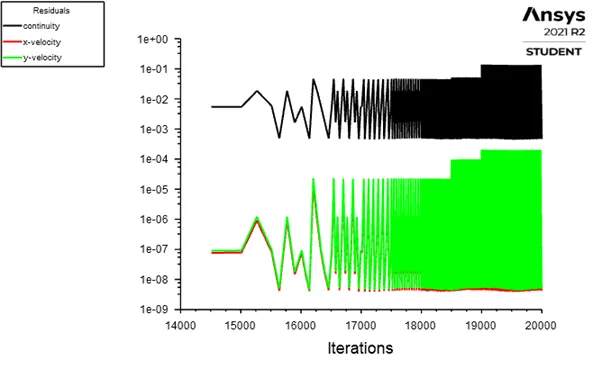
Residual plot-
After 17000 to 18000 iteration solution is converge
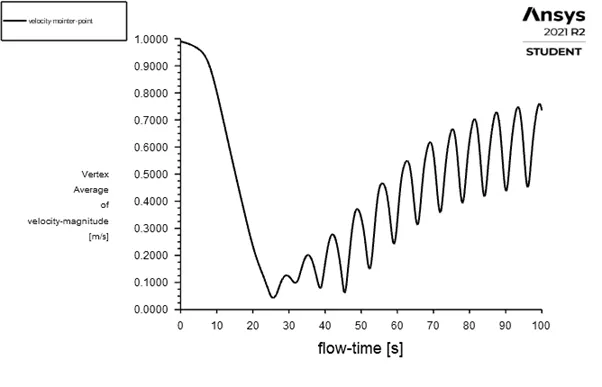
Vertex Average of velocity magnitude
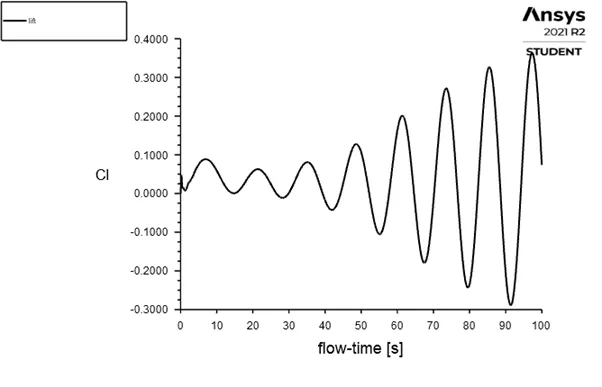
Lift coefficient
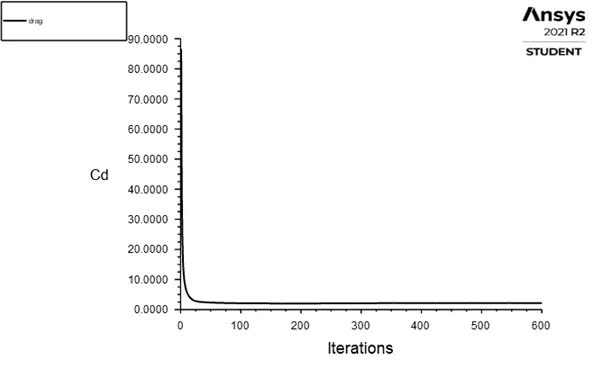
Drag coefficient
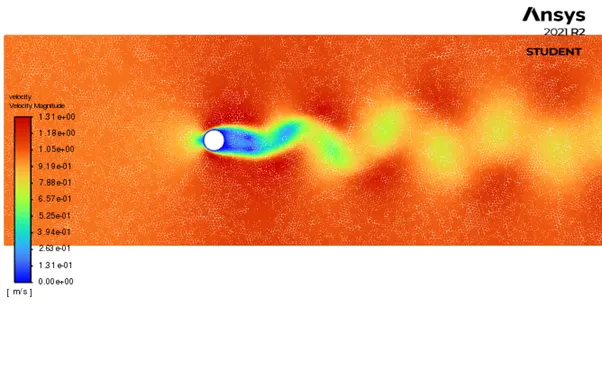
Velocity contour
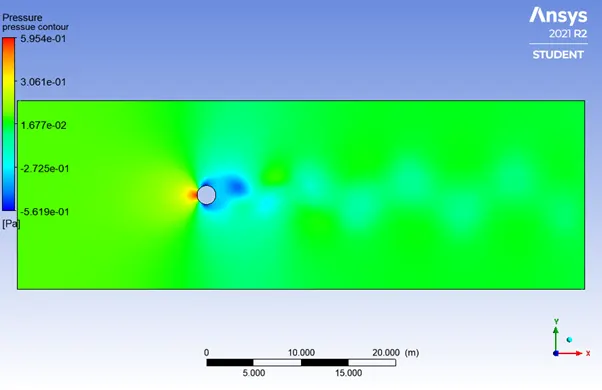
Pressure contour
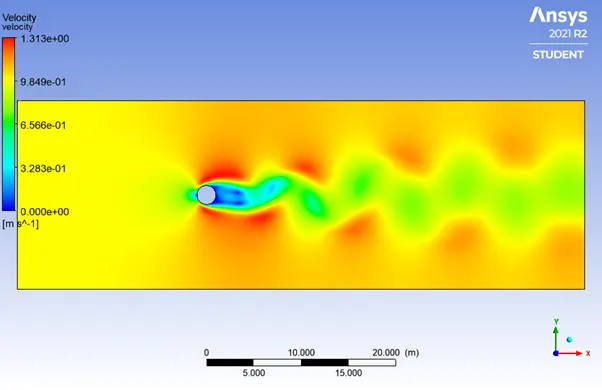
Velocity contour by insert plane
Strouhal number only calculated in transient(unsteady) simulation as oscillation captured by time and in steady you can not capture oscillation wrt time
St=(fD/V)
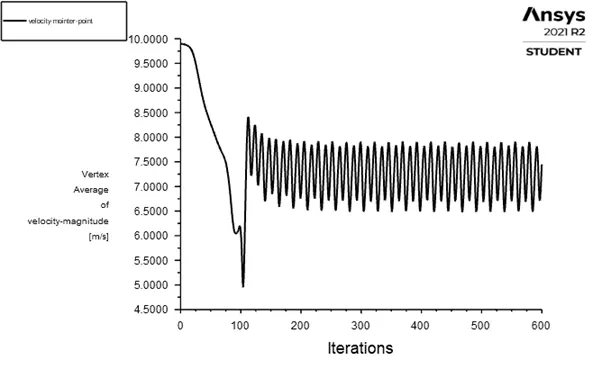
f=frequency= no. of oscillation per time=7/50
f=0.14Hz
D=2m
V=1m/s
St=(0.14*2)/1
St=0.28
Case 2-Steady state solver
Re=10
Residual plot
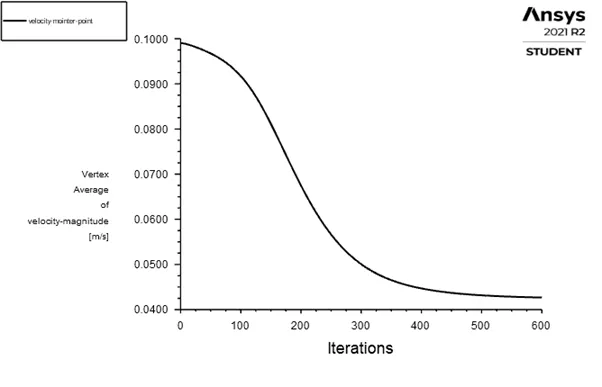
Vertex average of velocity magnitude
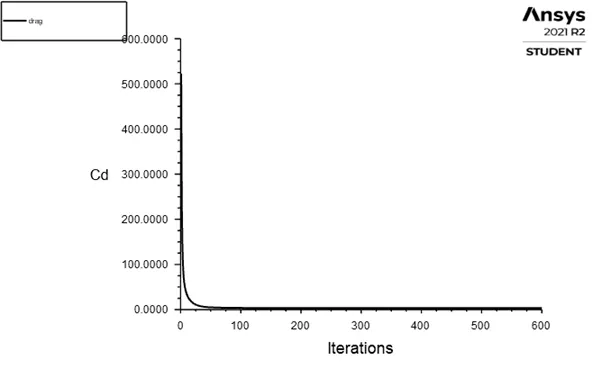
Drag coefficient
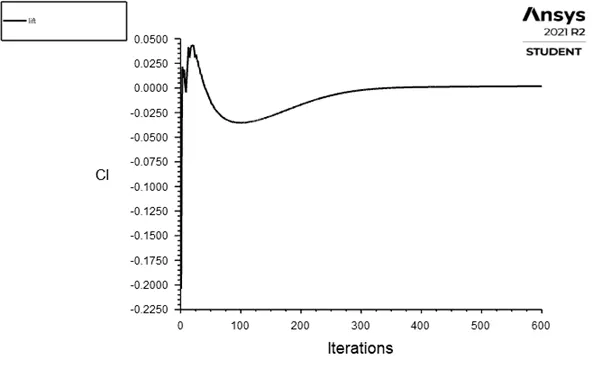
Lift coefficient
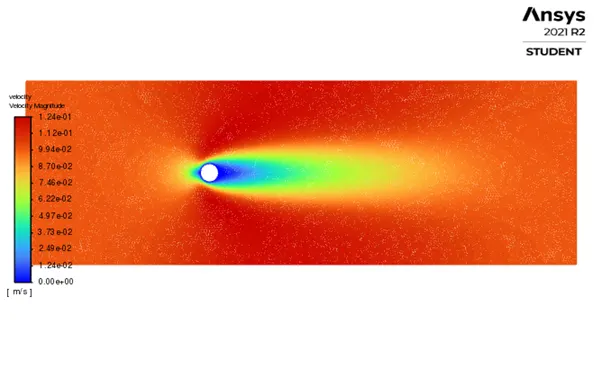
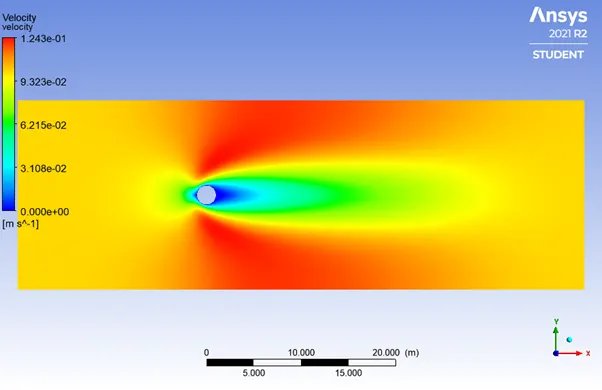
Velocity contour
Velocity contour by inserting plane
Pressure contour
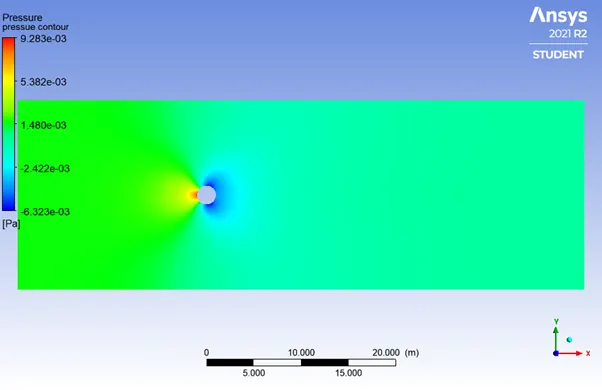
Re=100
Residual
Vertex Average of velocity magnitude
Velocity contour
Velocity contour by insert plane
Pressure contour
Lift coefficient-
Drag coefficient-
Re=1000
Residual plot
Vertex average velocity magnitude
Drag coefficient
Lift coefficient
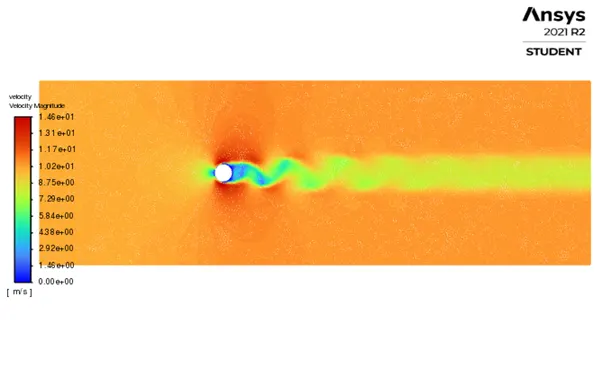
Velocity contour
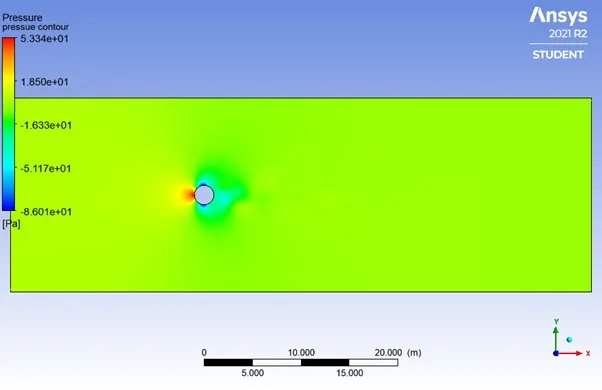
Pressure contour
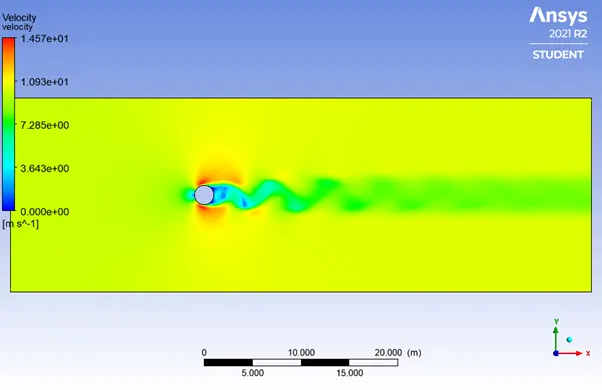
Velocity contour by inserting plane
Re =10000
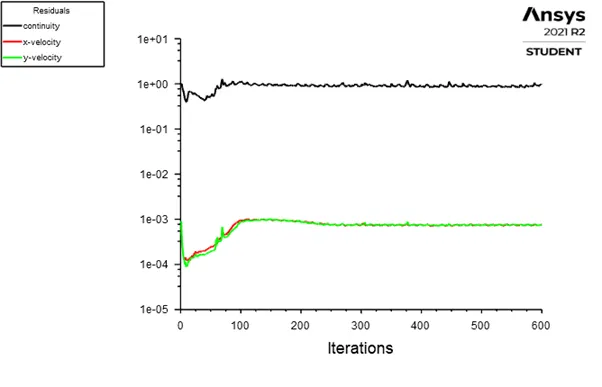
Residual plot
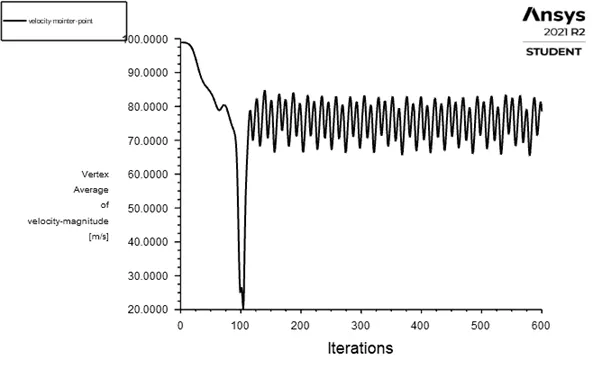
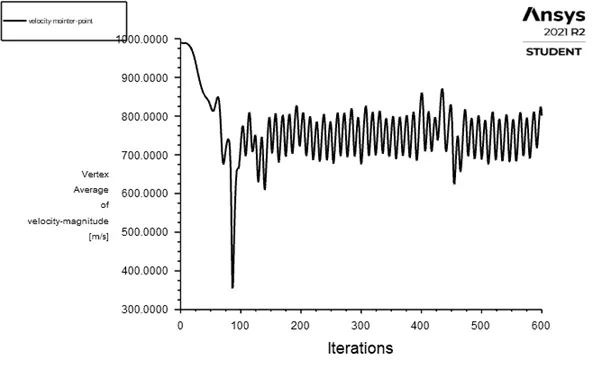
Vertex average velocity magnitude
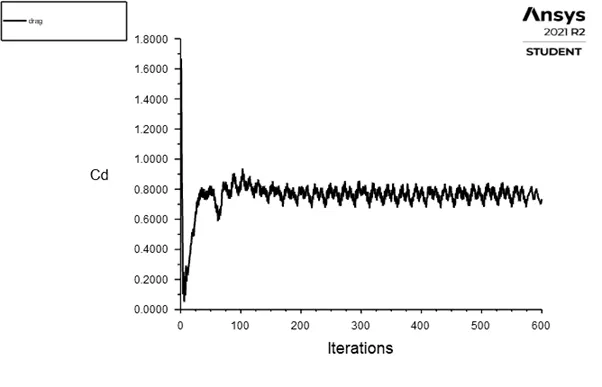
Drag coefficient
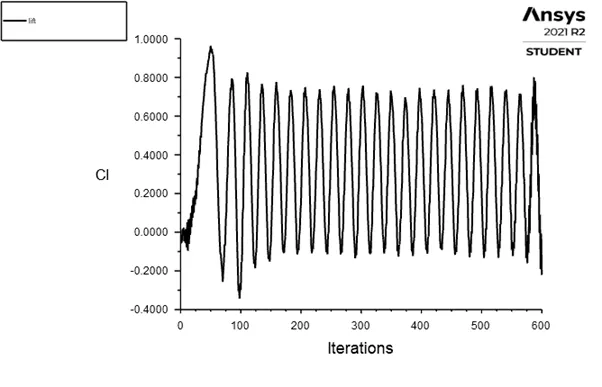
Lift coefficient
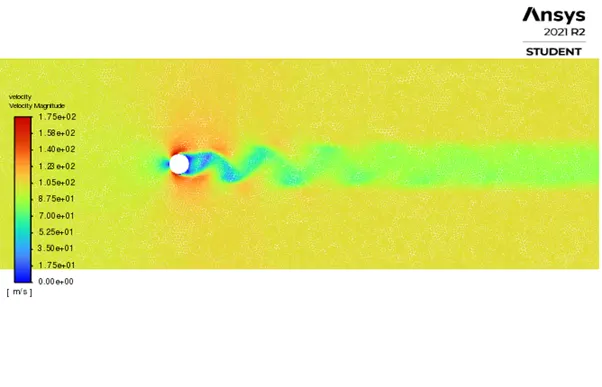
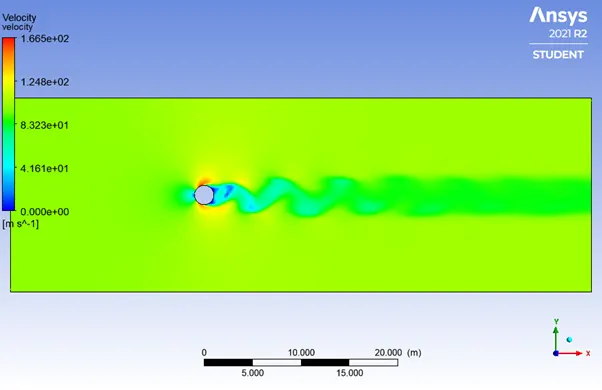
Velocity contour
Pressure contour
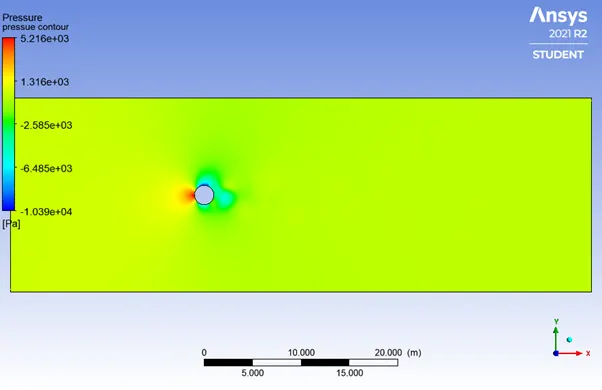
Velocity contour by inserting plane
Re=100000
Residual plot
Vertex average velocity magnitude
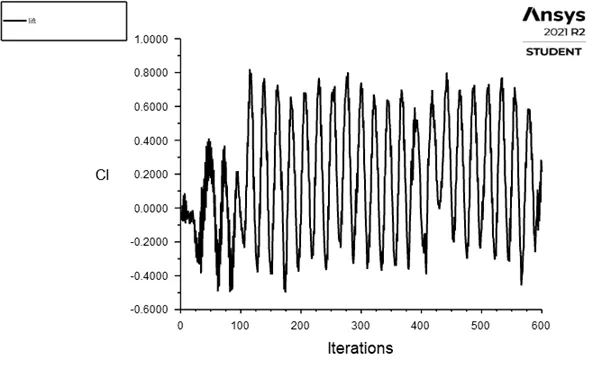
Lift coefficient
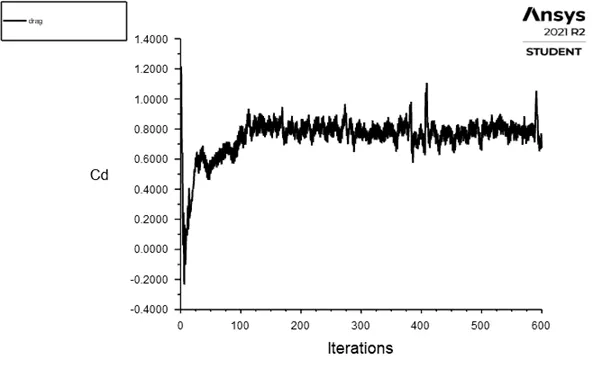
Drag coefficient
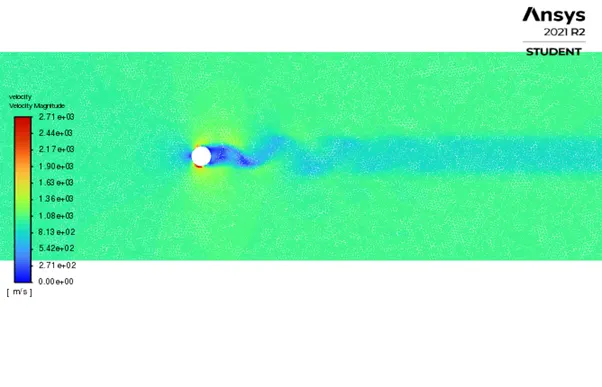
Velocity contour
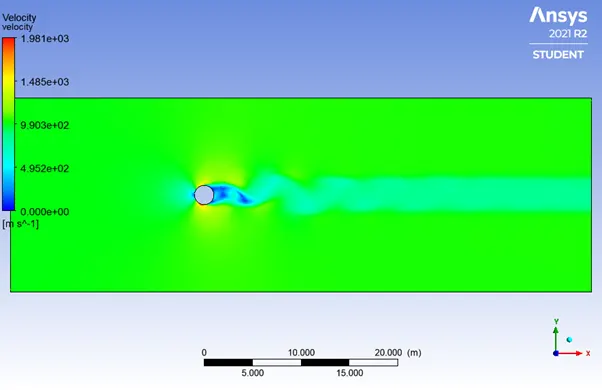
Velocity contour after inserting plane
Pressure contour
Calculations
Strouhal number only calculated in transient(unsteady) simulation as oscillation captured by time and in steady you cannot capture oscillation wrt time
St=(fD/V)
f=frequency= no. of oscillation per time=7/50
f=0.14Hz
D=2m
V=1m/s
St=(0.14*2)/1
St=0.28
screenshot from litrature review
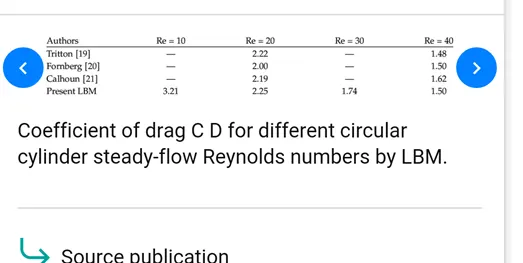

Table for relation between Reynold number with drag &lift coefficient
|
Reynold number |
Drag coefficient |
Lift coefficient |
|
10 |
3.325 |
0.00175 |
|
100 |
1.33625 |
0.01976 |
|
1000 |
0.6965 |
-0.0552 |
|
10000 |
0.7340 |
-0.2214 |
|
100000 |
0.673146 |
0.2135 |
From screenshot (value from literature review) and table values obtained by me so I consider this value as exact and for validation purpose. I am validating my drag coefficient for Re=100
Error=value form literature – value obtained by me
Error= 1.37-1.336
Error =0.034
% Error= (0.034/1.37) *100=2.48%
Conclusion-
- Strouhal number only calculated in transient(unsteady) simulation as oscillation captured by time and in steady you cannot capture oscillation wrt time
- Vortex shedding is observed in velocity contour
- Vortex shedding observe in both transient and steady state but Vortex shedding is does not observed for Re=10 (generally observed after Re = 40)
- As Reynold number increases, the drag coefficient decreases
References
Wikipedia used for concept for vortex shedding and Karman vortex street
https://www.sciencedirect.com/topics/earth-and-planetary-sciences/bluff-body
note-put your reference value for calculating drag and lift coefficient.