Week 2 - Converging diverging nozzle
AIM:
To perform CD-Nozzle simulation to find out the pressure, velocity, and temperature variations across the nozzle.
THEORY:
CD-Nozzle:
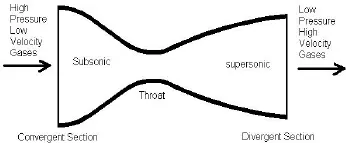
It is a nozzle with a varying cross-section area of its length and a small area called the throat. CD-Nozzle is used only in aerospace applications, it is used to accelerate the velocity. The shape of the nozzle can define the velocity of the object. The chemical potential energy produced in the combustion chamber is converted as kinetic energy by CD-Nozzle. The pressure from the combustion enters into the CD-Nozzle and becomes high pressure because of the throat. In the throat region, the pressure is very high as velocity decreases, after the throat region, the high pressure drops instantly as the divergent area comes. Since due to high pressure drop the velocity increases rapidly. CD-Nozzle is used in rocket motors to achieve supersonic speed and it is also used in missiles also.
PROCEDURE TO SET UP THE CASE FOR SIMULATION:
GEOMETRY:
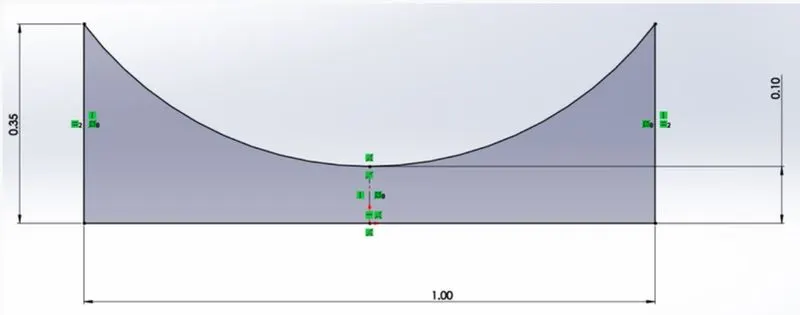
- Forgiven dimension geometry is created by using SolidWorks.
- The geometry is converted as a step file and imported to Ansys.
MESH:
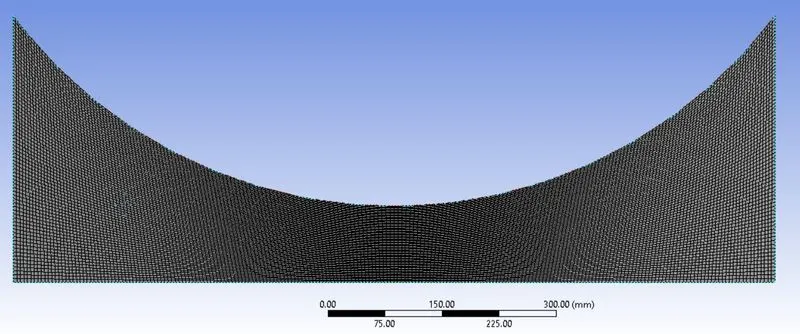
- The imported geometry is open in the mesh tool in the Ansys workbench.
- In mesh, we are going to use the Face mesh option and the size of the mesh is 5mm.
- Face mesh is used to created structured mesh for the entire geometry.
SOLVER:
- A density-based solver is used due to supersonic flow.
- An Axis-symmetric plane is used.
- For the viscous model, Inviscous is used to obtain maximum efficiency at the nozzle.
- The energy equation is on to obtain temperature changes during flow occurs.
- For boundary conditions, In pressure inlet as 101325 pa and pressure outlet as 2735.775 pa.
- The operating condition is set as 0 since we don't know the operating pressure.
- Solution methods are implicit, least-square cell-based, and second order.
- The solution is to initialize as standard from the pressure inlet.
POST-PROCESSING AND PLOTS:
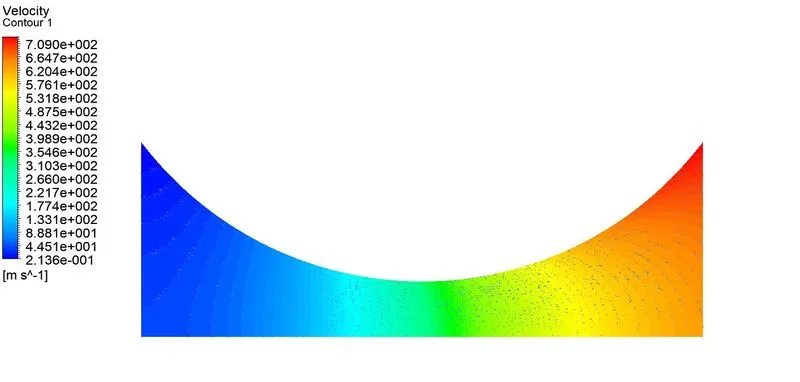
velocity contour :
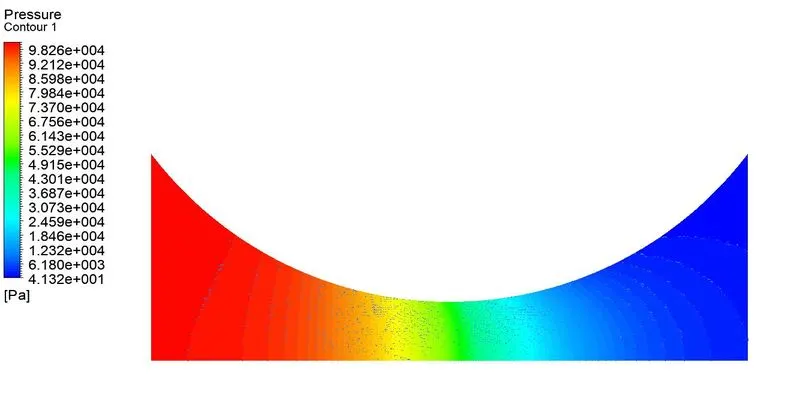
pressure contour:
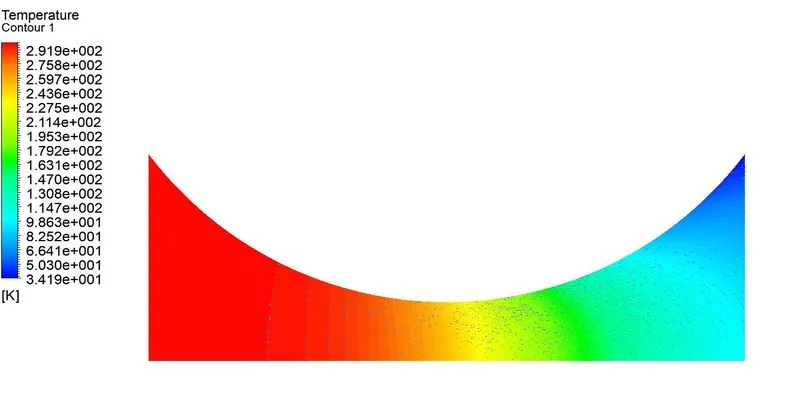
temperature contour:
Line plot over the nozzle:
Velocity plot: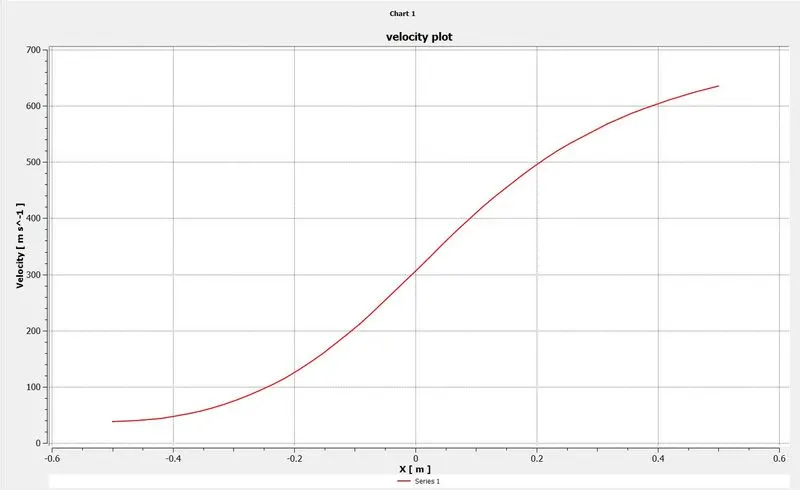
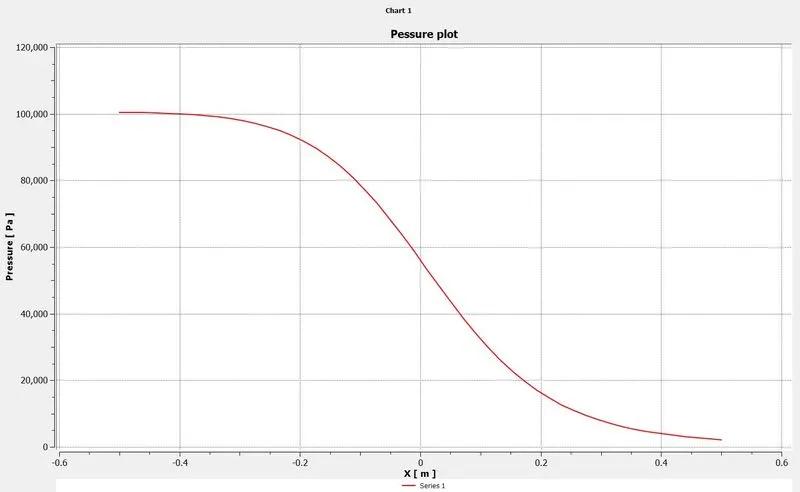
Pressure plot:
Temperature plot:
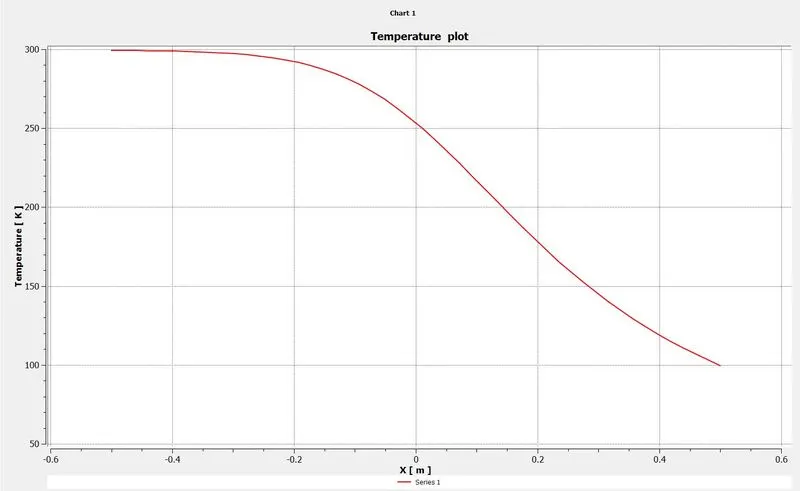
From the velocity plot, we can see that the match number reaches 1 at 0.52m which is the throat section. Before the throat section, we have a convergent section where the pressure increases and the velocity decreases, at the throat section the pressure starts to decreases which leads to increases in pressure rapidly and the velocity reaches more than Mach 1. In small words, we can say that the subsonic flow is converted as supersonic by using CD-Nozzle.
CONCLUSION:
From this analysis, we came to know how to set up the case for CD-Nozzle and understand the flow physics behind the nozzle.