Week 2 - Converging diverging nozzle
Aim - Plotting Pressure, Velocity and Temperture variations across the given Converging-Diverging Nozzle.
Theory :-
A de Laval nozzle or Convergent-Divergent nozzle is a tube which is pinched in the middle, making a carefully balanced, asymmetric hourglass shape.
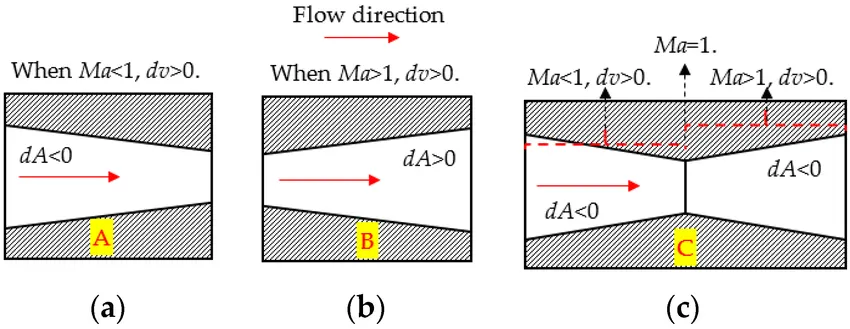
It is used to accelerate a compressible fluid to supersonic speeds in axial direction, by converting the thermal energy of the flow into kinectic energy. These nozzles are used in some types of steam turbines androcket engine nozzles. It also sees uses in supersonic jet engines.
The velocity of fluid at inlet is subsonic (Mach No < 1), at throat is sonic (Mach No = 1) and at the diverging section the speed changes to Supersonic speed(Mach No > 1). The gas flow through CD nozzle is Isentropic(Reversible, Adiabatic Flow). At throat section, a condtion is achived called 'Choked Flow'(Is a compressible flow effect. The parameter that gets choked is fluid velocity.)
The flow will only choke at the throat if the pressure and mass flow through the nozzle is sufficient to reach sonic speeds, otherwise no supersonic flow is achieved, and it will act as Venturi Tube.
Procedure :
1. Create Geometry as given in the question in Spaceclaim.
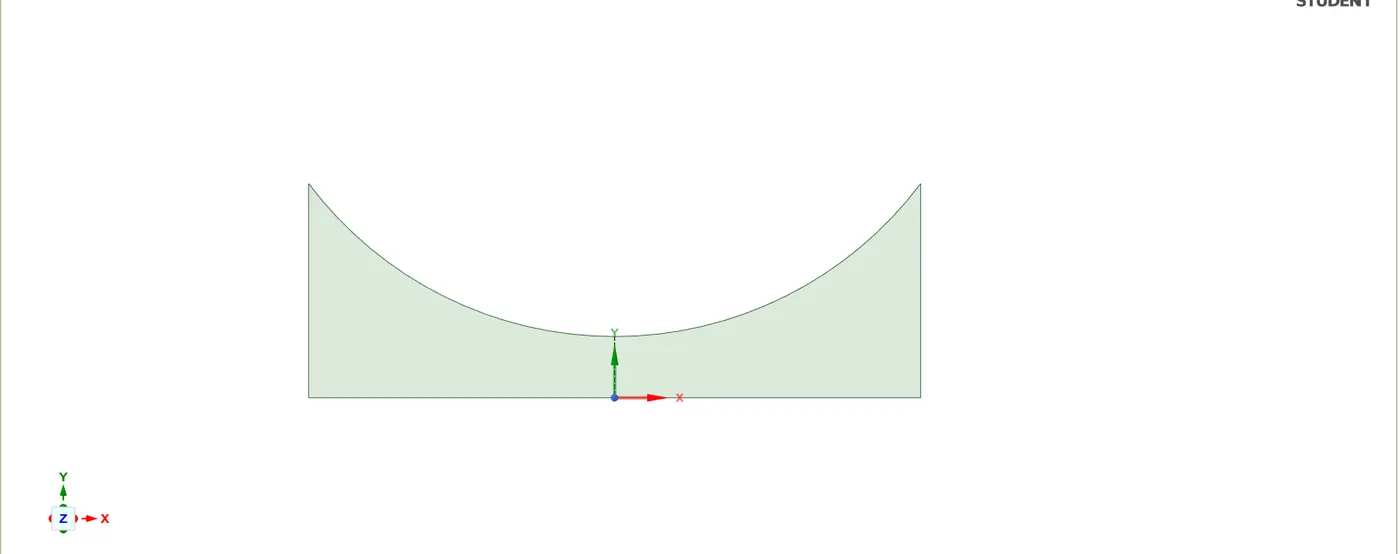
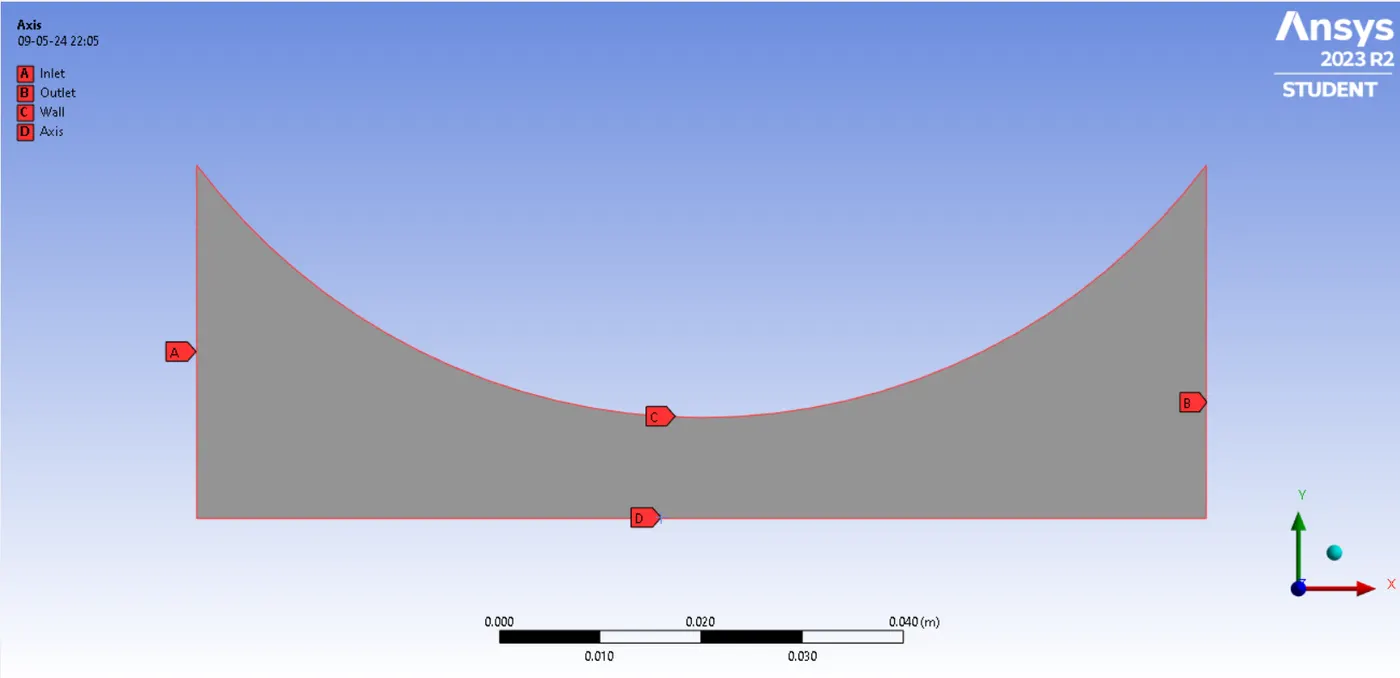
2. Open the Mesh , name the boundaries as mentioned and generate mesh.
Boundary Names:
A - Inlet
B - Outlet
C - Wall
D - Axis
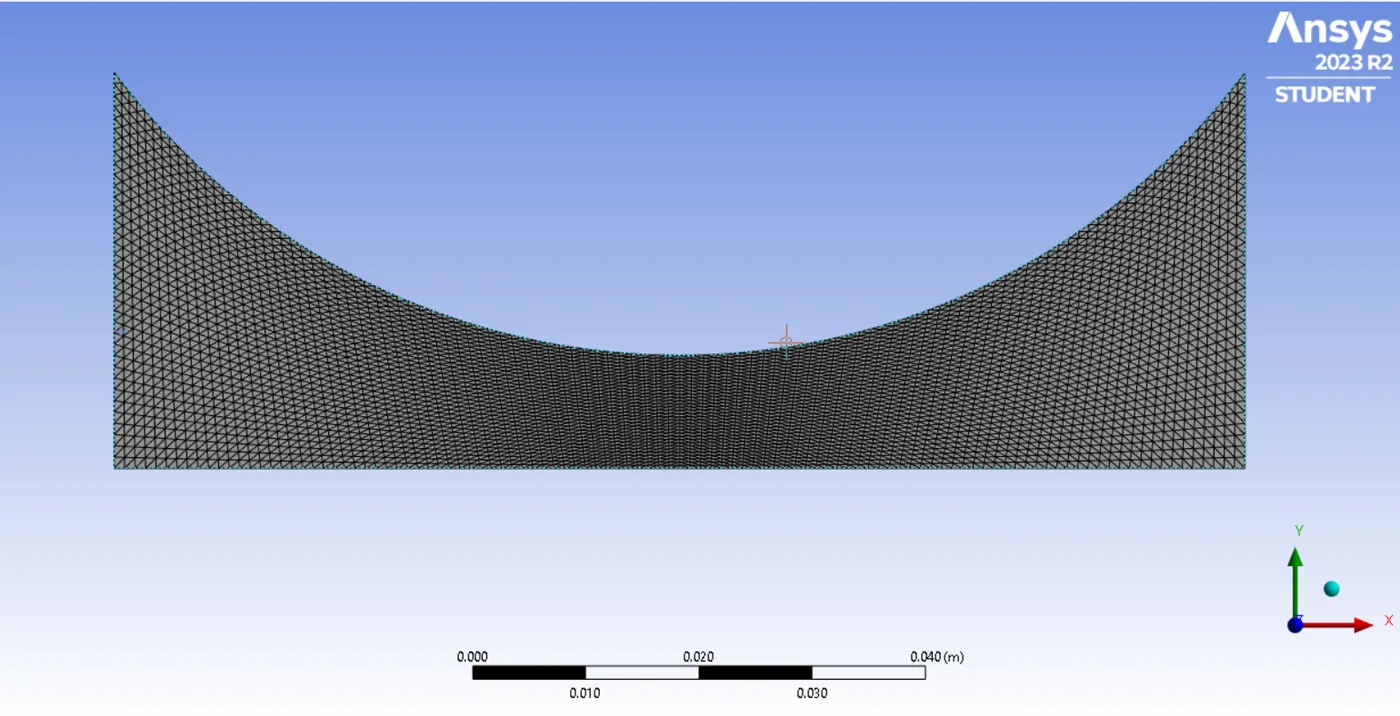
Element size : 0.001m
Number of Elements : 7560
3. Setting up the solver conditions, boundary conditions for solving the CD Nozzle. Set all the parameters as mentioned below
Set the General Settings as below :
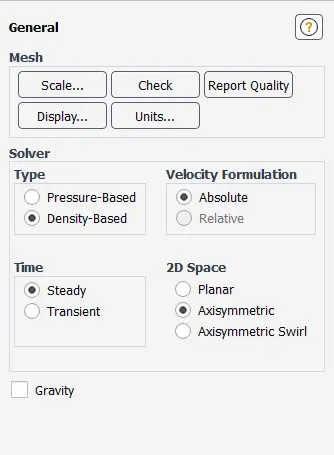
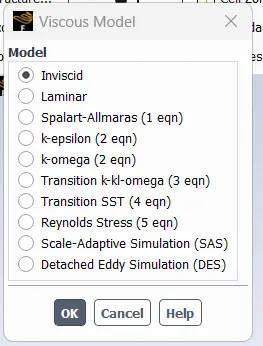
Set the Model as mentioned below :
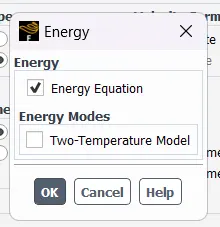
Set the Energy Equation ON as we are also solving for Temperature :
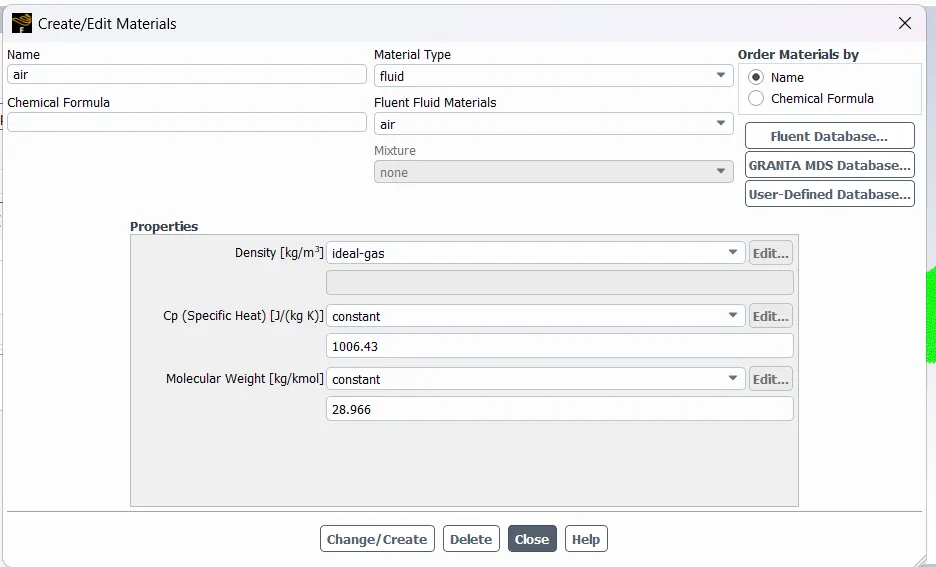
Edit the air material as mentioned below to Ideal gas conditions :
Set the Operating Conditions as mentioned below :
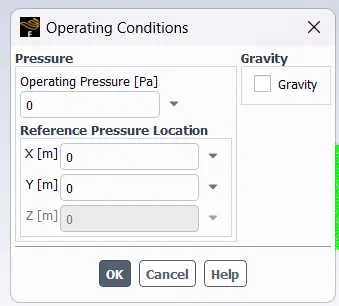
Set the Boundary Conditions as follows :
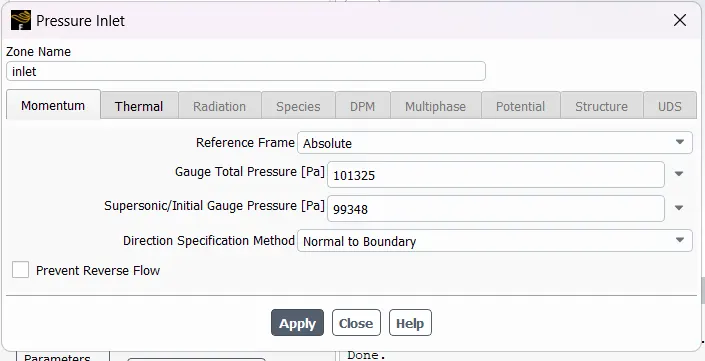
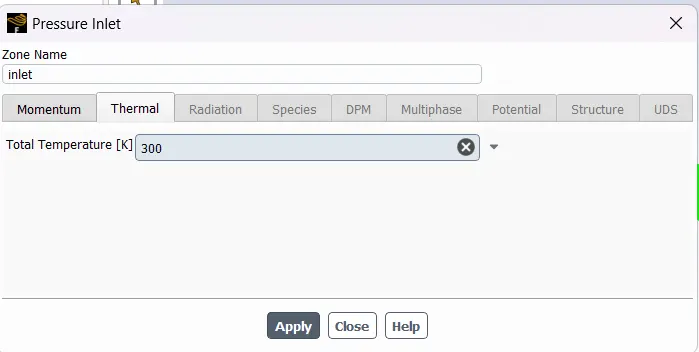
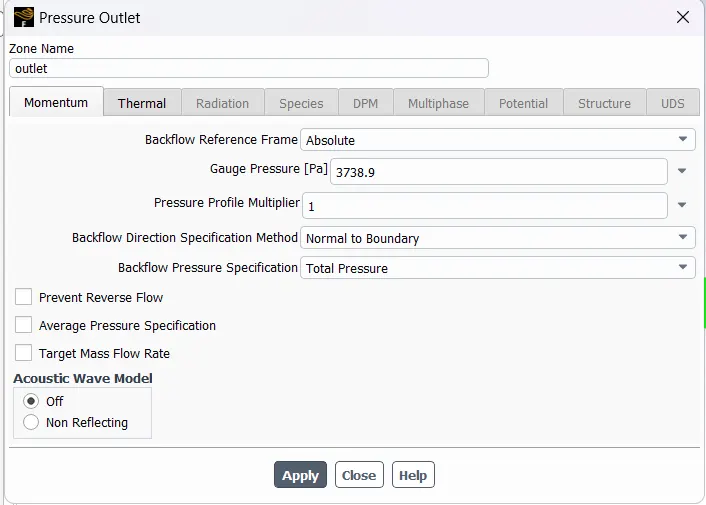
The guage total pressure at te intlet boundary is the total (stagnation) pressure. This value is taken as is. The supersonic/initial guage pressure is an initial guess for the static pressure at the inlet. This value will get updated if the flow at the inlet is subsonic. In our case this value will get updated.
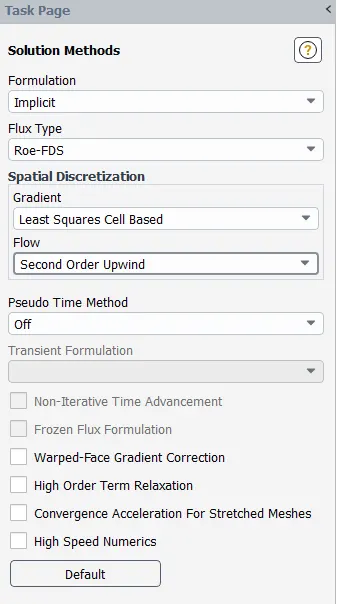
Set the solution methods as mentioned below :
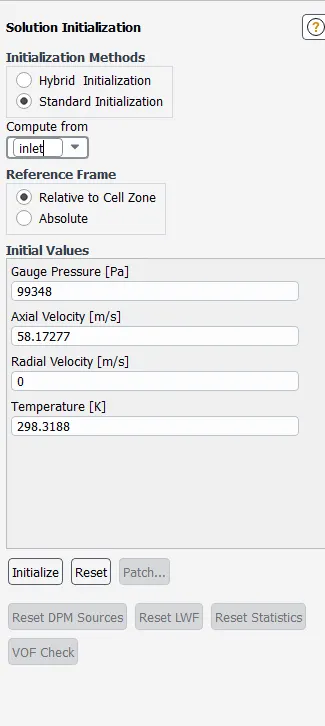
Initialize the solution from inlet :
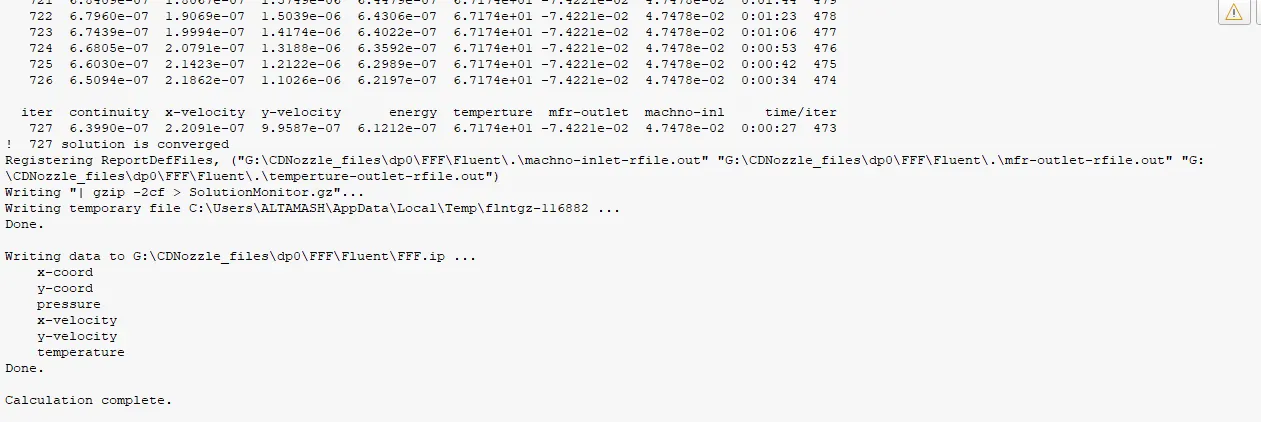
Then run the solution for 1200 iterations, in my case the solution got converged at 700th iteration.
Results :
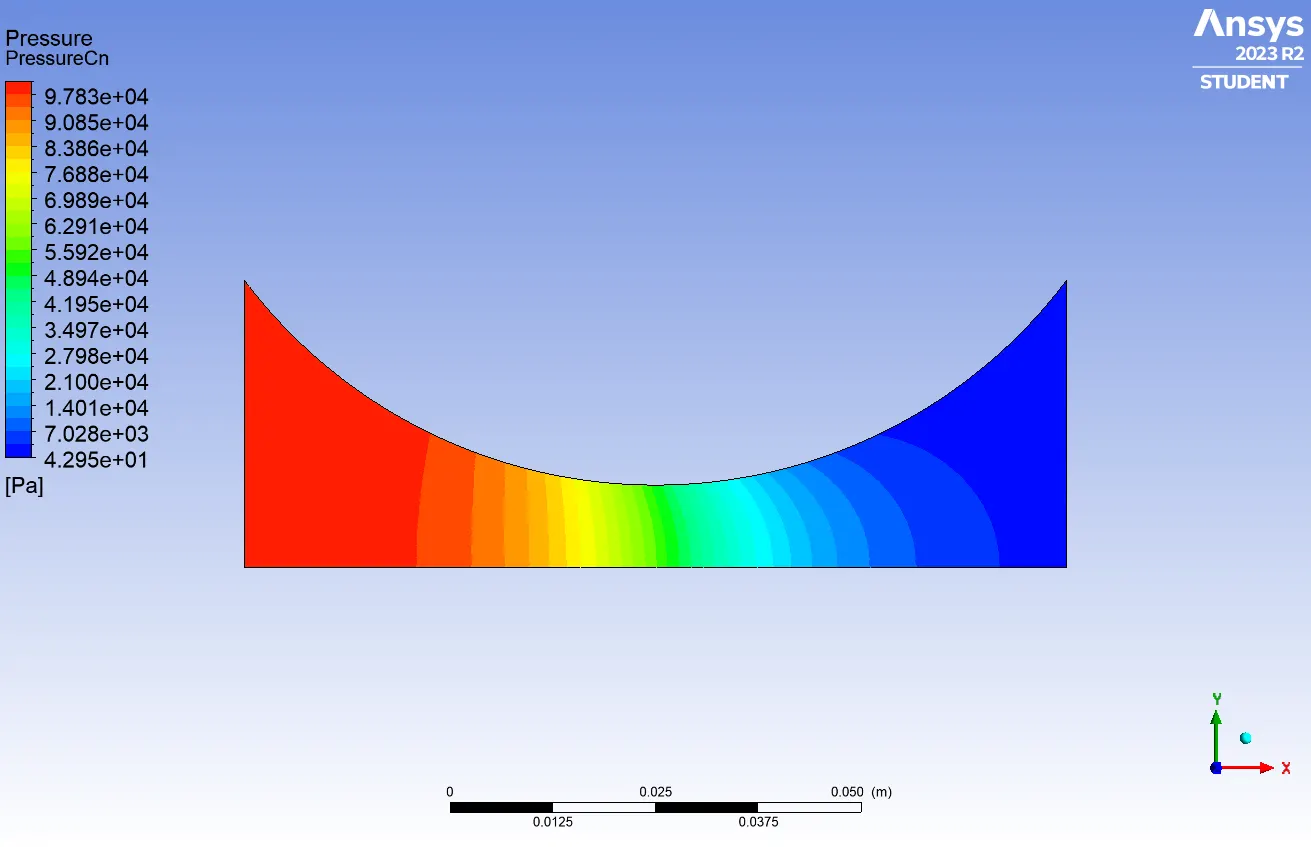
Pressure Contour :
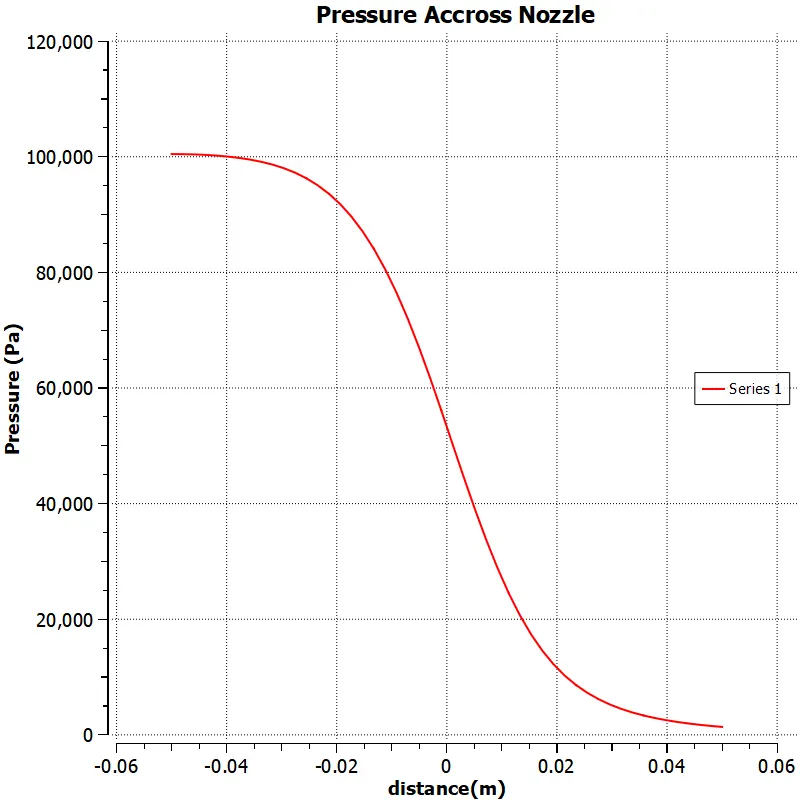
Pressure Chart :
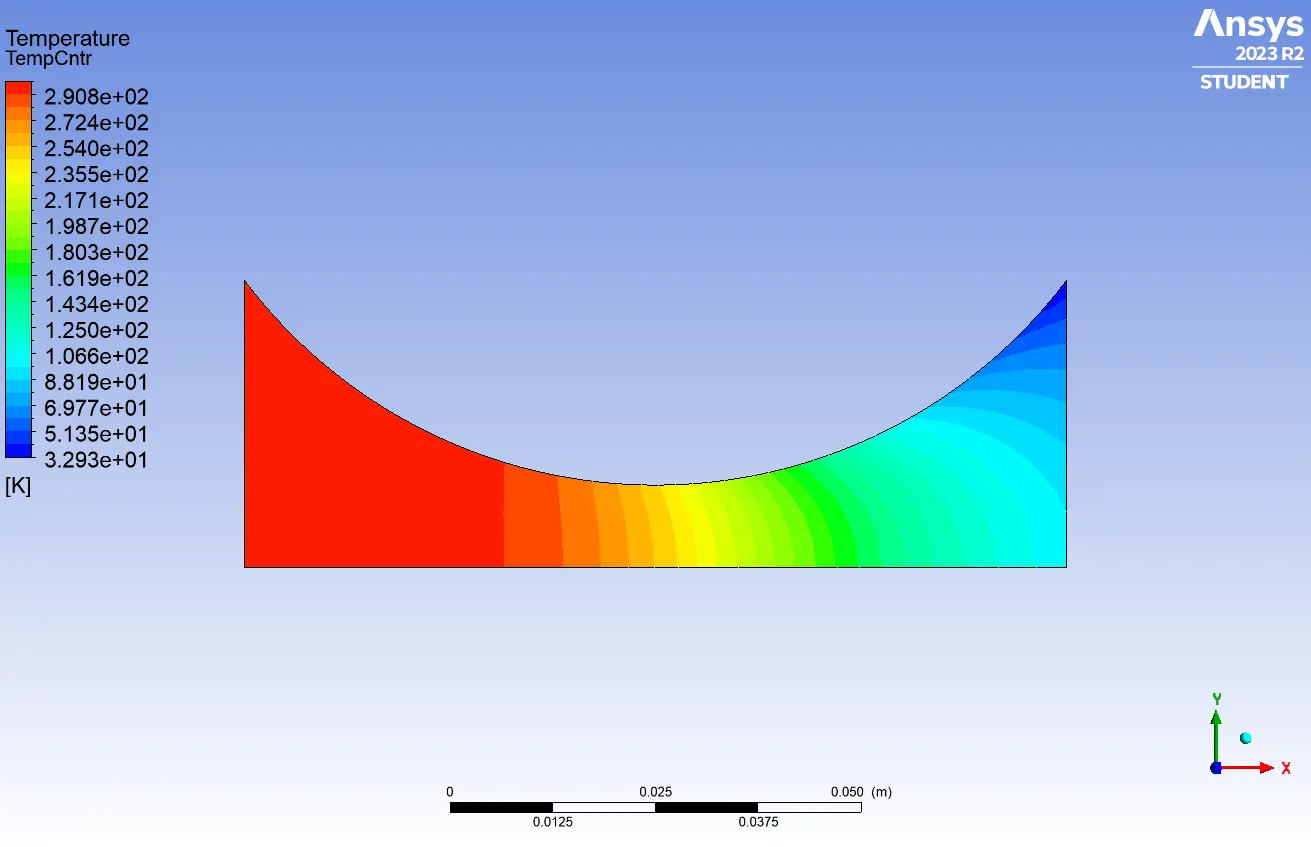
Temperature Contour :
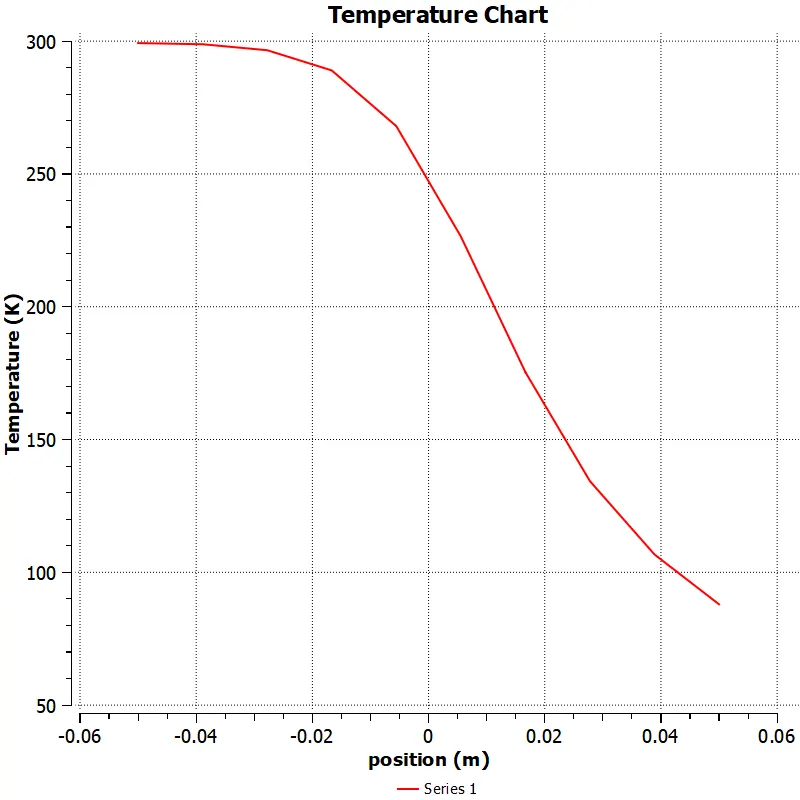
Temperature Chart :
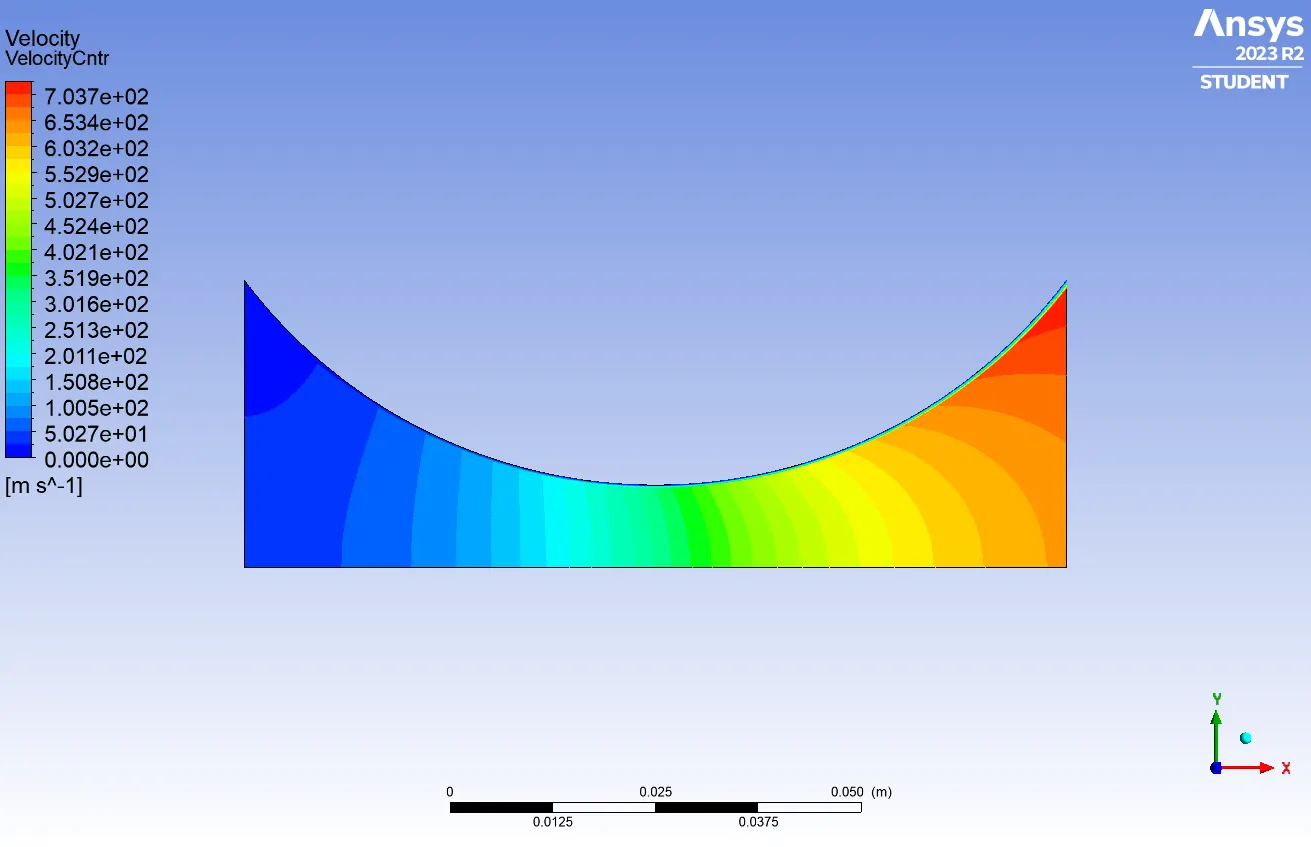
Velocity Contour :
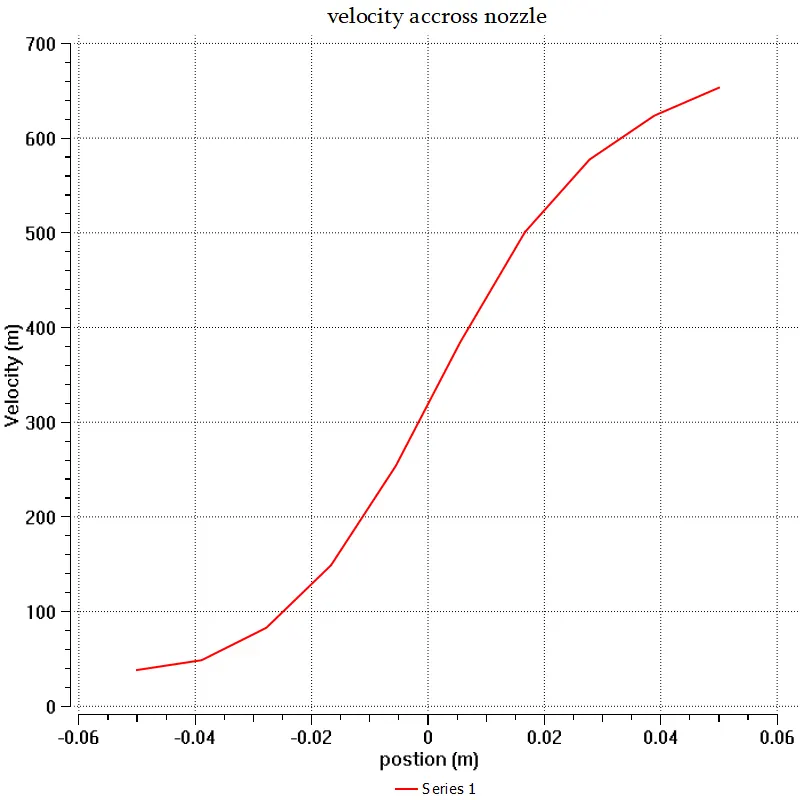
Velocity Chart :
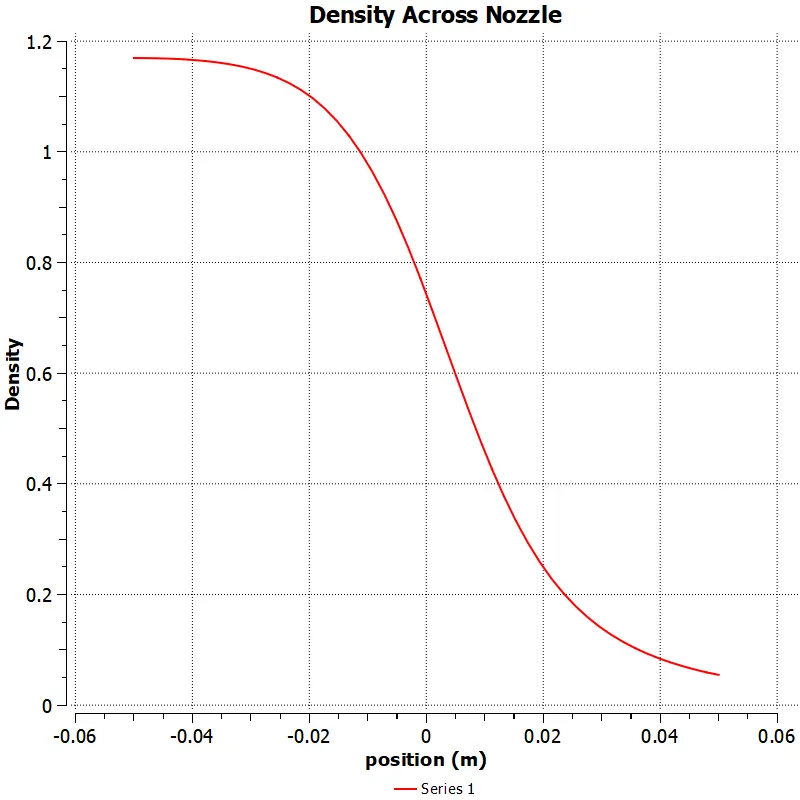
Density Chart :
Results :
In Converging-Diverging Nozzle, when fluid enters the converging section the pressure increases as well as temperature. At the throat the area decreases and velocity decreases, as the flow reaches to divergent section the area increases and the velocity/Mach No increases and pressure decreases as the fluid accelerates the temperature decreases and density decreases.