Week 2 - Converging diverging nozzle
Converging Diverging Nozzle
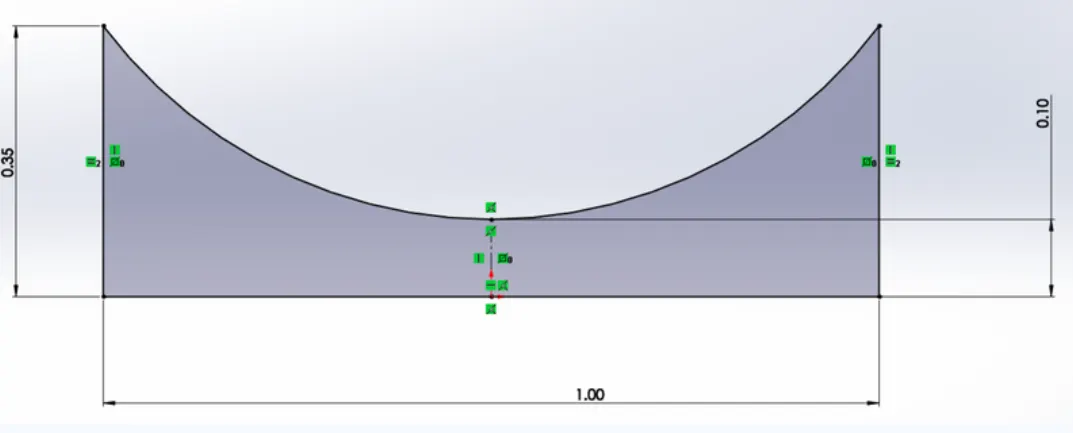
According to the challenge statements, the following converging-diverging nozzle shape must be simulated:
ENGINEERING DEVELOPMENT
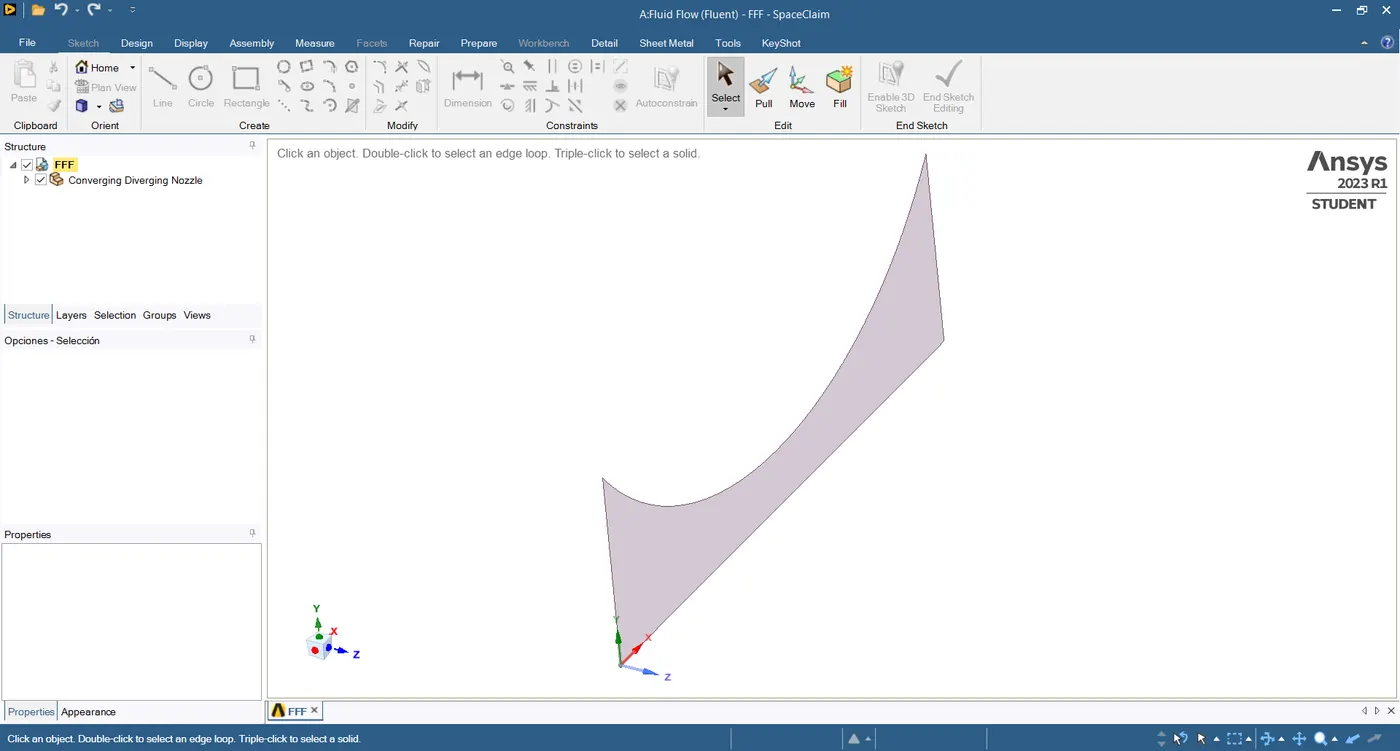
This shape represents the longitudinal section cutting off a half converging-diverging nozzle; This section will be simulated by using ANSYS Fluent, however, new flow parameters will be taken. The geometry plotted above is drawn and extruded by using ANSYS SpaceClaim.
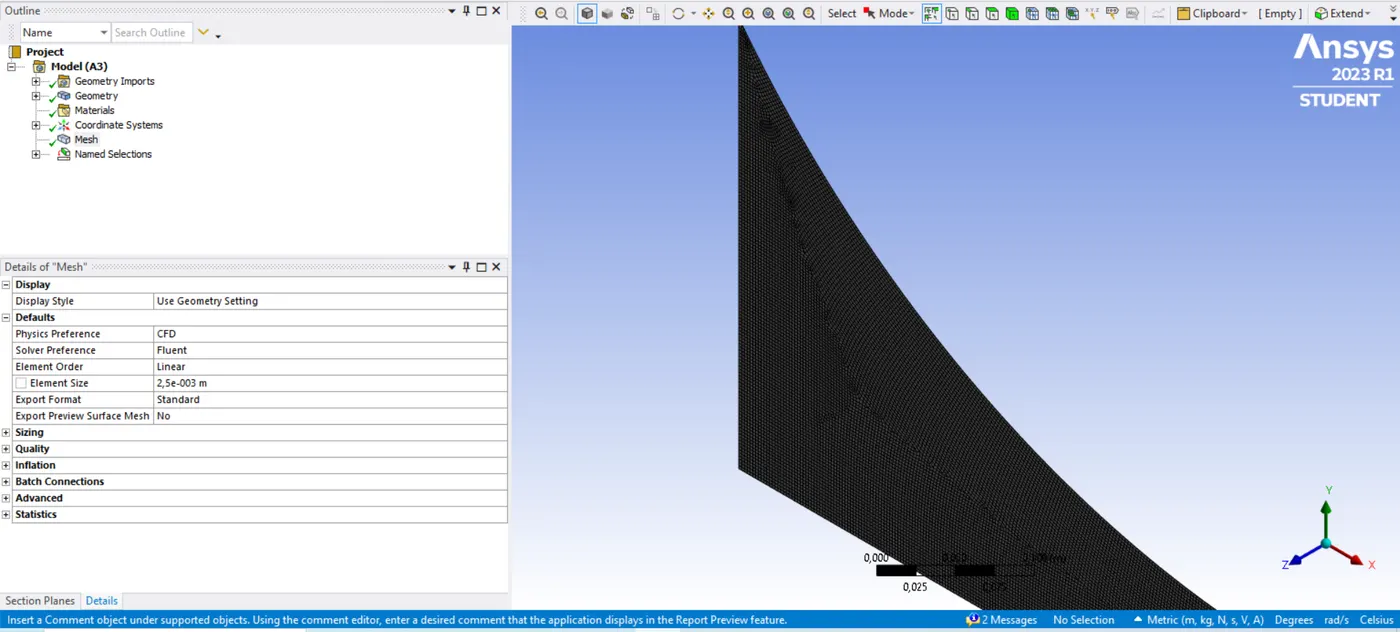
This geometry is then meshed, and the main advantage of this geometry is that thanks to its short lengths, the mesh created over it, will be able to get more accurate results along the shape. The mesh obtained will be:
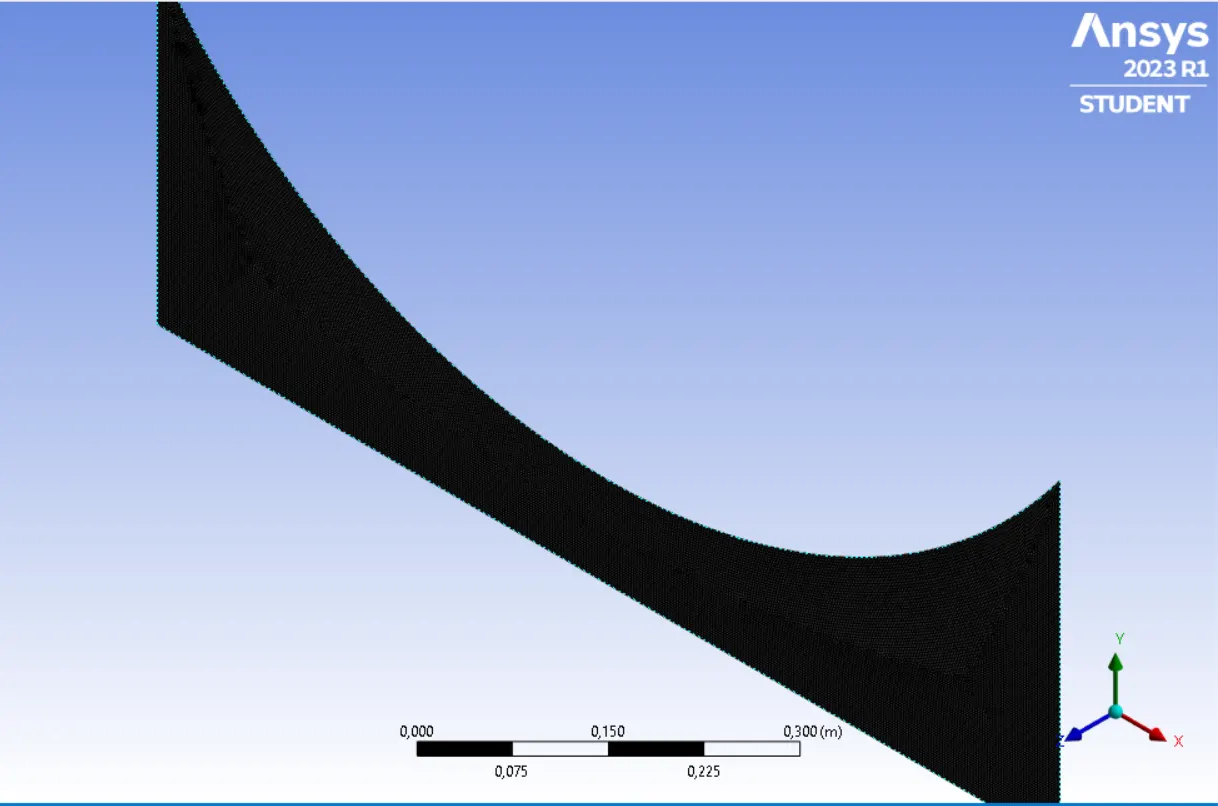
Likewise, the geometry is divided into the following sections:
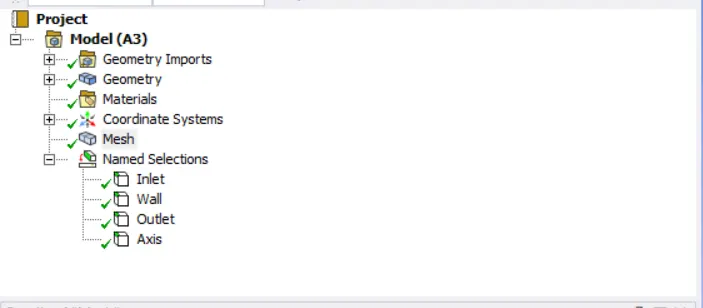
Being the inlet, the section where the flow enters; the outlet, the section where the flow leaves the nozzle; the axis the mean reference that ANSYS will take to generate the axisymmetric relation and; the wall, which is the curved section of the nozzle. Getting all these things done, the next step is to start the simulation. The main parameters that the simulation will have are:
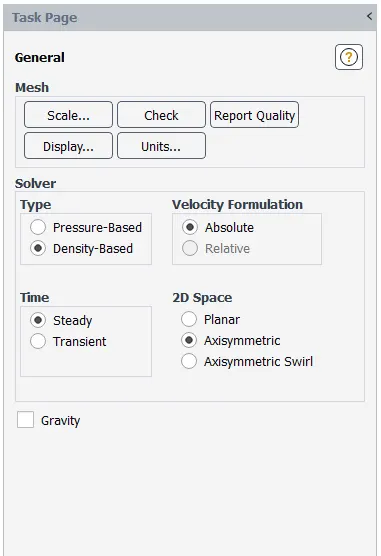
The density-based solver type is commonly used when the flow behaves as a compressible flow, as it happens into a converging-diverging-nozzle; The flow between the converging section gets energy, increasing the speed until Mach=1 and decreases the pressure and the temperature; then, due to the flow is passing to the diverging section as a compressible flow, makes tha the flow accelerates and the pressure and temperature keep decreasing too. In the same way, the 2D space is taken as axisymmetric, because the section created above just represents half of the whole nozzle. Thus, the viscous model and the flow parameters must be defined.
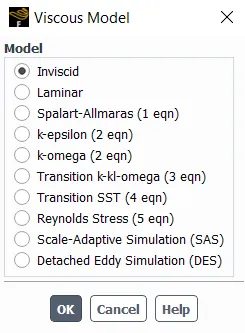
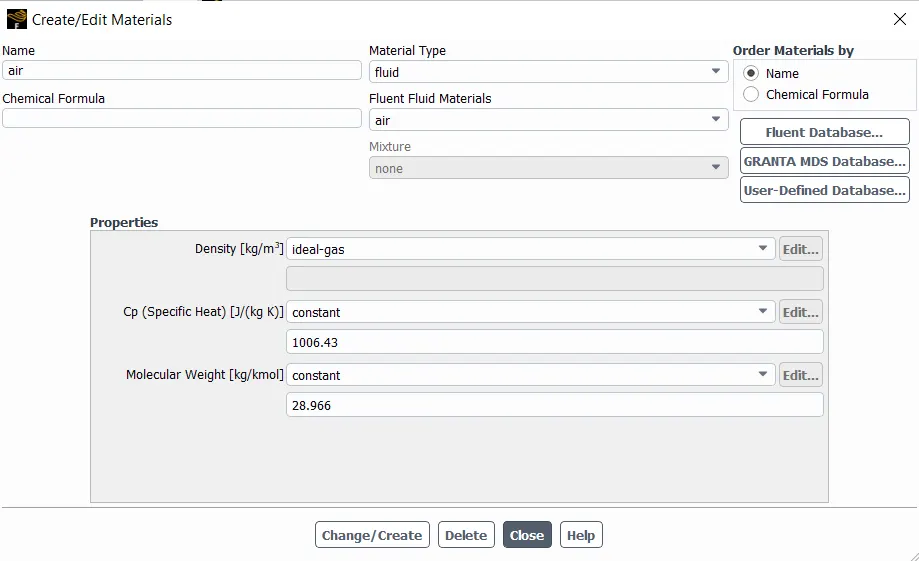
It is also important to know that the flow in a compressible behavior is inviscid, which means the viscous effects are neglected. Furthermore, the fluid is considered as an ideal gas.
The inlet pressure will be equal to 1 atm; the temperature is equal to 300 Kelvin and at the outlet section, the pressure is equal to 0.027 atm. These values are equal to 101325 Pa, 300 Kelvin, and 2735.775 Pa. Once all these parameters are entered and the other steps are completed, the solution is carried out by using at least 300 iterations.
RESULTS
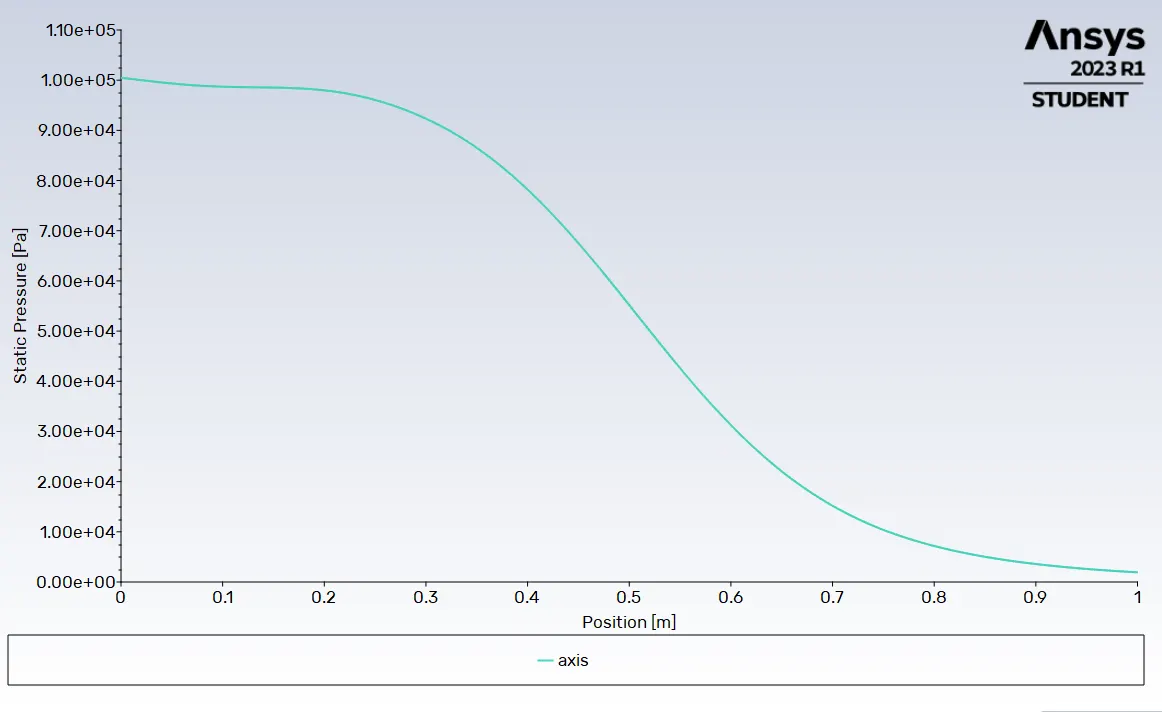
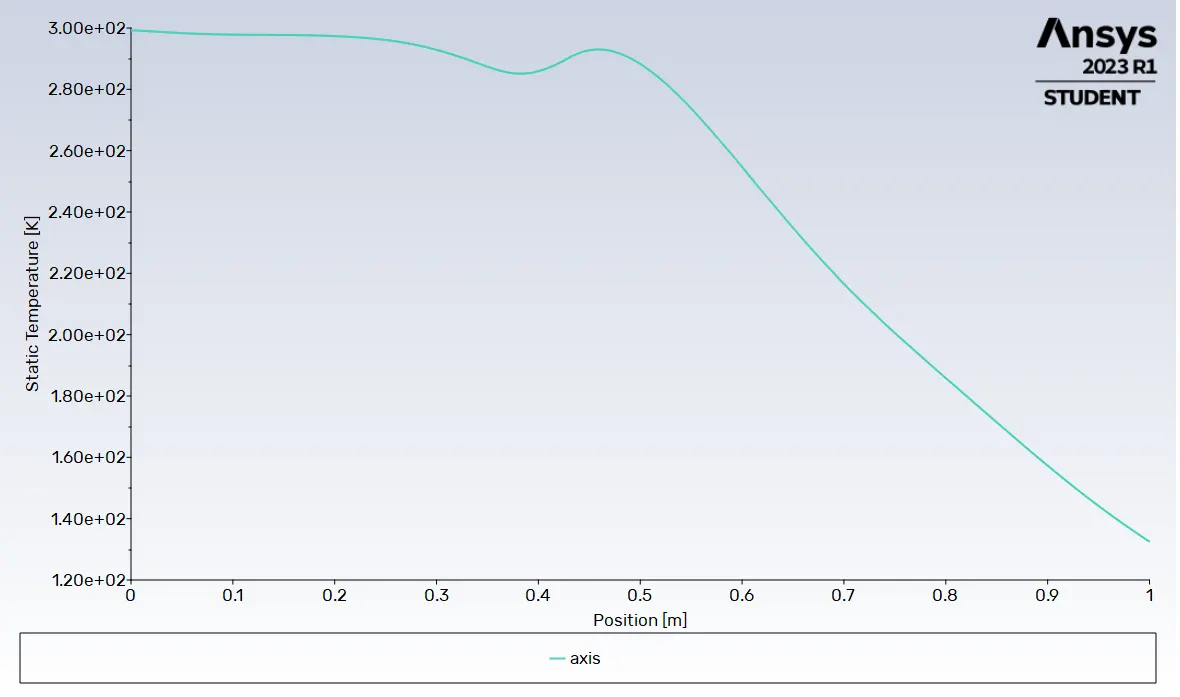
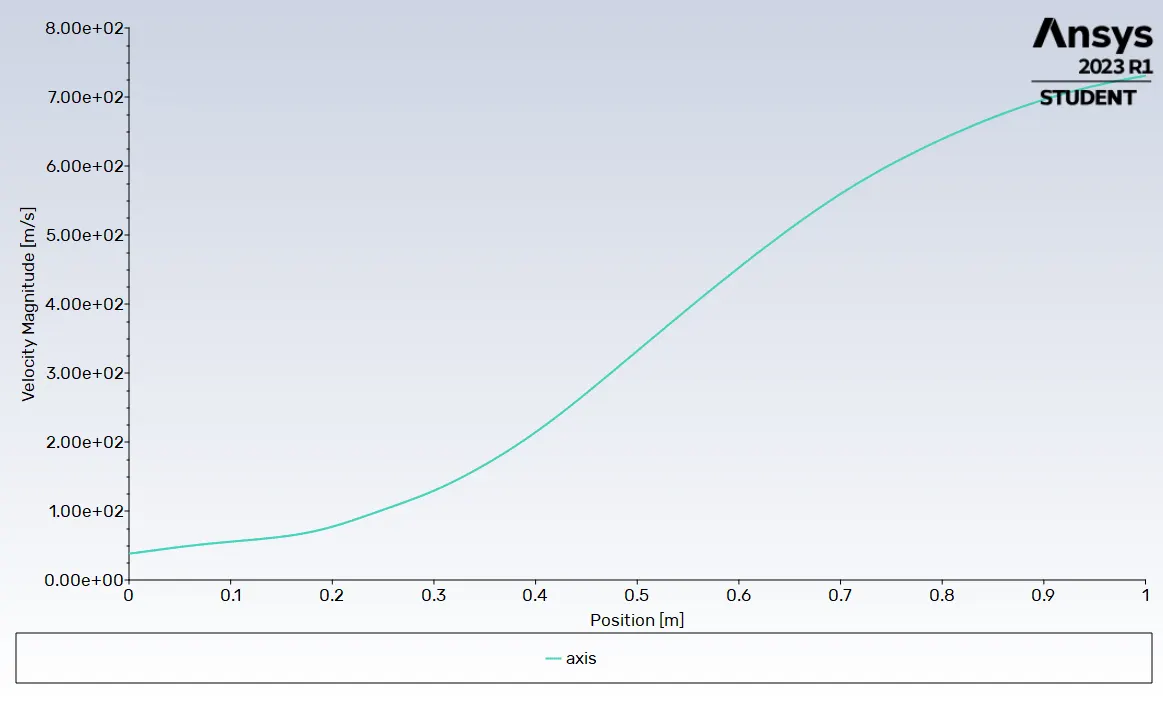
The following results were obtained from the nozzle axis, located in the middle of the nozzle:
Pressure along the nozzle
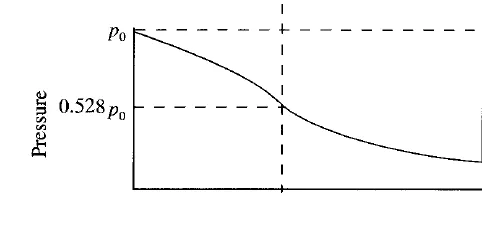
Pressure plot comparison with Computational Fluid Dynamics Book - J.D. Anderson
Temperature along the nozzle
Velocity along the nozzle
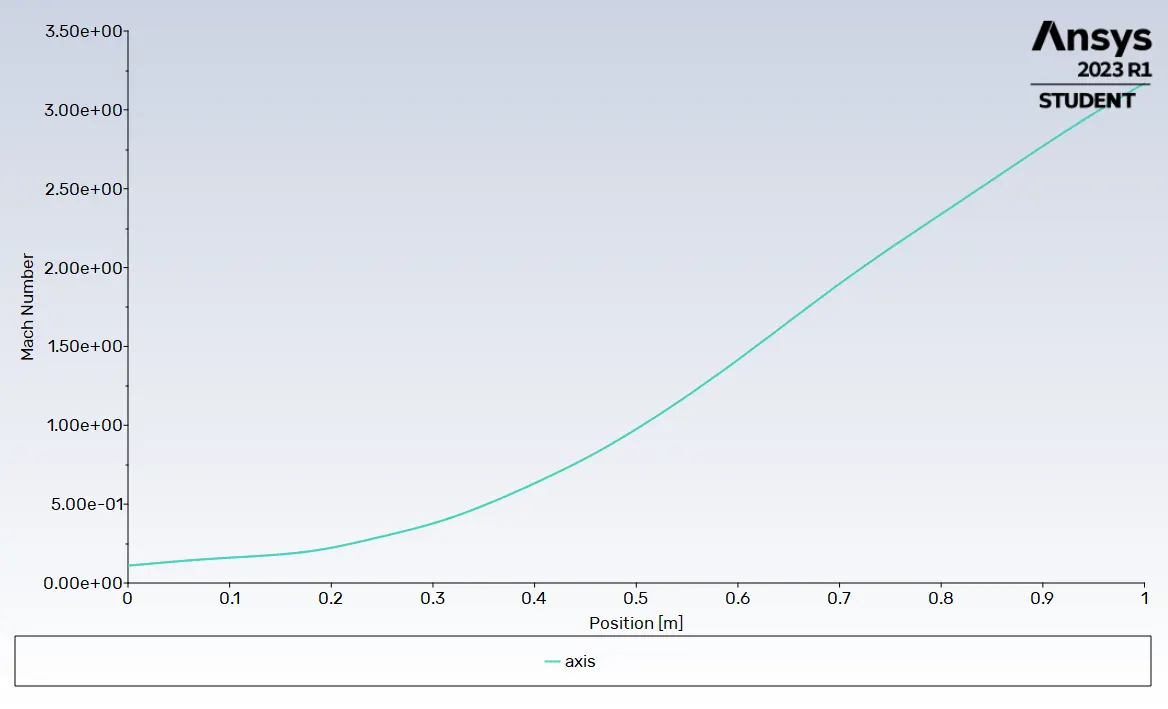
Mach Number along the nozzle
Mach number plot comparison with Computational Fluid Dynamics Book - J.D. Anderson
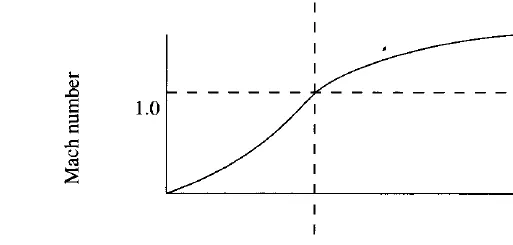
And, comparing the plot results obtained against the results plotted by the Converging-Diverging-Nozzle simulation performed in the seventh chapter of the Computational Fluid Dynamics book from J.D. Anderson, it can be seen that the results are similar and the simulation was well performed. Now, the reason for this behavior was explained before in the engineering development section, and using these results can prove the theory is correct.
The converging section makes the initial pressure decrease and the velocity increase according to Bernoulli's equation for incompressible flows; then, depending on the inlet-throat area difference, the flow will reach the speed of sound or not, in this case, the speed of sound is reached at this point and, once the speed of sound is reached, the flow in the diverging zone will get accelerated, decreasing even more the pressure and temperature values. Likewise, the density at these points varies too. The following video shows the convergence of the velocity field inside the nozzle.
CONCLUSIONS
Incompressible flows will make the flow lose kinetic energy at the diverging section, increasing the pressure and temperature, however, compressible flows do not keep the correlation commonly used in these cases, and generate the flow accelerates even more.
In the simulation above, the shock waves that are generated at supersonic speeds are not shown; but this phenomenon must be taken into account when a converging-diverging-nozzle is designed.
REFERENCES