Week 2 - Converging diverging nozzle
AIM:
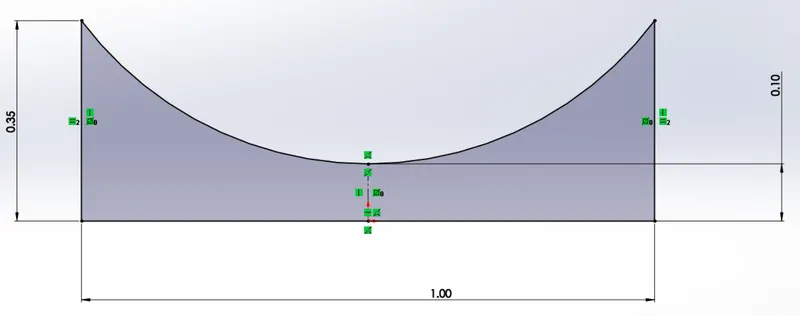
To Simulate the flow through converging-diverging nozzle for the given boundary conditions
OBJECTIVE:
- At Inlet, Pressure = 1atm and Temperature = 300K. The outlet pressure= 0.027 atm.
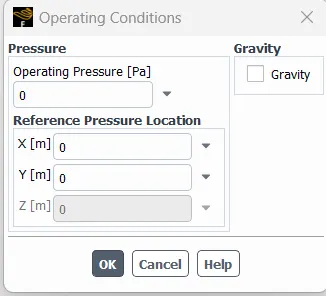
- In the operating conditions, consider the reference pressure to be zero.
Plot:
- The pressure, velocity and temperature variations across the domain
- The variation of Mach number across the domain and at what distance from the inlet does the flow become supersonic.
THEORY:-
Converging-Diverging Nozzle:
A convergent-divergent nozzle is a used to accelerate a compressible fluid to supersonic speeds in the axial (thrust) direction, by converting the thermal energy of the flow into kinetic energy. It is widely used in some types of steam turbine and rocket engine nozzles. It also sees use in supersonic jet engines.
In converging section ,Mach number (M)<1, at throat M=1 and in diverging section M>1.
A convergent nozzle is a nozzle that starts big and gets smaller-a decrease in cross-sectional area. As a fluid enters the smaller cross-section, it has to speed up due to the conservation of mass. To maintain a constant amount of fluid moving through the restricted portion of the nozzle, the fluid must move faster.
PROCEDURE:
GEOMETRY:
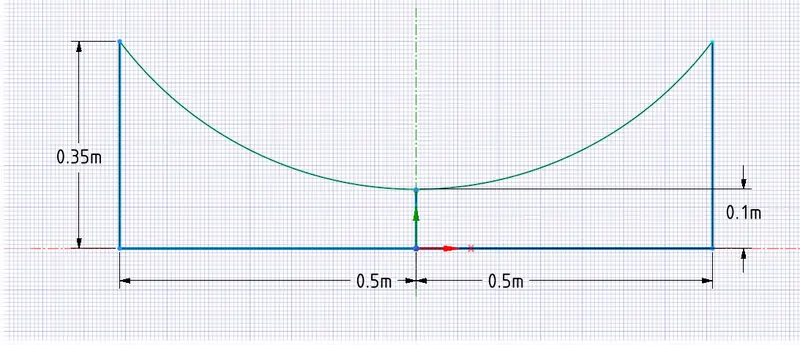
- Create the geometry using Spaceclaim in Ansys fluent
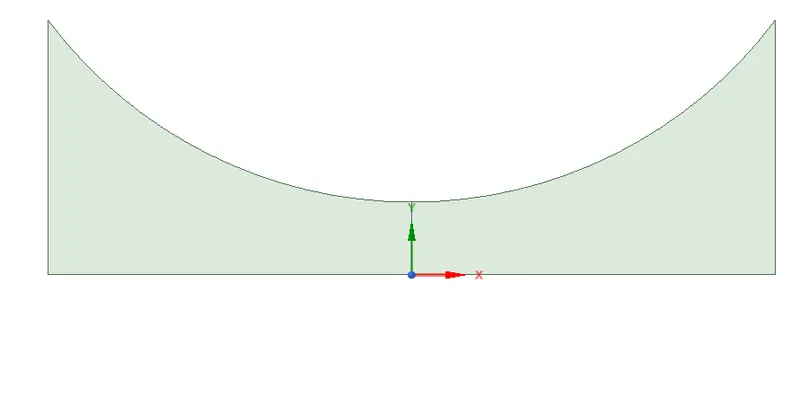
- After generating geometry we will use Pull tool for creating Surface.
MESHING:
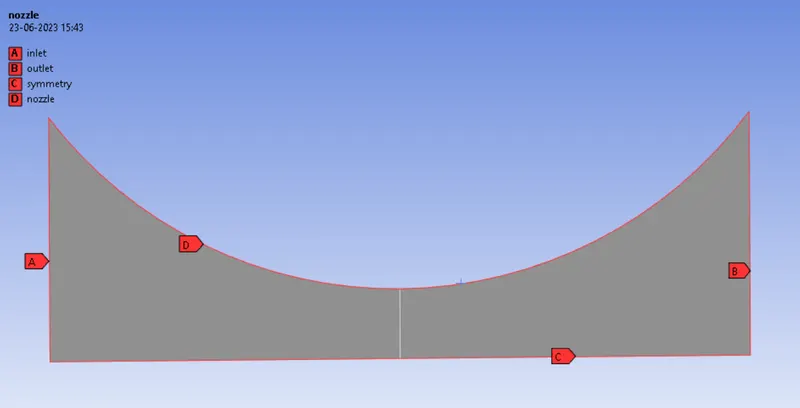
- After opening it in Mesh we will define the Named Selection
- Inlet
- Outlet
- Symmetry
- Nozzle
- We will mesh the geometry with element size 2mm

SOLVER:
- Type:- Density-Based
- Time:- Steady
- Velocity Formulation :- Absolute
- 2D Space:- Axisymmetric
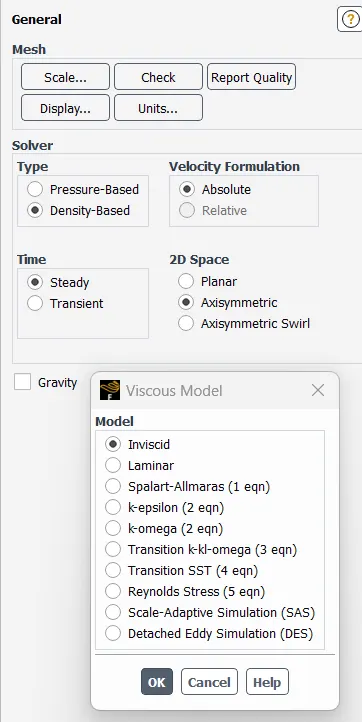
- We are Simulating a Supersonic Steady flow through the CD nozzle, in supersonic flow the air considered is compressible, hence selecting Density based Solver.
- We use Inviscid Viscous Model because we are using Ideal gas.
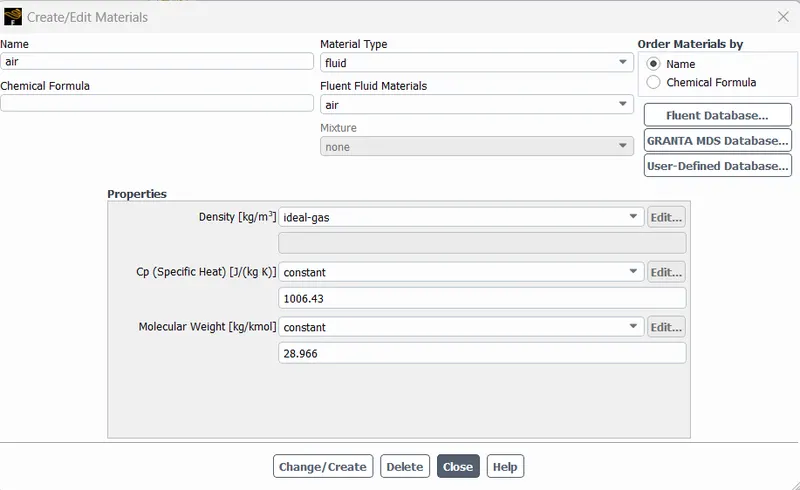
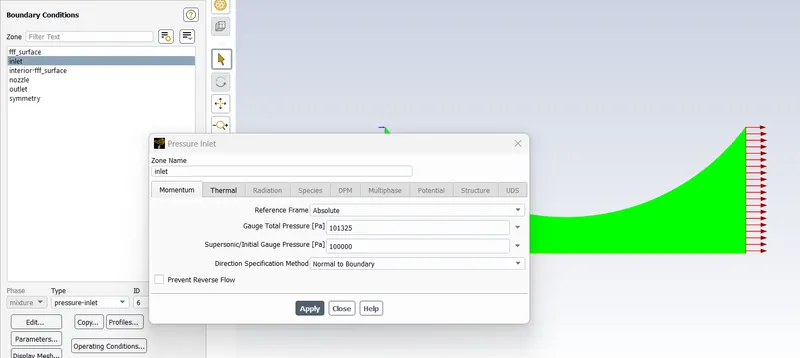
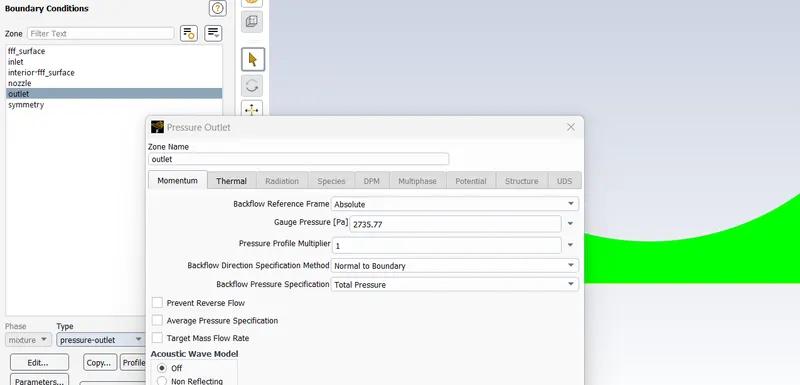
- Applying the pressure based inlet and outlet boundary condition
At Inlet, Gauge Pressure = 101325 Pa and Temperature = 300K
The outlet Gauge Pressure= 2735.77 Pa
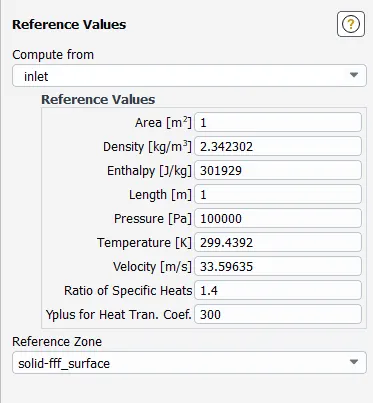
Reference Values:
Operating Conditions:
RESULTS:
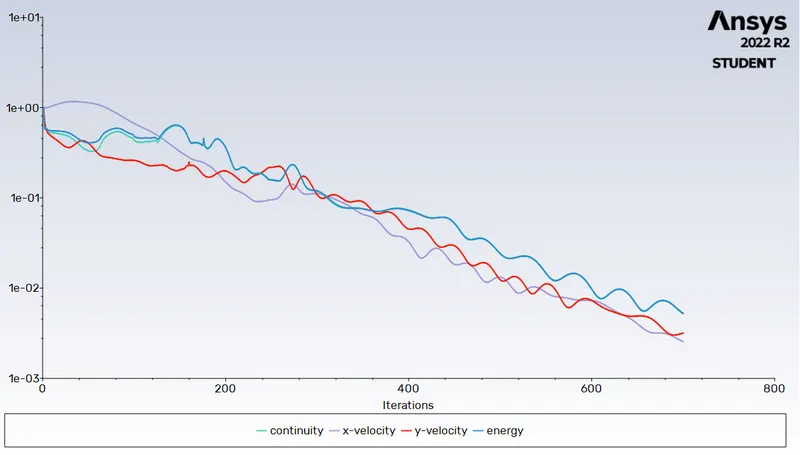
After setup we will calculate for 700 Iterations:
Residual Plot:
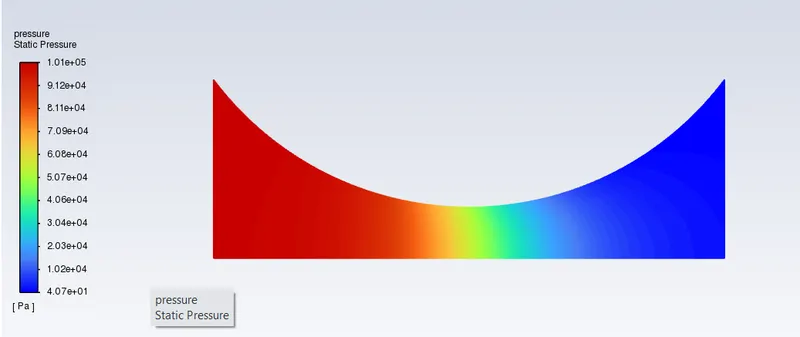
Pressure Contour:
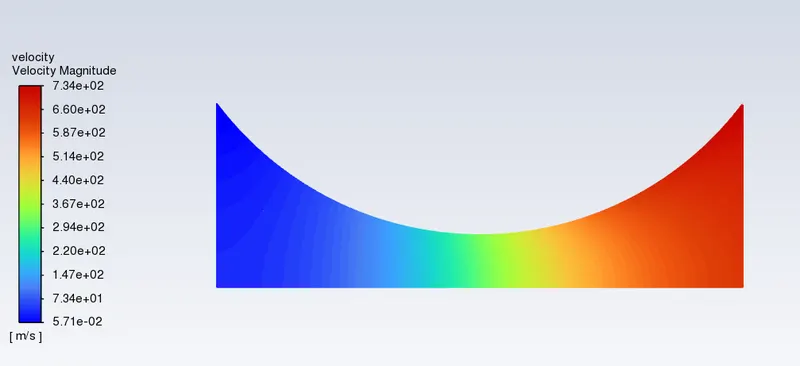
Velocity Contour:
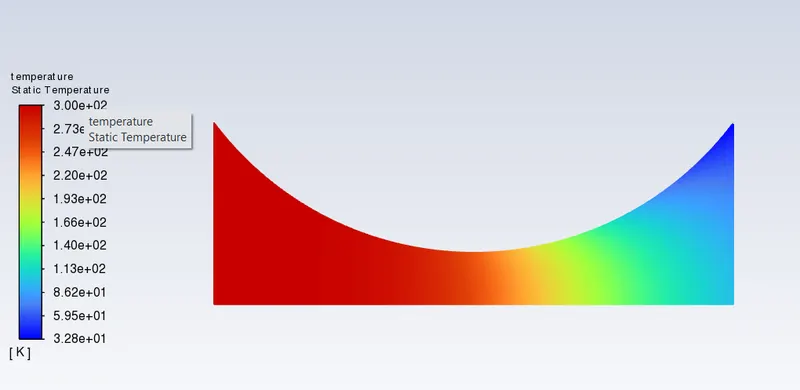
Temperature Contour:
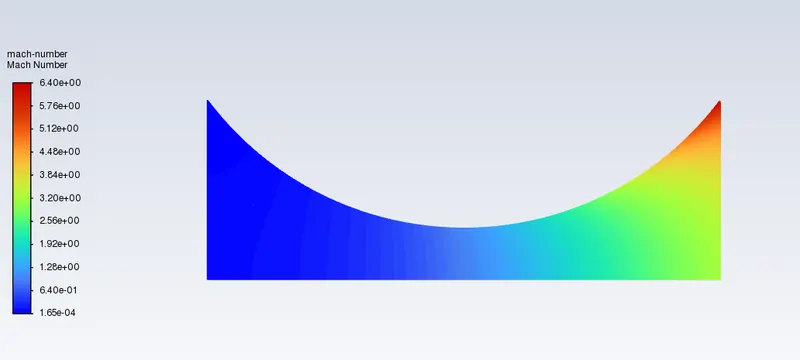
Mach Number:
PLOT:
Pressure Distribution Over Nozzle Plot:
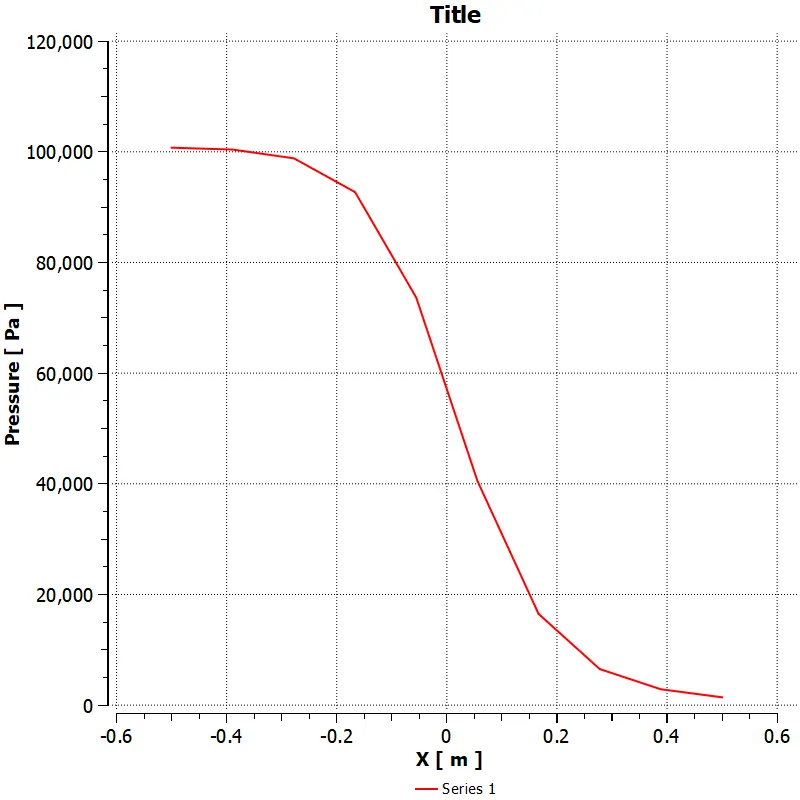
We can see that as we go from -0.6 to 0.6 the inlet to outlet pressure keeps Decreasing.
Temperature Distribution Over Nozzle Plot:
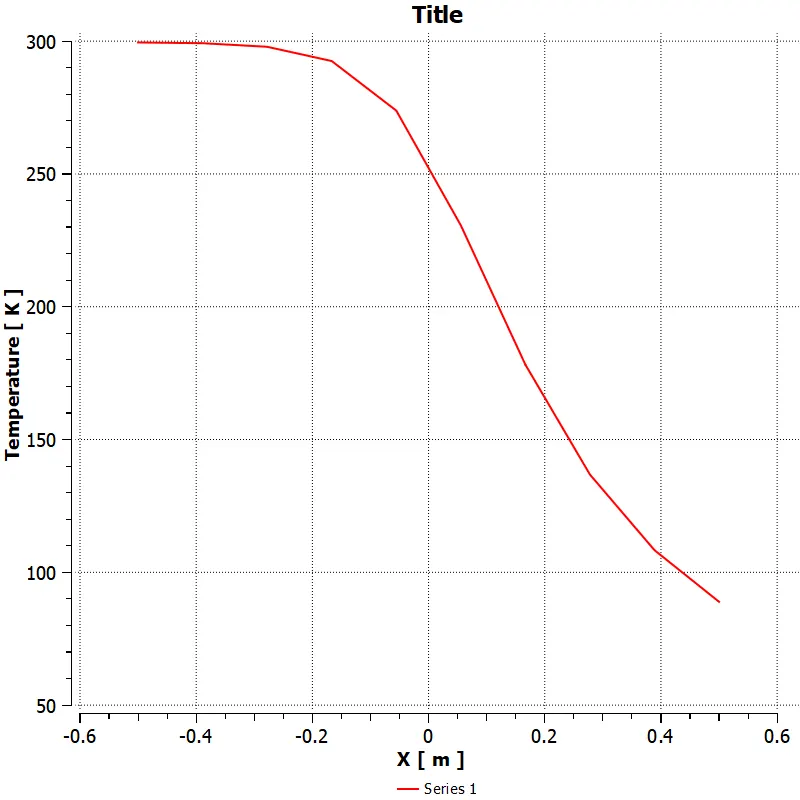
We can see that as we go from -0.6 to 0.6 the inlet to outlet Temperature keeps Decreasing
Velocity Distribution Over Nozzle Plot:
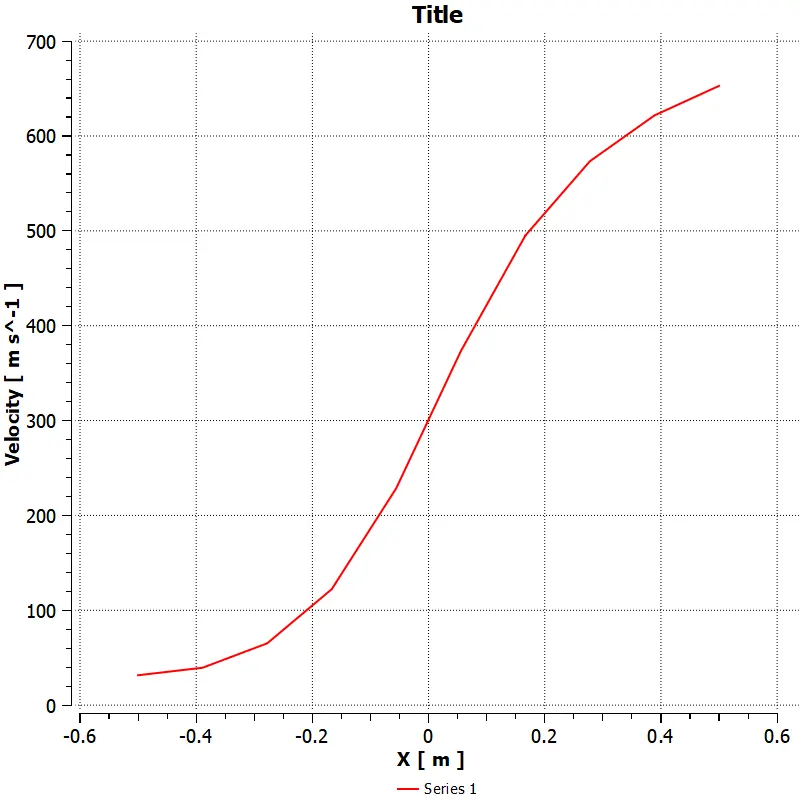
We can see that as we go from-0.6 to 0.6 the inlet to outlet Velocity keeps Increasing.
Mach Number Plot:
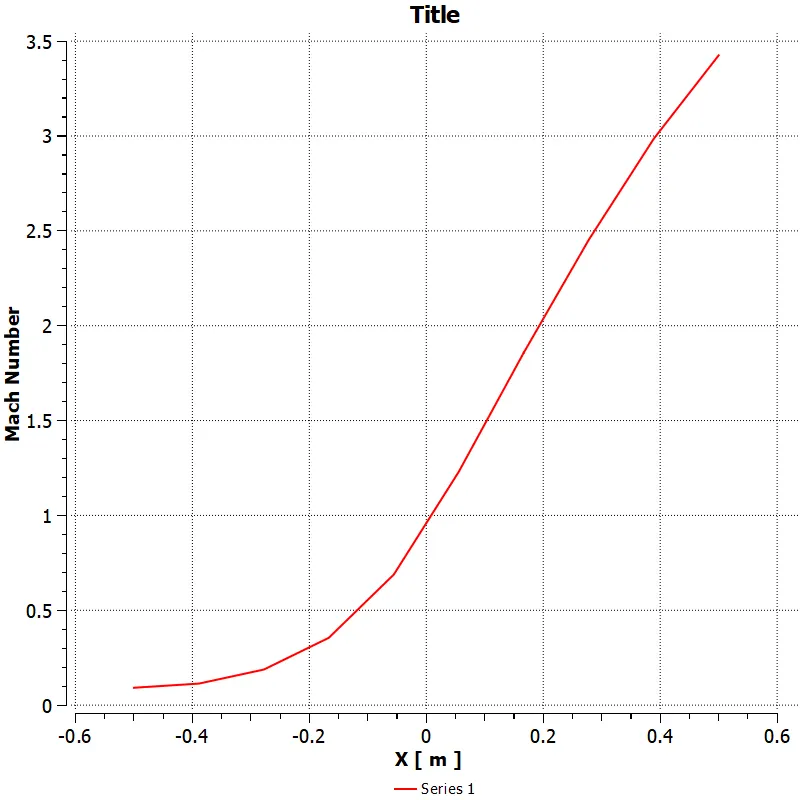
We conclude that (M=1) at Throat Region and it starts to become Supersonic flow from Throat region 0.51 m from inlet
ANALYTICAL:
- Variation of fluid velocity with the flow area of the nozzle is given below
`(d A) /A = − (D v) /V ( 1 − M^ 2 )`
CONDITION 1:
- Consider the first half of the nozzle (converging zone), the flow is isentropic
`(d A) /(d V) = (A 2 − A 1)/( V 2 − V 1)`
- Since A 2 < A 1 and V 2 > V 1
- So if the above conditions are applied in the nozzle equation we will get dA/dV<0 and Mach number M<1.
- Hence it comes under subsonic flow.
CONDITION 2:
- Consider the second half of the nozzle (diverging zone), the flow is isentropic
`(d A) /(d V) = (A 2 − A 1)/( V 2 − V 1)`
- Since A 2 < A 1 and V 2 > V 1
- So if the above conditions are applied in the nozzle equation we will get dA/dV>0 and Mach number M>1.
- Hence it comes under supersonic flow.
CONDITION 3:
- Consider the middel part of the nozzle (Throat zone), the flow is isentropic
`(d A) /(d V) = (A 2 − A 1)/( V 2 − V 1)`
- Since A 2 = A 1 and V 2 = V 1
- So if the above conditions are applied in the nozzle equation we will get dA/dV=0 and Mach number M=1.
- Hence it comes under sonic flow.
CONCLUSION:
- We have plotted the pressure, velocity and temperature variations across the domain
- We have also seen the variation of Mach number across the domain and at what distance from the inlet does the flow become supersonic.
- We have concluded that both Analytical and CFD Approach at the throat region the Mach number is Equal to 1 .