Week 2 - Converging diverging nozzle
- Converging diverging nozzle
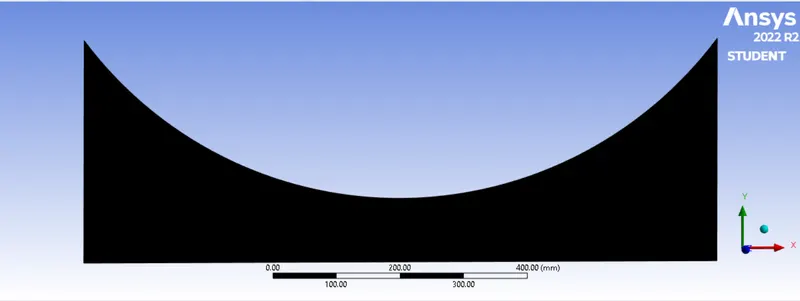
- Consider the converging-diverging nozzle below with the dimensions.
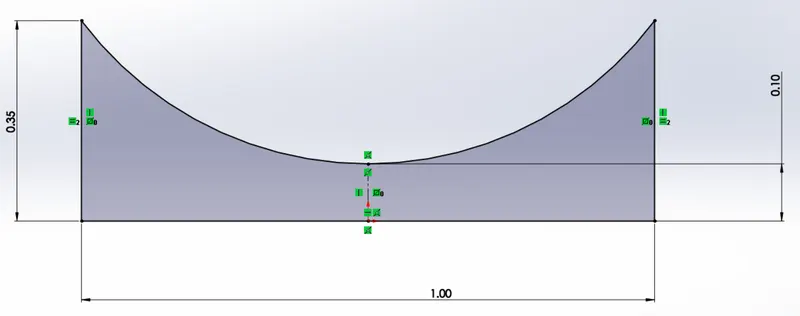
-
For the following boundary conditions,
-
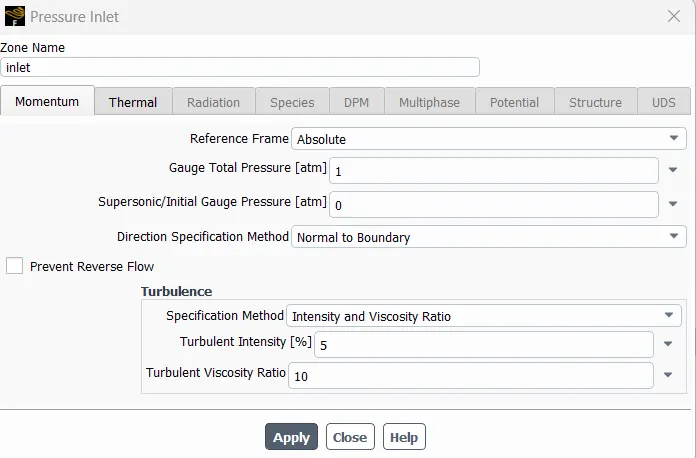
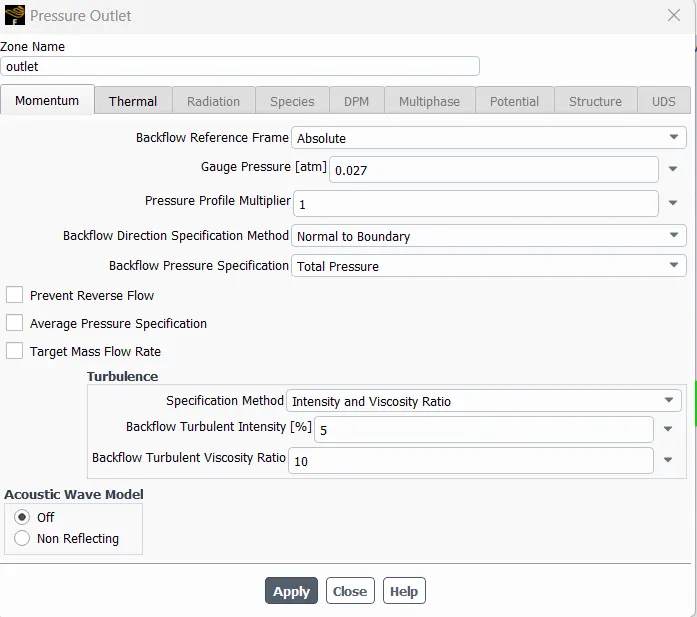
At Inlet, Pressure = 1atm and Temperature = 300K. The outlet pressure= 0.027 atm
- In the operating conditions, consider the reference pressure to be zero.
- Aim - To perform flow simulation through convergent divergent nozzle.
- Objective - To simulate flow through the the converging-diverging nozzle.
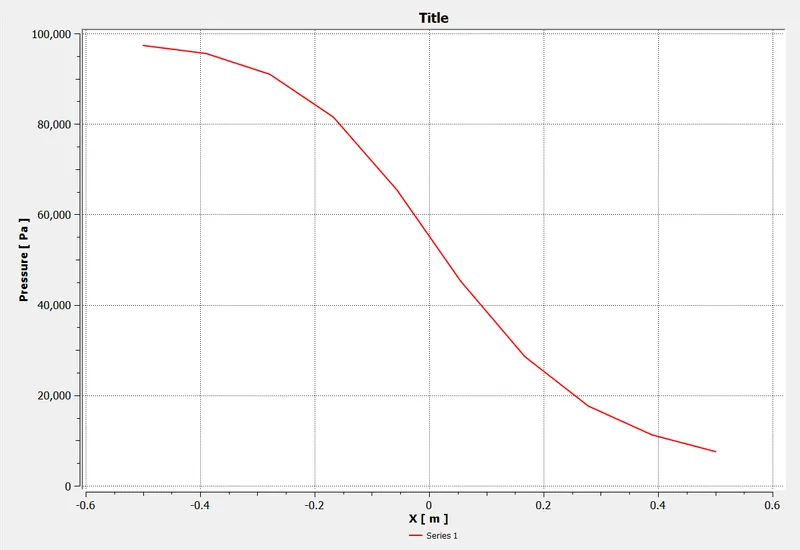
- To plot the pressure, velocity and temperature variations across the domain
- The variation of Mach number across the domain and at what distance from the inlet does the flow become supersonic.
- Convergent Divergent nozzle or CD nozzle-
- Hot exhaust gases leave the combustion chamber and converge towards the smaller area or throat of the nozzle
- Pipes of decreasing section in the direction of fluid flow converge until a minimum surface is reached. Then the cross section increases or diverges.
- Convergent-divergent nozzles are used to increase gas flow at supersonic speeds (like rockets). Their cross-sectional areas first decrease and then increase. The area with the smallest diameter is called the throat.
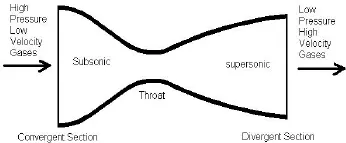
- It consist of convergent section ,throat, divergent section .
- Gas flows through nozzles from a high pressure area (often called a chamber) to a low pressure area (called an atmosphere or reservoir). The gas flows from the chamber into the converging section of the nozzle, through the throat, through the diverging section and out into the environment in a jet.
- Procedure
- Geometry is created using Ansys Spaceclaim.
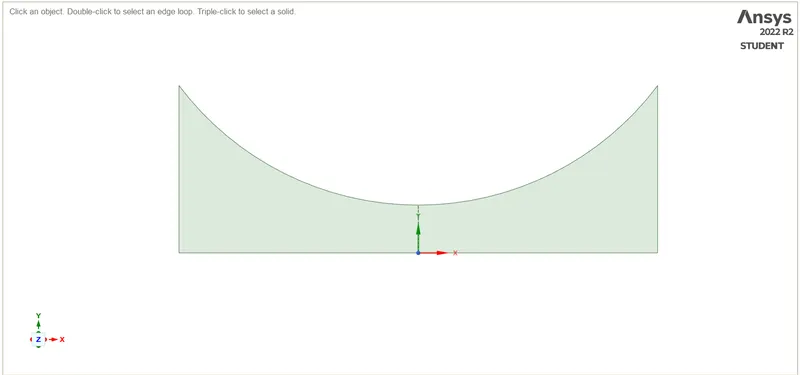
- Pull option is used for 2D creation.
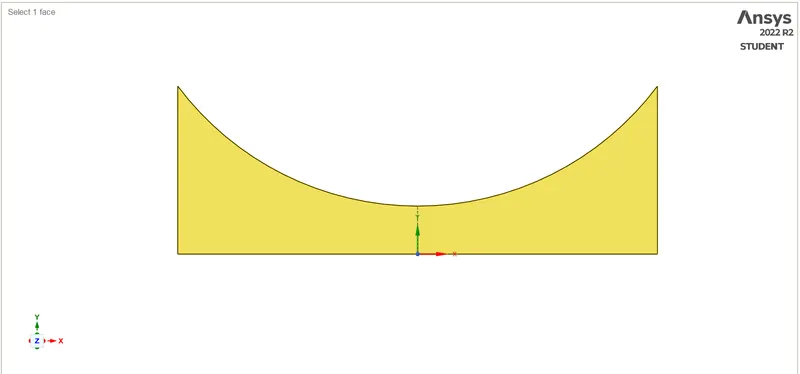
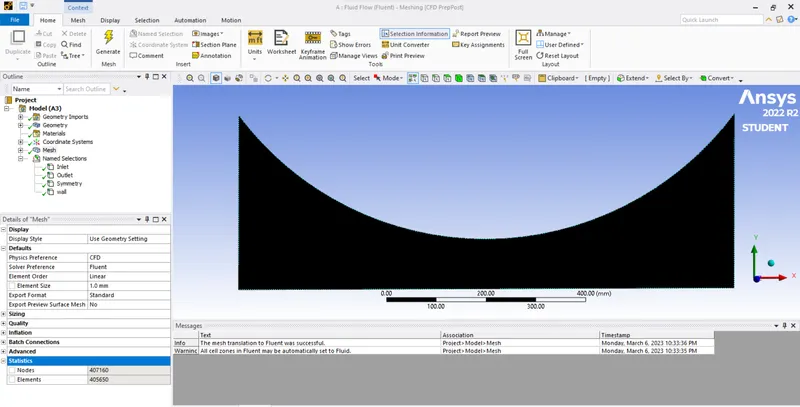
- Meshing
- Element size = 1 mm
- Name selections
-
Set up:
Solver: Steady state, density base
Energy: On
Turbulance model: Inviscid
Boundary conditions:
- Inlet
- Outlet
- Results
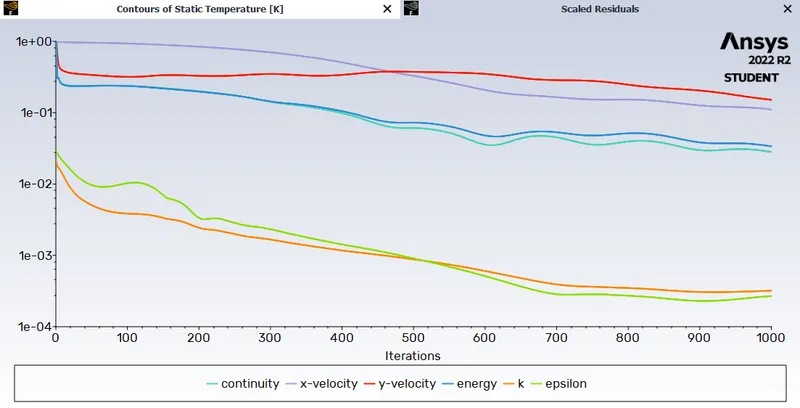
- Residuals
- Pressure Contour
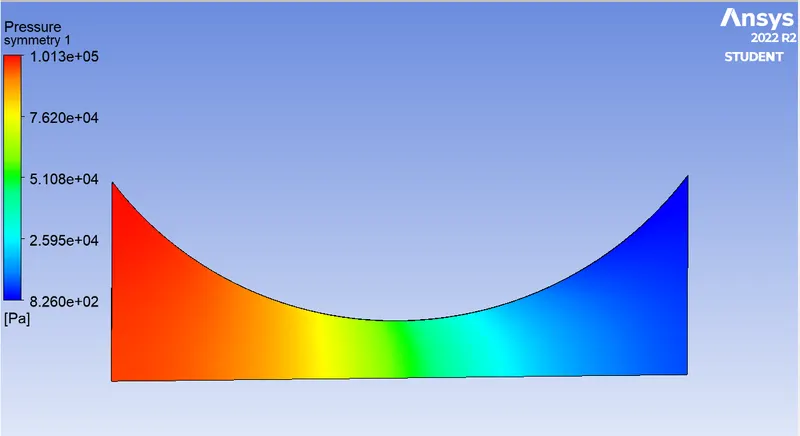
- In Above fig we are clearly seen that Inlet Pressure is High (101324.50 pa) 1 atm. and Outlet Pressure is lower.
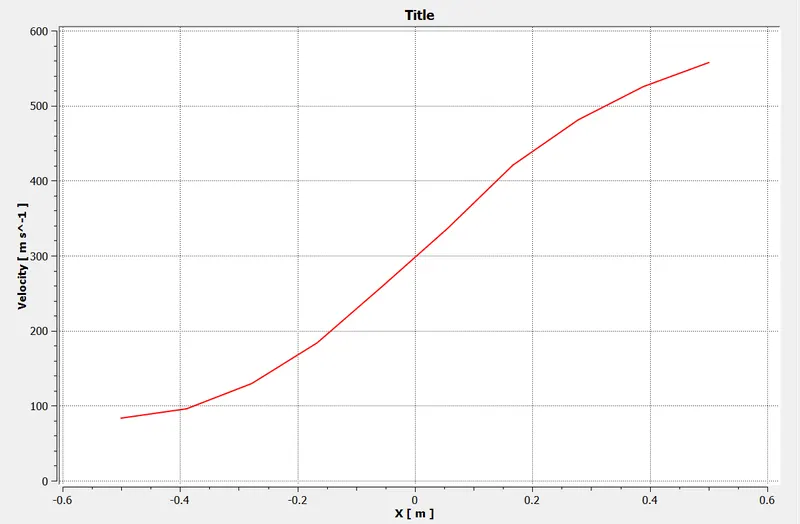
- Velocity contour
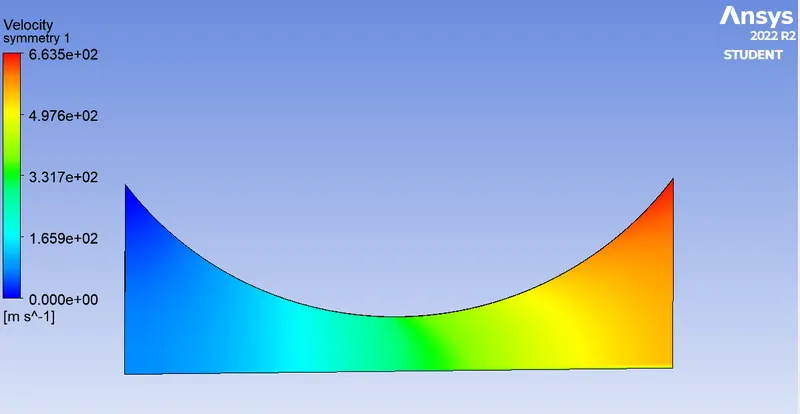
- In Above fig we are clearly seen that Inlet Velocity is Low and Outlet Velocity is High.
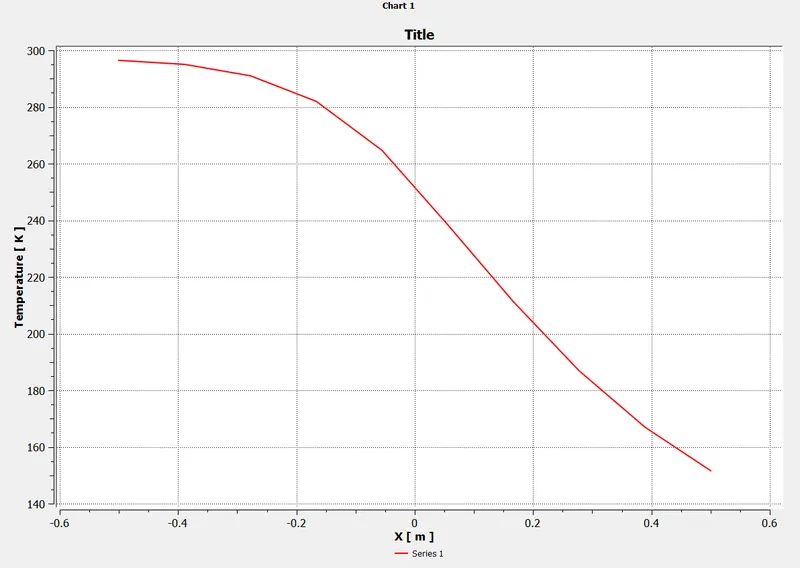
- Temperature contour
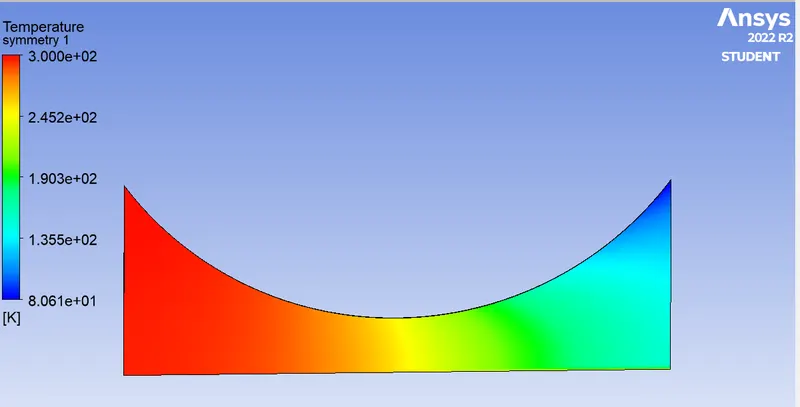
- Temperature is high at inlet and decreases gradually in supersonic region.
- Mach Number plot
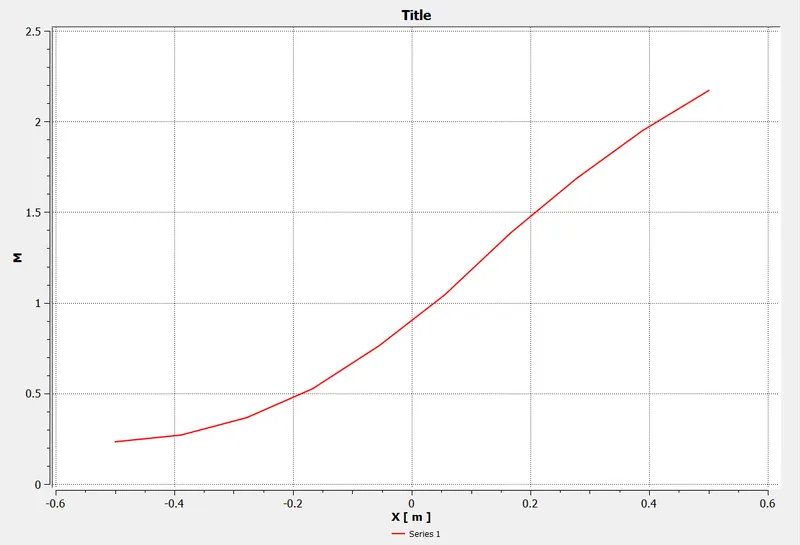
- The Above shown graph is Mach Number as Ideal gas introduced in Inlet Mach No. is zero and it becomes Higher toward Outlet. also we can see the Mach no at throat region near to 1. The supersonic region starts from mach no 1.
- Stepwise Explaination
- Geometry is created using Ansys Spaceclaim.
- Meshing is done .
- Face grids enabled
- Boundaries named Inlet ,Outlet, symmetry, wall.
- Edge dimensions enabled with BIAS option enabled and bias factor set to 10.
With grid size 1mm, edge dimensions are 1 mm. - Solver Density based
- Axis symmetric
- Energy option is enabled
- Inviscid flow
- Material set to Ideal Gas air
- In operating conditions the pressure is set to 0 to remove round off errors which common in density based solvers
- A standard initialisation from inlet is done.
- Run for 1000 iterations
- The graphs are plotted for pressure, velocity and temperature variations across the domain
- The variation of Mach number across the domain and at what distance from the inlet does the flow become supersonic.
- Conclusion
- The geometry of the convergent-divergent nozzle section area is analyzed and it is concluded that fluid properties such as velocity, pressure and temperature are conditions for the dependence of the flow section and the degree of expansion.
- Velocity increases along the length of the nozzle .
- Higher temperature and pressure at the inlet from the contours .
- Perform a steady state simulation on the diverging convergent nozzle .
- Extract the necessary contours and plot the changes in the characteristics of flow such as pressure, temperature, velocity and Mach number .