Week 2 Challenge : Surface meshing on a Pressure valve
Loop: Helps to select multiple cons connected to each other at a time.
New Face Option: Can create new surfaces. Existing Surf, Plannar, Fitted, Coons are used to rectify topology as per requirements.
Check manager>Geometry check: Helps to check the errors in the model and can help to fix some of the errors in the model.
PID: The PID serves as a reference or identifier for the processes carried out within ANSA. It helps track and identify specific actions or operations, making it easier to review or troubleshoot the modeling process.
Type of cons:
Single con (red in colour): Cons shared by only one surface.
Double cons (golden yellow in colour): Shared by two surfaces.
Triple cons (Blue colour0: Shared by three surface.
Fill Holes: Fills the holes and holes present in the model.
Compress: Compress files size by removing unwanted and unused entities.
AIM:
To check the geometrical errors and perform topology cleanup and mesh the model with target length set to 1mm, 3 mm and 5 mm separately with element type Tria.
Model given:
Valve :
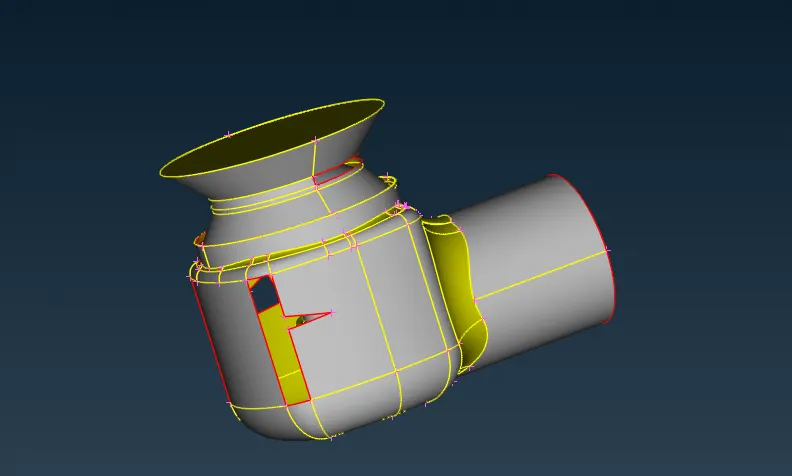
Solution:
- Finding all the geometrical errors using tools in the ANSA using checks manager.
Checks>Geometry
select the options that are needed to be checked and execute.
Errors found: 46
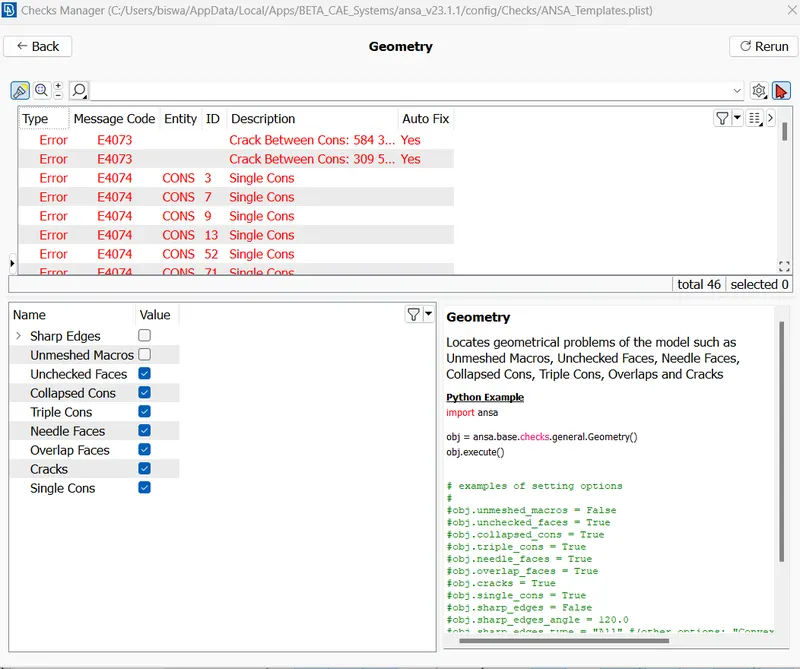
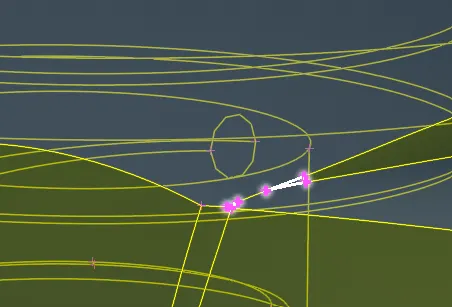
These were the cracks found :
Nos: 2
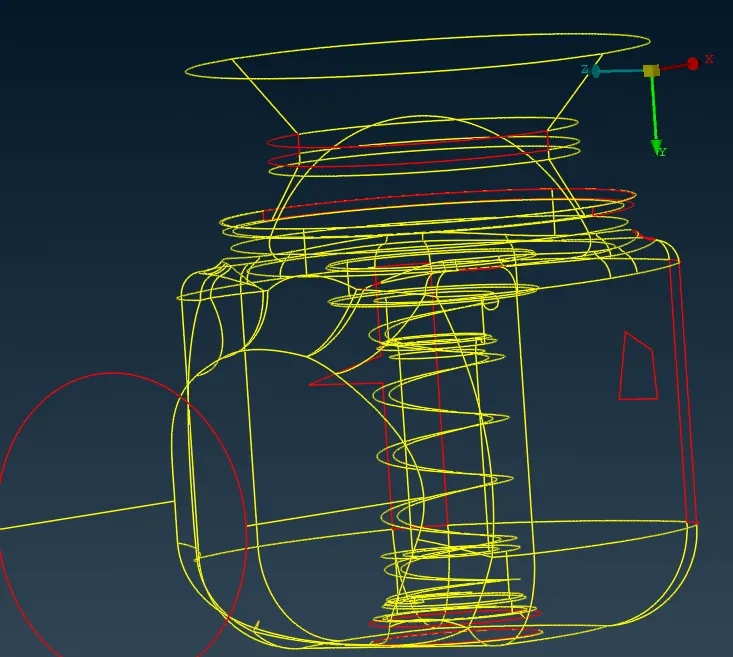
All double cons are represented by yellow lines and triple cons are not found.
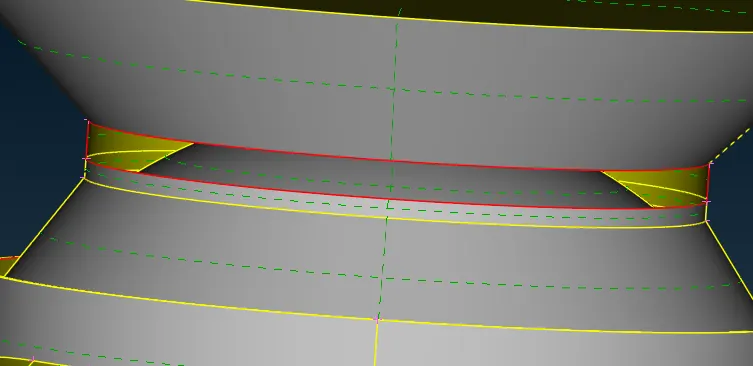
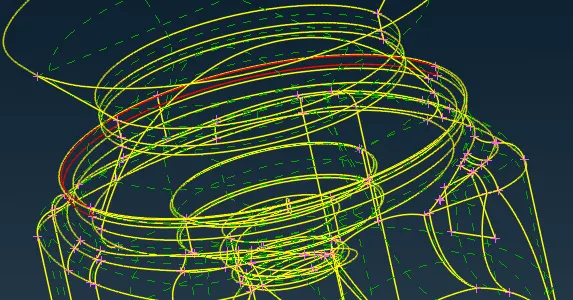
Lots of single cons can be seen in the figure below represented by red lines=44 nos.
- To clean the model from the errors use Topo deck.
Topo>Faces>New
Other tools used: ENT and loop for selections of cons
1. Patching the single cons shown in the figures.
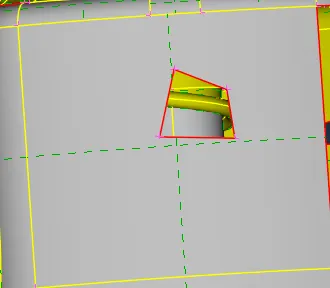
To patch this figure, we will use TOPO>Faces>New>EXISTING SURF
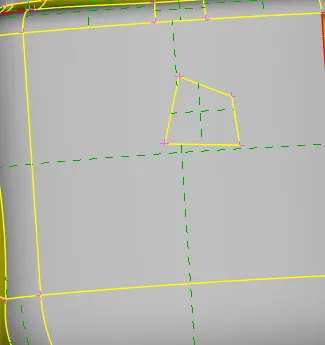
2. Surfaces to be fixed.
(a)
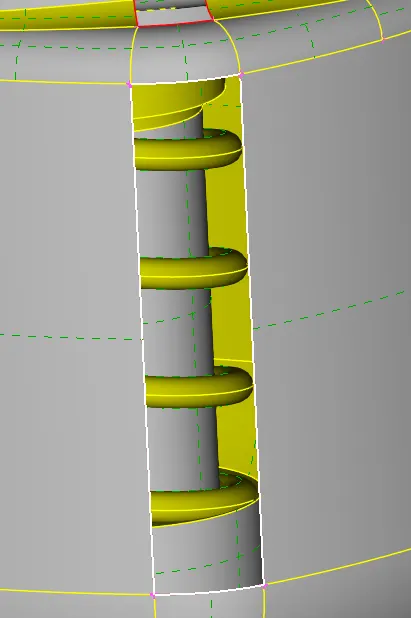
(b)
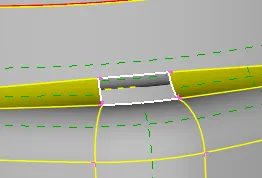
(c)
(d)
(e)
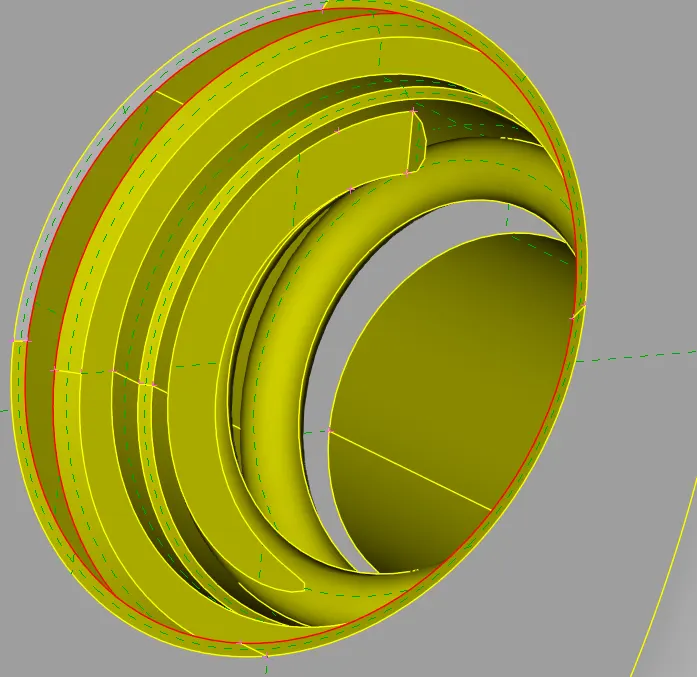
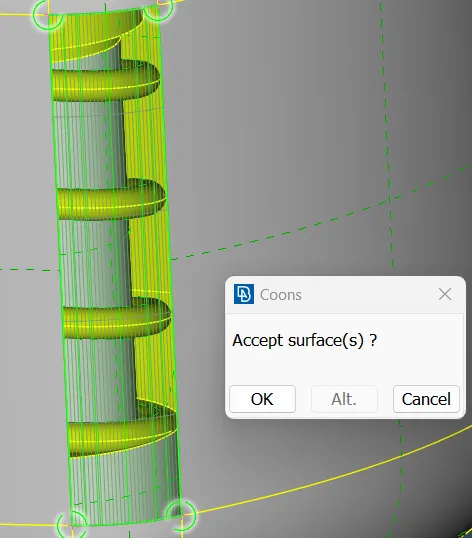
TOPO>Faces>New>COONS
Suggested fix
(a)
(b)
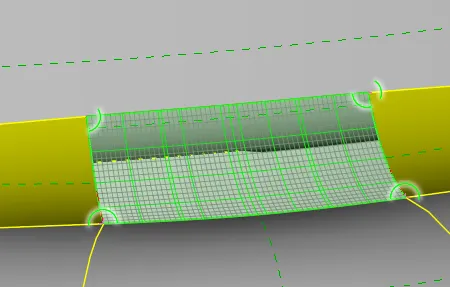
(c)
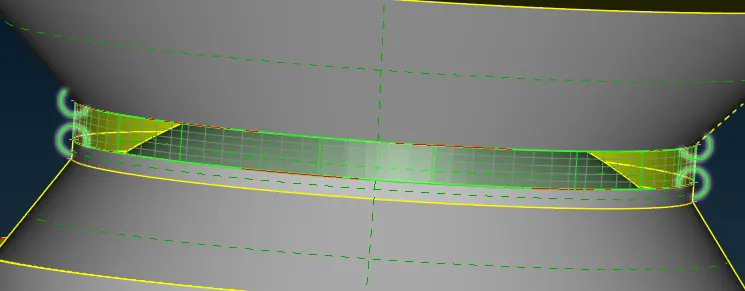
(d)
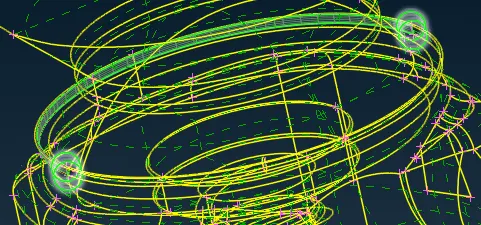
(e)
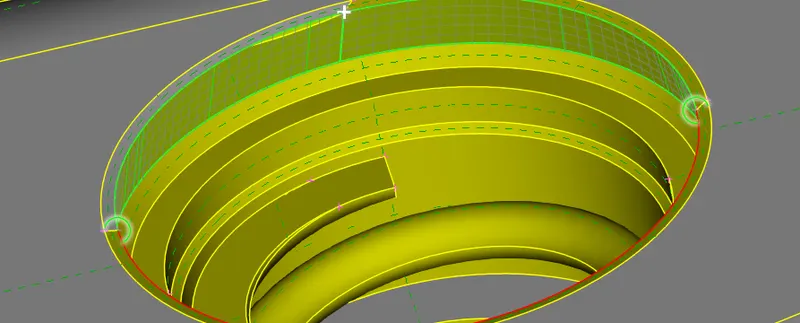
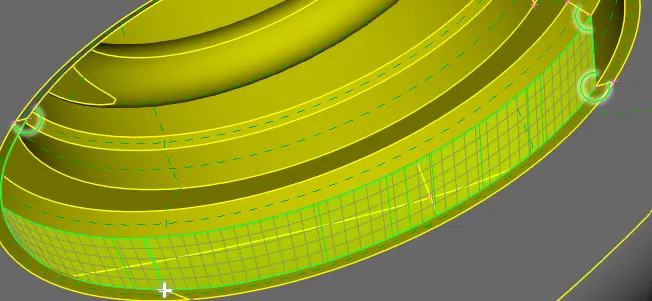
Fixed topology:
(a)
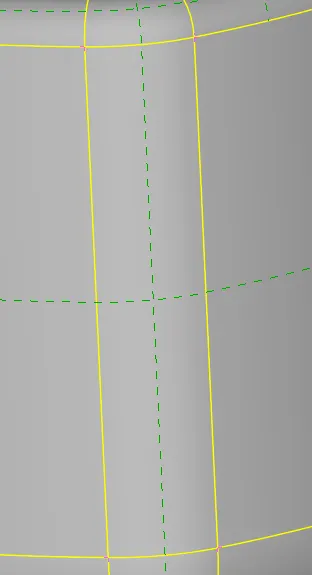
(b)
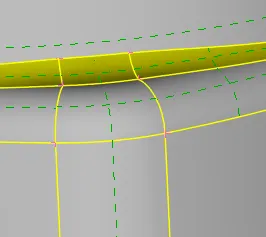
(c)
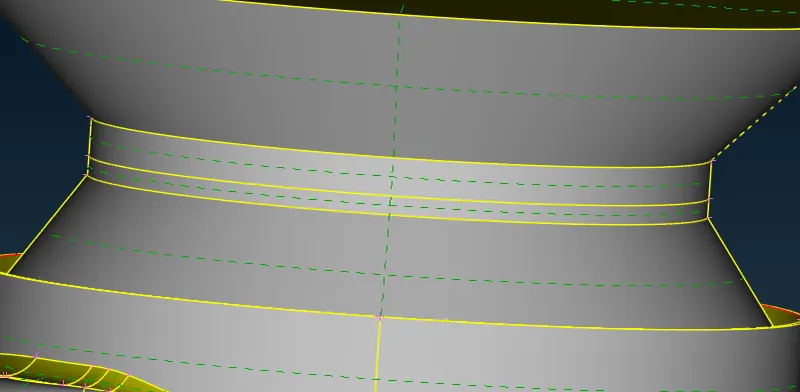
(d)
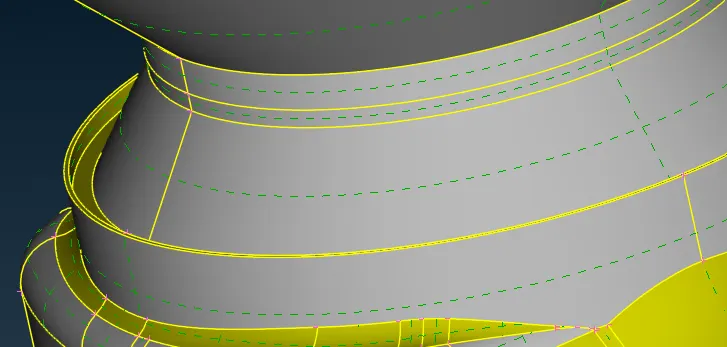
(e)
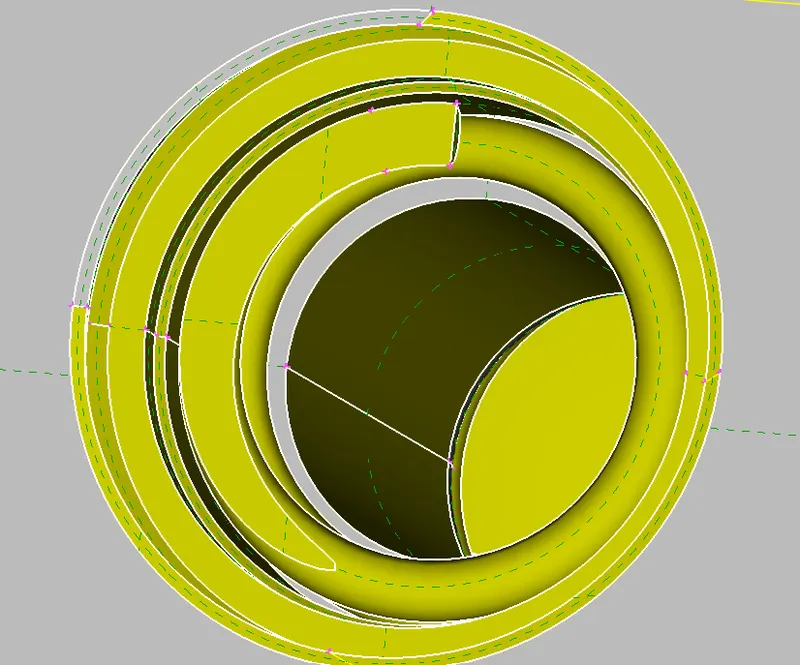
- Fixing the below we will be using FITTED surface type as COONS is not giving a good result.
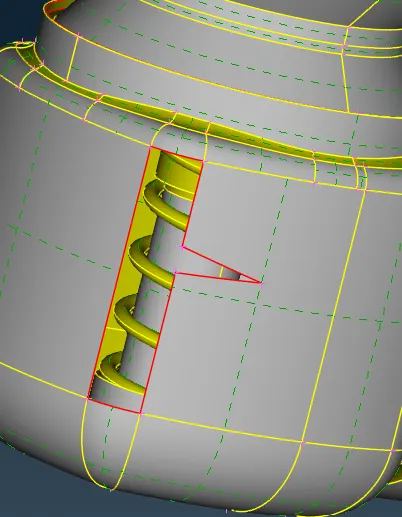
Applying fix: TOPO>Faces>New>FITTED
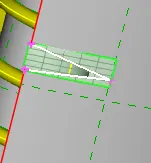
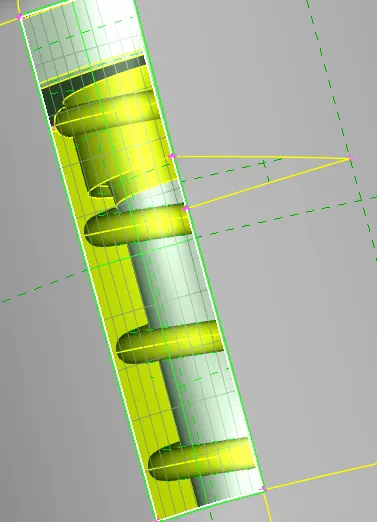
Resulting new surface:
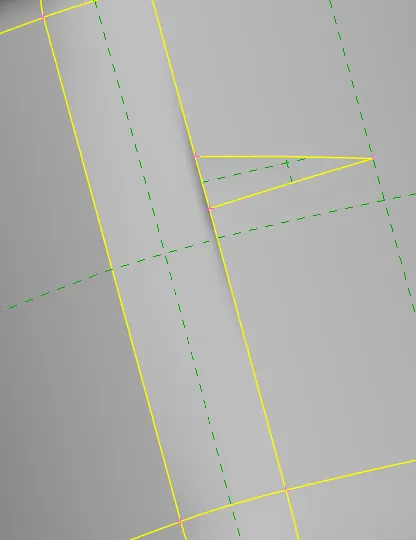
- Patching small holes on the model surface
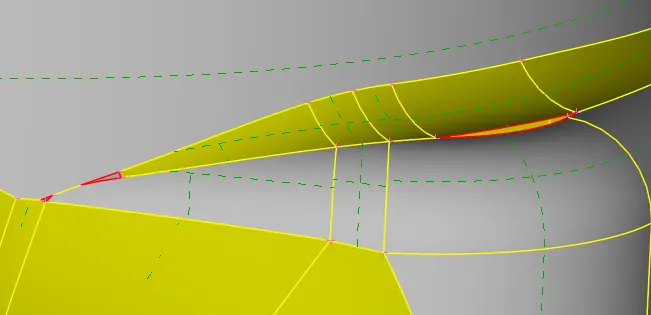
Use: TOPO>CONS>holes
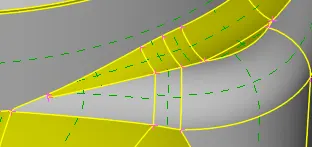
Fixed surface:
Closure models are necessary because CFD models are based on the fundamental equations governing fluid flow, known as the Navier-Stokes equations. Thus, all surfaces of this models are needed to be closed.
We can use the above method to fill the outlet of the valve:
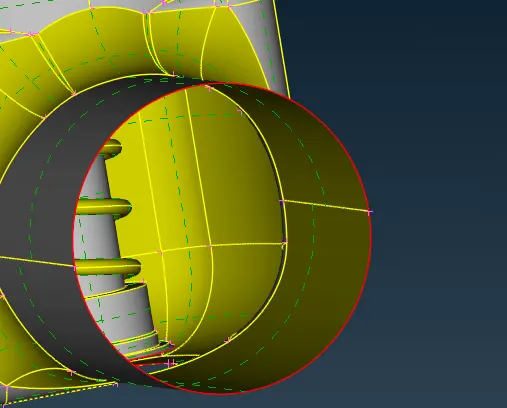
After fixing:
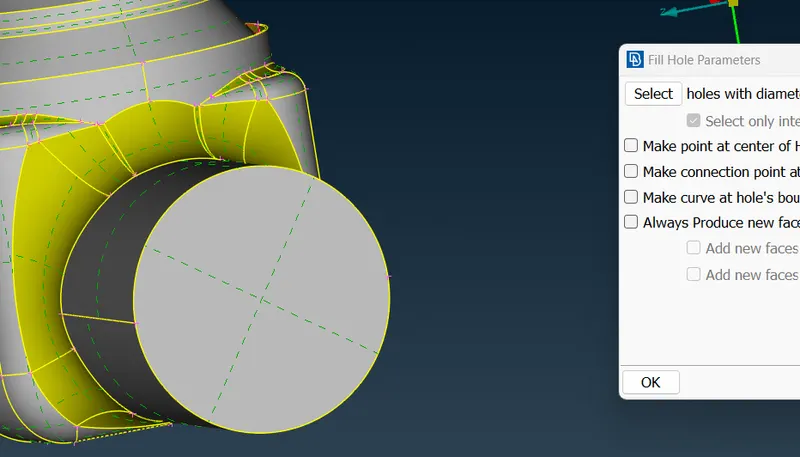
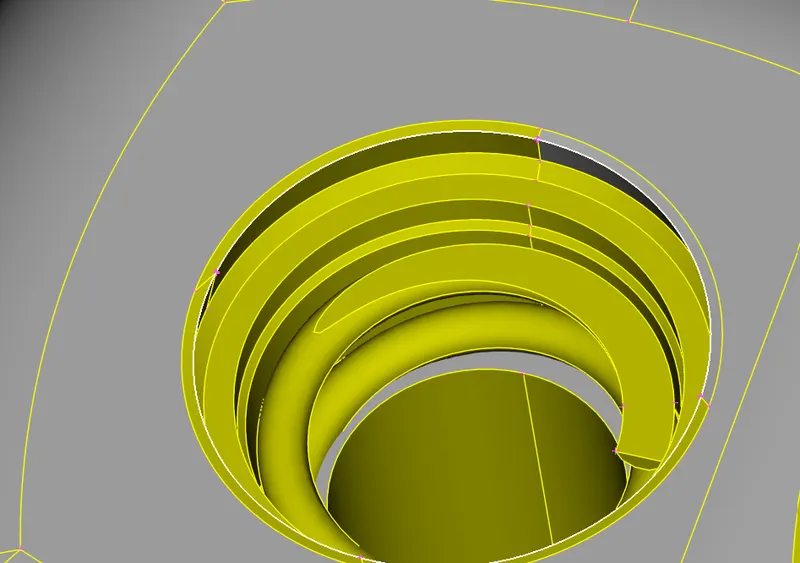
Closing the open surface at spring column bottom:
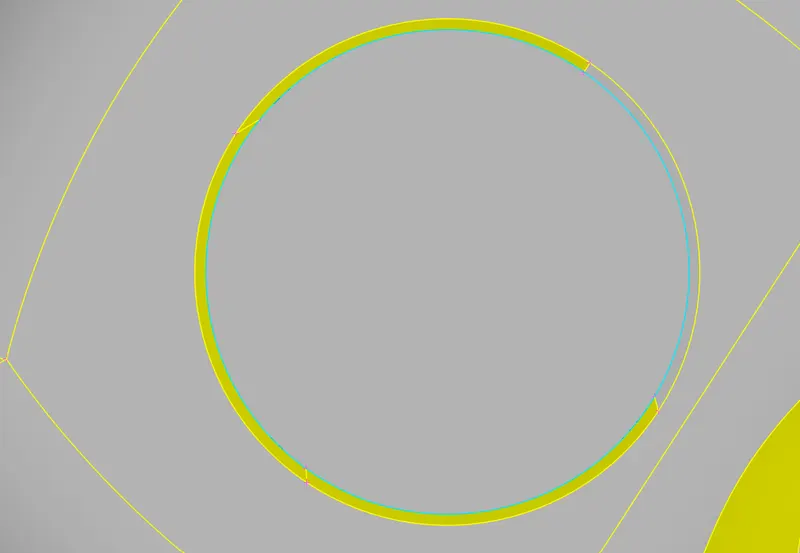
Closed inlet: TOPO>Faces>New>COONS
Rechecking for the errors:
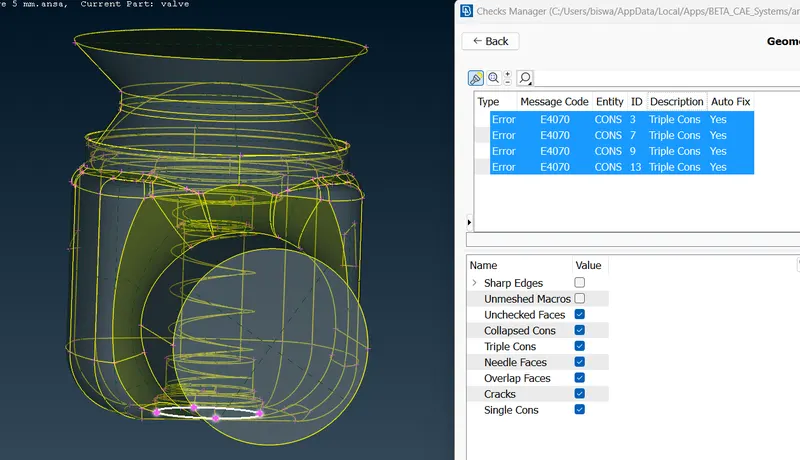
Here, we can see triple-cons but it is necessary as there are three surfaces in contact.
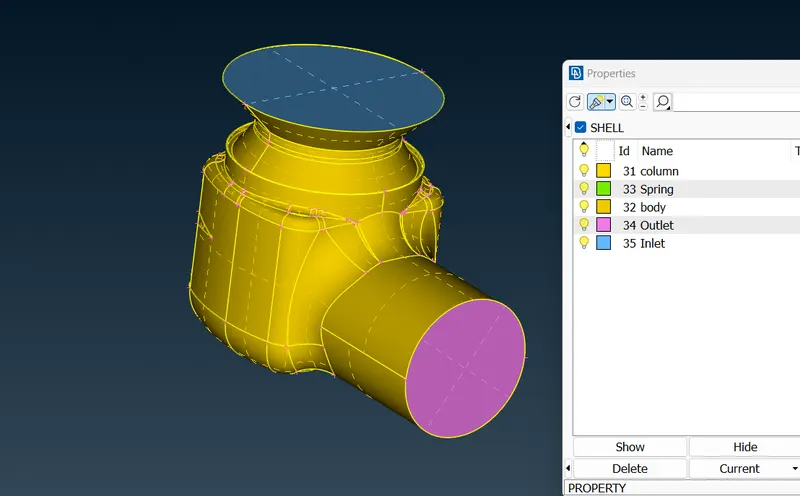
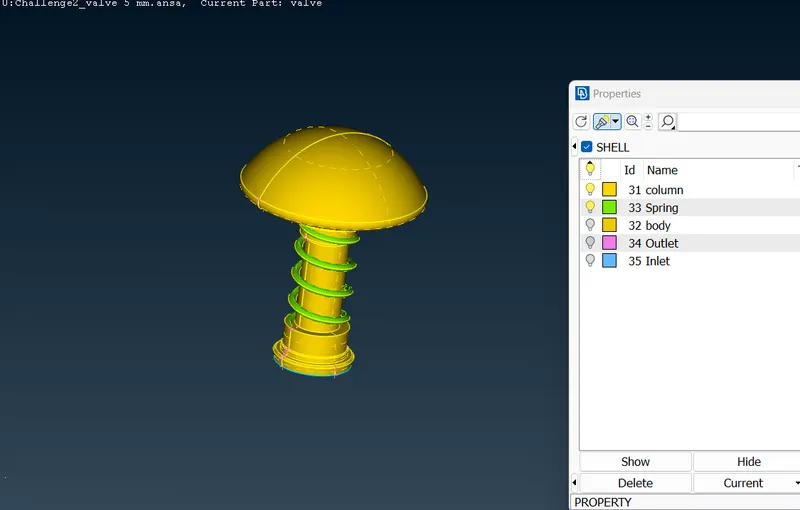
- Now to assign the names of the components in the model using PID (Property id) features:
Body, Inlet, Outlet:
Spring and column:
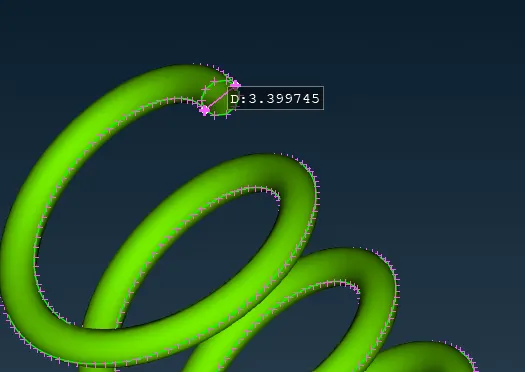
Spring dia:
MESHING:
MESH>Mesh Generation>Spot Mesh
Condition 1:
- Target length = 1mm
- Element type = Tria
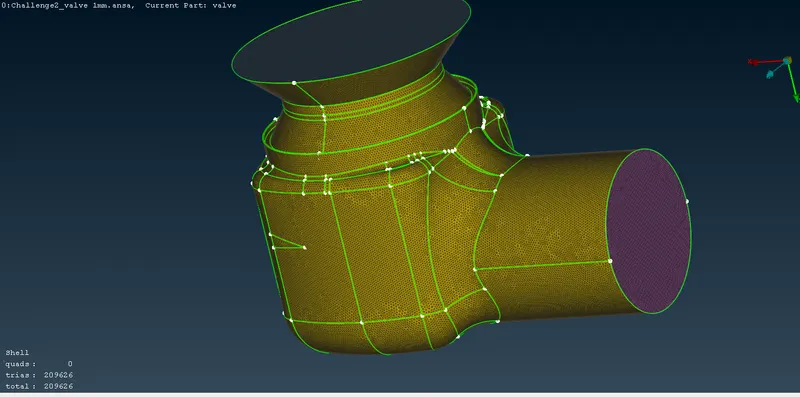
Checking the spring as it has smaller dimension:
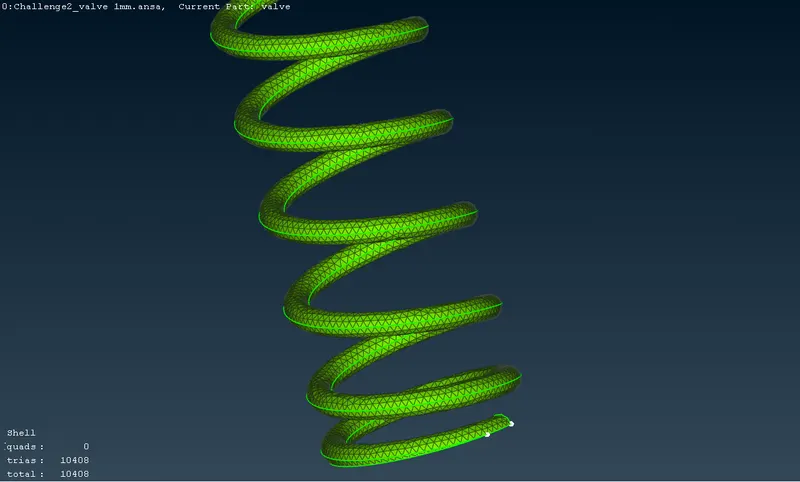
It is well meshed.
Condition 2 :
- Target length = 3 mm
- Element type = Tria
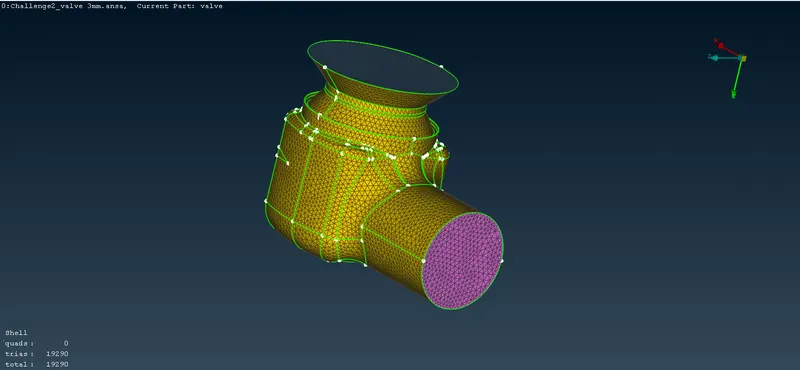
Spring:
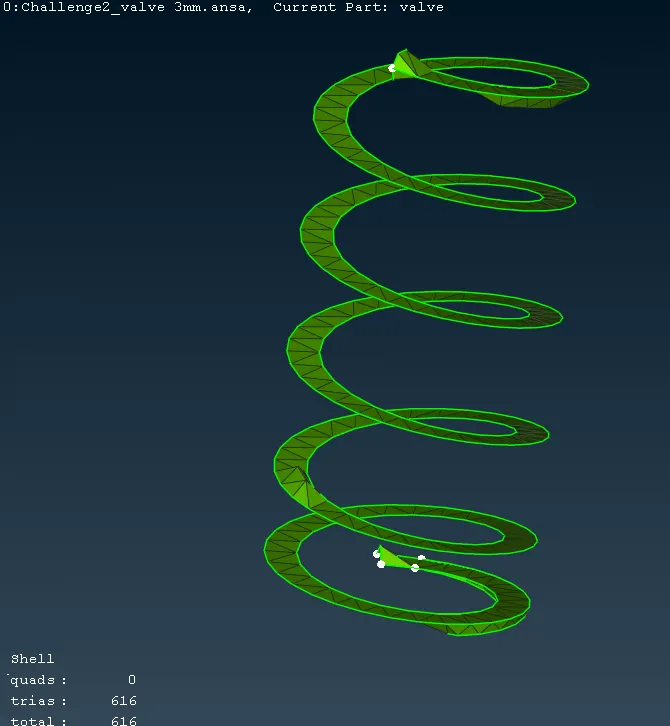
The spring mesh is not proper as the mesh length is more than the dia or thickness of the spring resulting in distorted mesh model.
Condition 3:
- Target length = 5 mm
- Element type = Tria
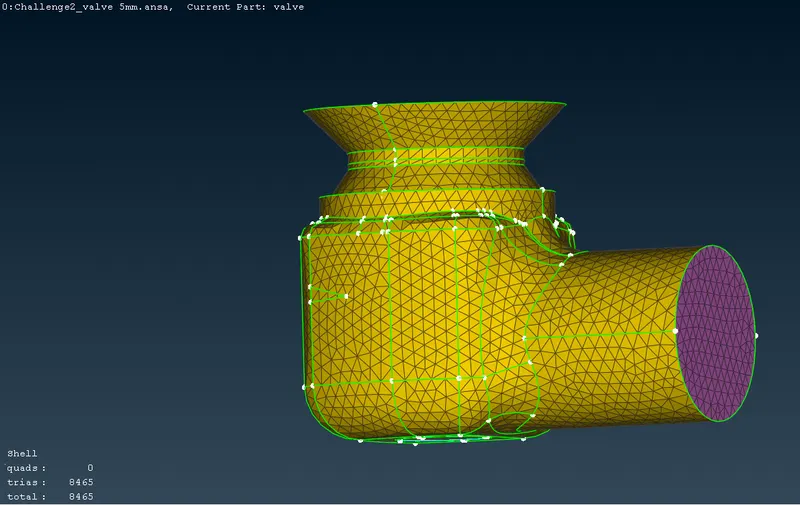
Spring:
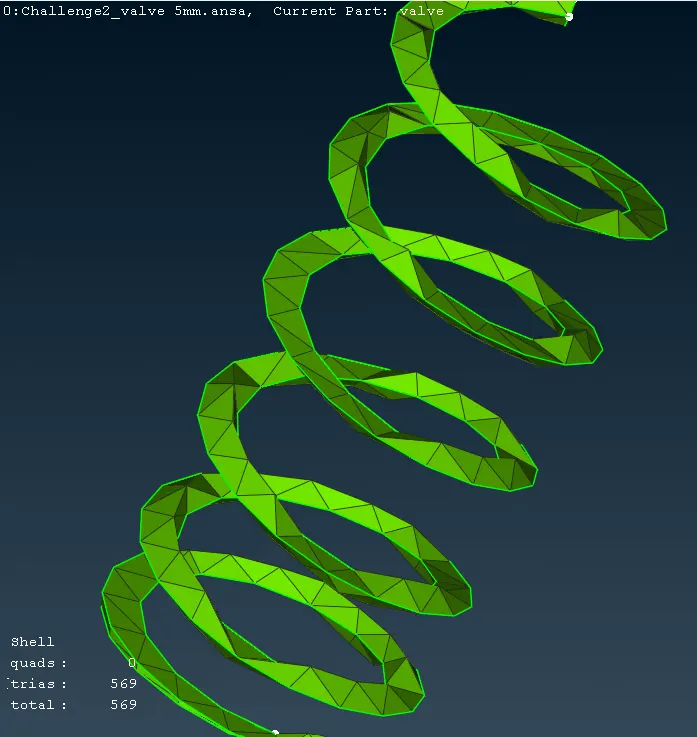
As per the given parameters it can be seen that the mess model of the spring is distorted and we can say, the mesh is not proper at mesh length of 5mm.
CONCLUSION:
- Checking of geometrical error was done and topological cleanup was done as per need.
- PID was done for the model.
- Three different target lengths 1mm, 3 mm and 5 mm (i.e. 3 cases) are taken and model was meshed using Tria type element.
- From the above 3 cases the following things were observed:
(a) More is the target length less is the number of mesh elements and vice-versa.
(b) As the spring dia is 3.39 (approx), the mesh created by target length 1 mm is best and 3 mm is bad as the spring losses it shape but as the mesh length is above 3mm i.e 5mm the spring is deformed more.
(c) Smaller is the target length more are the number mesh elements and hence the memory consumption is more with increase in meshing time but improves mesh quality which can give better results during simulation.
Thus, 1mm target length is giving better result than any other target length.
Google drive link for the files:
https://drive.google.com/file/d/1s80k2XhAS-BpK6Yt0_SqwGOgIGG8NP7Y/view?usp=sharing