Week 2 Challenge : Surface meshing on a Pressure valve
Surface meshing on a Pressure valve
Aim:
To mesh the give component by surface meshing in ansa by using the target length of 1mm, 3mm and 5mm
Objective:
Mesh the given model by using different parameter with three different cases
Procedure:
- Open the file from the location where we have saved in our Computer by using “Ctrl+O” Command.
- Go to the Tool in ansa
- Select the check
- Left click on geometry check
- Select the following check in geometry check
- Single cons
- Cracks,
- Overlap faces
- Needle faces
- Trible cons
- Collapsed cons
- Unchecked faces
- Eliminate void surface by creating the new surface in ansa.
- Check the single Cons by using wireframe mode in ansa by using the combination of Ctrl+Shift key.
- Go to the PID manager
- Create new PID
- Assign the colour for each surface according to the PID which we have created.
- Apply the PID to the Surface.
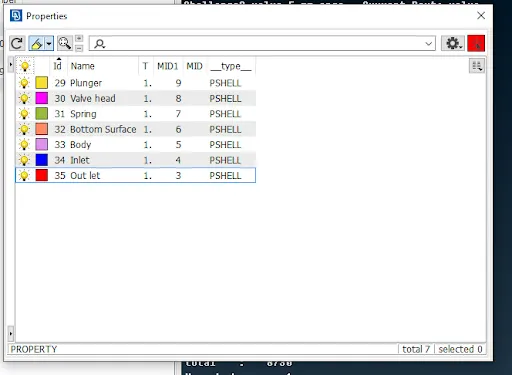
Fig: PID manager
- Go to the mesh deck and give the perimeter value, and macro value as a target length.
- Assign the mesh parameter value
- Go to the quality Criteria give the minimum and maximum value.
- Go to the mesh deck,
- Pick the spot mesh.
- Generate the mesh for the give component.
- Do the same procedure for varias target length that they given.
Learning Outcomes:
- Geometry clean up
- PID creation for a part
- 2D mesh
Result:
The meshing has been done by using varias target length as 1mm, 3mm, and 5mm.
Case 1:
Target length :1mm
Element type: Tria
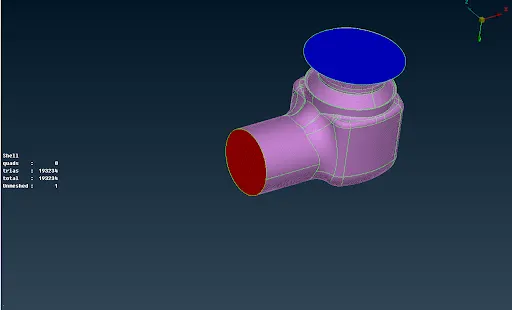
Fig: Over all mesh
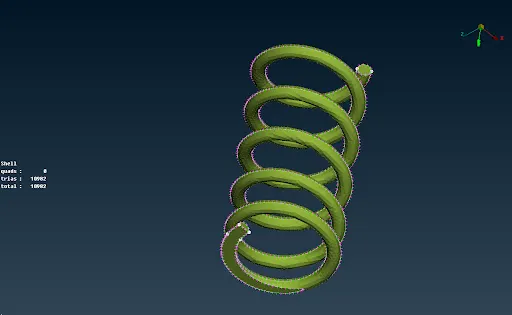
Fig: Spring Mesh
Case2:
Target length:3mm
Element Type:Tria
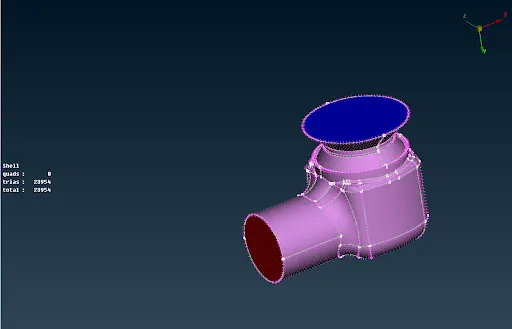
Fig: Over all mesh
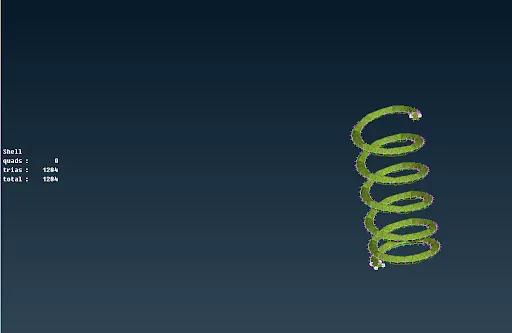
Fig:Spring Mesh
Case3:
Target length 5mm
Element type: Tria
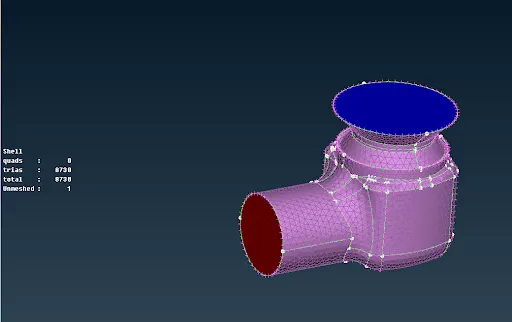
Fig: Over all Mesh
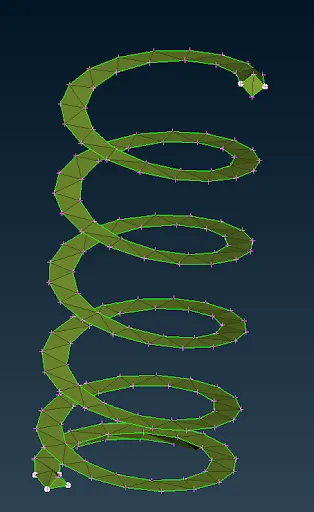
Fig: spring Mesh
Conclusion:
Thus, the meshing of given model has done successfully by using the varias target length. While reducing target length, the number of element are increasing. While giving high target length compare with geometry dimension, the mesh is not good. The model appear diffrenlty. It will lead to get bad result while do the analysis (CFD are FEA)