Week 2 Challenge : Surface meshing on a Pressure valve
Objectives:
to perform topology cleanup and to mesh the given model for three different target lengths(1mm,3mm,5mm) and to compare results
Procedure:
topology cleanup:
- import the given model in ansa
- click on checks>geomentry>ANSA check>click for features like single cons;crack;overlap faces;needle faces;triple cons;collapsed cons;unchecked faces; > click on execute
- result will show the list of single cons in the model during meshing there should not be any single cons
- so we need to fill the gap between surfaces throughoutly.goto Topodeck> faces>new to create faces between gaps with options like existing surfaces;coons;fitted;planar surfaces;
- using loop otion can reduce complex of selecting cons
- after closing all the gaps check on once again to verify the given model is single cons free
- also there should not be gap or hole in assembly at default. it also must be closed
- then we need to define each of part of component with with each PID regions like inlet;outlet;body;spring;base surface;valve head;
- also we need to get rid of smmaller surfaces which smaller than target lengths we can combine two faces by clicking on faces> new>right click on cons between faces
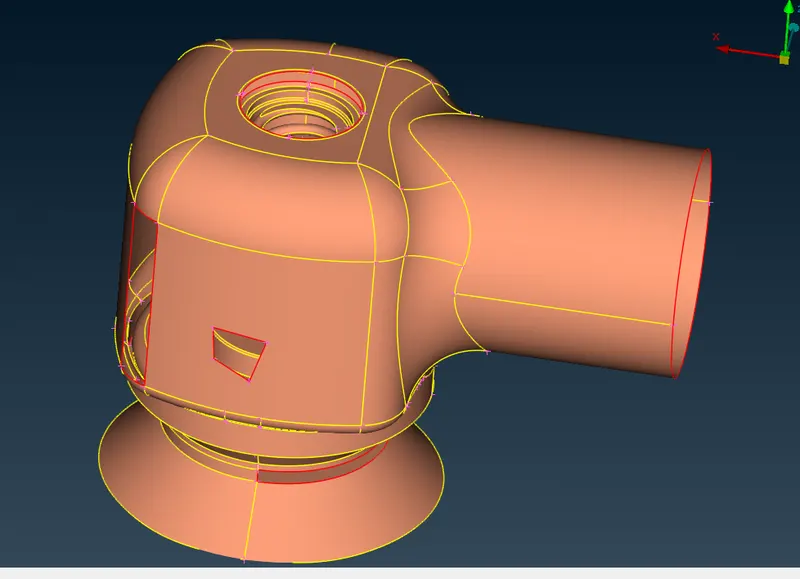
before topology
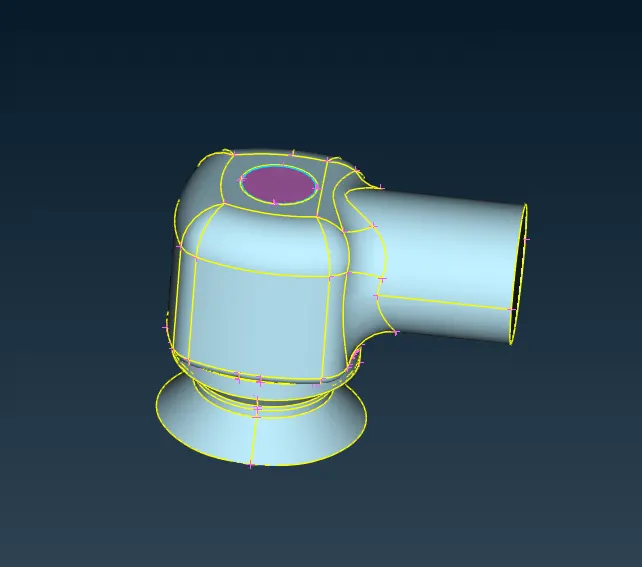
after topology
Meshing :
- for meshing click on classic mesh> length > perimeter >select entire model> 1mm >ok
- also macros>select entire model>1mm>ok
- click on mesh parameters > set target length as 1mm>element type>tria>click ok
- click on quality criteria>give min length as 0.5 and max length as 2mm(make sure target lenght lies between this limit)
- go to mesh>spot mesh >select each PID region >click middle mouse button
- hence meshing for 1mm target length is done
- for meshing for 3mm and 5mm repeat the steps from 1 to 5 and change target length and limit accordingly
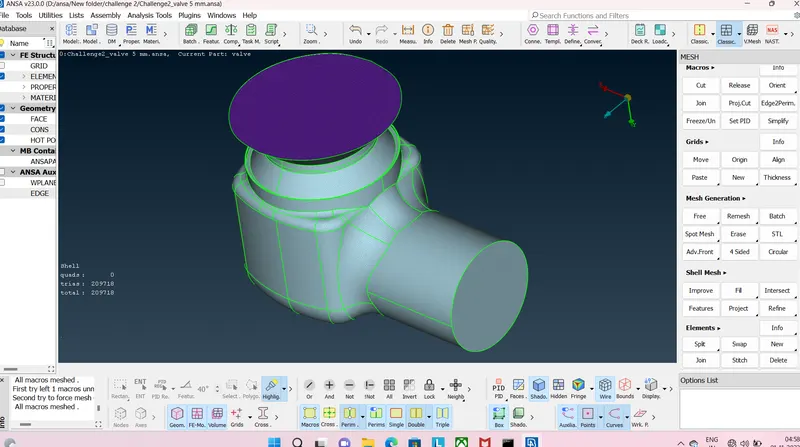
1mm mesh
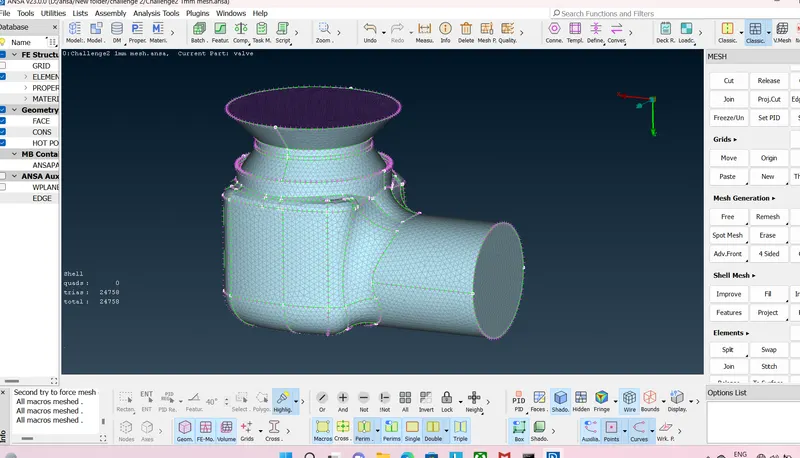
3mm mesh
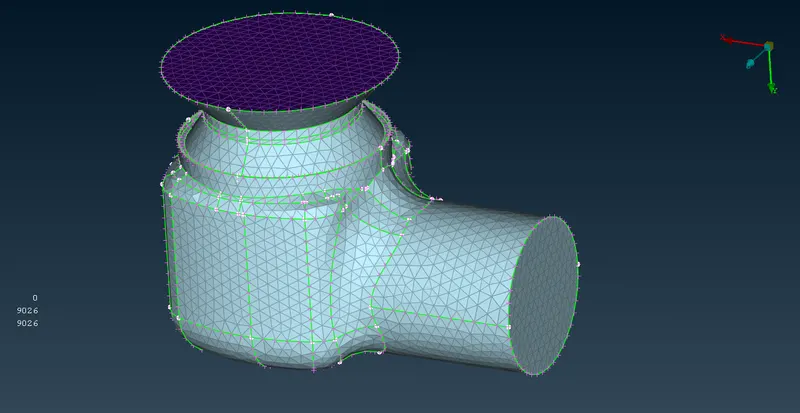
5mm mesh
Learning outcomes:
this week we learned about how to seperate each component with different PID region and mesh them accordingly after topology cleanup.
Result:
by comparing above three different types of mesh we can observe that minimum the target length the mesh quality will be greater. for example the mesh quality of 1mm mesh is higher than that of 5mm mesh as shown below
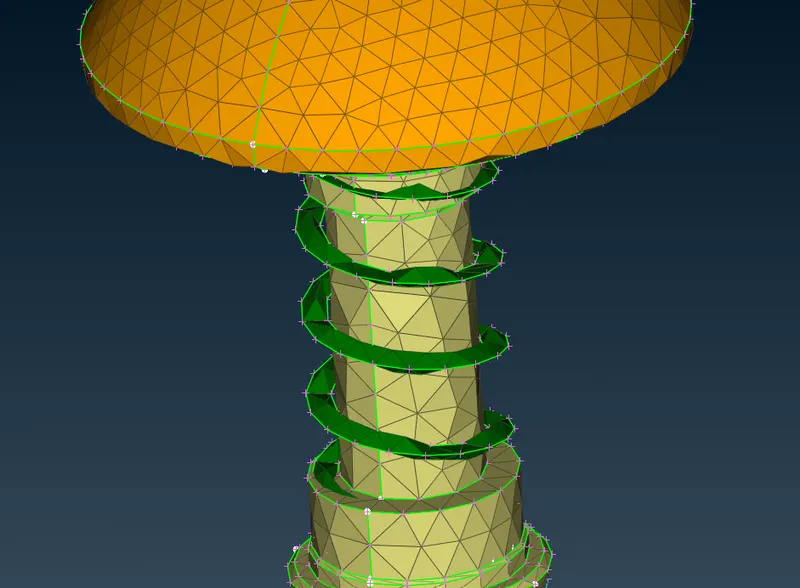
5mm mesh result
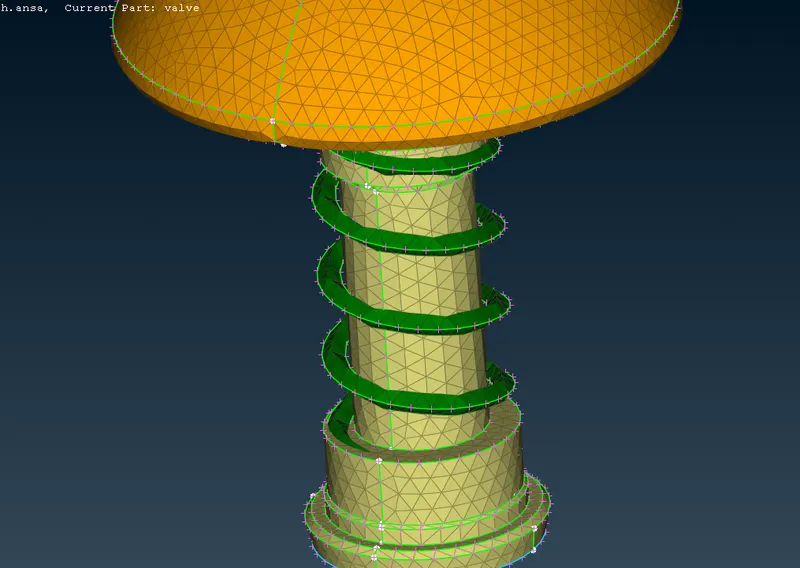
3mm Mesh result
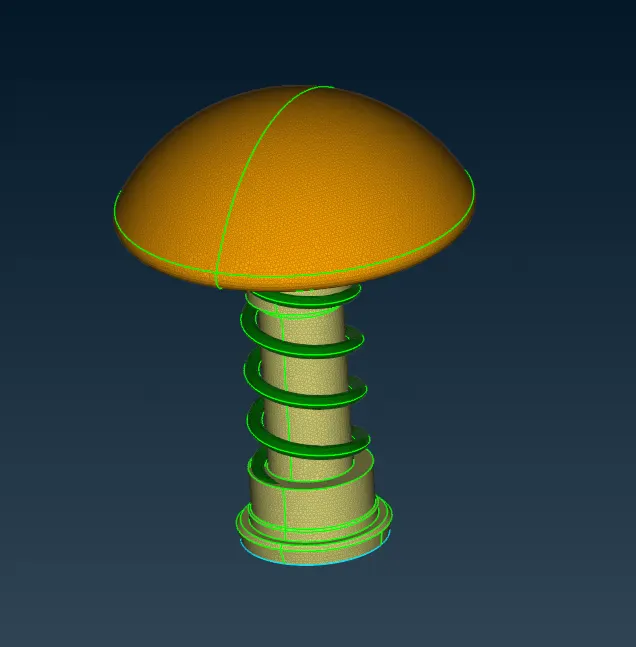
1mm mesh result
As you can observe that specifically on the areas of radial feature the mesh quality is good when target length is minimum also accuracy will also be high.
Conclusion:
hence topology and meshing of the given model is done for three different mesh lengths and the results are compared.