Week 2 Challenge : Surface meshing on a Pressure valve
AIM:
- To surface meshing on a Pressure valve.
- Check for the geometrical errors and perform Topology cleanup accordingly.
- Set three different target lengths as three different cases and mesh the model.
Target length = 1mm, 3 mm and 5 mm (i.e. 3 cases)
Element type = Tria
PROCEDURE:
- IMPORTED GEOMETRY
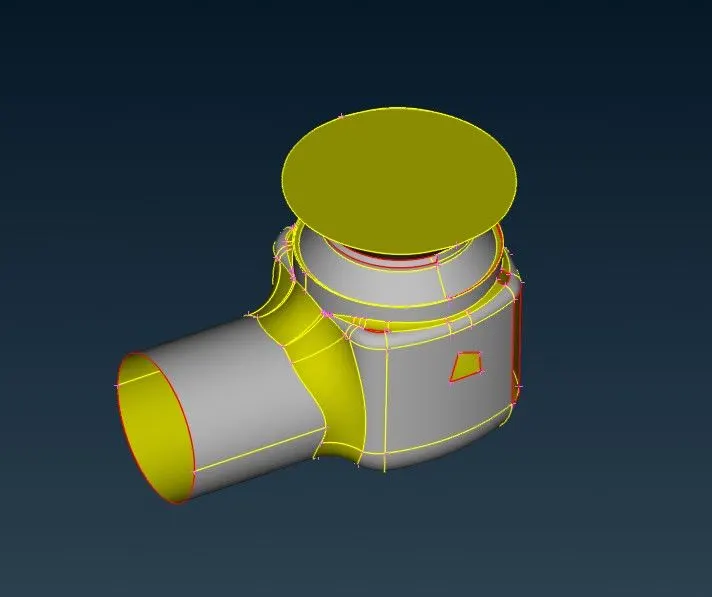
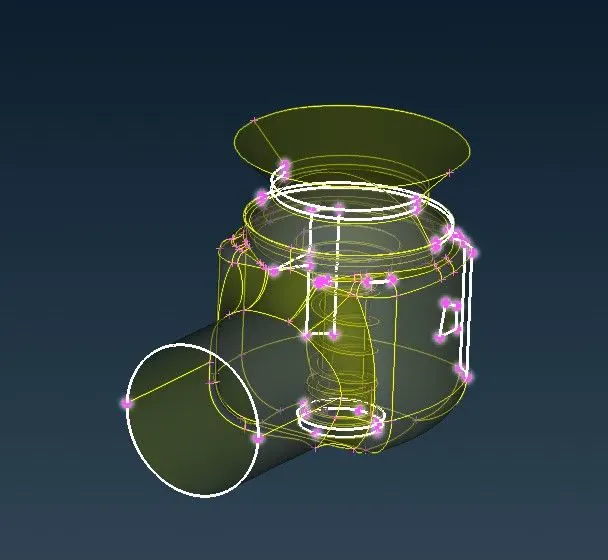
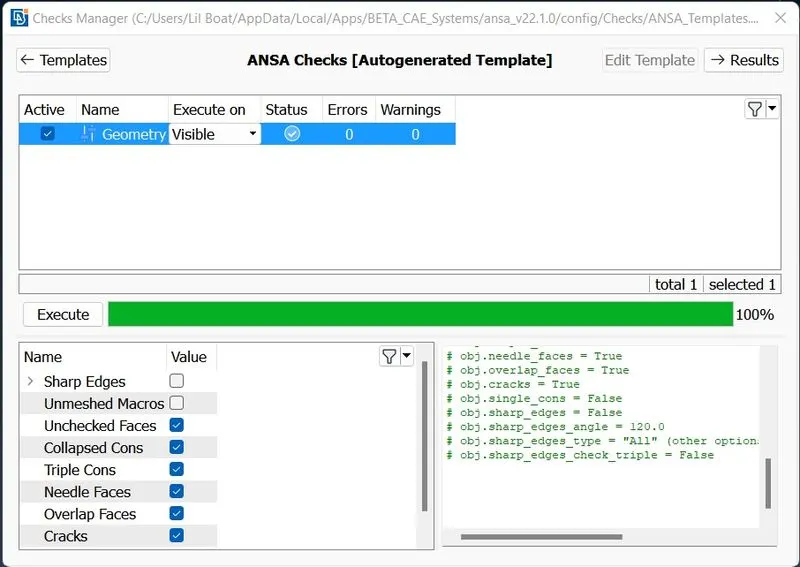
- GEOMETRY ERROR CHECK
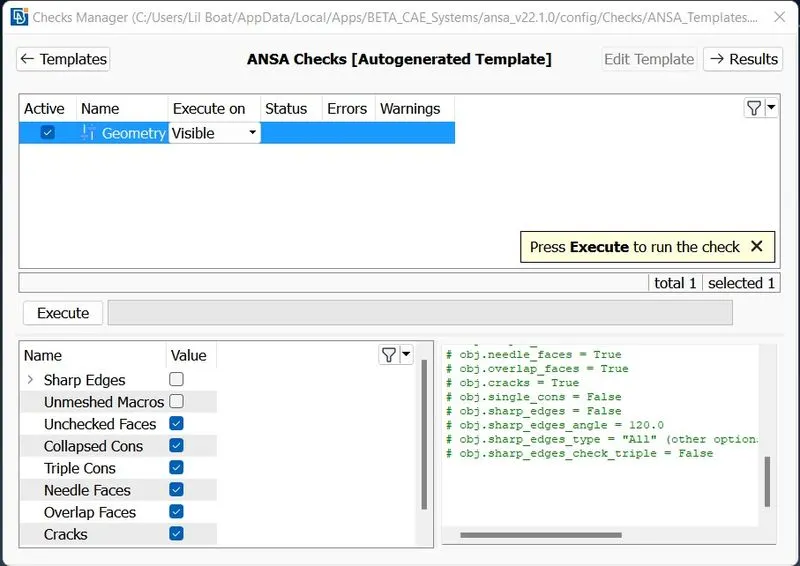
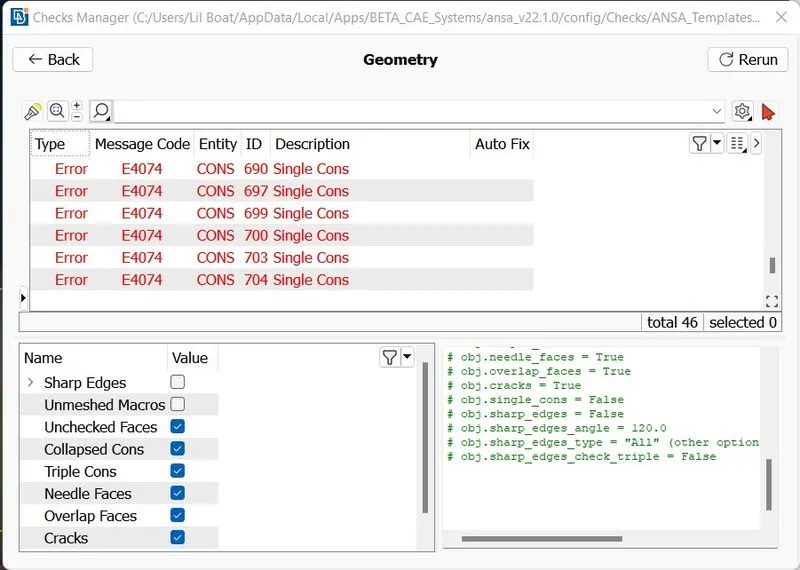
- ERRORS PRESENT
- CRACK ERRORS
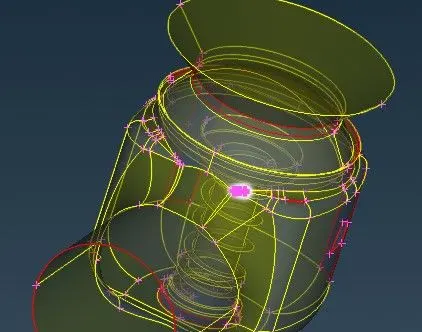
- SINGLE CONS ERROR
- REPAIR NO. 1 USING FACES-NEW-EXISTING SURFACES
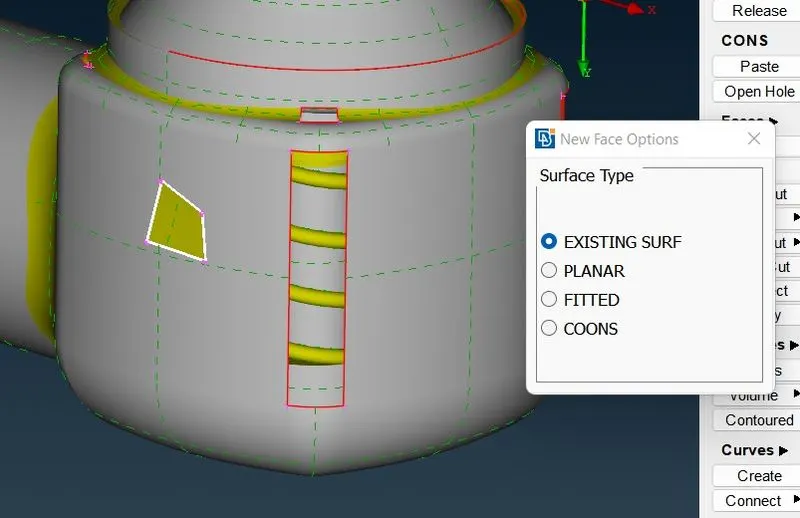
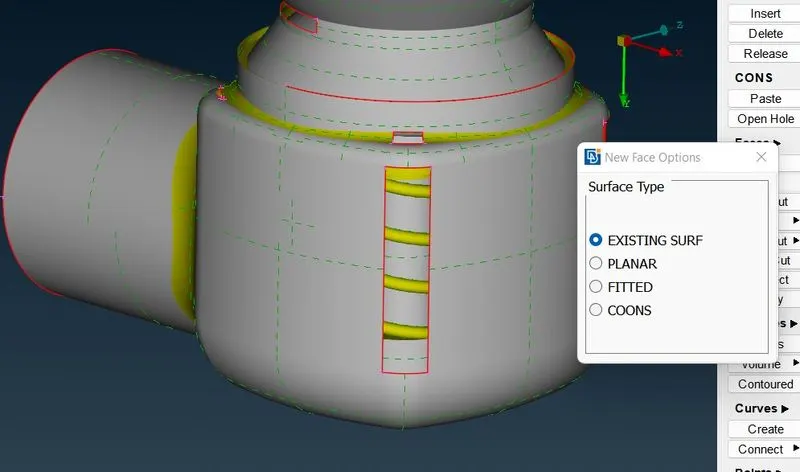
- AFTER CLICKING THE MID MOUSE BUTTON AND SELECTING THE EXISTING SURFACE THE REPAIR WILL BE DONE
- REPAIR NO. 2- REPAIR SURFACE USING COONS
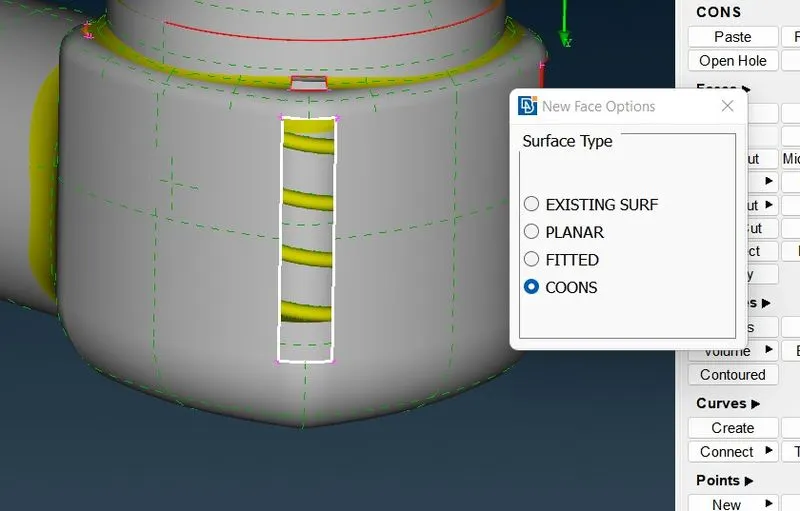
- APPROVE IF THE PREVIEW IS CORRECT
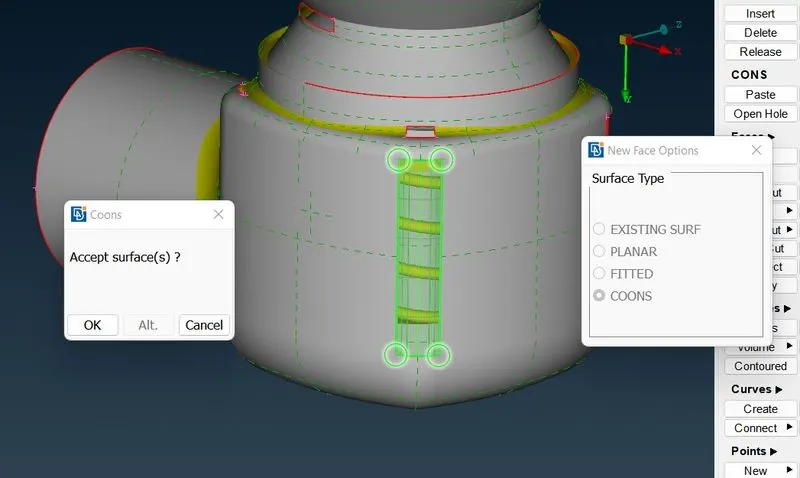
- REPAIR NO. 3 USING FITTED AND COONS OPT
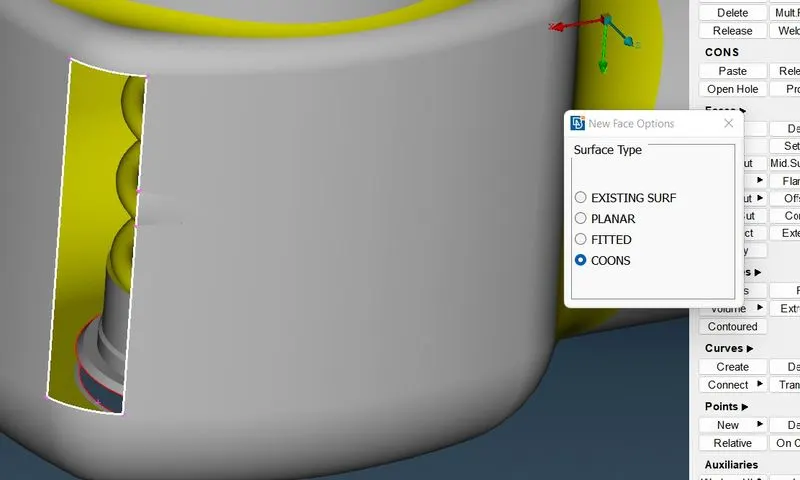
- REPAIR 4- USING FILL HOLE
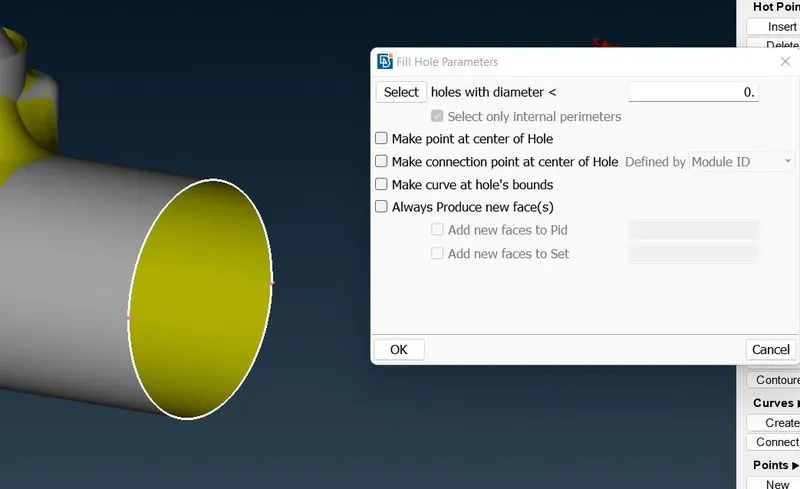
- REPAIR 5- USING COONS
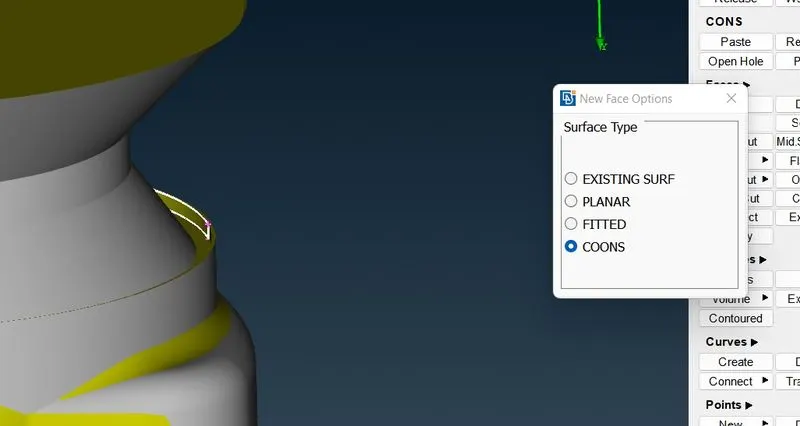
- REPAIR 6- SELECT CONS WITH THE SAME ENTITY LENGTH TO AVOID UNWANTED SURFACE GENERATION
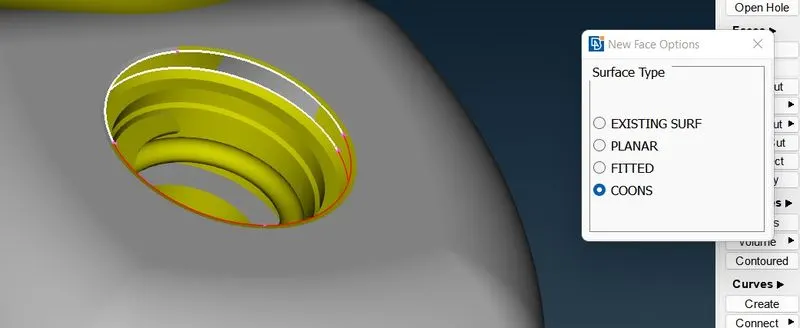
- GEOMETRY REPAIRED
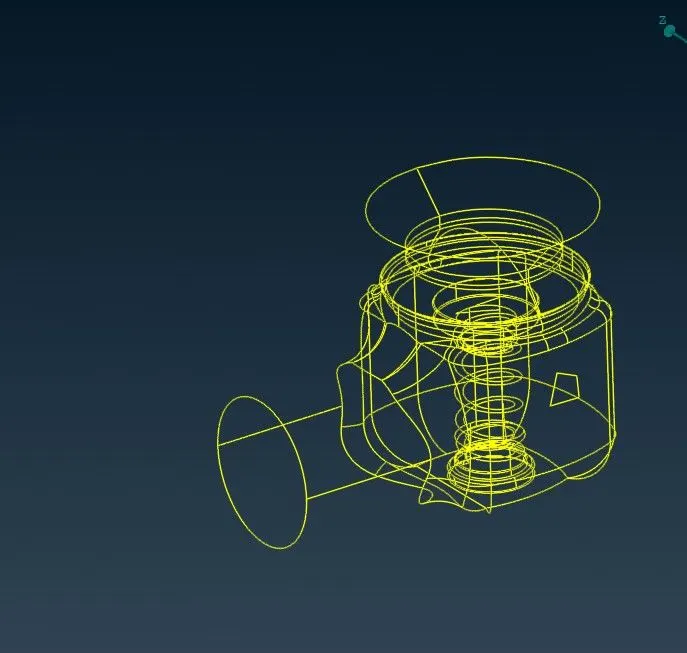
- GEOMETRY STATUS ALL OK
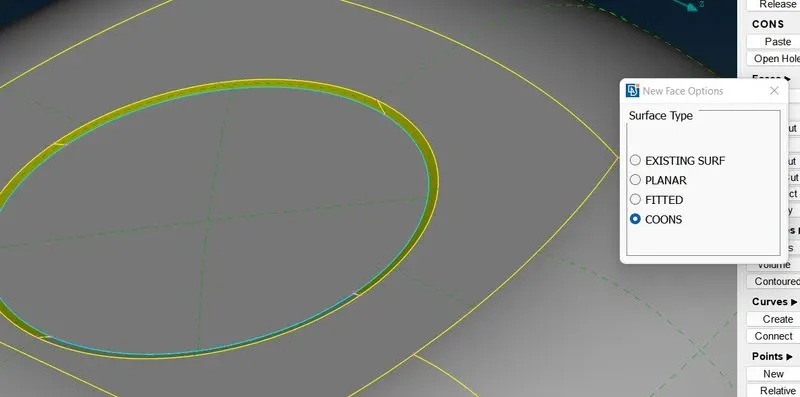
- FILL THIS OPEN SIDE FOR CFD ANALYSIS BY CREATING A SURFACE ON DOUBLE CONS USING COONS
- CONDUCT A GEOMETRY CHECK AFTER FILLING THE HOLE.
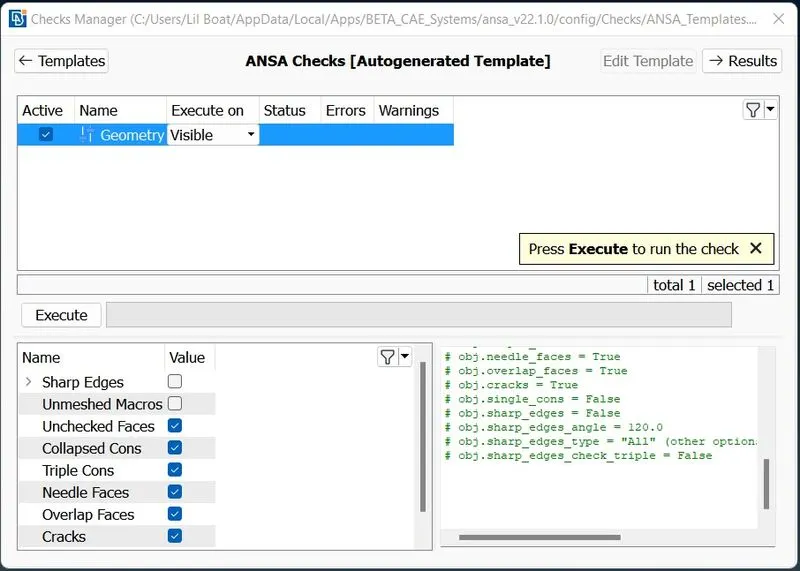
- TRIPLE CON ERROR
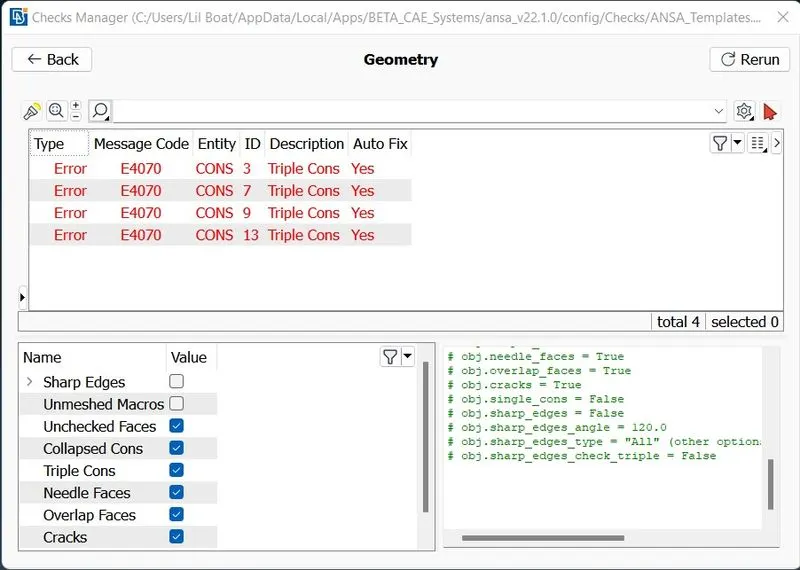
- REMOVE SURFACES SMALLER THAN THE TARGET ELEMENT LENGTH

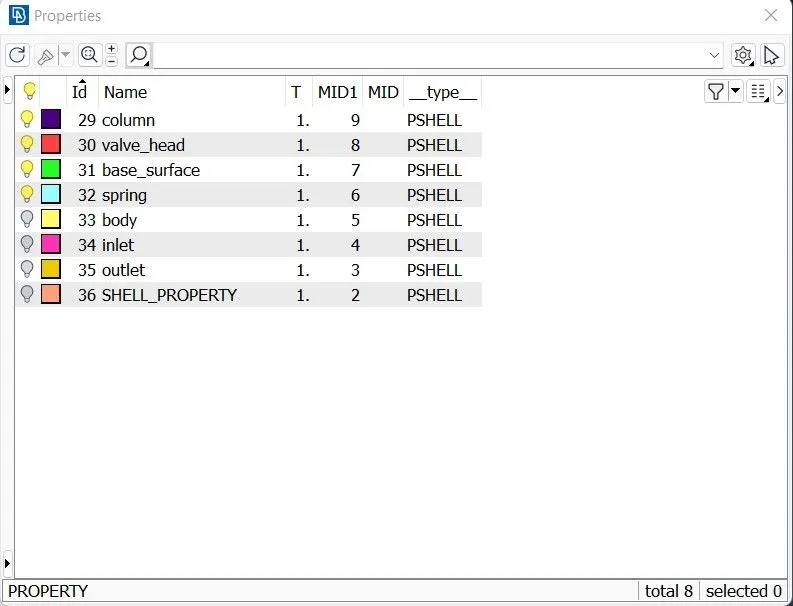
- create pshells for inlet outlet and body
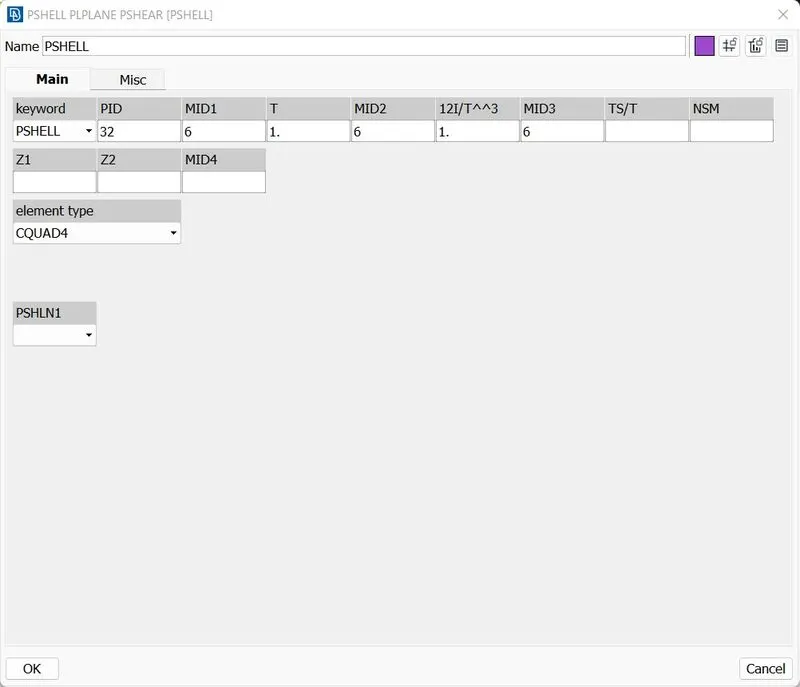
- pshells created
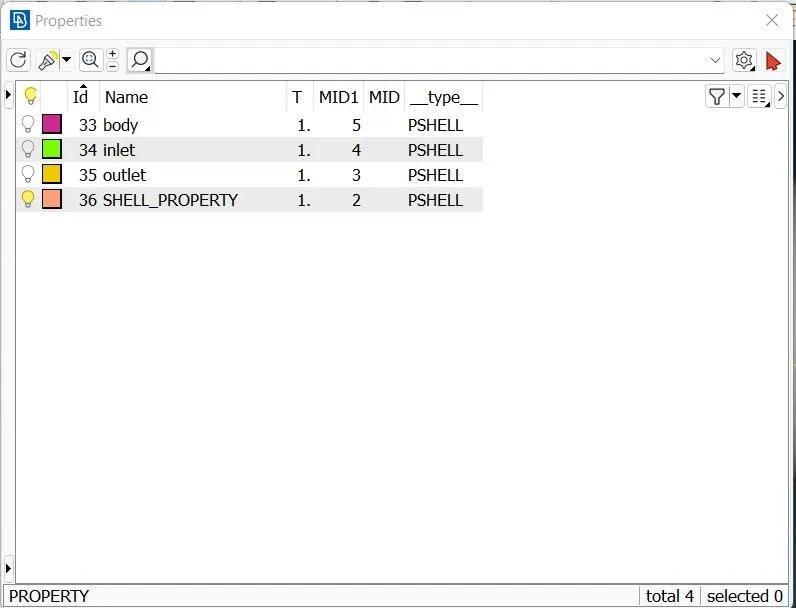
- all the PID assigned to all the pshells
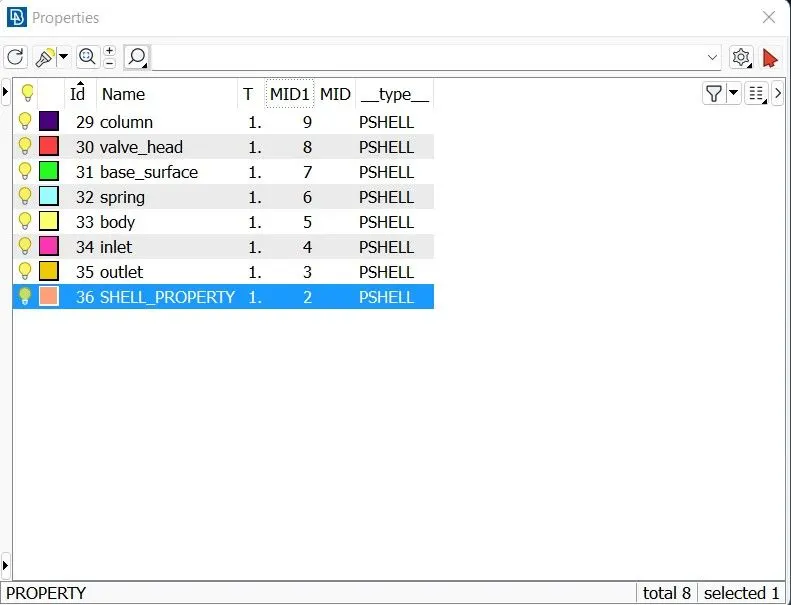
- delete shell property by selecting option to undelete then selecting outlet then selecting delete 36_shell_propert
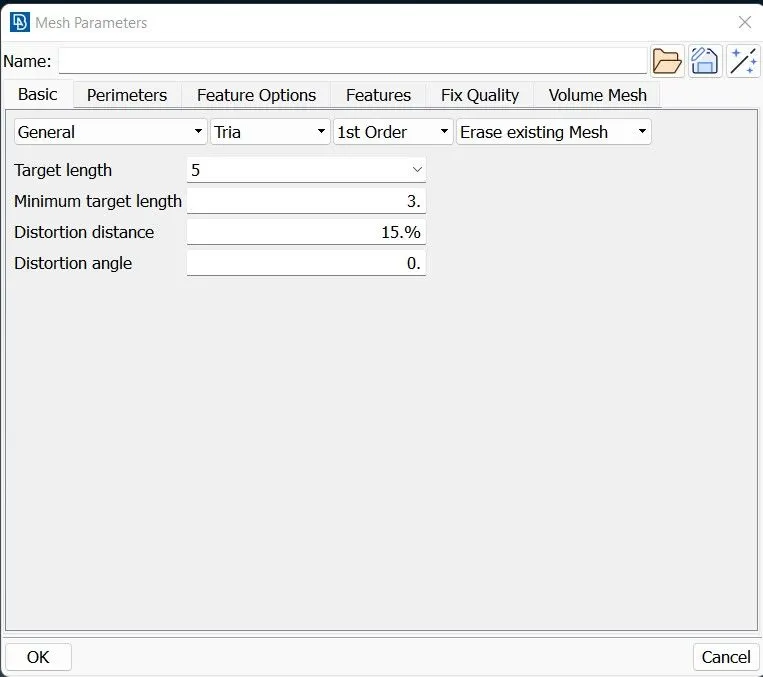
- now assign mesh length under parameters in classic meshing method, select parameter
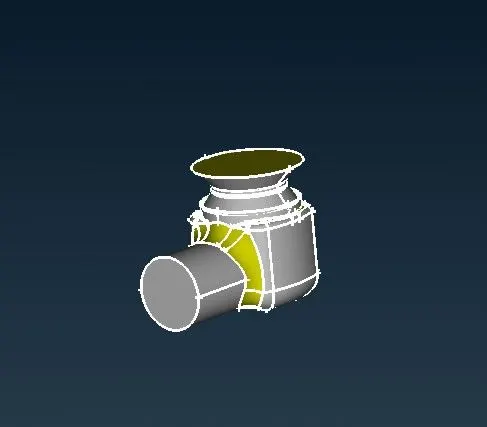
- box selected geometry
- assign element size
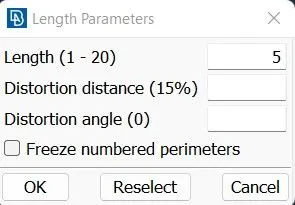
- macros element size
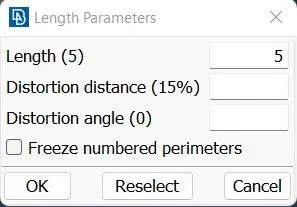
- mesh parameters
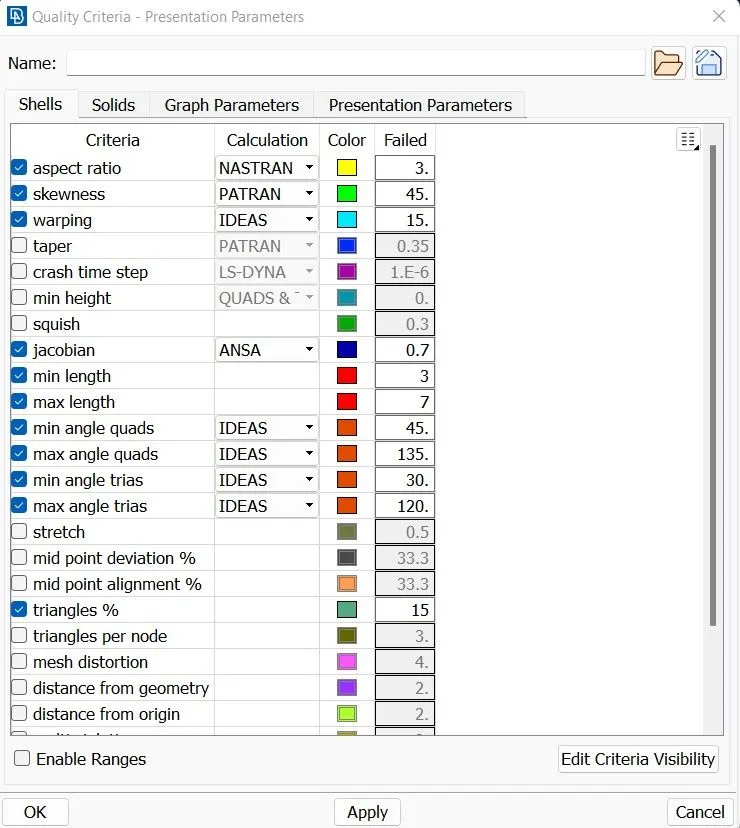
- quality parameter
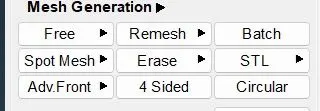
- start meshing by using spot meshing options and selecting inlet outlet and body
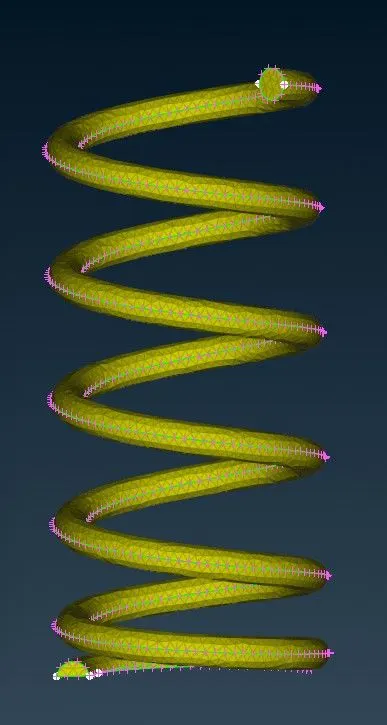
- mesh intricate parts using finer element size
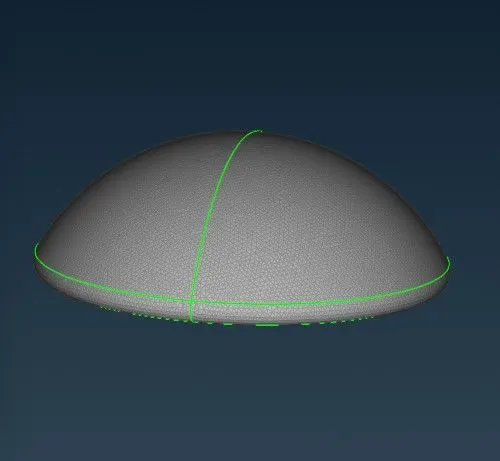
- small element size here avoids error in the surface due to high element size
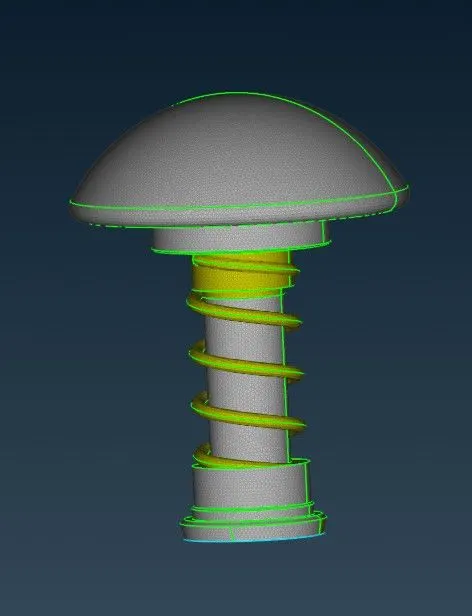
- inner parts need to be meshed finely to avoid errors
RESULTS:
case 1.1 inlet outlet and body with element size 5mm
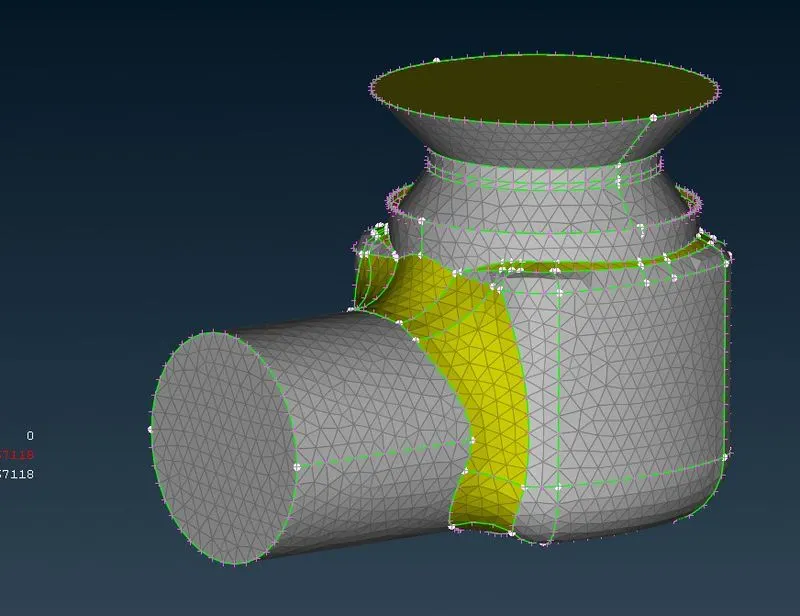
case 1.2 5mm mesh with surface errors at spring and valve head
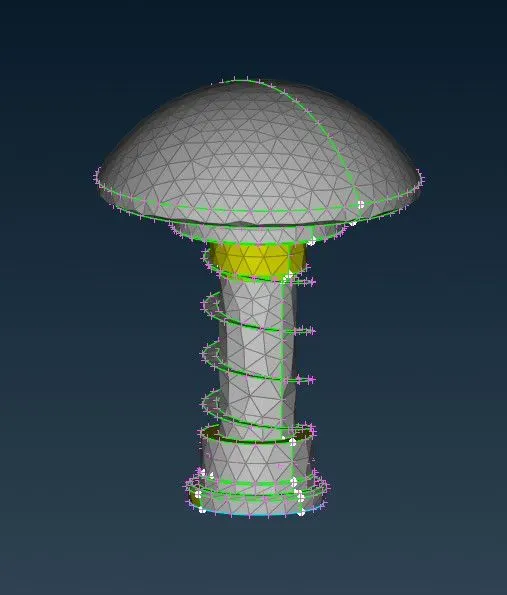
case 2.1 body mesh 3mm
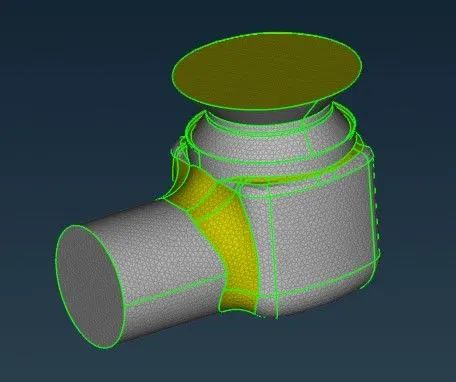
case 2.2 3mm mesh size with coarse surface near spring and valve head
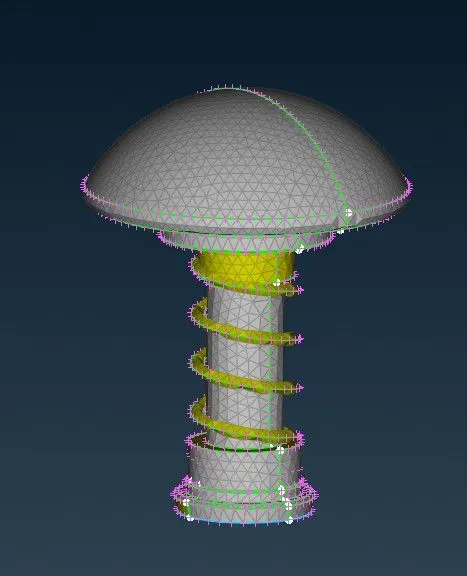
case 2.3 coarse spring mesh at 3mm
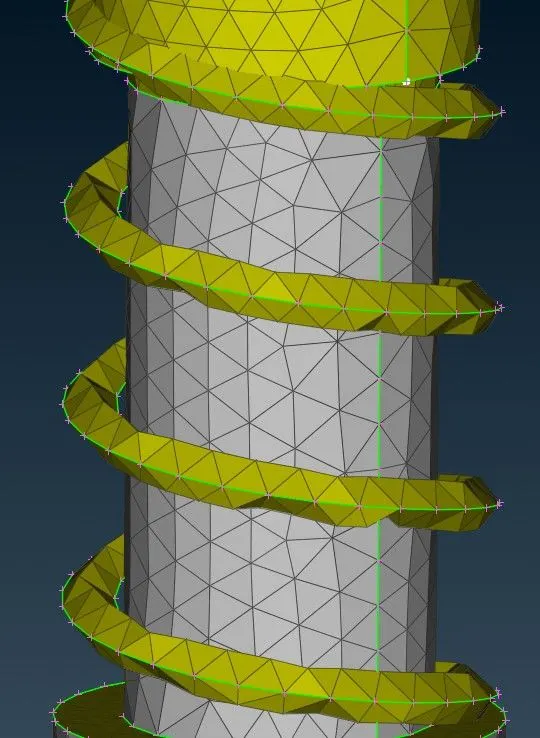
case 3.1 1mm body mesh
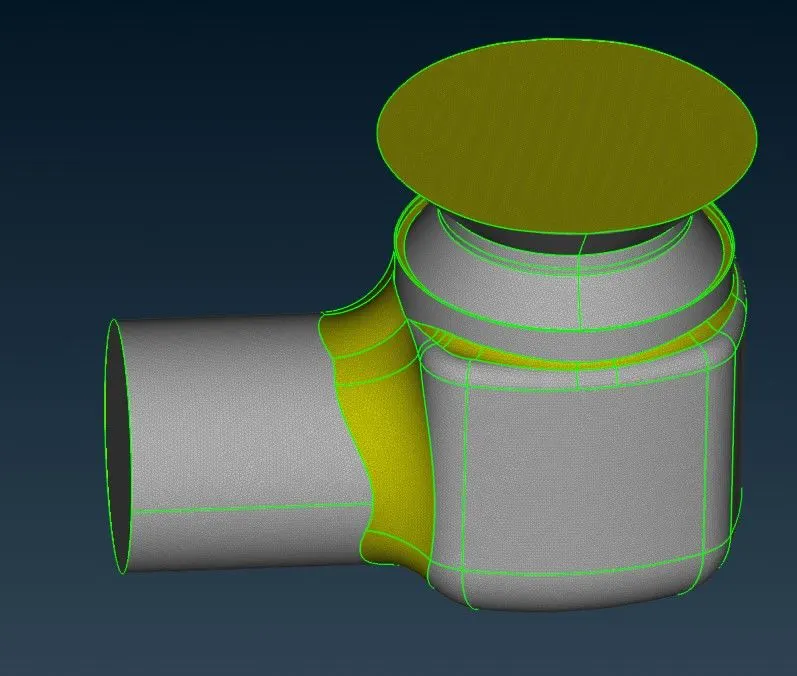
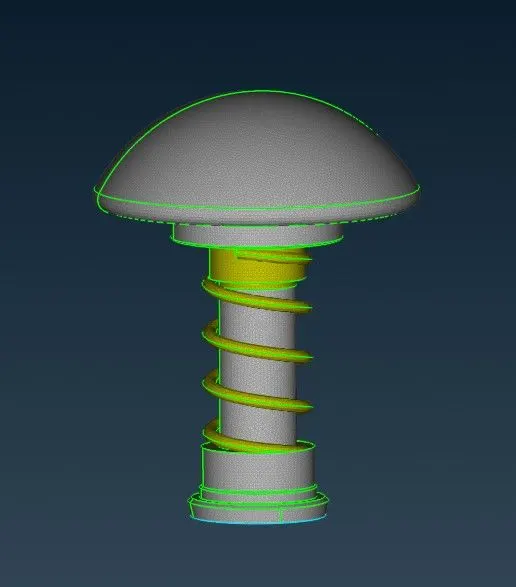
case 3.2 1mm inner body mesh with finer spring meshing
CUNCLUSION:
- With fine mesh size the accuracy increases but the time for calculation also increases
- We can make two different target length according to the size of parts and required accuracy, in this case the outer casing mesh size can be 3mm which is not so large and not that fine earthier for good and accurate result
- For the smaller parts like the spring and the column head the mesh length can be 1mm so the accuracy for smaller parts increases too