Week 2 Challenge
OUESTION NO 1 : TYPES ON LOADS ON ABUTEMENT OF BRIDGE AS PER IRC6
Various design loads to be considered in the design of bridges are:
- Dead load : The dead load is nothing but a self-weight of the bridge elements. The different elements of bridge are deck slab, wearing coat, railings, parapet, stiffeners and other utilities. It is the first design load to be calculated in the design of bridge.
- Live load: The live load on the bridge, is moving load on the bridge throughout its length. The moving loads are vehicles, Pedestrians etc. but it is difficult to select one vehicle or a group of vehicles to design a safe bridge. So, IRC recommended some imaginary vehicles as live loads which will give safe results against the any type of vehicle moving on the bridge. The vehicle loadings are categorized in to three types and they are
- IRC class AA loading
- IRC class A loading
- IRC class B loading
- Impact load : The Impact load on bridge is due to sudden loads which are caused when the vehicle is moving on the bridge. When the wheel is in movement, the live load will change periodically from one wheel to another which results the impact load on bridge. To consider impact loads on bridges, an impact factor is used. Impact factor is a multiplying factor which depends upon many factors such as weight of vehicle, span of bridge, velocity of vehicle etc. The impact factors for different IRC loadings are given below.
For IRC Class AA Loading and 70R Loading
Span Vehicle type Impact factor Less than 9 meters Tracked vehicle 25% up to 5m and linearly reducing to 10% from 5 m to 9 m. Wheeled vehicle 25% up to 9 m Greater than 9 meters Tracked vehicle (RCC bridge) 10% up to 40 m Wheeled vehicle (RCC bridge) 25% up to 12m Tracked vehicle (steel bridge) 10% for all spans Wheeled vehicle (steel bridge) 25% up to 23 m - Wind load : Wind load also an important factor in the bridge design. For short span bridges, wind load can be negligible. But for medium span bridges, wind load should be considered for substructure design. For long span bridges, wind load is considered in the design of super structure. Indian Code for calculating wind load is IS 875 part 3
- Longitudinal forces : The longitudinal forces are caused by braking or accelerating of vehicle on the bridge. When the vehicle stops suddenly or accelerates suddenly it induces longitudinal forces on the bridge structure especially on the substructure. So, IRC recommends 20% of live load should be considered as longitudinal force on the bridges.Indian is mainly divided into 5 seismic zone & Code we have to reffer for seismic load is IS 1893 part 3 ( 2016).
- Centrifugal forces : If bridge is to be built on horizontal curves, then the movement of vehicle along curves will cause centrifugal force on to the super structure. Hence, in this case design should be done for centrifugal forces also. Centrifugal force can be calculated by C (kN/m) = (WV2)/(12.7R) Where W = live load (kN) V = Design speed (kmph) R = Radius of curve (m).When ever vehicle move from curvature path of bridge then centrifugal load act on in. Calculation clause are given in the IRC 6.
- Buoyancy effect : Buoyancy effect is considered for substructures of large bridges submerged under deep water bodies. Is the depth of submergence is less it can be negligible.
- Effect of water current : When the bridge is to be constructed across a river, some part of the substructure is under submergence of water. The water current induces horizontal forces on submerged portion. The forces caused by water currents are maximum at the top of water level and zero at the bottom water level or at the bed level. The pressure by water current is P = KW [V2/2g] Where P = pressure (kN/m2) K = constant (value depending upon shape of pier) W = unit weight of water V = water current velocity (m/s) G = acceleration due to gravity (m/s2)
- Thermal effects : Thermal stresses are caused due to temperature. When the temperature is very high or very low they induce stresses in the bridge elements especially at bearings and deck joints. These stresses are tensile in nature so, concrete cannot withstand against this and cracks are formed. To resist this, additional steel reinforcement perpendicular to main reinforcement should be provided. Expansion joints are also provided.
- Deformation and horizontal effects:Deformation stresses are occurred due to change is material properties either internally or externally. The change may be creep, shrinkage of concrete etc. similarly horizontal forces will develop due to temperature changes, braking of vehicles, earthquakes etc. Hence, these are also be considered as design loads in bridge design.
- Erection stresses :Erection stress are induced by the construction equipment during the bridge construction. These can be resisted by providing suitable supports for the members.
- Seismic loads: When the bridge is to be built in seismic zone or earthquake zone, earthquake loads must be considered. They induce both vertical and horizontal forces during earthquake. The amount of forces exerted is mainly depends on the self-weight of the structure. If weight of structure is more, larger forces will be exerted.
Question (2) :-
A deep hole or narow hole made under the ground which is made to check the property of soil is called as borehole. loacation of the borehole we decide near the foundation which we constructed later on we need to know the property of soil below the foundation. we have to explore soil upto hard strata, at which depth we are getting hard strata below soil bed that we need to consider. shallow foundation shall be kept below 2 meter from ground strata.
Depth of borehole for shallow foundation we have to take width of foundation X 1.5 .
Consider,
Width of foundation is 6 meter then
= 6 X 1.5
= 9 meter ( Depth of Borehole)
Thing we are getting from tha site is :-
- Topography of ground surface.
- HFL level of water in case bridge is submerge under the water.
- Hydrological data.
- Type of soil below the ground level ( Soil testing report).
- Traffic data.
Thing we are getting from geotechnical investigation reportL :-
Geotechnical investigation made by geotechnical engg. to obtain the information of soil under the ground surface.
From the report we get -
- Nature of soil and it's property.
- Depth suitable for bridge structure.
- Bearing capacity of soil.
- Settlement of the soil upto what depth.
- Location of water table below the ground surface.
- Density of soil and other parameter.
Type of soil and their chateracteristic
- Sandy soil.
- Silt Soil.
- Clay Soil.
- Loamy Soil.

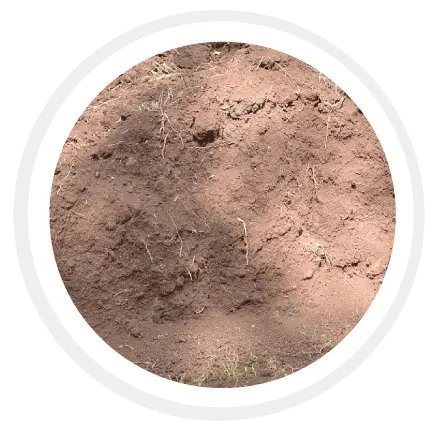
- SANDY SOIL :The first type of soil is sand. It consists of small particles of weathered rock. Sandy soils are one of the poorest types of soil for growing plants because it has very low nutrients and poor water holding capacity, which makes it hard for the plant’s roots to absorb water. This type of soil is very good for the drainage system. Sandy soil is usually formed by the breakdown or fragmentation of rocks like granite, limestone and quartz.
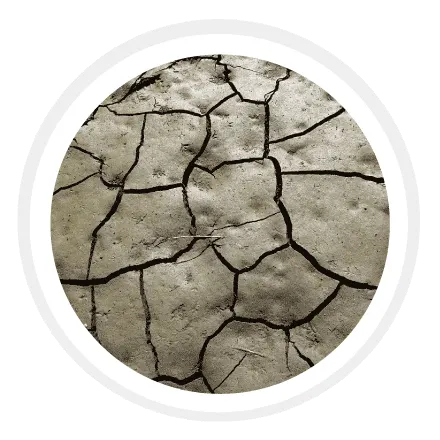
2. SILT SOIL : Silt, which is known to have much smaller particles compared to sandy soil and is made up of rock and other mineral particles, which are smaller than sand and larger than clay. It is the smooth and fine quality of the soil that holds water better than sand. Silt is easily transported by moving currents and it is mainly found near the river, lakes and other water bodies. The silt soil is more fertile compared to the other three types of soil. Therefore, it is also used in agricultural practices to improve soil fertility.
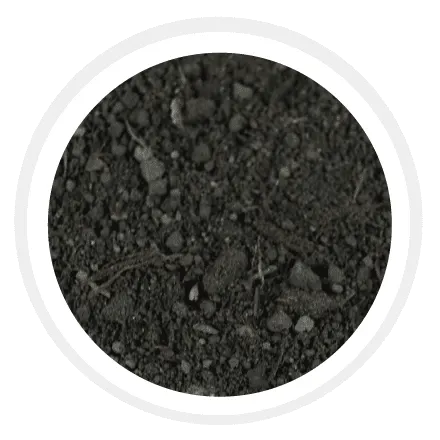
3.CLAY SOIL : Clay is the smallest particle among the other two types of soil. The particles in this soil are tightly packed together with each other with very little or no airspace. This soil has very good water storage qualities and makes it hard for moisture and air to penetrate into it. It is very sticky to the touch when wet but smooth when dried. Clay is the densest and heaviest type of soil which does not drain well or provide space for plant roots to flourish
4.LOAMY SOIL : Loam is the fourth type of soil. It is a combination of sand, silt and clay such that the beneficial properties of each are included. For instance, it has the ability to retain moisture and nutrients; hence, it is more suitable for farming. This soil is also referred to as agricultural soil as it includes an equilibrium of all three types of soil materials, being sandy, clay, and silt, and it also happens to have humus. Apart from these, it also has higher calcium and pH levels because of its inorganic origins.
Type of Rock and there chateracteristic
1) Igneous Rock
- Igneous rocks are defined as types of rocks that are formed when molten rock (rock liquefied by intense heat and pressure) cools to a solid state.
- The igneous form of rocks does not include any fossil deposits. If there are any chances of fossil deep inside the crust, it erupts out of the Earth’s surface and gets destroyed due to the sheer heat these rocks produce.
- Most igneous forms include more than one mineral deposit.
- They can be either glassy or coarse.
- These usually do not react with acids.
- The mineral deposits are available in the form of patches with different sizes.
2) Sedimentary rocks
- Sedimentation is the combined name for all the processes that cause organic and mineral particles to get settle. The particle that helps in forming the sedimentary rock.
- Flint is a hard, sedimentary form of the mineral quartz.
3) Metamorphic rock
- Metamorphic rock are formed when rock changes over a eriod of time due to lot of physical changes like pressure, hest and different chemica
- Cataclastic metamorphism occurs along with the tectonic plate faults where the rocks get rubbed with each other which results in the grain size reduction.
- Transformation of these rocks are classified as one which could not form non foliated rock and is of low grade.
- Circulation of rock results in huge number of mineral water chemical reactions which results in different kinds of precious metals and stones.