Week 2:- BiW Fixture Basics Challenge
1. What is the process of project execution activity ?
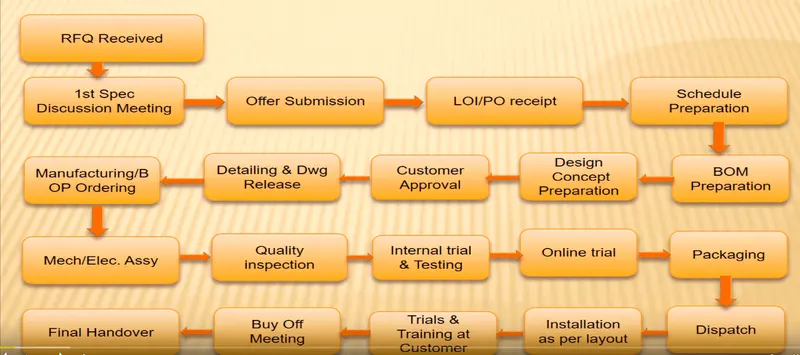
The project execution activity is the step by step procedure to design and manufacture a fixture.
- RFQ received- Request For Quotation. Here the customers requirments/specification are received.
- 1st Specification discussion meeting- The disscusion is done for the date, timeline, technical aspects.
- Offer submission- The offer is submitted to the customer to check.
- LOI/PO recipt- after the customer has gone through they will order to proceed.
- Schedule preparation- The schedule is prepared for the workflow.
- Manufaturing/BOP ordering- Manufacturing the parts or ordering the from the supplier.
- Detailing and drawing- The detailed drawing of the product is made acocrding to the customer's need.
- customer approval- After the drawing is completed the drawing is send to the customer for apporaval.
- design concept preparation- preparation of the method and process for production and design.
- BOM preparation
- Mechanical or Electrical assembly- After the parts are accquired the fixture is assembled.
- Quality inspection- the fixture is inspected for any defects.
- Internal trial and testing- the fixture is tested before delivering to the customer.
- online trail
- Packaging- the finished product is packed.
- Dispatch-The finished fixture is delivered to the customer.
- Installation as per layout- The fixture is assembled according to the customer requirment.
- Trial and training at the customer-The customers are trained on how to handle the fixture.
- Buy off meeting- To check for any additional requirements or to check the fixture.
- Final Handover- The fixture is given to the customer.
2. What are the different joining process ?
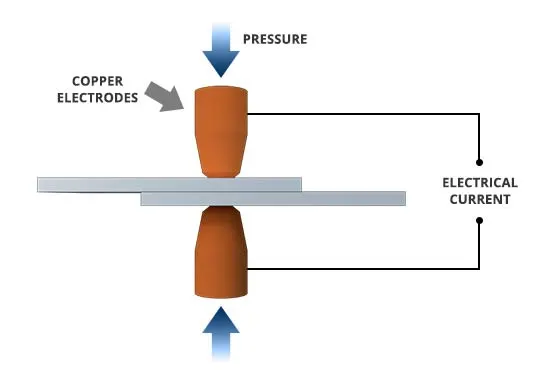
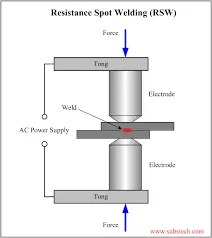
- Spot welding- in this process the metal sheets are joined together by applying heat and pressure at the spot to be welded.
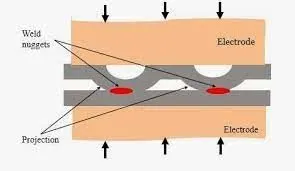
- Resistance projection welding- in this process the force is directly applied to the sheet metal. Here the shape of the part is used for welding.
- Resistance seam welding- in this process the sheets are rolled between two rollers, the current is applied between the two rollers.
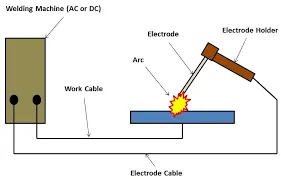
- arc welding- in this process the an electric arc is used to create heat and join two metals. The electric arc is produced by an power source.
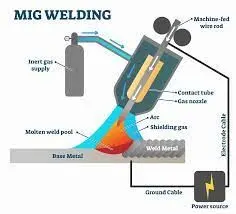
- MIG welding- metal inert gas welding is a process in which a solid wire is used for welding. the electrode is sorrounded by an inert gas.
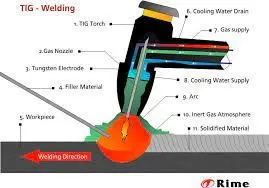
- TIG welding- tungsten inert gas welding. This process in which a non consumable tungsten electrode is used.
3. What is resistance welding & its application in automotive sector ?
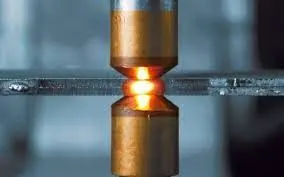
- This is the welding in which the two electrodes are pressed on the sheet metal and the current is applied. Due to the resistance, heat is generated in the metal which welds the metal.
Types of resistance welding
- resistance spot welding
- resistance seam welding
- resistance projection welding
- resistance butt welding
Advantage:
- Similar and dissimilar metals are capable of being welded
- Highly automated
- Efficient with high production rate and high welding rate
- Cost-effective
- Environment-friendly, produces little waste or pollution
- No need for filler metal or extraneous materials such as rods, fluxes, inert gasses, oxygen, or acetylene are required
Disadvantage:
- The thickness of the work piece is often limited
- It is less efficient for high conductive materials
- High electric power required
Applications in automotive industry
- For joining the sheet metal
- cost effective process.
4. What is fusion welding & types of fusion welding with its application in the automotive sector?
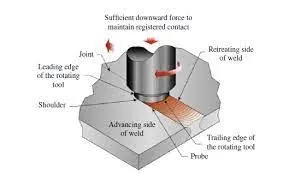
- In this method the metal is melted by applying the heat. In this the two metals are melted together at the joining point by heat produced between the two electrode. Here there is no requirment of external pressure. Filler material may or may not be needed.
- The welding done without the filler material is called autogenous welding.
- The welding done with the filler material, same as the welded metal is called homogenous welding.
- The welding done with the filler material, different than the welded metal is called heterogenous welding.
Types of fusion welding:
- arc welding - Uses electric arc for welding.
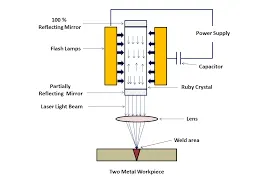
- laser beam welding- Uses focused laser beam to weld two metals.
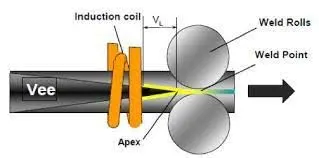
- induction welding- Uses electromagnetic induction to heat up the metals.
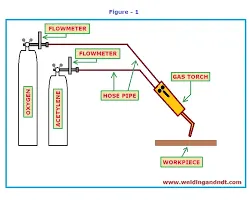
- oxyfuel welding- Uses the combination of oxygen gas and acetyline to weld metal.
- solid reactant welding
Application in Automotive industry
- For joining the body panel and make the BIW.
5. What is the 3-2-1 principle?
- This principle defines the way in which the workpiece is constrained on the fixture.
- the workpiece has 12 DOF
The DOF
- trational: +X, -X, +Y, -Y, +Z, -Z
- rotational: XCCW, XCW, YCWW, YCW, ZCWW, ZCW
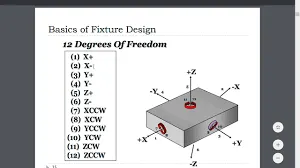
- the first six DOF are fixed by three points. (+Z, -Z, XCCW, XCW, YCCW, YCW)
- then the next four DOF are by two points perpendicular to the first points. (+X, -X, ZCCW, ZCW)
- then the next two DOF are fixed by one point perpendicular to the all the other points. (+Y, -Y)
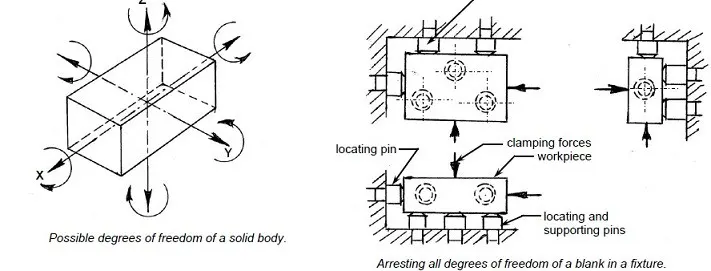
example
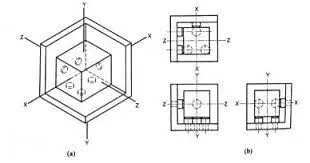
6. Define Body coordinate system ?
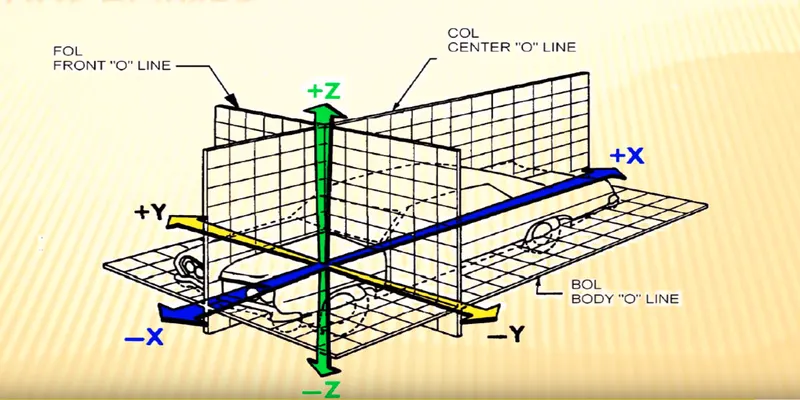
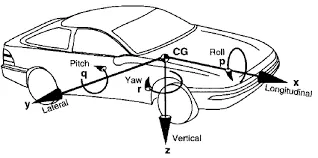
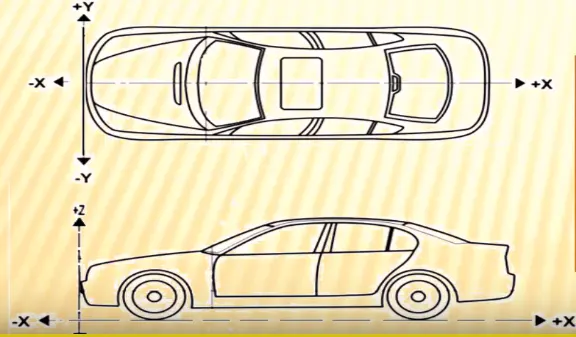
- The body coordinate system lays down the car body in X, Y and Z direction. It is used for drawing body parts, product and process design.
- The length of the car being the X axis. This is called front O line
- The width of the car being the Y axis. This is called center O line
- The height of the car is the Z axis This is called bottom O line
7. Elaborate Body plane system & its essentials.
- The body planes are used for defining the GD&T for the parts. These planes are perpendicular to each other.
Use of body plane
- used for define exact position of each part of the car.
- used for quality inspection
- used for making a standard system
- used for assembly of the car
- used for locating all the parts