Week 2 Bevel Gear Challenge
Aim: To perform grid dependency test for the Bevel gear simulation and obtain Von- Mises stress, Equivalent elastic strain and Total Deformation for each case using Ansys workbench.
Grid Dependency Test: Mesh refinement, mesh convergence, grid dependency, all mean the same. It is a method used in finite element analysis to get close to accurate results by reducing the element size/mesh density in a given model.
So in this test, basically we run the simulation with coarse mesh and reduce the element/mesh size step by step until we get an optimum result. We would know it is optimum when reducing the mesh size furthur would show the same older results.
Procedure:
- Open Ansys workbench and select "Static Structural". Right click on "Engineering Data" and click on "Edit" and select material as structural steel.
- Righr click on "Geometry" and import the bevel gear model to edit it. Draw circle of 45mm and 25mm from the centres of big and small gears respectively and use pull command to make the cut section.
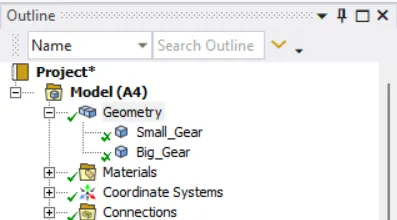
- Right click on "Model" and and select "Edit". Rename the gears as small and big gears under the "Geometry" section.
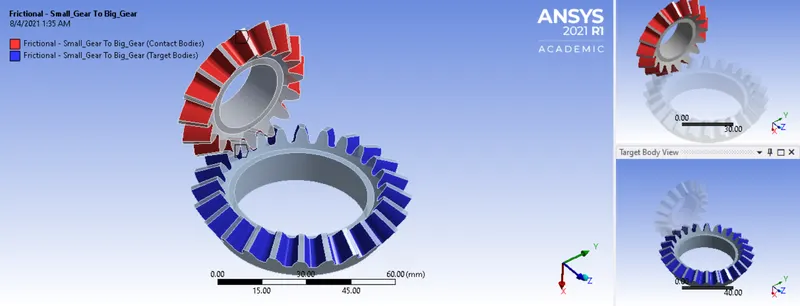
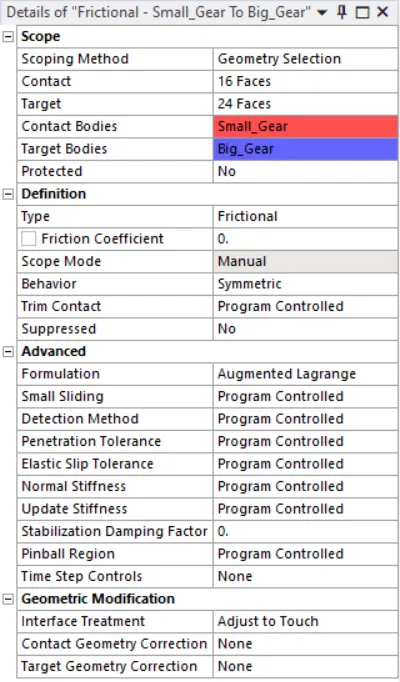
- Insert "Contact" under the "Connections" tab select the contact and target face of the gear tooth with the following specifications.
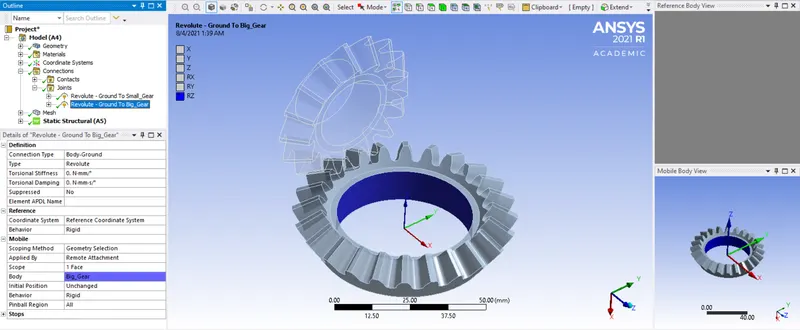
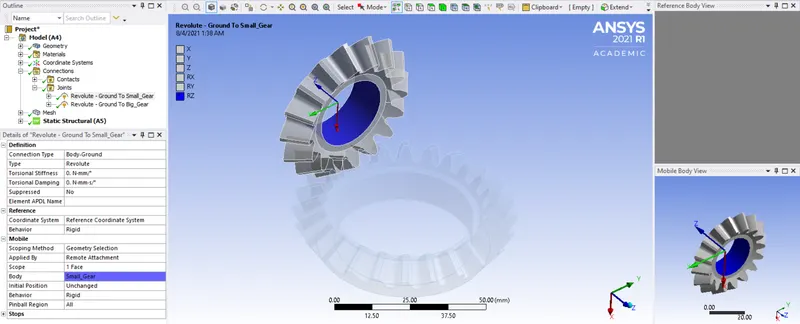
- Insert "Joints" under the "Connections" tab and define the gears to "Revolute" type using the following specifications.
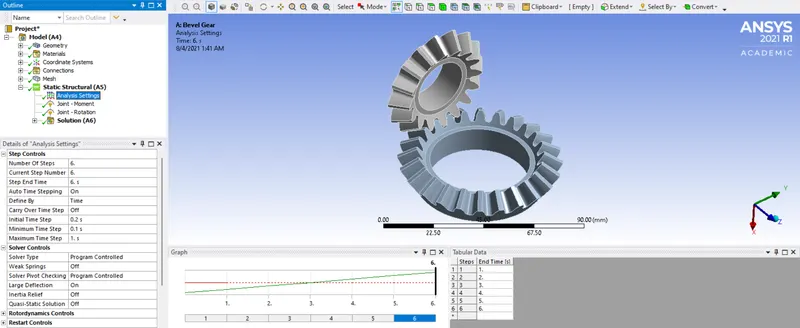
- Make the following changes to the analysis settings for timesteps.
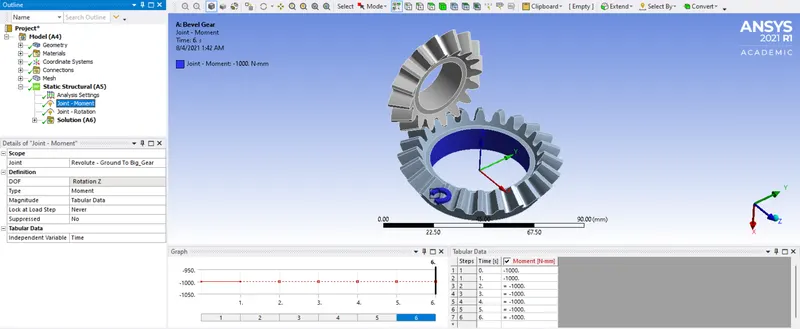
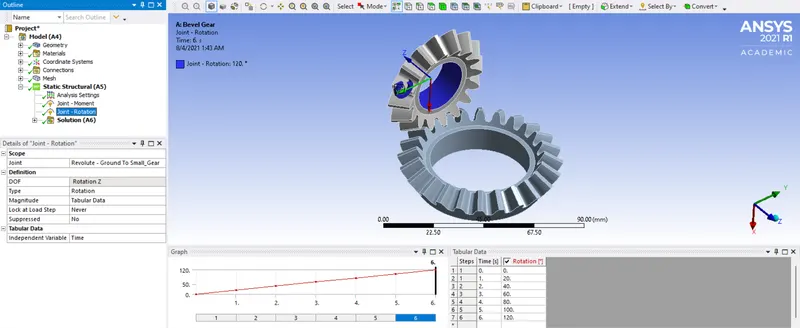
- Insert "Joint loads" under "Static Structural" tab and assign moment value of -1000 Nmm for Big gear and angles in degrees from 0 to 120 for small gear as follows.
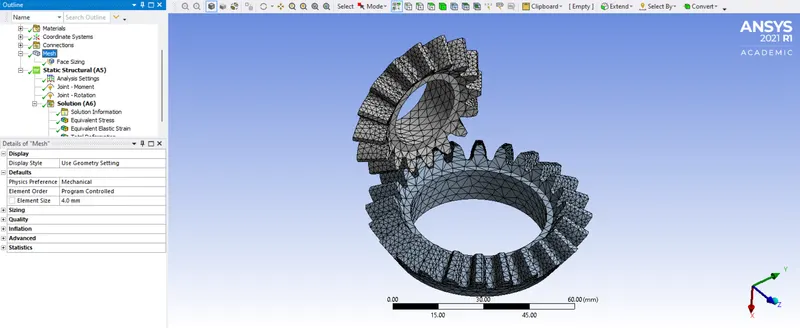
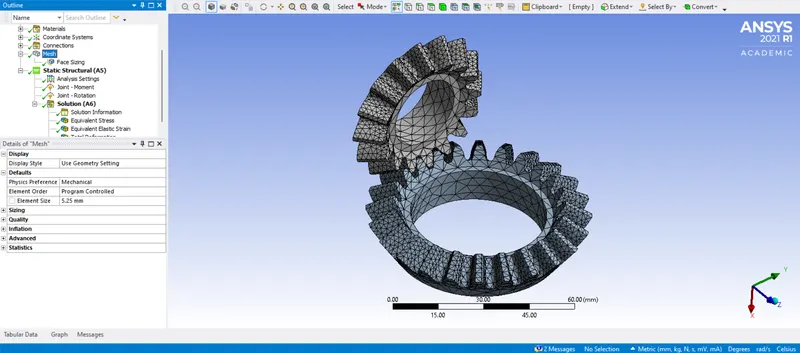
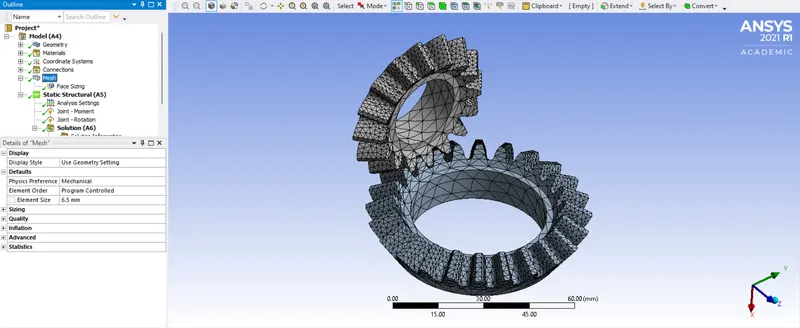
- Insert "Sizing" under the "Mesh" tab with an element size of 1.75 mm.
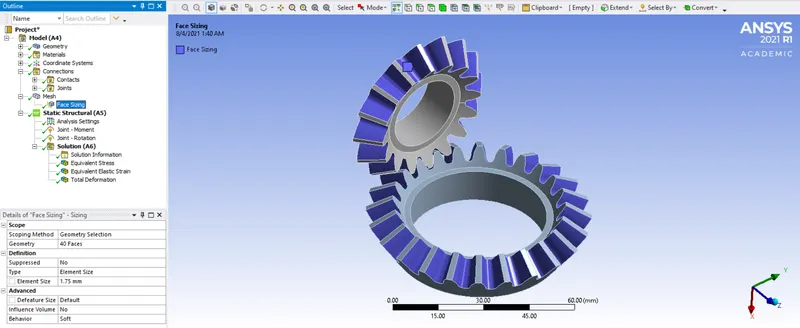
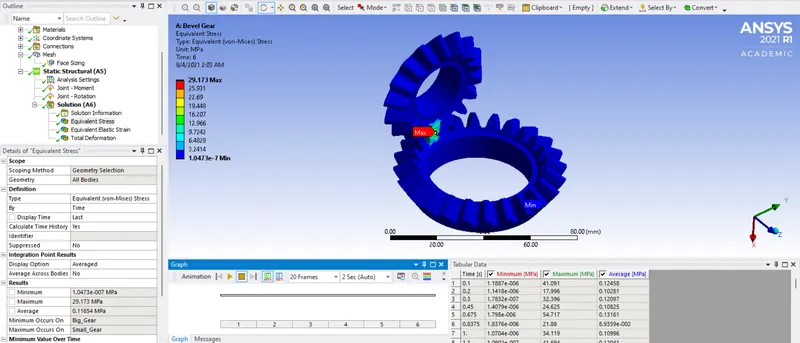
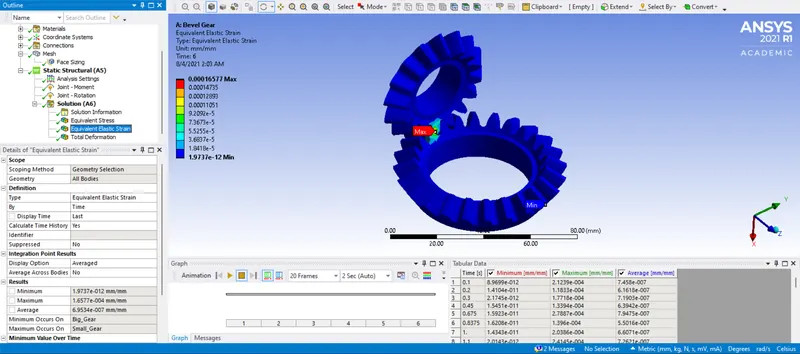
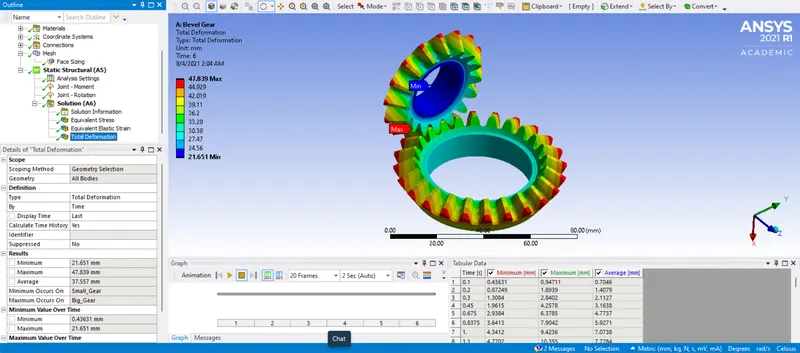
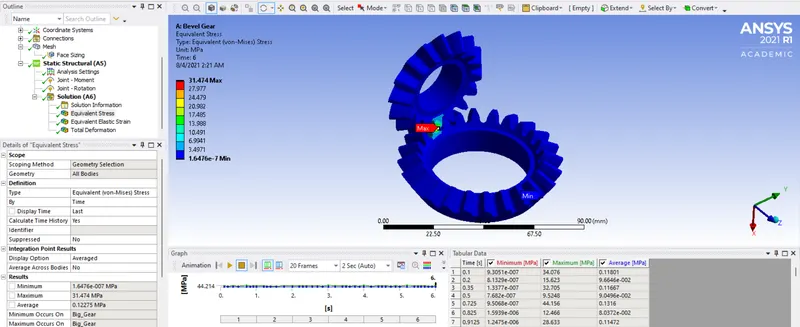
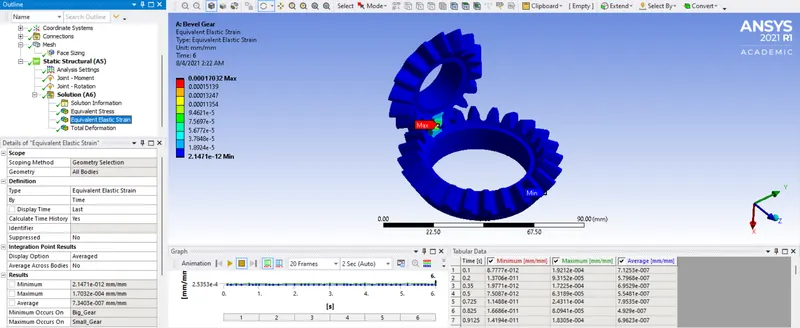
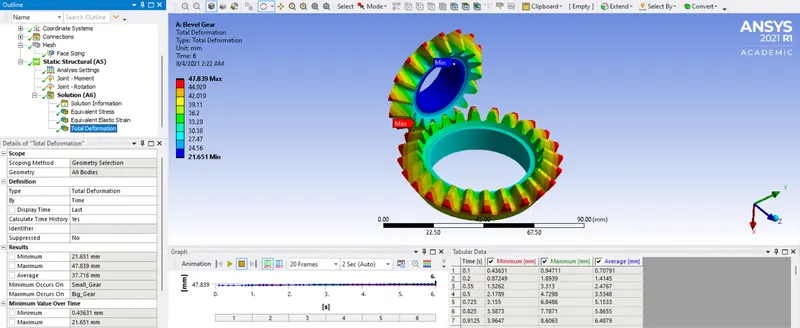
- Change the default size of mesh as per each caseand hit "Generate mesh". Under the solutions tab, insert "Equivalent Stress", "Equivalent Elastic Strain" and "Total Deformation" and hit "Solve" to generate results as shown below.
Results:
| Case | Size of Mesh | Equivalent Stress | Equivalent Elastic Strain | Total Deformation |
| 1. |
Element Size: 4mm |
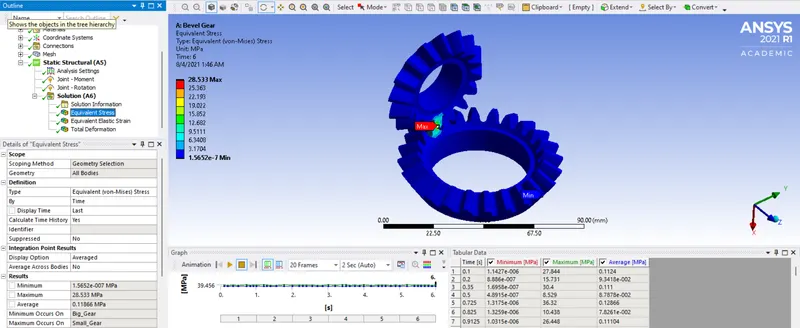 |
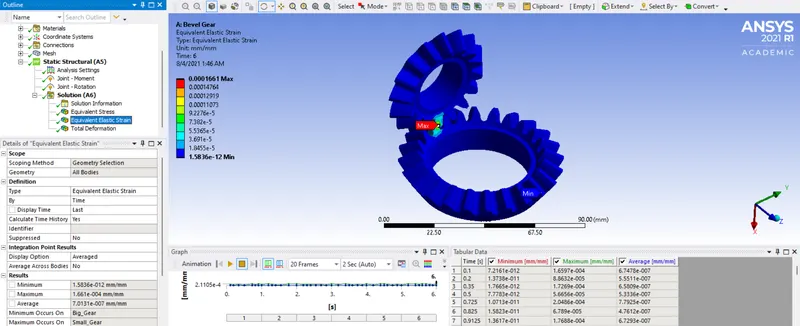 |
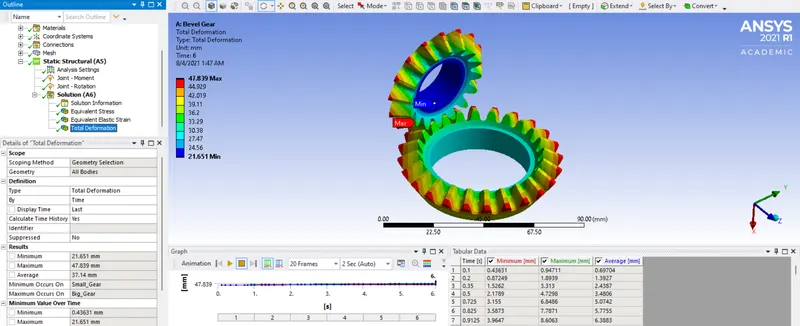 |
| 2. |
Element Size: 5.25 mm |
 |
 |
 |
| 3. |
Element Size: 6.50 mm |
 |
 |
 |
Conclusion:
Reduction of mesh size leads to reduction in values of Equivalent stress and Equivalent Elastic Strain showing that the values are moving to convergence but Total Deformation seems to remain the same in the all the cases.
Errors faced:
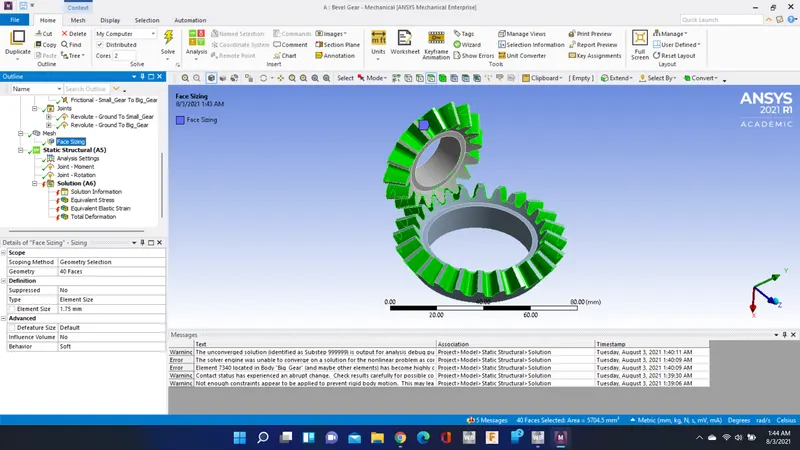
At first, the solver was not able to run the simulation. The problem found was, the mesh element size was set to default and moment values were mistakenly mentioned as 100 Nmm for big gear. The error messages popped up can be seen the screenshot below.
Note: The animation videos for the following simulation is uploaded as a .rar file and can be downloaded through the following drive link. For some reason, the attachment option doesnt accept the file to attached through this site.
https://drive.google.com/file/d/1twoDTagX95dJVkPfuVEVs8sssQT-y7WA/view?usp=sharing