Week -2
Aim
Preparing the Simulink model for Doorbell and a thermistor to sense the heater temperature.
Objective
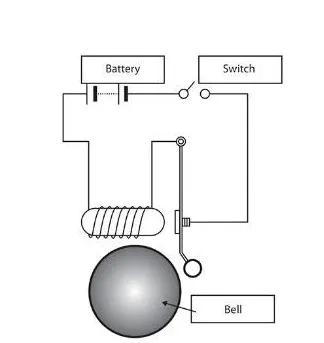
1. Make a simulink model of Doorbell using solenoid block with the following details:
In the above arrangement, when the switch is closed the electromagnetic recieves electrical power from
the battery and pulls the metal arm to the bell producing sound.
Create a situation where the switch is closed for 2 seconds and then released. Observe the physical
movement of the plunger.
2. Use a thermistor to sense the temperature of a heater & turn on or turn off the fans as per
the below condition
Temperature source 20 °C from 0 to 10 seconds,27°C from 10 to 30 seconds, 23°C from 30 to 50
seconds
Fan conditions: ON if the temperature above 25°C, OFF otherwise
Solution
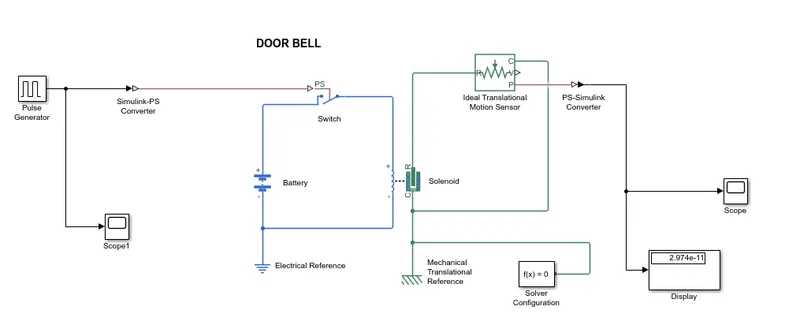
Here first we are going to study the simulink model of the doorbell using a solenoid block. We need to
access the simulink with the block parameters to run the simulation.First we need to get understand the
theory behind the doorbell mechanism.
Theory of Doorbell
A chime doorbell uses a specialised sort of electromagnet called a solenoid.A solenoid is just an
electromagnet where the coiled wire surrounds a metal piston.The piston contains magnetically conductive
metal,so it can be moved backward or forward by the electromagnetic field
In this design, the solenoid piston consists of an iron core mounted to a non-magnetic metal bar. when
there is no power to the electromagnetic, a spring pushes the piston to the left and the iron core extends
outside the wire coil. When you turn the electromagnet on , the iron cire is drawn to the magnetic field
so it slides into the centre of the coiled wire.
As the iron core slides to the right the end of the piston strikes the right-hand tone bar. The tone bar
vibrates,producing a pecrticular note.This is the'ding'sound.
As long as you hold the doorbell button,the current will flow through the electromagnet and the piston will
remain in this postion.But when you release the button,the current will stop flowing through the electro
magnet and the magnetic field will collapse.The spring snap the piston back to the left,where it hits the
tone bar on the other side.The second tone bar produces the "dong" sound.
You can make more elaborate tone sequences by adding more solenoids and tone bars. Some variations
on this design produce a different tone pattern when someone rings the back doorbell then when someone
rings the front doorbell. Each doorbell button closes a seperate circuit connected to seperate solenoids in
the doorbell mechanism. In the simplest design,one of the solinoids hits a bumber instead of the second
tone bar.In this wayone doorbell button will trigger a 'ding-dong' tone and the other button will trigger only
a 'ding' tone
In recent years, more and more people have been installing electronic doornells in their homes. An
electronic doorbell doesn't have any electromagnets or tone bars. instead it has an integrated circuit(ic)
the registers when the button has been passed.The ic trigger a digitally recorded song or message.A lot
of electronic doorbell have a wirless control system so the doorbell mechanism doesn't have to be specially
wired.
PS-Simulink and Simulink-PS converter
These are basically the converter from physical system to simulink signal and vise versa


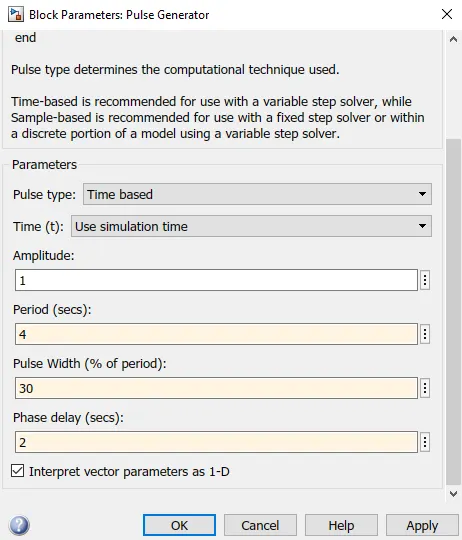
Pulse Genetator
It is an along input that has amplitudeand frequency with which the input is transmitted.

Electrical and Mechanical Reference
It is the reference block with which the system has a ground source as a base.


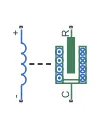


Solver Configuration
It is type of block thet acts as a complete equation for where f(x) = 0 where we find the value of x and
generate the out which represents the block diagram as an equation.

Block Parameter
Simulink Model
Scope value of Pulse Generator
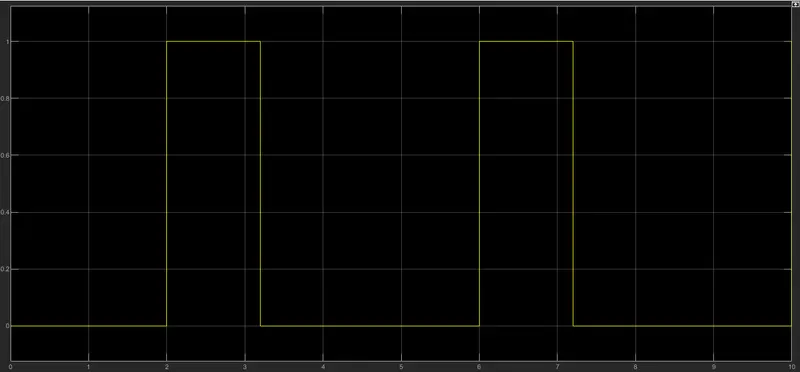
Doorbell Final Scope Value
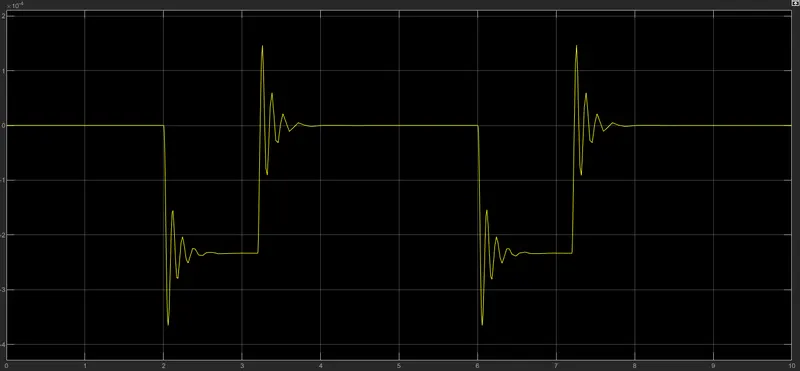
There are some spikes in the graph when switch is closed due to electromagnetic interference
Thermistor
Simulink Model
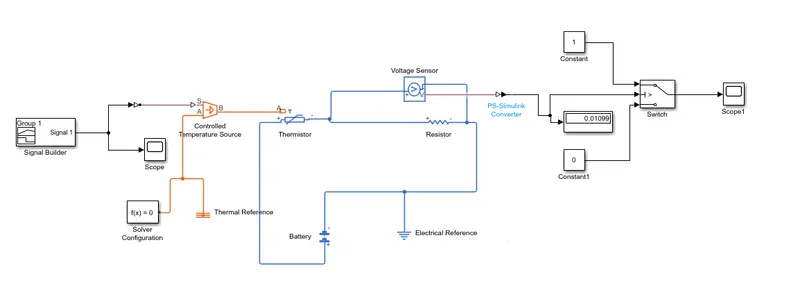
The required is such that the fan should be turned on when the temperature sensed is greater than 25
degree celsius. To fullfill this objective we use a voltmeter to find the voltage to find the voltage os the
circuit at different temperatures . It is found that voltage at 25 degree celcius is approximately 0.23v.Now
this voltage signal is passed through switch. The switch is configured in such a way that it is open if the
voltage across the voltmeter is less than 0.23v and close if the voltage across the voltmeter is greater than
0.23.The threshold of the switch is set to 0.23v.
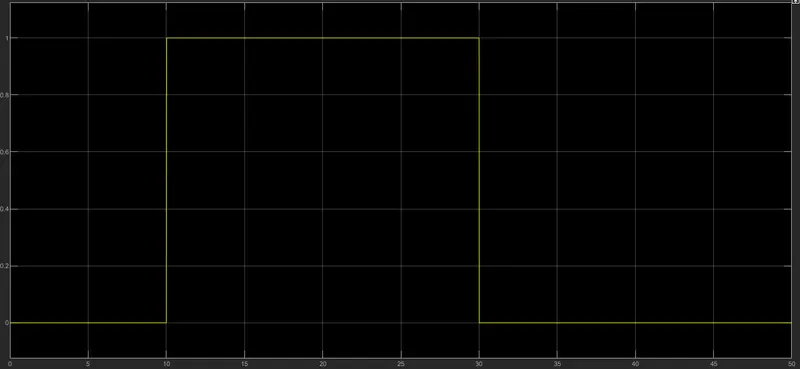
Temperature source 20 °C from 0 to 10 seconds
27 °C from 10 to 30 seconds
23 °C from 30 to 50 seconds
Fan conditions: ON if the temperature above 25 °C, OFF otherwise
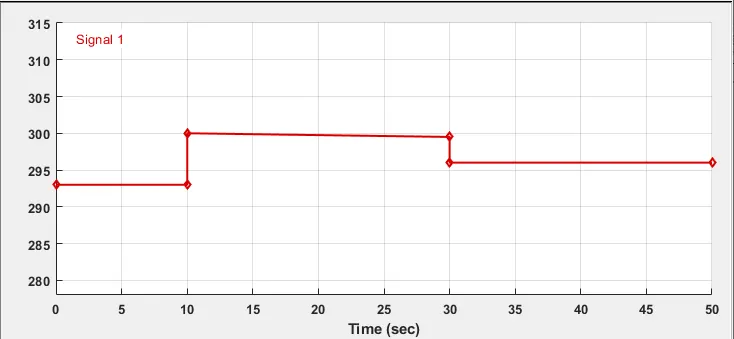
Final Scope Output
Conclusion
1. I was able to make the model of door bell using solenoid block.
2. I was able to make a block on thermister to sense the temperature of a heater and turn off the fan.
3. This task helped ma a lot in understanding the blocks and working of it.
Googledrive link
https://drive.google.com/drive/folders/1xfjecCCjeDB0W8jsZ-yF1hw0nvReb3iA?usp=sharing