Week 14 challenge
TITLE:-Design the Nut and apply GD&T to the drawing.
What is a butterfly valve?
Butterfly valves are a family of quarter-turn rotational motion valves that are used in pipelines to shut-off flow. It is often said that butterfly valves can be used to regulate the flow. However, we do not recommend doing this, as it can damage the valve disk and have a negative effect on the sealing properties. They are used in a wide variety of process media and industries especially in water supply, collection, and distribution, as well as pumping stations, and have a broad range of use cases especially in flow isolation. A couple of their key advantages over other valve families are their simple construction and compactness, resulting in the end products being of lighter weights and lower cost and with smaller installation footprints and faster actuation speeds.
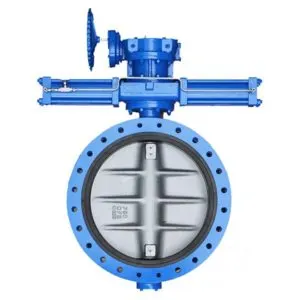
Butterfly valve parts
Below are the major butterfly valve components:
- Valve Body
The valve body fits between the pipe flanges - the most common end connection types being flanged, double lug, and wafer types.
- Disc
Attached to the valve body is the disc that functions as a gate that stops or throttles fluid flow; it can be considered equivalent to a gate in a gate valve, or a ball in a ball valve. The disc is typically bored to receive the stem, or shaft. There are many variations in disc design, orientation, and material in order to improve flow, sealing, and/or operating torque. For example, Hawle’s 9881K double eccentric disc is designed to reduce seal wear and “scuffing” as well as operating torque requirements.
- Seat
Lining the internal valve body is a strong elastomer or metal anti-leak seal that secures the disc in place in the closed position in order to achieve complete shutoff. The 9881k series’ stainless steel weld filled and microfinished integral body seat ensures a corrosion and erosion resistant seat face. With this special type of seat design, it is possible to manufacture the valve drop tight according to EN12266 –A requirements.
- Stem
The valve shaft, often also referred to as the stem, is the component that connects the disc to the actuation mechanism and transmits the torque through itself.
- Seals
Seals are present at multiple interfaces within the valve to either ensure a tight seal during operation or to isolate the process media from the valve’s internal components for a more flexible and cost-efficient design.
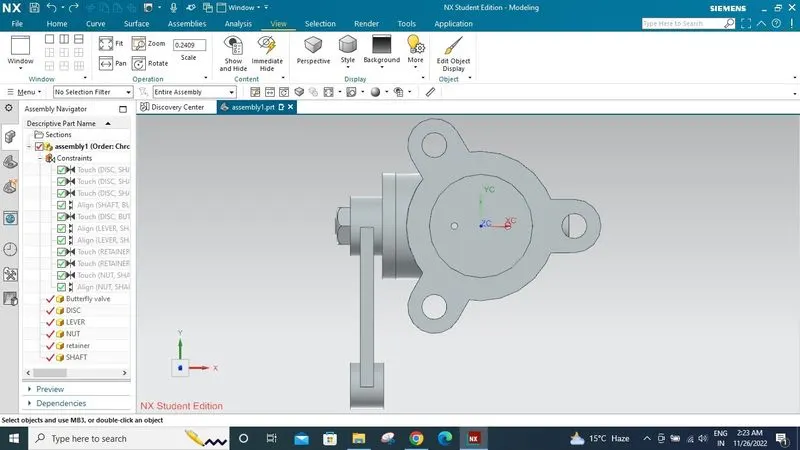
screenshots of Model . (Front View, Side View, Isometric View and the Top View)
Front View
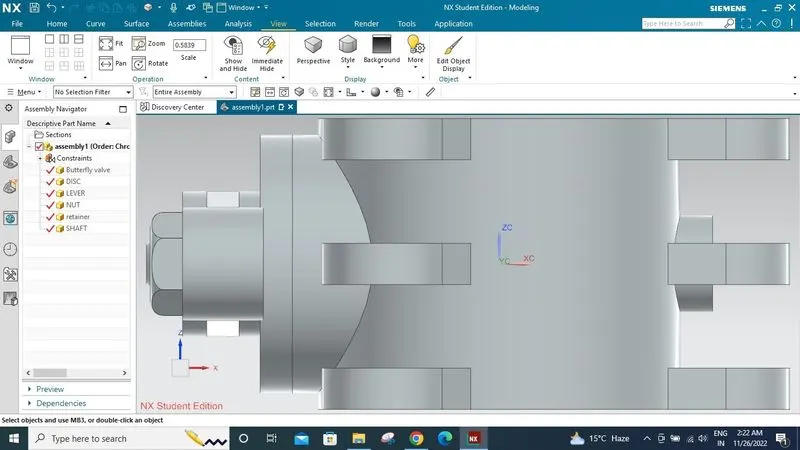
Side View
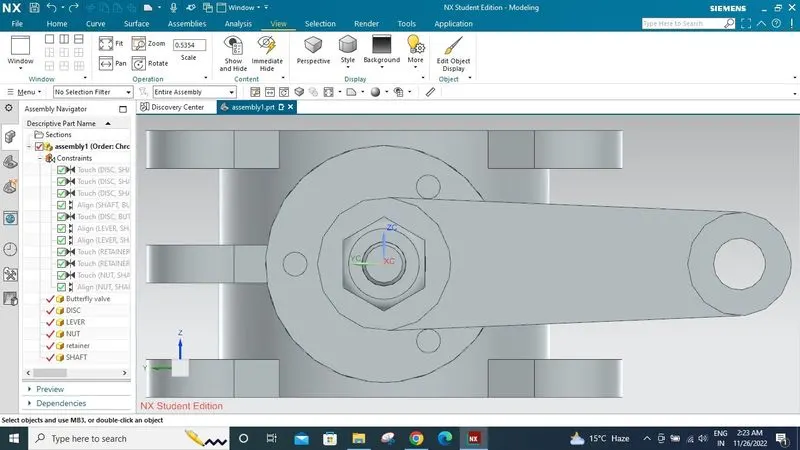
Isometric View
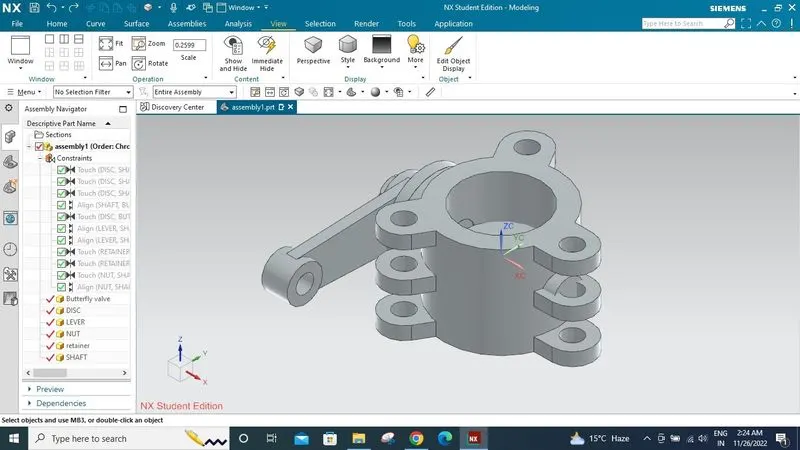
Top View
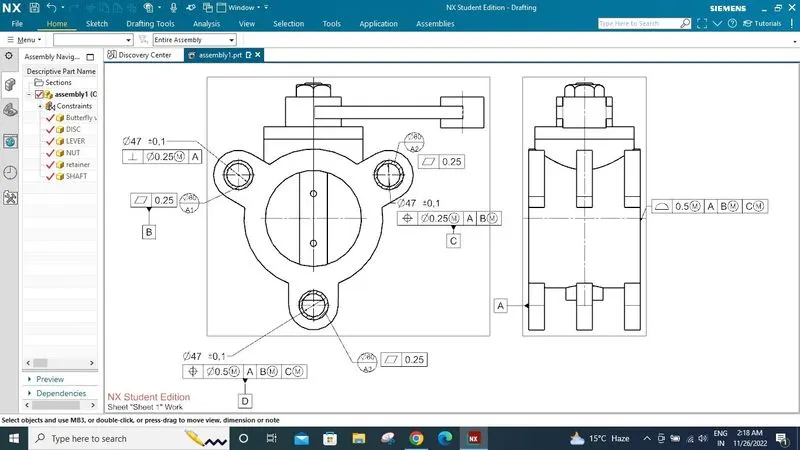
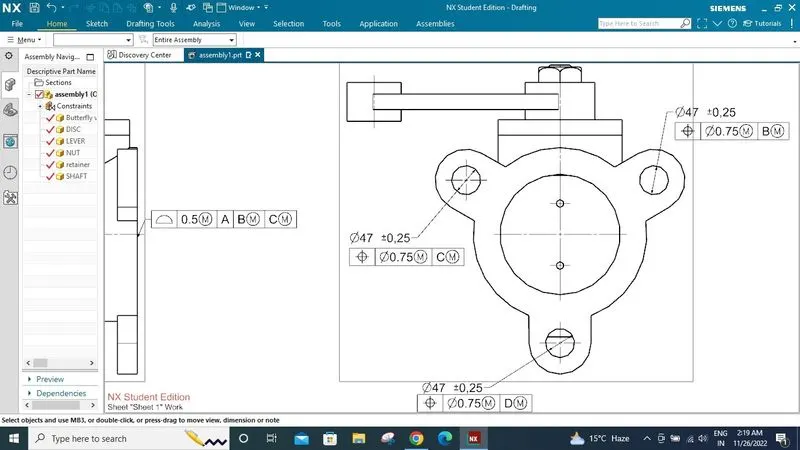
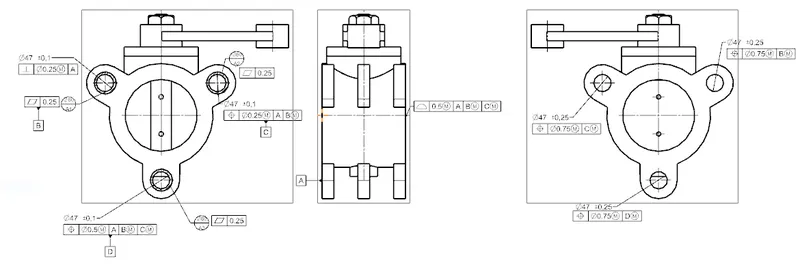
GD&T symbol to the drawing sheet.
THANK YOU