Week 14 challenge
Objective
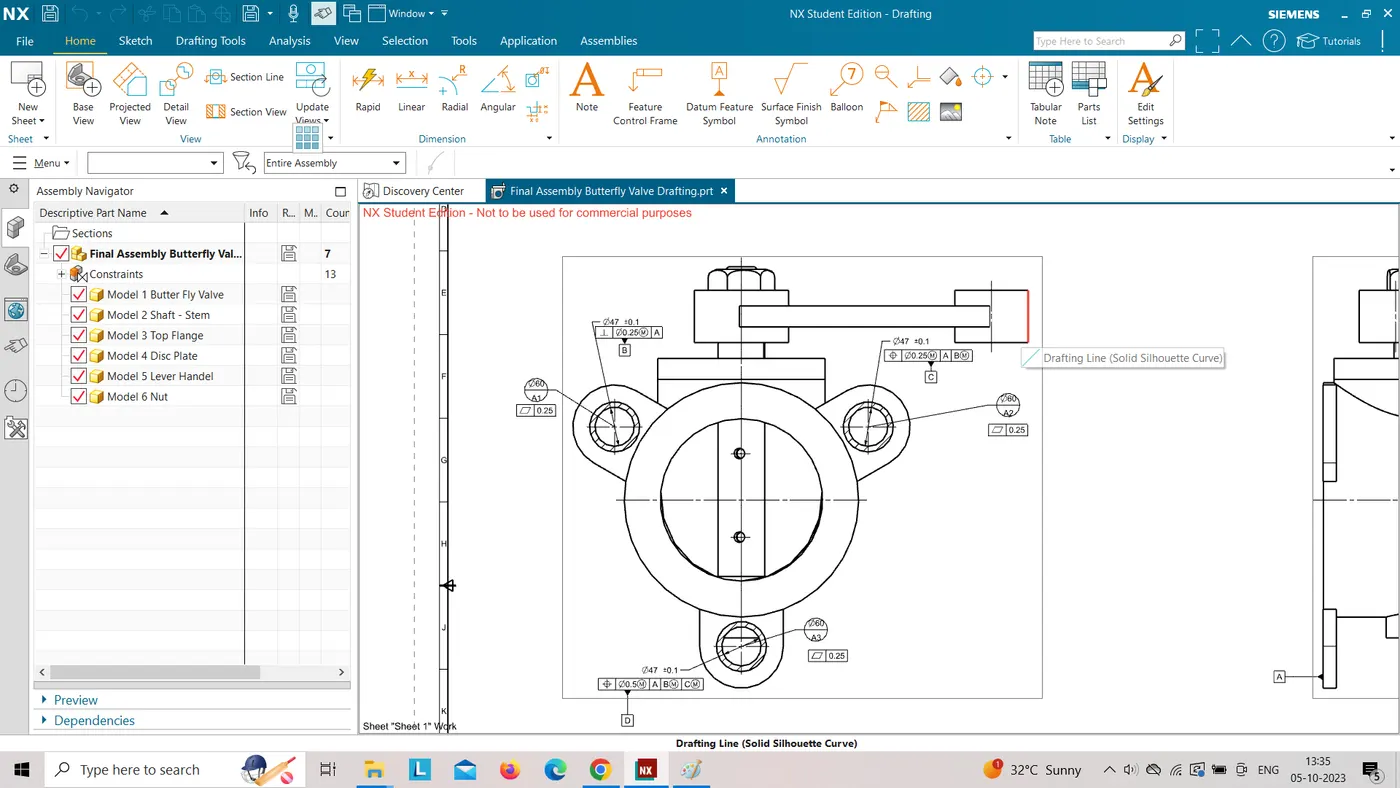
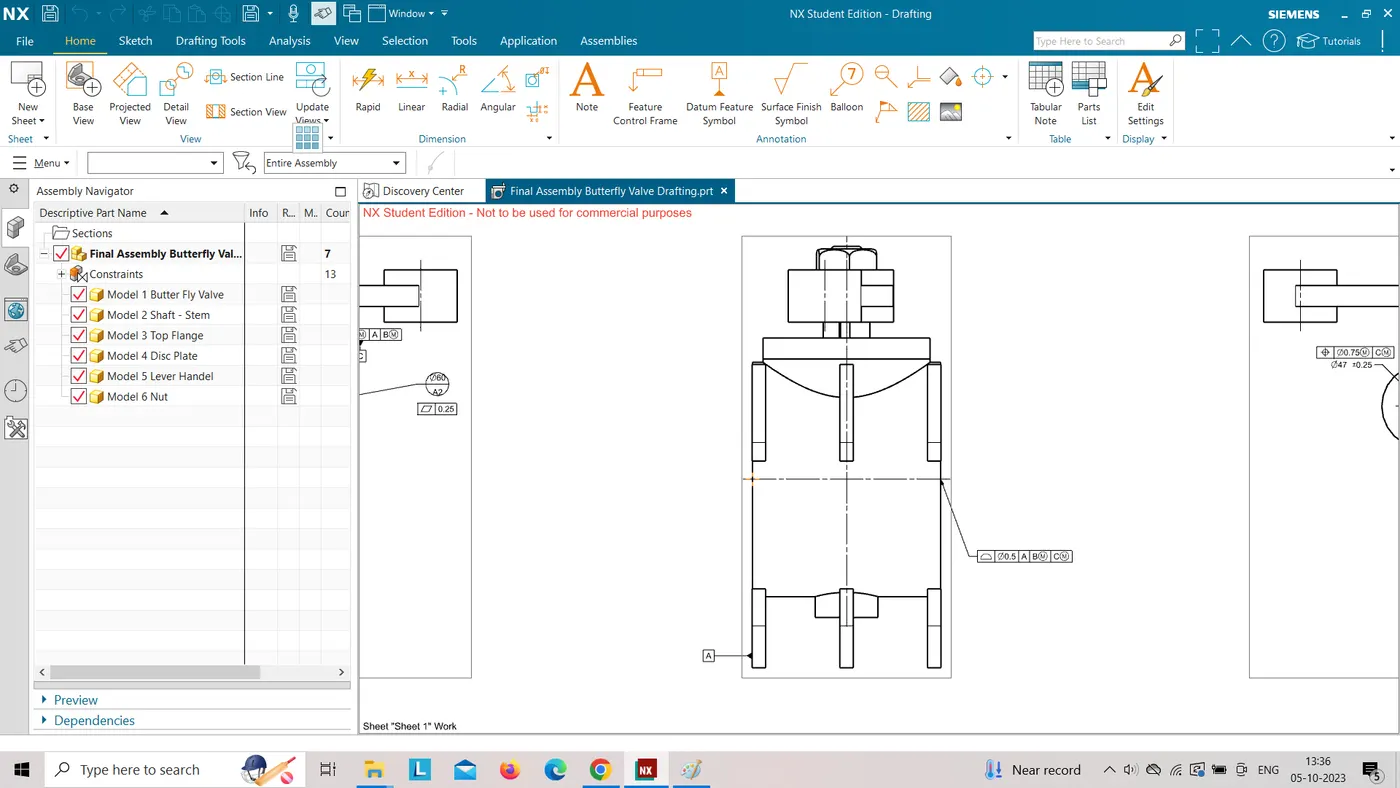
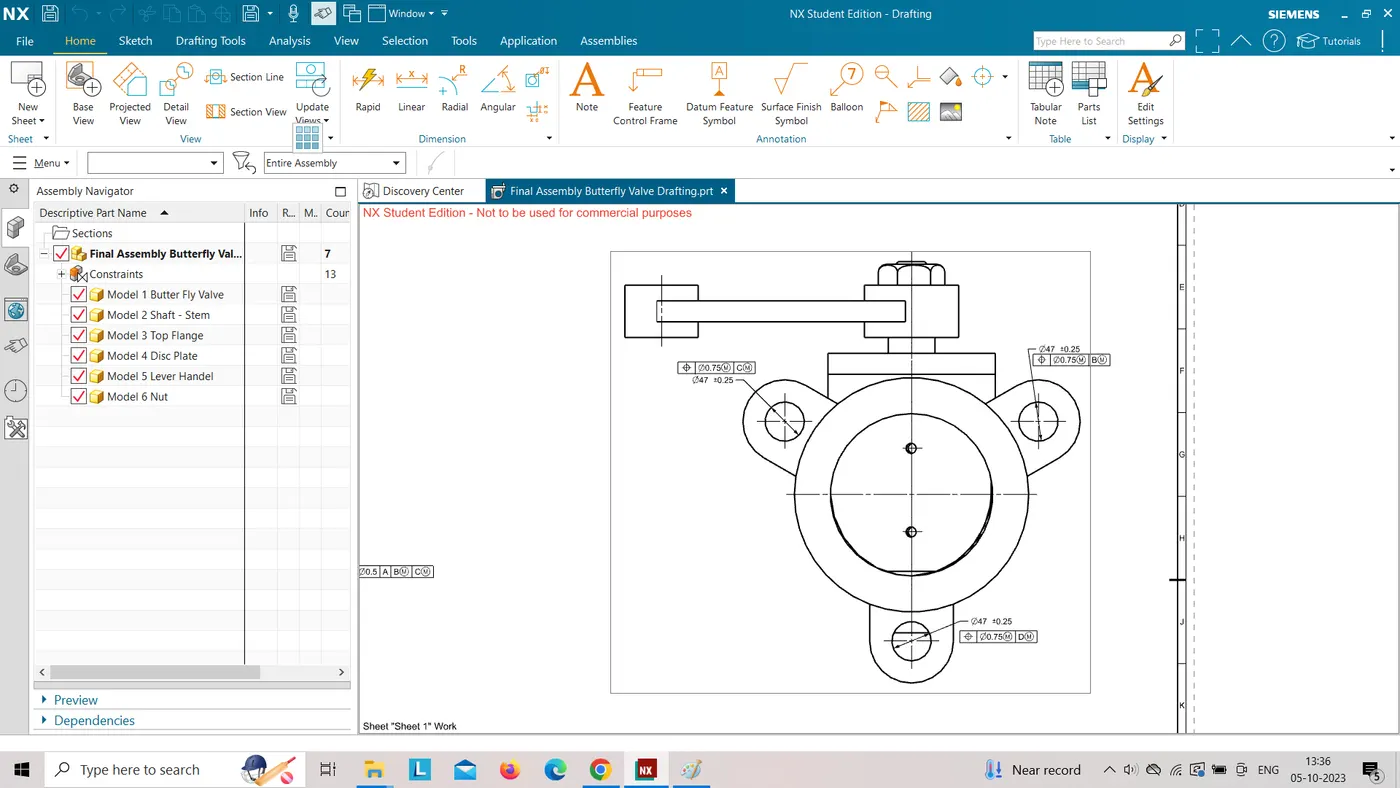
The objective of this project is to model a butterfly valve and apply GD&T to the different parts and assembly of the butterfly valve.
Introduction
A Butterfly valve is a quarter-turn rotational motion valve, that is used to stop, regulate, and start a flow. Butterfly valves are easy and fast to open. A 90° rotation of the handle provides a complete closure or opening of the valve. Large Butterfly valves are usually equipped with a so-called gearbox, where the handwheel by gears is connected to the stem. This simplifies the operation of the valve, but at the expense of speed.
Applications of Butterfly Valves
A Butterfly valve can be used in many different fluid services and they perform well in slurry applications. The following are some typical applications of Butterfly valves:
- Cooling water, air, gases, fire protection, etc.
- Slurry and similar services
- Vacuum service
- High-pressure and high-temperature water and steam services
Advantages of Butterfly Valves
- Compact design requires considerably less space, compared to other valves
- Light in weight
- Quick operation requires less time to open or close
- Available in very large sizes
- Low-pressure drop and high-pressure recovery
Disadvantages of Butterfly Valves
- Throttling service is limited to low differential pressure
- Cavitation and choked flow are two potential concerns
- Disc movement is unguided and affected by flow turbulence
Components of Butterfly Valve
1. Body
Butterfly valves generally have bodies that fit between two pipe flanges. The most common body designs are lug and wafer.
2. Stem/Shaft
The stem of the butterfly valve may be a one-piece shaft or a two-piece (split-stem) design.
3. Retainer
The retainer is a specially shaped washer that fits over the top of the valve spring. The keepers, or locks, fit into the valve stem grooves, holding the retainer and spring in place.
4. Disc
The flow closure member of a butterfly valve is the disk. The disk is the equivalent of a plug in a plug valve, gate in a gate valve or a ball in a ball valve. Rotating the disk one-quarter turn or 90 Degrees opens and closes the butterfly valve.
5. Lever
The hand lever is commonly used for small butterfly valves and is used to open and closed the valve. It is capable of being locked into a position of open, partially open, or closed.
6. Nut
Nuts are almost always used in conjunction with a mating bolt to fasten multiple parts together. The two partners are kept together by a combination of their threads' friction.
Assembly
After modeling all the individual parts of the butterfly valve, all parts are assembled together in the assembly workbench of NX.
Conclusion
The Butterfly valve is successfully created and GD&T is applied to all the different parts and the assembly of the Butterfly valve.