Week 12 - Validation studies of Symmetry BC vs Wedge BC in OpenFOAM vs Analytical H.P equation
1) Assumptions (same as previous challenge)
Reynolds no: 2100
Length of Pipe = 1.5m
Dia of pipe = 0.01m
At 20 degree Celsius, Density = 998 kg/m^3
Kinematic Viscosity = 1.004e^-6 m2/s
now v, after solving
Initial velocity = 0.2
2) Boundary condition
Pressure inlet = ZeroGradient
Pressure outlet = 0
Velocity inlet = Pressureinletvelocity
velocity outlet = ZeroGradient
Simulation was run for both Boundary condition symmetry and Wedge, for above BC and velocity profile was obtains
Though the profile looks same as both this boundary condition are alike
Velocity profile = parabolic
average velocity = 0.2
maximum velocity = 0.4
Hydro-Dynamic length = 1.2m
3) Velocity graph for symmetry boundary condition
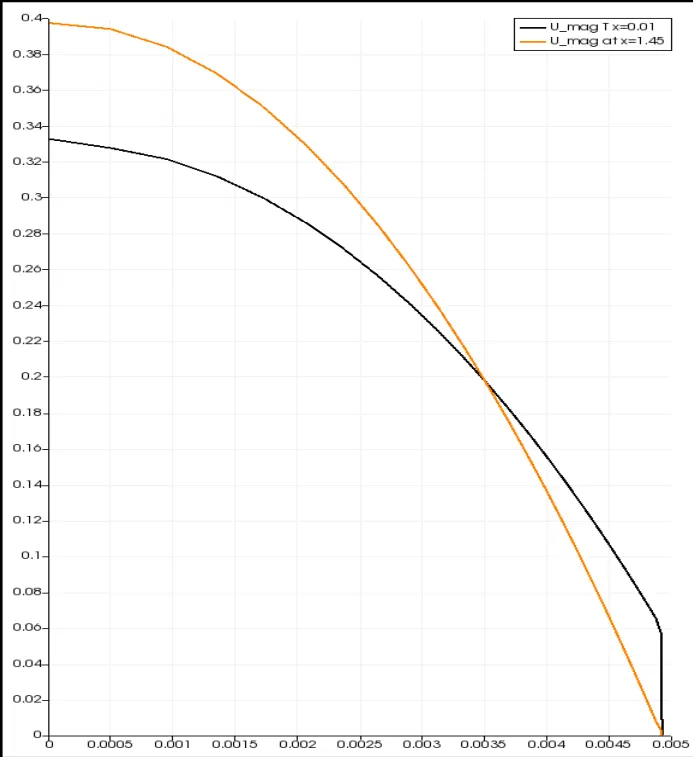
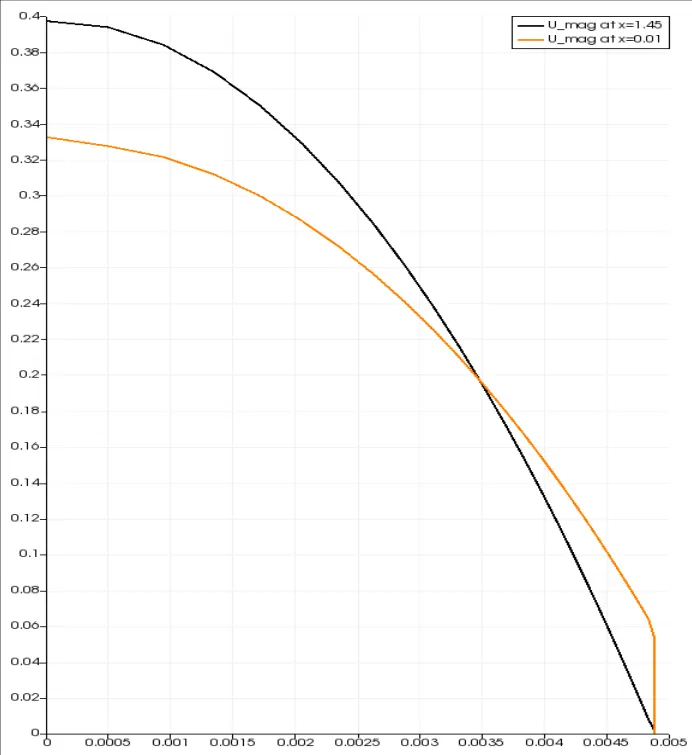
Theta = 10 deg. Theta = 25 deg.
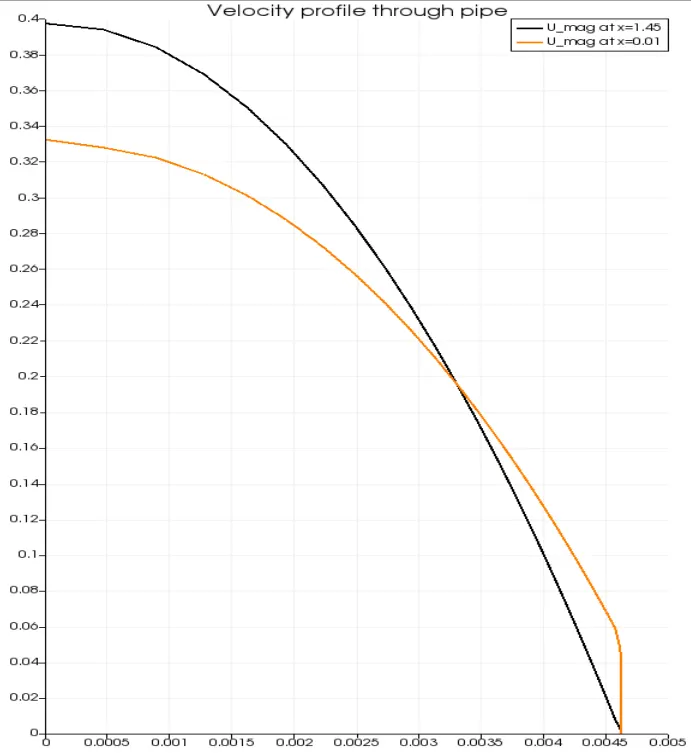
Theta = 45deg.
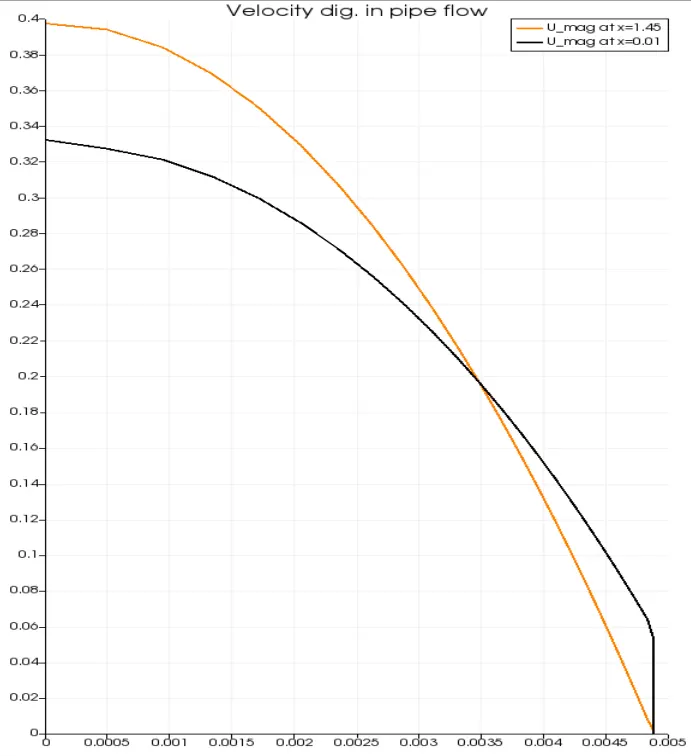
The graph looks identical, and the fully developed parabolic velocity profile can be validated from HP equation, even the pressure drop can be validated as it is linear across the length of pipe.
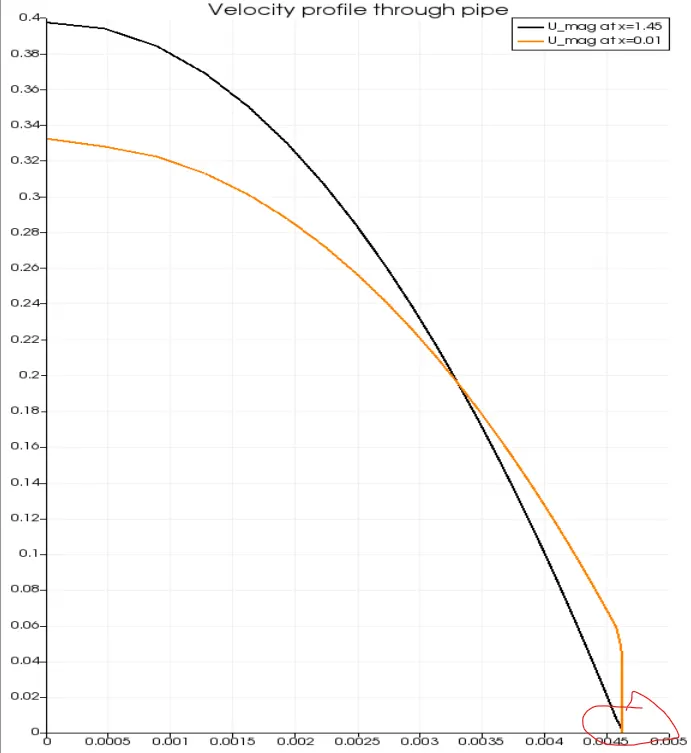
only change can be seen on x axis as the dia shown in graph decreases with increase in theta angle, can’t specify the reason maybe it is a bug that’s why openfoam suggest less than 5deg. angle for wedge
overall, the profile looks same and the maximum velocity can be validated as well
4) Velocity graph for wedge boundary condition
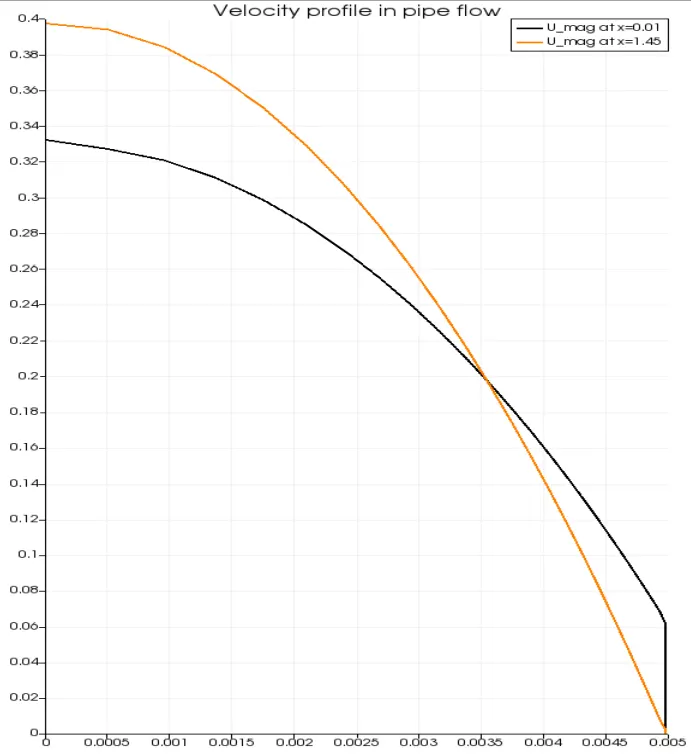
Theta = 10deg. Theta = 25deg.
Theta = 45deg
Similarly, the graphs are all identical to the validated HP velocity diagram and the graph look same with symmetry and wedge BC, also the change in x axis can be seen as theta increases
4) Comparison
i) The truncation error decreases as the angle decreases so, it is suggested to use less then 5deg. angle while simulating the pipe flow
ii)The velocity profile can be seen to be completely parabolic and the pressure drop to be linear along the length so we can say both BC give the similar result only the simulation time can be different considering the changes in angle and BC
iii) since, we have used a grid where no. of cells is not affected with the change in angle so the simulation time doesn’t change a lot with changing angle and in wedge BC the truncation error decreases with the decreasing angle