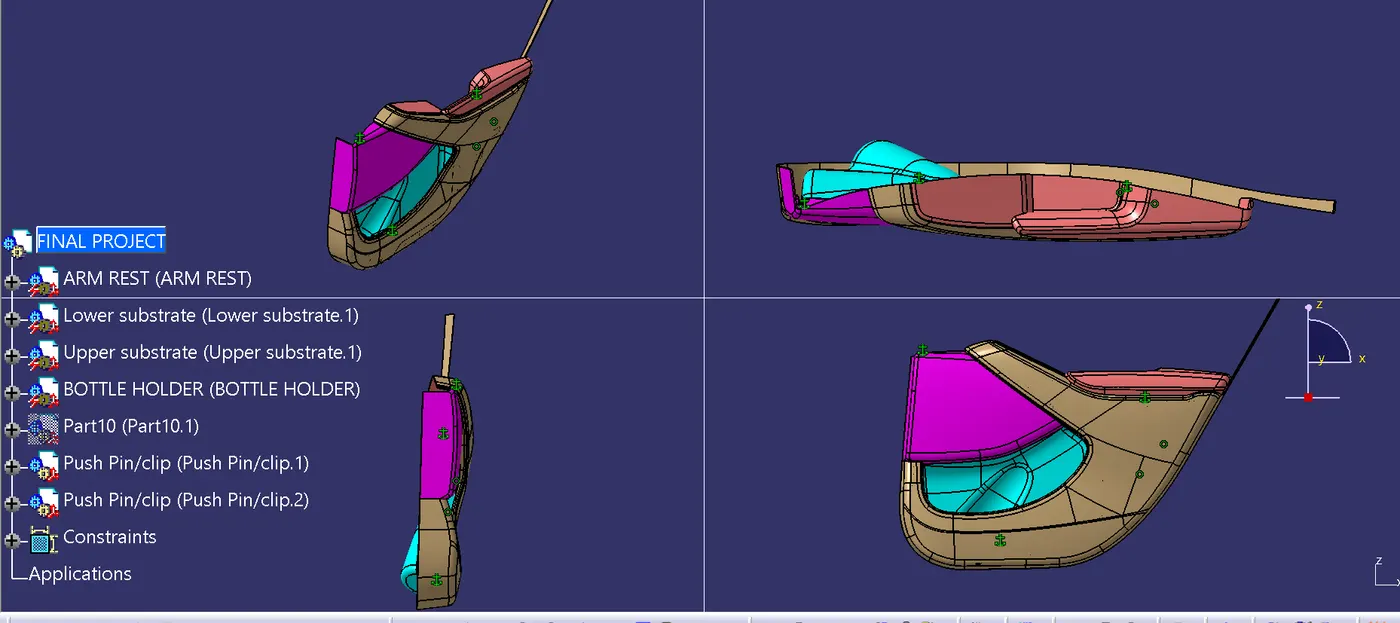
Week 12- Final project
OBJECTIVES
- Create the Door trim Panel Plastic component through the given Class-A surface. To begin with, the tooling axis for the given Class A Surface should be created meeting the requirements of the draft angle and at the end perform the Draft analysis on the model.
- To Create the Heat stakes and locators in the lower substrate considering the design rules.
- To Create the Dog house in the lower substrate and assemble the pushpin considering the design rules.
- To Create the Flanges to connect all the design features together considering the design rules.
- All parts should be 2.5 mm thickness
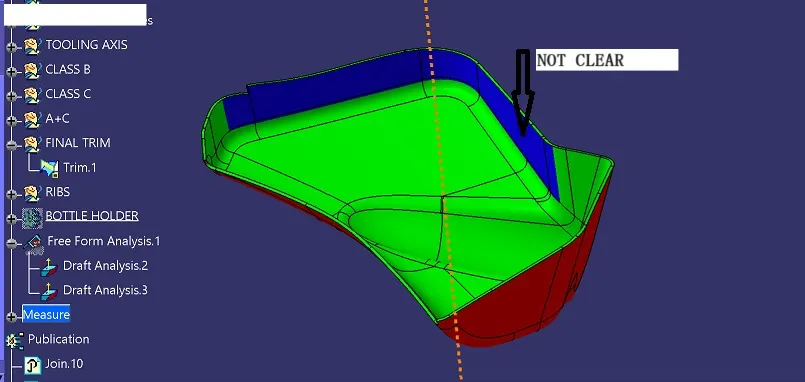
- someof the parts have error in class A
SPECIFICATIONS OF PLASTIC COMPONENT
- Required strength
- Specific service temperature range
- Exposure to chemicals and harsh environments
- Appearance requirements
- Dimensional tolerances
- Required agency approvals
- Processing method
- Assembly method
- Recyclability considerations
MANUFACTURING OF PLASTIC COMPONENTS
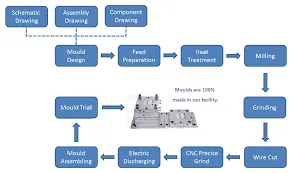
INJECTION MOULDING PROCESS
Injection molding is the most widely used molding process for thermoplastics. It is based on the ability of thermoplastic materials to be softened by heat and to harden when cooled. The process thus consists essentially of softening the material in a heated cylinder and injecting it under pressure into the mold cavity, where it hardens by cooling. Each step is carried out in a separate zone of the same apparatus in the cyclic operation.
APPLICATIONS
Solid neck, Flat Products are made like buckets, Automobile and industrial parts, Moulded chairs, Computer/ TV/ Radio Cabinets, Washing machine Cabinets, Mobile, power housings, etc. Moulded Household items etc. by injecting molten thermoplastic material into a closed mould which is relatively cool.
ADVANTAGES OF INJECTION MOULDING
- Parts can be produced at high production rates.
• Large volume production is possible.
• Relatively low labor cost per unit is obtainable.
• Process is highly susceptible to automation.
• Parts require little or no finishing.
• Many different surfaces, colors, and finishes are available.
• Good decoration is possible.
• For many shapes this process is the most economical way to fabricate.
• Process permits the manufacture of very small parts which are almost impossible to
fabricate in quantities by other methods.
• Minimal scrap loss results as runners, gates, and rejects can be reground and reused.
• Same items can be molded in different materials, without changing the machine or
mold in some cases.
• Close dimensional tolerances can be maintained.
• Parts can be molded with metallic and non-metallic inserts. Parts can be molded in a combination of plastic and such fillers as glass, asbestos, talc, and carbon. The inherent properties of the material give many advantages such as high strength weight rates, corrosion resistance, strength, and clarity
TYPES OF PLASTIC
Plastics come in thousands of varieties with different base chemistries, derivatives, and additives that are formulated to cover a wide range of functional and aesthetic properties. To simplify the process of finding the material best suited for a given part or product, let’s look first at the two main types of plastic: thermoplastics and thermosets.
THERMOPLASTICS
Thermoplastics are the most commonly used type of plastic. The main feature that sets them apart from thermosets is their ability to go through numerous melt and solidification cycles without significant degradation. Thermoplastics are usually supplied in the form of small pellets or sheets that are heated and formed into the desired shape using various manufacturing processes. The process is completely reversible, as no chemical bonding takes place, which makes recycling or melting and reusing thermoplastics feasible.
Common types of thermoplastic materials:
- Acrylic (PMMA)
- Acrylonitrile butadiene styrene (ABS)
- Polyamide (PA)
- Polylactic acid (PLA)
- Polycarbonate (PC)
- Polyether ether ketone (PEEK)
- Polyethylene (PE)
- Polypropylene (PP)
- Polyvinyl chloride (PVC)
THERMOSETTING PLASTICS
In contrast with thermoplastics, thermosetting plastics (also referred to as thermosets) remain in a permanent solid state after curing. Polymers in thermosetting materials cross-link during a curing process that is induced by heat, light, or suitable radiation. This curing process forms an irreversible chemical bond. Thermosetting plastics decompose when heated rather than melting, and will not reform upon cooling. Recycling thermosets or returning the material back into its base ingredients is not possible.
Common types of thermoplastic materials:
- Cyanate ester
- Epoxy
- Polyester
- Polyurethane
- Silicone
- Vulcanized rubber
TYPES OF MANUFACTURING PROCESSES
- 3D Printing
- CNC Machining
- Polymer Casting
- Rotational Molding
- Vacuum Forming
- Injection Molding
- Extrusion
- Blow Molding
MANUFACTURING STEPS FOR PLASTIC COMPONENTS
- Mold preparation: The mold is coated with a release agent to facilitate demolding, and often preheated to a material-specific temperature.
- Casting: The synthetic resin is mixed with a curing agent and poured or injected into the mold, where it fills the mold cavity.
- Cure: The casting cures in the mold until it solidifies (subjecting the mold to heat can accelerate the cure time for certain polymers).
- De-mold: The mold is opened and the cured part is removed.
- Trimming: Casting artifacts like flash, sprues, and seams are cut or sanded away.
GIVEN CLASS A SURFACE OF PRODUCT OF DIFFERENT PARTS:-
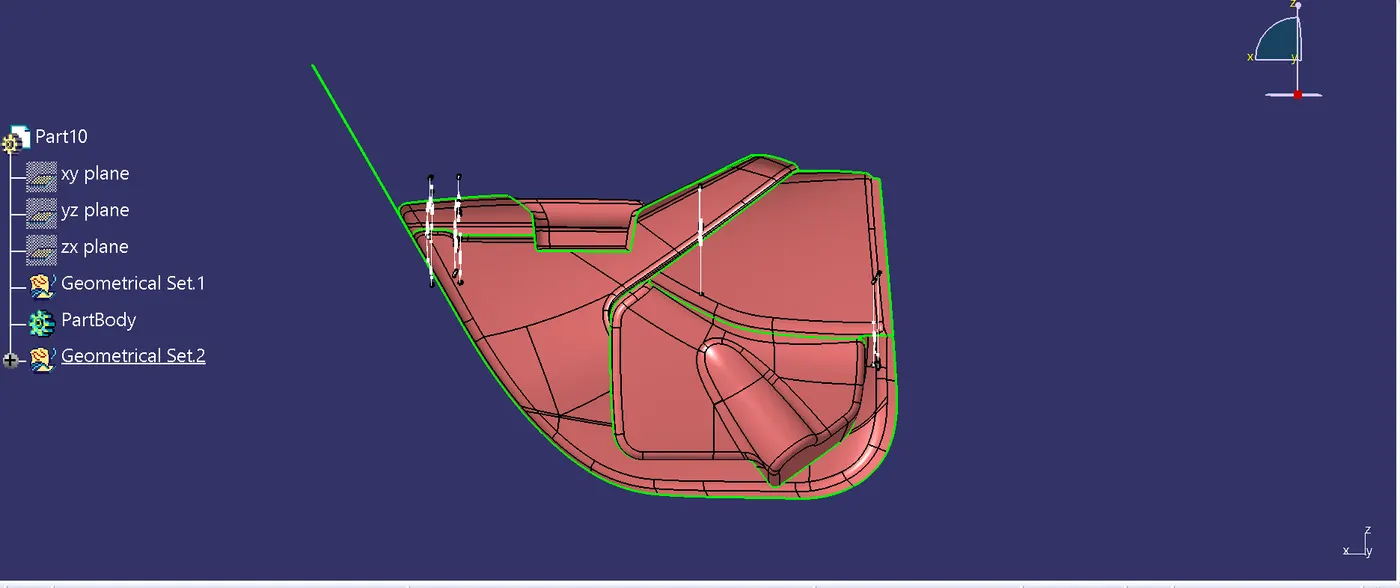
MASTER SECTION FOR CREATING ENG FEATURE AND RIBS :
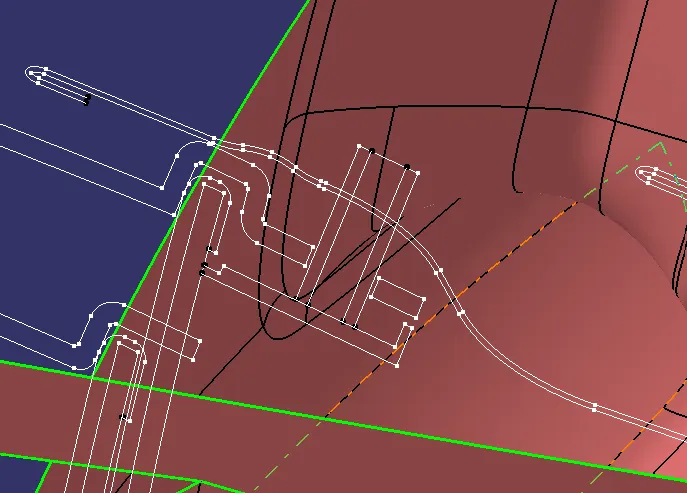
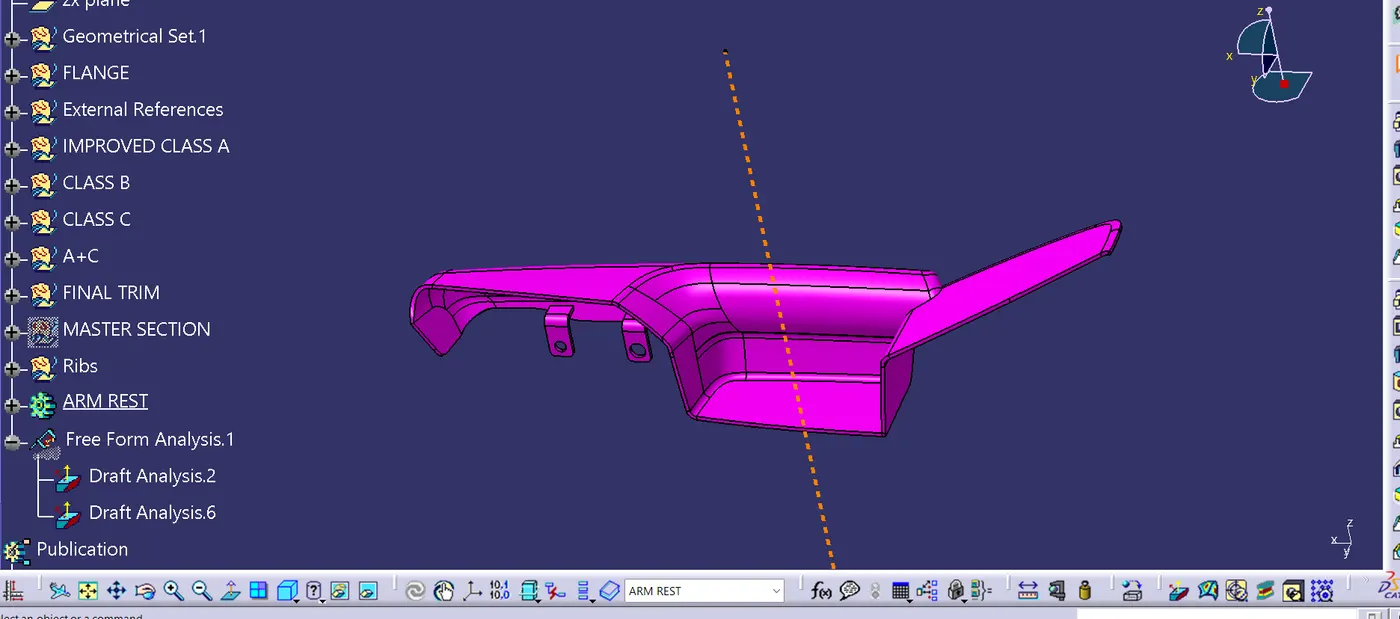
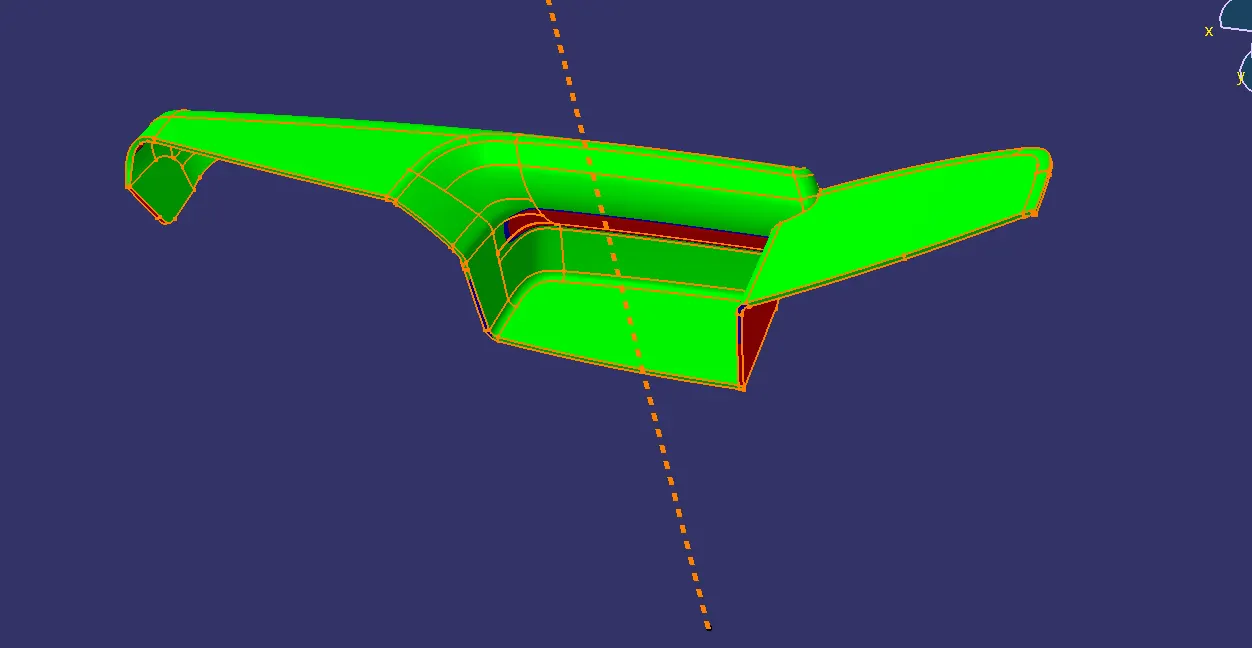
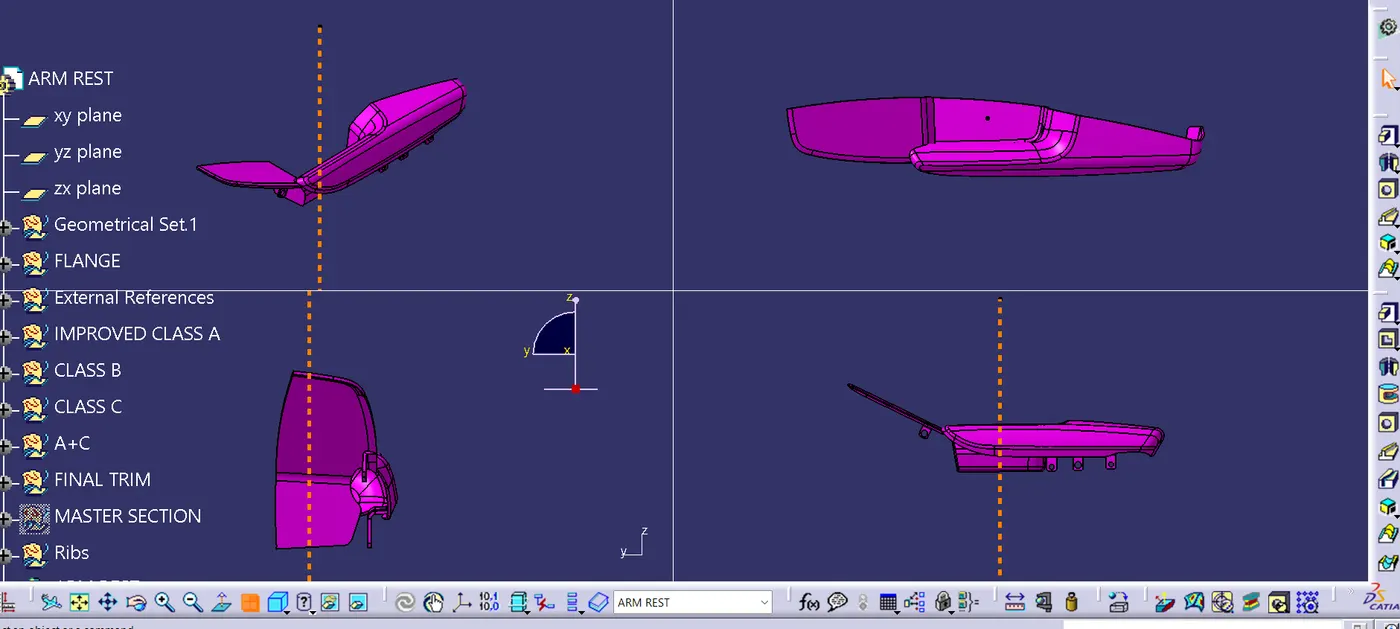
ALL IMAGES OF ARMREST:-
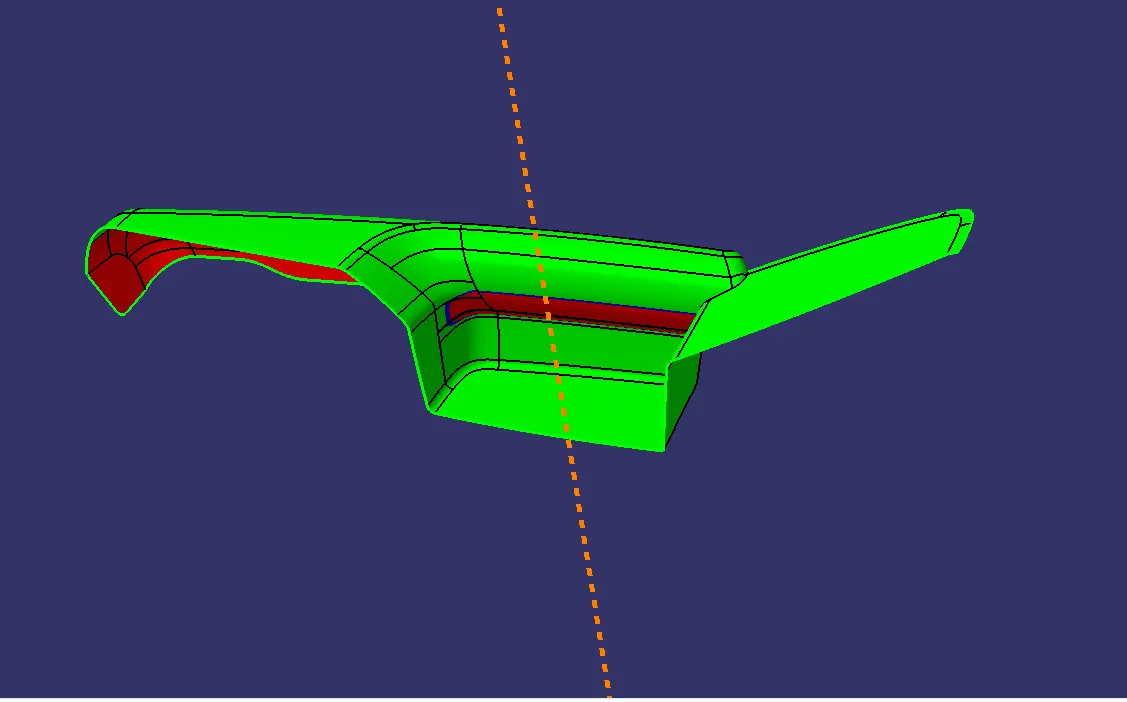
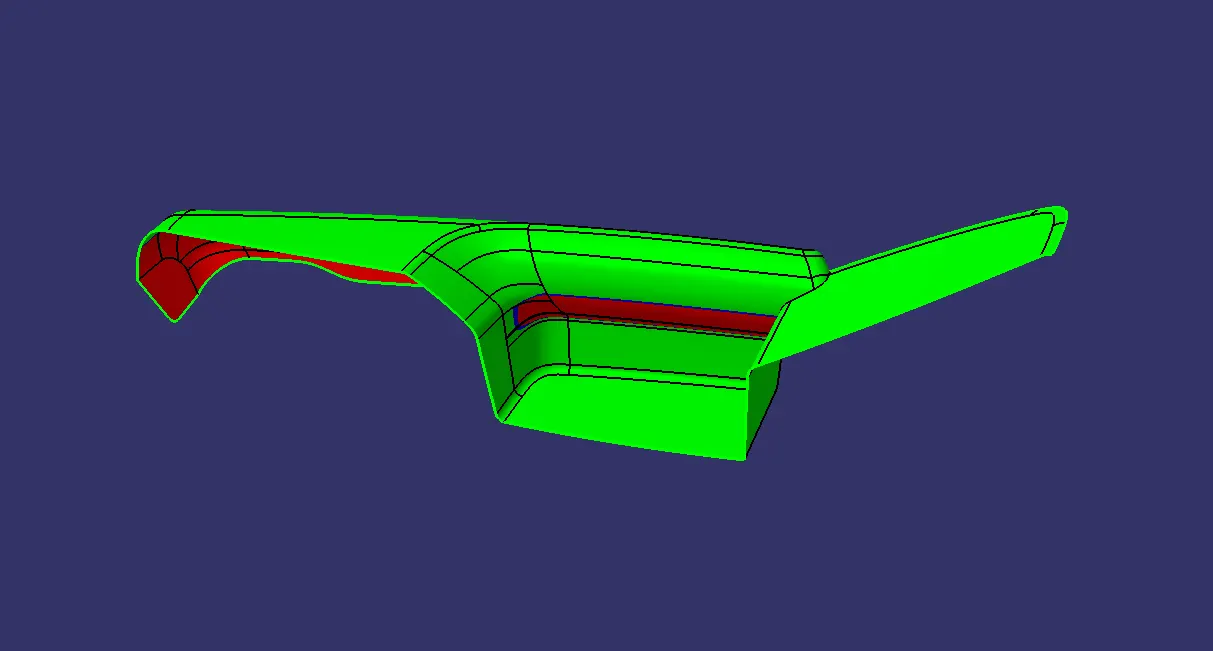
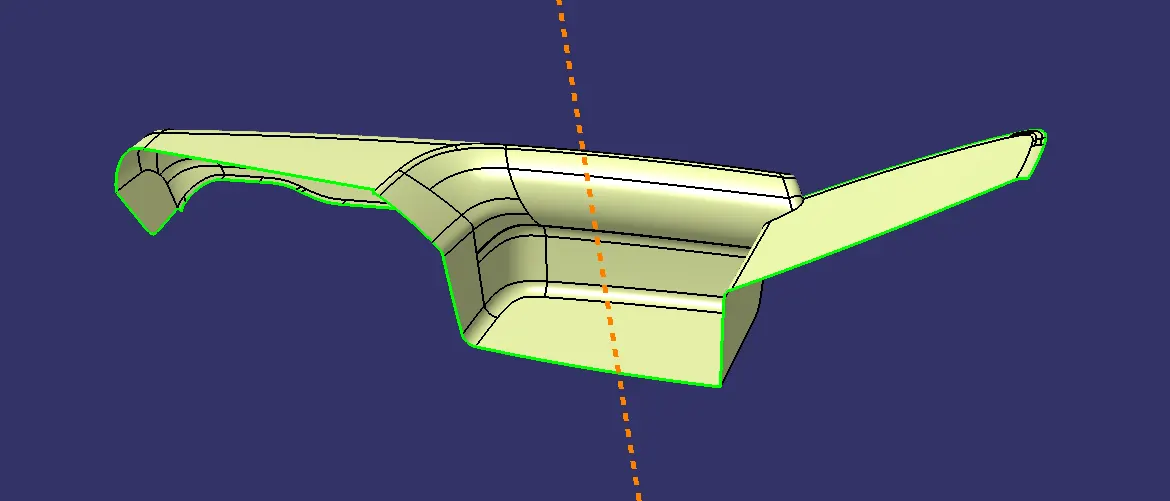

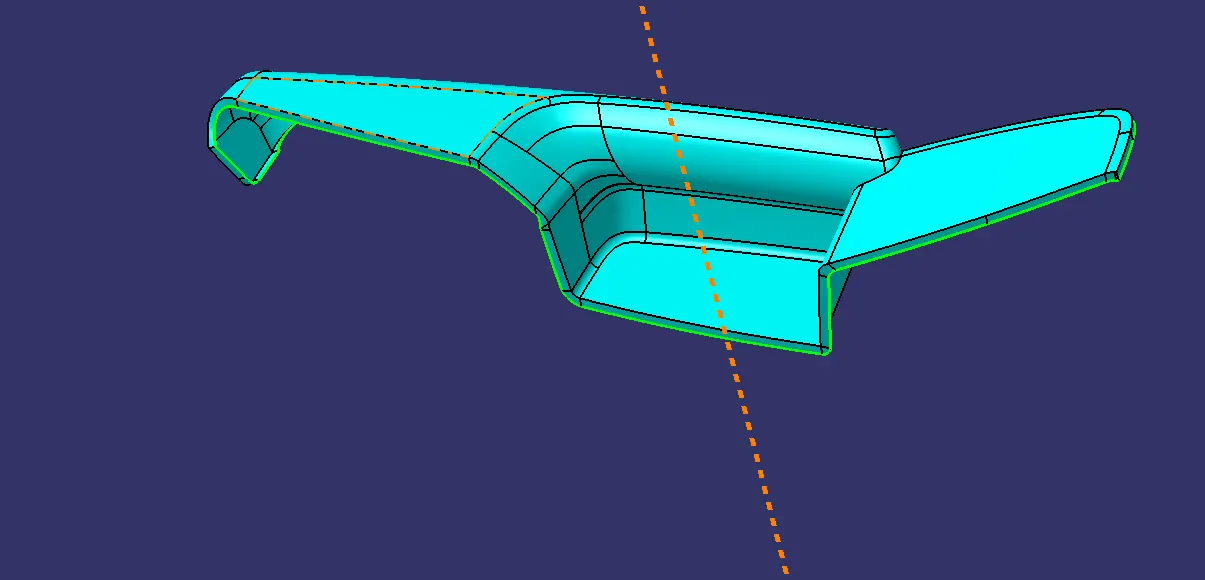
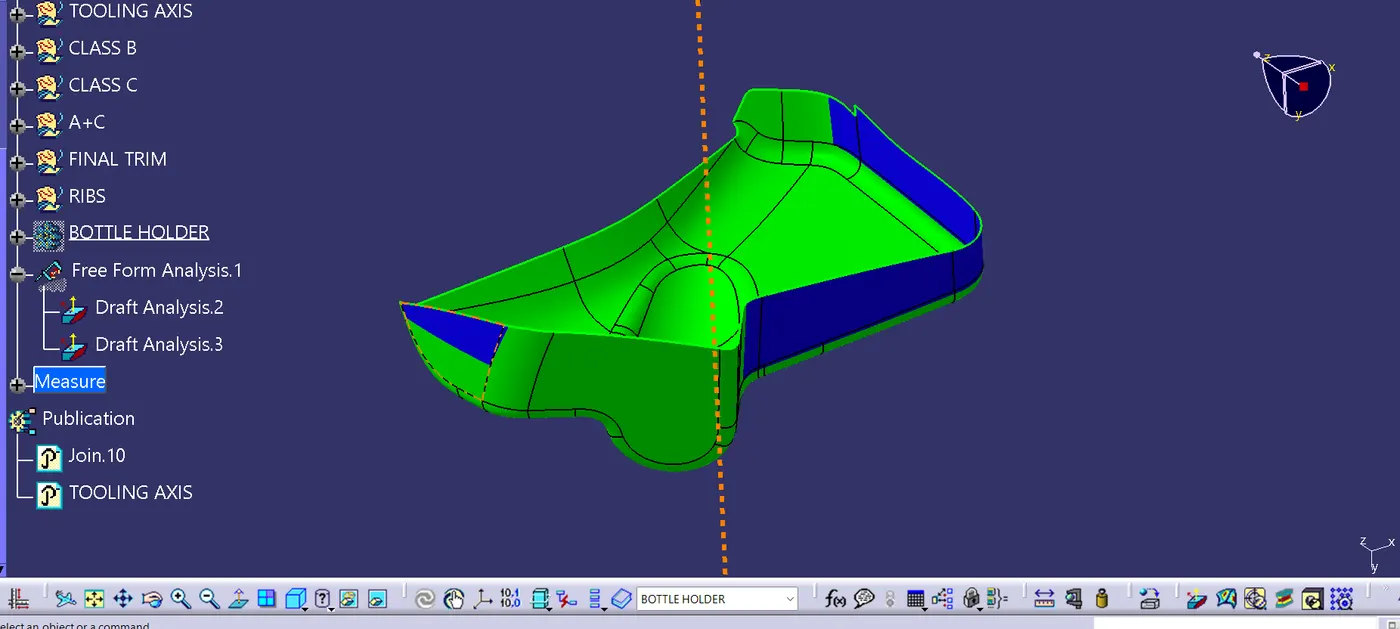
ALL IMAGES OF BOTTLE HOLDER:-
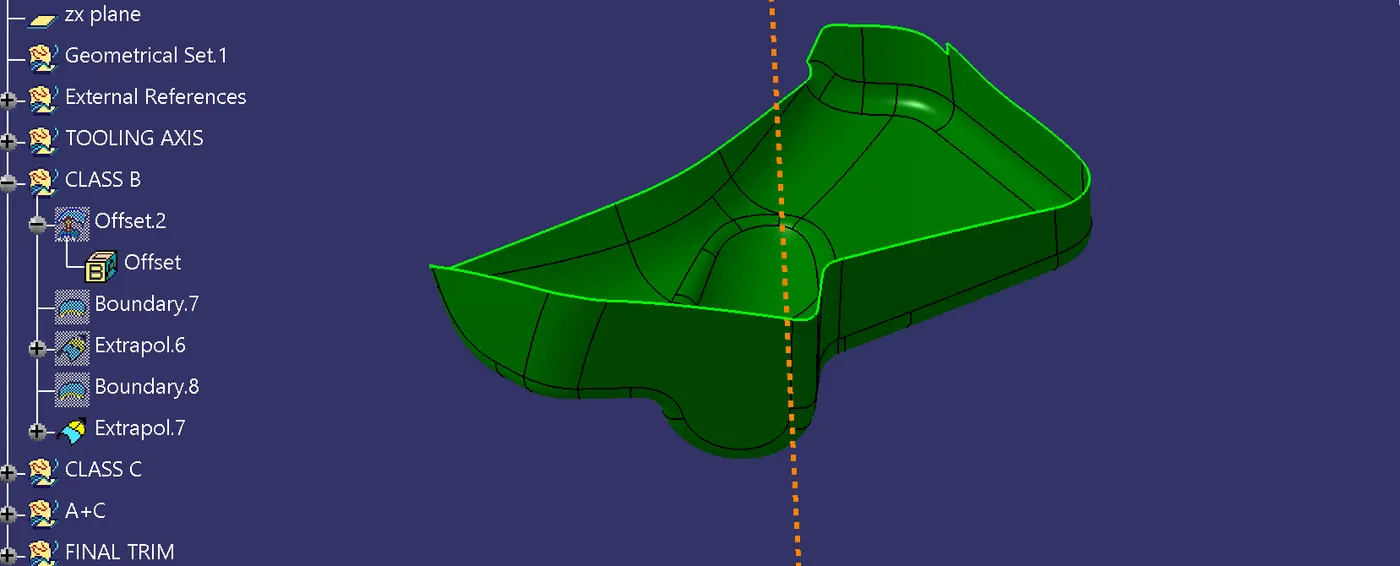

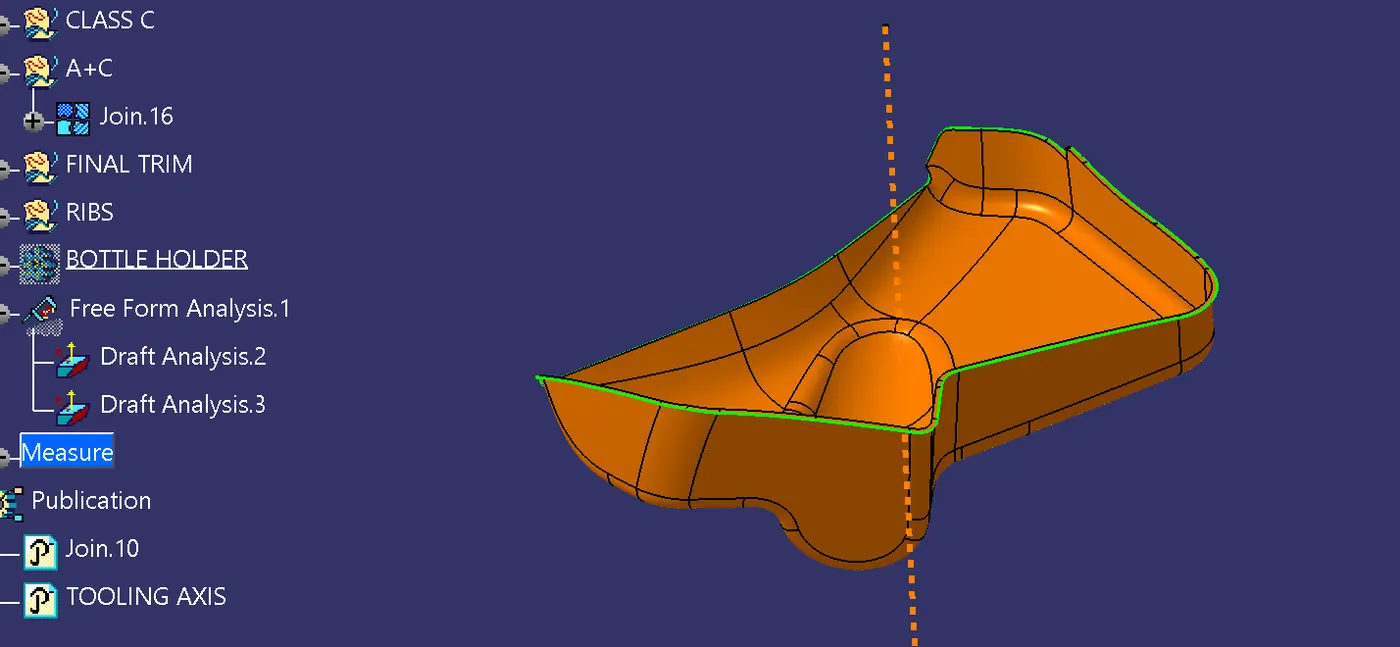
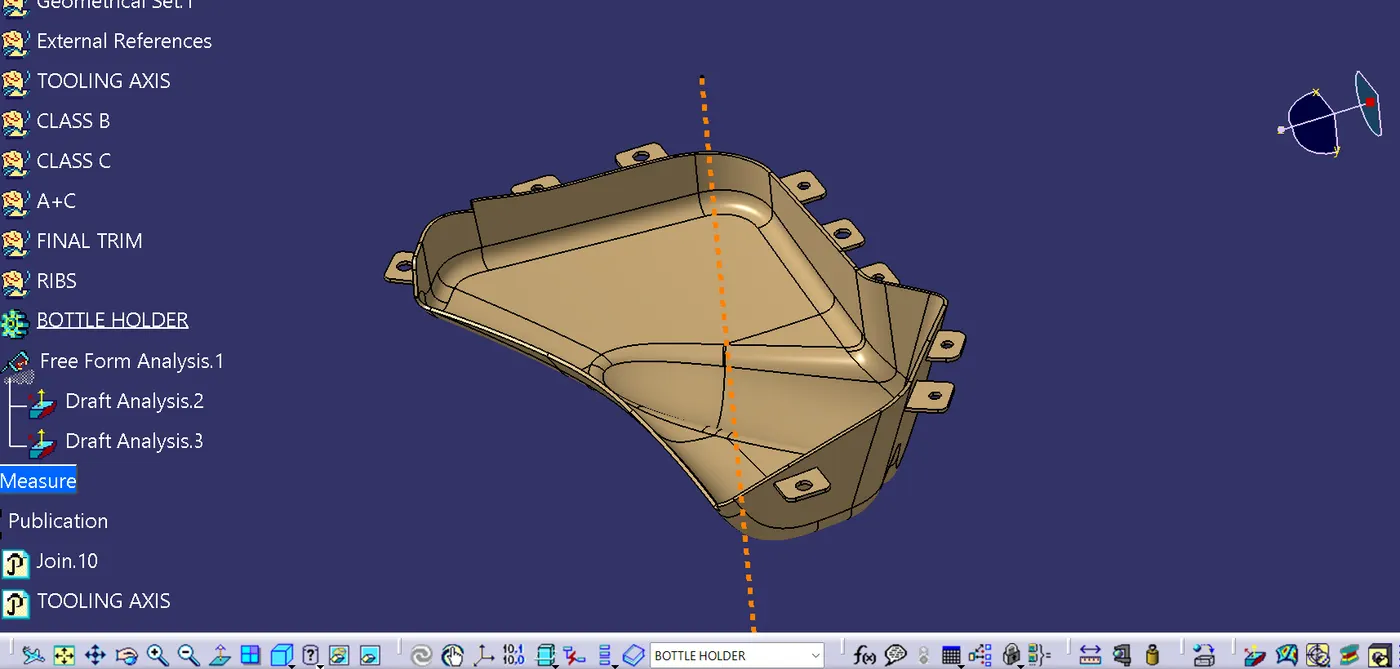
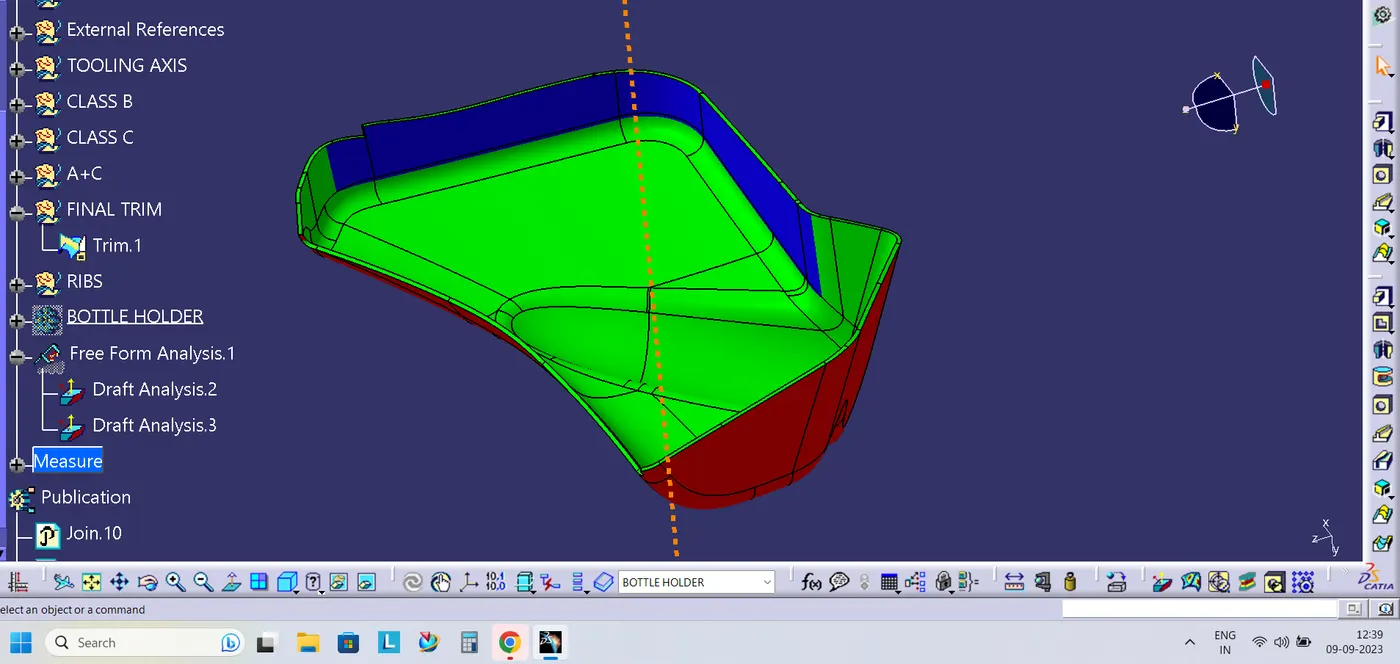
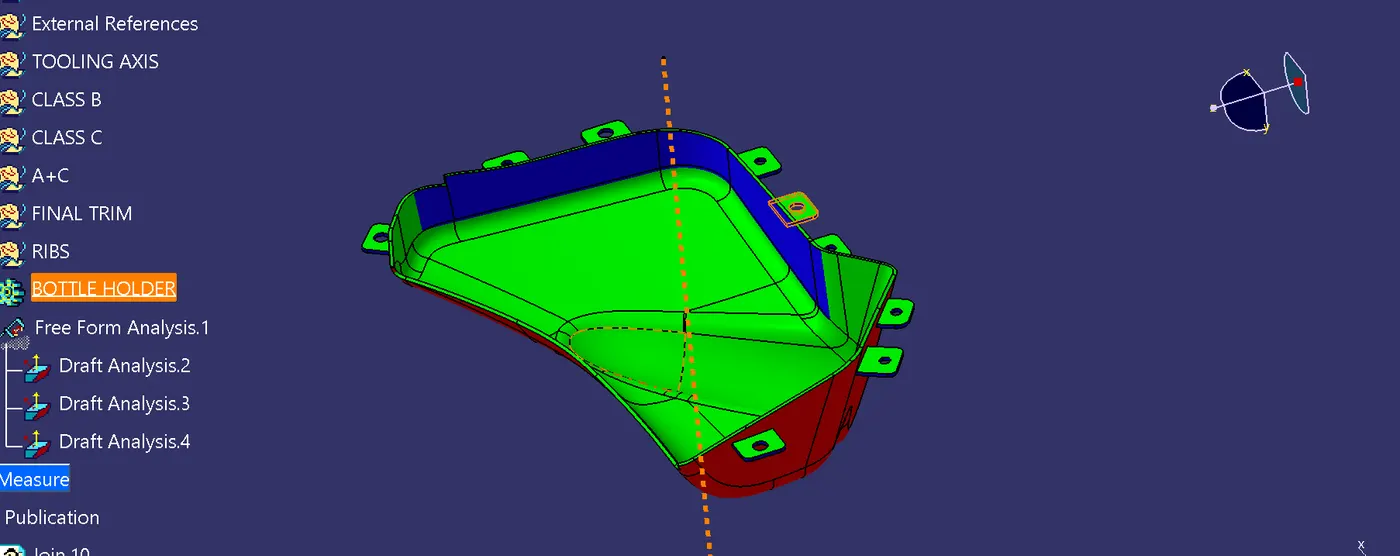
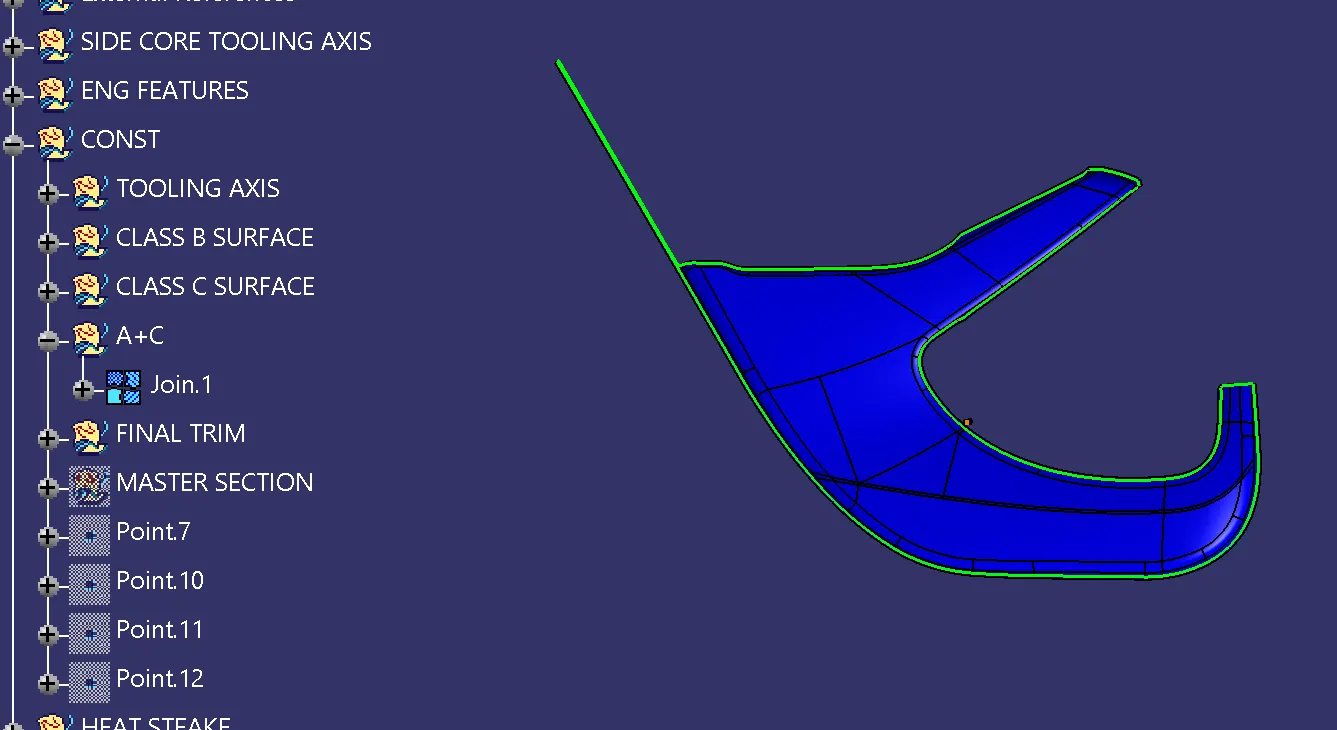
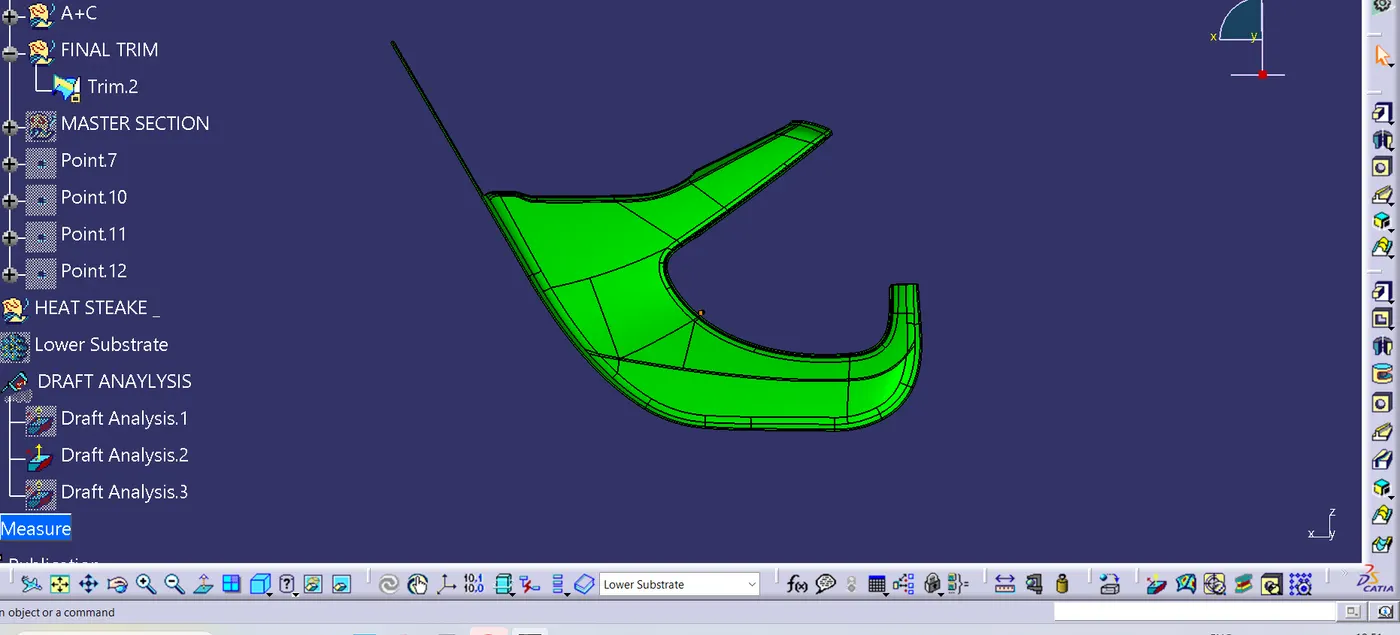
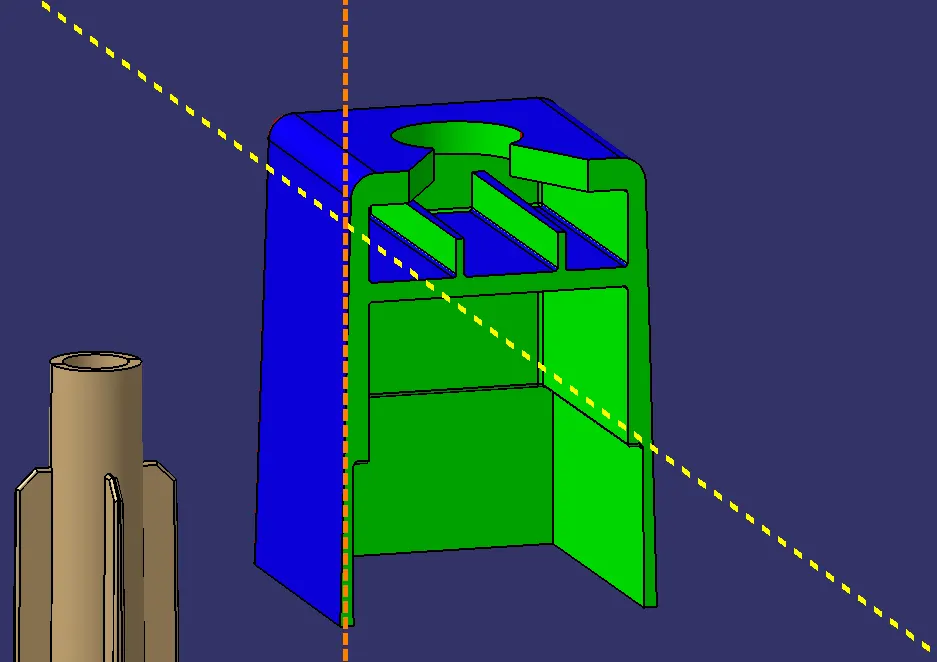
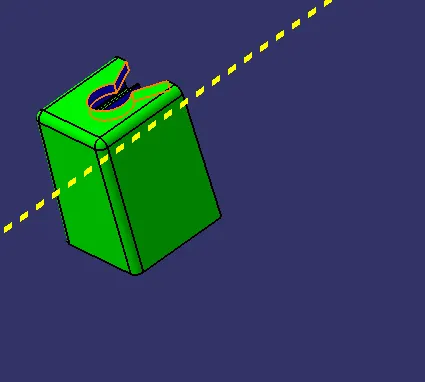
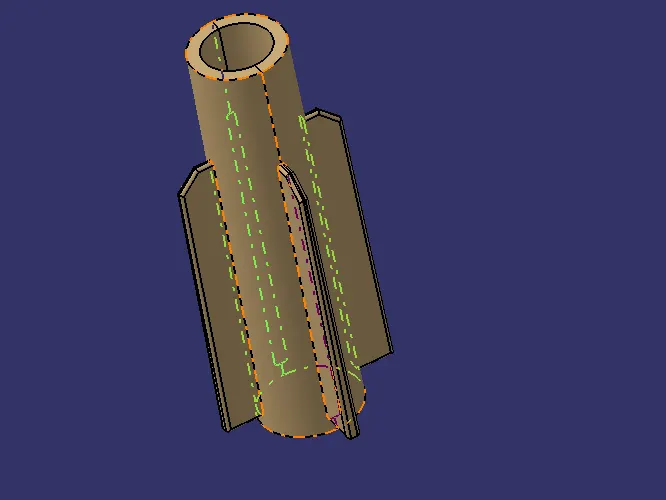
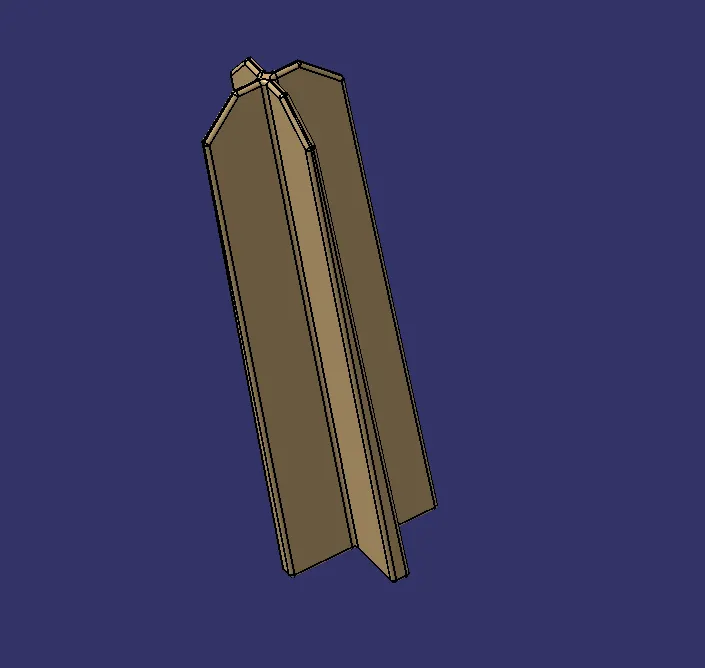
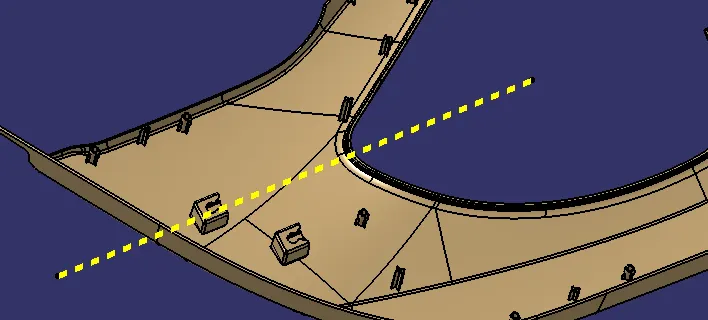
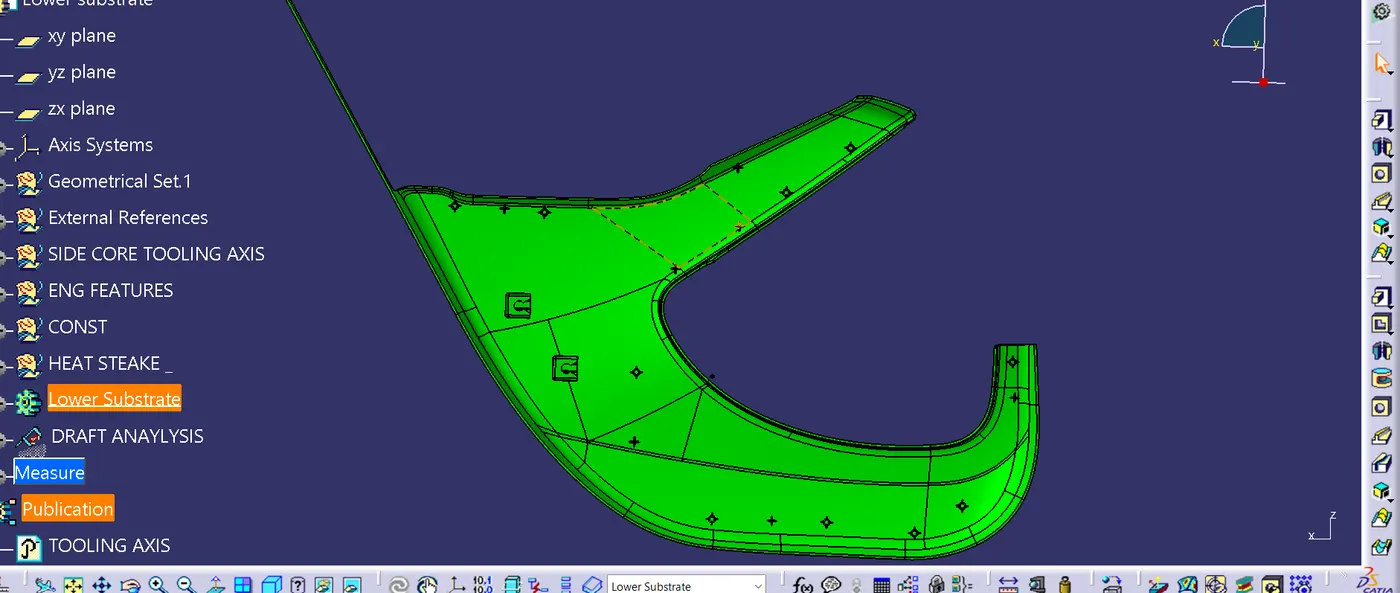
ALL IMAGES OF LOWER SUBSTRATE WITH DOG HOUSE, HEAT STAKES, AND FOUR-WAY LOCATORS,:-
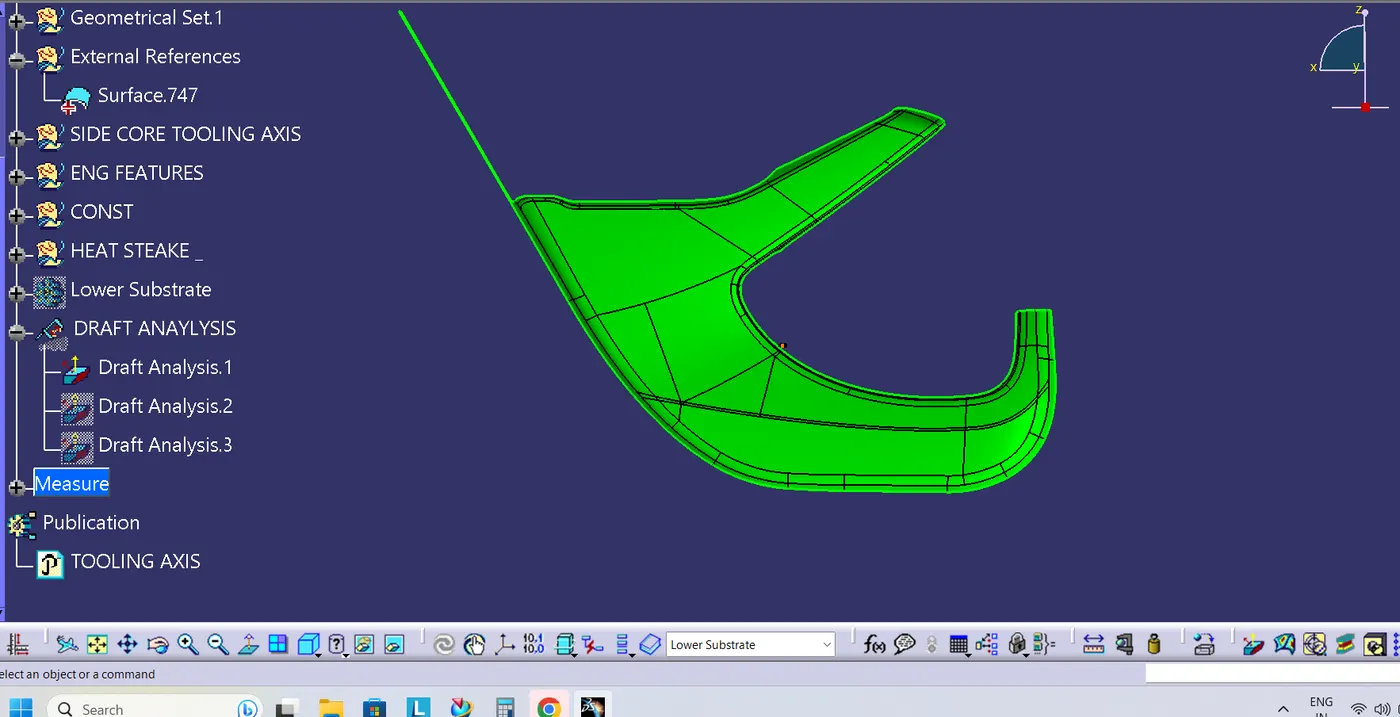
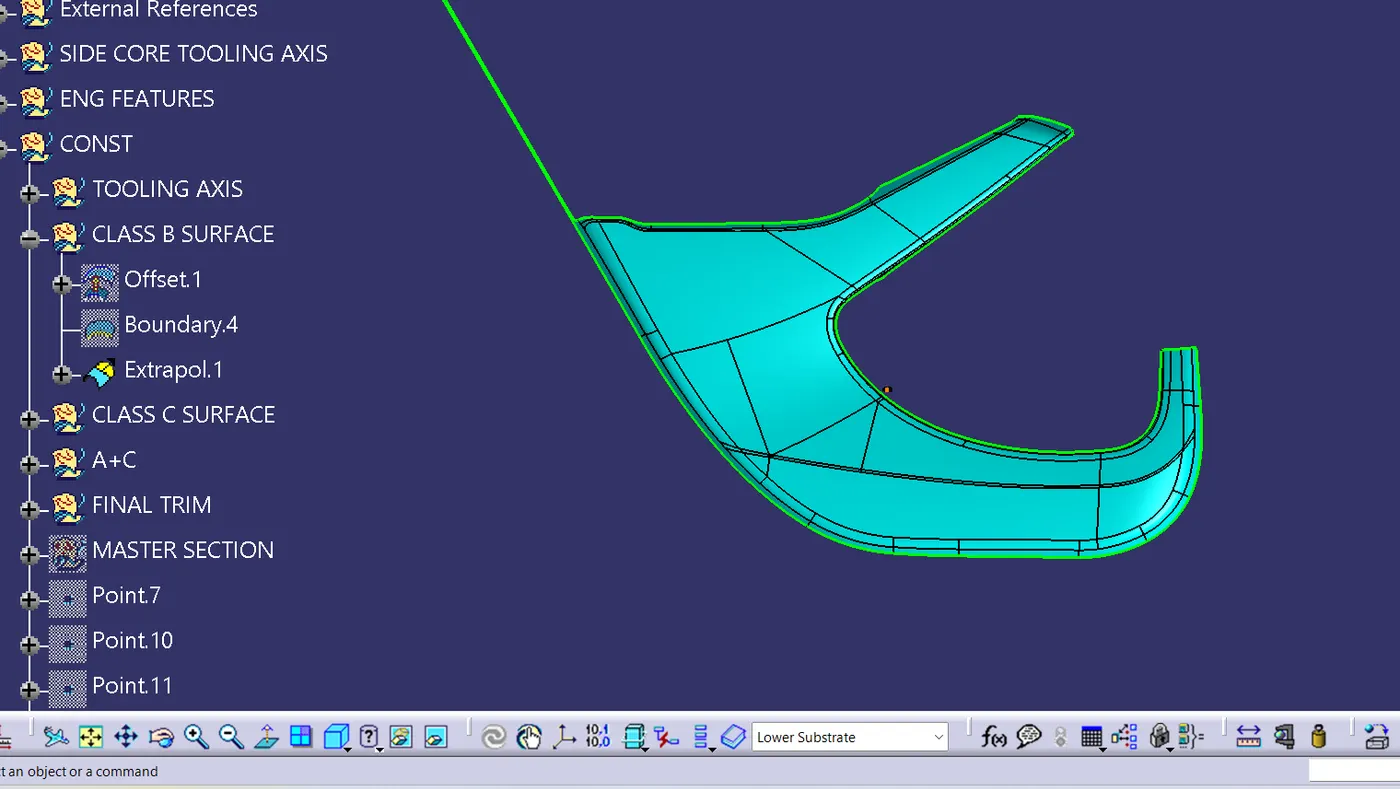
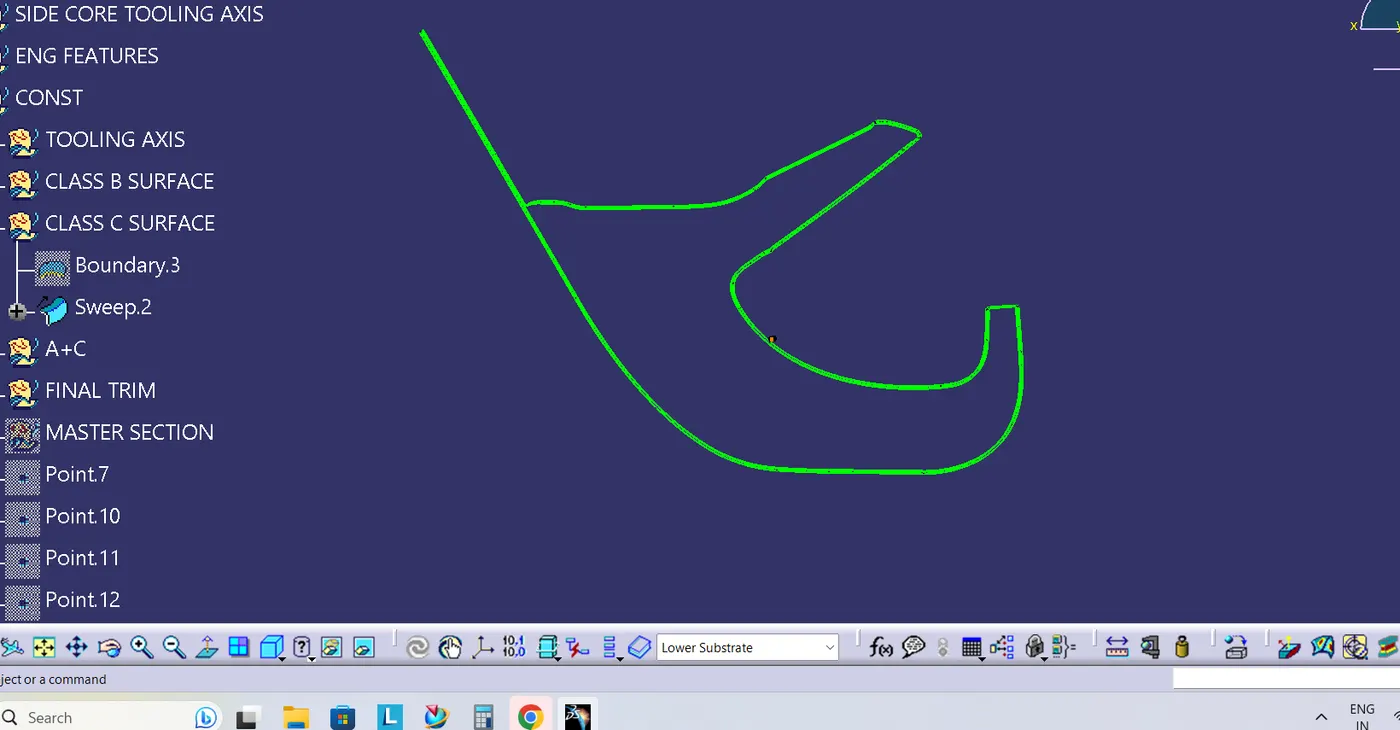
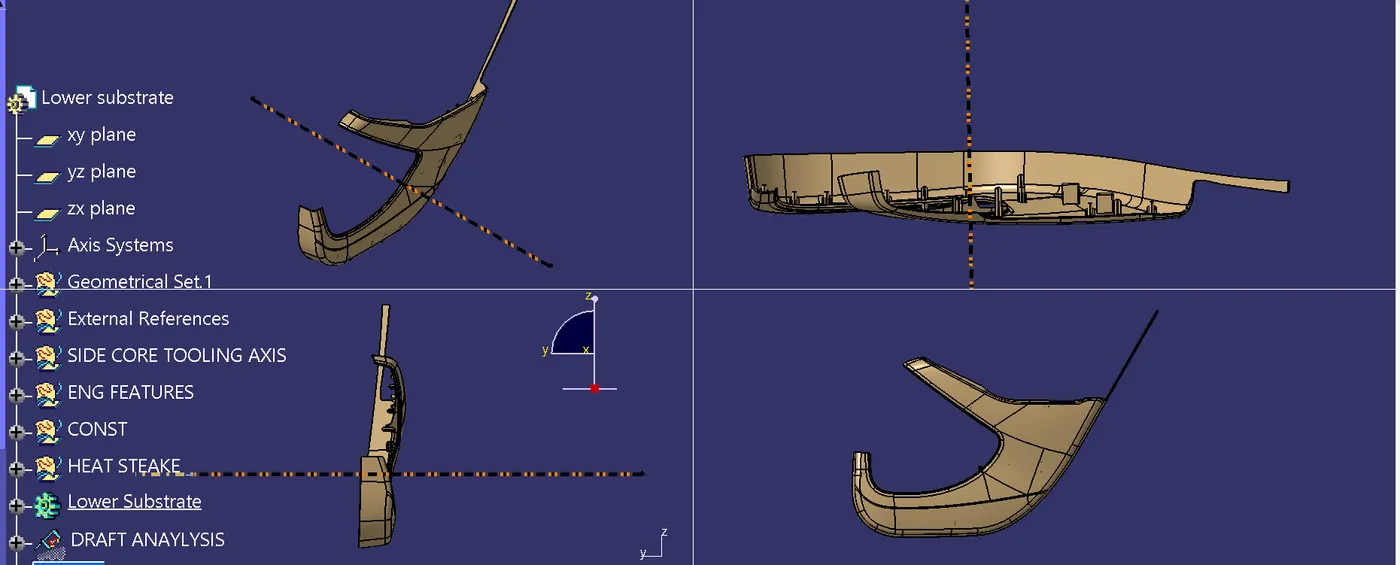
ALL IMAGES OF UPPER SUBSTRATE OR MAP POCKET:-
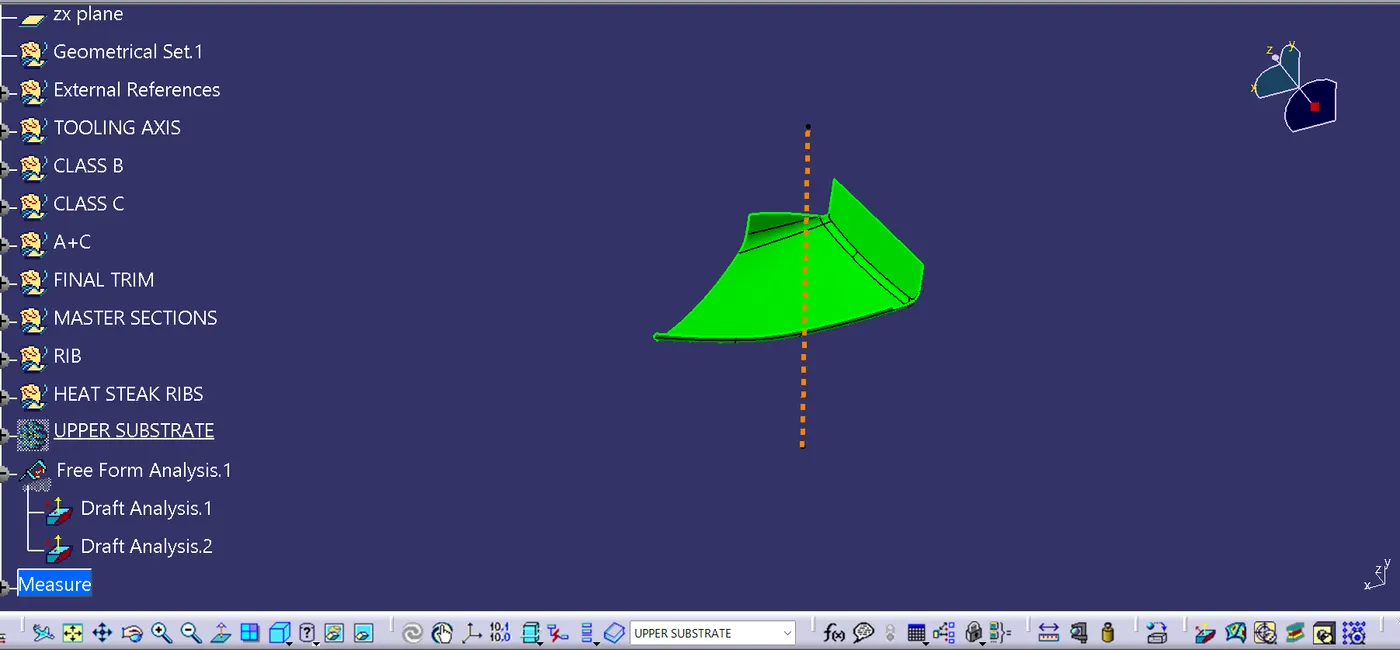
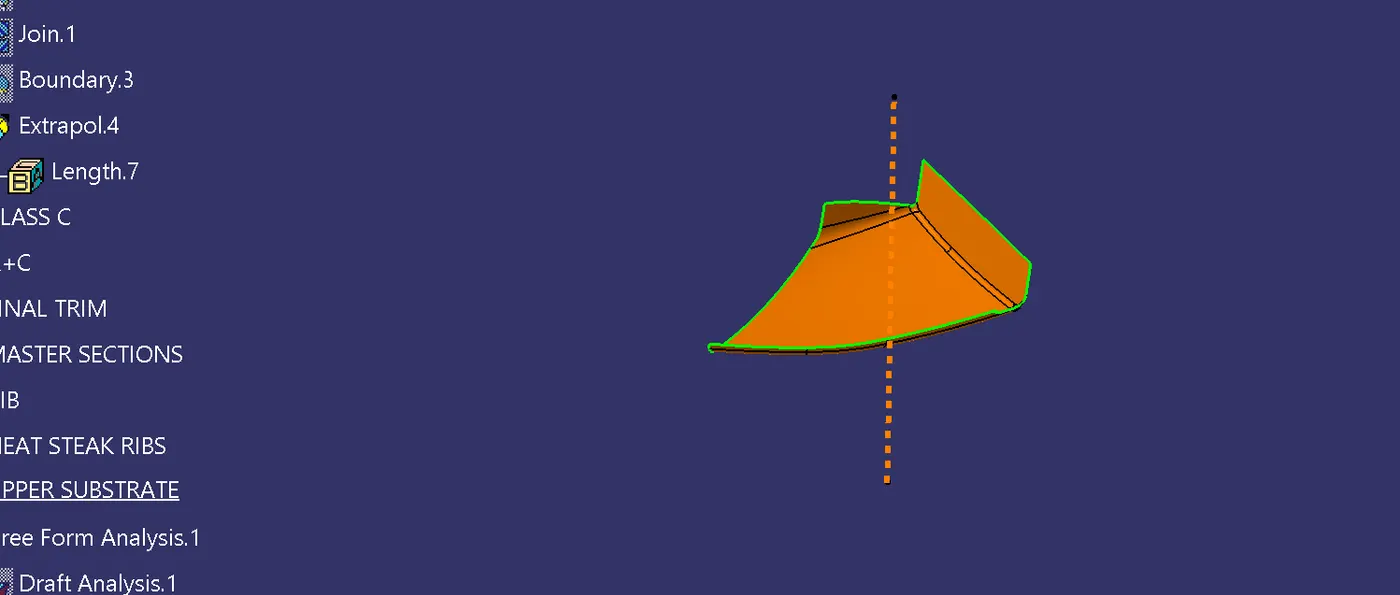
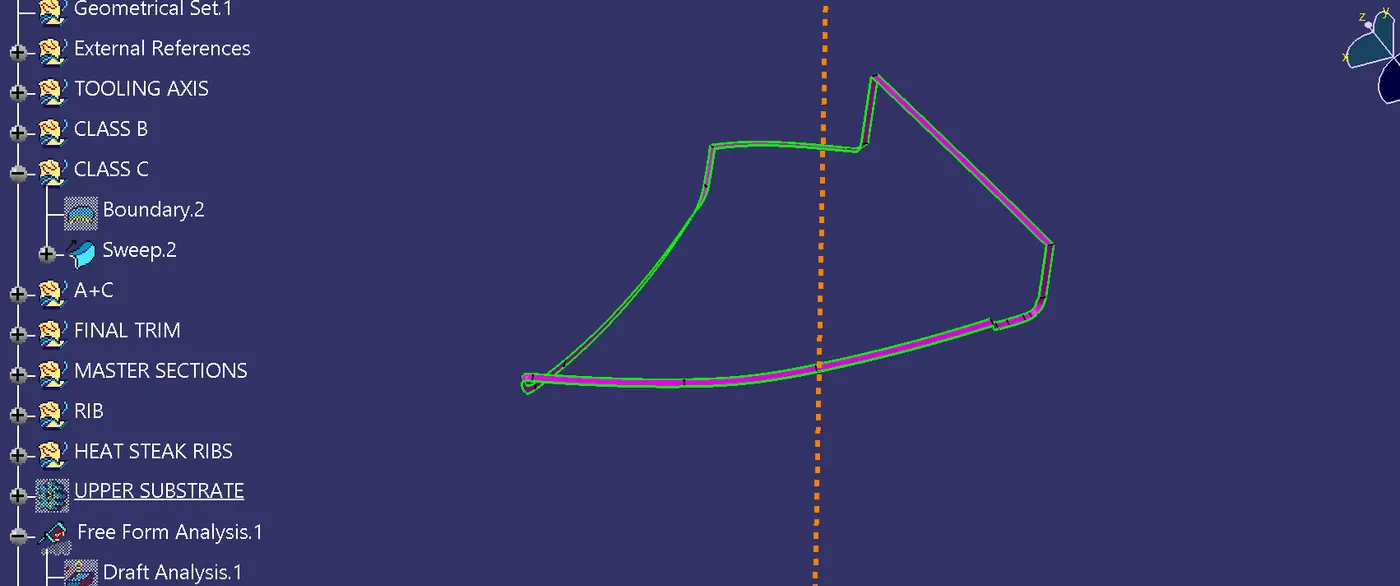
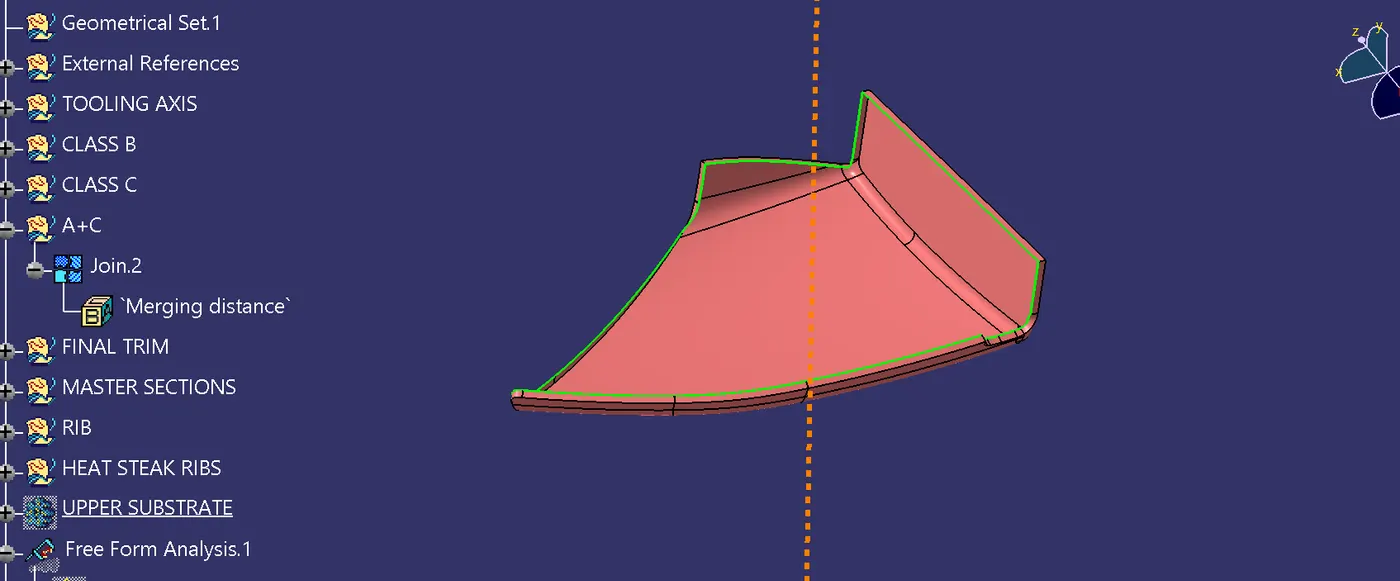

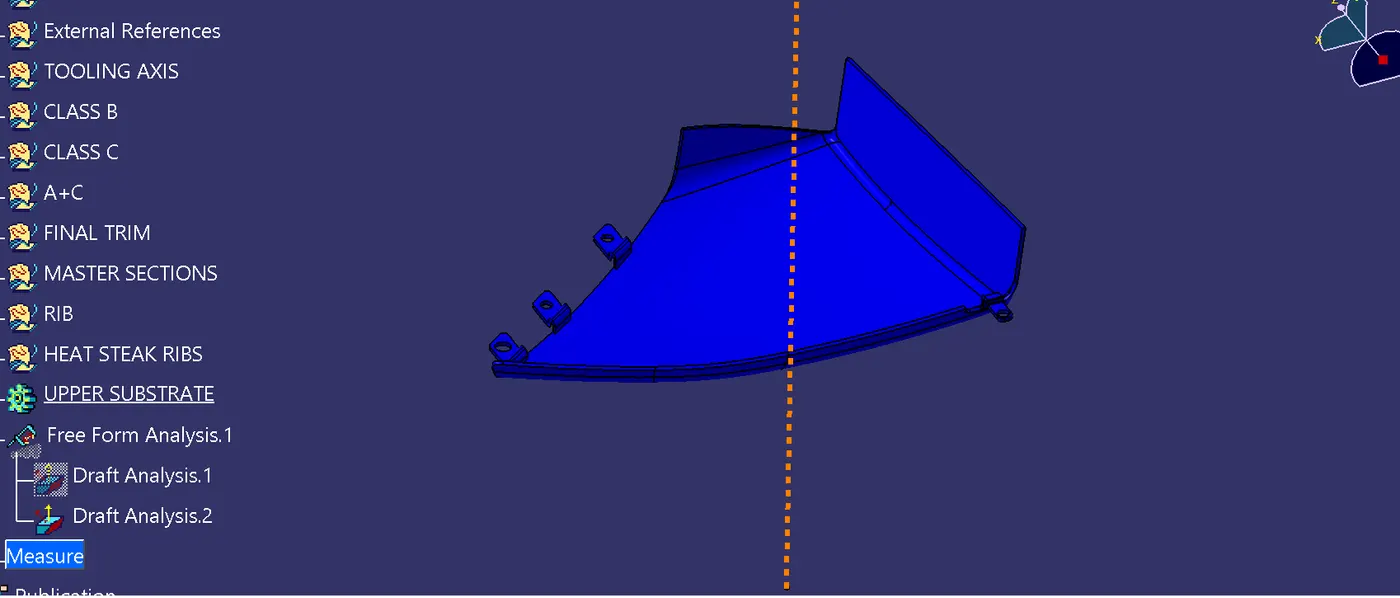
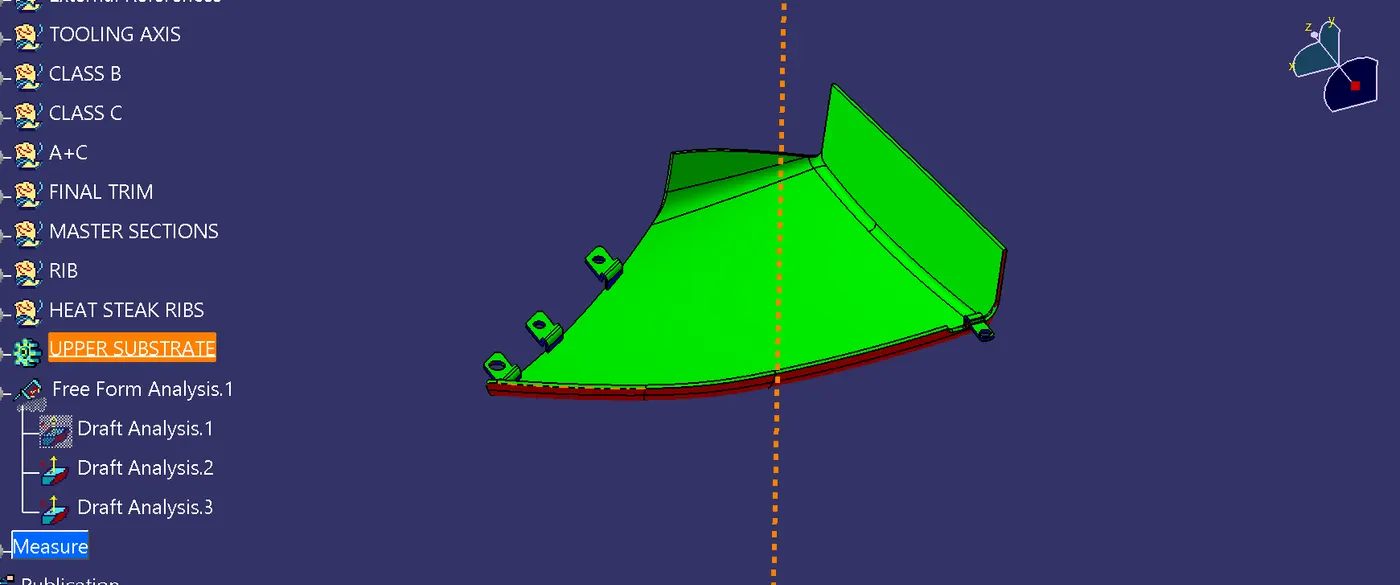
HERE CLASS A DRAFT ANALYSIS AND WITH CLASS C DRAFT ANALYSIS ERROR SHOWING IMAGES:-
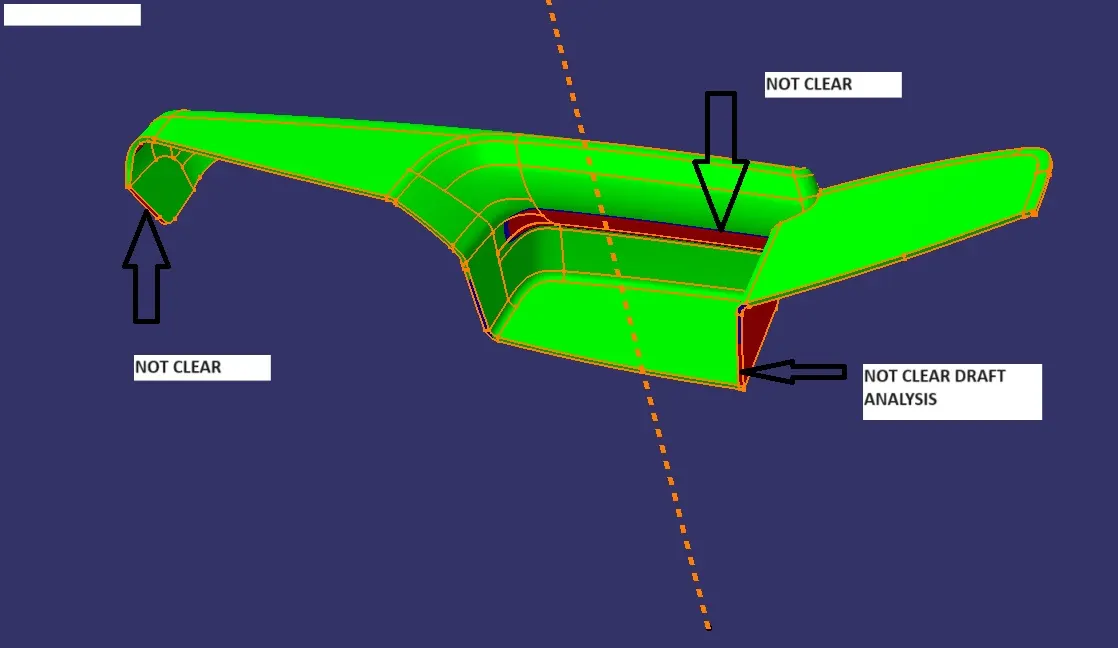
OTHER IMAGES :-
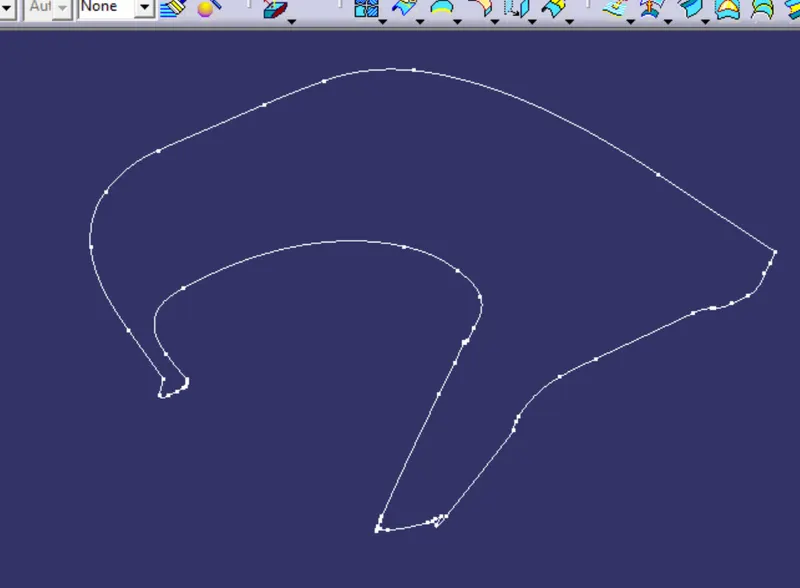


PUSH CLIP IMAGES :-

FINAL MODEL IMAGES:-