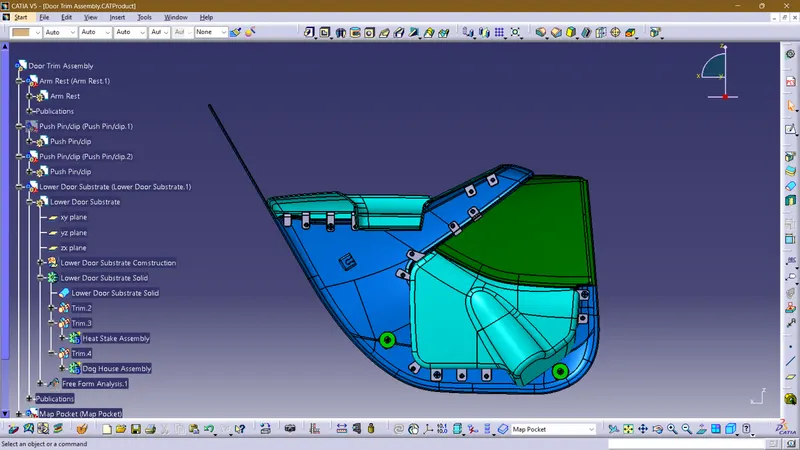
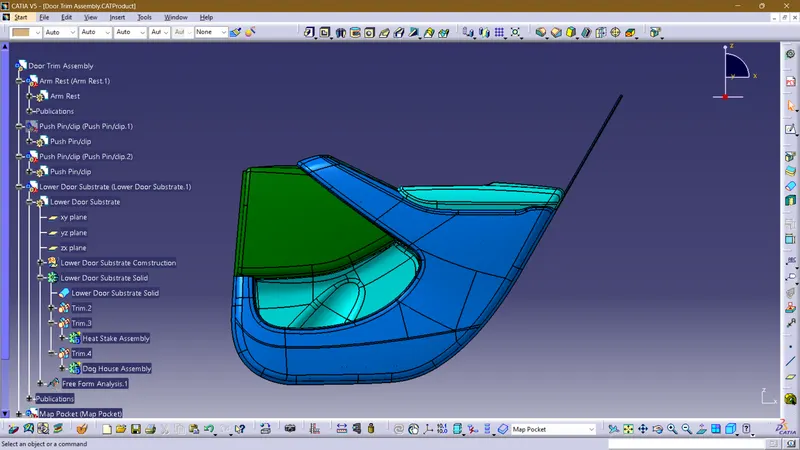
Week 12- Final project
Final Project on Lower Door Trim
Objective-
In the Final project of Automotive Plastic Design using the CATIA V5 Course, we need to create a door trim assembly using Class A and master-section. The thickness of the product will be 2.5mm as per the master section.
Given Data:
In the given data we are provided with some styling surfaces with some irregularities. So, we need to correct the issues and create a proper class A surface. Although in real-time projects the changes in the Class A surface can only be done under the guidance and knowledge of the Styling team. So, we need to create a proper presentation about the necessary changes required in the Surface and share it with the Styling team.
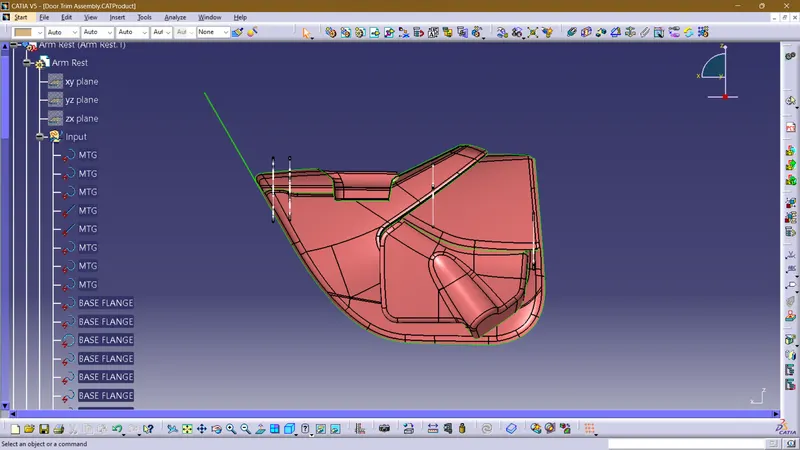
Master section:
Master sections are the guides for design requirements that decide the component packaging after technical (Styling, Concept, or Class-A) surfaces.
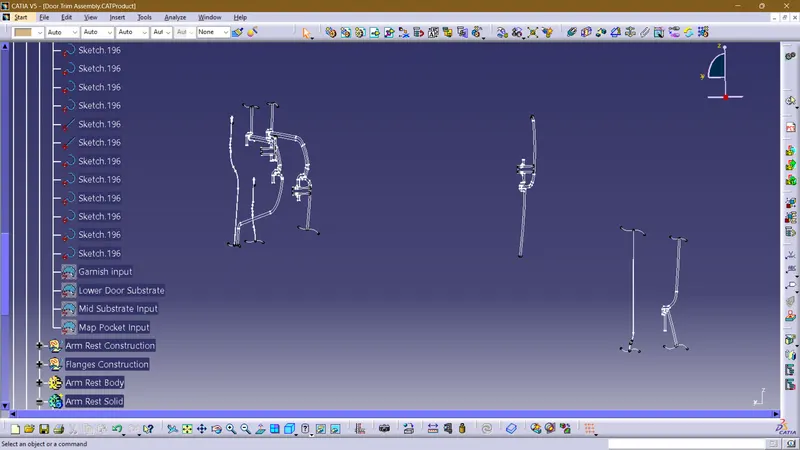
Class A Surface:
Class A surface is the Aesthic surface provided by the Styling team to the Design to work on that to create further Surfaces. Class A is the face of the model. So, the design engineer is not authorized to make any changes to the surface.
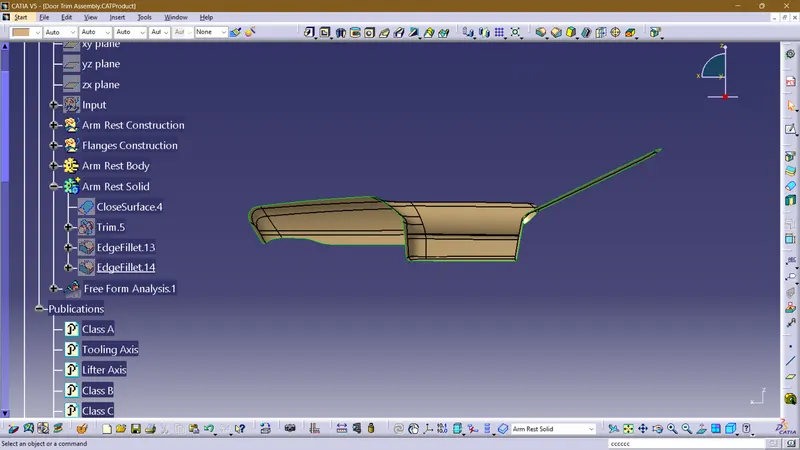
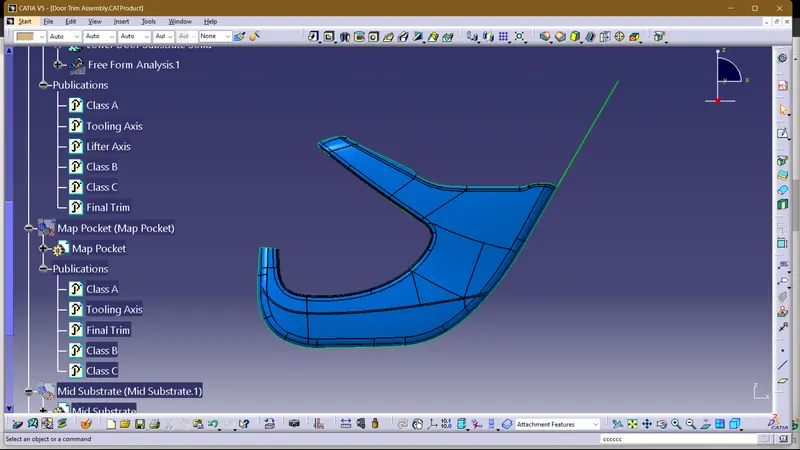
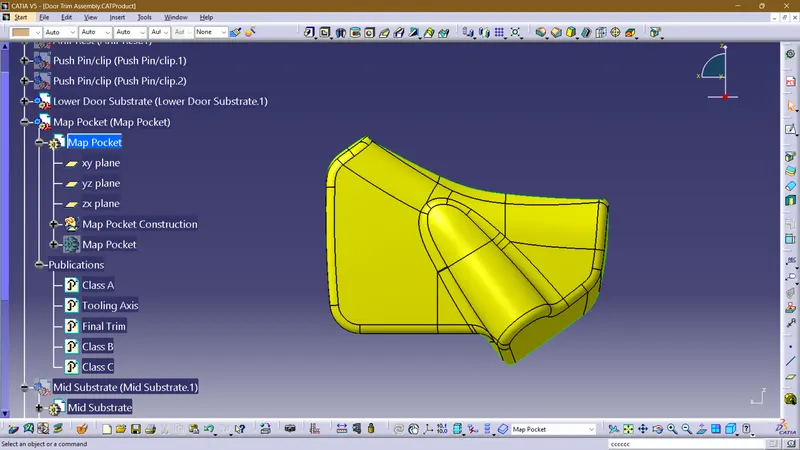
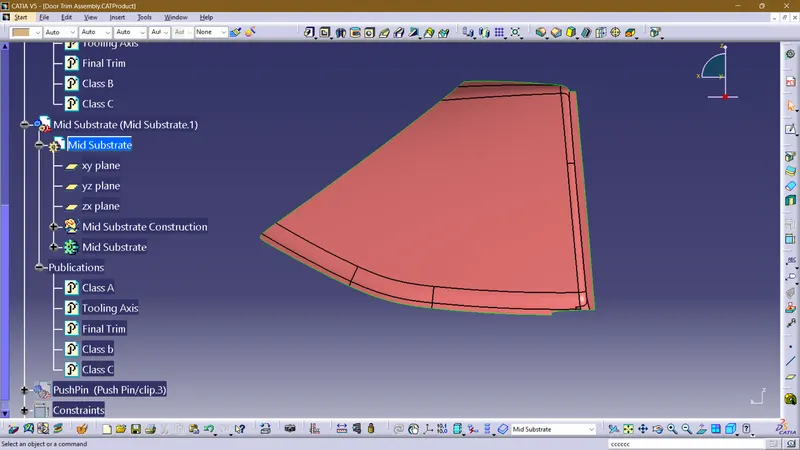
Tooling Axis Creation:
The tooling axis tells us about the angle at which the core and cavity open. Also, it the very important when it comes to draft Analysis of the model.
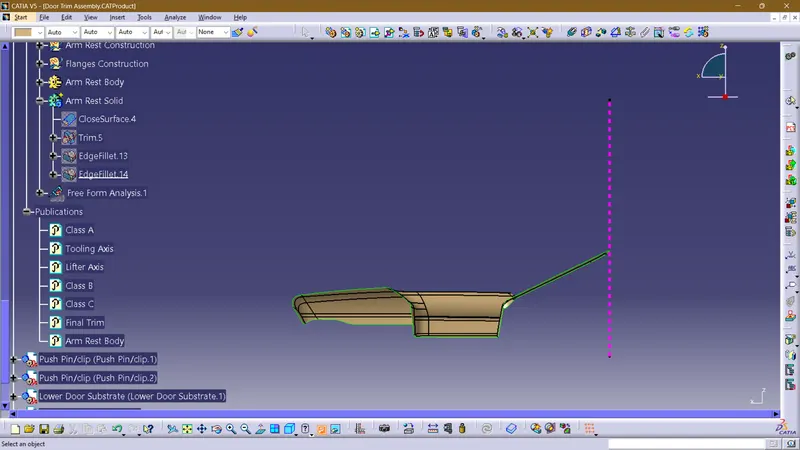
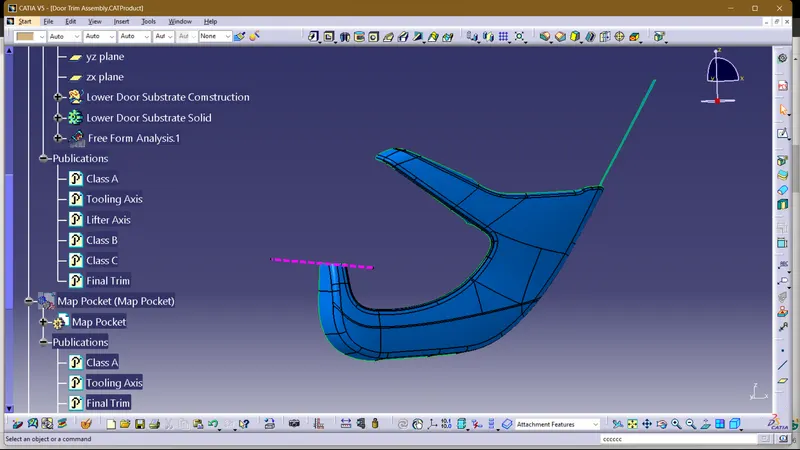
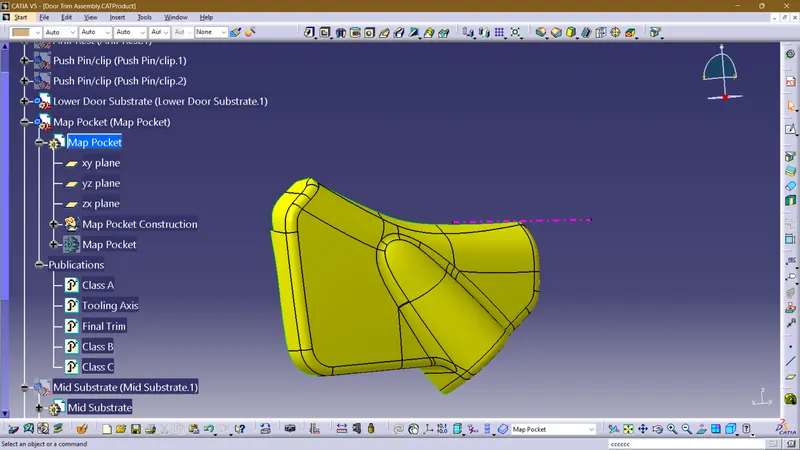
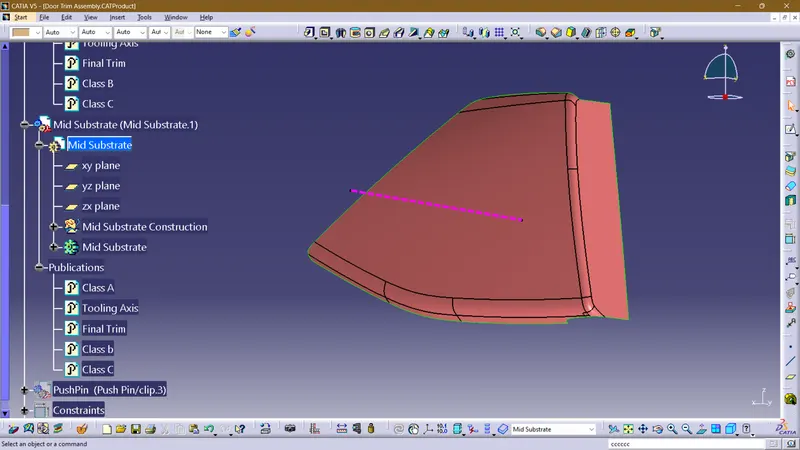
Class B:
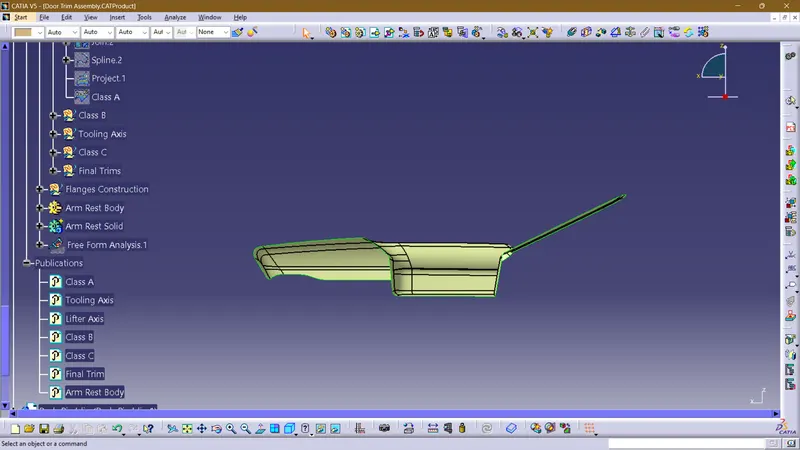
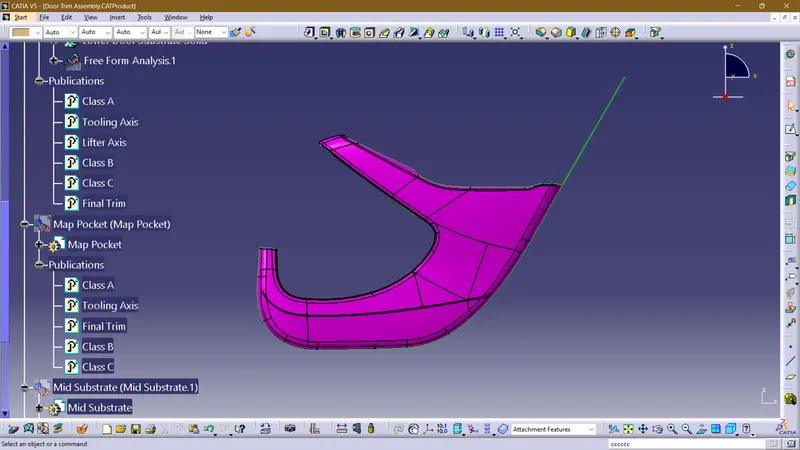
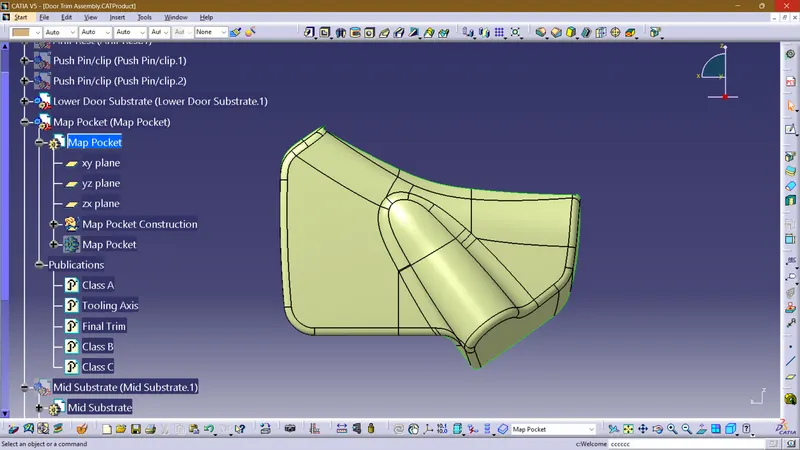
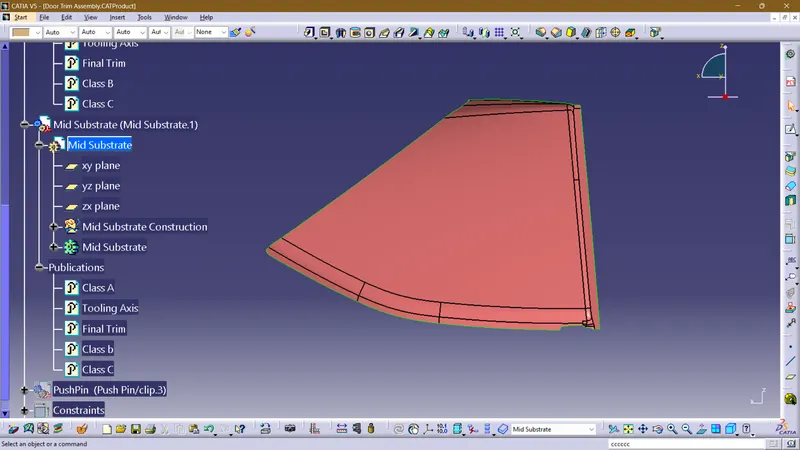
Class B is the surface where all the necessary engineering features will be mounted and a pattern is created as this surface is not visible to the customer this surface also represents the thickness of the Model.
Class C:
Class C surface is used as the joining surface between Class A and Class B. The Class C finish allows more imperfections than Class A or B. Class C is often specified for interior surfaces not readily visible, surfaces that will be covered by another part when assembled, or surfaces that the Customer feels do not need to meet a high cosmetic finish.
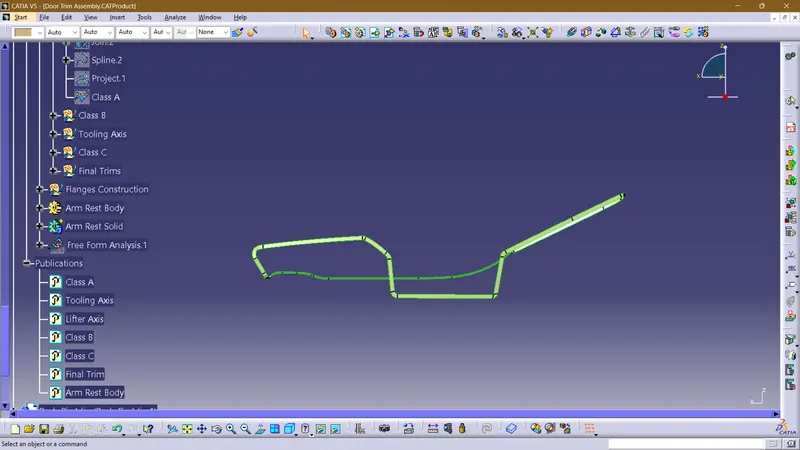
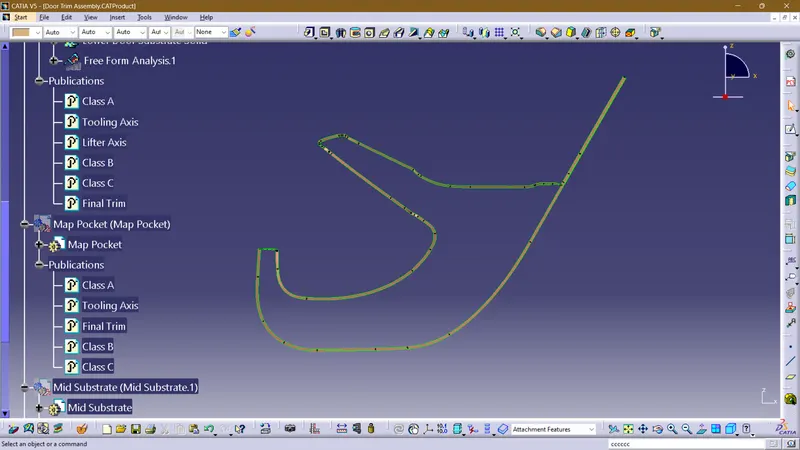
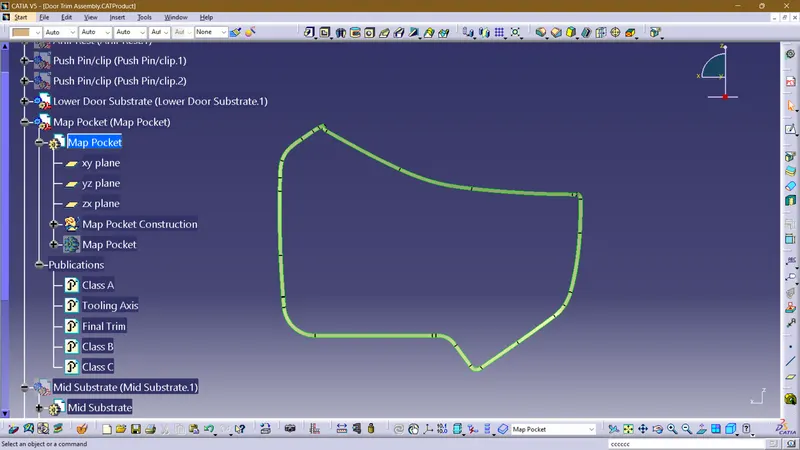
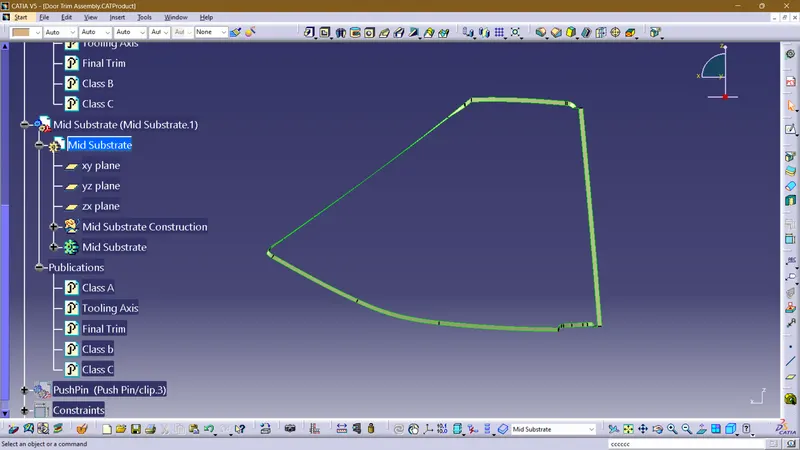
Solid Part:
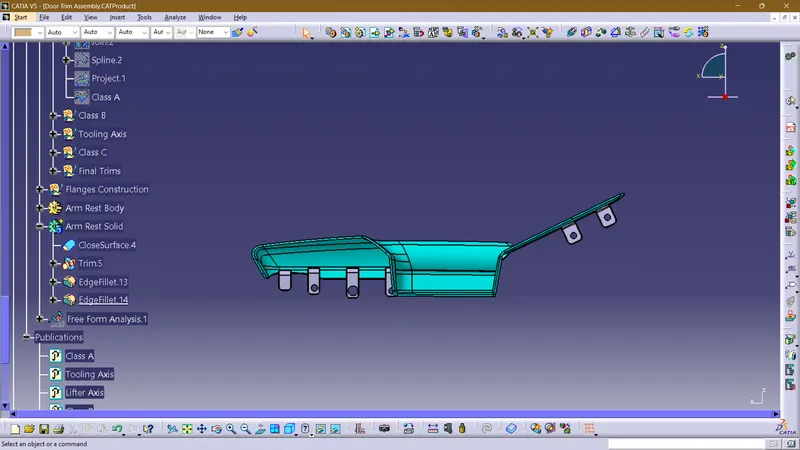
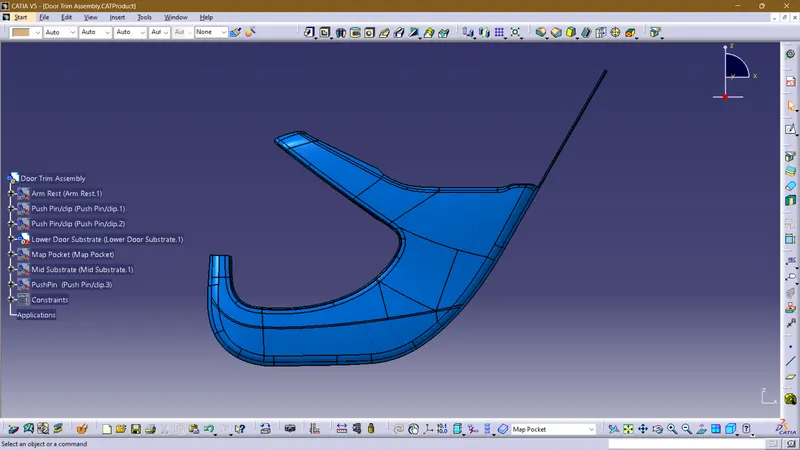
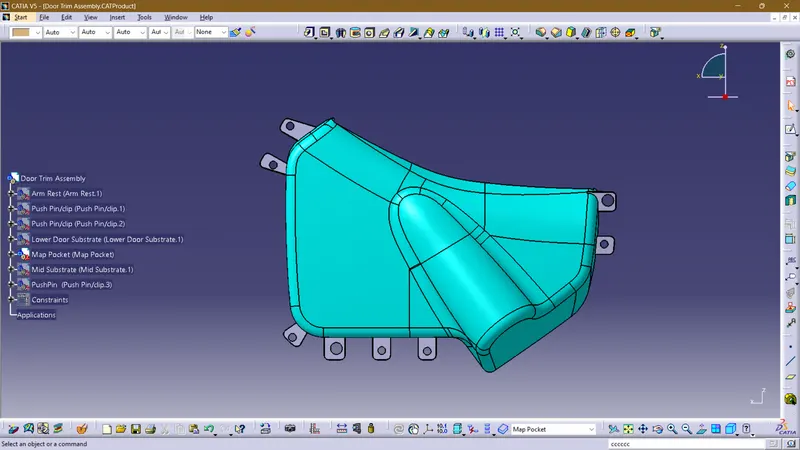
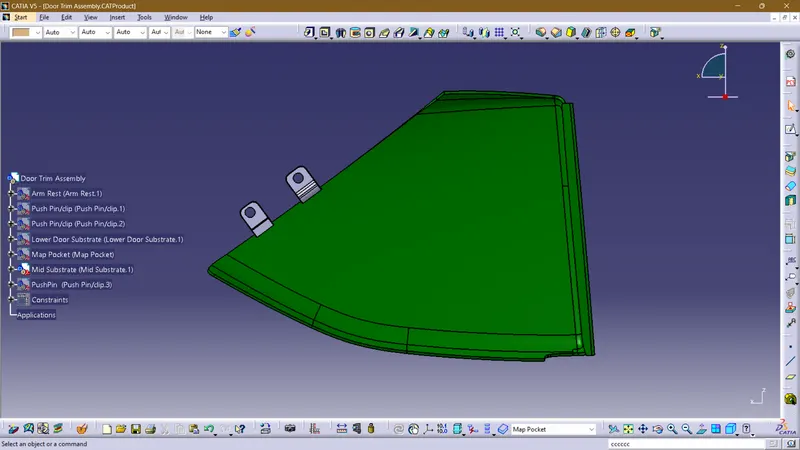
Draft Analysis:
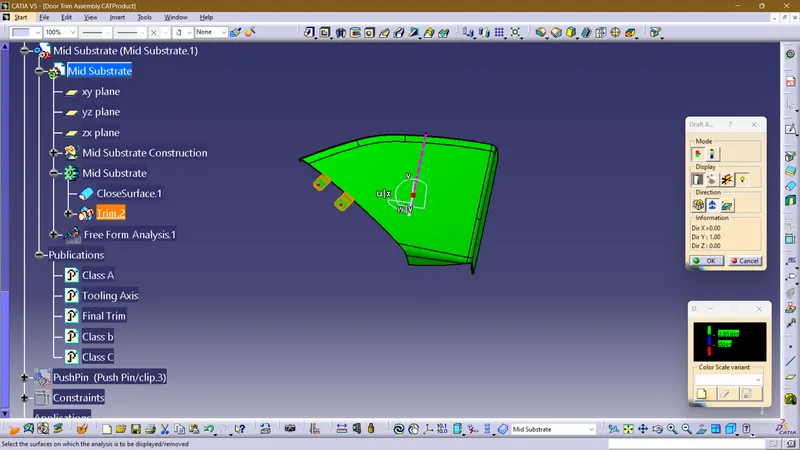
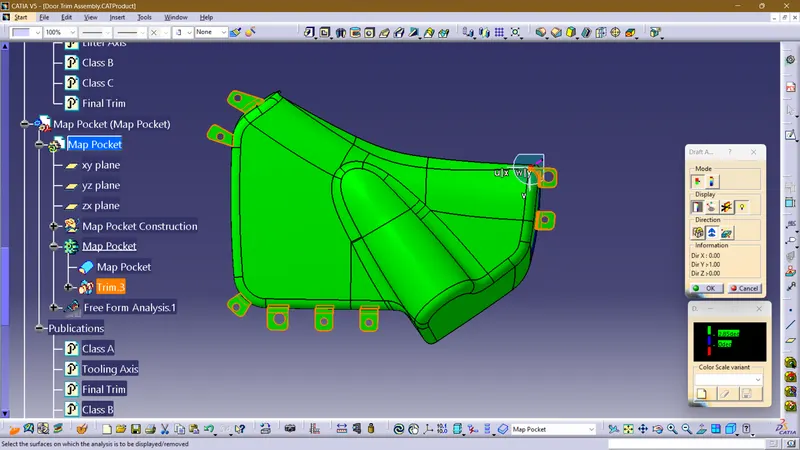
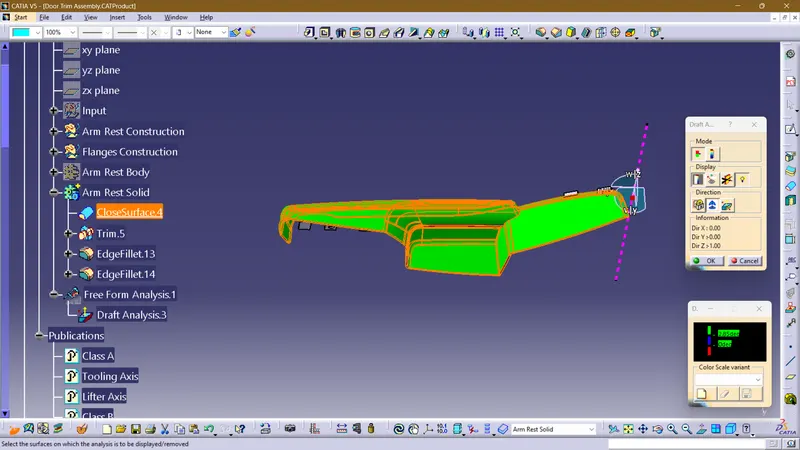
The draft analysis technique is used to analyze whether our part model created in CAD is manufacturable based on the draft condition applied. Here the part should get easily removed from the panel dies (in case of Sheet metal part) or Mold (in case of plastic).
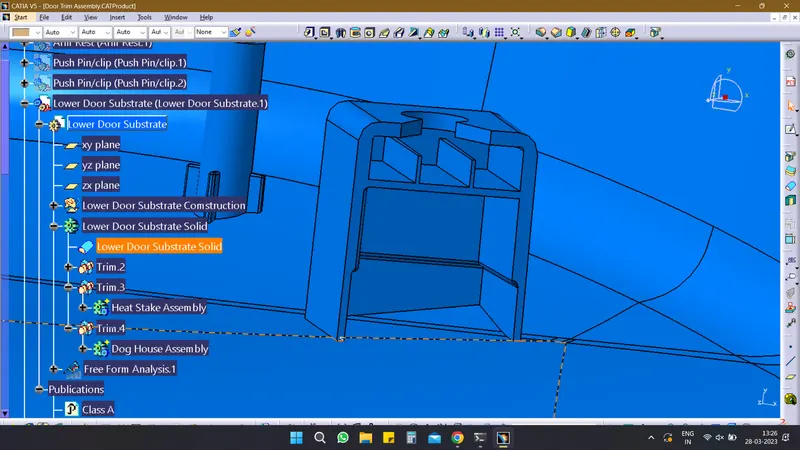
Dog House:
The dog house is an engineering feature used in the plastic trim design. Dog houses are used as supporting features. Sometimes other engineering features like snaps; locators etc. are mounded on them to increase their strength. Dog houses are subjected to draft analysis to prevent breakage of the component during ejection from the mold cavity. Dog house and other engineering components are built on B-surface.
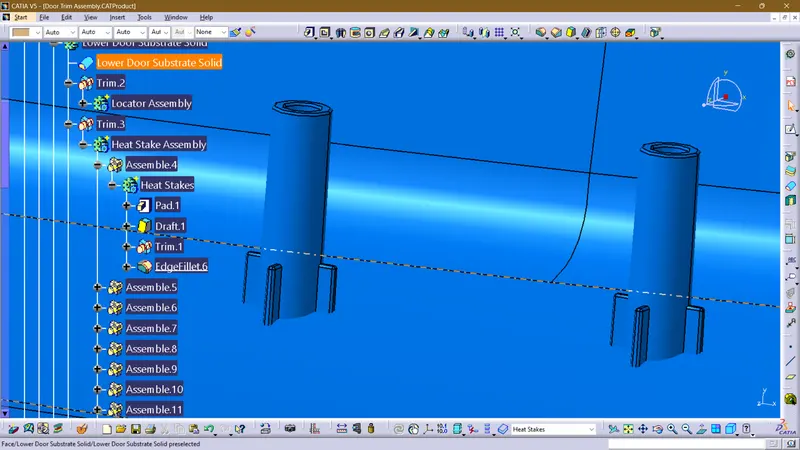
Heat Stakes:
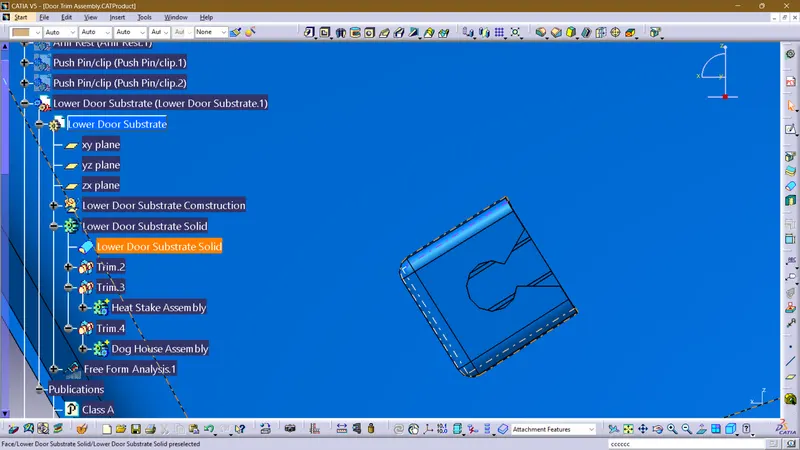
Heat staking also known as thermoplastic staking is the process of joining two dissimilar materials together. In heat staking, we use local heating and cooling to raise the temperature of plastic components and allow plastic reforming to be carried out.
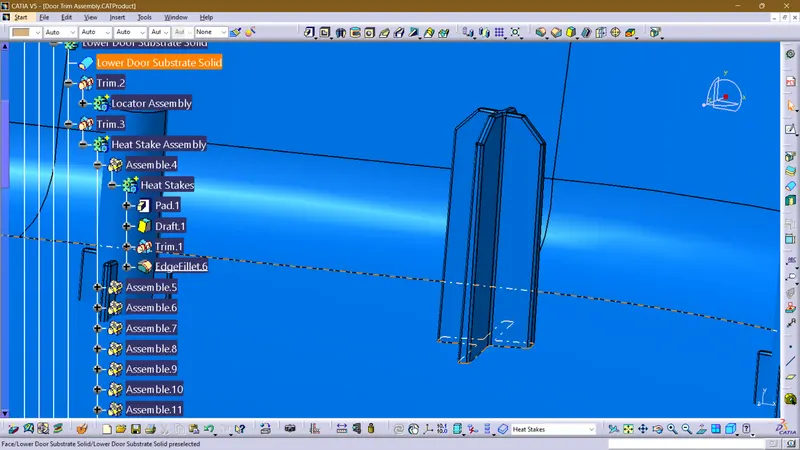
Locators:
The Locators pins are used in the Plastic Design to restrict the motion between the parts. There are two types of Locators i.e. 2-way Locators & 4-way locators.
A 2-way locating pin restricts motion along 1 axis (or 2 degrees of Freedom), like a round pin in a slot. Likewise, a 4-way pin restricts 4 degrees of freedom along 2 axes. A round locating pin located concentrically in a hole is a common application of a 4-way pin and helps to further secure the piece.
Flanges:
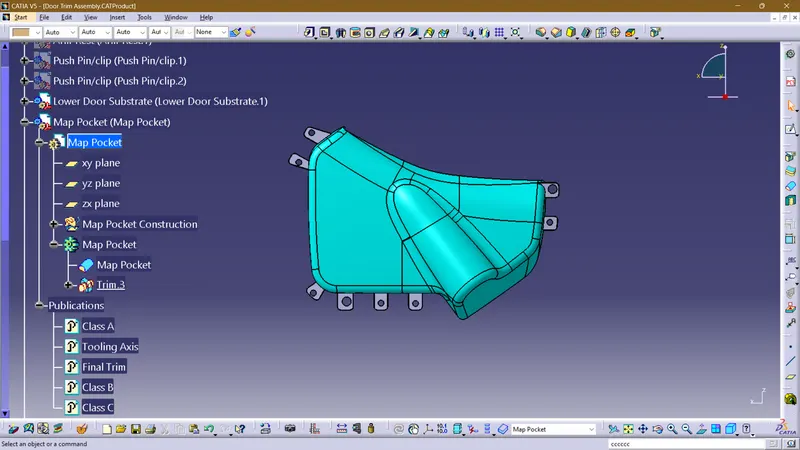
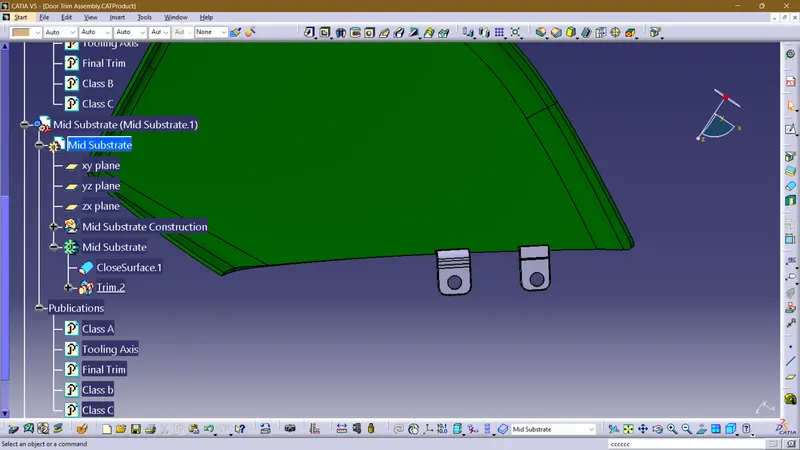
Push Pins-
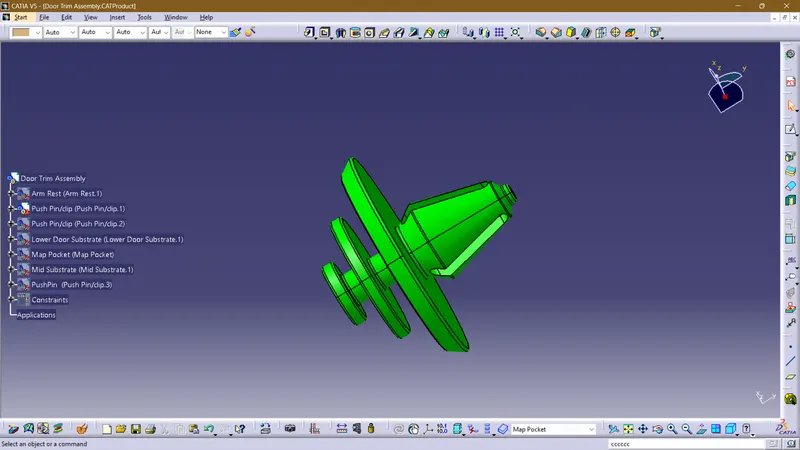
Final Assembly-