Week 12- Final project
Final project
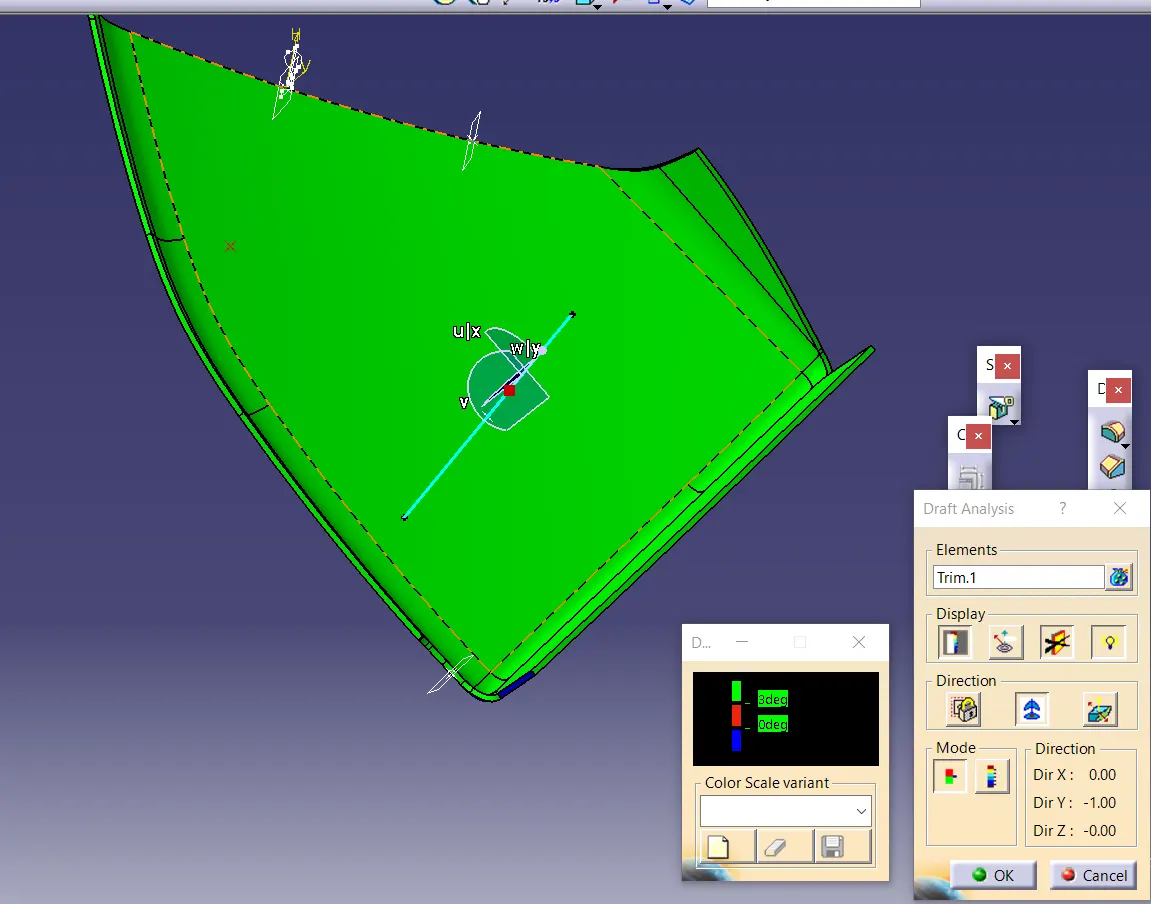
1.Lower Substrate
A suraface draft analysis
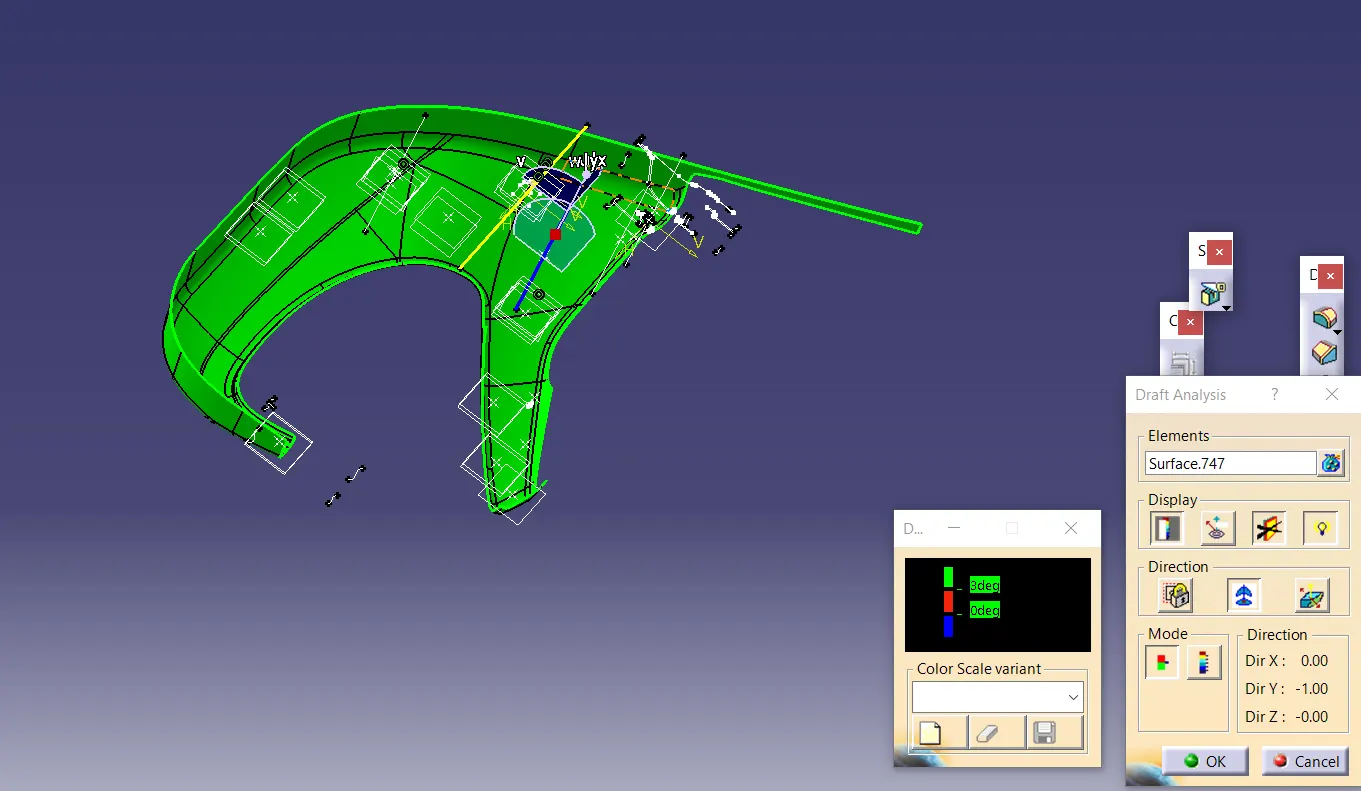
final part draft analysis
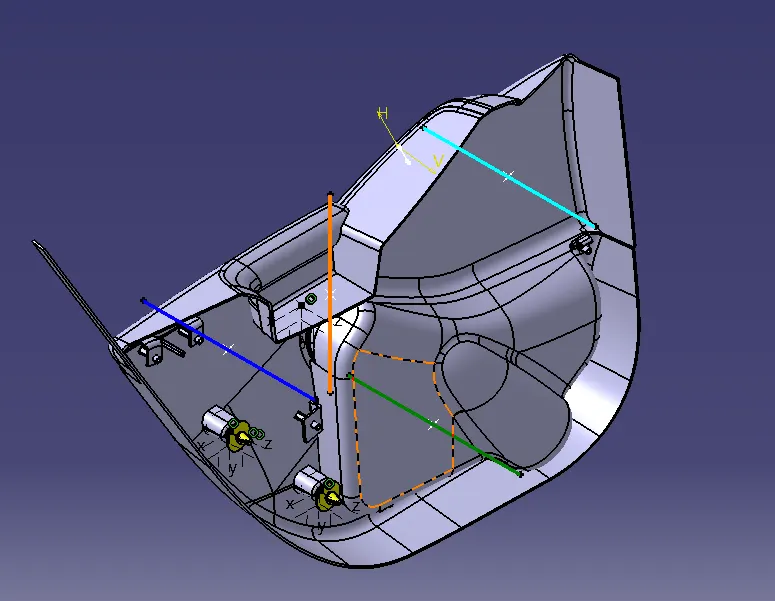
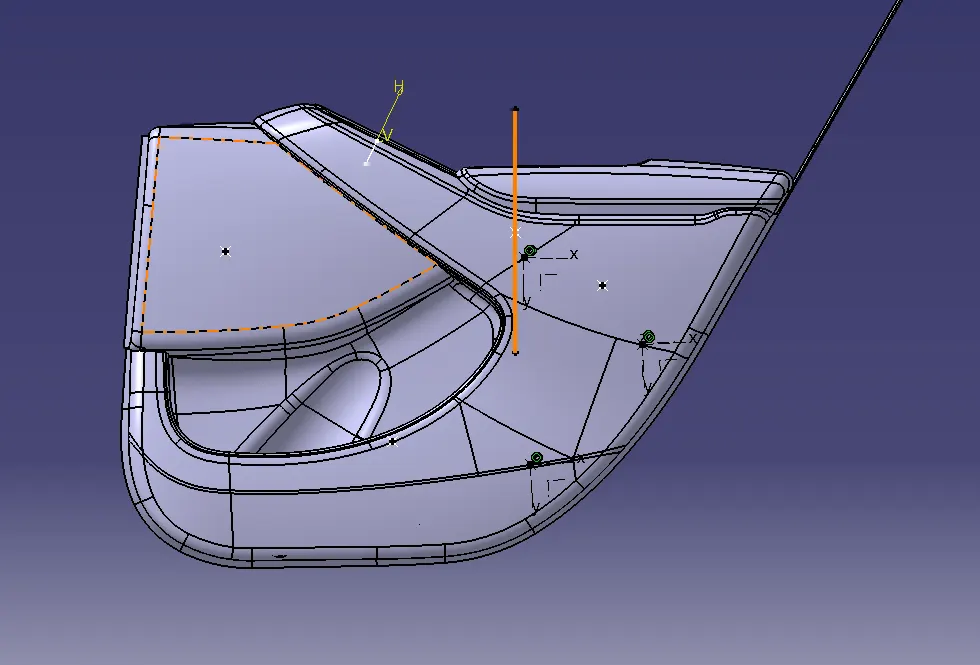
- Creation of tooling axis for the given part
- Based of design for manufacturing the tooling axis is created by using differnet method
- By offsetting the part for the required thickness then the surface with some opening are corrected and a and b surface are joined
2.Door arm rest
Draft analysis(main tooling axis)
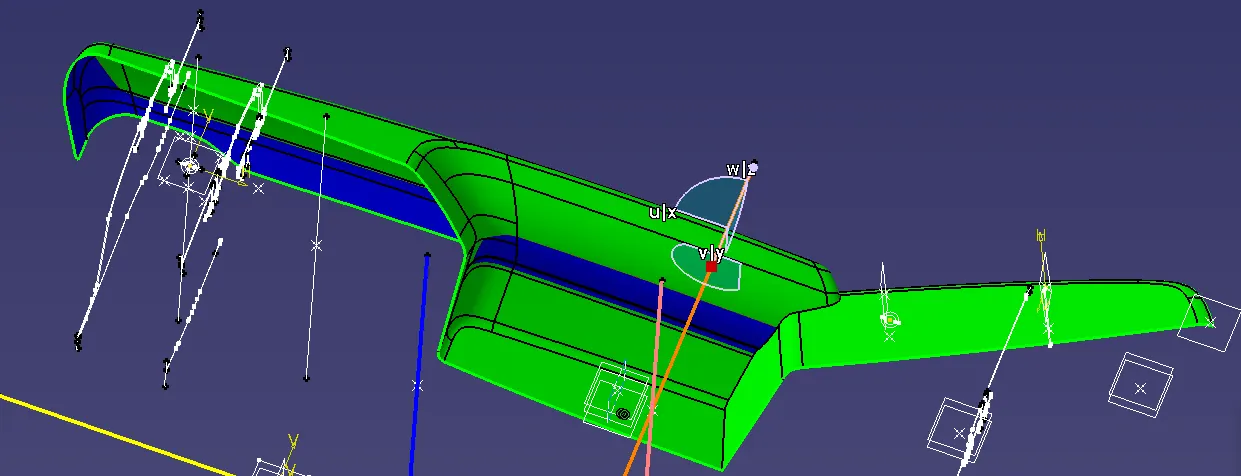
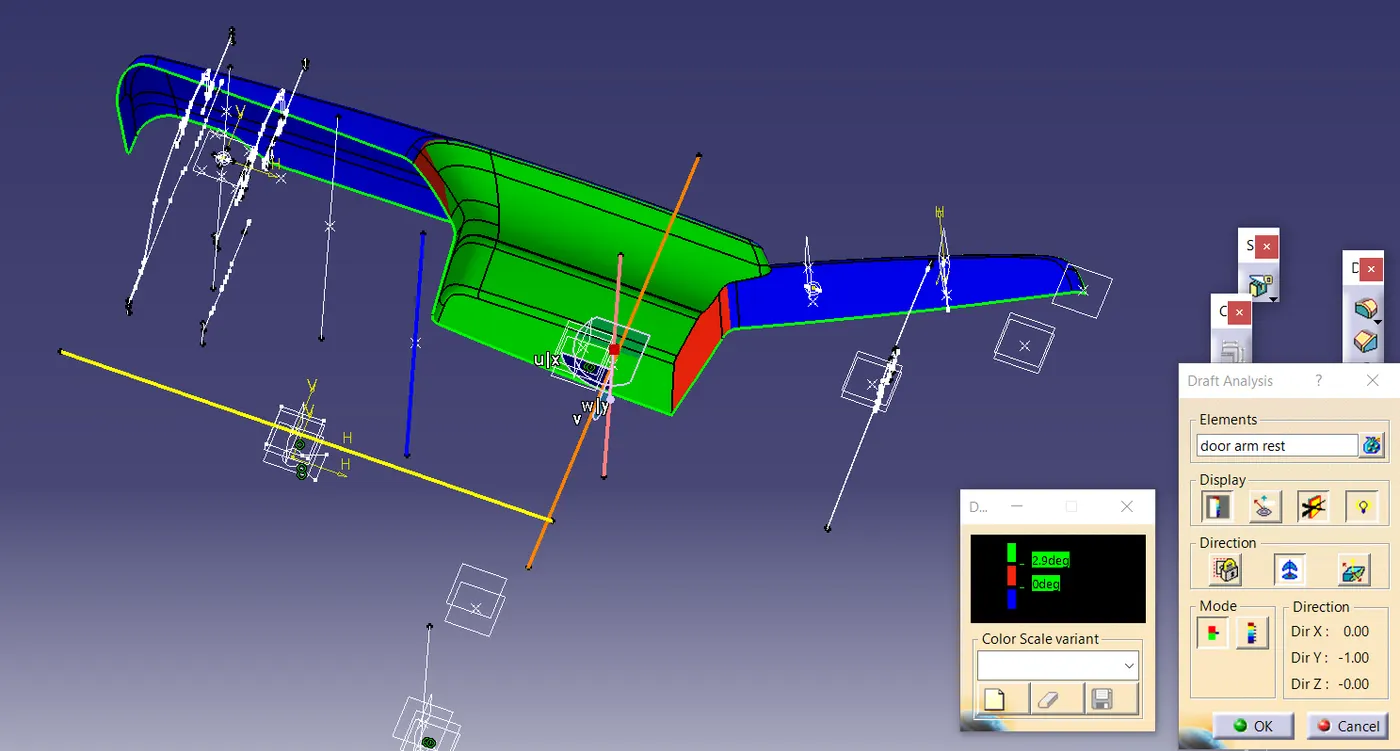
Draf analysis of side tooling axis
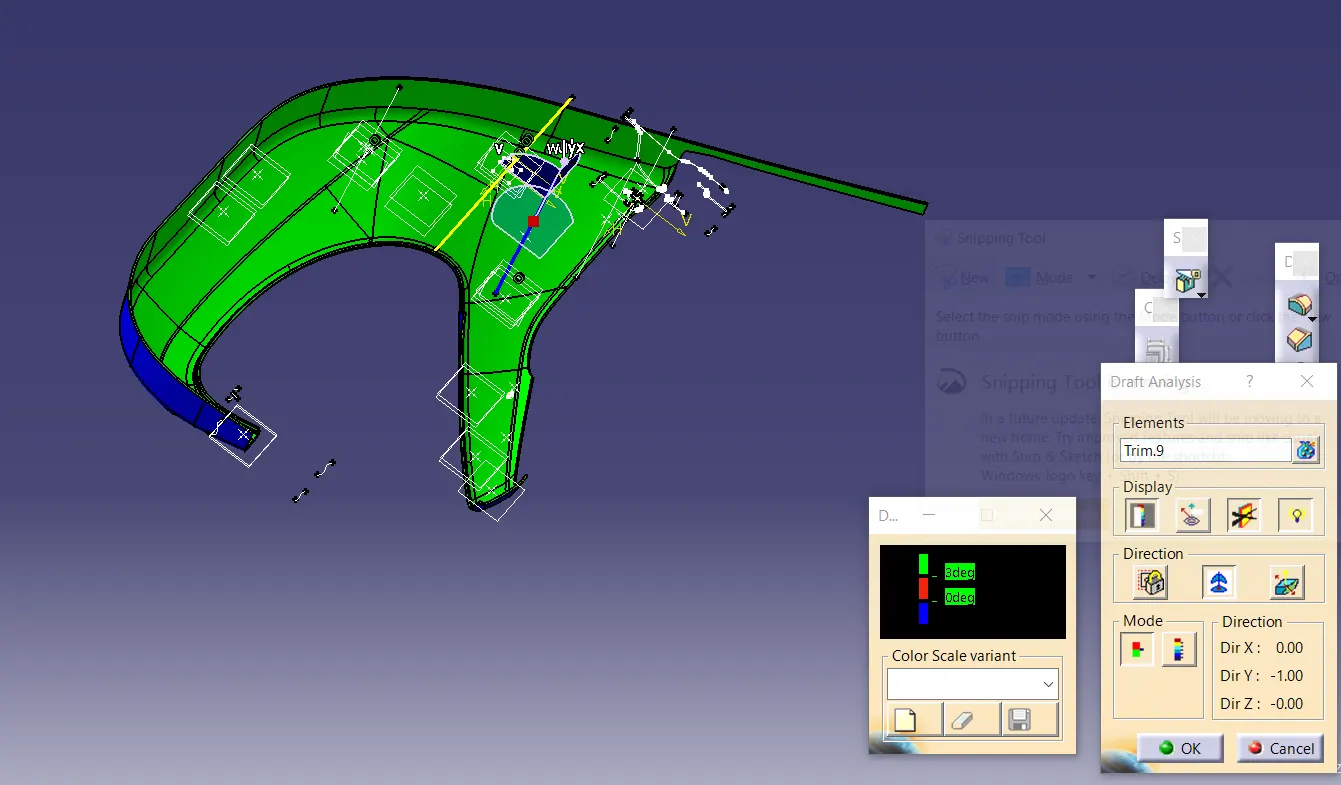
Final trim analysis
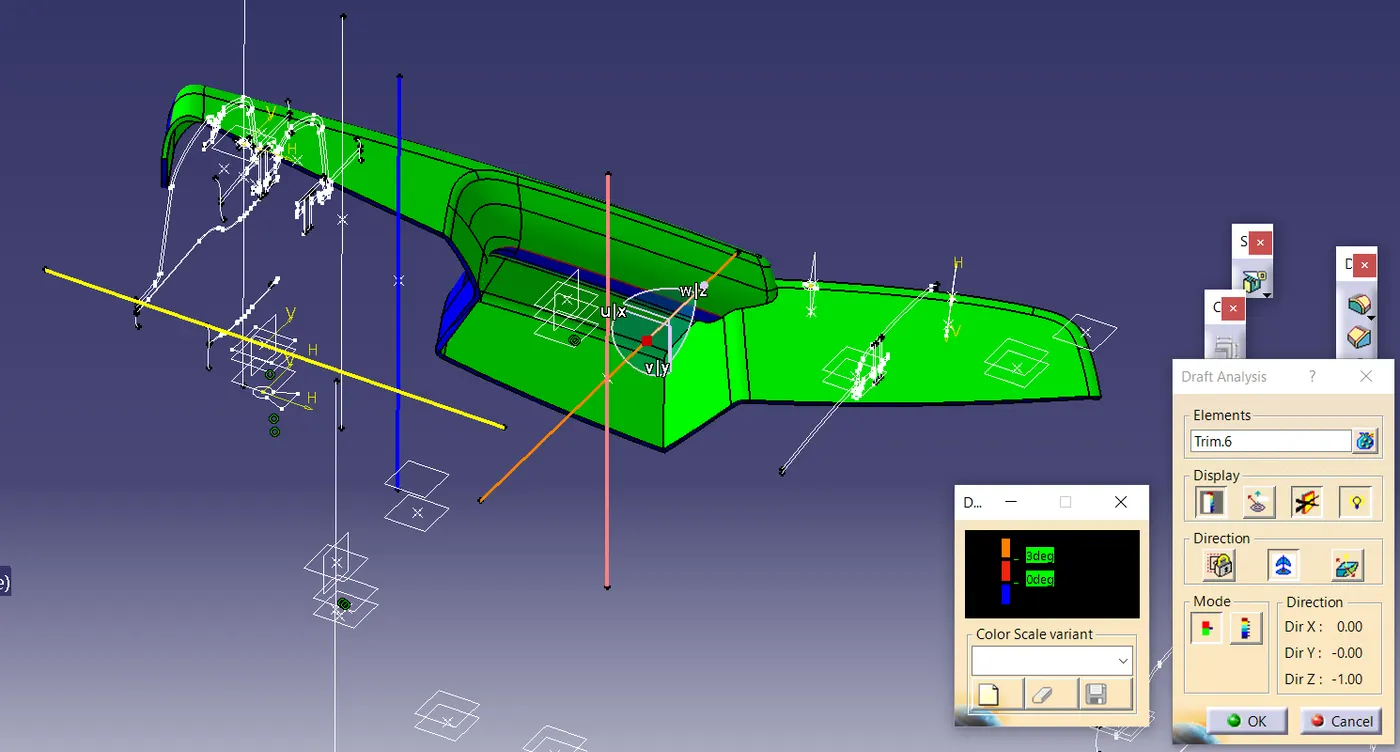
- In this we have to check the surface and make sure the sure is in good condition
- MOdification of classsurface can be done after stylish team apporval
- After creation of b surface by offsetting
- Then c surface is created and joined with A surface
- Then both and b surface are trimmed to get the required part as per given thickness
3.Map pocket
A surface draft analysis
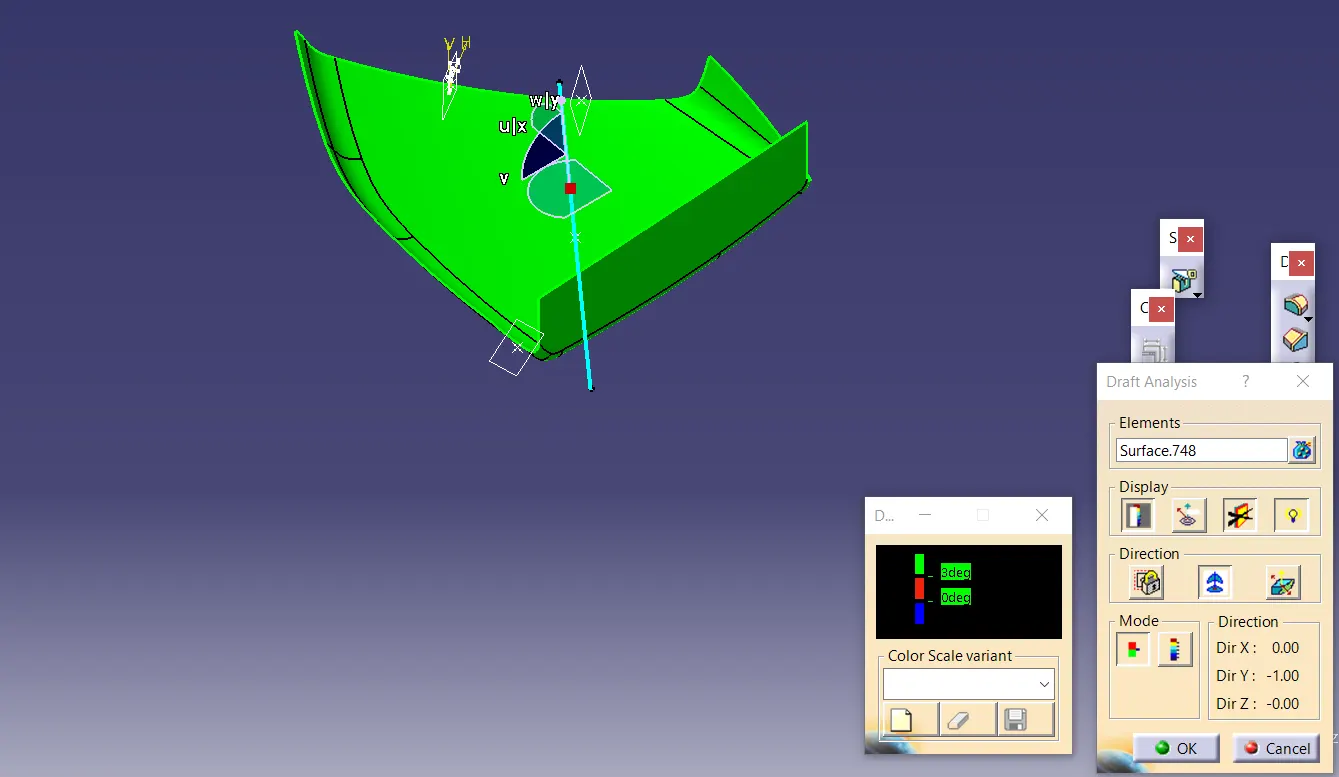
Draft analysi of the final part
Draft analysis with flanges
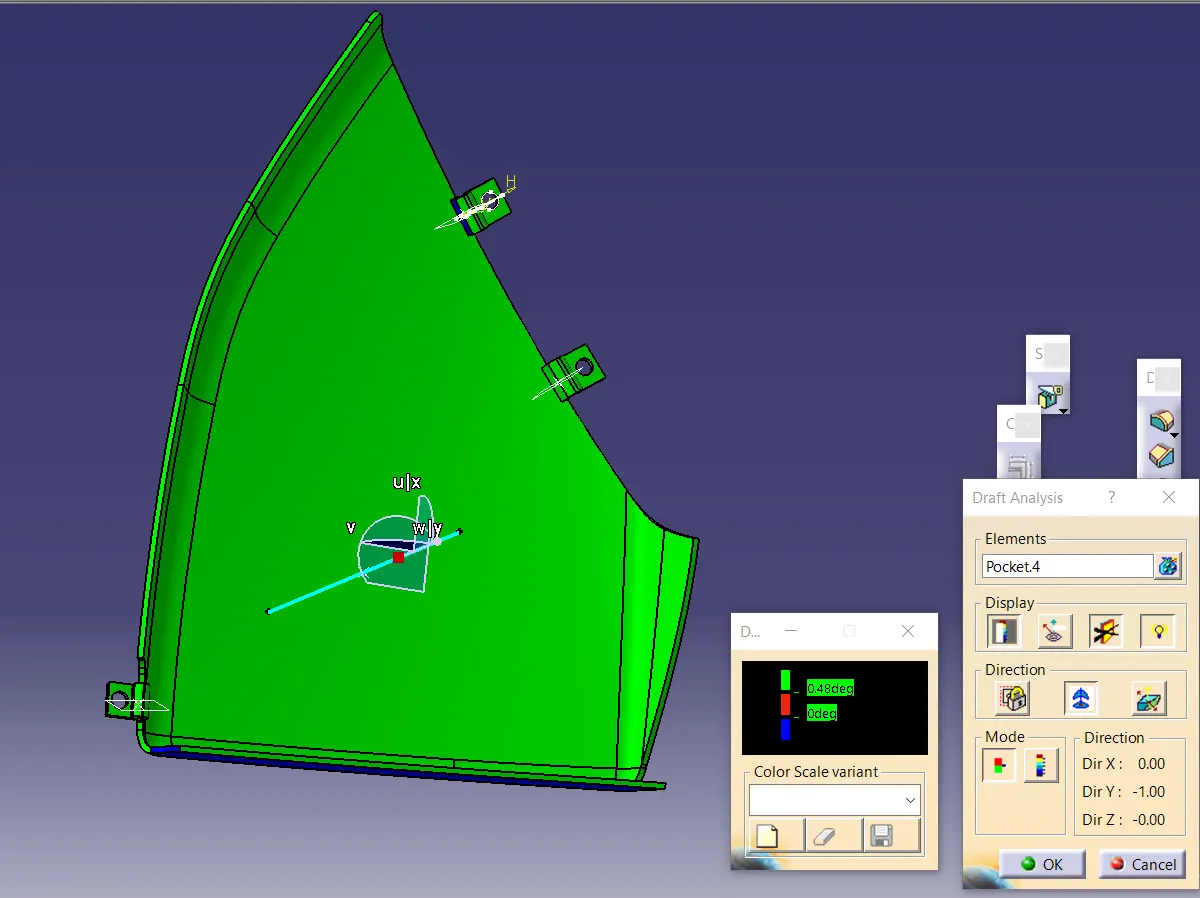
- After checking the surface by using boundary command there aren't any opening
- Then b surface is created
- Then the c surface is creadted and joined with A surface
- Now join class A, B, C surfaces together to create a closed surface.
4.Bottle holder
Draft analysis of a surface
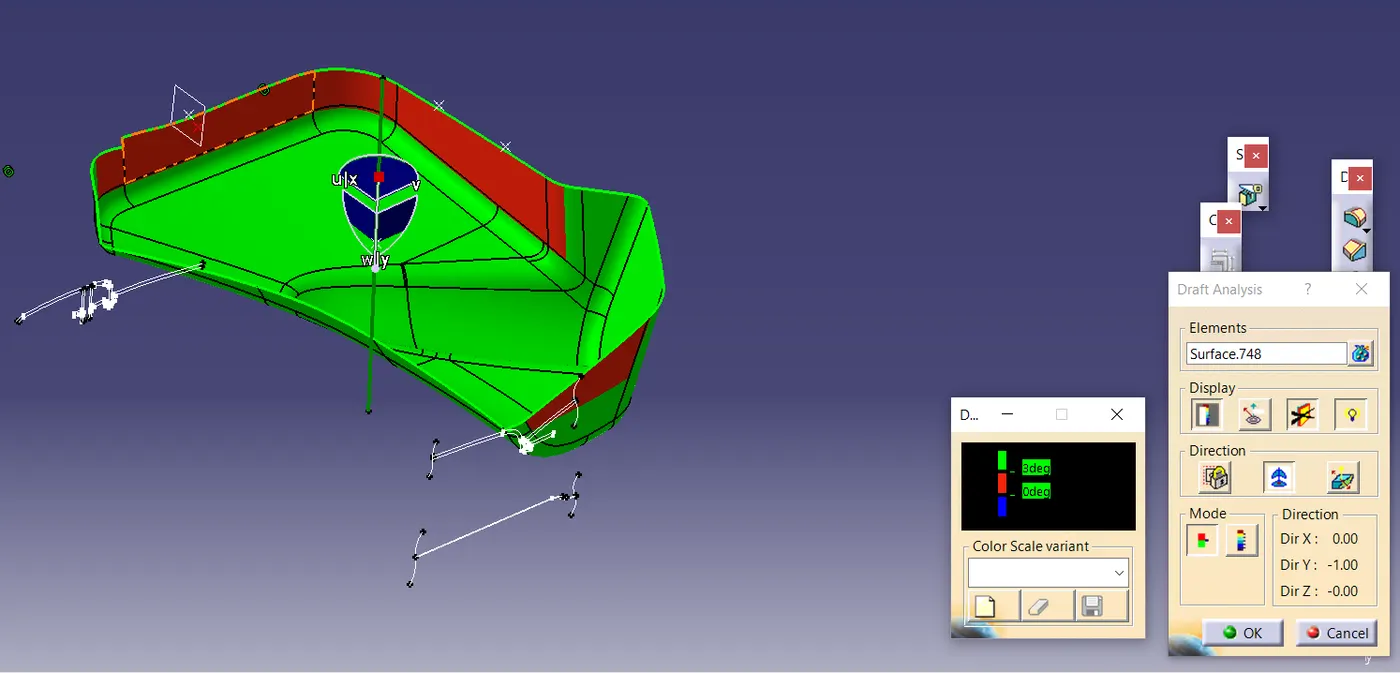
Draft analysis of final trim with flanges
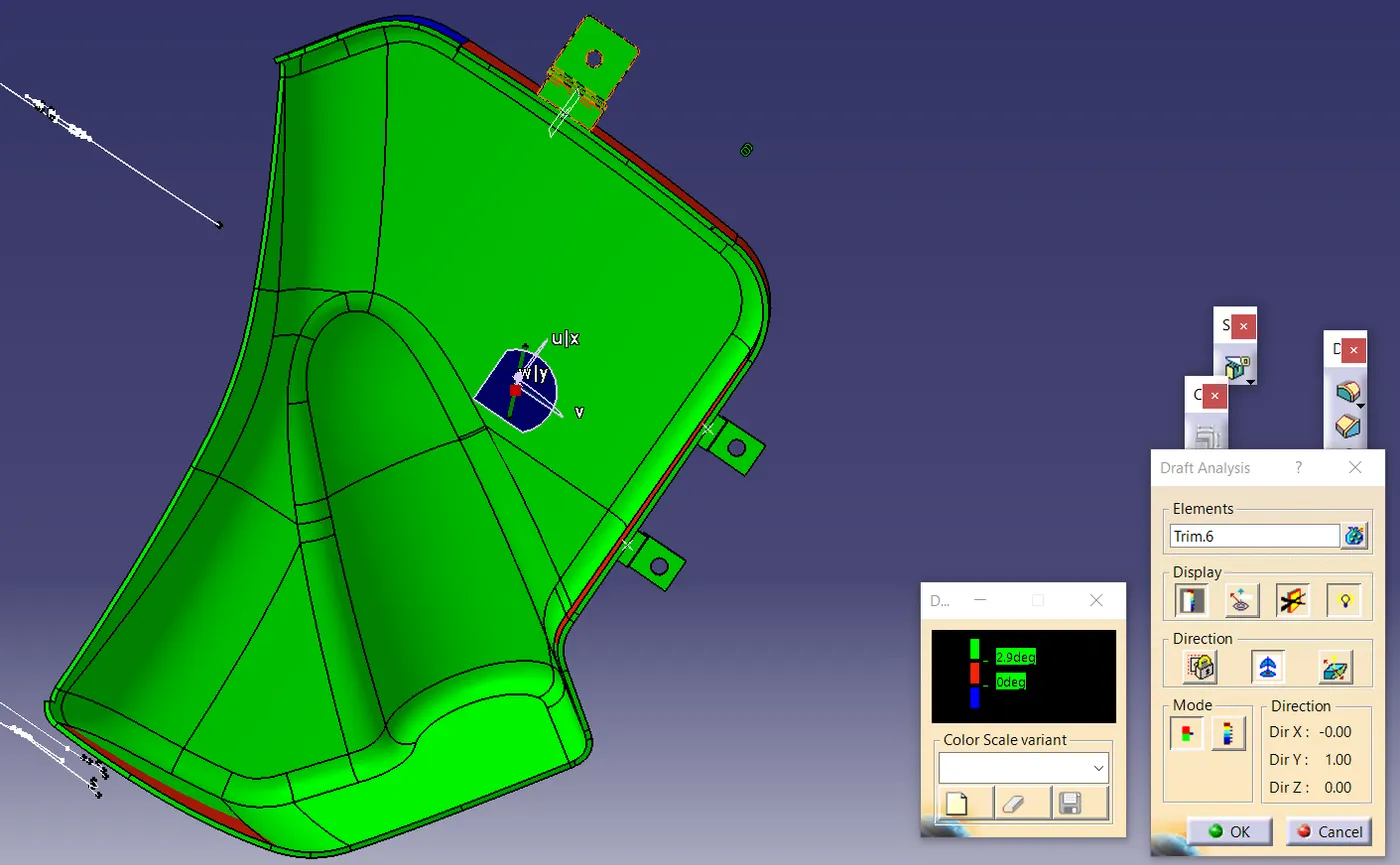
- Similar to the other based cheked the surface condition and found there aren't any opening on the surface
B side Engineering features
- 3-2-1 Principle will be followed for attaching the components amongst one another.
- For attaching the individual components created above with each other and also with the Sheet Metal/Biw Panel to form an entire single Door Trim Panel we need to design the attachment features onto the part.
Heat stakes
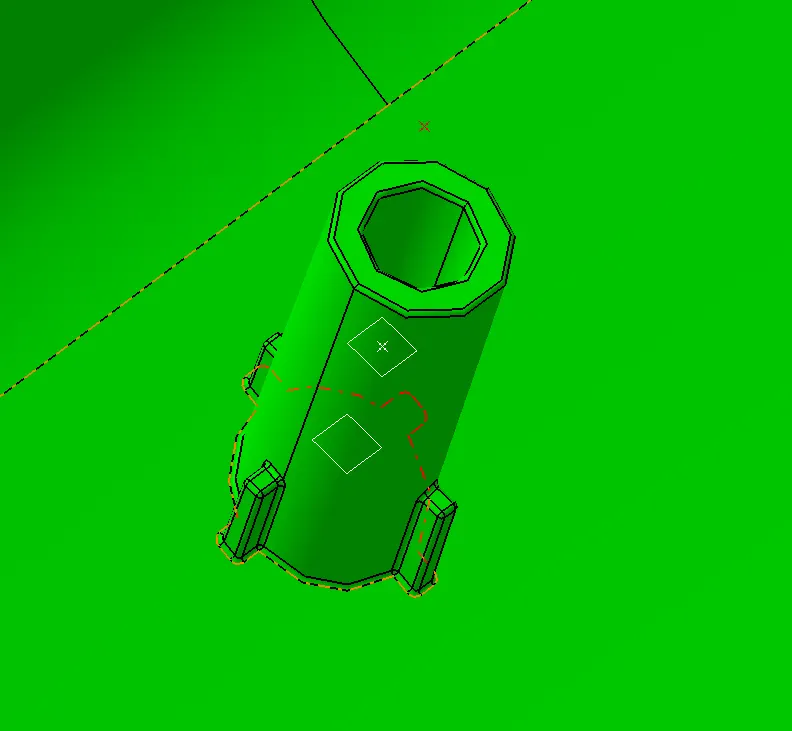
- Heat Staking is a pulsed-heat process to join two or more parts out of which one at least is made of plastic. The process is to deform the plastic material using heat and force at a set process time. The bond is made by partially de-forming the plastic part in order to fix the other.
- The basic purpose behind the creation of Heat Stakes is for arresting the degree of freedom of the assembly along the tooling axis direction.
- Heat stakes are designed by referring the Master Sections given and by following the Tooling Axis direction of the Lower Substrate.
- The distance betwwen the heat stakes should kept between 50 to 55mm.
- Heat Stakes and Flanges are plastic welded by melting the protruding heat stake onto the flanges
Dog house
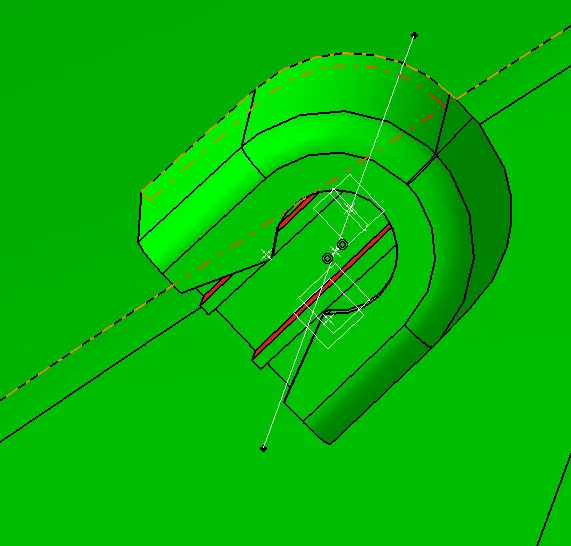
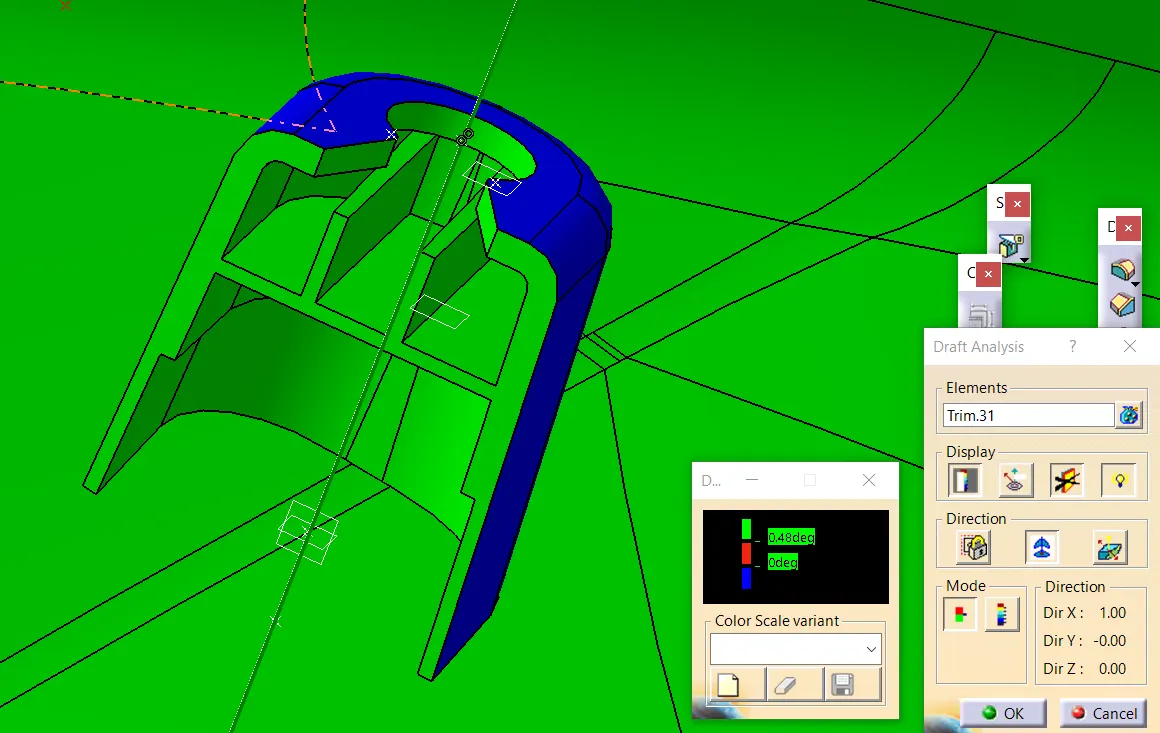
Dog house is an engineering feature used in plastic trim design. Dog houses are used as supporting feature. Sometimes other engineering features like snaps; locators etc. are mounded on them to increase their strength. Dog houses are subjected to draft analysis to prevent breakage of the component during ejection from mould cavity. Dog house and other engineering components are built on B-surface.
-
Doghouse wall thickness at the intersection of the part wall ( C ) should be 40% or less than the main wall stock ( T ).
-
Height of ( B ) should be between 3.0 – 6.0 mm
Loacators
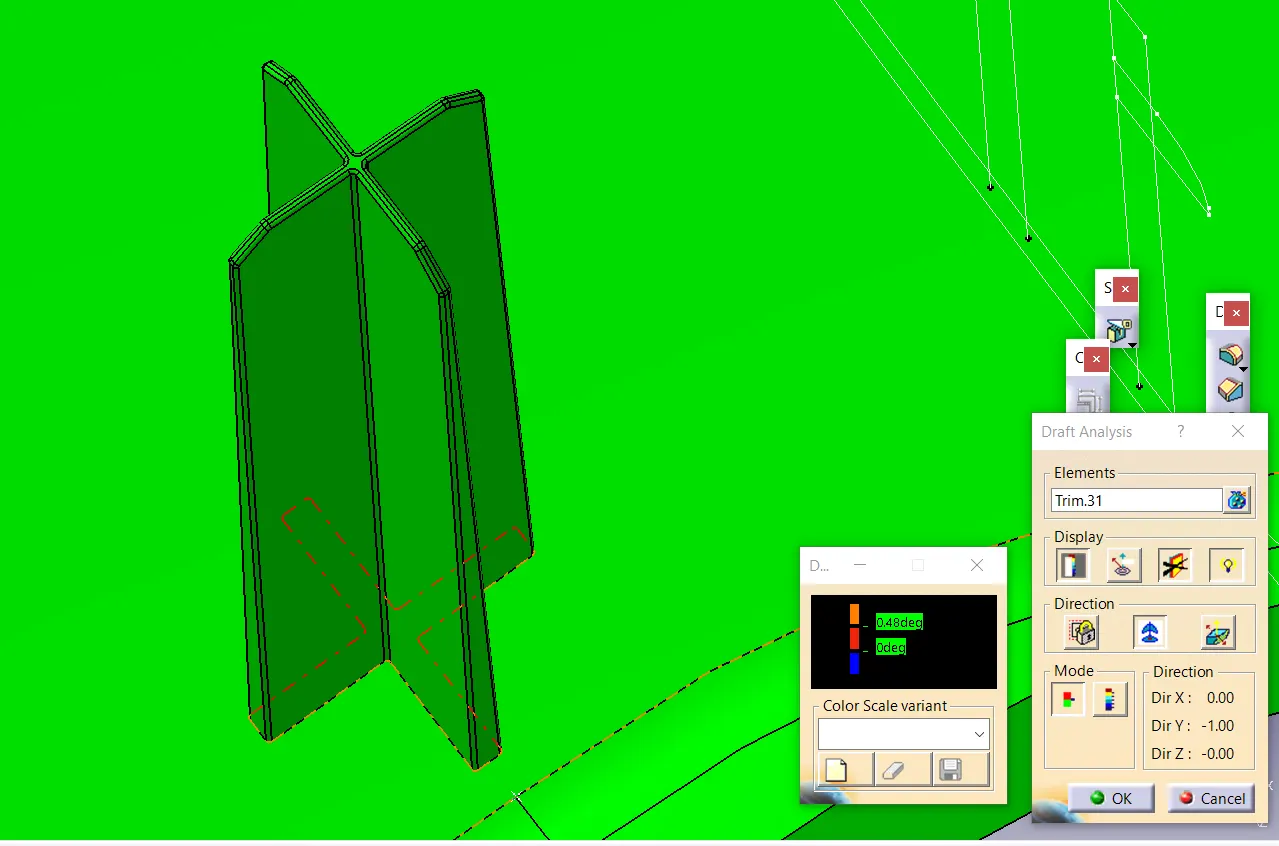
- Based on 12 degree of freedom locators are designed
- The height of locator should more than the height of heat stakes
- locators are crucial components that help position and secure a workpiece accurately and securely within the fixture
- They ensure that the workpiece is in the correct orientation and alignment for assembly or inspection
Assembley