Week 12- Final project
FINAL PROJECT
Development of a Door Trim panel
Aim:
To create a complete solid body of the inner door panel from the given Class A surfraces. Main substrate,Door arm rest , Map pocket and Bottle Holder are the A surfaces given to us and these are the parts that requires to be convertred into solid bodies and assemble them along with the attachments.Use the mater sections for creating necessary add ons like flange,heatstakes,Dog house, Ribs, Push pins Extras.
Objective:
To design the Lower Door Trim of the door from the given Class-A Surface in Catia -V5. Understand and practice each tools,steps and operations to design it to a final product.
Theory:
Plastic designing is evolving day by day. The increasing use of plastics in the automotive industry is a response to the need of reducing the weight of vehicles and improving fuel efficiency, complying with the strictest regulations on greenhouse gas emissions and the demand for environmentally friendly products. However, plastics also ensure improvements in car design, both in terms of internal and external components. Today, automotive designers are looking for a lightweight material that will improve the designing, manufacturing and efficiency of moulded parts. For decades, they replaced heavy metal components with plastics such as polypropylene (thermoplastic) and Fiber-filled composites. This practice is expanding since manufacturers are trying to increase the use of polymers for vehicle exterior parts and interior accessories. Thanks to technological progress, engineers have a wider range of new and lighter options, offering greater freedom of design, including in mechanical parts that are consistent with the weight reduction strategy. Here ere we are trying to improve the designing features of Door trim panel with couple of developments. The main features for making the final product of door trim panel is given below.
1.Manufacturing Process: Injection Moulding
Plastic injection moulding is the process of melting plastic pellets that once malleable enough, are injected at pressure into a mould cavity, which fills and solidifies to produce the final product.Injection moulding is one of the most commonly used production processes for plastics. It offers a viable solution for the mass production of high-quality injection automotive parts from a broad range of polymers. In the automotive industry, where consistency, safety, and quality are of utmost importance, automotive plastic injection moulding is an important manufacturing process.
2.Design for Manufacturing & Assembly (DFMA)
Design for Manufacturing and Assembly is an engineering methodology that focuses on reducing time-to-market and total production costs by prioritizing both the ease of manufacture for the product’s parts and the simplified assembly of those parts into the final product – all during the early design phases of the product lifecycle.Before becoming the singular philosophy it's known as today, DFMA used to be considered as two distinct methodologies: Design for Manufacturing (DFM) and Design for Assembly (DFA).
DFM is concerned with - cost-effective, minimize the complexity ,reduce the overall manufacturing time and costs. DFA is concerned with - reducing the product's assembly time, costs, and complexities by minimizing the number of individual parts, assembly steps, and promising the built quality.
Procedure:
Here we are including the images of each stages of the features and their analysis by adding small notes. The main features are
- Surface A
- Surface B&C
- Draft Analysis
- B side Features
- Final Constrains
SURFACE A
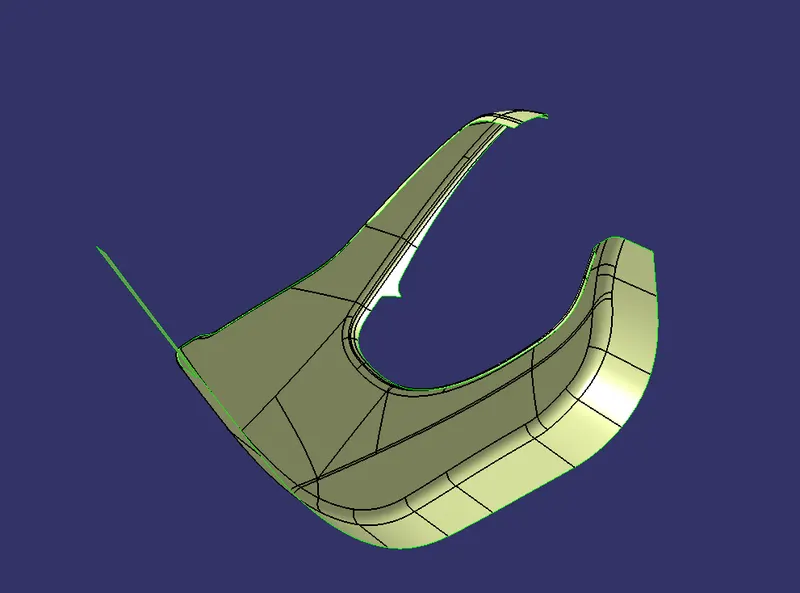
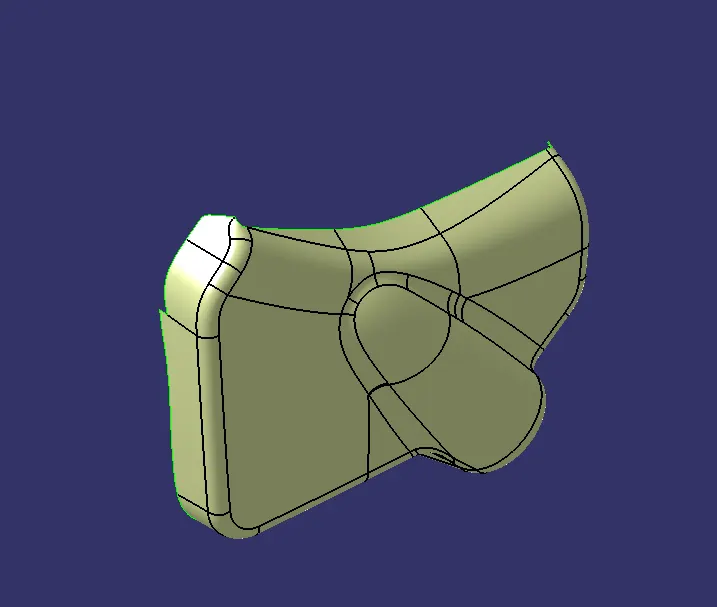
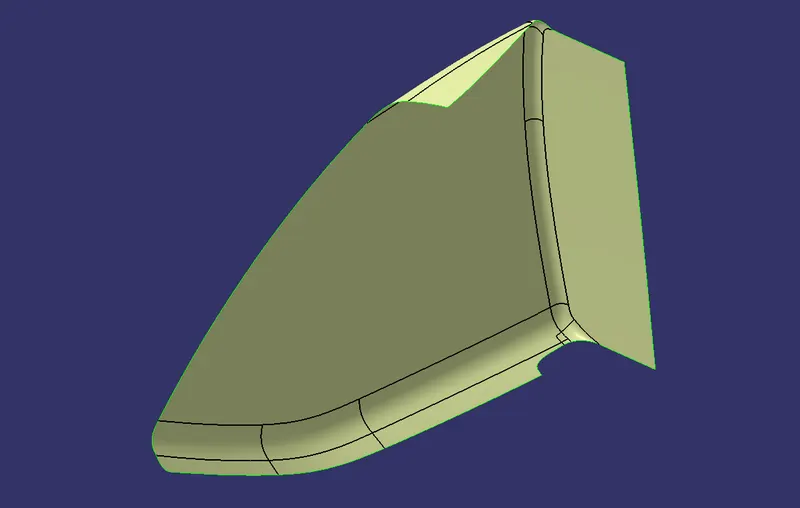
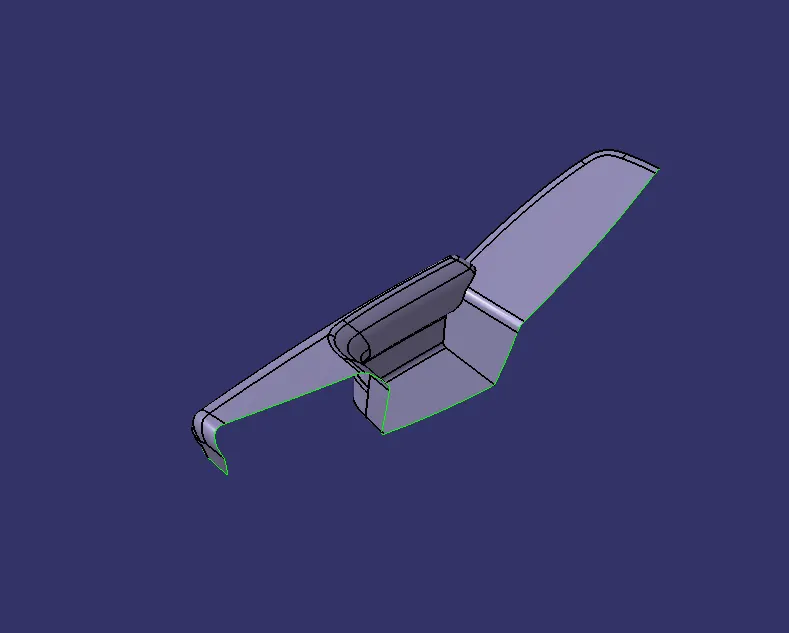
These are the given class A surfaces. These have been slightly modified from the original due to imperfections and instability in the original one.
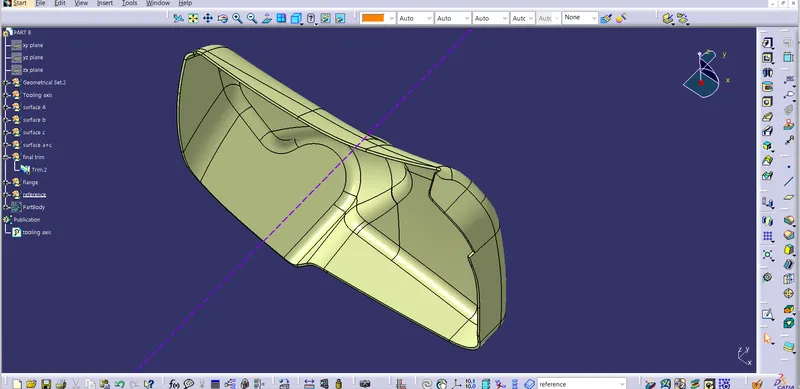
1. Main Substrate
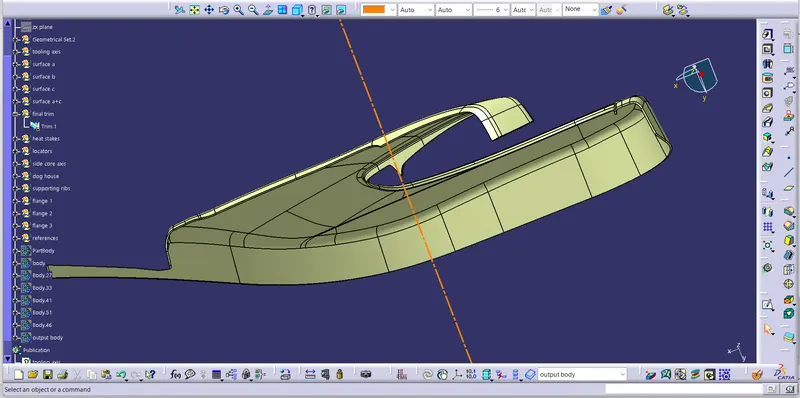
2.Bottle Holder
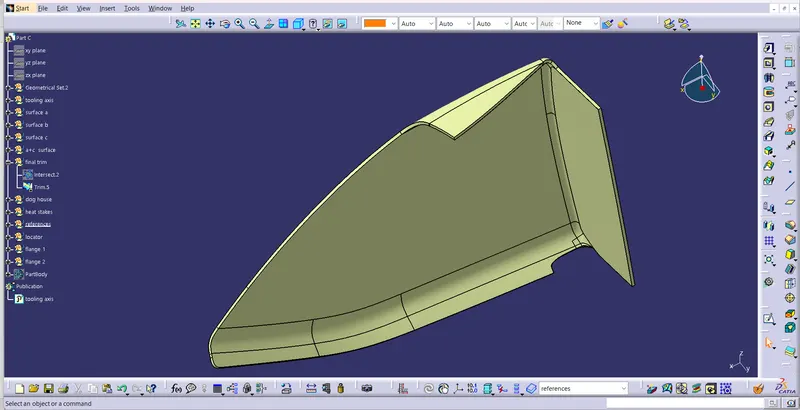
3.Map Pocket
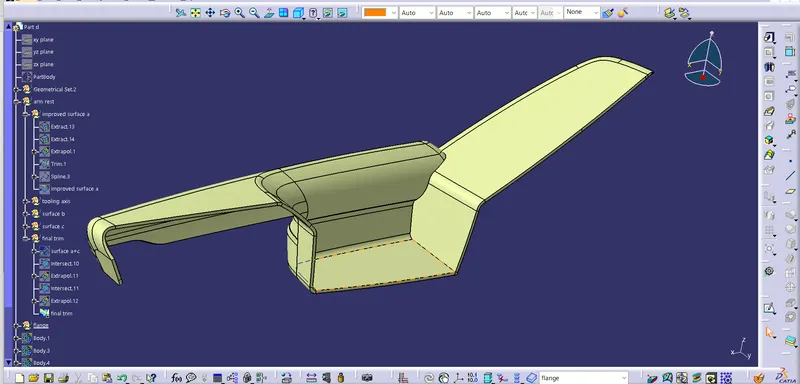
4.Door Arm Rest
SURFACE B& C
Tooling axis for the LS has already been made, which is shown by the dashed colored line. Created b surface using ofsett tool and fil all the patches using multisction and fill cammands. After creating b surface , made C surface of each with respect to the tooling axis direction.Later trim whole A+B+C surface together.
Draft Analysis
Done the draft analysis of each four parts using feature draft analysis tool in part workbech. Set the range of 0 to 3 degree of draft and observed each side of part.
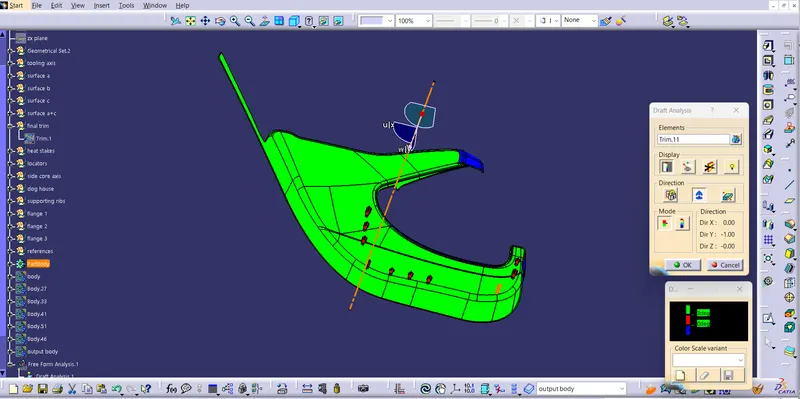
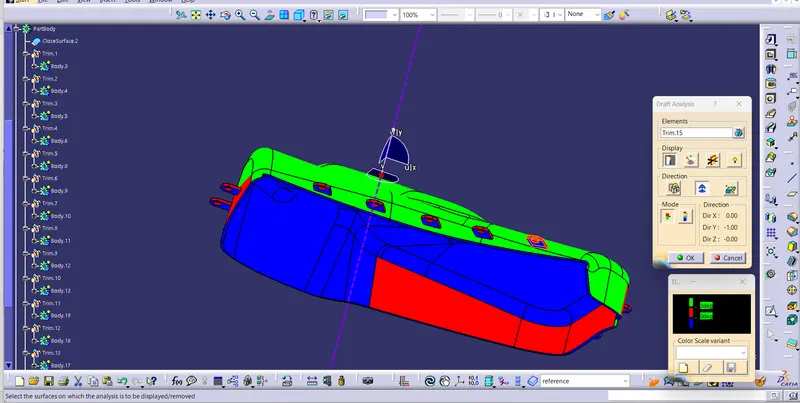
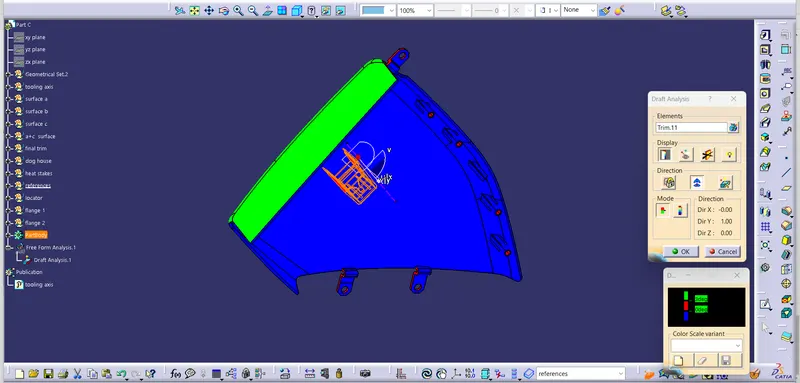
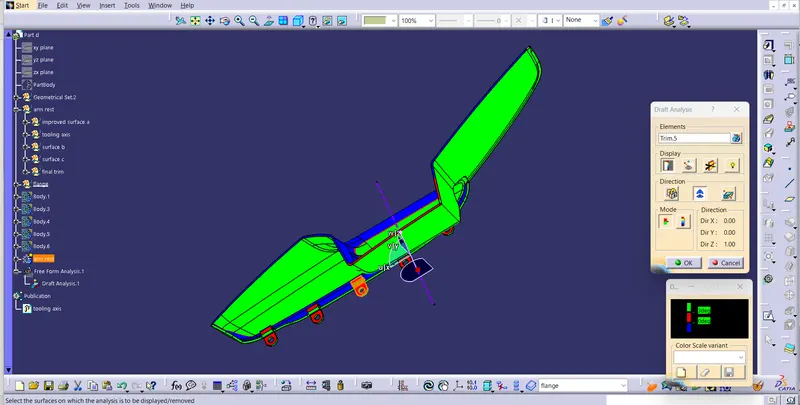
Draft result: Some of the draft didnt meet the range hence almost area were covered in a single tool axis.
B- SIDE FEATURES
There are major add on which we provide in the b side surface for make sure the fixation or assembling process of each door trim panel parts together.The major sub elements in the B surfaces are
- Flange
- Heat stake
- Locator
- Rib
- Dog house
- Push pin
Flange
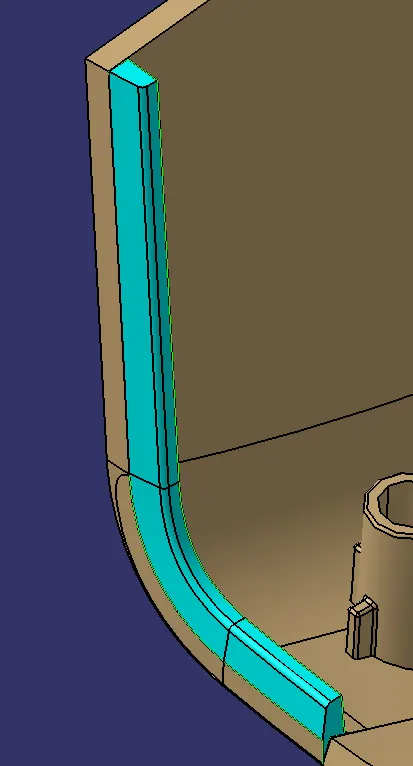
we need to make flanges for the BH, MP, and DA. The flanges surround the HSs and locators. The clearance b/w flange and HS should be 0.5mm and that b/w HS and locator be 0.1mm.Creation of the flange was started by taking an extrude from the upper edge of the solid body and making directional changes according to the HS/locator placement.
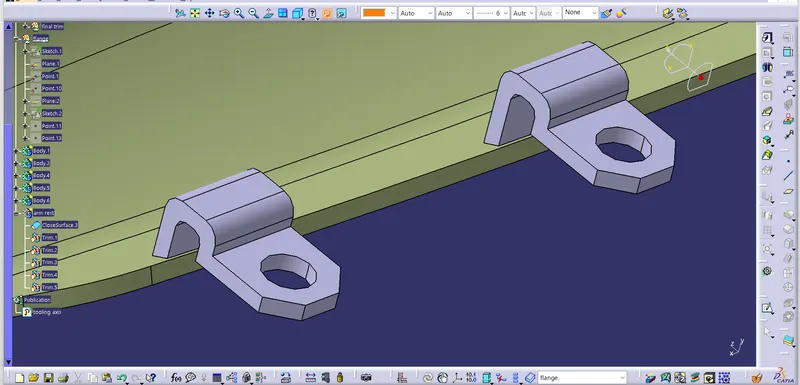
Placed all the Flange with proper distance gap. The measurment of flange hole is standard through out. 3.75 mm radius. Totally 20 no of main flange is created.
Heat Stake
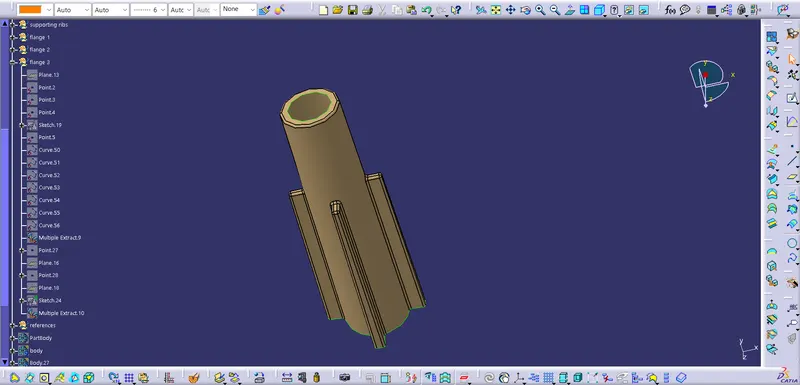
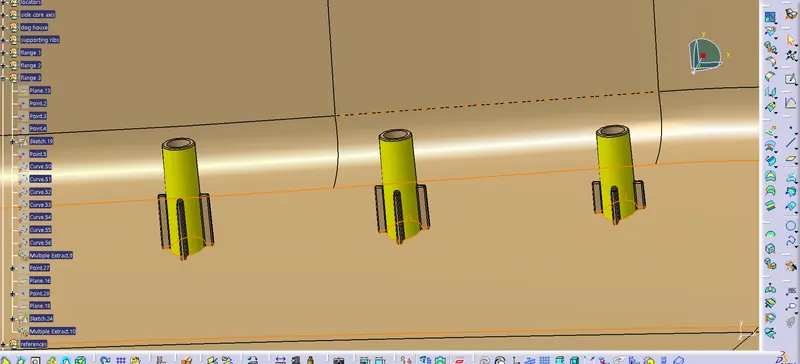
A circle of diameter 5mm was made and thickened outside 2mm to get a 7mm dia. circle outside. Ribs were added on both sides for strength to the heat stake. 15mm ribs were provided.Multiple heat stakes were made using translate function on various areas of the doghouse. These heat stakes support the bottle holder, map pocket and door armrest.A draft of 0.5 was given to the heat stakes and their ribs. Note that inside draft for the stake will be in the opposite direction to the outside.Finally, the heat stakes were union trimmed with the lower substrate.
Locator
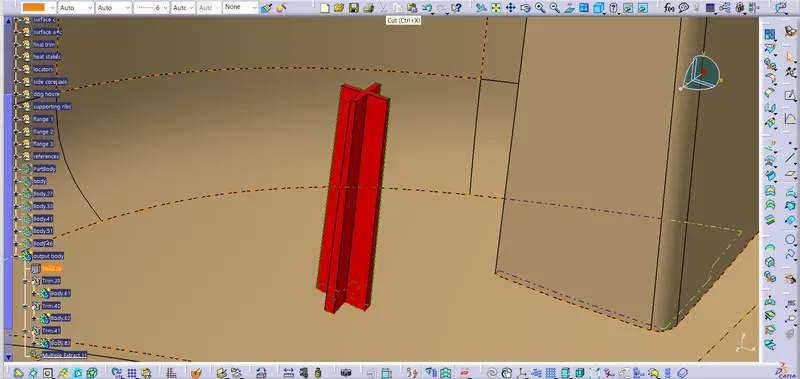
Similarly, 4-way and 2-way locators were made. Note that the height of the locators should be more than that of the heat stakes.
RIB
4 ribs were made on the sidewalls of the LS for extra rigidity. Why rib is provide because of the the unwanted gaps between the 4 parts when those are aligned to assemble. Rib is also provided for the strength of the part which corrcorrelated with stress strain relations.
Dog house
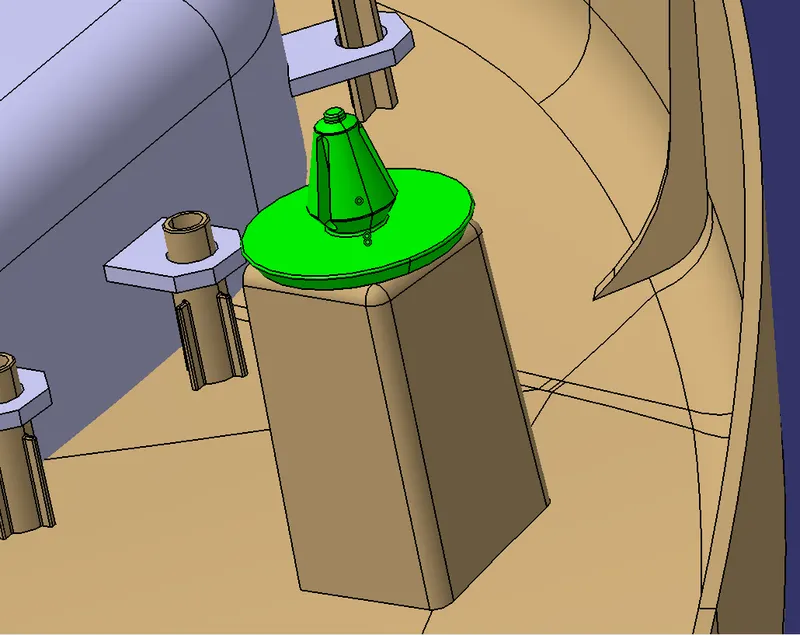
Dog house is an engineering feature used in plastic trim design. Dog houses are used as supporting feature. Sometimes other engineering features like snaps; locators etc. are mounded on them to increase their strength. Here we are use to support the push pins acts as a major fitment of the final product.
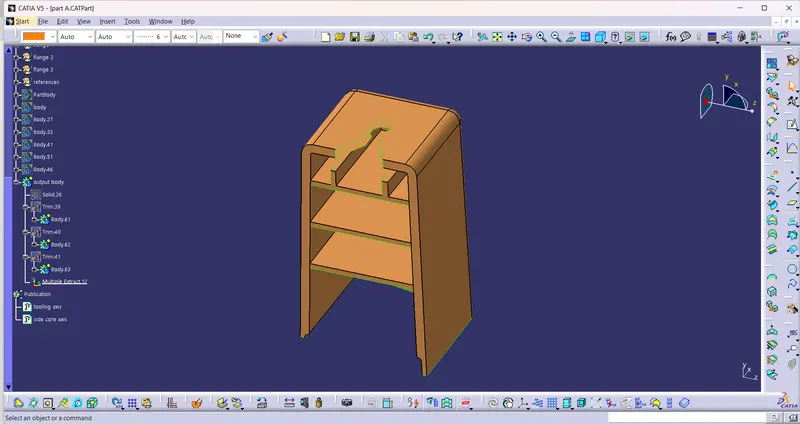
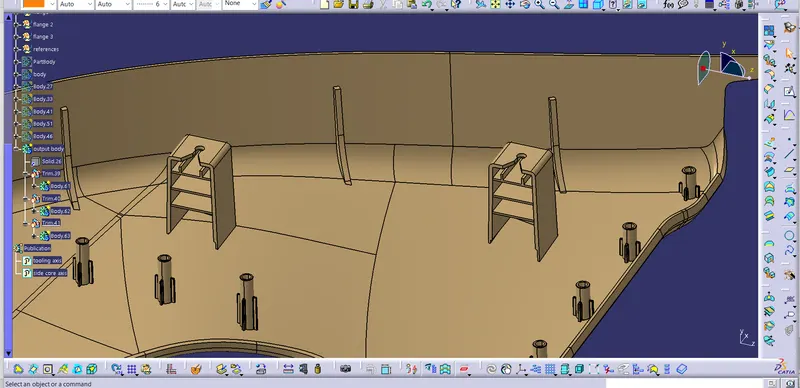
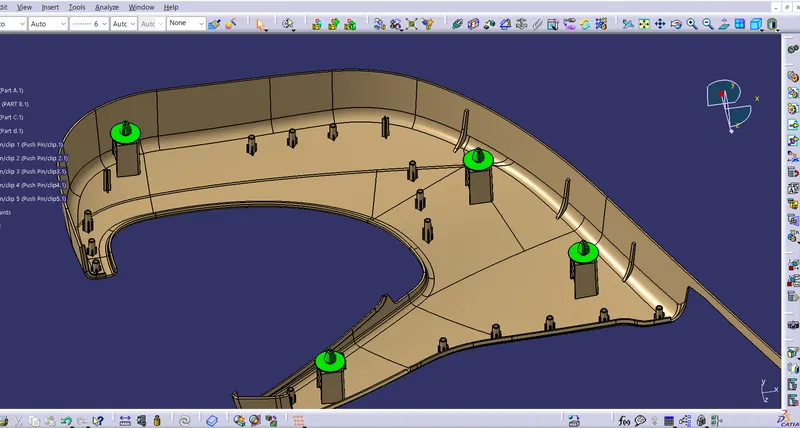
We created 4 Dog houses in the Main Substrate and one in Map pocketing. Total 5 nos of Fod houses craeted.
Push Pin
Pushpins are the go-to solution for securely attaching parts and other lightweight materials to bulletin boards With their sharp point and sturdy construction, our pushpins offer a reliable hold, ensuring your items stay in place.
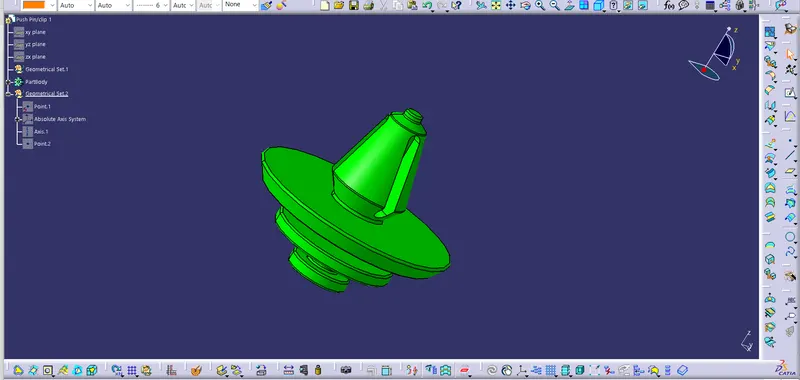
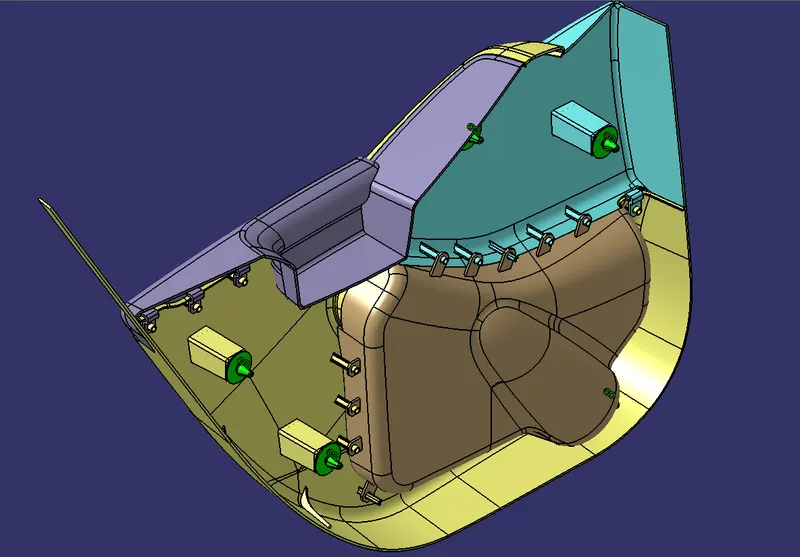
Push pins have to be placed on top of all 5 doghouses.
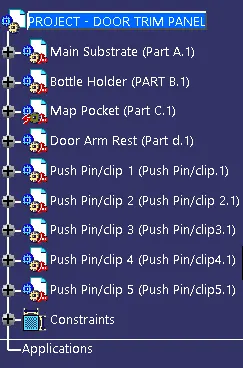
The push pins have been placed by assembly design using coincidence and surface constraints.
FINAL CONSTRAINING
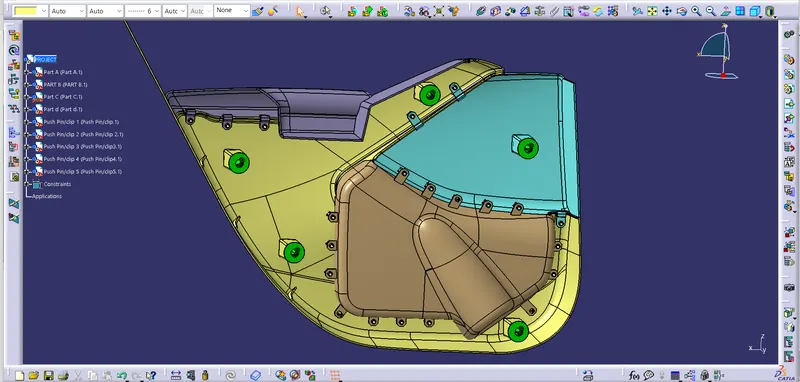
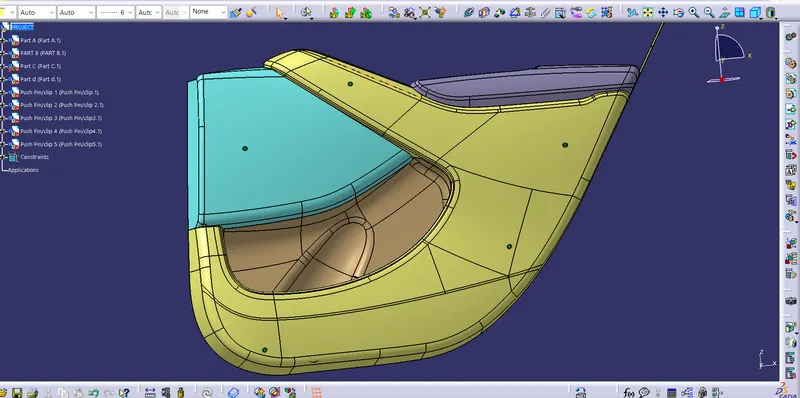
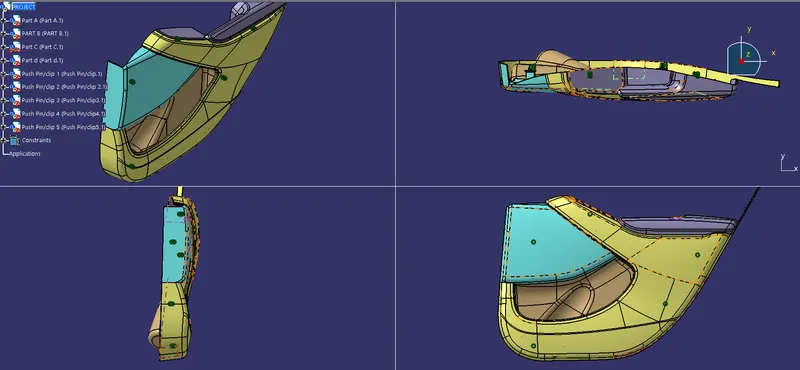
Hence, everything has been completed in B side features, Fix and Constrain all the parts together using reference axis and points in he Product workbench.
REAR VIEW-
FRONT VIEW-
ISOMETRIC VIEW-
MULTI VIEW-
TREE STRUCTURE-
CONCLUSION
In this project, we embarked on the task of designing a lower door trim with the aim of enhancing both the aesthetic appeal and functional aspects of a vehicle's interior. Our objectives were to create a visually appealing and efficient door trim that would contribute to the overall basic features. Throughout the design process, we thoroughly analyzed various Tools, shapes, and finishes to ensure the final product aligns with industry standards and target measurements. Additionally, we took into consideration factors such as cost-effectiveness, ease of manufacturing, and sustainability to make our design feasible product developers.
The CATpart and CATproduct are submitted in the attachment.