Week 12- Final project
AIM – To create a Solid body of side door plastic trim with engineering features using the Class-A Surface and master section.
INTRODUCTION – The door trim panel is the interior plastic component attached to the sheet metal part of the Door. It contains engineering features like a doghouse, heat stakes and pushpins.
DOOR TRIM OF THE AUTOMOBILE:
- Door panels serve as an interface between the interior of the car and the inner workings of the door, and between vehicle occupants and the door.
- They are expected to meet a variety of design specifications regarding safety, aesthetics, and functionality. In addition, they are expected to continue the material theme of the dashboard and pillars while concealing intricate electrical and mechanical components for operating locks, windows, and other features.
- The door panel has evolved from a simple two-part system of latch and simple winding mechanism to a more sophisticated enclosure. Doors currently have an inner full-width panel consisting of electronic windows, central locking system, and speakers.
- These panels typically consist of a foamed core covered with either textiles or plastics.
- Plastics is the core and soul of the door trim interior, one must have knowlege about the plastic being used and its cost associated with the molding and manufacturing.
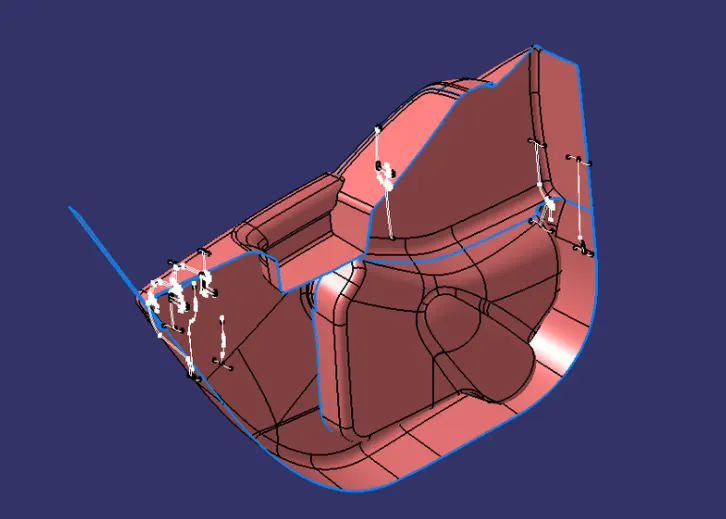
INTERIOR DOOR TRIM CONSISTS OF FOUR PARTS –
- Lower substrate
- Door armrest
- Upper map pocket
- Lower map pocket
Class A Surface:
In Automotive design, a Class A Surface in any of a set of freeform surfaces of high efficiency and quality. Although, strictly, its nothing kore than saying the surfaces have curvature and tangency alignment- to ideal aesthetical reflection quality, many people interpret Class A surfaces to have G2 or even G3 curvature continuity to one another. Class A Surfacing is done using computer aided industrial design applications. Class A surface modellers are also called "digital sculptors" in the industry. Industrial Designers Develope their design styling through A-Surface, the physical surface the end user can feel, see, touch etc.
Door Arm Rest :
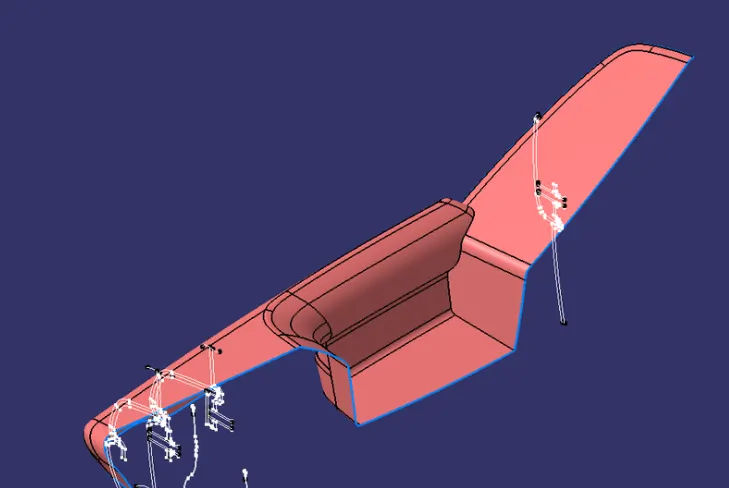
Map Pocket :
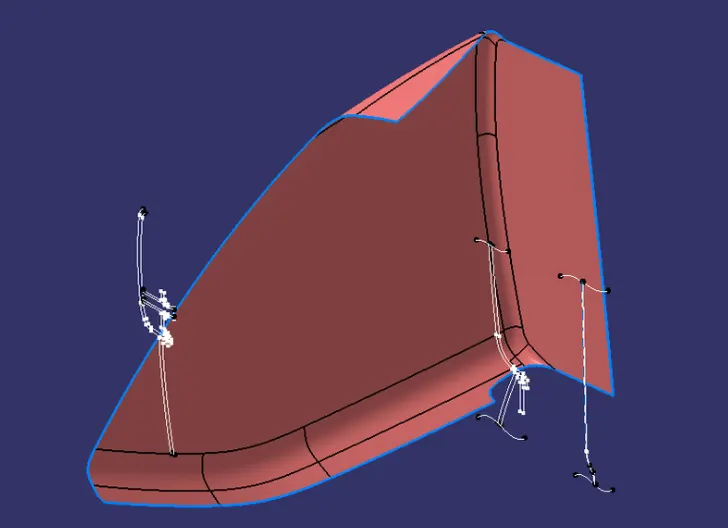
Bottle Holder :
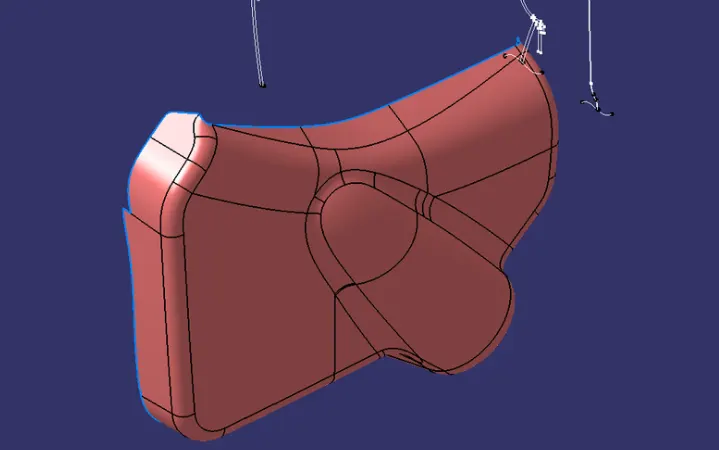
Lower Substarate :
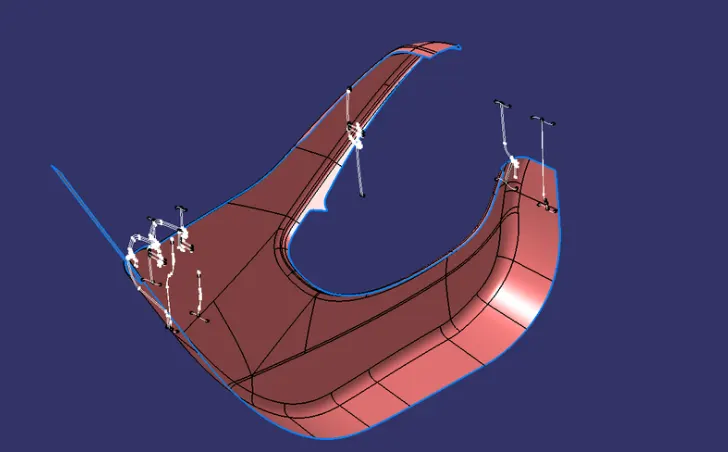
Tooling Axis:
Tooling axis is nothing but the direction in which the core and cavity opens and closes. Design engineer works on it to analyse the Class A surface and finds out the best possible tooling direction keeping in mind all the draft angle is with respect to the tooling axis so that the component can be easily ejected from the moulds.
Door Arm Rest :
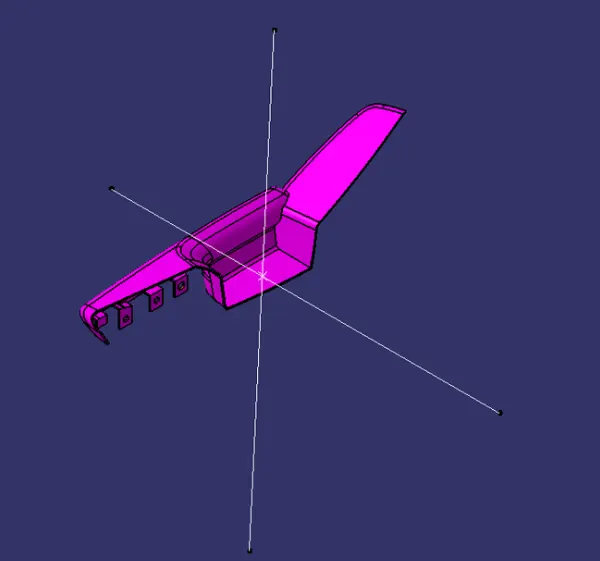
Map Pocket :
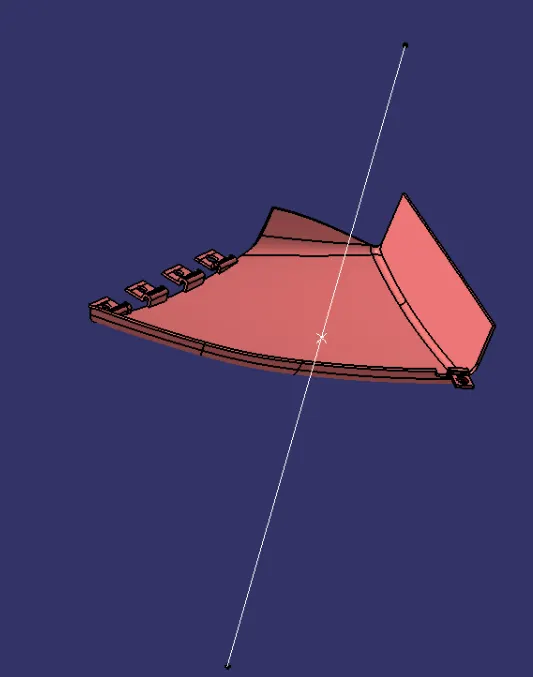
Lower Substarate :
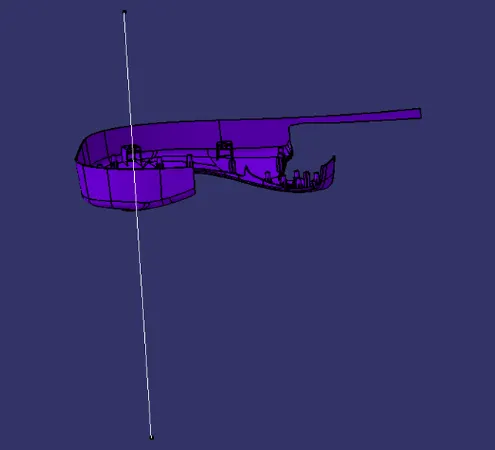
Bottle Holder :
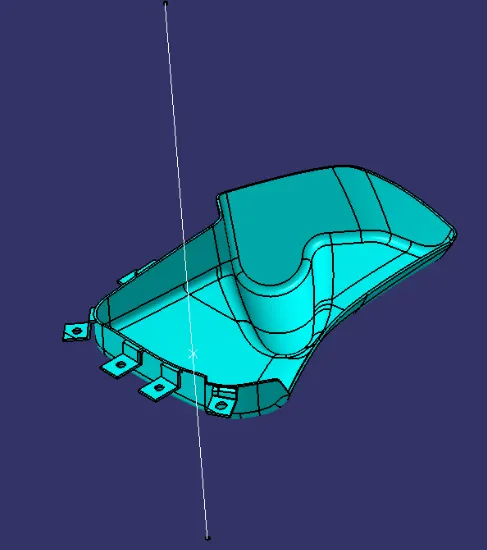
Draft Analysis:
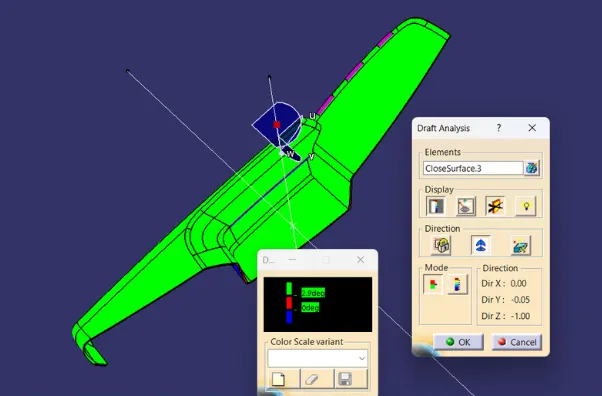
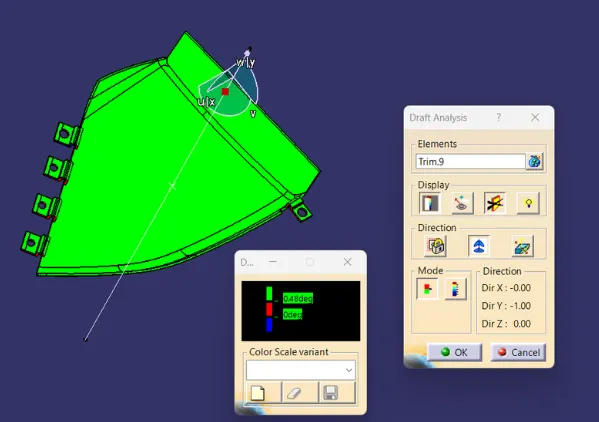
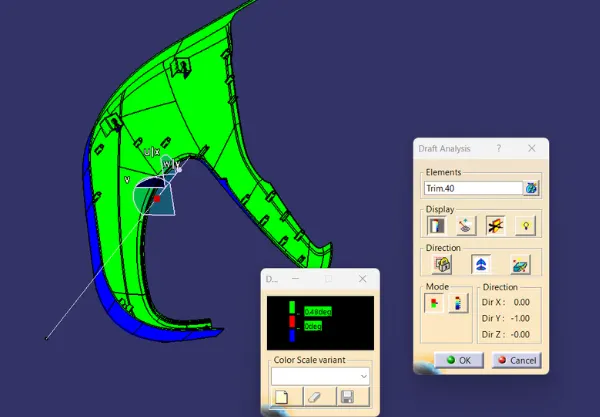
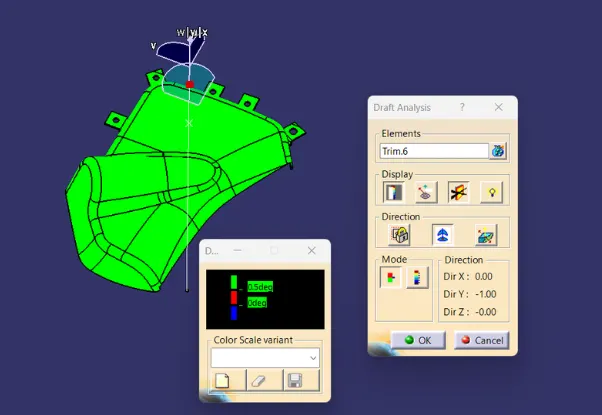
The Draft analysis command enables you to detect if the part you drafted will be easily removed. This type of analysis is based on color ranges identifying zones on the analysed element where the deviation from the draft diection at any point, corresponds to specified values.
Draft anlges are very important in thermoforming product designs. If the product is formed onto a female or negative mould, it shrinks away from the mould side walLs. As a result, true female or negative products can be thermoformed with vertical walls having zero draft angles. Parts cannot be ejected from the tool if it is at 90 degree surface. For that reason, a small draft angle is to be provided for each and every surface of the component in order to easy removal of the component from the moulds without any defects. Most of the part require minimum 0.5 degree to 1 degree, however 3 degree is widely accepted in plastic component design. Draft analysis is the technique used to analyse weather our designed product are manufacturable with required conditions are not.
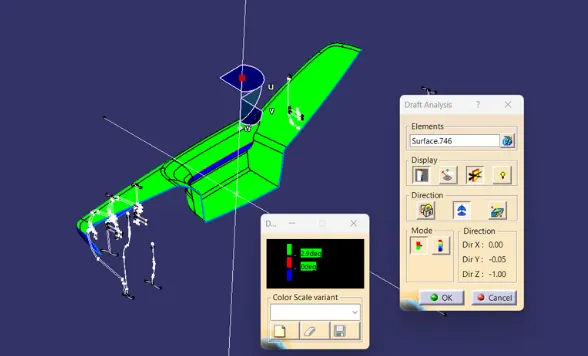
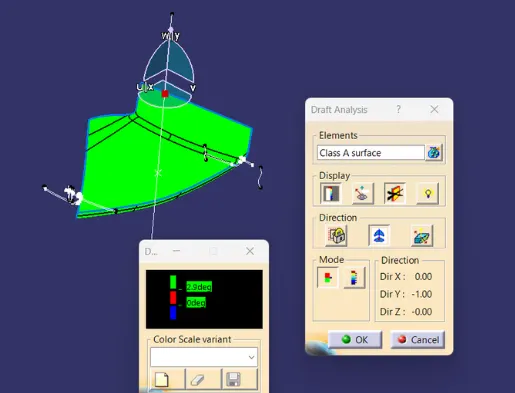
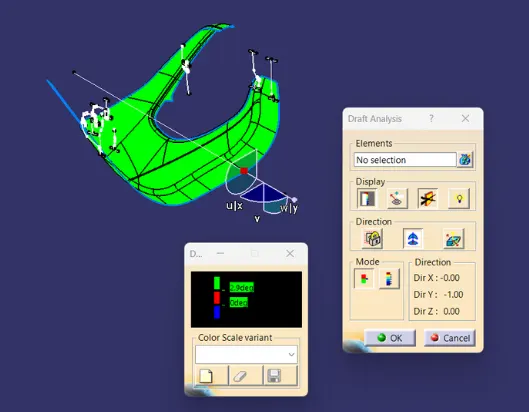
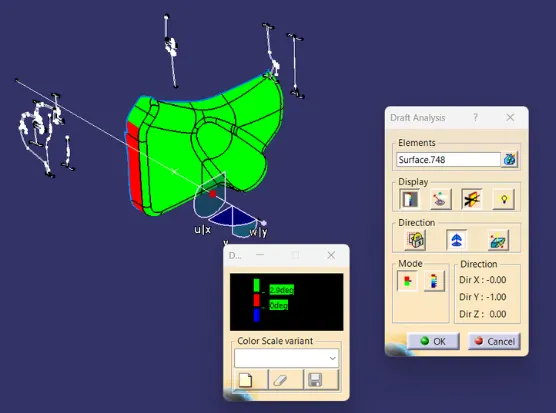
CLOSED SURFACES OF DOOR TRIM PANEL :
A) Class B Surface Creation;
Class B surface includes derived surfaces created by offset operations from Class A surfaces to define the thickness Of the material. In this file it is important to link Class B Surfaces geometrically to enable an adaptation to Class A surfaces Automatically in case of styling change.
After creating the tooling axis, B surface is to be created which is nothing but the surface parallel to the A surface. B surface contains all the fillets and the edges which the A surface contains.
B) Class C Surface Creation:
Class c Surface is swept along the boundary of the Class A at an angle perpendicular to the Class A Surface
with respect to the tooling axis direction with a draft angle of 3 degree.
After finishing all the 3 Surfaces, join the Class A and Class C surface together using Join command. Now, the joined surfaces are then trimmed with the Class B surface to form a Closed Surface.
Door Arm Rest :
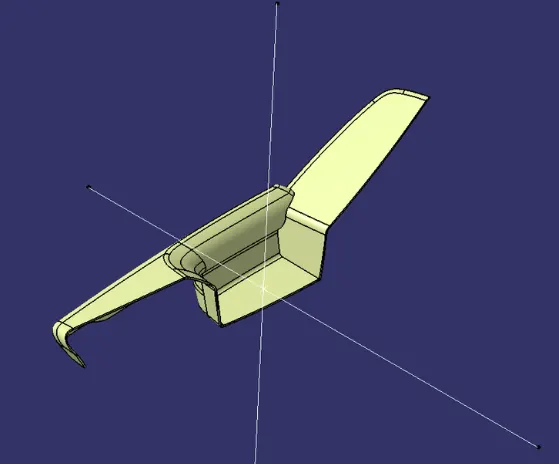
Map pocket :
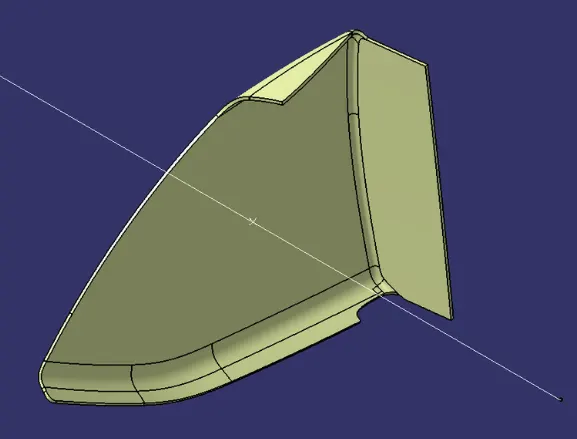
Bottle holder :
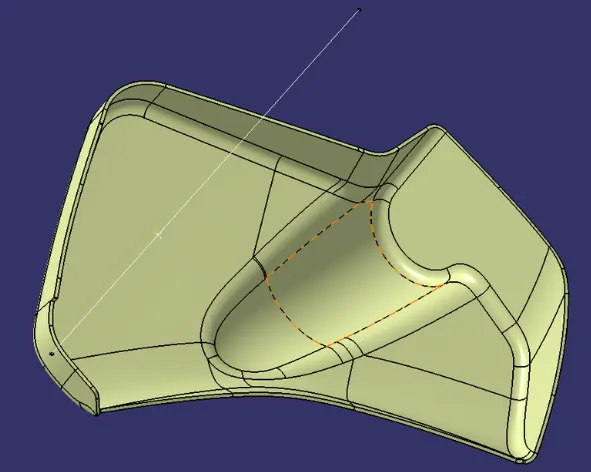
Lower subtrate :
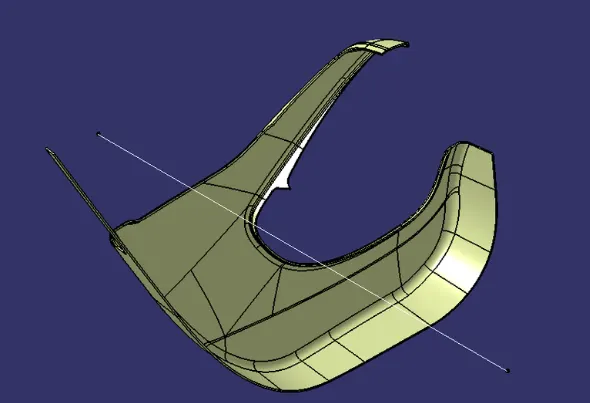
SOLID CAT PARTS OF CLOSED SURFACES AND FLANGES, HEAT STAKES AND LOCATORS :
After completion of closed surfaces thicken by the closed surface tool from CATIA V5.
Creation Of Flanges, Ribs, Dog House and Heat Stakes:
Dog House:
Create the Dog House as per the design rules and give the requiredd draft angle.
- Dog House wall thickness at intersecton of the part Wall(C) should be 40% or less than the main wall stock(T).
- Height of (B) should be between 3-6 mm.
Ribs:
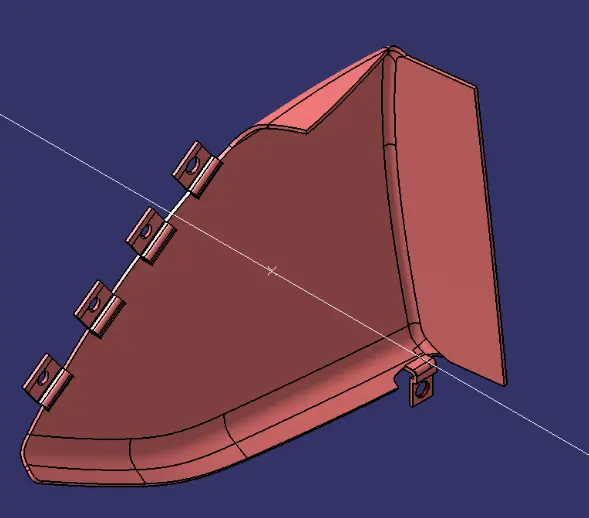
Create the ribs as the design rules and give the required draft angle, Ribs are created to increase the stifness and strength of the surface.
Heat Stakes:
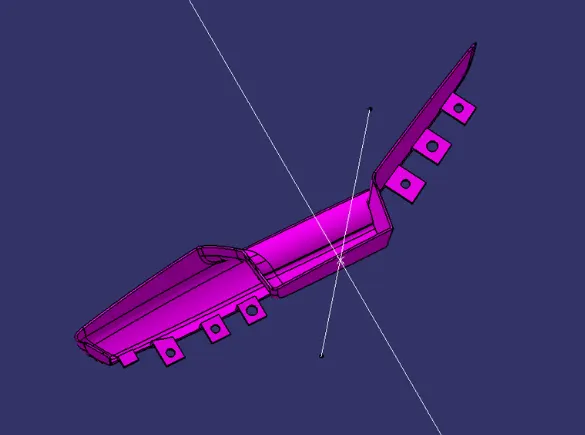
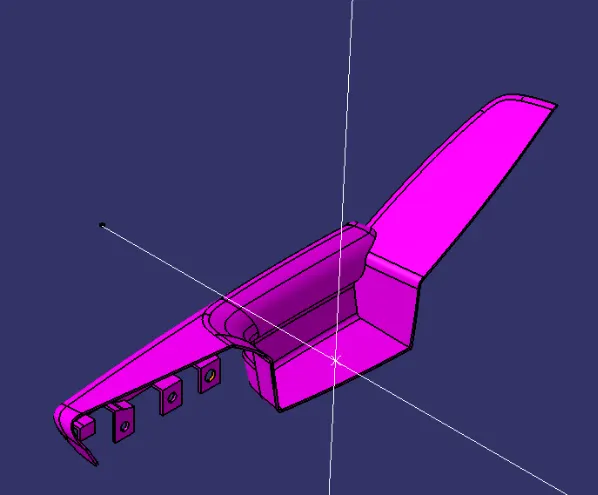
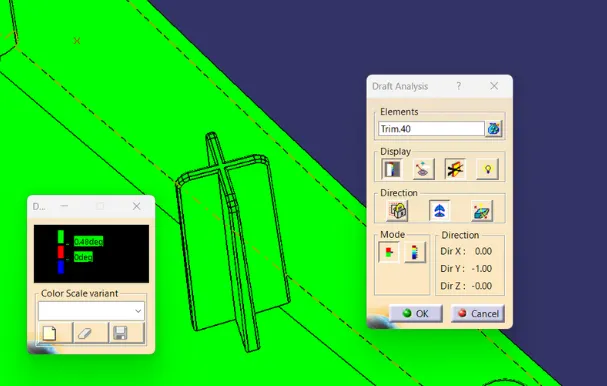
Heat Staking is a pulsed-heat process to join two or more parts out of which one atleast is made of plastic.
The process to deform the plastic material using heat and force at a set process time. The bond is made bt partially deforming the plastic part in order to the fix the other.
Door Arm Rest :
Map Pocket :
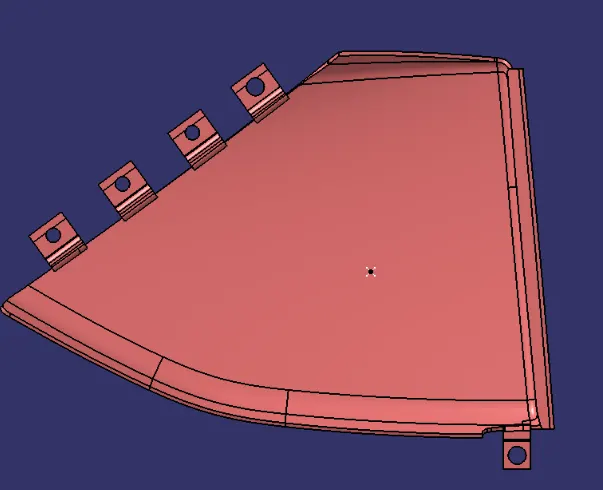
Lower Subtrate :
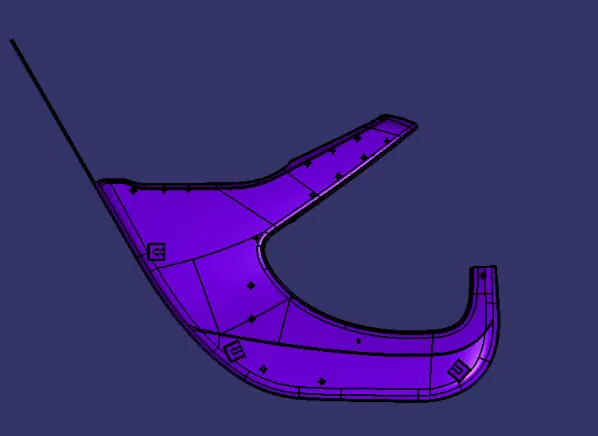
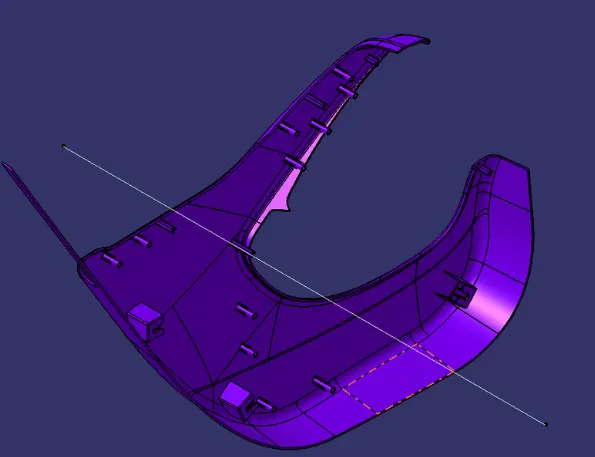
Bottle Holder :
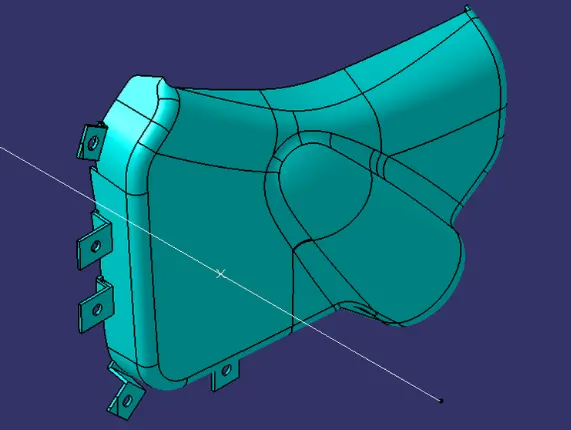
Draft Analysis of Final Component with required angle :
Door Arm rest :
Map Pocket :
Lower Subtrate :
Bottle Holder :
Dog House :
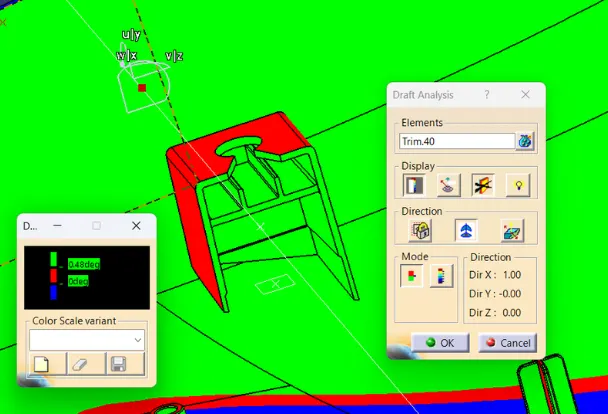
Heat stake :
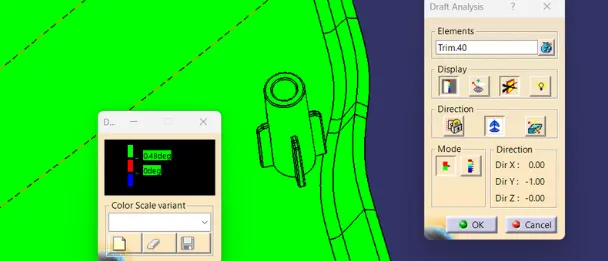
Locators :
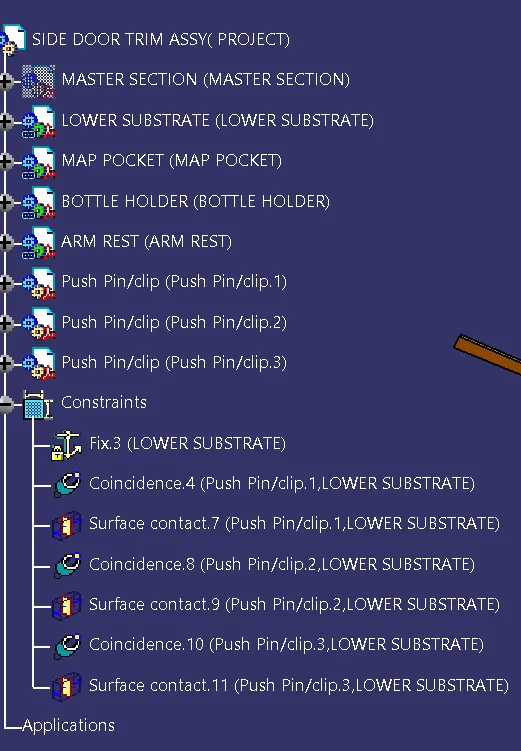
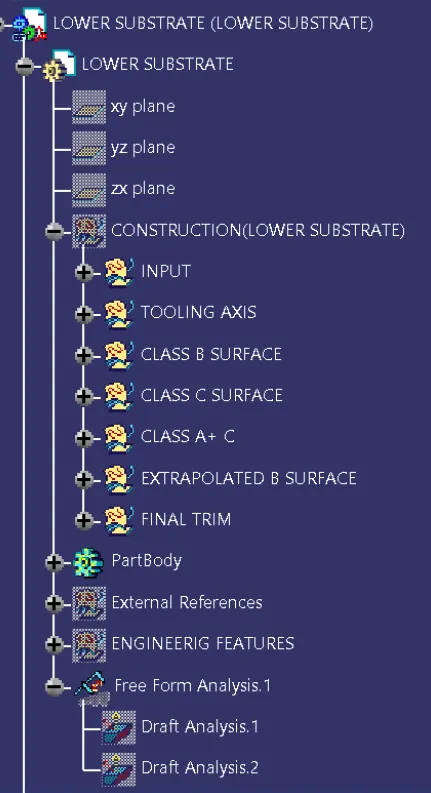
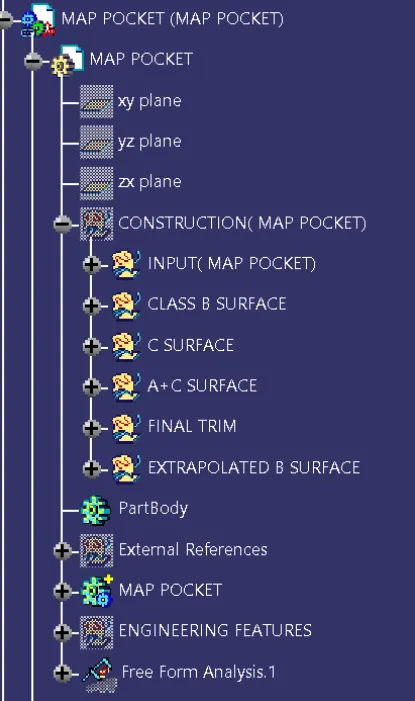
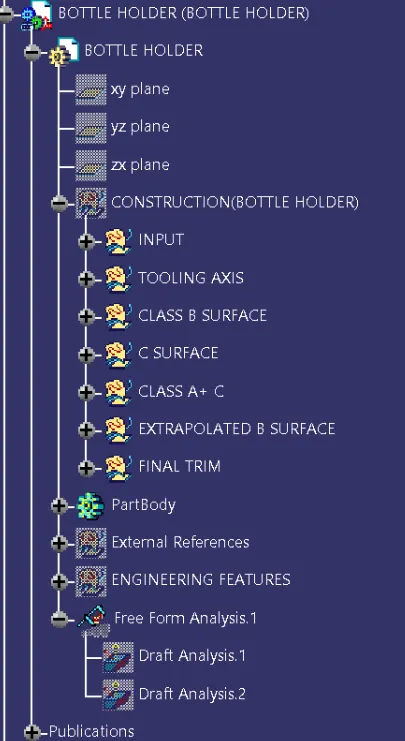
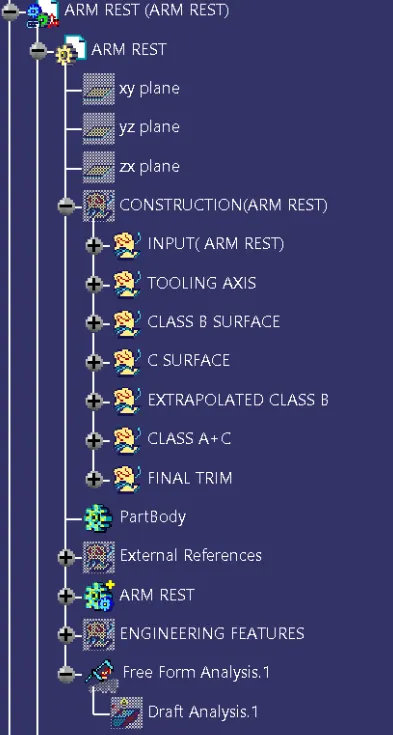
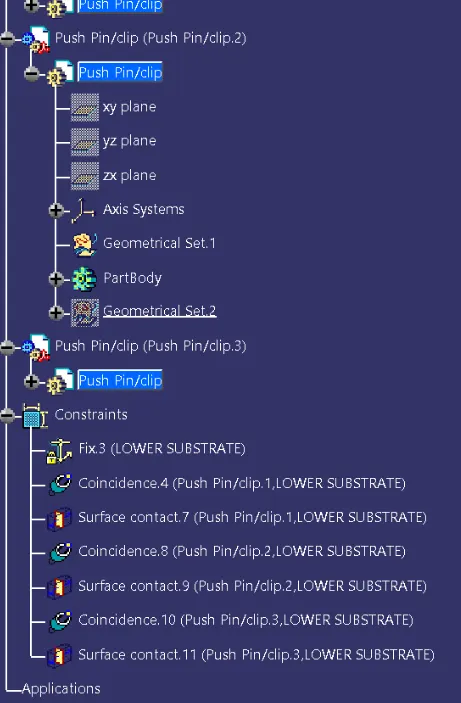
TREE STRUCTURE:
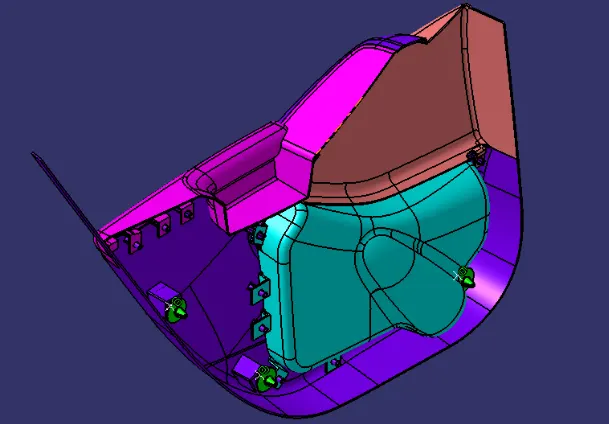
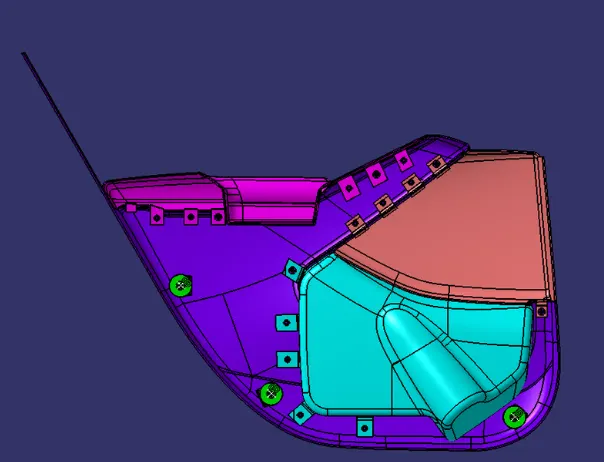
Final Assembly of all components in different views :
CONCLUSION:
- Successfully created Side Door trim Panel plastic component.
- Successfully performed draft analysis for class a surface and solid close surface.
- Successfully Extracted closed solid body from plastic surface.
- Created the Heat stakes and locators in the Door Trim Lower substrate considering the design rules.
- Created the Dog house in the Door Trim Lower substrate considering the design rules.
- Created flanges in Arm rest, map pocket and bottle holder.
- Successfully performed final draft analysis for solid close surface with engineering features.