Week 11 - Project - A pillar Design with Master Section
Aim:-
To design an A-Pillar using the master section provided from the given Class-A surface, considering the design rules and thickness of the part as 2.5mm.
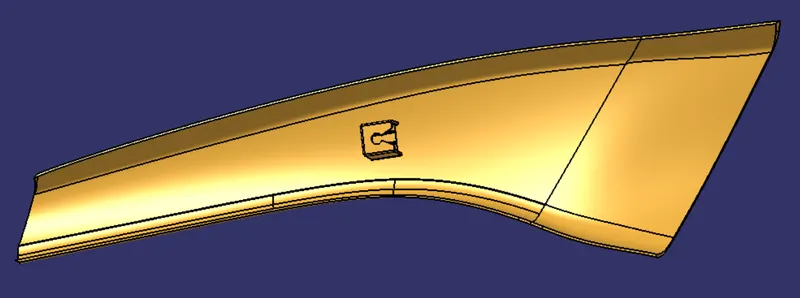
Fig.1: A-Pillar with Dog House.
Tooling Axis:-
The direction with respect to the component in which the mould opens and closes is the tooling axis. Basically, it defines the direction in which the mould pulls apart.
Procedure to create the main tooling axis using bisecting method:-
For this model,
- First, the given Class-A surface with the master sections was observed carefully from every direction and found that at the intersection of the two master sections, the Tooling Axis can be created.
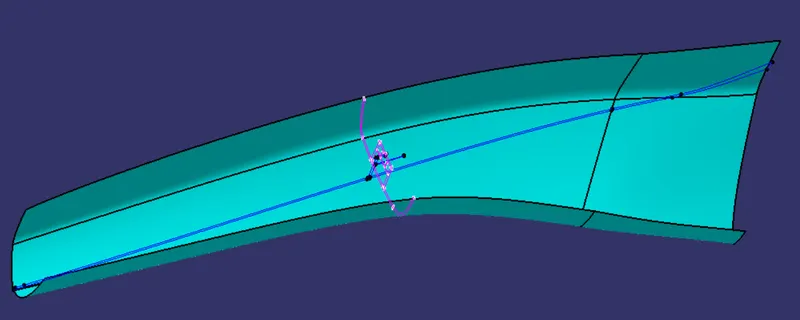
Fig.2: Given Class-A surface with master sections. - Then, a point was created at the intersection of both master sections.
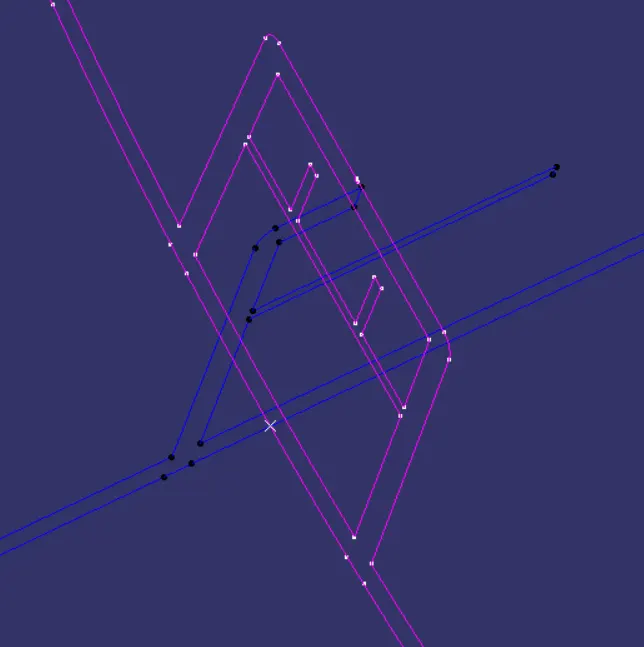
Fig.3: Point at the intersection of both master sections. - Then, two lines were extracted from one master section and a centre line was created using bisecting method passing through that point.
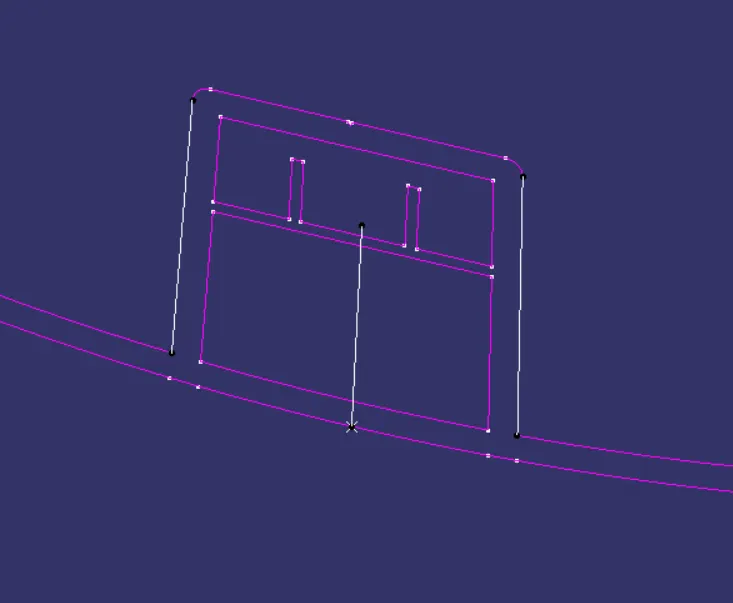
Fig.4: First bisecting line. - Then, two lines were extracted from another master section and another centre line was created using bisecting method passing through that point.
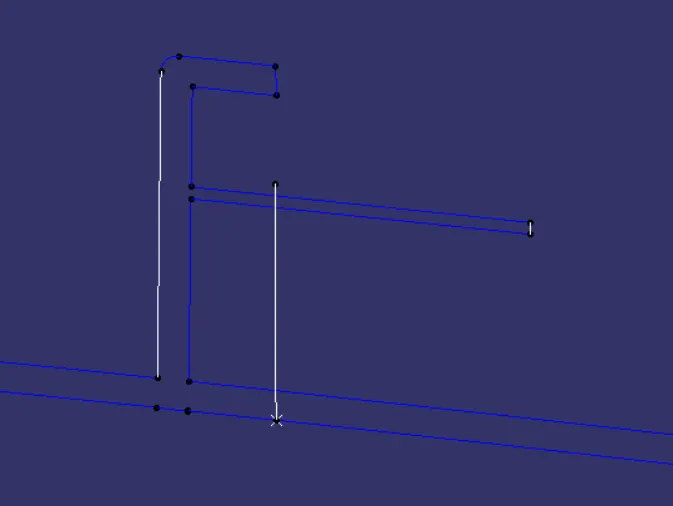
Fig.5: Second bisecting line. - Then, one more bisecting line was created using the above two bisecting lines passing through that same point.
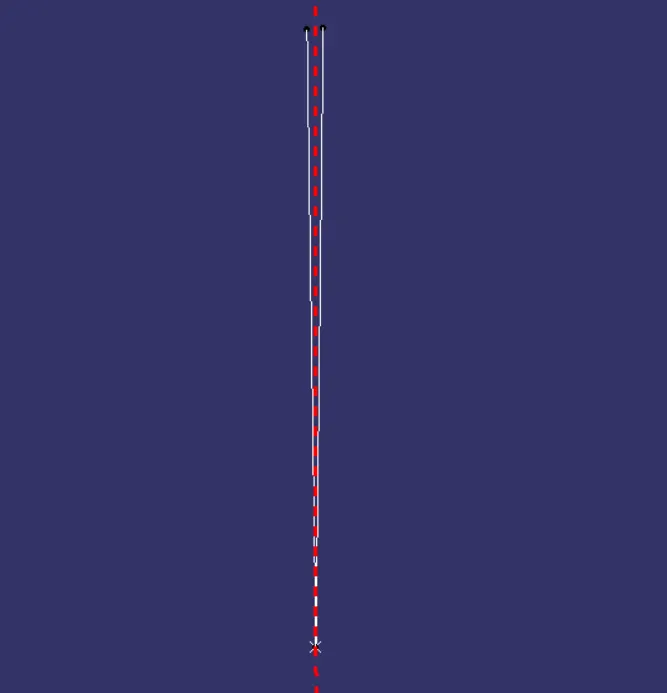
Fig.6: Third bisecting line. - Then, draft analysis was done for the Class-A surface considering the line as tooling direction.
- When no error was found in the draft analysis the line was named Tooling Axis.
- Hence, the Tooling Axis was created.
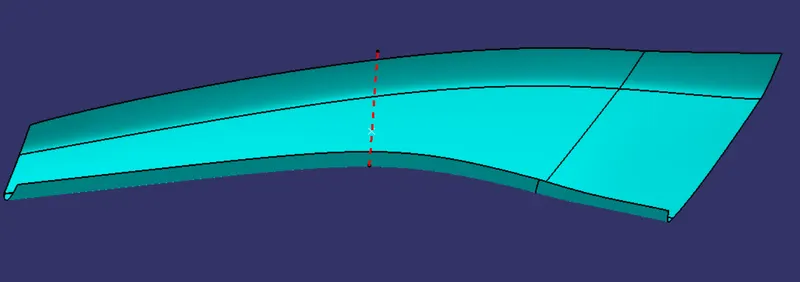
Fig.7: Main Tooling Axis.
Procedure to create the side core tooling axis:-
For this model, the side core tooling axis is required for creating the dog house.
- First, a point is created on the main tooling axis.
- Then, a plane was created on the master section.
- Then, a line was created perpendicular to the main tooling axis passing through that point in the perpendicular direction of that plane.
- Hence, the Side Core Tooling Axis was created.
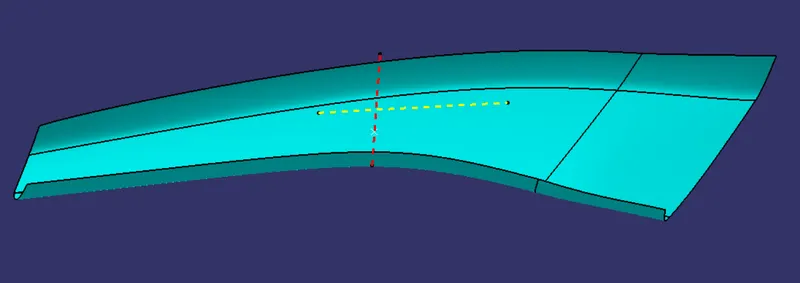
Fig.8: Side Core Tooling Axis.
Draft Analysis:-
The draft analysis is used to analyze whether our part model created in CAD is manufacturable based on the draft angle and the tooling direction provided. It also enables us to detect if the part will be easily removed from the mould or not. The ejection of the part from the mould depends on the draft angle.
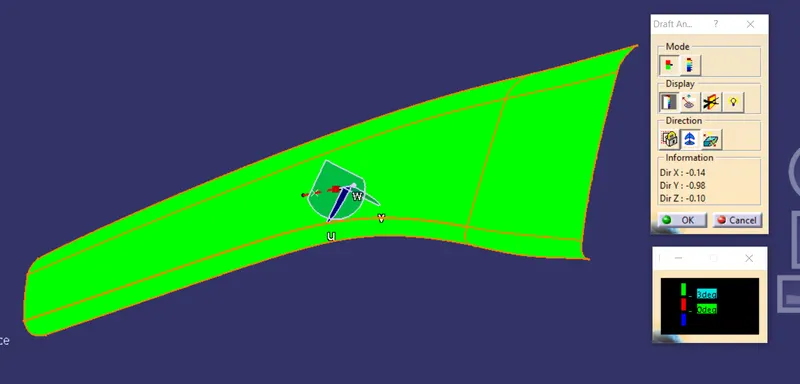
Fig.9: Draft analysis of the given Class-A Surface.
Class-B Surface:-
Class-B Surface was created by offsetting the Class-A surface by 2.5 mm. Then the surface patches were solved using the boundary and sweep commands.
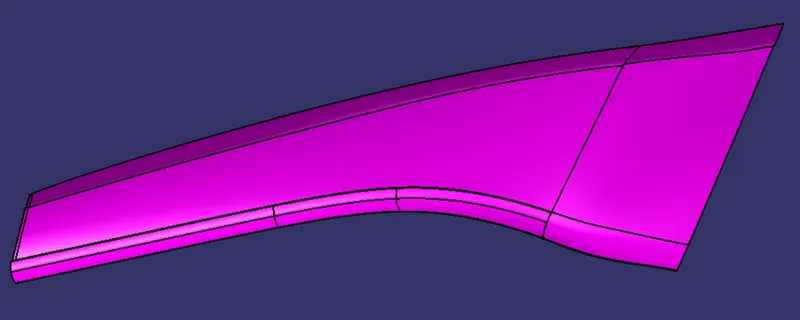
Fig.10: Class-B Surface.
Class-C Surface:-
Class-C Surface was created using the boundary of the class-A surface and sweeping along the tooling axis direction. Then the edges of the sweeps were extrapolated and trimmed with each other.
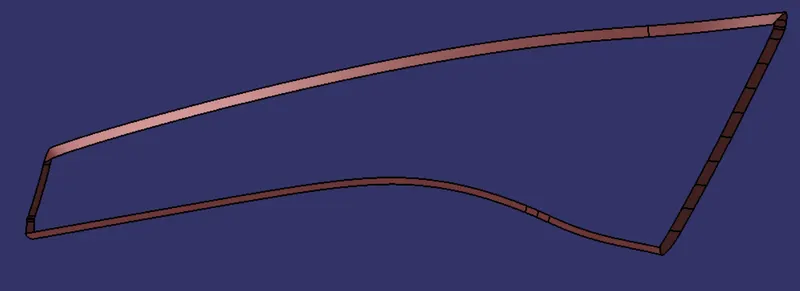
Fig.11: Class-C Surface.
Combining A, B and C Surface:-
All three surfaces were combined by joining the Class-A and Class-C surfaces and trimming them with the Class-B Surface. At last, it was converted into the Solid Model by using the Close Surface command.
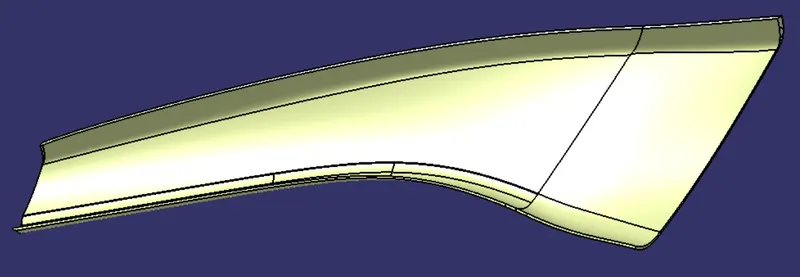
Fig.12: Joined Class-A, Class-B, and Class-C Surface.
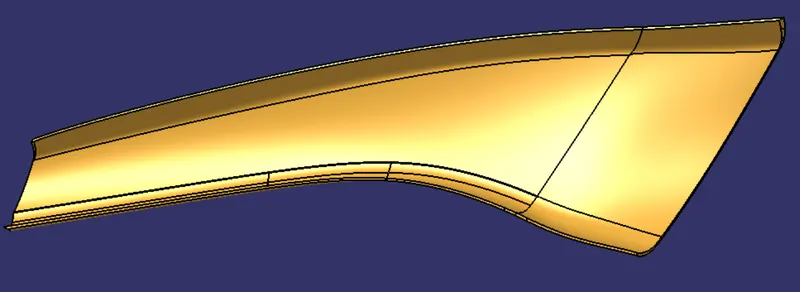
Fig.13: Solid Model.
Attachment Feature Dog House Design:-
Dog houses are designed to avoid sink marks created on the CLASS-A surface by screw bosses and to solve the length issues of screw bosses which need to be assembled with other components.
After making the solid model dog house was created following the dog house design rules.
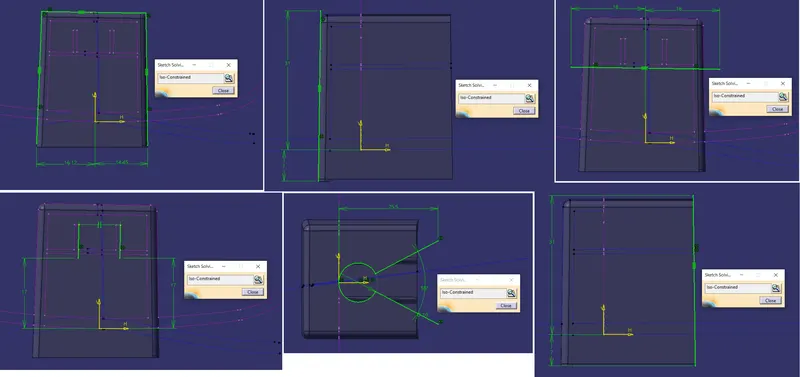
Fig.14: Sketches for dog house.
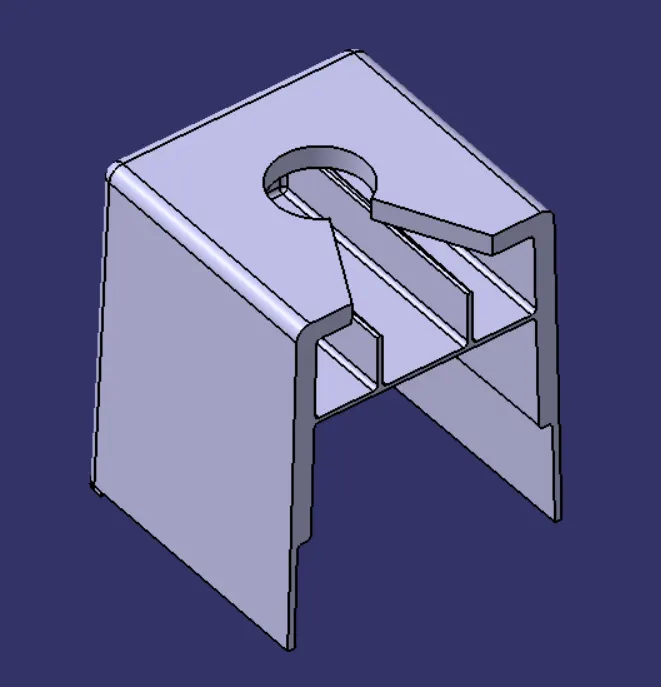
Fig.15: Dog house.
Fig.16: Model with dog house.
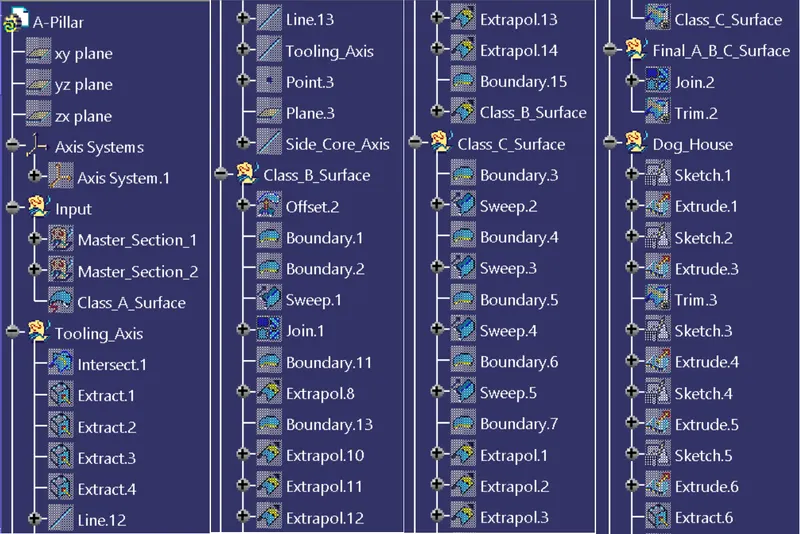
Fig.17.1: Tree Structure for the Geometrical Sets and the Part Body of the Model.
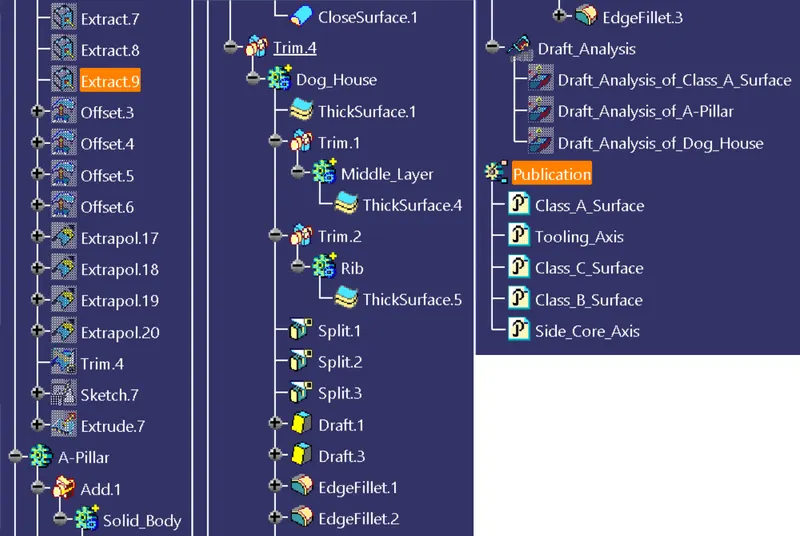
Fig.17.2: Tree Structure for the Geometrical Sets and the Part Body of the Model.
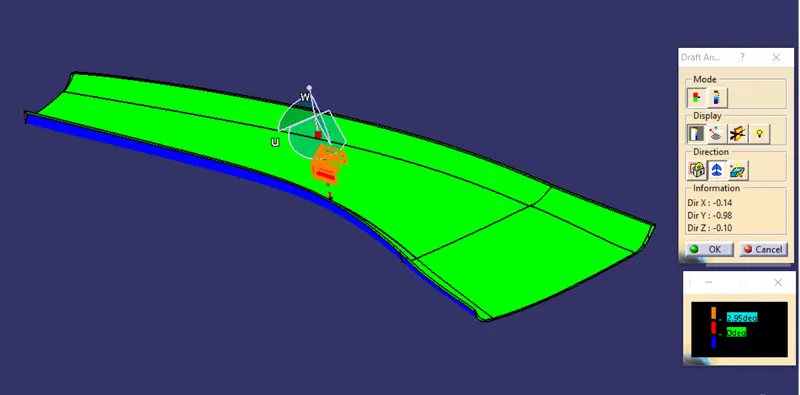
Fig.18: Draft analysis of the A-Pillar.
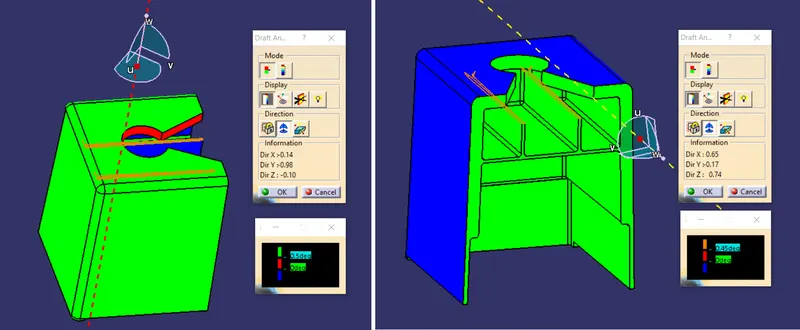
Fig.19: Draft analysis of the Dog House.
Conclusion:-
The A-Pillar was designed using the master section provided considering the design rules from the given Class-A surface. Also, the Tooling axis was created and perform the Draft analysis on both Class-A Surface and the solid model.