Week 11 - Project - A pillar Design with Master Section
REPORT ON A PILLAR DESIGN
AIM
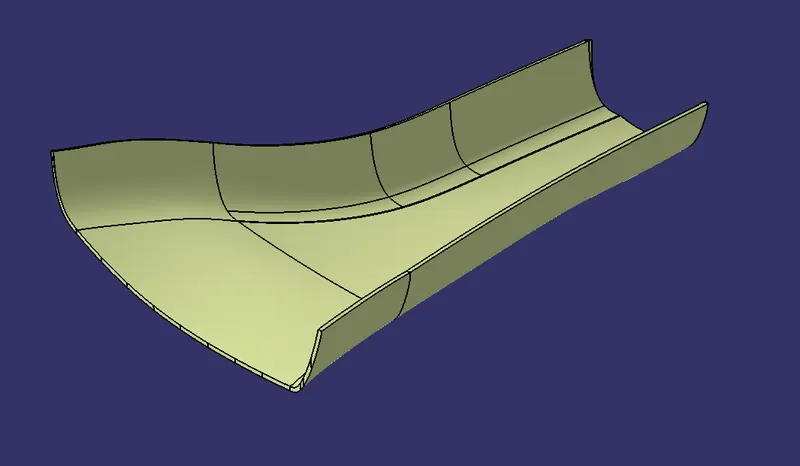
The aim of this project is to design the A - Pillar from the given class-A surface and also create the B side features for the A - Pillar. Also the objective of this project is to create the tooling axis for main tooling and the side core tooling for dog house creation and do the draft analysis on both class-A surface and final component.
INTRODUCTION
PILLAR -
Car pillars are components that support the structure of an enclosed automobile body. This is similar to that of a house with pillars supporting the roof over the floor. Car pillars are designed to stand in near vertical or inclined positions to support the roof.
The consistent alphabetical designation of a car's pillars provides a common reference for design discussion and critical communication. This is used by insurance companies to identify damaged components and rescue teams employ pillar nomenclature to facilitate communication when cutting wrecked vehicles, as when using the jaws of life.
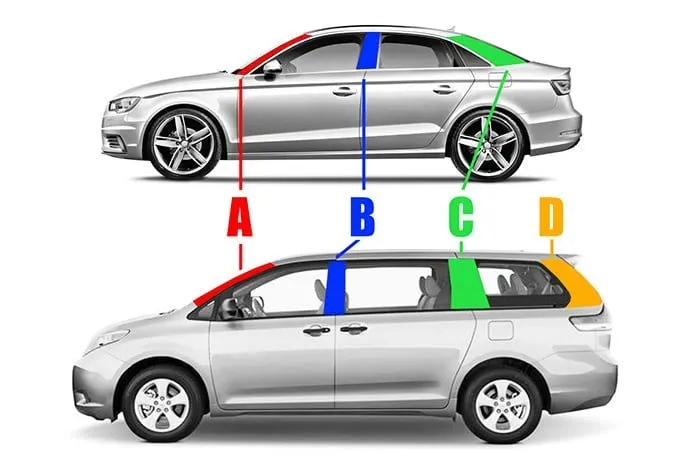
Body pillars are critical in providing strength to an automobile body. As the most costly body components to develop or re-tool, a vehicle's roof and door design are a major factor in meeting safety and crash standards. Before safety standards, pillars were typically thin. The design of body pillars has changed with regulations that provide roof crush protection. Standards in the United States were introduced in phases starting in 2009 that require enclosed passenger cars to be able to support from 1.5-times to 3.0-times the vehicle's unloaded weight on its roof while maintaining headroom (survival space) for occupants.
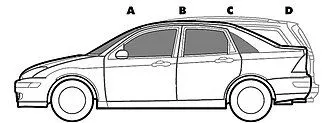
This has meant designing thicker roof pillars that not only provide sufficient strength, but also to incorporate padding and airbags. However, thicker A-pillars block the field of vision and create blind spots). Some designs employ slimmer, chamfered A-pillars on each side of the windshield to help improve driver vision and through the use of stronger alloy steel. The objective of this construction is to meet safety standards and offer crash protection.
A - Pillar -
A-Pillar is located on either side of your car’s front window (or windshield).
They also hold the hinges of your front doors. A-pillars are normally made of steel alloys.
Besides being a supporting member, A-pillars are very crucial as far as safety is concerned. A-pillars usually carry a significant amount of load during a frontal collision or a rollover crash. So the larger the width or cross-section, the greater would be the strength but A-pillars always block the driver’s vision (create blind spots) to some extent that can be realized while driving. So, having that said, using thicker A-pillars can make the situation even worst. It might further lower the driver’s vision and raise a question about the vehicle’s and passenger’s safety.

Hence, the design of A-pillars must be optimized giving equal importance to both strength and the driver’s vision.
Design methodology for A - Pillar design -
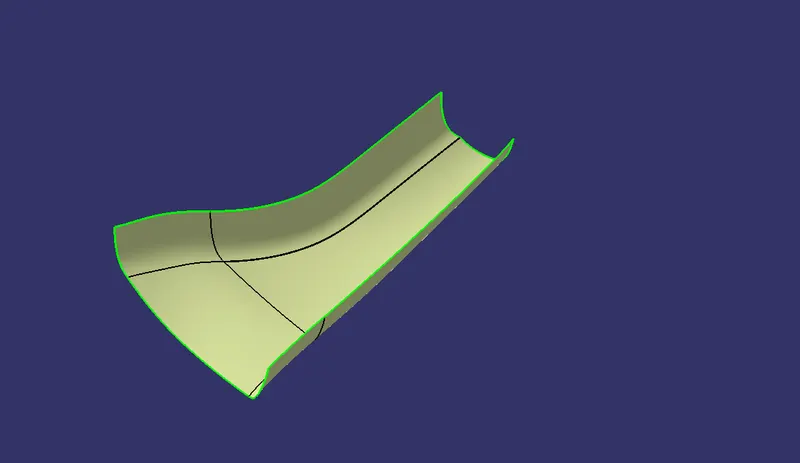
- Class - A Surface - Class A surface is a surface made by the designer specially in automotive design which is the aesthetic part of a body and is given as an input to the plastic designer to work on it.
- Tooling Axis -
Tooling axis is the direction in which the core and cavity opens. If we are using proper tooling axis, we can avoid adding side cores thus the cost of manufacturing the component can be reduced.
It is defined as the direction in which the mould/core and cavity open. Selection of the direction of the tooling axis depends on the ease at which components can be easily ejected.
Generally tooling axis is decided from the natural axis of the design, that is, tooling axis is analysed with the x, y and z axis of the system. If the axis doesn’t clear the draft analysis, the next step is to look for the surface in which the drafting axis can be created in such a way that the axis is normal to the surface taken. These are the methods of deciding tooling axis. Bisecting method is the least used method.
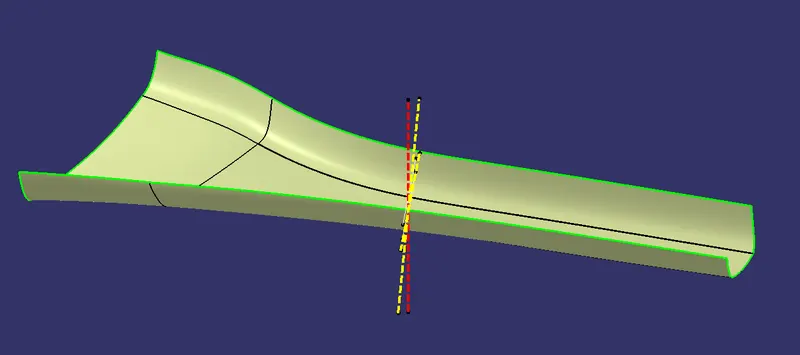
Main Tooling Axis -
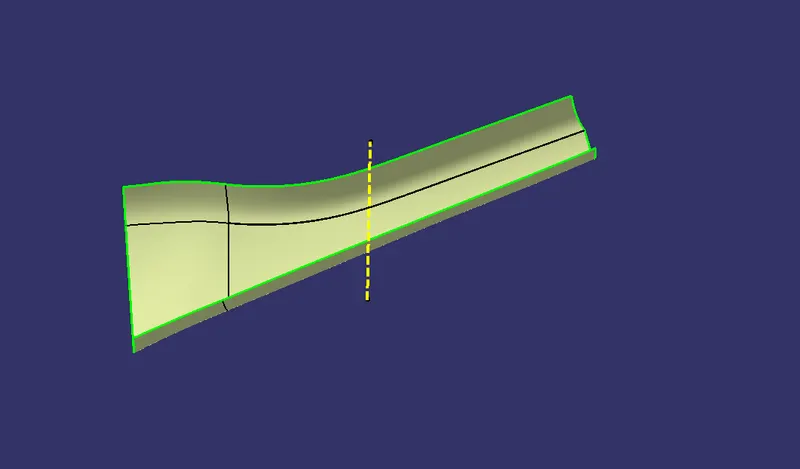
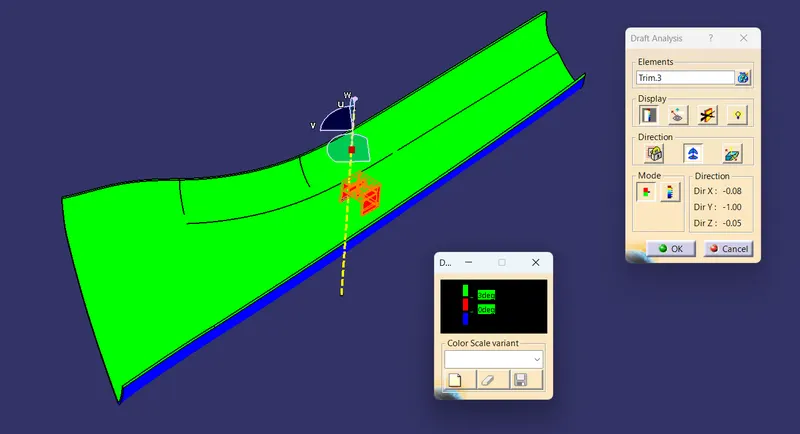
- Draft Analysis on Class-A Surface -
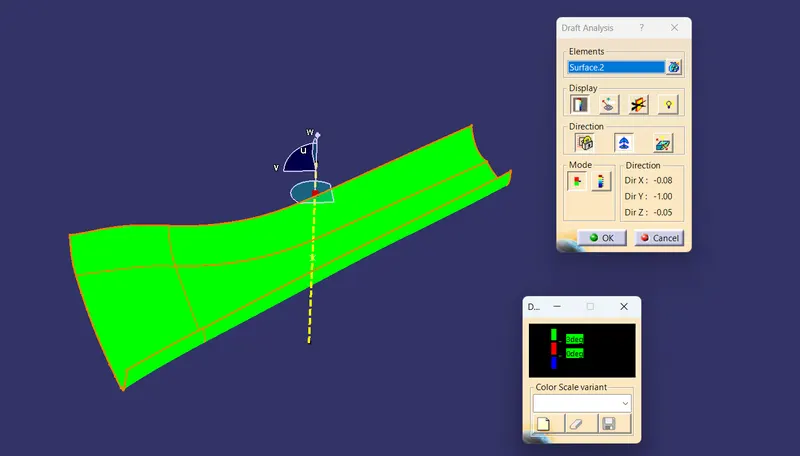
Do the draft analysis on class-A surface with main tooling direction.
- B Surface Creation -
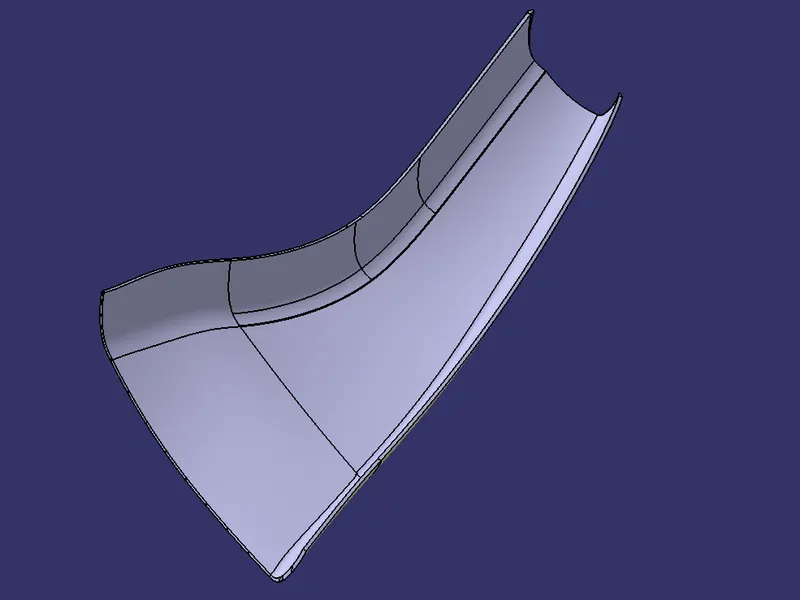
It is a surface which comes below the class A surface with a particular thickness. This surface contains engineering features of a model.
- C Surface Creation -
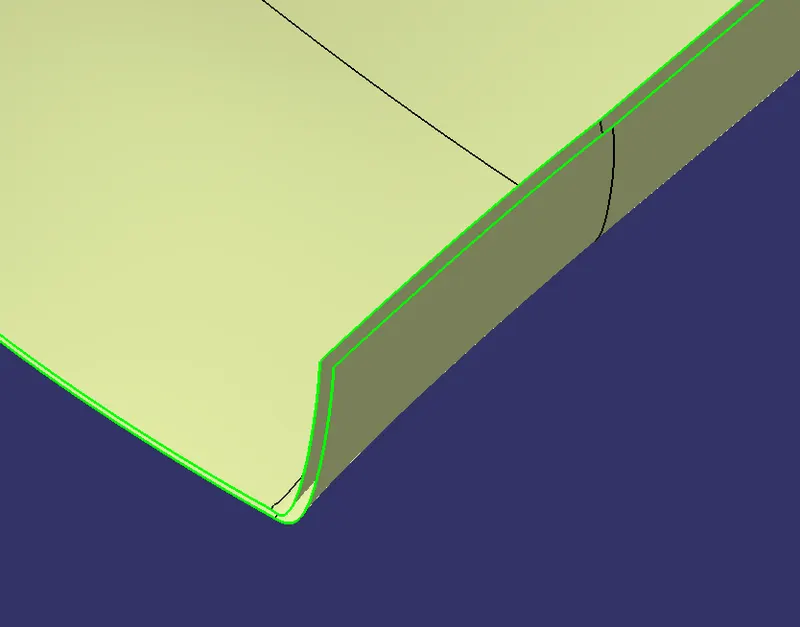
It is the surface which joins class A with class B surface.
- Final Trim
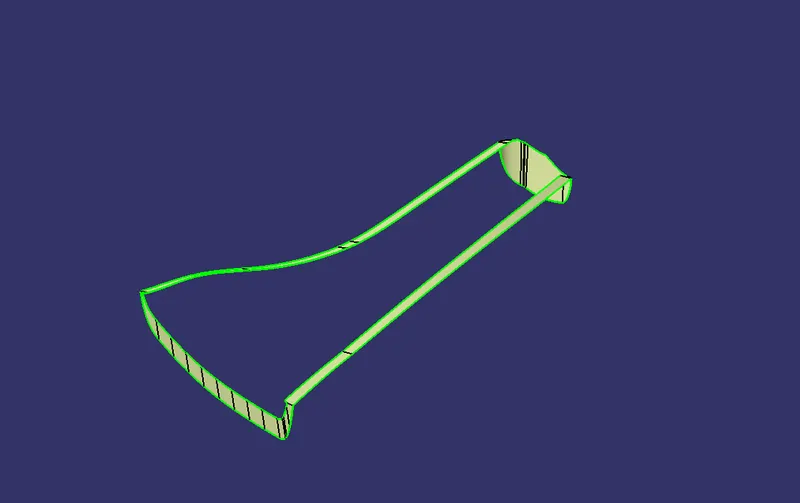
After creating the class-A, B and C surfaces we trim them together to make closed surface and then make them into solid body.
- B Side Features Creation -
Master Section -
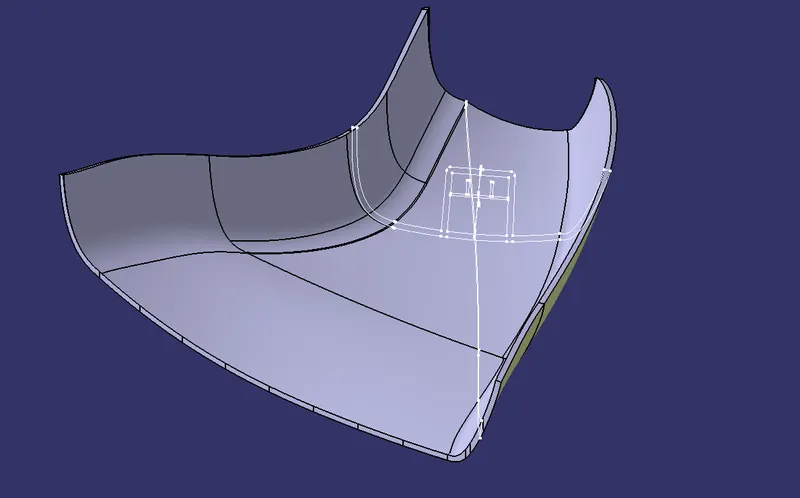
Master sections are the guides for design requirements which decide the component packaging after technical (Styling, Concept or Class-A) surfaces. Creating this master section should need 5 to 6 years of experience. This helps you to decide the feasibility, clearance, the packaging and the fixation strategy before working it on a 3D.
DOG HOUSE -
It is an engineering feature used in plastic trim design. It is used as a supporting feature. By using dog house, we can support the other engineering features like heat stakes, screw boss and locators to locate them at a certain height where we cannot violate the design rules for the features. By using doghouse, we can avoid sink marks in class A surface.
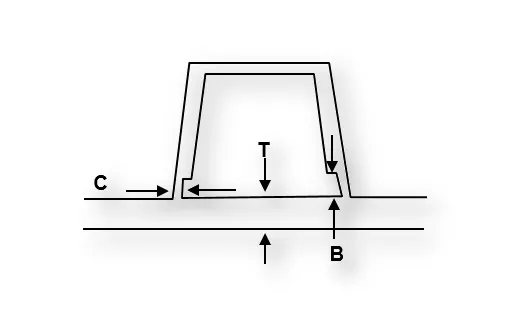
Doghouse wall thickness at the intersection of the part wall ( C ) should be 40% or less than the main wall stock ( T ).
The height of ( B ) should be between 3.0 – 6.0 mm
Let's create B side features according to the master section -
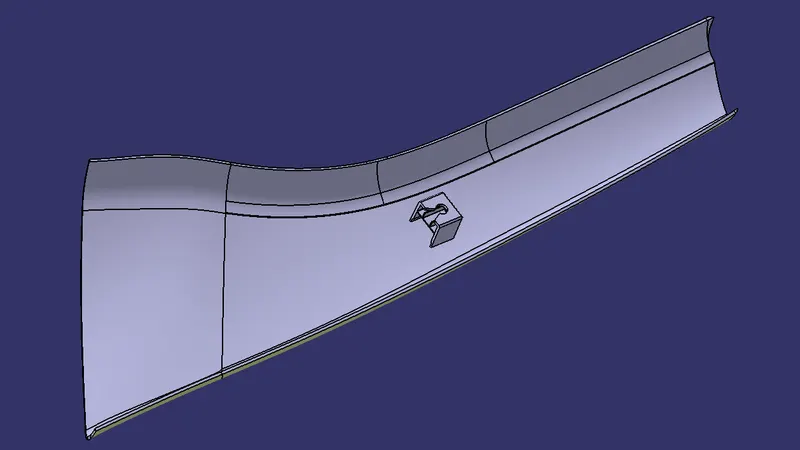
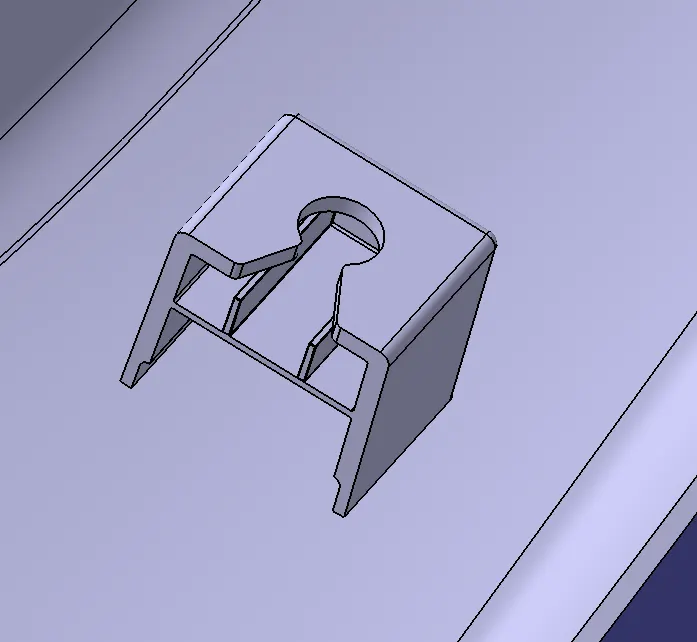
- Creating Side Core Tooling Axis for Dog House -
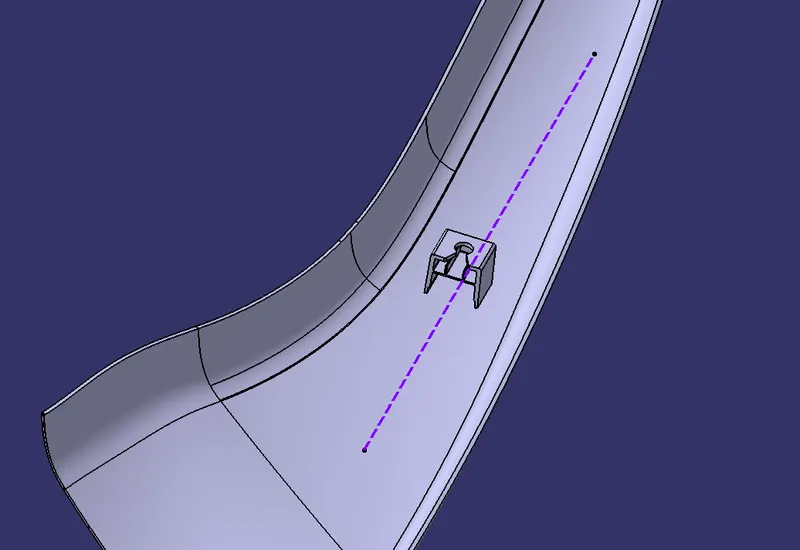
Draft Analysis on dog house with side core tooling axis -
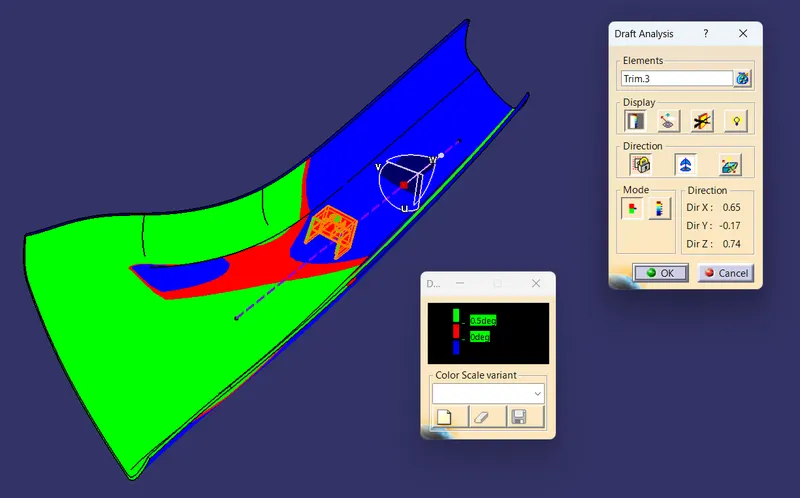
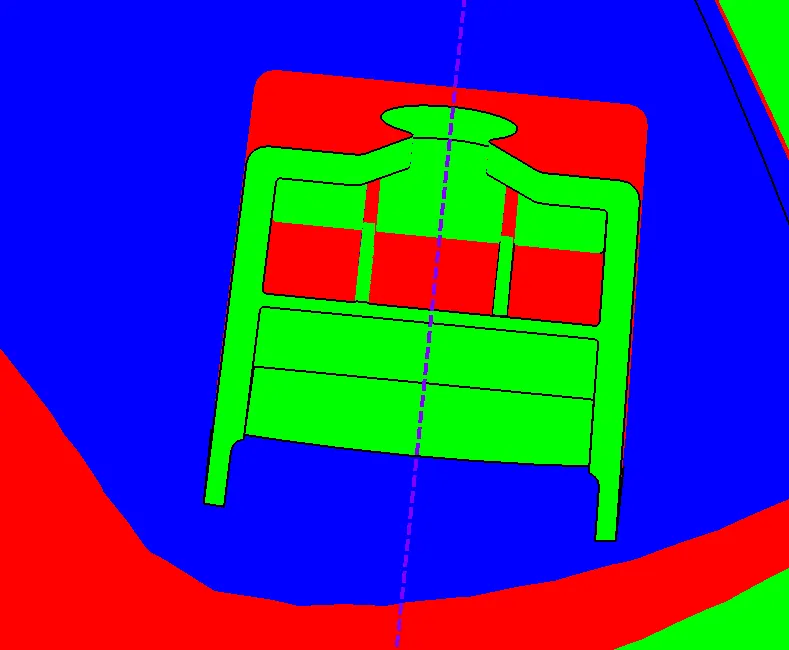
- Draft Analysis on Final Component with Main Tooling Axis -
CONCLUSION
We discussed about the A - Pillar and its application in Automobile. Also we discussed about the design methodology for A - Pillar design. We created B side features according to the given master section and do draft analysis on it. we also created the main tooling axis & side core tooling axis and do draft analysis on both class-A surface and Final Component.