Week 11: Project 2 - Emission characterization on a CAT3410 engine
AIM:
To simulate a 600 Sector geometry of a CAT-3410 diesel engine with different piston bowl profiles and to understand the effect of piston bowl geometry on performance and emisson characteristics of the engine.
INTRODUCTION:
The geometries are created using the “make engine sector surface” tool available in CONVERGE studio.
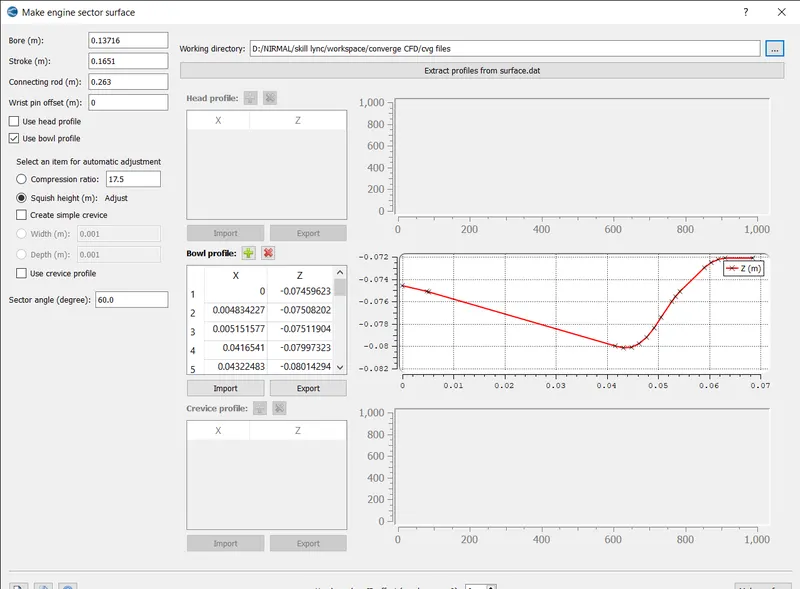
- Open-w piston:
- Omega piston:
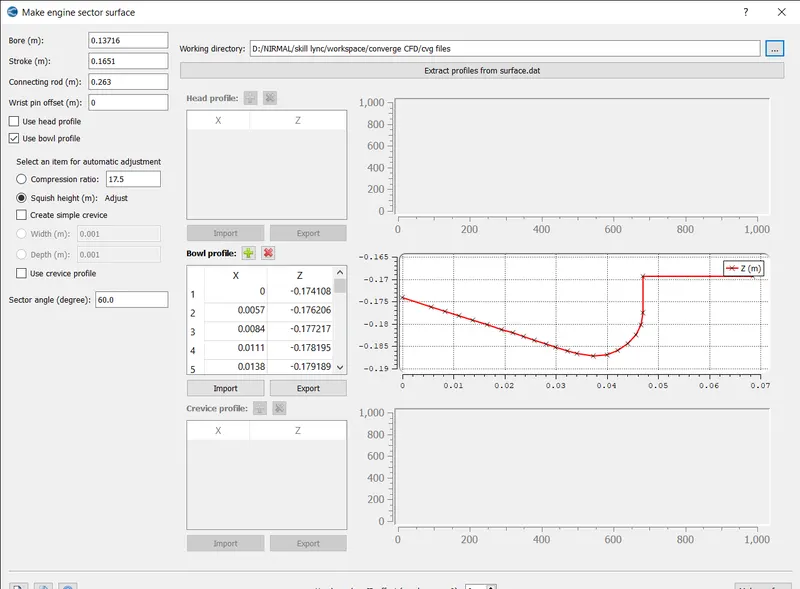
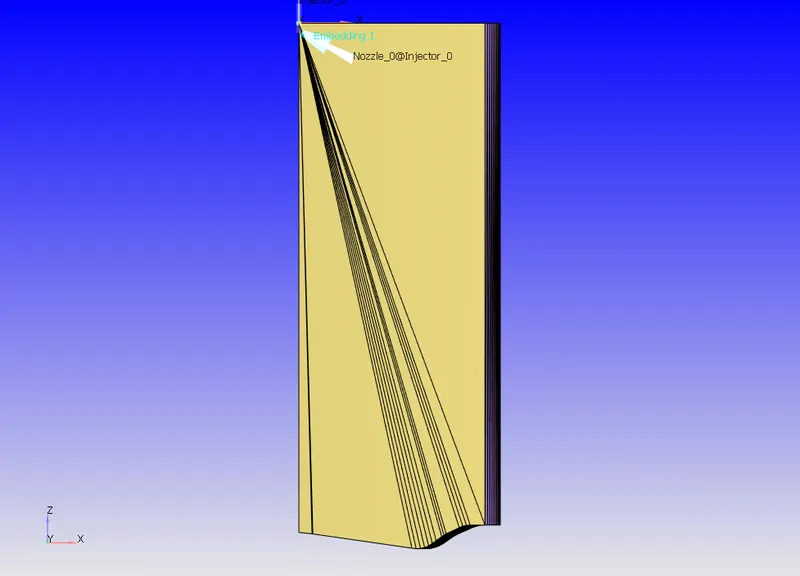
The surface geometries generated from this tool are shown below
1.Open-w piston
2.omega piston
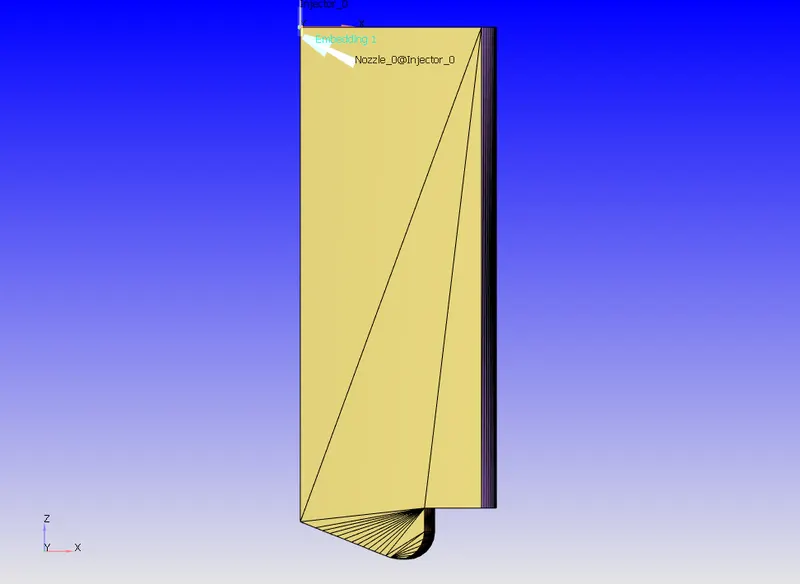
Sector geometries are useful in running quick simulations when there is symmetry in the model. This engine consists of 6 nozzles hence the model can be divided into 3600/6 = 600 sector.
The engine geometric parameters are as follows
- Bore: 0.13716 m
- Stroke: 0.1651 m
- Connecting rod: 0.263 m
- Compression ratio: 17.5
- RPM: 1600
SETTING UP THE SOLVERS:
- MATERIALS:
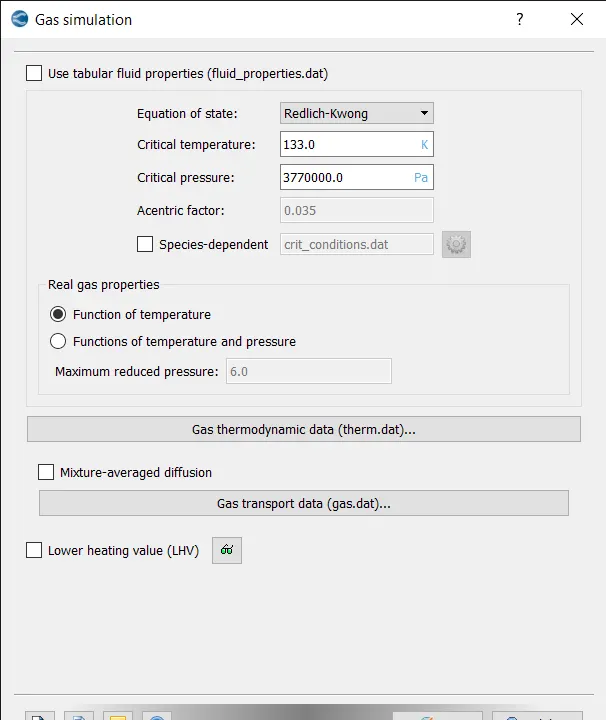
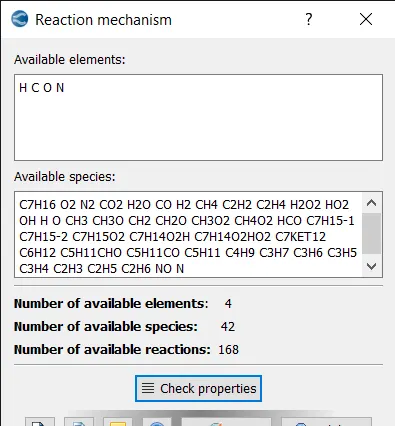
Gas simulation and reaction mechanism are selected and thermodynamics properties are imported.
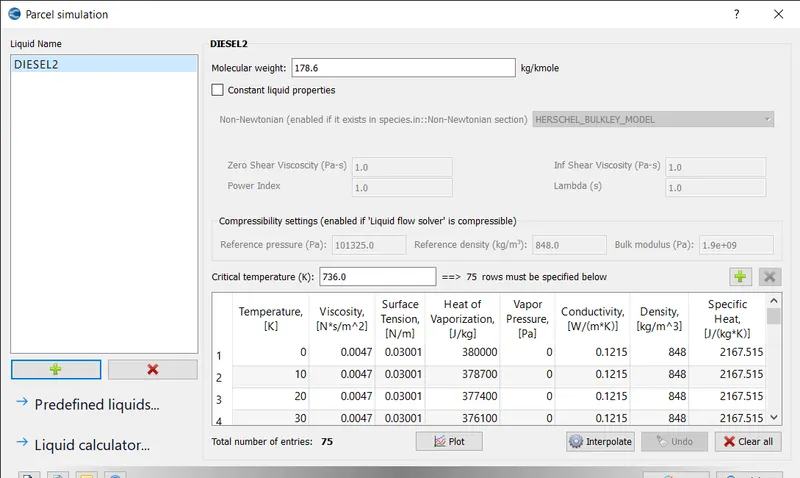
Diesel2 species is selected under parcel simulation as this as closer properties to diesel.
- RUN PARAMETERS:
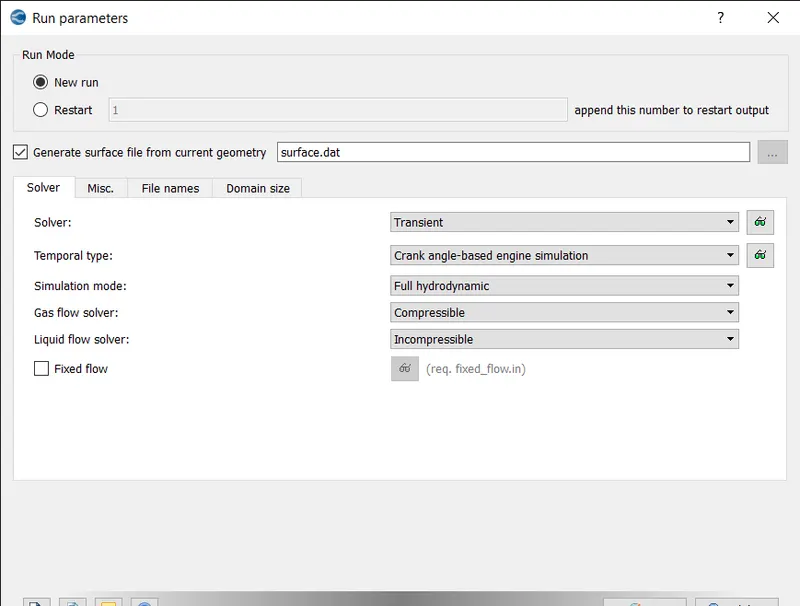
The transient solver is selected as the solver type.
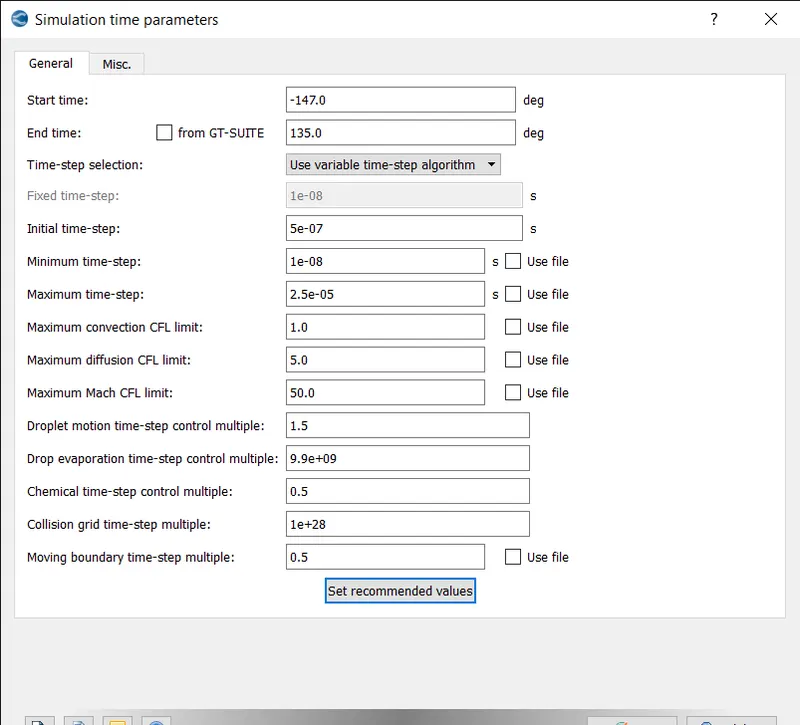
The start time, end time and the time step are specified in simulation time parameters.
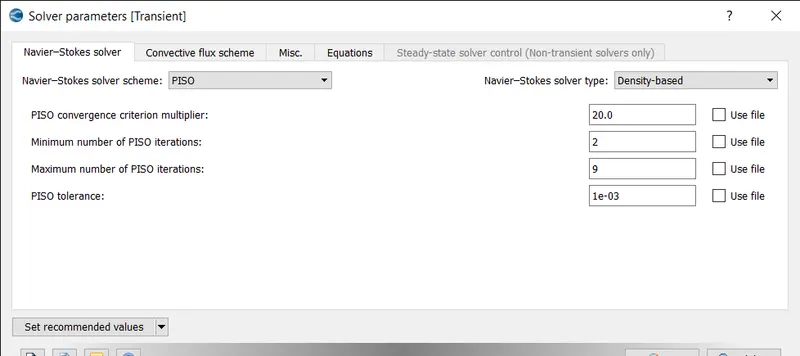
PISO is selected as navier-stokes solver scheme.
- REGIONS AND INITIALIZATION:
IN CYLINDER REGION:
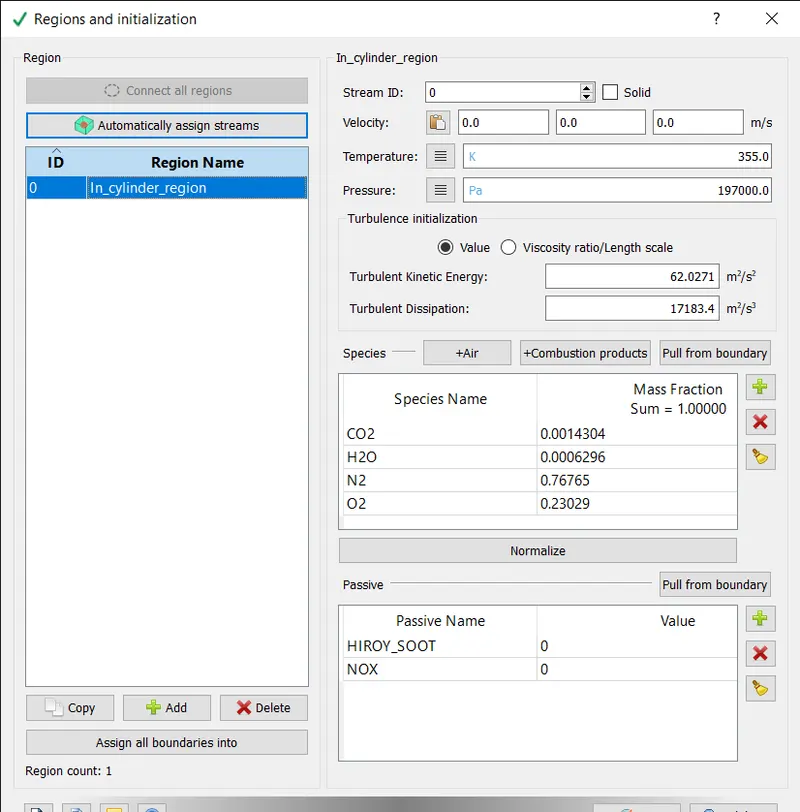
The cylinder region of temperature 355k and pressure of 197000 pa and CO2, H2O, N2, O2 are added as species. The soot and nox are added as passives.
- BOUNDARY CONDITIONS:
PISTON:
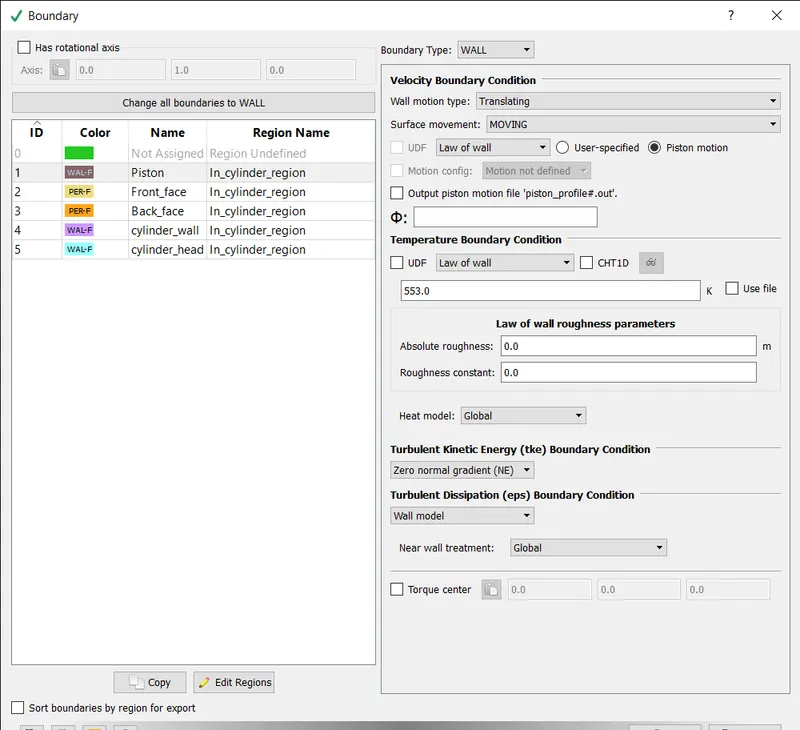
The piston is of boundary type wall and velocity b.c. as translating motion and moving and law of wall boundary condition and temperature b.c. as 553k is defined.
FRONT FACE:
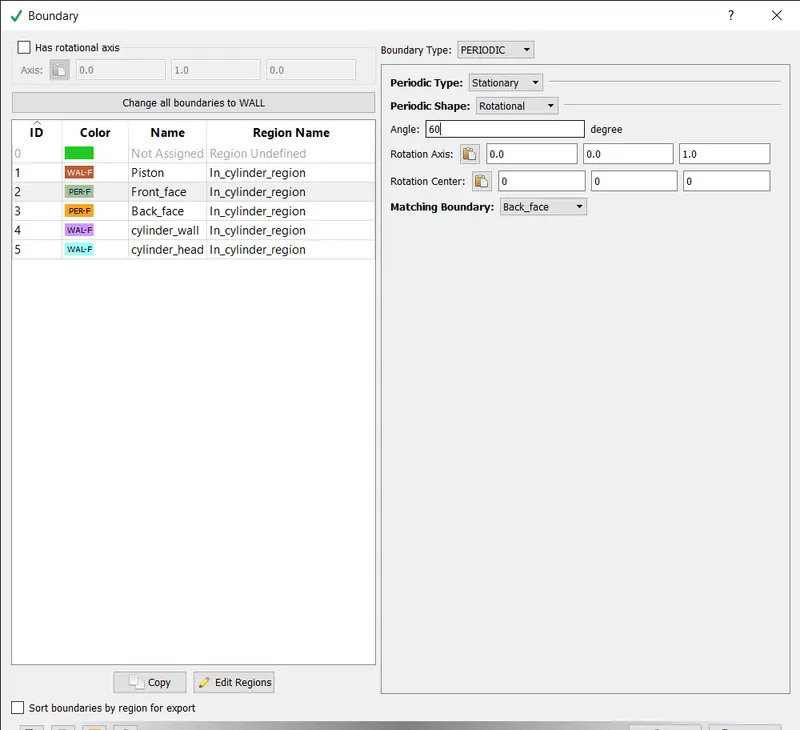
The front face is of boundary type periodic and periodic tyoe stationary and shape as rotational of angle 60 degrees and matching boundary as back face is defined.
BACK FACE:
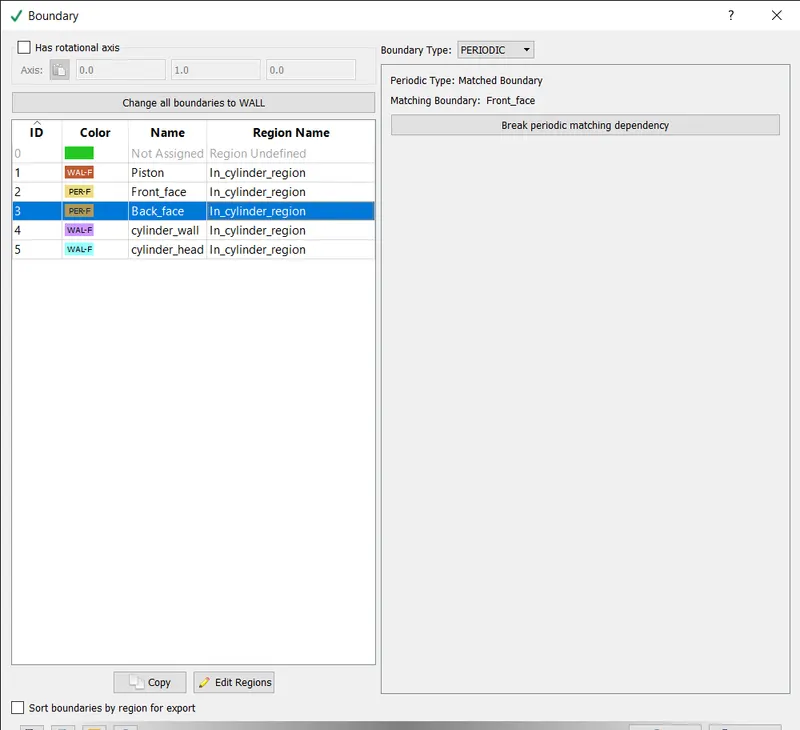
For back face the boundry type is specified as periodic and matched boundary as front face.
CYLINDER WALL:
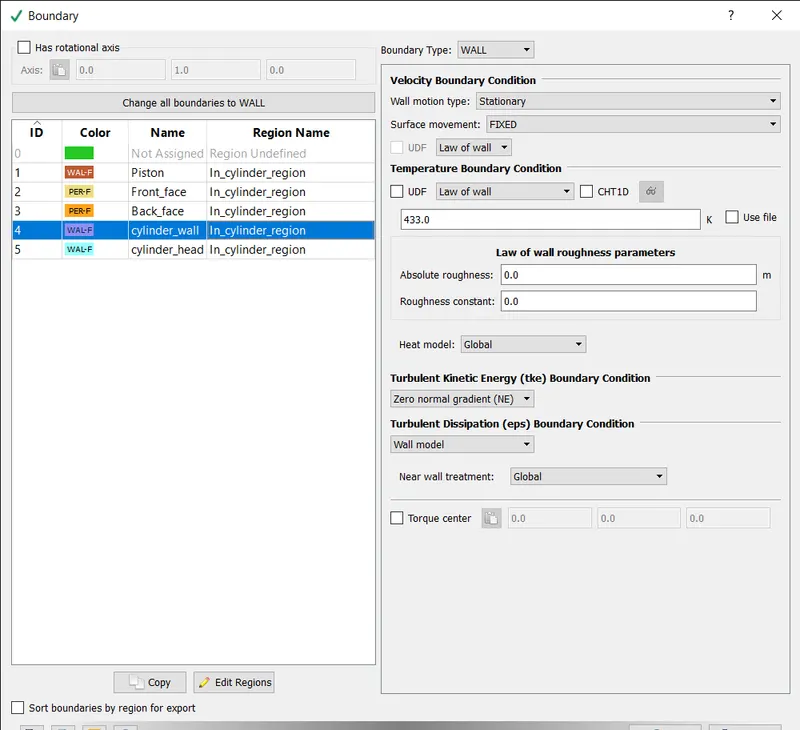
The cylinder wall is of boundary type wall and velocity boundary condition as law of wall and temperature boundary condition as law of wall of 433k.
CYLINDER HEAD:
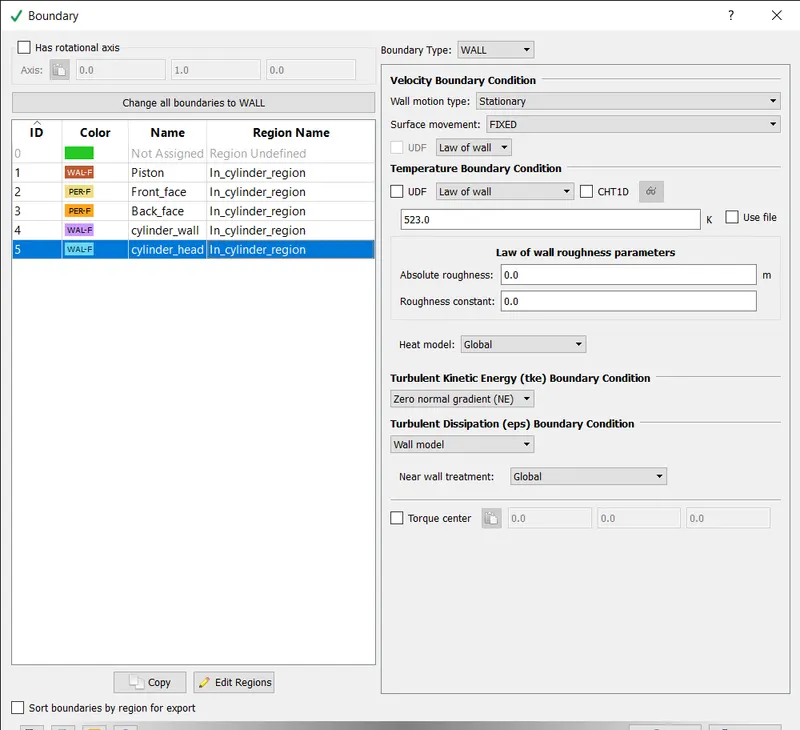
The cylinder head is of boundary type wall and velocity boundary condition as law of wall and temperature boundary condition as law of wall of 523k.
- SPRAY MODELLING:
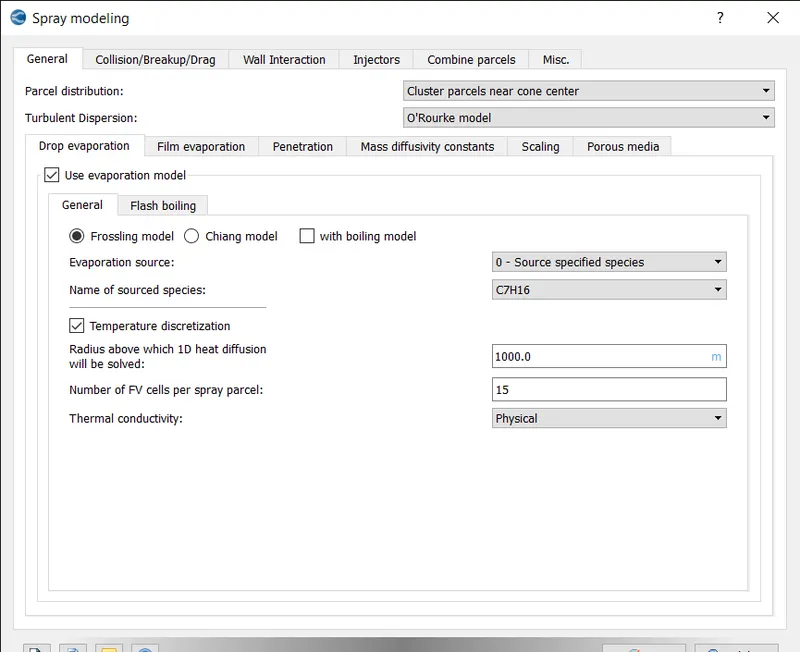
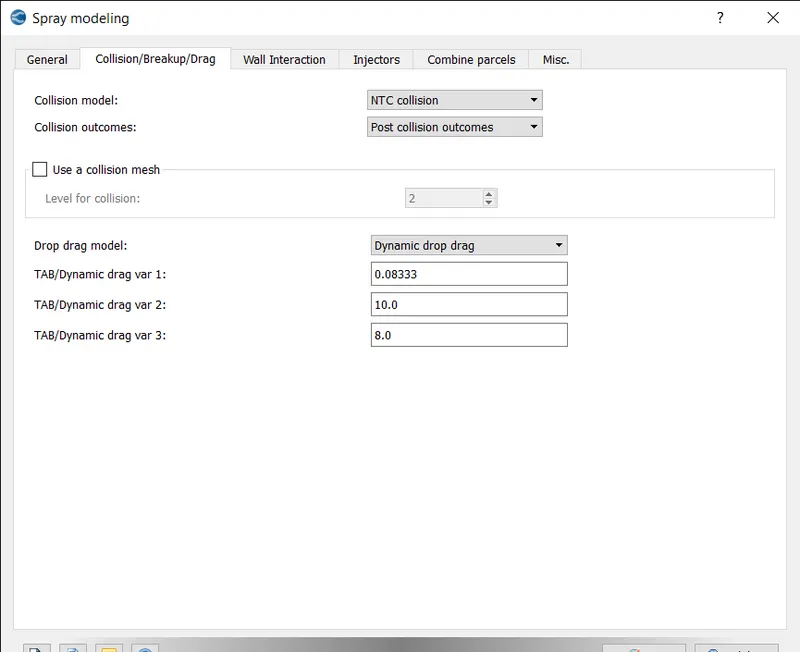
INJECTION PARAMETERS:
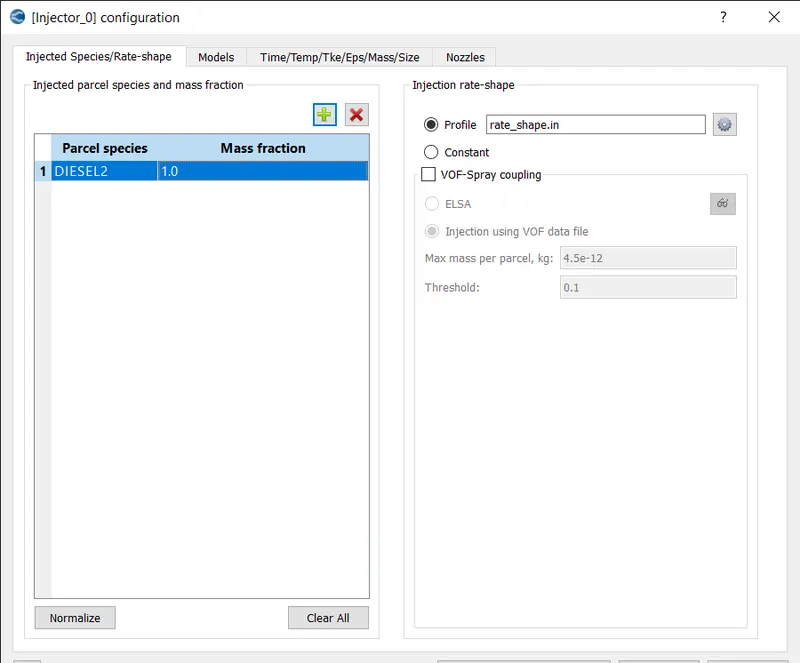
The diesel2 is specified as parcel species and rate shape is specified in the profile.
RATE SHAPE:
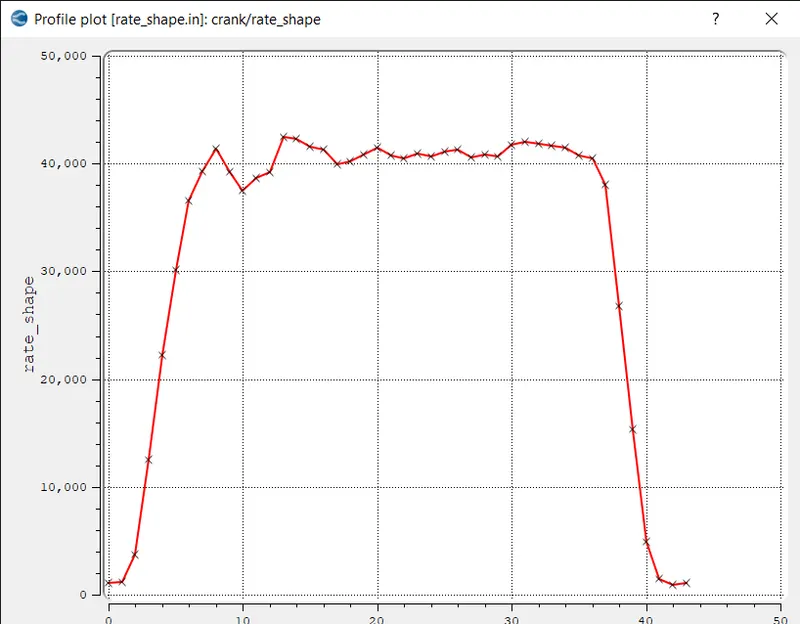
This is the profile that is specified in the rate shape.
The kelvin-helmholtz and rayleigh-taylor model are used as spray models.
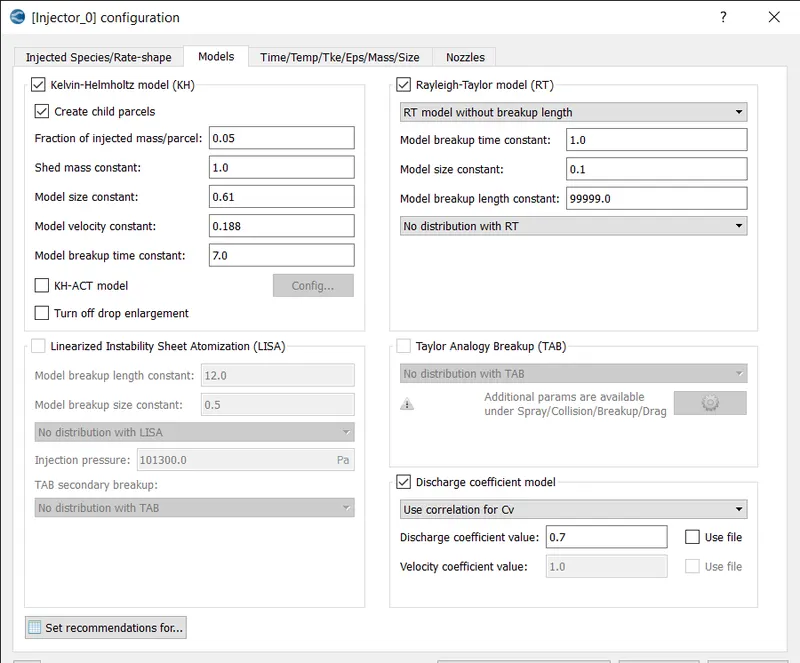
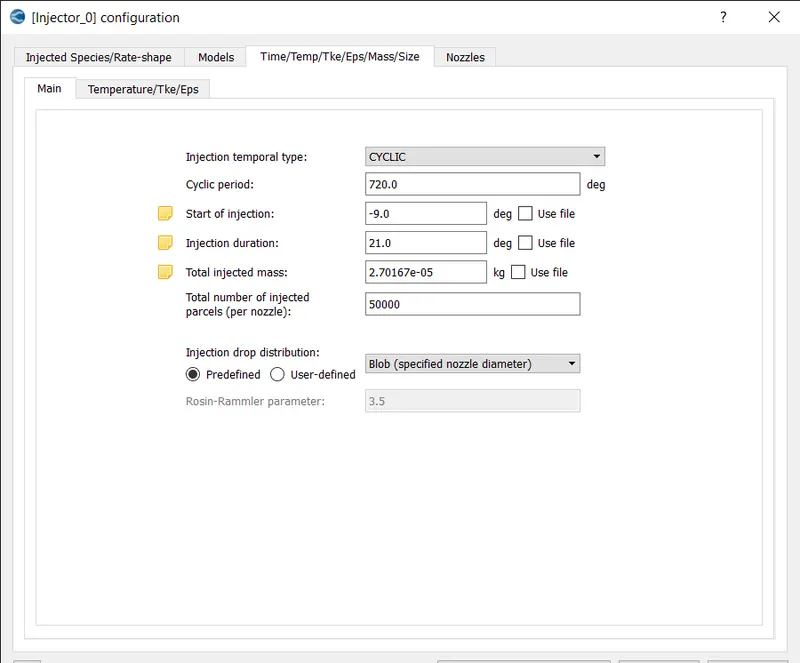
The injection type of cyclic and start and duration of injection and the cycle period of injection and total mass injected is specified.
NOZZLE PARAMETERS:
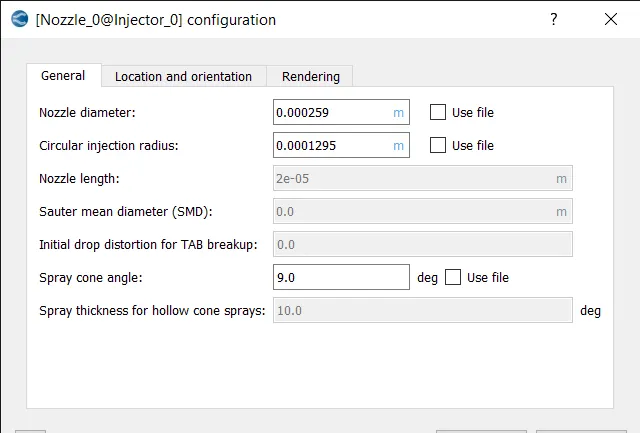
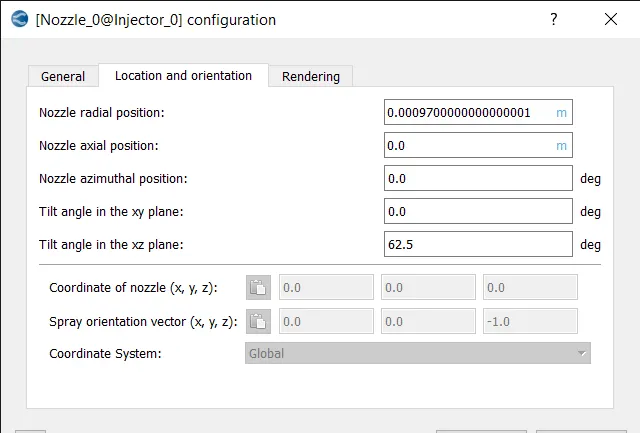
The nozzle location and diameter are specified in nozzle tab.
- COMBUSTION MODELLING:
The SAGE detailed chemical kinetics solver is used for combustion modelling.
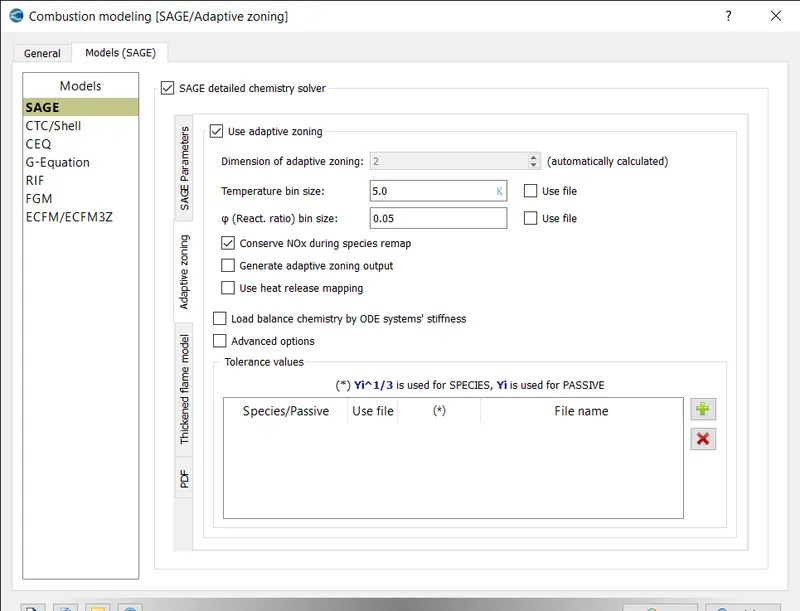
Converge uses the multi zone model which accelerates chemistry calculations by grouping together similar computational cells.
The chemistry is solved for once per group rather than once per cell.
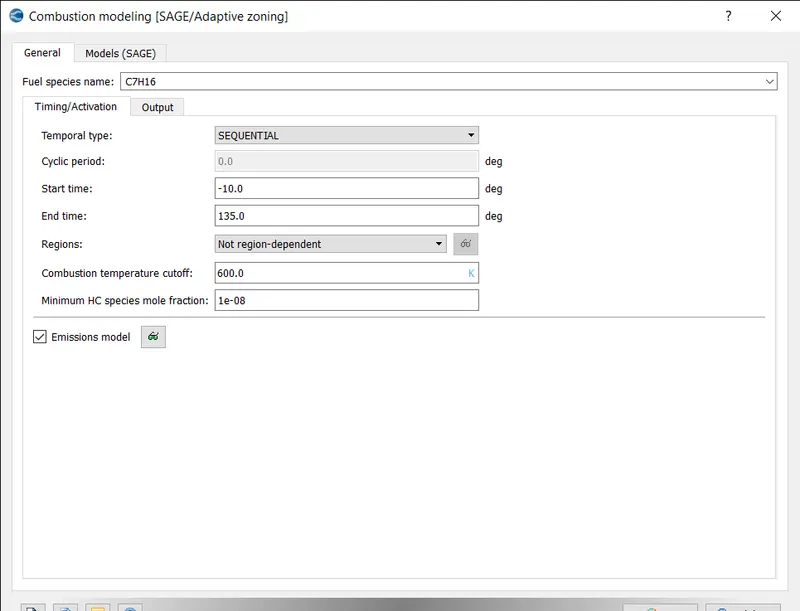
MODEL:
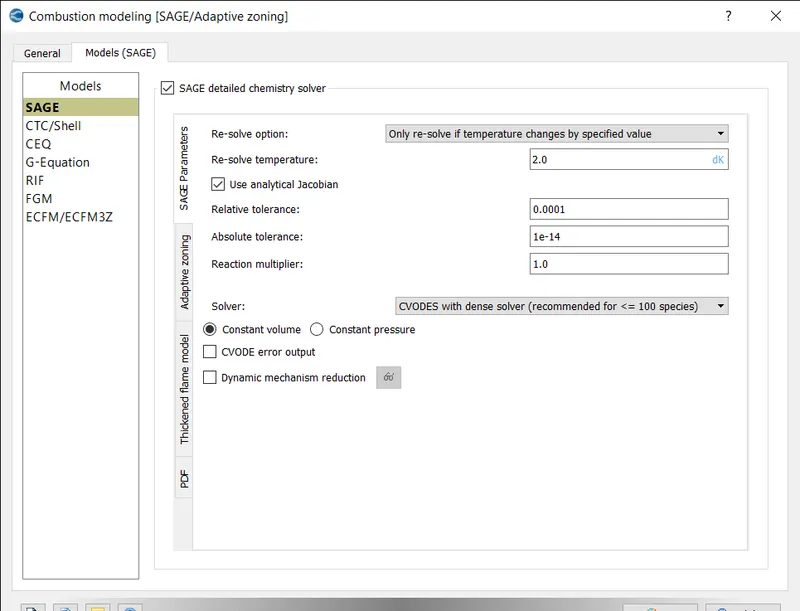
ADAPTIVE ZONING:
- TURBULENCE MODELLING:
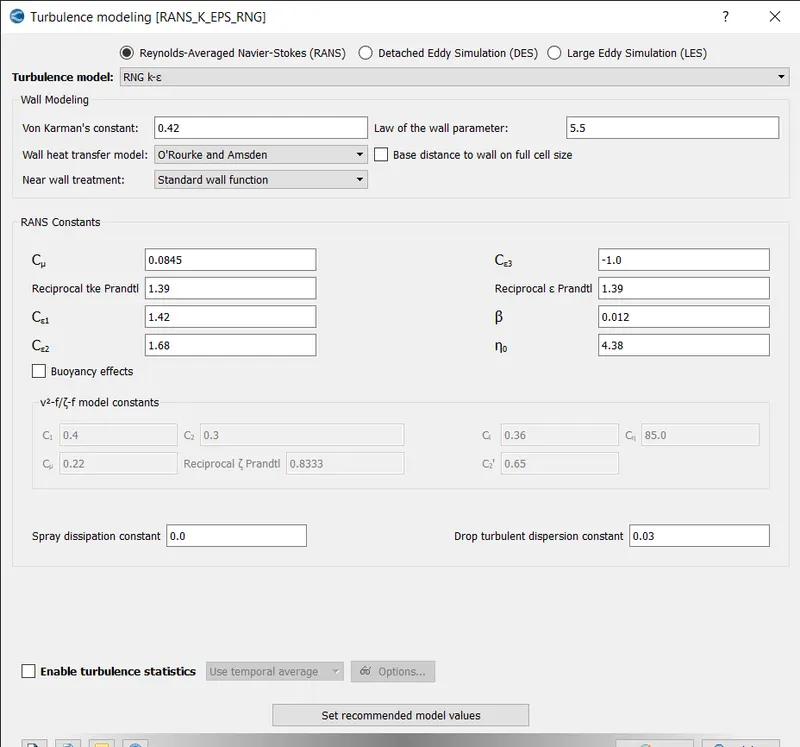
The default RNG K-epsilon model is specified as turbulence model.
- GRID CONTROL:
BASE GRID:
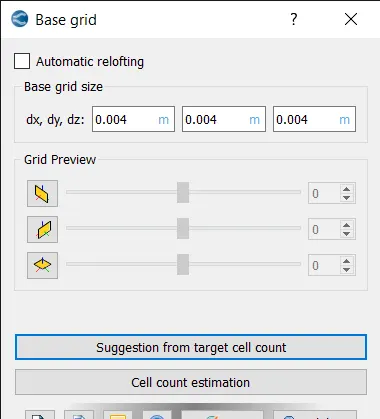
The base grid of 0.004m is defined.
ADAPTIVE MESH REFINEMENT:
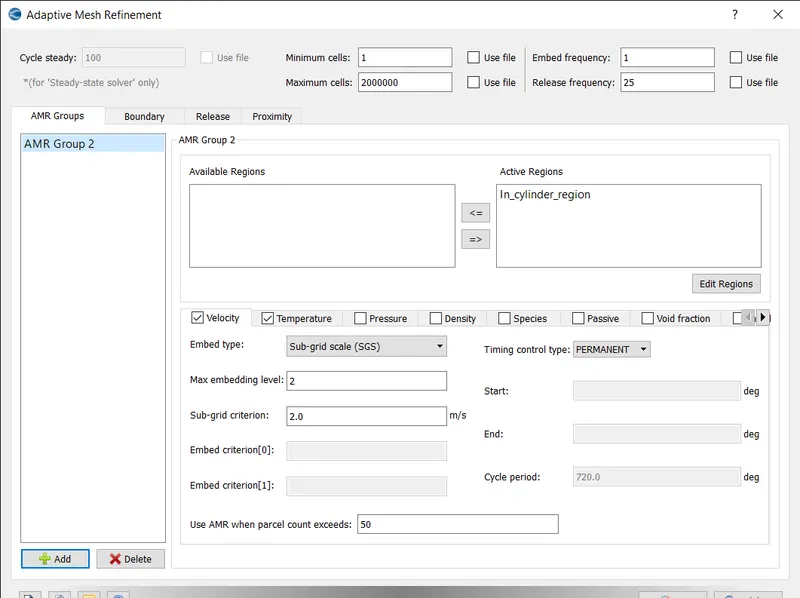
Adaptive mesh refinement (AMR) is a method of adapting the accuracy of a solution within certain sensitive or turbulent regions of simulation, dynamically and during the time the solution is being calculated.
FOR VELOCITY:
FOR TEMPERATURE:
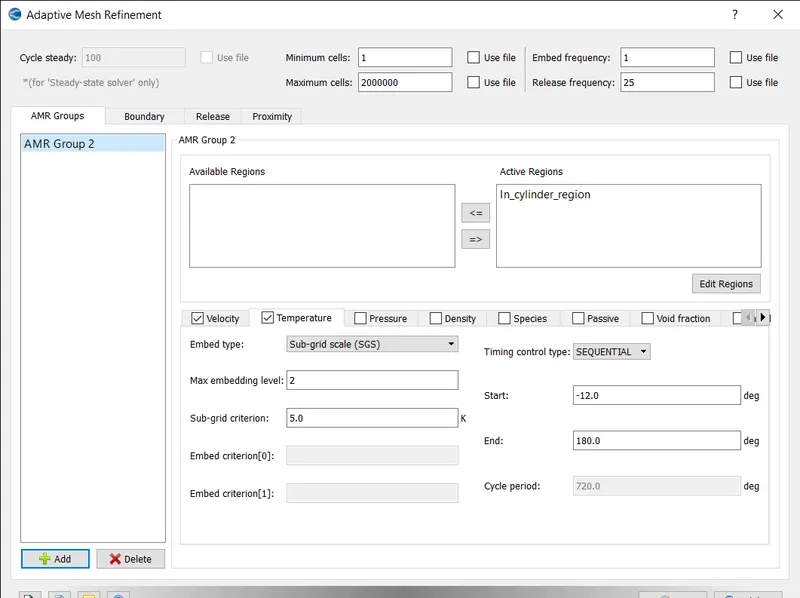
The adaptive mesh refinement is added for temperature and velocity.
FIXED EMBEDDING:
Fixed embedding is the feature which is used to add mesh to the required locations.
A nozzle embedding of factor 2 is provided at the injector to capture fuel sprays.
FOR NOZZLE:
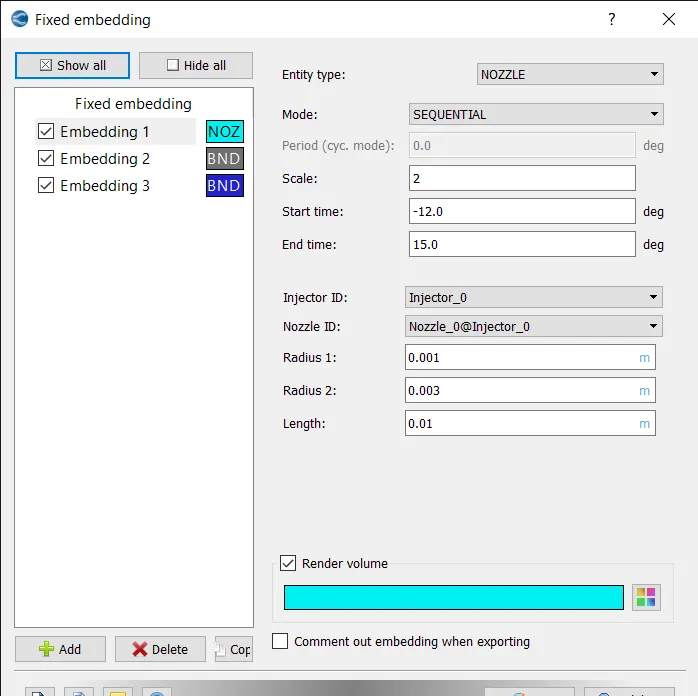
The sequential embedding of factor 1 is defined for piston and cylinder head boundaries between -20 and 180 when combustion occurs.
FOR PISTON AND CYLINDER HEAD:
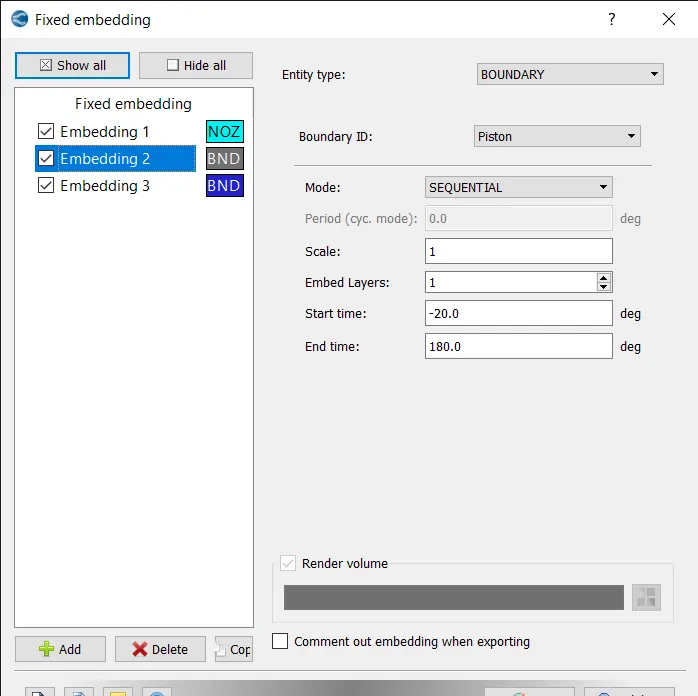
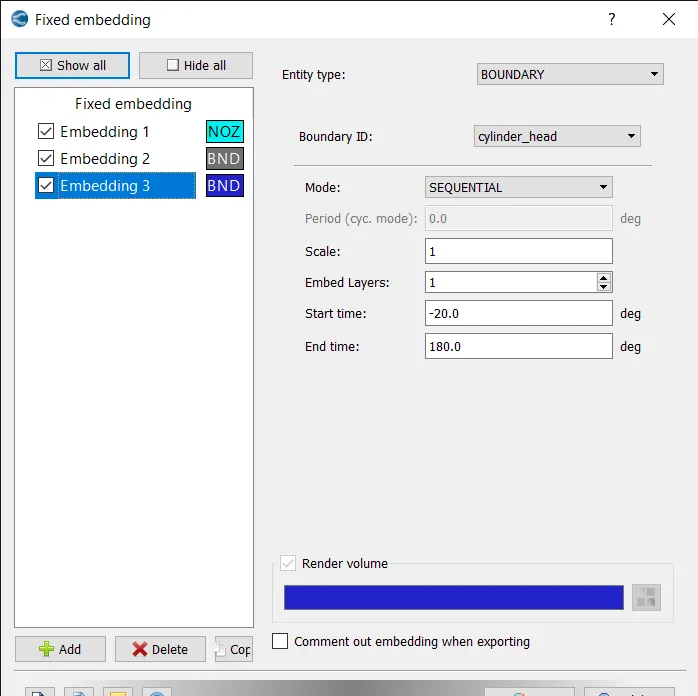
The fixed embedding is done for cylinder head, piston and nozzle.
RESULTS:
MESH:
PRESSURE:
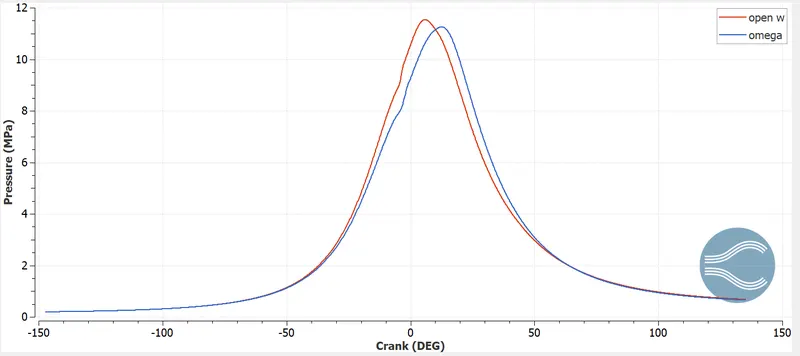
The maximum pressure generated by both the piston is close to each other. The maximum pressure of open-w is 11.53Mpa and for omega piston is 11.25Mpa. The difference is due to piston geometry.
TEMPERATURE:
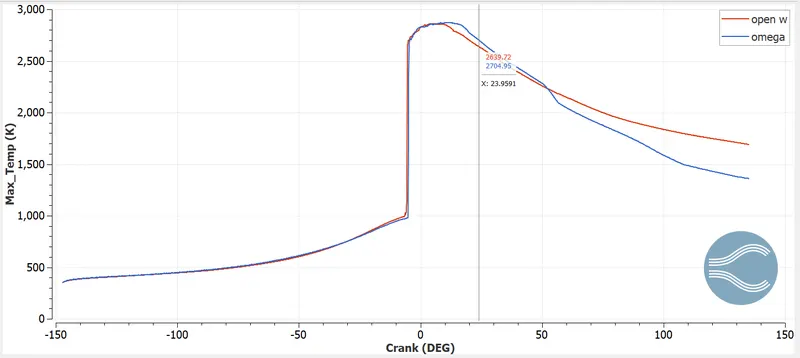
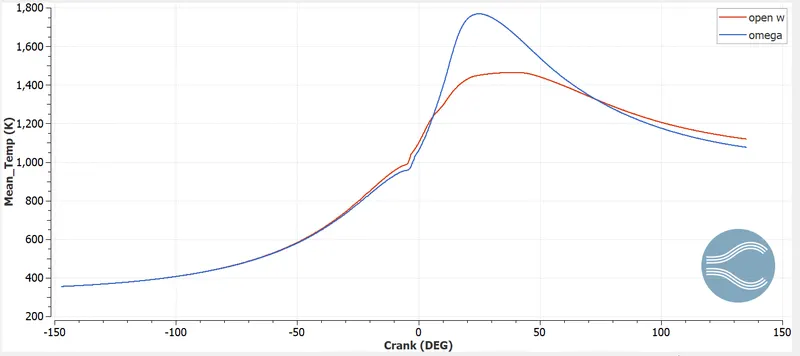
The maximum temperature for both the piston is identical. The mean temperature is higher for omega piston than open-w piston which is due to proper mixing of air-fuel mixture inside the combustion chamber.
HEAT RELEASE:
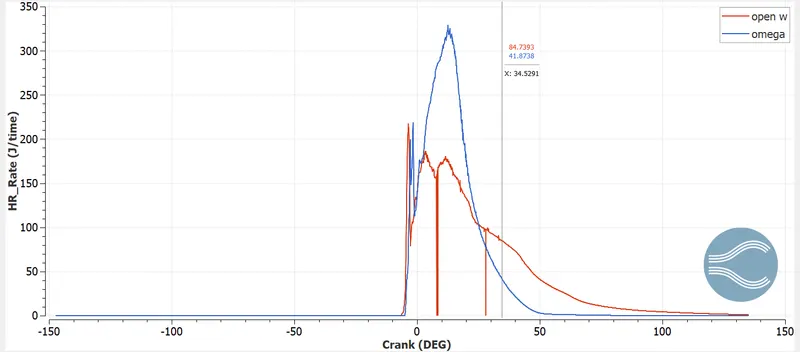
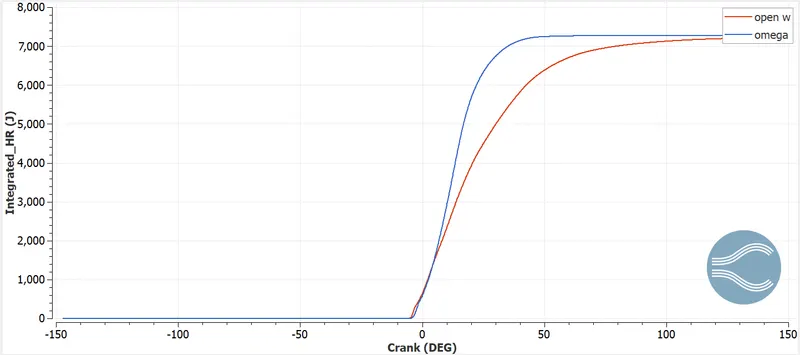
From the above plots, we can conclude that the omega piston has higher and faster heat release from the combustion for the same amount of fuel injection.
SPECIES MASS FRACTION:
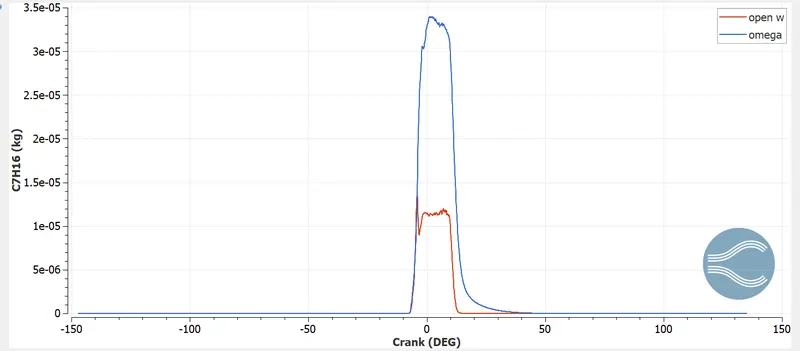
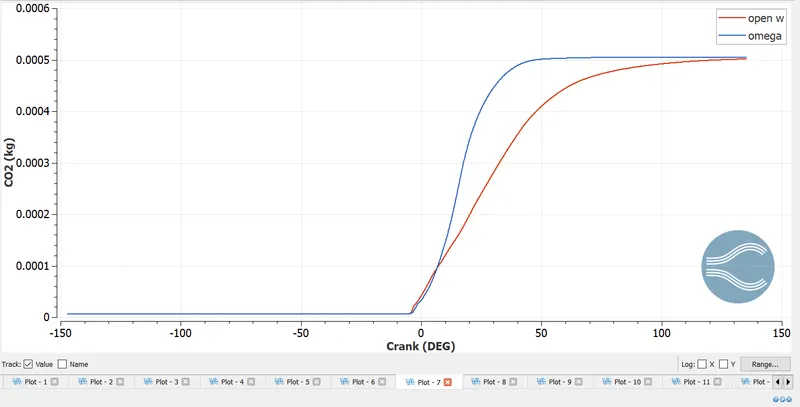
From the above plots and animation we can say that omega piston produces more co2 for the same amount of fuel injection. This shows omega piston has better combustion than open-w piston.
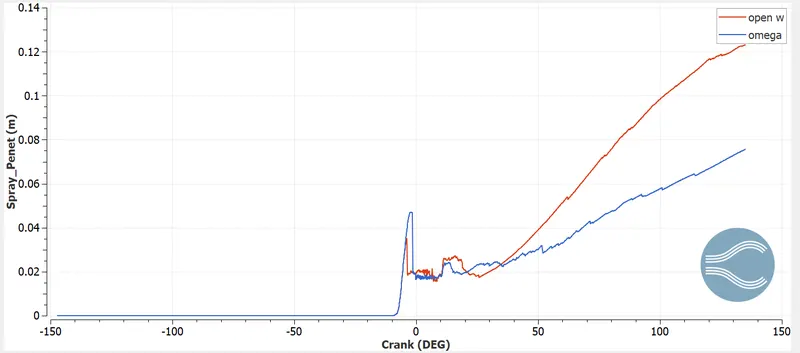
The above plots shows the spray penetration for both pistons. The spray penetration is higher in open-w piston than omega piston.
EMISSIONS:
NOX:
CO:
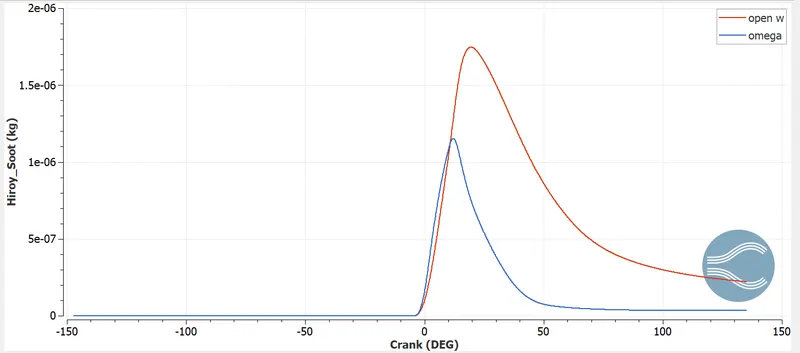
HIROY SOOT:
UNBURNT HYDROCARBONS:
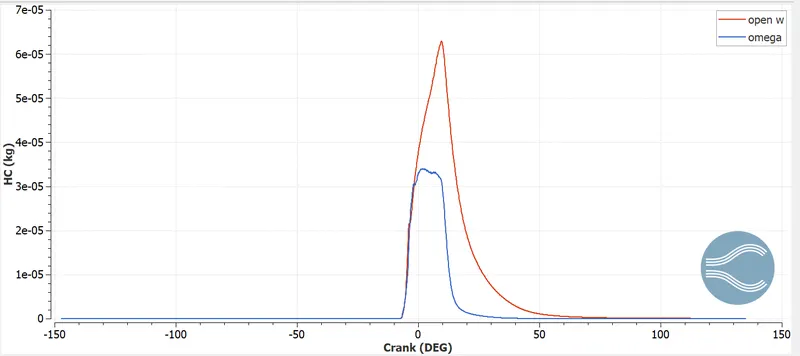
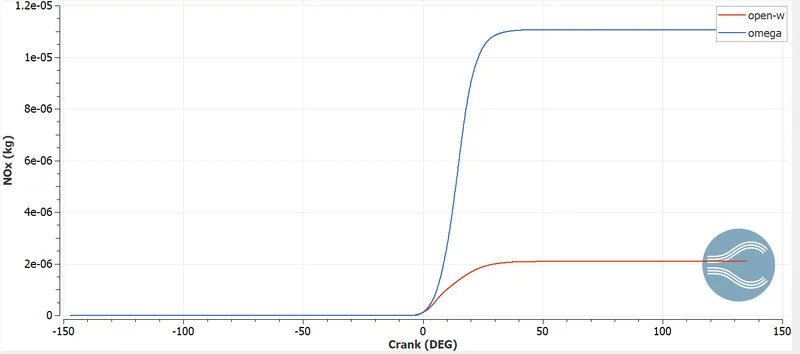
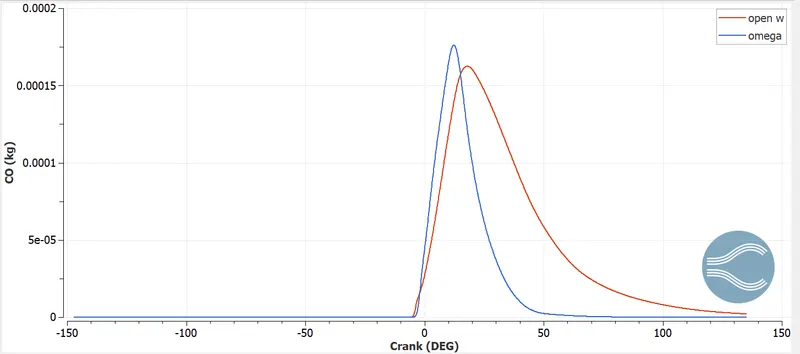
The open-w piston produces less NOx than omega piston, however it produces more co, soot and unburnt hydrocarbon.
ENGINE PERFORMANCE CALCULATOR:
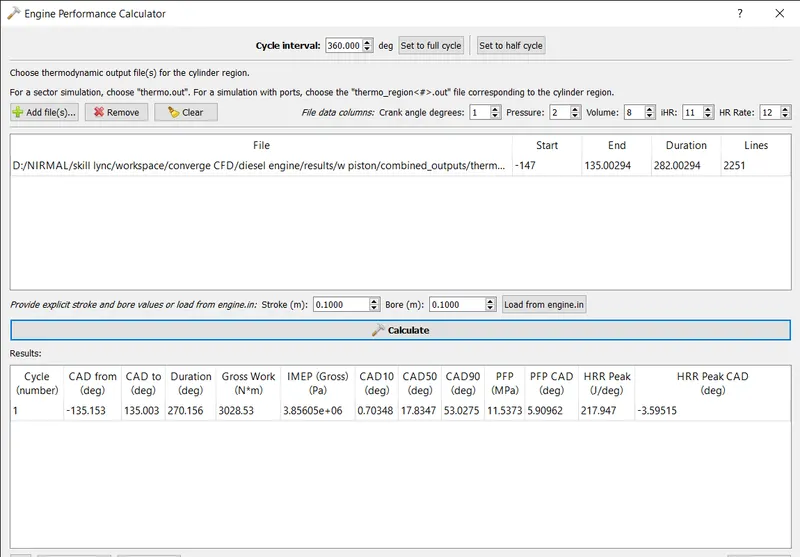
OPEN-W PISTON:
OMEGA PISTON:
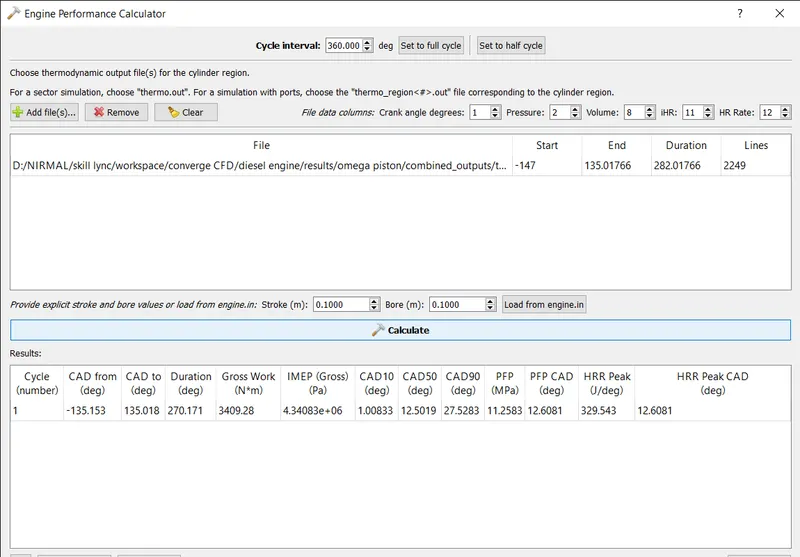
The IMEP is compared from the above two plots for both pistons.
Power is calculated as
FOR OPEN-W PISTON:
Work done: 3028.53 N-m
Revolutions per minute: 1600
Revolutions per second: 1600/60 = 26.67
Degrees per second: 26.67*360 = 96000 / sec
Duration of combustion: 270.1560
Time of combustion: 270.1560 / 96000/sec = 0.028 sec
Power (p) = work/time = 3028.53/0.028 = 108161.7857 w
FOR OMEGA PISTON:
Work done: 3409.28 N-m
Revolutions per minute: 1600
Revolutions per second: 1600/60 = 26.67
Degrees per second: 26.67*360 = 96000 / sec
Duration of combustion: 270.1710
Time of combustion: 270.1710 / 96000/sec = 0.028 sec
Power (p) = work/time = 3409.28/0.028 = 121760 w
The torque generated can be calculated as
FOR OPEN-W PISTON:
T = 60*P/2*Phi*N = 60*108161.7857/(2*phi*1600) = 645.54 N-m
FOR OMEGA PISTON:
T = 60*P/2*Phi*N = 60*121760/(2*phi*1600) = 726.70 N-m
| PROFILE | WORK (N-m) | IMEP (bar) | POWER(KW) | TORQUE (N-m) |
| OPEN-W TYPE | 3028.53 | 38.56 | 108.16 | 645.54 |
| OMEGA TYPE | 3409.28 | 43.41 | 121.76 | 726.70 |
CONCLUSION:
Combustion simulation is performed on CAT 3410 engine with two different piston using converge.
Omega piston is better than open-w piston for following reasons.
- Higher fuel penetration.
- Higher power.
- Complete combustion of fuel.
- Low HC, Soot, CO but higher NOx.